Amazon US Market Analysis: Portable Blender Category
📊 Executive Summary
📈 Market Trends
Portability is the foundation, healthy living is the driver. The portable blender market is highly mature. Consumers' immediate needs for healthy eating propel category growth. Products are severely homogenized in basic functions, with competition shifting focus to core performance, long-term durability, user experience details, and integration with eco-friendly concepts.
⚡ Major Pain Points
Insufficient blending performance, short battery life, and poor quality are the three major flaws. Users commonly complain about products' inability to effectively blend ice and frozen fruit, inflated battery life claims with rapid degradation, and high incidence of durability issues like motor failure and cracked cups, severely damaging consumer trust and brand reputation.
💡 Selection Opportunities
Invest in real performance and reliable quality to break through user trust barriers. Market opportunities lie in developing truly high-performance products that can 'crush ice for real' and significantly improving battery life and overall durability (supporting full submersion). Simultaneously, by optimizing cup design and providing multi-functional accessories, deliver a seamless, worry-free portable drinking experience, building differentiation in the details.
I. Analysis Overview
1.1 Introduction & Report Scope
This report analyzes the 'Portable Blender' category within the Amazon US market, focusing on target user personas, core needs, decision factors, market communication, and potential opportunities.
1.2 Category Snapshot
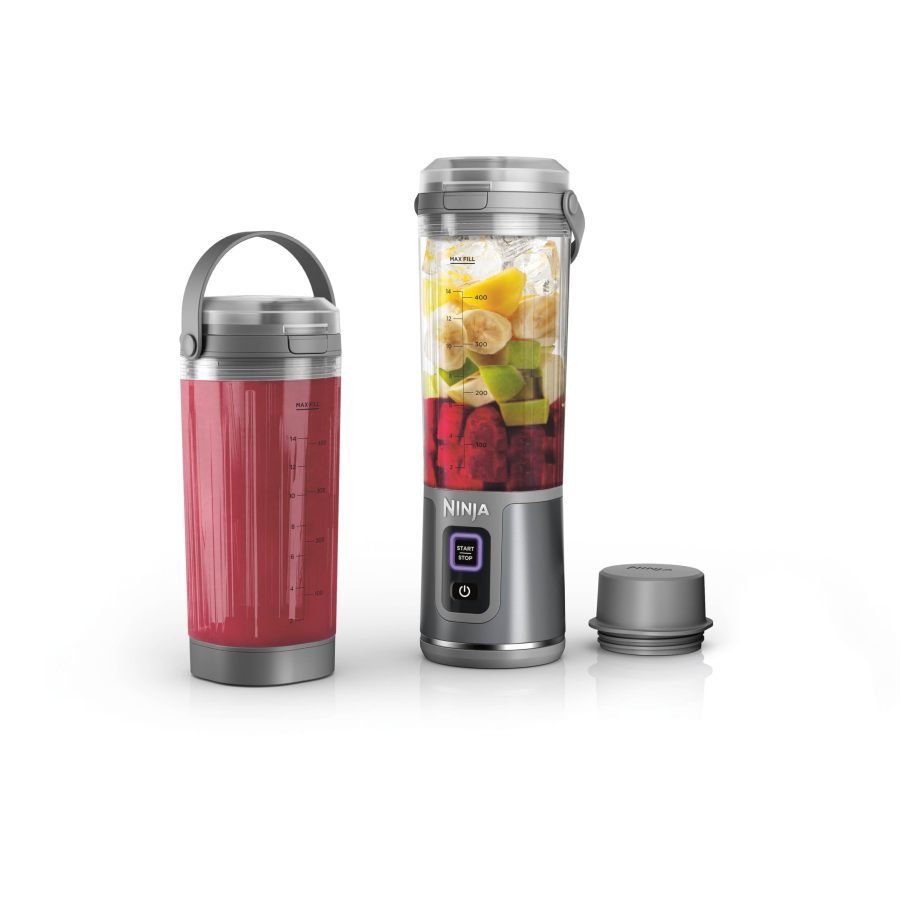
Portable blenders, also known as personal blenders, are compact, lightweight, and easily portable small kitchen appliances. Their core function is to quickly prepare single servings of smoothies, shakes, juices, or simple baby food, catering to users' healthy eating needs in offices, gyms, outdoors, or while traveling. These products primarily achieve wireless portability through battery power, while some plug-in models focus on countertop mini-portability, with capacities typically ranging from 380ml to 600ml. The following table illustrates the key characteristics of consumer behavior in this category.
| Dimension | Segment | Description |
|---|---|---|
| Need Driver Type | Planned Purchase / Emergency-driven Purchase | Purchases are typically driven by anticipated healthy eating plans, fitness goals, or sudden immediate needs for healthy beverages, reflecting clear expectations for on-the-go nutritional supplementation. |
| Purchase Frequency | Low / Medium | As a small kitchen durable good, purchase frequency is low, typically once every few years. However, due to product iteration, performance degradation, or damage, there is a mid-to-long-term replacement or upgrade need. |
| Decision Complexity | Medium | Consumers engage in moderate research and evaluation, comparing key factors such as blending power, battery life, ease of cleaning, material safety, and brand reputation. |
| Price Sensitivity | Medium | Price is an important consideration in the decision, but users are willing to pay a premium for reliable performance, good user experience, and durability. |
| Emotional Dependency | Medium | Primarily driven by functionality and practical value, but also carries emotional value and self-satisfaction for users related to health, efficiency, and controlling quality of life. |
II. User Personas & Usage Scenarios
2.1 Fitness Enthusiasts & Health-Conscious Foodies
🎯 Actively pursue a healthy lifestyle, value nutritional intake, and desire to easily prepare healthy beverages regardless of location.
| Typical Usage Scenarios | Core Pain Points | Primary Purchase Drivers |
|---|---|---|
|
|
|
2.2 Busy Urban Commuters
🎯 Have fast-paced work or study schedules with limited time, requiring quick and convenient meal solutions to reduce reliance on eating out.
| Typical Usage Scenarios | Core Pain Points | Primary Purchase Drivers |
|---|---|---|
|
|
|
III. User Needs Hierarchy (KANO Model)
3.1 Basic Needs (Must-Haves)
- Safe Operation: The product must have safety mechanisms such as anti-misoperation start, overheat protection, and magnetic sensing switches to ensure worry-free use.
- Stable Operation: Must be able to start normally and complete basic blending tasks without frequent jamming or unexplained stops.
- BPA-Free Material: Cup material must be free of BPA and other harmful substances, ensuring food contact safety and eliminating health concerns.
- Basic Blending Capability: Must be able to easily blend soft fruits, vegetables, and powders to make liquid beverages, fulfilling fundamental needs.
3.2 Performance Needs (Linear Satisfiers)
- Powerful Blending Motor: Effectively handles ice cubes and frozen fruit, ensuring smooth, particle-free drink texture without blade jamming, enhancing the experience.
- Long Battery Life: A single charge supports multiple blending cycles (e.g., 10-20), meeting full-day or short-trip needs and avoiding frequent charging.
- Compact & Lightweight Design: Small size and light weight for easy portability in backpacks or car cup holders, without being a burden.
- Easy & Thorough Cleaning: Removable parts, no-dead-zone design, supports self-cleaning or easy hand-washing, reducing cleaning effort.
- Low-Noise Operation: Operates with minimal noise, not disturbing others, improving comfort for use in public spaces or at home.
3.3 Excitement Needs (Delighters)
- Multi-Functional Accessories: Includes travel lids, cleaning brushes, ice cube trays, funnels, insulated sleeves, etc., expanding usage scenarios and convenience, providing added value.
- Smart Battery Level Display: LED screen or indicator lights show remaining battery in real-time, helping users plan charging and eliminate battery anxiety.
- Pulse / Multi-Speed Modes: Offers pulse function or multiple speed settings for precise control over blending results, catering to diverse ingredient processing needs.
- Detachable Drinking Cup Design: After blending, the blade base can be detached and replaced with a separate bottom cap, transforming the cup body into a regular drinking cup or sports bottle, enhancing convenience and hygiene.
- High-Level Waterproof Body: Supports full-body washing or higher waterproof ratings, simplifying the cleaning process and reducing the risk of damage from water entering the charging port.
3.4 Unmet Needs & Opportunities
-
Poor Frozen Ingredient Processing: Most products struggle to blend ice cubes and frozen fruit effectively, easily jamming, requiring repeated operation or manual shaking, impacting user experience.
User Reviews (VOC) I hate this blender... Everyone I add frozen food or ice it goes to blinking orange, meaning blades are blocked. // It runs for less than a minute, then it stopped and started flashing red. So ridiculous. I'm not sure I'm interested in a product that says it can blend frozen fruit/ice but actually can't.
-
Short Battery Life & Rapid Degradation: Users commonly report poor battery performance, fewer uses per charge than advertised, and rapid performance decline or complete failure over time.
User Reviews (VOC) It stops working after 5 months. // The battery goes low quickly in about 4 blends. // The battery drains pretty easily.
-
Insufficient Long-Term Durability: Quality issues like cracked cups, motor failure, water leakage, etc., severely impact user trust in product quality and lead to returns.
User Reviews (VOC) Started leaking water after 3 months of use. // The two cups cracked on the first day of use. // It just doesn't even work anymore. Red light comes out and it won't operate.
-
Incomplete Waterproofing of Charging Port: Some product designs inadequately waterproof the charging port, causing user concern about water damage during cleaning, affecting safety and lifespan.
User Reviews (VOC) I do get scared of getting water in the charging port. // Hard to wash because the USB power slot is right at the base. You shouldn't put any water in the base.
-
Complex Product Assembly & Startup: Some products require precise alignment to start, with non-intuitive operation, causing user frustration and reducing the instant convenience expected from a portable product.
User Reviews (VOC) Good luck aligning dot on the cup with the arrow on the base. // It works but it's weird to turn it on. In order for it to blend you have to like the arrow up at base which is difficult after filling it with your juice mix.
IV. User Decision Drivers
4.1 Key Decision Factors
- Blending Efficiency & Power: Whether it can smoothly and quickly blend various ingredients, especially ice cubes and frozen fruit, is the core functional consideration for users choosing a portable blender, directly determining satisfaction with the product's core value.
- Portability & Ease of Use: Whether the product is lightweight and easy to carry, the operation process is simple and intuitive, and it can be conveniently used in various scenarios, is the primary driver for purchasing a portable blender.
- Cleaning Convenience: Whether it can be cleaned easily and thoroughly is a key pain point in daily use, directly impacting frequency of use and long-term maintenance willingness.
- Product Durability & Quality: Cup material strength, motor lifespan, and overall build quality determine user perception of value-for-money and trust.
4.2 Secondary Decision Factors
- Battery Life: Number of uses per charge and charging speed directly impact convenience and peace of mind for on-the-go use.
- Safety: Features like leak-proofing, anti-misoperation, and BPA-free materials provide user reassurance, especially important for users preparing baby food.
- Aesthetics & Brand: Product color, design alignment with personal taste, brand recognition, and reputation serve as tie-breakers among comparable products, influencing final purchase decisions.
- Noise Level: Although it's a blender, excessive noise can still negatively impact the user experience, especially during morning use or in quiet environments, potentially becoming a drawback.
- Price: After core needs are met, price becomes a significant factor influencing the final purchase decision, especially for high-value-for-money products.
V. Selling Points & Competitive Landscape
5.1 Selling Point Analysis
5.1.1 Standard Features (Points of Parity)
- Portable & Lightweight: Compact size and light weight for easy portability, suitable for mobile scenarios like travel, office, and gym.
- USB Charging: Supports USB-C or standard USB charging, compatible with power banks, computers, etc., facilitating daily top-ups and enhancing flexibility.
- Easy to Clean: Often features self-cleaning mode (water agitation) or removable parts design for easy daily cleaning and maintenance.
- Single-Serve Capacity: Designed for individual portions, typically 16-20 oz (approx. 380-600 ml), meeting single-drink needs.
- Multi-Purpose Use: Promoted for making smoothies, shakes, juices, protein drinks, and baby food, catering to diverse daily needs.
- BPA-Free Material: Cups commonly use food-grade safe materials, BPA-free, ensuring drinking safety and meeting health standards.
5.1.2 Key Differentiators
- Powerful Motor & Blade Count: Highlights motor power (e.g., 150W-360W), blade speed (e.g., 18,000-22,000 RPM), and 6 or 12 stainless steel blades, emphasizing blending efficiency and smoothness.
- Safety Locking System: Magnetic sensing switch or cup-body alignment requirement for startup, emphasizing safety and anti-misoperation, enhancing user peace of mind.
- Rich Additional Accessories: Provides portable lids with handles or drinking spouts, bottom caps, cleaning brushes, mini ice cube trays, insulated sleeves, etc., increasing convenience and scenario applicability.
- Pulse / Multi-Mode Operation: One-touch pulse function or multiple blending modes to handle ingredients of varying hardness or control blending results for precision.
- LED Battery Level Display: Real-time display of remaining battery via LED indicators or screen, helping users manage charging timing and eliminate battery anxiety.
5.1.3 Unique Selling Propositions (USPs)
- IPX7 High-Level Waterproofing: Individual products promote full-body washability or even immersion, greatly simplifying cleaning and reducing charging port water damage risk (e.g., some Devan products).
- Detachable Drinking Design: After blending, the blade base can be removed and replaced with an independent bottom cap, transforming the cup body into a regular drinking cup or sports bottle, enhancing convenience and hygiene (e.g., some Devan products).
- Ribbed Cup Design: Special internal cup texture creates a vortex during blending, improving mixing efficiency and uniformity (e.g., Ninja Blast series).
5.2 Competitive Landscape
5.2.1 Market Maturity
The portable blender market has entered a mature competitive phase. Basic category features like portability, USB charging, and easy cleaning have become standard, leading to significant product homogenization. Brands primarily seek differentiation through incremental innovations in blending power, blade design, additional accessories, and safety features, such as increasing blade count, boosting motor speed, or providing insulated sleeves and travel lids. However, widespread consumer dissatisfaction with core product performance (especially blending frozen ingredients) and long-term durability indicates the market is far from saturated, with substantial room for product upgrades and brand building.
5.2.2 Innovation Trends
Current innovation trends are concentrated on enhancing blending performance to tackle frozen ingredients, improving battery life and reliability to address user pain points, and optimizing the cleaning experience (e.g., full-body washability, fully detachable blades) to lower usage barriers. Additionally, integration and smartification of multi-functional accessories, such as insulated sleeves with temperature control, customized sports cups, and more design-forward, personalized aesthetics, are emerging as new directions to attract consumers.
VI. Marketing Claims vs. Reality Check
The table below analyzes the gap between common marketing claims and actual user experiences in this category:
| Dimension | Marketing Claim | User Reality | Verdict |
|---|---|---|---|
| Frozen Ingredient Blending Capability | Powerful motor, easily crushes ice and frozen fruit for smooth drinks. | Multiple products receive user feedback of inability to effectively handle ice or frozen fruit, with machines prone to jamming or stopping, requiring repeated blending or manual assistance. | Most low-priced portable blenders are limited by small DC motor power. Claims of 'easily crushing ice' constitute over-marketing that defies basic physics, easily leading to user disappointment and returns. |
| Battery Life & Longevity | Long-lasting battery, one charge supports X cups, meeting all-day use. | Users commonly report short battery life (far below advertised), rapid power drain under heavy use, and quick performance degradation or complete failure in a short period. | Sellers use ideal lab data or minimal-load scenarios to misrepresent real-world performance under high load and extended use, severely eroding user trust. |
| Product Long-Term Durability | High-quality materials, sturdy and durable, offering long-term warranty. | Numerous users report issues like cracked cups, motor failure, water leakage, and button malfunctions, with some products becoming unusable within months, contradicting 'durable' claims. | Cost-cutting measures compromise material strength and quality control, resulting in short product lifecycles. The brand's advertised 'quality' is severely disconnected from the actual delivered experience, damaging brand reputation. |
Key Takeaway: The portable blender market suffers from widespread performance inflation and overpromising on functional experience, with significant gaps between user expectations and reality, particularly regarding core blending capability and product lifespan.
VII. Supply-Demand Misalignment Analysis
The table below highlights mismatches between seller focus and buyer priorities:
| Dimension | Seller Behavior | User Focus | Verdict |
|---|---|---|---|
| Hard Ingredient Processing Ability | Widely highlight 'powerful motor,' 'easily crushes ice' in listings to attract users. | Users report these products simply cannot handle ice or frozen fruit, jamming every time or requiring manual shaking, which is very troublesome. | Sellers over-promote 'ice-crushing ability' despite their products failing to meet common expectations, creating a 'pie-in-the-sky' marketing approach that ultimately backfires on user trust. |
| Battery Life & Performance Degradation | Most listings only mention 'large battery capacity' or 'X cup endurance,' avoiding transparency on actual battery lifespan, long-term degradation, and how to clean without risking water damage to the charging port. | Users are most concerned about how long the battery lasts before failing and the safety/waterproofing of the charging port, not the theoretical number of cups per charge (which is often far from reality). | Sellers fail to provide transparent, reliable information and solutions for the battery, a core component, leading users to frequently encounter pitfalls in the very core benefit of portability. |
| Product Long-Term Durability | Focus is generally on initial feature introduction, with collective silence on potential long-term issues like motor failure, cracked cups, or leakage, offering only standard short warranties. | Users expect products to last reliably for at least a year or more, not fail within months. Frequent malfunctions and returns erode confidence in quality. | Sellers have a blind spot in product lifecycle management, neglecting consumers' deep-seated value demand for 'good value that lasts,' leading to high return rates and negative word-of-mouth. |
Key Takeaway: Sellers excessively focus on marketing portability and basic features, while collectively overlooking or underestimating users' deep-seated pain points regarding core blending performance, battery reliability, and product long-term durability, leading to a severe supply-demand mismatch.
VIII. Strategic Opportunities & Recommendations
8.1 Breakthrough 'True Ice-Crushing' High-Performance Portable Blender
8.1.1 Target Audience & Pain Points
⚡️ Pain Points Addressed: Poor frozen ingredient processing ability.
8.1.2 Action Plan
Develop a model equipped with a high-power, high-torque motor (e.g., 250W+, non-inflated), utilizing multi-layer or staggered 3D blade design and optimizing the internal cup structure to generate stronger vortex flow. Ensure efficient cutting and mixing of ice and frozen fruit within 30 seconds for a silky smooth texture. Employ higher energy-density batteries to balance runtime and instantaneous power.
| Tech Complexity | Medium |
| Cost Impact | High Impact |
| Trade-off Warning | A higher-power motor may slightly increase weight or volume and place higher demands on battery life. High-hardness blades require a more robust cup structure, potentially raising cup material costs. |
| Price Band | Only viable above $49.99 |
8.1.3 Marketing Strategy
Emphasize 'Hardcore Blending, Smoothies in Seconds, No More Jams'; showcase real-world test videos (including slow-motion) demonstrating the product effectively blending ice and frozen fruit, highlighting its superior performance. Engage professional fitness KOLs for authentic reviews and provide third-party authoritative reports on motor power and blade hardness.
8.2 Long-Lasting, Stable & Fully Submersible Durable Product
8.2.1 Target Audience & Pain Points
⚡️ Pain Points Addressed: Short battery life & rapid degradation // Insufficient product long-term durability // Incomplete waterproofing of charging port.
8.2.2 Action Plan
Use higher-quality batteries with longer cycle life and integrate smart power management chips to ensure long-lasting, stable performance with slow degradation. Enhance overall material quality and structural strength, particularly at cup joints and blade seals, to reduce cracking and leakage risks. Upgrade the motor base waterproof rating to IPX7 or higher, allowing users to rinse directly under a tap or fully submerge for cleaning, completely eliminating charging port water damage concerns.
| Tech Complexity | Medium |
| Cost Impact | Medium Impact |
| Trade-off Warning | Higher-quality batteries may slightly increase cost and weight. Full-body waterproof design may increase production process difficulty and mold precision requirements. |
| Price Band | Only viable above $24.99 |
8.2.3 Marketing Strategy
Highlight 'Enduring Power, Fully Submersible, The Trustworthy Choice'; showcase battery cycle life test reports, cup drop test videos, and demonstrations of the product being washed under running water (or submerged). Emphasize material choices and structural design for 'drop-proof and leak-proof' performance and offer an extended warranty of 2 years or more.
8.3 Optimize Cup & Accessory Ecosystem for Superior Portable Drinking Experience
8.3.1 Target Audience & Pain Points
⚡️ Pain Points Addressed: Poor drinking experience with some travel cups // Inconvenient to carry.
8.3.2 Action Plan
Design ergonomic wide-mouth drinking lids, offering various mouthpiece options to suit different drinking habits. Ensure travel cup diameter fits standard car cup holders and clearly demonstrate this compatibility in listing images. Consider designing modular accessories, such as a 'sports drinking lid' with a built-in foldable handle and dust cover, a 'nutrition companion lid' with an independent sealed compartment for protein powder/nuts, or an 'insulated bottom cap' that converts the blending cup into a regular insulated tumbler.
| Tech Complexity | Low |
| Cost Impact | Low Impact |
| Trade-off Warning | No significant physical side effects; primarily involves design and mold cost optimization, not affecting core blending function. |
| Price Band | Only viable above $19.99 |
8.3.3 Marketing Strategy
Emphasize 'Blend and Go, Seamless Transition, Fits Your Mobile Life'; provide real-world photos in car cup holders (showing secure fit), close-ups of various mouthpiece lids, leak-proof test demo videos. Highlight the multi-functionality and convenience of accessories, e.g., 'One Cup, Multiple Uses, Seamless Scenario Switching'.