Amazon US Market Analysis: Hanging Dust Covers Category
📊 Executive Summary
📈 Market Trends
Portability & large capacity are mainstream; transparent visibility is basic. The hanging dust cover market is highly competitive, with products generally emphasizing lightweight, large capacity, transparent visibility, and zipper design. Growing consumer demand for more efficient garment management and protection solutions drives continuous optimization in materials and detailed functionality.
⚡ Major Pain Points
Fragile zippers and thin material are the core weaknesses. Users commonly complain about zippers breaking, jamming, and derailing, as well as bag material being too thin and tearing easily, severely impacting product lifespan and experience. Additionally, insufficient transparency in some products and incomplete top dust prevention lower user satisfaction.
💡 Selection Opportunities
Deepen focus on quality details, deliver on user experience. Market opportunities lie in solving the consumer trust crisis regarding zipper reliability and material durability, establishing brand advantage through 'Extreme Durability Zipper & Thickened Tear-Resistant Material'. Simultaneously, enhance 'Crystal-Clear Visibility & Smart Categorization System' to optimize search efficiency. Design 'Multi-Functional Portable Garment Transport Bags' for specific scenarios (e.g., moving, travel), and provide more comprehensive protection through 'Top Full-Seal & Anti-Slip Securing' to achieve differentiated competition.
I. Analysis Overview
1.1 Introduction & Report Scope
This report analyzes the 'Garment Covers' (hanging dust covers) category in the US Amazon market, focusing on target user personas, core needs, decision drivers, market communication, and potential opportunities.
1.2 Category Snapshot
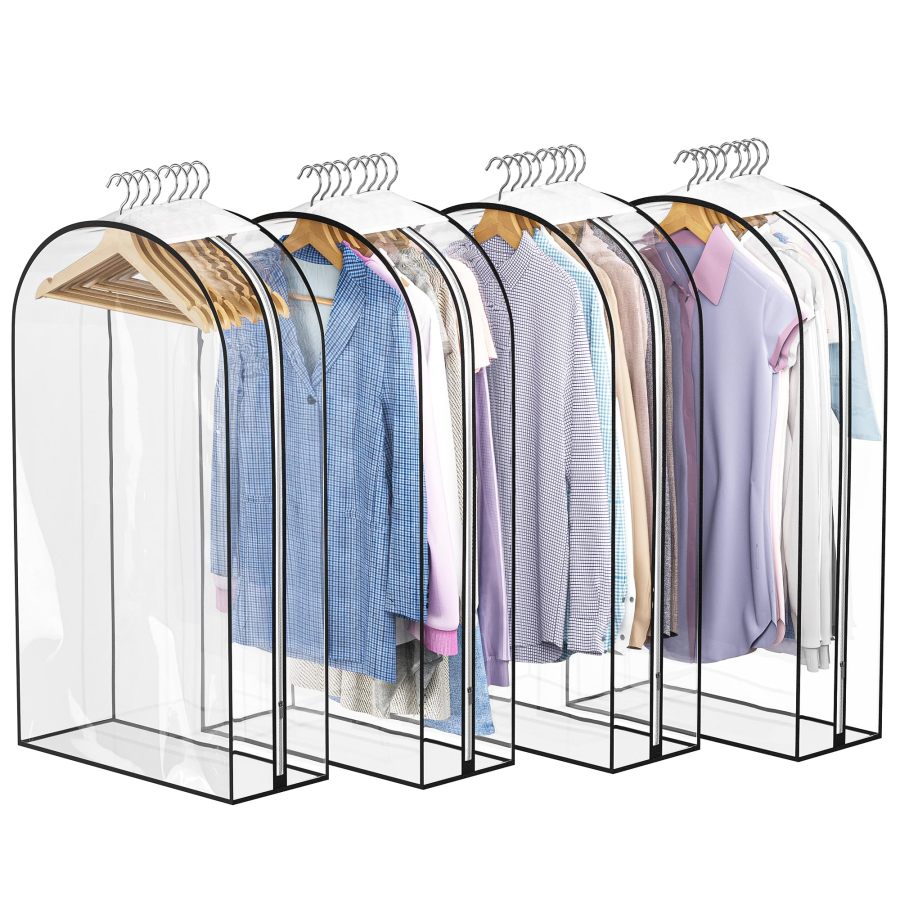
A hanging dust cover is a protective storage product designed specifically for hanging garments, aiming to prevent clothes from dust, moisture, odors, moth damage, and pet hair. These products typically use materials like PEVA, PE, or non-woven fabric, feature zipper closures, and come in various lengths (e.g., 40, 50, 60 inches) and widths (e.g., 4-inch, 10-inch accordion folds) to accommodate different types of clothing. They serve as practical tools for home closet organization, seasonal storage, and protecting clothes during moves. The following table illustrates the key characteristics of consumer behavior in this category.
| Dimension | Segment | Description |
|---|---|---|
| Need Driver Type | Planned Purchase / Emergency-driven Purchase | Purchases are typically driven by anticipated clothing storage plans (e.g., seasonal change, long-term storage) or sudden needs (e.g., moving, short-term travel), with a clear purpose of garment protection. |
| Purchase Frequency | Low | As durable goods, their replacement cycle is typically long, resulting in low purchase frequency. Purchases mainly occur when new storage needs arise or old products wear out. |
| Decision Complexity | Medium | Consumers compare different products based on material, size, pack count, price, and user reviews, but do not conduct deep research. |
| Price Sensitivity | Medium | Price is an important decision factor, but users are willing to pay a reasonable premium for products offering more reliable protection, better durability, or solving core pain points. |
| Emotional Dependency | Low | Primarily based on the practical function of garment protection and the peace of mind from a tidy closet. Emotional drivers are relatively low, but there is higher emotional expectation for protecting high-value garments. |
II. User Personas & Usage Scenarios
2.1 Home Organizer
🎯 Focuses on home cleanliness and garment care, aiming to keep the wardrobe neat, organized, and extend clothing lifespan through effective storage.
| Typical Usage Scenarios | Core Pain Points | Primary Purchase Drivers |
|---|---|---|
|
|
|
2.2 Special Garment Guardian
🎯 Owns high-value or precious clothing (e.g., gowns, wedding dresses, uniforms, furs) and has higher requirements for garment protection.
| Typical Usage Scenarios | Core Pain Points | Primary Purchase Drivers |
|---|---|---|
|
|
|
III. User Needs Hierarchy (KANO Model)
3.1 Basic Needs (Must-Haves)
- Dust Prevention: Keeping clothes free from dust and clean is the core, fundamental function of a hanging dust cover.
- Hanging Convenience: The bag design should work with hangers, allowing easy hanging in the wardrobe without disrupting existing garment arrangement.
- Zipper Closure: Allows users to easily place or remove garments from the bag, enabling the basic operation of protection and access.
3.2 Performance Needs (Linear Satisfiers)
- Durable Material: The dust cover should not tear or break easily, allowing for repeated, long-term use and reducing the cost and hassle of frequent replacement.
- Transparency / Visibility: Ability to clearly see garments inside without opening, improving search efficiency. A widely expected feature.
- Water & Moisture Resistance: Material effectively blocks water and moisture, keeping garments dry, especially in damp environments or basement storage.
- High-Capacity Design: The bag has sufficient space to hold multiple or bulky garments without squeezing or deforming, such as accordion-fold designs.
- Moth & Pest Prevention: Effectively prevents moths, insects, etc., from entering, protecting vulnerable garments like wool and furs, extending their lifespan.
3.3 Excitement Needs (Delighters)
- Optimized Top Sealing: Special design at the hanger hole (e.g., Velcro, overlapping stitching, small aperture) for more comprehensive dust sealing, leaving no entry point for dust.
- Side Zipper Design: Allows quick access to a single garment from the side without removing the entire bag from the rod, significantly enhancing convenience.
- Odorless Material: The product itself has no plastic or chemical odor, ensuring garments remain fresh after storage, especially important for sensitive individuals.
- Breathability: Allows some air circulation while preventing dust, avoiding musty odors from trapped moisture. A balance between function and experience.
3.4 Unmet Needs & Opportunities
-
Zipper Quality & Reliability: Many users complain about zippers breaking, derailing, or jamming easily, severely impacting product lifespan and daily experience, leading to repeat purchases and dissatisfaction.
User Reviews (VOC) Zippers broke immediately on first use of several bags. // The zippers are awful. They will sometimes just fall off and you can't get them back on at all. // The zipper is cheap.
-
Material Thickness & Tear Resistance: Some products use overly thin material that easily tears or rips during use, especially during moving or frequent access, failing to provide reliable long-term protection.
User Reviews (VOC) The plastic is very thin and tears easily. // not very durable. Some started falling apart in the zipper area after 2-3 weeks of a light use. // The material feels flimsy but the zipper is good.
-
True, Full Transparency: Some products claim 'crystal clear' but have insufficient transparency, making it difficult to clearly identify garment details inside, impacting quick search, creating an expectation gap.
User Reviews (VOC) not see-thru enough for me to be able to tell the difference between jackets of similar colors. // It's too opaque to distinguish navy from gray, striped from check, etc.
-
Garment Anti-Slip / Securing Design: Some users report garments slipping inside the bag or at the hanger, causing clothes to pile up or the bag to deform, especially when holding multiple items.
User Reviews (VOC) they do tend to slip the top hanger through a lot. Make sure to duck tape the top of the hangers when moving them // The hanger opening isn't a big hole, but more of an open seam which will prevent dust from getting in.
IV. User Decision Drivers
4.1 Key Decision Factors
- Protection Effectiveness: Whether it effectively prevents dust, moisture, and pests, keeping clothes clean and intact, and extending their lifespan. The primary purpose of purchase.
- Capacity & Size: Whether it fits the target garments (e.g., coats, gowns) and holds enough quantity without causing wrinkles from squeezing. Directly impacts user satisfaction.
- Material Durability: Whether the bag is sturdy, not easily damaged, and can withstand long-term use and some degree of handling. Relates to product lifespan and value.
- Value for Money: Whether the price is reasonable and the pack count offers good value, assuming basic function and quality are met. Influences purchase decisions.
4.2 Secondary Decision Factors
- Zipper Quality: Whether the zipper is smooth, sturdy, and not prone to jamming or derailing. Directly impacts daily convenience and long-term reliability.
- Visibility: High transparency for quick identification of contents, saving search time and enhancing user experience.
- Odorless: New product has no irritating plastic smell, ensuring garments remain fresh, impacting health and wearing experience.
- Ease of Use: How convenient and quick it is to access garments, such as with a side zipper design, reducing operational friction and time consumption.
V. Selling Points & Competitive Landscape
5.1 Selling Point Analysis
5.1.1 Standard Features (Points of Parity)
- Dust & Water Protection: Most products emphasize effective protection against dust and moisture, a foundational category function.
- Transparent / Visible: Widespread use of transparent PEVA or PE materials, marketed for easy, direct viewing of contents.
- Zipper Design: All products feature zippers as the primary closure for placing and removing garments, emphasizing convenience.
- Large Capacity / Wide Design: Often use accordion-fold designs (e.g., 4-inch, 10-inch) or emphasize wide space to hold multiple or bulky garments.
- Multi-Pack Sets: Mainstream sales strategy, selling in multi-piece packs (e.g., 4, 6, 12-piece sets) for better value.
5.1.2 Key Differentiators
- Material Upgrade / Thickening: Some products emphasize using 'thickened PEVA' or higher GSM materials to market greater durability.
- Side Zipper: Some products innovate with a side zipper, claimed to allow more convenient access to single items without moving the whole bag.
- Top Dust Prevention Optimization: A few products feature small holes, overlapping stitching, or Velcro at the hanger hole for tighter dust sealing.
- Multiple Size Options: Offering different length combinations (e.g., 40, 50, 60 inches) to meet needs for short, mid-length, and long garments.
5.1.3 Unique Selling Propositions (USPs)
- Double-Sided Zipper: Very few products (e.g., LANDNEOO) feature a two-way zipper, further enhancing access flexibility from either side.
- Portable Handle Design: Individual products (e.g., KIMBORA) integrate a handle or external strap at the bottom for easy carrying or travel.
- Breathable Material Back Panel: A few products (e.g., MISSLO, SLEEPING LAMB, Liuoud) use breathable materials like non-woven fabric on the back, balancing dust prevention with breathability to avoid musty odors.
- Patented Velcro Hanger Hole: BAMALU claims an exclusive patented Velcro hanger hole design aimed at completely preventing dust entry for ultimate sealing.
5.2 Competitive Landscape
5.2.1 Market Maturity
The hanging dust cover market has entered a mature stage, with high homogenization of basic product functions. Core selling points focus on dust prevention, transparency, capacity, and zippers. Competition mainly manifests in material thickness, detail design (e.g., side zipper, hanger hole sealing), and pack strategies. Insufficient differentiation between brands leads to intense price competition and high consumer demand for value.
5.2.2 Innovation Trends
Current innovation primarily revolves around enhancing the ability to solve core user pain points, such as improving zipper and material durability. Functional expansion for specific use cases (e.g., moving, bulky garment storage, pet households) and the adoption of more eco-friendly, odorless materials to meet growing consumer health and environmental awareness are also emerging trends. Some sellers are beginning to experiment with more airtight sealing designs at the top hanger hole for more comprehensive protection.
VI. Marketing Claims vs. Reality Check
The table below analyzes the gap between common marketing claims and actual user experiences in this category:
| Dimension | Marketing Claim | User Reality | Verdict |
|---|---|---|---|
| Zipper Durability | Claims of 'heavy-duty metal zipper', 'smooth zipper', 'upgraded zipper', or 'zipper with stopper', implying excellent durability and reliability. | Users widely report zippers breaking, derailing, jamming, or having poor bottom sealing, sometimes failing on first use, severely impacting product functionality. | Sellers generally overstate zipper quality, failing to deliver on the reliability promise of this core operational component, leading to extremely poor user experience on the most basic function and generating many negative reviews. |
| Material Thickness & Tear Resistance | Emphasizes 'thickened version', 'high-quality PEVA', 'not easy to tear', creating an image of sturdiness and durability. | Many users report product material as 'very thin', 'tears easily', 'not durable', especially during moving or when holding multiple garments. | Sellers' claims about material 'thickness' and 'durability' severely misalign with actual product performance. Consumer trust in the product's protective ability is broken after short-term use. |
| Transparency | Commonly claims 'crystal clear', 'clear visibility', promising users can identify contents at a glance without opening. | Some users find product transparency insufficient, appearing 'semi-transparent' or 'frosted', making it hard to distinguish details of dark or similarly patterned garments, still requiring opening to confirm. | Sellers' promise of 'transparency' differs from the user's expectation of 'crystal-clear' visibility, impacting the core experience of efficient searching through visibility. |
Key Takeaway: The hanging dust cover market exhibits widespread parameter inflation and a tendency towards scenario-based experience exaggeration, particularly regarding claims about material durability, zipper reliability, and transparency, which show significant gaps with actual user experience.
VII. Supply-Demand Misalignment Analysis
The table below highlights mismatches between seller focus and buyer priorities:
| Dimension | Seller Behavior | User Focus | Verdict |
|---|---|---|---|
| Actual Zipper Lifespan & Reliability | Listings commonly emphasize 'smooth zipper', 'heavy-duty zipper', but lack specific reliability data or warranty promises, failing to communicate zipper as a core differentiator. | Users care most about whether the zipper is durable, doesn't jam or derail, but reality involves frequent zipper failures affecting garment protection and user mood. | Sellers fail to acknowledge and address the user's core pain point regarding zipper reliability, causing the product to lose points on the most critical operational experience, creating a trust crisis. |
| Material Tear Resistance During Moving/High-Frequency Use | Sellers emphasize 'thickened PEVA', 'not easy to tear', but generally do not mention specific performance guarantees or solutions for high-wear scenarios like moving or frequent access. | Users report bag material easily tearing during moving or high-frequency use, with product durability far below expectations, making it unsuitable for 'travel' purposes. | Sellers' marketing overlooks product limitations in high-intensity use scenarios, leading to a severe mismatch between user expectations and actual experience, affecting multi-scenario applicability. |
| Airtight Dust Prevention at Top Hanger Hole | Most products merely mention 'small hole for dust prevention', a few mention 'overlapping stitching' or 'Velcro', but with insufficient detail emphasis, not highlighted as a core dust prevention selling point. | Some users find gaps at the top opening still allow dust entry, requiring extra measures (e.g., tape) for complete dust prevention, failing to meet the demand for ultimate protection. | Sellers generally pay insufficient attention to top dust prevention details, failing to meet users' pursuit of 'zero dust' for garments, leaving potential pain points and room for improvement. |
Key Takeaway: Sellers collectively remain silent or downplay core quality pain points affecting long-term user experience (like zippers, material), while overemphasizing basic functional points, leading to a supply-demand mismatch.
VIII. Strategic Opportunities & Recommendations
8.1 Extreme Durability Zipper & Thickened Tear-Resistant Material
8.1.1 Target Audience & Pain Points
⚡️ Pain Points Addressed: Unreliable zipper quality, insufficient material thickness leading to easy tearing.
8.1.2 Action Plan
Adopt high-quality (e.g., YKK-level) metal or thickened resin zippers, and conduct rigorous zipper operation testing in production (e.g., 10,000 cycles without failure). Increase PEVA/PE material weight to 120gsm or above, and consider adding reinforced fibers or double-stitching at stress points (e.g., zipper edges, bottom). Offer a three or five-year warranty promise.
| Tech Complexity | Medium |
| Cost Impact | Medium Impact |
| Trade-off Warning | Using thicker material and sturdier zippers may slightly increase product weight and volume, but users will accept this for durability. |
| Price Band | Only viable above $24.99 |
8.1.3 Marketing Strategy
Emphasize 'Goodbye to zipper woes, we promise lasting durability'; Provide third-party test reports (e.g., zipper durability, material tear strength), highlight 'one investment, ten years worry-free' long-term value; Showcase product sturdiness through comparison videos.
8.2 'Crystal-Clear' Visibility & Smart Categorization System
8.2.1 Target Audience & Pain Points
⚡️ Pain Points Addressed: Insufficient transparency makes garments hard to identify quickly, reducing search efficiency.
8.2.2 Action Plan
Select PEVA or PP materials with higher light transmittance, ensuring the bag body is as clear as glass for a full view of garment details. Design a writable label area or transparent card slot at the top or side of the bag, allowing users to customize garment information. Offer combination sets with different colored edges or lengths to assist visual categorization.
| Tech Complexity | Low |
| Cost Impact | Low Impact |
| Trade-off Warning | No significant physical side effects. Mainly involves material selection and design optimization, with controllable cost increment. |
| Price Band | Only viable above $18.99 |
8.2.3 Marketing Strategy
Emphasize 'See at a glance, goodbye to blind searching'; Showcase crystal-clear effect through high-definition comparison images; Promote 'Personalized smart categorization, the wardrobe management master'; Provide downloadable printable label templates as added value.
8.3 Top Full-Seal & Anti-Slip Hanger Securing Solution
8.3.1 Target Audience & Pain Points
⚡️ Pain Points Addressed: Top hanger hole dust prevention is not airtight; garments easily slip inside the bag or at the hanger.
8.3.2 Action Plan
Use a double-fold Velcro or 'labyrinth-style' overlapping stitching structure for the top hanger hole to maximize dust prevention. Add an internal elastic strap or anti-slip buckle at the top inside to secure the hanger neck, preventing garments from slipping and piling up during transport or access. Consider adding anti-slip texture at the bottom inside to prevent multiple garments from sliding when stacked.
| Tech Complexity | Medium |
| Cost Impact | Medium Impact |
| Trade-off Warning | Slightly more complex top structure may marginally increase friction or steps when removing the hanger, but acceptable for complete dust prevention. |
| Price Band | Only viable above $22.99 |
8.3.3 Marketing Strategy
Highlight 'Patented top full-seal, zero dust worries'; Emphasize 'Garments stay secure and wrinkle-free'; Target high-end garment care users, building a professional, reassuring care image.
8.4 Multi-Functional Portable Garment Transport Bag
8.4.1 Target Audience & Pain Points
⚡️ Pain Points Addressed: Clothes get messy and dirty during moves/travel, and are inconvenient to transport.
8.4.2 Action Plan
Sew a sturdy, foldable handle at the bottom or side of the bag for easy hand-carrying or attachment to luggage. Reinforce the bag's edge structure to prevent deformation when fully loaded. Offer sets compatible with suitcase or moving box dimensions, providing a holistic solution.
| Tech Complexity | Low |
| Cost Impact | Low Impact |
| Trade-off Warning | Bottom handle might slightly affect neatness when laid flat, but can be solved with a foldable design. |
| Price Band | Only viable above $16.99 |
8.4.3 Marketing Strategy
Emphasize 'Move or travel, worry-free garments, grab and go'; Highlight 'Convenient handle, goodbye to hassle'; Showcase the experience of easy transport and wrinkle-free garments through scenario-based images or videos.