Amazon US Market Analysis: Mattress Vacuum Cleaners Category
📊 Executive Summary
📈 Market Trends
Health-focused cleaning demand continues to rise, but the market suffers from severe homogenization, and users are skeptical about the effectiveness of 'invisible' functions. The mattress vacuum cleaner category is growing rapidly due to alignment with user pursuit of healthy sleep environments. Products commonly integrate multiple technologies like suction, beating, UV, and heat. However, most products have similar functional claims, lack core differentiation, and fail to effectively address user pain points regarding perceiving the real-world effectiveness of these high-tech features.
⚡ Major Pain Points
Short cordless battery life, high noise, and weak functional perception are core user pain points. Despite offering convenience, cordless products universally suffer from insufficient battery life and long charging times. Noise from high-power motors is disruptive, and technologies like UV, heat, and ultrasound are difficult to perceive or risk failure in actual use, severely impacting user trust. Additionally, small dust cup capacity and limited pet hair cleaning power are frequent complaints.
💡 Selection Opportunities
Deepen focus on user experience details, deliver on core functions, return to pragmatic marketing. Selection opportunities lie in: 1. Enhancing cordless product battery life and fast-charging capability to solve the core pain point for premium users. 2. Optimizing noise reduction and ergonomic design to improve operational comfort. 3. Strengthening the perceptibility and authenticity of UV/heat/beating functions by using data and visualization to build user trust. 4. Providing specialized cleaning solutions for pet-owning households to meet segmented market demand. By addressing these genuine pain points rather than blindly stacking concepts, brands can stand out in a competitive market.
I. Analysis Overview
1.1 Introduction & Report Scope
This report analyzes the 'Handheld Vacuums' category (specifically mattress vacuum cleaners) within the Amazon US market, focusing on target user personas, core needs, decision drivers, market communication, and potential opportunities.
1.2 Category Snapshot
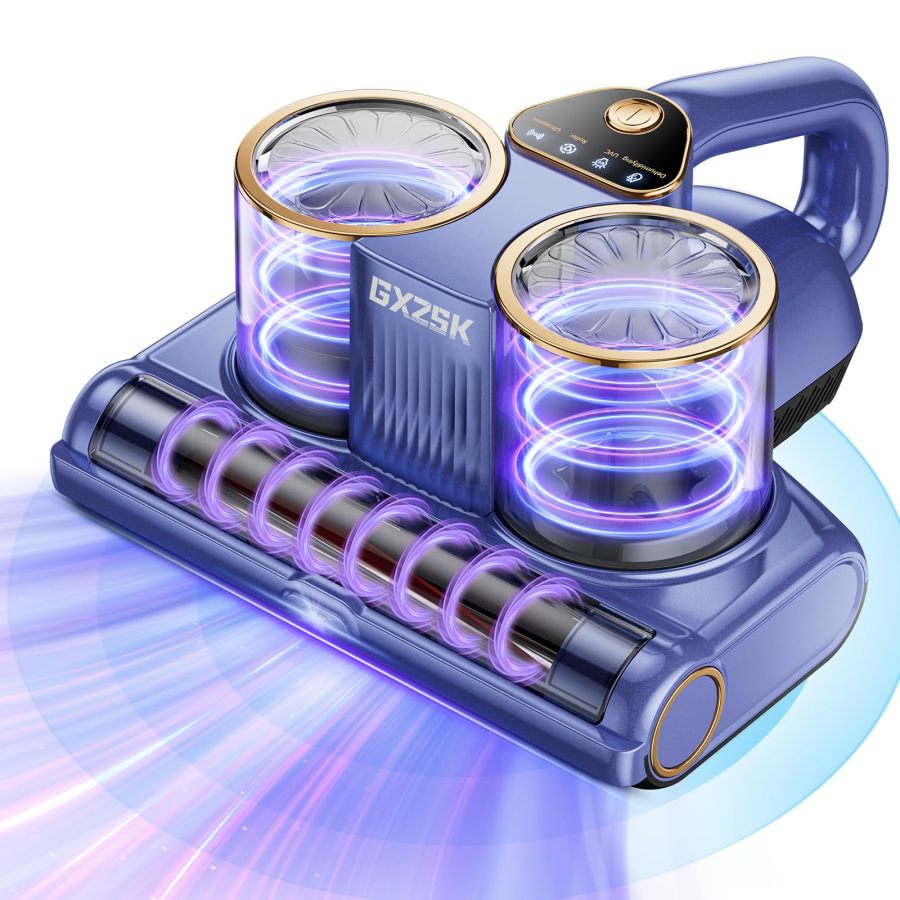
A mattress vacuum cleaner is a specialized handheld vacuum designed for deep cleaning of fabric furniture such as mattresses, sofas, and carpets. It typically integrates multiple functions including powerful suction, high-frequency beating, UV-C sterilization, high-temperature drying/dehumidification, and ultrasonic mite removal. Its aim is to effectively remove deep-seated dust, dander, dust mites, and allergens, providing users with a cleaner, healthier sleep and home environment. This product category serves as a significant supplement to traditional vacuums in the realm of specialized health-oriented cleaning. The following table illustrates the key characteristics of consumer behavior in this category.
| Dimension | Segment | Description |
|---|---|---|
| Need Driver Type | Planned Purchase / Emergency-driven Purchase | Purchases are typically driven by long-term planning for household health (e.g., families with allergies) or triggered by specific issues like allergy symptoms or pet hair. Some purchases are also made for Gift-giving. |
| Purchase Frequency | Low Frequency | As durable cleaning appliances, these are typically one-time purchases with long repurchase cycles, unless the product breaks or a significant functional upgrade is desired. |
| Decision Complexity | Medium | Consumers compare comprehensive factors such as suction power, sterilization technology, corded/cordless design, noise level, price, and brand, but do not engage in overly deep, technical research. |
| Price Sensitivity | Medium | Users are willing to pay a reasonable premium for products that effectively address health concerns and provide peace of mind, but they still weigh value for money and have limited acceptance for excessive price premiums. |
| Emotional Dependency | Medium to High | The product is directly linked to user health (allergies, respiratory issues) and sleep quality, providing a sense of deep cleanliness and peace of mind ('out of sight, out of mind'), resulting in relatively high emotional value. |
II. User Personas & Usage Scenarios
2.1 Families with Allergies / Health-Conscious Individuals
🎯 Highly sensitive to allergens like dust mites and pet hair. Households may include children, the elderly, or allergy sufferers, with extreme focus on sleep hygiene and home environment health.
| Typical Usage Scenarios | Core Pain Points | Primary Purchase Drivers |
|---|---|---|
|
|
|
2.2 Pet Owners / Home Cleanliness Enthusiasts
🎯 Households with pets where fabric furniture like mattresses and sofas easily accumulate large amounts of pet hair, dander, and odors, requiring efficient, convenient cleaning tools.
| Typical Usage Scenarios | Core Pain Points | Primary Purchase Drivers |
|---|---|---|
|
|
|
III. User Needs Hierarchy (KANO Model)
3.1 Basic Needs (Must-Haves)
- Powerful Suction: Ability to effectively remove surface and shallow-layer dust, dander, and fine debris from mattresses, sofas, etc. This is the core function of a vacuum.
- Compatibility with Soft Surfaces: Product design must be compatible with fabric materials like mattresses, sofas, and carpets, without damaging the fabric, ensuring broad applicability.
- Easy Cleaning and Maintenance: Dust cups and filters should be easily detachable, washable, and re-installable, reducing daily maintenance difficulty and extending product lifespan.
- UV Light Safety Mechanism: UV-C lights must have safety features like gravity sensors to prevent accidental human exposure, ensuring safe use.
3.2 Performance Needs (Linear Satisfiers)
- High-Frequency Beating Function: Effectively dislodges deeply embedded dust mites, bacteria, and stubborn dirt from fabrics through physical beating, enhancing cleaning thoroughness.
- UV-C Sterilization Function: Utilizes ultraviolet light to sterilize fabric surfaces, reducing bacteria and mite counts, providing health assurance.
- Efficient HEPA Filtration: Equipped with HEPA filters to effectively capture 99.9% of fine particles and allergens, preventing secondary pollution and expelling clean air.
- Lightweight Design: Product weight is moderate, allowing for comfortable prolonged handheld operation and reducing arm fatigue during cleaning.
- Long Power Cord / Cordless Runtime: Corded products should have sufficiently long cords for large-area coverage, while cordless products need reliable battery life for a single cleaning task.
3.3 Excitement Needs (Delighters)
- High-Temperature Drying & Mite Elimination: Provides hot air above 140°F (60°C) to further disrupt mite habitats, dry fabrics, remove dampness and odors, enhancing comfort.
- Smart Dust Sensing & Display: Real-time LED indicators or screens display dust/allergen concentration in the cleaning area, allowing users to intuitively perceive cleaning effectiveness and feel in control.
- Multi-Functional Specialized Brush Heads: Provides specialized interchangeable brush heads for different types of dirt (e.g., pet hair, fine dust) or fabric materials, enhancing cleaning professionalism.
- Low-Noise Operation: Maintains relatively low operating noise even in high-suction modes, not disturbing users or family rest, improving comfort.
- Aromatherapy / Negative Ion Function: Releases pleasant scents or negative ions to purify air during cleaning, enhancing sensory experience, eliminating odors, and improving air quality.
3.4 Unmet Needs & Opportunities
-
Cordless Product Runtime & Fast Charging: Most cordless products have insufficient battery life to complete large-area cleaning tasks, and charging times are generally long (e.g., several hours), severely impacting cleaning efficiency and usage continuity.
User Reviews (VOC) battery lasts 20-30 min max, barely enough to clean one bed or sofa. Then you need to wait for another 2-3h to fully charge the battery. Very impractical to clean the whole house in one attempt. // doesn't stay charged long and takes a full day to charge.
-
Noise Level Interference: Despite some products claiming to be quiet, most high-power vacuums produce noticeable noise during operation (75-80dB), causing user discomfort in quiet home environments like bedrooms.
User Reviews (VOC) It can be loud but overall it vacuums very well. // The fans are loud! Can’t hear a word anyone is saying (or cars coming while on a walk, etc.) especially if the hat is flipped and the fans are in the back, right next to your ears.
-
UV/Heat/Ultrasound Function Perception & Reliability: Users generally cannot intuitively perceive the actual mite/germ removal effectiveness of UV-C, ultrasonic, and hot air functions. Some products even have malfunctioning UV lights or ineffective heating, reducing trust in core health claims.
User Reviews (VOC) It does not get hot at all, I feel zero warmth, and the UV light does not stay on. // UV-C light only activates when placed horizontally and immediately deactivates when tilted or lifted // No idea, really, other than it's showing some dust and mild debris in the canister.
-
Dust Cup Capacity & Ease of Emptying: Most products have relatively small dust cup capacities (0.5-0.6L). When deep cleaning dusty areas like mattresses, users need to frequently empty the cup, interrupting the cleaning flow and adding operational burden.
User Reviews (VOC) The catch bin is small so you are not going to vacuum a hotel with these. // The dust container is small and needs to be emptied frequently, which gets a bit annoying.
-
Limitations in Pet Hair Cleaning Power: Some products explicitly state they are not suitable for absorbing fine pet hair, or user feedback indicates poor efficiency when dealing with large amounts of pet hair, requiring multiple passes, failing to fully meet pet owner needs.
User Reviews (VOC) NOTE: Not suitable to absorb pet hair // I think it's designed to work best on dust, skin cells, etc because sometimes it leaves hair behind or takes several passes to grab it.
IV. User Decision Drivers
4.1 Key Decision Factors
- Actual Cleaning Performance: Whether the vacuum effectively removes deep-seated dust, mites, dander, and pet hair from mattresses and provides a visible sense of cleanliness is the user's primary consideration.
- Mite & Germ Removal Capability: Whether technologies like UV-C, heat, or ultrasound truly provide deep sterilization/mite removal and deliver health assurance and psychological peace of mind.
- Ease of Use & Operational Convenience: Whether the product is lightweight, comfortable to hold, easy to operate, and whether the dust cup and filters are easy to detach and clean, directly impacting user frequency and experience.
- Product Reliability & Durability: Whether core functions (e.g., UV light, motor) are stable, whether the product is durable, and the quality of after-sales service form the foundation of long-term user trust.
4.2 Secondary Decision Factors
- Noise Level: The amount of noise generated during cleaning affects home environment comfort, especially when used in quiet areas like bedrooms.
- Battery Runtime / Power Cord Length: For cordless products, whether battery life meets a single cleaning task; for corded products, whether the cord is long enough, determining cleaning range and freedom.
- Filtration System Efficiency: HEPA filter grade, dual dust cup design, etc., and their ability to effectively trap fine particles, prevent secondary pollution, and reduce clogging.
- Additional Smart Features: Whether smart dust sensing, LED displays, aromatherapy, etc., genuinely enhance user experience or are merely marketing gimmicks.
- Price & Brand: Whether the product price is reasonable, and whether the brand reputation and after-sales service are trustworthy.
V. Selling Points & Competitive Landscape
5.1 Selling Point Analysis
5.1.1 Standard Features (Points of Parity)
- Powerful Suction & High-Frequency Beating: Nearly all products emphasize around 16kPa suction power and 30,000-48,000 RPM high-frequency beating as the core function for deep cleaning.
- UV-C Sterilization: Commonly claim that 253.7nm wavelength UV-C lights remove 99.9% of invisible harmful substances, with gravity-sensing safety switches.
- HEPA Filtration System: Most products are equipped with HEPA filters, emphasizing capture of 0.3-micron particles to prevent secondary pollution.
- High-Temperature Hot Air Function: Many products offer 140-149°F (60-65°C) hot air for dehumidification, disrupting mite habitats, and keeping fabrics dry.
- Dual Dust Cup Design: Widespread adoption of dual dust cups or dual-chamber designs to separate dust and hair, preventing filter clogging and maintaining suction.
5.1.2 Key Differentiators
- Smart Dust Sensing & LED Display: Some products (e.g., Trucozie, JIGOO) use LED color changes (blue/orange/red) to display real-time dust/allergen concentration in the cleaning area, providing visual feedback.
- Cordless Portable Design: A few products (e.g., XIAOLANG, PATO, Amzany) focus on being cordless, emphasizing freedom of movement and convenience, typically offering 20-60 minutes of runtime.
- Multi-Functional Brush Heads & Accessories: Some products (e.g., IRONSPIRE) offer interchangeable soft/hard brush heads or integrate aromatherapy pads, negative ion generators, etc.
- Ultrasonic-Assisted Mite Removal: Several products add 40,000Hz ultrasonic technology on top of UV-C, claiming to further disrupt harmful substance structures, but user perception is low.
5.1.3 Unique Selling Propositions (USPs)
- Ambient Humidity Monitoring: The Amzany product claims to have ambient humidity monitoring, providing comfort range suggestions, but this is not mentioned in user feedback.
- 10-Year Durability Promise: The JPHYLL product explicitly promises 10-year durability and emphasizes low maintenance costs, but lacks long-term user validation.
5.2 Competitive Landscape
5.2.1 Market Maturity
The mattress vacuum cleaner category is in a rapid growth phase. Market products have reached basic consensus on core functions like suction, beating, and UV sterilization, leading to high homogenization. Most brands compete by stacking functional specs (e.g., heat, ultrasound) and promoting health benefits. However, user perception of these additional functions' actual effectiveness varies. The market still needs to mature further in terms of user experience and functional execution.
5.2.2 Innovation Trends
Current innovation trends are mainly reflected in smart features (e.g., dust sensing, LED displays), cordless design (improving portability), and customized solutions for specific user groups (e.g., pet owners). Future innovation may focus on improving battery life and fast-charging technology, developing more efficient and perceptible mite/germ removal technologies, and achieving quieter, lighter designs to solve core user pain points and enhance overall user experience.
VI. Marketing Claims vs. Reality Check
The table below analyzes the gap between common marketing claims and actual user experiences in this category:
| Dimension | Marketing Claim | User Reality | Verdict |
|---|---|---|---|
| UV/Heat/Ultrasound Effectiveness | 99.9% efficient removal of invisible harmful substances, providing deep sterilization and mite elimination. | Users generally cannot intuitively perceive the actual mite/germ removal effectiveness of these technologies. Some products even have malfunctioning UV lights or ineffective heating. One user commented: 'It does not get hot at all, I feel zero warmth, and the UV light does not stay on.' | Sellers have overstated the absolute efficacy of invisible technologies without providing perceptible verification, reducing user trust in core health claims. Some products have functional defects, constituting misleading information for consumers. |
| Cordless Product Battery Life & Charging | Cordless design, long-lasting battery, worry-free cleaning. | User feedback on multiple cordless products indicates short battery life (e.g., 20-30 minutes), insufficient for large-area cleaning, and charging times lasting several hours or even 'a full day,' severely impacting usage continuity. | Battery life is overstated, failing to account for the gap between current battery energy density and high-power usage scenarios. This creates unrealistically high expectations for cordless cleaning convenience, leading to a disappointing user experience. |
| Noise Level | Quiet airflow noise reduction technology, operates quietly without disturbance. | Multiple products have noise levels around 75-80dB. User feedback describes them as 'loud' and 'noisy,' contradicting 'quiet' claims. Noise interference is particularly noticeable in quiet environments like bedrooms. | Contradicts the physical reality of noise from small, high-power motors. Over-marketing the 'quiet' concept leads to a mismatch between user experience and expectations, making noise a common negative feedback point. |
| Pet Hair Cleaning Capability | Powerful suction, easily removes pet hair. | Some product listings explicitly state 'Not suitable to absorb pet hair,' yet sellers still claim or imply effective pet hair removal. User feedback shows that when dealing with large amounts of pet hair, multiple passes are needed or results are suboptimal. | Product design has limitations, yet marketing obscures or exaggerates pet hair cleaning capabilities, misleading pet-owning households in their purchase decisions and creating cleaning blind spots and user disappointment. |
| Smart Dust Sensor Accuracy | Smart sensors detect allergens in real-time, visualize cleaning progress. | Users question the accuracy of smart dust sensors, noting they still show 'dirty' after repeated cleaning, perceiving them more as 'performance' than genuine feedback. | Smart feature design may be superficial, failing to provide stable, reliable cleaning feedback. This reduces user trust in the product's intelligence, undermining the perceived value of visualized cleaning. |
Key Takeaway: The market exhibits widespread parameter inflation and a gap between functional claims and perceived reality, especially regarding cordless product battery life, noise control, and the effectiveness of invisible technologies like UV/heat/ultrasound. A significant disconnect exists between marketing promises and actual experience.
VII. Supply-Demand Misalignment Analysis
The table below highlights mismatches between seller focus and buyer priorities:
| Dimension | Seller Behavior | User Focus | Verdict |
|---|---|---|---|
| Cordless Product Battery Life & Charging Efficiency | Generally emphasize cordless cleaning convenience but lack effective solutions or clear communication regarding the core pain points of short runtime and slow charging. This is not a primary R&D focus. | Users frequently complain about 'battery doesn't last' and 'long charging time,' limiting the practical use cases and cleaning efficiency of cordless products. | The industry has failed to effectively overcome the physical bottlenecks of energy density and charging speed in cordless products, causing users to pay a high experiential price for convenience, which is a core obstacle to category development. |
| Noise Control | A few claim 'quiet,' but most products avoid the topic, failing to position it as a key product optimization area or differentiating feature. | Users commonly report noticeable operational noise, affecting home comfort and causing disturbance, especially in quiet areas like bedrooms. | Sellers have not captured users' deep-seated need for a quiet home environment. Noise is a widespread but inadequately addressed pain point, limiting the product's application potential in more scenarios. |
| Perceptible Effectiveness of UV/Heat/Ultrasound Functions | Commonly promote technologies like UV-C, heat, and ultrasound as core selling points with high frequency, using absolute figures like 99.9%, and piling on 'health' concepts. | Users generally cannot intuitively perceive the actual effectiveness of these invisible technologies, and some functions even fail, reducing trust in core health claims and making them seem more like 'placebos.' | Sellers over-stack technical concepts without sufficiently considering user needs for perceiving and verifying the effects of these technologies. This creates a disconnect between marketing and actual experience, and resource investment does not translate into effective value. |
| Aromatherapy / Negative Ion Functions | Some products integrate aromatherapy pads or negative ion generators, marketing them as additional features to enhance cleaning experience. | Users reject aromatherapy due to personal scent preferences, sensitivities, or ingredient concerns, and have weak perception of negative ion effects, preventing these added values from gaining broad market acceptance. | Sellers lack deep insight into user personalization and health concerns, blindly adding sensory features. This results in added value that fails to gain broad market acceptance and can even become a barrier in user decision-making. |
Key Takeaway: Sellers commonly over-market technical concepts, creating a disconnect with real user experience. Significant supply gaps exist in cordless battery life, noise control, and perceptibility of invisible functions. Conversely, some additional features represent oversupply.
VIII. Strategic Opportunities & Recommendations
8.1 Enhance Cordless Product Runtime & Fast Charging
8.1.1 Target Audience & Pain Points
⚡️ Pain Points Addressed: Short cordless product battery life and slow charging.
8.1.2 Action Plan
Adopt higher energy-density lithium batteries (e.g., 4000mAh+), integrate PD/QC fast-charging protocols to achieve 80% charge in 30-60 minutes. Optimize power management systems for more accurate battery level display and low-battery alerts.
| Tech Complexity | High |
| Cost Impact | High Impact |
| Trade-off Warning | Using higher energy-density batteries may slightly increase product weight and volume, but fast-charging technology can significantly improve user experience and alleviate usage anxiety. |
| Price Band | Only viable above $89.99 |
8.1.3 Marketing Strategy
Emphasize 'Worry-Free Runtime, Rapid Recharge, True Cordless Freedom.' Use comparison videos to showcase actual usage time and charging speed, highlighting genuine efficiency and convenience of cordless cleaning, alleviating user battery anxiety.
8.2 Noise Reduction & Structural Optimization for Enhanced Comfort
8.2.1 Target Audience & Pain Points
⚡️ Pain Points Addressed: Excessive noise, bulky design, fatigue during prolonged use.
8.2.2 Action Plan
Adopt low-noise brushless motors, optimize airflow design, add internal sound-absorbing materials. Redesign handle and weight distribution for better ergonomics, reducing arm fatigue during prolonged handheld cleaning.
| Tech Complexity | Medium |
| Cost Impact | Medium Impact |
| Trade-off Warning | Using quieter motors and sound-absorbing materials may slightly increase product cost and volume but can significantly improve user experience and product competitiveness. |
| Price Band | Only viable above $69.99 |
8.2.3 Marketing Strategy
Highlight 'Enjoy Cleanliness in Peace, Lightweight and Effortless.' Provide authoritative noise decibel test reports comparing with competitors. Emphasize 'Ergonomic Design, Making Cleaning a Pleasure,' reinforcing perception through user experience videos.
8.3 Strengthen 'Perceptible Effectiveness' & Authenticity of UV/Heat/Beating Functions
8.3.1 Target Audience & Pain Points
⚡️ Pain Points Addressed: UV/heat/ultrasound effects are not perceptible or fail, leading to low user trust.
8.3.2 Action Plan
Ensure UV lights work stably, add UV operation indicator (e.g., breathing light effect). If heating function underperforms, adjust marketing claims or integrate more effective heating modules. Provide third-party lab mite/germ removal reports and make them visual (e.g., QR code in listing).
| Tech Complexity | Low |
| Cost Impact | Low Impact |
| Trade-off Warning | Primarily achieved through marketing strategy adjustments and user education. Technically, can add UV work indicator lights or optimize heating modules. |
| Price Band | No Price Band Jump |
8.3.3 Marketing Strategy
Emphasize 'Seeing is Believing, Deep Cleaning with Evidence.' Use short videos to show dust sensors in action, UV sterilization process (simulated animation). Use data and real user testimonials to substantiate effectiveness, building a trustworthy, reliable brand image.
8.4 Specialized Solutions for Pet-Owning Households
8.4.1 Target Audience & Pain Points
⚡️ Pain Points Addressed: Limited pet hair cleaning efficiency, odor issues.
8.4.2 Action Plan
Develop specialized brush heads for anti-tangle, efficient pet hair pickup (e.g., silicone bristles + V-bristle combo) with magnetic quick-release design. Integrate a negative ion generator or replaceable deodorizing filter to effectively neutralize pet odors.
| Tech Complexity | Medium |
| Cost Impact | Medium Impact |
| Trade-off Warning | Developing specialized brush heads may slightly increase weight/volume but significantly improves cleaning in specific scenarios. Integrating a negative ion module increases cost but effectively addresses odor pain points. |
| Price Band | Only viable above $79.99 |
8.4.3 Marketing Strategy
Highlight 'Designed for Pet-Loving Families, Say Goodbye to Hair and Odor Worries.' Use before-and-after visuals to emphasize superior pet hair removal. Appeal to users with the emotional value of 'Fresh Air, Happy Coexistence for People and Pets.'