Amazon US Market Analysis: Baby Snack Cups Category
📊 Executive Summary
📈 Market Trends
Portability and safety are the foundation; user demands for detailed experience are escalating. The baby snack cup market is fiercely competitive with severe homogenization of basic functions. While pursuing ultimate portability and food-grade safety, consumers are increasingly focusing on the detailed experience of products in actual use, such as flap comfort, thorough cleaning, and truly effective spill and dust prevention, driving the market towards refinement and humanized design.
⚡ Major Pain Points
Gap between spill-proof promises and reality; cleaning and hygiene challenges are prominent. Current products generally suffer from spill-proof performance falling short of expectations, silicone flaps being unfriendly to baby hands, or easily causing snack spills. Simultaneously, silicone material easily absorbs odors and dust, complex structures have cleaning dead spots, and dust-proof lids lack sufficient sealing, all severely impacting user experience and trust in product hygiene.
💡 Selection Opportunities
Deep dive into user pain points, establish differentiation with 'real experience.' Market opportunities lie in solving consumers' trust crisis regarding product real performance. For example, developing an 'Adaptive Flap Snack Cup' to balance spill-proofing and easy access, launching a 'Long-Lasting Stain & Odor Resistant' premium silicone series to address cleaning difficulties, designing a 'Fully Sealed Dust-Proof Travel Lid' to elevate outdoor hygiene standards, and optimizing handle ergonomics to improve baby grip comfort. Achieving breakthroughs in these details can win user word-of-mouth and market share.
I. Analysis Overview
1.1 Introduction & Report Scope
This report analyzes the 'Cups' category (baby snack cups) in the US Amazon market, focusing on target user personas, core needs, decision drivers, market communication, and potential opportunities.
1.2 Category Snapshot
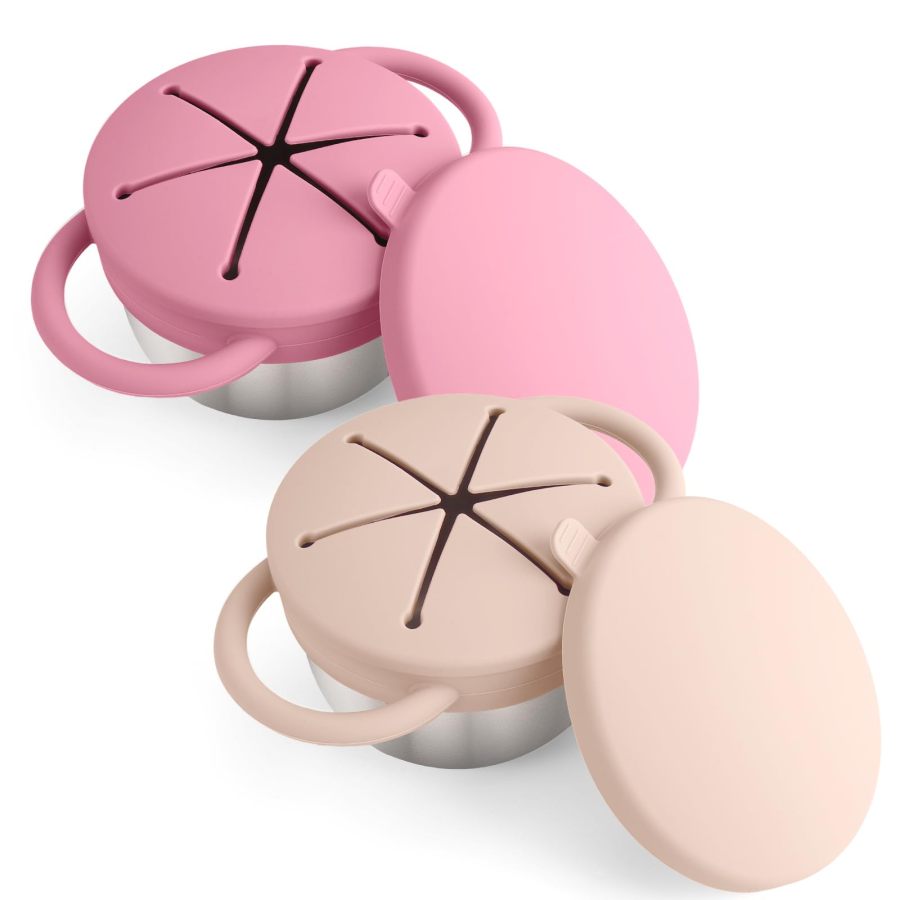
A baby snack cup is a portable snack container specifically designed for infants and toddlers. Its core function is to prevent snack spillage through a soft silicone flap while allowing babies to grab snacks independently. These products typically use food-grade safe materials, feature easy-grip handles and dust-proof lids, and are designed to provide worry-free snack time for babies at home, on the go, or in strollers, while helping parents maintain a clean environment. The following table illustrates the key characteristics of consumer behavior in this category.
| Dimension | Segment | Description |
|---|---|---|
| Need Driver Type | Planned Purchase / Emergency-driven Purchase | Parents plan ahead to prepare snacks for their babies, seeking convenient and hygienic feeding solutions while hoping to cultivate their baby's independent eating skills; they also often respond to babies' sudden snack demands. |
| Purchase Frequency | Low Frequency / Medium Frequency | As a durable baby product, the purchase frequency is low, but it may be repurchased due to wear and tear, functional updates, or as a gift. |
| Decision Complexity | Medium | Users consider multiple factors such as material safety, spill-proof effectiveness, ease of cleaning, baby acceptance, portability, and price, making a comparative decision. |
| Price Sensitivity | Medium | Price is a consideration, but parents are more willing to pay a reasonable premium for safe, reliable, high-quality products that provide peace of mind. |
| Emotional Dependency | Medium to High | The product relates to the baby's health, independence, and the parents' parenting experience, carrying emotional values of safety, convenience, and joy. |
II. User Personas & Usage Scenarios
2.1 Busy First-Time Parents
🎯 Young parents experiencing parenthood for the first time, leading a fast-paced life, eager for hassle-free feeding tools to tackle various parenting challenges.
| Typical Usage Scenarios | Core Pain Points | Primary Purchase Drivers |
|---|---|---|
|
|
|
2.2 New-Generation Parents Focused on Quality and Design
🎯 Pursue high-quality, aesthetically pleasing, and durable parenting products, pay attention to details and user experience, and are willing to pay for better design and functionality.
| Typical Usage Scenarios | Core Pain Points | Primary Purchase Drivers |
|---|---|---|
|
|
|
III. User Needs Hierarchy (KANO Model)
3.1 Basic Needs (Must-Haves)
- Food-Grade Safe Materials: The product must use 100% food-grade silicone, BPA-Free plastic, 304 stainless steel, or other safe, non-toxic materials to ensure the baby's health when in contact with food.
- Effective Spill-Proof Function: The snack cup's soft flap design effectively prevents snacks from spilling when the baby shakes, tilts, or drops it, reducing parents' cleaning burden.
- Easy-to-Grip Handle: The cup body or handle size is suitable for the baby's small hands to grip, facilitating independent use and preventing it from being easily dropped.
- Easy for Daily Cleaning: The product has a simple structure, with detachable parts, supporting dishwasher cleaning or hand washing with warm water, making it easy for parents to clean thoroughly.
3.2 Performance Needs (Linear Satisfiers)
- Soft and Comfortable Snack Opening: The flap opening should be soft enough and elastic, making it easy for the baby's small hand to reach in and grab snacks without scratching the baby's skin.
- Compatible with Car/Stroller Cup Holders: The cup body size and shape are compatible with most car seat, stroller, or high chair cup holders, facilitating portability and use on the go.
- Drop-Resistant and Durable: The material is sturdy, can withstand the baby's daily drops and bumps, is not prone to cracking or deformation, extending its service life.
- Effective Dust-Proof Lid Design: Equipped with a tightly fitting dust-proof lid that effectively blocks external pollutants like dust and sand when not in use, keeping snacks clean.
- Moderate Capacity and Size: The capacity should meet the baby's single serving snack amount; the cup size should suit the baby's hand movements while being portable and space-saving.
3.3 Excitement Needs (Delighters)
- Collapsible/Retractable Design: The silicone cup body can be folded or retracted, further saving storage space and making it easy to fit into a diaper bag or suitcase.
- Dual-Lid Design Enhances Functionality: In addition to the spill-proof flap, it also provides a fully sealed travel lid for storing moist snacks or long-distance carrying, preventing moisture ingress or leakage.
- Unique Shapes and Cartoon Patterns: Using animal shapes (like elephants, dinosaurs, mushrooms) or vibrant color designs increases fun, attracts the baby's attention, and enhances the enjoyment of use.
- Weighted or Non-Slip Base Design: The cup base is equipped with a weighted block or suction cup, increasing stability and preventing the baby from easily knocking it over on a table.
- Includes Toy Strap/Clip: Provides a strap or clip to connect to the stroller, high chair, or car seat, preventing the snack cup from accidentally falling or getting lost.
3.4 Unmet Needs & Opportunities
- Poor Balance Between Flap Comfort and Leak Prevention: For some baby snack cups, the silicone flap is either too hard, making it difficult for the baby's small hand to reach in, or too soft, allowing small snack particles to leak out when tilted, making it hard to achieve the perfect balance between easy access and leak-proofing.
- Cleaning Dead Spots and Lingering Odors: Although many products claim to be easy to clean, the complex flap structure or cup body design may have cleaning dead spots, easily trapping food residue and breeding bacteria. Additionally, silicone material tends to absorb food odors over time, causing unpleasant smells.
- Insufficient Dust-Proof Lid Seal and Ease of Use: Some products have a dust-proof lid, but its sealing is insufficient to completely isolate dust or prevent moisture ingress. Also, the lid may be inconvenient to open and close, affecting hygiene and convenience when carrying it out.
- Handle Design Not Suitable for All Small Hands: The handle design of some snack cups may not be comfortable for babies of different ages or hand sizes. For example, it might be too large for a 6-9 month old, or the shape design is not conducive to easy gripping, hindering the development of their independence.
IV. User Decision Drivers
4.1 Key Decision Factors
- Material Safety: Whether the product uses safe materials like BPA-free, food-grade silicone, or 304 stainless steel is the primary consideration for parents when choosing a snack cup for their baby, directly related to the baby's health.
- Spill-Proof/Leak Prevention Effectiveness: Whether the snack cup can effectively prevent snack spillage, reducing cleaning burden, is the core driver for parents purchasing this category, directly impacting the user experience.
- Baby's Snack Access Convenience: Whether the flap opening is soft and easy for the baby to reach in and grab snacks without hurting their hand directly affects the baby's eating experience and independence development.
- Cleaning Convenience: Whether the product is easy to disassemble, clean, and can thoroughly remove food residue and odors is crucial for parents, affecting daily usage frequency.
4.2 Secondary Decision Factors
- Portability and Compatibility: Whether the product is lightweight, easy to carry, and compatible with mainstream stroller and car seat cup holders is an important consideration for outings.
- Product Durability: Whether the material is sturdy and drop-resistant, and whether it becomes loose or damaged after long-term use, determines the product's value for money and lifespan.
- Capacity and Size: Whether the capacity meets the baby's snack needs, whether the cup size is suitable for the baby to grip, and whether it is convenient to store.
- Appearance Design: Whether the product's color, shape, and patterns attract the baby and align with the parents' aesthetics can enhance purchase intent and enjoyment of use.
- Brand Reputation and Price: Trust in well-known brands, reviews from other users, and the product's price positioning become auxiliary decision factors after core needs are met.
V. Selling Points & Competitive Landscape
5.1 Selling Point Analysis
5.1.1 Standard Features (Points of Parity)
- Food-Grade Silicone/BPA-Free: Commonly emphasizes the use of safe, non-toxic food-grade silicone or BPA-free materials to protect the baby's health.
- Spill-Proof/Leak Prevention Design: Preventing snack spillage through a soft silicone flap is the most basic and core functional claim of this category.
- Easy-Grip Handle: Dual handles or easy-grip handles designed for small hands encourage the baby to eat independently.
- Easy to Clean/Dishwasher Safe: Most products highlight being detachable, easy to rinse, and dishwasher-safe, making maintenance convenient for parents.
- Portable Design: Emphasizes that the product is lightweight and suitable for travel, car rides, or stroller use.
5.1.2 Key Differentiators
- Dual-Lid/Multi-Function Lid Design: In addition to the spill-proof flap, it provides an extra sealed lid (dust-proof or travel lid) to expand usage scenarios and hygiene protection.
- Material Combination Innovation: For example, using a stainless steel cup body combined with a silicone flap and lid to enhance durability, freshness, or design sense.
- Collapsible/Space-Saving: Some silicone snack cups feature a collapsible design for easy storage and portability, further saving space.
- Unique Shapes and Colors: Using animal shapes (like elephants, mushrooms) or diverse Morandi color palettes and contrasting color designs to increase product appeal.
- Clear Age Range Applicability: Differentiated marketing for babies 6-12 months or 12+ months, emphasizing its adaptability to different growth stages.
5.1.3 Unique Selling Propositions (USPs)
- Includes Toy Strap: Individual products (like Jkevow) include a toy strap to attach the snack cup to the stroller or high chair, preventing it from falling.
- Weighted Anti-Tip Base: Ubbi Tweat product uses an interactive weighted base that allows it to tilt and wobble but not easily tip over, reducing snack spills on surfaces.
- "3-in-1" Multi-Use Design: Stainless steel base products like Mity rain and Elk and Friends market themselves as a snack cup, a lidded storage cup, and an open drinking cup.
- Silicone Odor Absorption Notice: Dilovely product explicitly notes that silicone absorbs odors and recommends washing with unscented, natural detergents, showing attention to detail.
5.2 Competitive Landscape
5.2.1 Market Maturity
The baby snack cup market has entered a mature competition stage. Basic product functions like spill-proofing, easy grip, food-grade materials, and easy cleaning have become standard. Market homogenization is prominent. Most brands seek differentiation through color, shape, micro-innovation design (like dual lids, collapsible), and price competition. Although there are numerous products, consumers have high expectations for the core user experience (like flap comfort, thorough cleaning), indicating there are still opportunities to deeply explore user pain points and improve product quality.
5.2.2 Innovation Trends
Current category innovation trends are mainly reflected in material fusion (combining stainless steel with silicone to enhance durability and texture), multi-functional design (like dual lids, 3-in-1 uses) to adapt to more scenarios, and the enhancement of humanized details (like toy straps, weighted anti-tip bases) to solve parents' practical frustrations. Furthermore, deep optimization of product safety and cleaning thoroughness, especially solving silicone odor and cleaning dead spot issues, will become key for future products to stand out. Design increasingly emphasizes integration with modern home aesthetics and parenting philosophies, pursuing a balance between practicality and aesthetics.
VI. Marketing Claims vs. Reality Check
The table below analyzes the gap between common marketing claims and actual user experiences in this category:
| Dimension | Marketing Claim | User Reality | Verdict |
|---|---|---|---|
| Spill-Proof Function | Claims like 'Spill-Proof,' 'No Spill,' stating snacks will never spill out, regardless of baby shaking or tilting. | User feedback indicates, especially when the cup contains many crumbs or small-particle snacks, the silicone flap may still not achieve 100% leak-proof. Snacks can still leak out during vigorous shaking or inversion. | Sellers over-market 'absolute spill-proofing,' failing to adequately inform consumers of physical limitations, leading to inflated user expectations and a gap between actual experience and claims. |
| Material Safety and Cleaning | Claims like '100% Food-Grade Silicone,' 'Easy to Clean,' ensuring hygiene and no lingering odors. | Silicone material easily absorbs food odors and dust/hair. Some products have one-piece or complex flap structures with cleaning dead spots, making thorough cleaning difficult. | Sellers emphasize material safety but ignore the inherent cleaning and odor challenges of silicone, failing to provide a complete hygiene solution, which affects user trust in the product's healthiness. |
| Travel Lid Seal and Convenience | Claims like 'Travel with a Lid,' 'Dust-Proof Lid,' ensuring clean and worry-free snacks on the go. | Multiple product reviews mention the lid is prone to coming loose, not securing firmly, or the seal is insufficient to effectively block dust or moisture, affecting hygiene and convenience when carrying it out. | The lid design lacks stability and actual sealing performance, failing to deliver on its promise as a 'travel companion' or 'dust protection,' impacting the user's out-of-home experience. |
Key Takeaway: The market exhibits a tendency for vague functional claims and exaggerated scenario-based experiences, especially regarding spill-proof effectiveness and cleaning convenience.
VII. Supply-Demand Misalignment Analysis
The table below highlights mismatches between seller focus and buyer priorities:
| Dimension | Seller Behavior | User Focus | Verdict |
|---|---|---|---|
| Flap Comfort and Spill-Proof Balance | Generally emphasizes 'spill-proof,' 'easy access,' but insufficient consideration is given to the flap's softness, opening size, and fine-tuning to match the hand size of babies of different months. | The baby has difficulty accessing snacks, their hand gets stuck; or snacks still leak out, leading to poor actual user experience. | Sellers pursue 'comprehensive' functional claims but fail to find the optimal balance between the flap's ease of access and spill-proofing, resulting in a compromised user experience that hinders the baby's independence development. |
| Cleaning Thoroughness and Odor Elimination | Generally emphasizes 'easy to clean,' 'dishwasher safe,' but rarely delves into silicone's odor-absorbing properties or cleaning dead spots in complex structures. | Silicone easily absorbs odors and hair; there are cleaning dead spots on the inner walls; cleaning is not thorough, raising hygiene concerns. | Sellers equate 'can be cleaned' with 'thoroughly clean,' overlooking the user's core demand for product hygiene and being odor-free, creating a trust crisis and usage frustration. |
| Practicality of Additional Features | Some products market collapsible designs or '3-in-1' multi-use designs to add selling points and differentiation, but fail to fully deliver on these promises. | Collapsible design leads to poor lid stability; '3-in-1' functions, like the stainless steel cup body not being microwave-safe, have limited practical application or do not address core pain points. | Sellers pile on features for non-core needs, investing BOM costs without providing significant real value, potentially even sacrificing the experience of core functions. |
Key Takeaway: While emphasizing functional selling points, sellers have not sufficiently addressed users' 'pain point details' and 'expectation gaps' in actual use, especially regarding flap comfort and cleaning thoroughness, where there is a supply gap.
VIII. Strategic Opportunities & Recommendations
8.1 Adaptive Flap Snack Cup
8.1.1 Target Audience & Pain Points
⚡️ Pain Points Addressed: Poor balance between flap comfort and leak prevention.
8.1.2 Action Plan
Develop a flap using multi-layer or gradient-hardness silicone. The inner part (closer to snacks) is softer for easy baby hand access, while the outer part is more elastic to ensure spill-proofing. Design microstructures on the flap edge to enlarge the inner opening when pressed externally and automatically tighten when released.
| Tech Complexity | Medium |
| Cost Impact | Medium Impact |
| Trade-off Warning | No apparent physical side effects; primarily optimizes structure and materials. |
| Price Band | Only viable above $19.99 (for a 2-pack) |
8.1.3 Marketing Strategy
Emphasize the 'Smart Spill-Proof Flap' - babies grab snacks comfortably without hurting their hands, moms are completely at ease. Use videos to showcase the baby comfortably accessing snacks and the spill-proof effect, highlighting 'the best solution balancing baby comfort and spill-proof performance.'
8.2 Premium Silicone Series with Long-Lasting Stain & Odor Resistance
8.2.1 Target Audience & Pain Points
⚡️ Pain Points Addressed: Cleaning dead spots and lingering odors.
8.2.2 Action Plan
Select premium food-grade silicone materials with enhanced stain and odor resistance, or incorporate non-toxic deodorizing processes during manufacturing. Optimize product structure to reduce cleaning dead spots, ensuring the flap can be completely detached and cleaned easily. Consider providing a matching mini cleaning brush.
| Tech Complexity | Medium |
| Cost Impact | Medium Impact |
| Trade-off Warning | No apparent physical side effects; primarily optimizes material properties and structure. |
| Price Band | Only viable above $16.99 (for a 2-pack) |
8.2.3 Marketing Strategy
Highlight the selling point of 'Pure Clean, Odor-Free Peace of Mind,' emphasizing long-lasting stain resistance and ease of thorough cleaning. Show comparative stain resistance test charts, detailed cleaning step diagrams, and the value of the included cleaning brush.
8.3 Fully Sealed Dust-Proof Travel Lid
8.3.1 Target Audience & Pain Points
⚡️ Pain Points Addressed: Insufficient dust-proof lid seal and ease of use.
8.3.2 Action Plan
Design a travel lid for the snack cup that truly achieves an airtight or even watertight seal, going beyond just 'dust-proof.' The lid should have a mechanism that is easy for parents to open/close but difficult for the baby to open accidentally.
| Tech Complexity | Low |
| Cost Impact | Low Impact |
| Trade-off Warning | Adding a sealing lid may slightly increase product thickness, but the user experience improvement is significant. |
| Price Band | Only viable above $12.99 (for a 2-pack) |
8.3.3 Marketing Strategy
Emphasize 'Worry-Free Outdoor Snacks! Fully Sealed Dust-Proof Design, Completely Isolates Dust and Bacteria,' highlighting its hygiene guarantee during travel and outdoor scenarios. Provide videos testing the lid's seal and showcase real-life photos of the product used outdoors.
8.4 Ergonomically Optimized Handle Design
8.4.1 Target Audience & Pain Points
⚡️ Pain Points Addressed: Handle design not suitable for all small hands.
8.4.2 Action Plan
Design a more ergonomic handle by studying the hand development characteristics and gripping habits of babies at different months. Consider offering multiple handle size options or designing an adjustable/removable handle. Use textured material for the handle to increase slip resistance and tactile feel.
| Tech Complexity | Low |
| Cost Impact | Low Impact |
| Trade-off Warning | No apparent physical side effects; primarily optimizes structure. |
| Price Band | Only viable above $11.99 (for a 2-pack) |
8.4.3 Marketing Strategy
Highlight 'Custom-Made for Small Hands! Ergonomic Handle, Comfortable Grip, Fosters Good Independent Eating Habits.' Show real photos of babies of different months using the product, emphasizing handle design details and slip resistance.