Amazon US Market Analysis: Floor Lamps Category
📊 Executive Summary
📈 Market Trends
Portability, Multi-functionality, and Smart Features are Dual Drivers. The floor lamp market is mature, with strong consumer demand for integrated functions, adjustable light, and convenient operation. Smart connectivity and personalized light effects are emerging growth points, but quality and stability remain key.
⚡ Major Pain Points
Structural Instability, Cheap Materials, and Poor Smart Experience are Major Flaws. Most products fail to deliver on stability and durability promises; cheap materials lower perceived quality. Smart features are 'in name only,' with unstable control, causing significant user experience gaps.
💡 Selection Opportunities
Deepen Quality Details and True Smart Integration. Build trust by improving product structural stability and material quality. Develop truly native smart floor lamps with smooth experiences. Simultaneously, strengthen eye-care functions and multi-scenario integrated designs to win the market with differentiation strategies.
I. Analysis Overview
1.1 Introduction & Report Scope
This report analyzes the 'Floor Lamps' category in the Amazon US market, focusing on target user personas, core needs, decision factors, market communication, and potential opportunities.
1.2 Category Snapshot
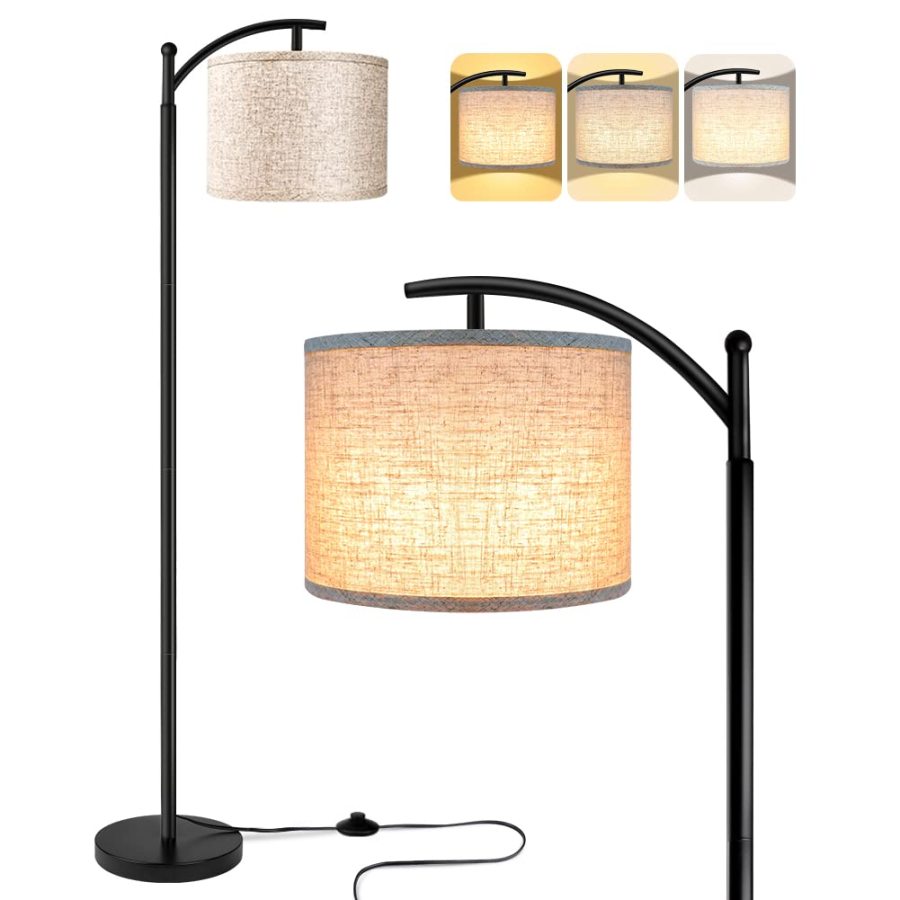
A floor lamp is a home lighting product that provides auxiliary illumination and atmosphere creation. This category features diverse product forms, ranging from pole lamps offering basic ambient lighting, to arc lamps that also serve reading tasks, and even composite lamps integrating storage or smart color-changing functions. They are typically used in indoor spaces such as living rooms, bedrooms, and studies, providing supplementary light for specific areas or the overall space. The following table illustrates the key characteristics of consumer behavior in this category.
| Dimension | Segment | Description |
|---|---|---|
| Need Driver Type | Planned Purchase/Emergency-driven Purchase | Consumer purchases are mostly driven by a desire to enhance home comfort or decor style (Planned Purchase), but can also be triggered by immediate lighting deficiencies (Emergency-driven Purchase). |
| Purchase Frequency | Low Frequency | As durable home goods, floor lamps have long replacement cycles and low repurchase frequency, primarily driven by home renovation or moving. |
| Decision Complexity | Medium | Consumers need to weigh factors such as function (dimming, color temperature), design style, price, and brand, resulting in moderate decision complexity. |
| Price Sensitivity | Medium | Price is an important consideration, but users are willing to pay a reasonable premium for multi-functionality, good design, or smart experiences, seeking high value for money. |
| Emotional Dependency | Medium | Floor lamps combine practicality and aesthetics; their emotional value in creating spatial ambiance carries significant weight in the decision-making process. |
II. User Personas & Usage Scenarios
2.1 Multi-functional Pragmatist
🎯 Seeks a floor lamp that can meet various lighting needs, is easy to operate, and has adjustable light, focusing on the product's practical utility and ease of use.
| Typical Usage Scenarios | Core Pain Points | Primary Purchase Drivers |
|---|---|---|
|
|
|
2.2 Home Aesthetics Enthusiast
🎯 Values the decorative aspect of a floor lamp, hoping it will perfectly blend with their home decor style, enhance spatial aesthetics, while providing basic lighting functionality.
| Typical Usage Scenarios | Core Pain Points | Primary Purchase Drivers |
|---|---|---|
|
|
|
2.3 Smart Tech Early Adopter
🎯 Enthusiastic about smart home products, expects floor lamps to seamlessly integrate with smart ecosystems, offering advanced interaction and personalized lighting effects.
| Typical Usage Scenarios | Core Pain Points | Primary Purchase Drivers |
|---|---|---|
|
|
|
III. User Needs Hierarchy (KANO Model)
3.1 Basic Needs (Must-Haves)
- Stable & Sturdy: The lamp base must be sufficiently heavy and stable, not prone to tipping over, ensuring safety in homes with children and pets.
- Easy Assembly: Product should provide clear instructions, parts should be easy to install without additional tools, saving user time.
- Basic Illumination: Can provide sufficient ambient light to meet basic indoor lighting needs.
- Convenient Switch: A convenient switching method (e.g., foot switch, physical button) is a basic requirement for daily use.
3.2 Performance Needs (Linear Satisfiers)
- Adjustable Brightness: Supports stepless dimming or multi-level brightness adjustment to suit different activities and times of day.
- Adjustable Color Temperature: Provides color temperature adjustment from warm white to cool white (2700K-6500K) to create different atmospheres or meet reading/work needs.
- Remote Control Operation: Equipped with a remote control for long-distance operation, eliminating the need to get up, enhancing convenience.
- Flexible Adjustment: Lamp head or gooseneck can rotate/bend, or lamp pole height is adjustable, enabling precise lighting.
- Compact Footprint: Slender design and smaller base for easy placement in narrow spaces or next to furniture, without occupying too much room.
3.3 Excitement Needs (Delighters)
- Smart Integration: Compatible with smart speakers like Alexa, Google Home for voice control and smart scene automation.
- RGBIC Color Effects: Provides multi-segment adjustable color temperature, 16 million colors, and dynamic lighting effects to enhance visual enjoyment and entertainment atmosphere.
- Music Synchronization: Lights can change with music rhythm, providing an immersive experience for parties, movie watching, or gaming.
- Magnetic Remote: Remote control can magnetically attach to the lamp pole for convenient storage and access, preventing loss.
- Multi-Mode Presets: Features one-click preset modes like reading, work, relaxation, night light, simplifying operation.
3.4 Unmet Needs & Opportunities
-
Insufficient Structural Stability: Multiple products have issues with wobbly poles, unstable bases, or loose connections, affecting the sense of safety and product lifespan.
User Reviews (VOC) The sturdiness of the clip is questionable you definitely have to play with the placement when putting your phone at different angles because it can fall off. // Base became wobbly over time.
-
Cheap-Looking Materials: Some products use plastic/resin for bases or shades, not matching the premium feel advertised, easily leaving an impression of being cheap and not durable.
User Reviews (VOC) The lampshade feels a bit flimsy. // Quality of the shade could be better for the price.
-
Poor Remote/Smart Function Stability: Some remotes have unstable connections, stop working, or non-native smart functions are cumbersome to set up, impacting the convenient control experience.
User Reviews (VOC) The remote sometimes loses connection. // I wish the remote was more reliable.
-
Light Quality & Eye Care Needs: Transparent shades can cause glare or harsh light, and sellers under-emphasize eye care details like flicker-free light and high color rendering, failing to meet user expectations for healthy lighting.
User Reviews (VOC) Light hits my eyes when reading. // The mirror is a little blurry/hazy
IV. User Decision Drivers
4.1 Key Decision Factors
- Easy Assembly: Consumers generally value installation convenience; quick setup creates a good first impression and reduces frustration.
- Brightness & Light Quality: Whether the light is sufficient, soft, eye-friendly, and adjustable in brightness/color is a core purchase factor directly affecting comfort.
- Value for Money: Given basic functions are met, whether the price is reasonable and offers good value is a key purchase driver, especially in mid-to-low price segments.
- Stability: Whether the base is stable and the pole wobble-free directly relates to safety and perceived quality, forming the foundation of security.
4.2 Secondary Decision Factors
- Remote Control Functionality: The convenience, feature completeness (e.g., preset modes, magnetic design), and stability of the remote affect user experience and serve as a plus.
- Design & Appearance: The lamp's modern feel, simplicity, and ability to match home decor are secondary yet important selection criteria influencing purchase decisions.
- Footprint: For space-constrained users, the lamp's slenderness and size affect purchase decisions, aiming for minimal space occupation.
- Customer Service & Warranty: Good warranty policies and responsive customer service can significantly boost purchase confidence and reduce after-sales concerns.
V. Selling Points & Competitive Landscape
5.1 Selling Point Analysis
5.1.1 Standard Features (Points of Parity)
- Easy Assembly: Most products emphasize simple installation, no tools required, completed in minutes, lowering the user entry barrier.
- Modern Minimalist Design: Commonly feature clean lines and versatile colors (e.g., black, white), adaptable to various home styles, emphasizing integration.
- LED Light Source: Highlight energy-saving, long lifespan, eye-friendly (flicker-free) LED light technology as a mainstream feature.
- Suitable for Multiple Rooms: Claim product can be used in various indoor spaces like living room, bedroom, study, office, expanding application scenarios.
- Foot Switch: Commonly equipped with a foot switch, emphasizing operational convenience and hands-free use.
5.1.2 Key Differentiators
- Adjustable Brightness & Color Temperature: Provides stepless dimming and color temperature adjustment from warm to cool light, meeting different ambiance and task needs, offering personalized lighting.
- Remote Control Function: Equipped with a remote control for convenient long-distance operation; some feature magnetic attachment, enhancing operational ease.
- Stable Base: Emphasize heavy metal base to prevent tipping, enhancing safety, especially for arc lamps and tall pole lamps.
- Flexible Adjustment: Some products highlight a 360°/multi-angle rotatable gooseneck or lamp head for directional lighting, increasing usage flexibility.
- Includes Bulb: Some products directly include an LED bulb, providing an out-of-the-box experience, saving users the trouble of separate purchase.
5.1.3 Unique Selling Propositions (USPs)
- RGBIC Color & Music Sync: Unique to a few brands like Govee, provides segmented color control and dynamic light effects synchronized with music, targeting gaming and entertainment scenes for immersive experiences.
- Smart Home Compatibility: Supports voice assistants like Alexa, Google Assistant or integration with smart plugs (some require separate purchase), enhancing smart capabilities.
- Dual-Light Source Design: Main light provides ambient light, with an additional adjustable reading lamp for more professional task lighting, serving multiple purposes.
- Integrated Shelf: Some floor lamps combine a shelf function, providing extra storage space, enhancing space utilization and practicality.
- Independent Multi-Head Adjustment: Multi-head floor lamps allow independent adjustment of brightness, color temperature, and direction for each head, enabling finer local lighting.
5.2 Competitive Landscape
5.2.1 Market Maturity
The floor lamp market has entered a mature stage. Products are highly homogenized in basic functions (easy assembly, LED light source, universal design), and price competition is intense. Consumer consensus has formed around 'performance needs' like adjustable brightness/color temperature and remote operation, which have become mainstream selling points. Innovation is mainly seen in smart connectivity and personalized light effects, but is not yet fully widespread, leaving significant room for improvement.
5.2.2 Innovation Trends
Key innovation trends lie in smart features and personalized light effects. Evolution from traditional foot/knob switches to remote, app, and voice control; from single color temperature to adjustable color temperature, to RGBIC color effects, combined with entertainment features like music sync, meeting higher user demands for immersive experiences and home ambiance creation. Meanwhile, integrated shelves, dual-light source designs, and more refined eye-care functions also reflect segmented innovation targeting specific functional scenarios and user pain points.
VI. Marketing Claims vs. Reality Check
The table below analyzes the gap between common marketing claims and actual user experiences in this category:
| Dimension | Marketing Claim | User Reality | Verdict |
|---|---|---|---|
| Structural Stability & Durability | Claim heavy, stable base, tip-resistant, made of high-quality metal, long-lasting durability. | Multiple user reports of wobbly poles, tilting issues, base not heavy enough, or loose connections, making it unstable in actual use. | Sellers present ideal structural descriptions as universal selling points, failing to deliver on core safety promises, especially in households with children/pets. Misrepresenting durability damages user safety perception and trust in product quality. |
| Smart Control & Compatibility | Claim compatibility with Alexa, Google Home, offering smart/remote control, convenient operation. | Some products' smart compatibility relies on separately purchased smart plugs; the lamp itself lacks built-in smart modules. Remotes may have unstable connections or weak signals; app experience also needs optimization. | Typical marketing rhetoric, packaging 'conditional compatibility' requiring extra investment as 'native smart,' increasing user cost and setup complexity. Actual control experience is unstable, contradicting the 'convenient' claim. |
| Material & Perceived Quality | Uses high-quality materials to enhance spatial aesthetics and create a premium ambiance. | Multiple products receive user feedback that bases or shades are plastic/resin, or wood veneer has poor texture, making the overall visual and tactile experience cheap, not matching advertised 'premium' or 'elegant' feel. | Significant discrepancy between seller promotion and actual materials used. Cheap materials lead to low perceived product quality, damaging consumer expectations for product quality and home aesthetics pursuit. |
| Light Quality & Eye Care | Provides soft, eye-friendly light to protect vision. | Some products (e.g., with transparent glass or open-style shades) have direct glare, harsh light, causing visual discomfort during prolonged reading or viewing, contradicting eye-care claims. | Design fails to effectively balance brightness and comfort. Transparent/open shades physically struggle to avoid glare, fundamentally conflicting with eye-care needs, misleading user expectations of light quality. |
Key Takeaway: The floor lamp market suffers from widespread functional exaggeration and experiential misdirection, especially regarding structural stability, smart integration, and material perception, with significant gaps between marketing promises and actual user experience.
VII. Supply-Demand Misalignment Analysis
The table below highlights mismatches between seller focus and buyer priorities:
| Dimension | Seller Behavior | User Focus | Verdict |
|---|---|---|---|
| Structural Stability | Generally emphasize 'easy assembly' and 'modern design,' but insufficiently mention the actual solidity of base materials and pole connections, long-term durability, or treat lightweight as an 'advantage' while neglecting stability. | High-frequency user complaints about product wobbling, tipping, or loose parts, especially in homes with children/pets. Stability is a baseline safety need not adequately addressed by sellers. | Sellers under-supply the most basic safety and quality perception, underestimating user expectations for product 'solidity,' leading to core pain points remaining unaddressed. |
| Smart Feature Experience | Most products blindly promote 'smart compatibility' (e.g., supports Alexa) without investing resources to optimize actual app connection stability, remote response speed, or native smart integration, meeting the 'has it' rather than 'is it good to use' criterion. | Multiple user reports of remote failure, complex app setup, or needing extra smart plugs for full functionality, expressing disappointment with this 'pseudo-smart' experience. | Sellers blindly chase the smart trend, piling on feature selling points, but neglect the core user need for smart products: 'seamless, stable, convenient' experience, resulting in ineffective competition and user aversion. |
| Material & Detail Quality | Sellers often use vague terms like 'premium materials,' 'elegant design' in listings, but actual products frequently use plastic or cheap veneer for key components like bases and shades, leading to mismatch between product and expectation. | Users frequently mention products 'look cheap,' 'feel plasticky,' 'don't match pictures,' with expectations for the quality feel of a home decor item unmet. | Sellers overly cut costs on material selection, sacrificing the quality feel and aesthetic value users expect from home decor, preventing the product from achieving a visual and tactile premium. |
Key Takeaway: Sellers focus on feature quantity and price competition, while users pay more attention to the reliability of core functions (e.g., stability, light quality), actual user experience, and design details, leading to a misalignment in supply-demand focus.
VIII. Strategic Opportunities & Recommendations
8.1 Structurally Reinforced Stable Floor Lamp
8.1.1 Target Audience & Pain Points
⚡️ Pain Points Addressed: Insufficient structural stability, prone to tipping, product durability concerns.
8.1.2 Action Plan
Use heavier all-metal bases (e.g., cast iron), optimize pole threading/connection processes to ensure tight, wobble-free assembly. For arc lamps, increase base diameter and weight, and reinforce stability through safety certifications like ETL.
| Tech Complexity | Medium |
| Cost Impact | Medium Impact |
| Trade-off Warning | Stronger magnetism might require slightly more effort to detach, or could leave slight marks on some extremely thin phone cases. |
| Price Band | Only viable above $35.00 |
8.1.3 Marketing Strategy
Emphasize 'Rock-Solid, Peace of Mind Choice,' showcase base anti-tip test videos; highlight 'Child & Pet Friendly Design' and '5-Year Warranty Promise' to build brand trust.
8.2 True Smart Integrated Experience Floor Lamp
8.2.1 Target Audience & Pain Points
⚡️ Pain Points Addressed: Poor remote/smart function stability, cumbersome setup, poor compatibility.
8.2.2 Action Plan
Integrate certified modules for mainstream smart platforms (e.g., Matter/Thread), provide native app direct control (not via Bluetooth or RF), optimize app interface design and connection stability. Offer simple, clear one-touch pairing and troubleshooting guides.
| Tech Complexity | High |
| Cost Impact | High Impact |
| Trade-off Warning | May slightly increase power consumption; requires ongoing maintenance for app compatibility. |
| Price Band | Only viable above $59.99 |
8.2.3 Marketing Strategy
Highlight 'Native Smart, Instant Response,' emphasize seamless connection with mainstream smart home ecosystems; showcase voice control, scene automation, and provide user-tested smooth experience videos.
8.3 Soft Light Eye-Care Reading Floor Lamp
8.3.1 Target Audience & Pain Points
⚡️ Pain Points Addressed: Glare issues, single light mode, eye-care needs insufficiently emphasized.
8.3.2 Action Plan
Use high-quality linen/fabric shades combined with internal honeycomb light grids or micro-prism arrays, optimize LED light emission angles to ensure even, flicker-free, blue-light hazard-free illumination. Provide Color Rendering Index (CRI) ≥90.
| Tech Complexity | Medium |
| Cost Impact | Medium Impact |
| Trade-off Warning | Soft light effect might sacrifice some peak brightness, requiring balance. |
| Price Band | Only viable above $39.99 |
8.3.3 Marketing Strategy
Emphasize 'Professional Eye Care, Reading Without Strain,' showcase flicker-free, high CRI, blue-light filter test reports; use comparison images to demonstrate soft light effects, highlight the health value of long-term use without fatigue.
8.4 High-Quality Multi-functional Storage Floor Lamp
8.4.1 Target Audience & Pain Points
⚡️ Pain Points Addressed: Cheap-looking materials, inefficient space utilization.
8.4.2 Action Plan
Use solid wood, high-density board with eco-friendly wood veneer, or precision steel plates for shelves to enhance overall visual and tactile quality. Combine with adjustable brightness/color temperature lighting, offer wireless charging pads or hidden USB ports.
| Tech Complexity | Low to Medium |
| Cost Impact | Medium Impact |
| Trade-off Warning | Solid wood or thicker metal will increase product weight and shipping costs. |
| Price Band | Only viable above $69.99 |
8.4.3 Marketing Strategy
Highlight 'Crafted Materials, Epitome of Spatial Aesthetics,' showcase detailed real-life photos and material close-ups; emphasize 'Multi-functional, Smart Storage,' integrating technology with the concept of quality home living.