Amazon US Market Analysis: Pulse Oximeters Category
📊 Executive Summary
📈 Market Trends
From Spot-Check to Continuous, from Basic to Smart. The pulse oximeter market is evolving from a simple instant spot-check tool towards smarter, more comfortable, continuously monitoring health management devices. Bluetooth app connectivity, data logging, and wearable forms are the main innovation directions, but user satisfaction with the actual smart experience is low.
⚡ Major Pain Points
Accuracy, Durability, and App Experience are Core Weaknesses. Users commonly express concerns about reading accuracy and the build quality of low-priced products, especially reliability under complex physiological conditions (e.g., cold fingers). Furthermore, issues like unstable app connections, limited features, and payment traps severely undermine the value of smart-connected products, leading to supply-demand mismatch and a trust crisis.
💡 Selection Opportunities
Deepen Quality, Optimize Experience, Target High-Value Niche Scenarios. Selection opportunities lie in: 1. Developing stable, free, and feature-complete smart apps that genuinely enhance user health management. 2. Creating extremely comfortable, long-lasting, intelligently alerting wearable oximeters for nighttime continuous monitoring to solve core pain points for sleep apnea patients. 3. Improving product long-term durability and verifiable accuracy to rebuild consumer trust. 4. Deeply exploring professional applications for athletic performance optimization, segmenting the non-medical market.
I. Analysis Overview
1.1 Introduction & Report Scope
This report analyzes the 'Pulse Oximeters' category in the US Amazon marketplace, focusing on target user personas, core needs, decision drivers, market communication, and potential opportunities.
1.2 Category Snapshot
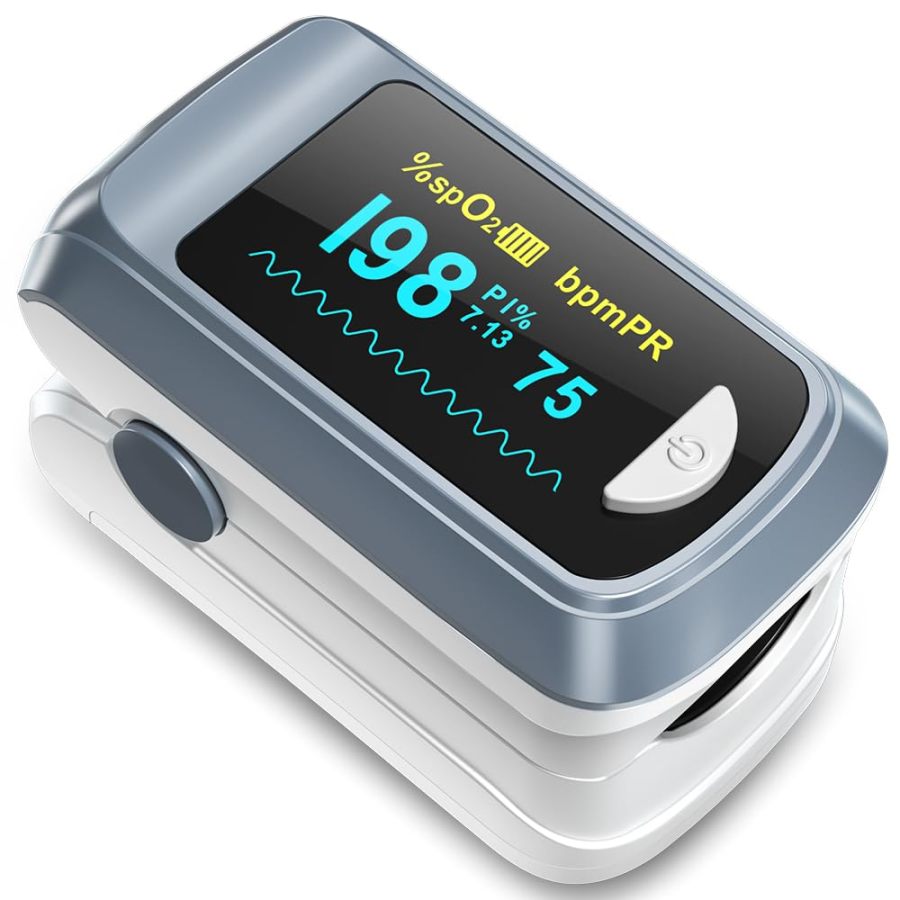
A pulse oximeter is a non-invasive health monitoring device primarily used to measure blood oxygen saturation (SpO2) and pulse rate. The category is mainly divided into traditional fingertip models and emerging wearable forms (e.g., ring or wrist-worn), aiming to provide users with a convenient and quick method for acquiring physiological data. Products are widely used for daily home health monitoring, outdoor activities, and as an aid in managing chronic respiratory conditions or sleep apnea. The following table illustrates the key characteristics of consumer behavior in this category.
| Dimension | Segment | Description |
|---|---|---|
| Need Driver Type | Emergency-driven Purchase / Planned Purchase | Purchases are typically driven by sudden health concerns (e.g., respiratory discomfort) or a pre-set plan for daily health management, with clear expectations for immediate and long-term monitoring. |
| Purchase Frequency | Low Frequency / Seasonal | As a durable health monitoring device, purchase frequency is low. However, peaks may occur during flu seasons, pandemics, or following specific health events. |
| Decision Complexity | Medium / Moderately Complex | Consumers compare product accuracy, features (e.g., Bluetooth connectivity, data logging), price, wearing comfort, and brand reputation, indicating relatively high decision involvement. |
| Price Sensitivity | Medium to High | Users are price-sensitive, but given the product's close link to health, they prioritize measurement accuracy and device reliability, willing to pay a reasonable premium for high quality and added features. |
| Emotional Dependency | Medium to High | Purchase decisions are significantly influenced by emotional drivers such as 'peace of mind', 'health control', and 'risk prevention', reflecting a high value placed on personal and family health. |
II. User Personas & Usage Scenarios
2.1 Health-Conscious Individuals / Daily Family Monitors
🎯 Focus on daily health for themselves and family, may have monitoring needs due to chronic disease risk or seasonal illnesses (e.g., flu). Seek devices that are easy to operate and provide reliable readings.
| Typical Usage Scenarios | Core Pain Points | Primary Purchase Drivers |
|---|---|---|
|
|
|
2.2 Sports / Aviation Enthusiasts
🎯 High-altitude activity participants (mountaineering, skiing), professional athletes, or pilots who need to understand their body's oxygenation and heart rate response in specific environments. Seek professional-grade monitoring and data.
| Typical Usage Scenarios | Core Pain Points | Primary Purchase Drivers |
|---|---|---|
|
|
|
2.3 Chronic Disease / Sleep Apnea Patients
🎯 Suffer from conditions like COPD or sleep apnea, requiring long-term, continuous monitoring of blood oxygen and heart rate, with data logging for doctor reference. Have high requirements for wearing comfort and data management.
| Typical Usage Scenarios | Core Pain Points | Primary Purchase Drivers |
|---|---|---|
|
|
|
III. User Needs Hierarchy (KANO Model)
3.1 Basic Needs (Must-Haves)
- Accurate Measurement: Blood oxygen saturation (SpO2) and pulse rate (PR) readings must be accurate, close to professional medical equipment. This is the minimum foundation for trust.
- Ease of Use: One-button operation, immediate measurement upon clipping, no complicated setup required, especially suitable for elderly users and quick use in emergencies.
- Clear Display: Large, bright screen with easily legible numbers, readable even at night or in low light, reducing misinterpretation.
- Fast Response: Provide stable readings within a short time (e.g., 8-10 seconds), reducing wait time and improving user experience.
- Auto Shut-off: Automatically turns off when not in use to save battery life, extending battery longevity, and demonstrating energy efficiency.
3.2 Performance Needs (Linear Satisfiers)
- Long Battery Life: Extended battery life reduces replacement or charging frequency. Support for rechargeable batteries is preferred to enhance convenience.
- Portability: Compact and lightweight for easy carrying. Inclusion of a storage pouch and lanyard is beneficial to meet mobile usage needs.
- Multi-Directional Display: Screen automatically rotates or can be manually adjusted for viewing from different angles, improving user comfort.
- Pulse Waveform/Perfusion Index: Provide pulse waveform graphs and Perfusion Index (PI) to help users assess reading reliability, adding a professional feel.
- Alarm Function: Emit audible or visual alerts when blood oxygen or heart rate exceeds preset ranges, prompting timely user attention to health status.
3.3 Excitement Needs (Delighters)
- Smart Connectivity & App: Connect to a smartphone app via Bluetooth for real-time data sync, historical record viewing, and professional report generation, offering more comprehensive health management.
- Continuous Monitoring Function: Capable of long-term (e.g., overnight) continuous monitoring of blood oxygen and heart rate with detailed data logging, especially for wearable devices, meeting the needs of specific user groups.
- Vibration Alert: Provide a gentle vibration alert for low nighttime blood oxygen, avoiding disturbing others or interrupting deep sleep, enhancing user experience.
- FSA/HSA Eligible: Product qualifies for reimbursement under Flexible Spending Accounts (FSA) or Health Savings Accounts (HSA) in the US, providing added value for specific users.
3.4 Unmet Needs & Opportunities
-
App Stability & Feature Completeness: Users commonly report unstable app connections, failed data syncs, limited features, or the need to pay to unlock advanced reports, resulting in a poor experience.
User Reviews (VOC) I need recordings and in order to record, you have to press another button on the app. This is very difficult in the middle of crisis // Customers have mixed experiences with the pulse oximeter's app connectivity: while some report that it instantly syncs with the device, others mention that it does not connect properly.
-
Accuracy in Low Perfusion/Cold Fingers: Reading accuracy remains a common pain point when fingers are cold, have nail polish, or have poor blood perfusion, affecting device usability and preventing users from obtaining reliable data at critical moments.
User Reviews (VOC) Sometimes it takes a while to read on my hands since my fingers are very small and usually pretty cold // If the blood flow in your finger drops below a certain level, the pulse oximeter will not be able to function.
-
Long-Term Device Durability: Some products are criticized for rough workmanship and being easily damaged, such as loose battery covers, detached silicone pads, or devices failing without reason, severely impacting user trust and brand reputation.
User Reviews (VOC) Poor quality.... It's was falling apart upon taking it out of the box // I bought this a few years ago. Used it a few times and put it in a drawer. Put fresh batteries in it today (5/10/2025) and it does not work.
-
Wearing Comfort & Size Adaptability: Fingertip models are not friendly to certain finger sizes (too large/small). While wearable models (especially rings) have improved, some users still find them too tight or prone to falling off, affecting willingness for long-term wear.
User Reviews (VOC) The unit fits snugly on my index finger and doesn't interfere with sleep. The vibration and audio alarm (set in the app) are great if your stats get too low. // One problem, the actual monitor for my finger comes off in my sleep, it's massive compared to my finger (even tried my thumb).
IV. User Decision Drivers
4.1 Key Decision Factors
- Accuracy: Users care most about whether readings are reliable and match hospital equipment. This is the core driver of purchase, directly impacting judgment and confidence regarding health status.
- Ease of Use: The simpler the operation, the better, especially for elderly users and in emergencies, reducing barriers to use and learning costs.
- Price: Price is a key consideration for basic models. For premium products, users are willing to pay for unique value but still weigh cost-effectiveness within their budget.
- Measurement Speed: Fast results significantly enhance user experience, avoiding inconvenience and anxiety from long waits, especially in immediate monitoring scenarios.
4.2 Secondary Decision Factors
- Battery Life / Charging Convenience: Long battery life or rechargeable design is attractive to users, reducing maintenance costs and the hassle of frequent battery replacements, improving convenience.
- Durability & Build Quality: Users expect robust, durable products that withstand daily use, especially for long-term wear devices, ensuring long-term value and product lifespan.
- Display Quality: Screen brightness, digit size, adjustability, and the inclusion of waveform graphs all impact the reading experience and professional feel, enhancing user comfort.
- Smart Features (App/Data Logging): For users wanting to track health trends and share data with doctors, app connectivity and data logging are important value-adds, providing an experience upgrade and data management capability.
V. Selling Points & Competitive Landscape
5.1 Selling Point Analysis
5.1.1 Standard Features (Points of Parity)
- Accurate & Fast Readings: Commonly emphasize measurement accuracy and speed for SpO2 and PR, typically delivering results within 8-10 seconds, competing on basic functionality.
- Ease of Use: One-button operation, simple and convenient, no complex setup required, suitable for a broad user base, a standard for entry-level products.
- LED/OLED Display: Clear, bright digital display for easy reading; some products offer multi-directional display functionality.
- Portable & Lightweight: Compact size and light weight for easy portability, supporting home or on-the-go use, meeting mobile needs.
- Includes Battery/Lanyard/Storage Pouch: Provide out-of-the-box convenience and protective accessories, enhancing purchase value and lowering the barrier for users to acquire additional items.
5.1.2 Key Differentiators
- Bluetooth/App Connectivity: Connect to a smartphone app for data logging, trend viewing, and report generation, enhancing the smart experience and attracting tech-savvy users.
- Alarm Function: Alert (sound or vibration) when blood oxygen or heart rate is abnormal, enhancing real-time monitoring capability and user security.
- Built-in Memory: Store a limited amount of historical data, allowing offline use without connecting to the app each time, increasing convenience.
- Multi-Display/Waveform Graph: Offer multiple display modes, pulse waveform graphs, and Perfusion Index (PI), enhancing professional feel and user experience, aiding in assessing reading reliability.
- Rechargeable Design: Built-in lithium battery with USB charging, eliminating the need for frequent disposable battery changes, reducing usage cost and maintenance hassle.
5.1.3 Unique Selling Propositions (USPs)
- Ring/Wrist-Worn Sensor: Specific brands offer ring or wrist designs, emphasizing long-term, continuous wearing comfort and an unobtrusive experience, particularly targeting nighttime monitoring scenarios.
- PDF Report Export: App supports exporting long-term monitoring data as a professional PDF report, facilitating sharing with doctors, enhancing data value and professionalism.
- FSA/HSA Eligibility: Emphasize that the product qualifies for reimbursement under US Flexible Spending Accounts (FSA) or Health Savings Accounts (HSA), attracting specific user groups and providing an additional purchase incentive.
5.2 Competitive Landscape
5.2.1 Market Maturity
The pulse oximeter market is highly mature. Basic fingertip products are highly homogenized in function, with fierce competition and obvious price wars. Consumers are no longer impressed by basic features, focusing more on cost-effectiveness and reliability. Emerging wearable models and products with smart connectivity features are exploring higher price points, differentiating through added value like continuous monitoring and data management. However, market penetration remains to be increased, and issues with user dissatisfaction regarding smart feature experience persist.
5.2.2 Innovation Trends
Innovation trends are primarily evolving from 'instant spot-checking' towards 'continuous monitoring and data management,' especially through Bluetooth apps for data visualization, historical logging, and anomaly alerts to meet deeper health management needs. Simultaneously, wearing methods are shifting from traditional fingertip to more comfortable, long-term-wear-friendly ring/wrist designs to improve user experience and data collection continuity. Rechargeable designs are also becoming mainstream, replacing disposable batteries to enhance environmental friendliness and convenience.
VI. Marketing Claims vs. Reality Check
The table below analyzes the gap between common marketing claims and actual user experiences in this category:
| Dimension | Marketing Claim | User Reality | Verdict |
|---|---|---|---|
| Product Positioning vs. Actual Use | Explicitly states 'For Sports and Aviation Use Only. Not a Medical Device.' | A large number of users (including medical personnel) purchase them for monitoring COPD, asthma, sleep apnea, and even COVID-19-related medical conditions, viewing them as tools for home health management and aiding doctor diagnosis. | Sellers have created a significant cognitive gap between legal risk avoidance and actual user needs, preventing the product from fully realizing its potential value in health management while damaging user trust. |
| App Functionality & Reliability | Claims 'Free App, real-time health data tracking, generates professional reports.' | Users commonly report unstable app connections, failed data syncs, and that some core features (e.g., continuous recording, advanced reports) require additional payment to unlock, contradicting 'free' claims. | Sellers over-market the value of smart connectivity but fail to deliver on core user experience, turning a potential differentiator into a user pain point and reason for returns. |
| Battery Life & Durability | Claims 'Long-lasting battery,' 'High-quality manufacturing.' | Some products have far lower battery life than claimed (e.g., only 1.5 nights) under high brightness or continuous monitoring modes. Numerous user feedback mentions loose battery covers, detached silicone pads, and devices failing without reason in a short time. | Sellers engage in false advertising regarding core hardware performance (battery) and quality control, failing to deliver on the promise of long-term reliable use, directly impacting user experience and product lifespan. |
Key Takeaway: The market commonly suffers from parameter inflation and a cognitive disconnect between 'non-medical device' labeling and 'actual medical auxiliary use,' leading to widespread consumer concerns about product reliability.
VII. Supply-Demand Misalignment Analysis
The table below highlights mismatches between seller focus and buyer priorities:
| Dimension | Seller Behavior | User Focus | Verdict |
|---|---|---|---|
| Product Medical Positioning | All products strictly label 'Not a Medical Device, for Sports/Aviation Use Only' to mitigate legal risk. | Users actually purchase for monitoring chronic diseases, sleep apnea, or acute health conditions, desiring more professional accuracy and reliability, and to serve as a reference for doctors. | The low-level marketing positioning adopted by sellers for liability avoidance prevents them from building trust and a professional image in medical auxiliary scenarios, missing the potential high-value market. |
| App Features vs. User Expectations | Commonly emphasize app features like Bluetooth connectivity, data logging, and reports as core selling points for premium products. | Users complain about unstable app connections, failed data syncs, limited free features, and even paywalls, feeling the marketing does not match the actual experience. | Sellers invested in the hardware (BOM) for smart connectivity but failed to match that commitment in software development and user experience, turning a 'selling point' into a 'complaint point'-ineffective internal competition. |
| Quality Assurance for Long-Term Use | Basic products commonly emphasize 'high accuracy,' 'ease of use,' but under-promote product long-term durability, material quality, and after-sales service. | Users frequently report products being easily damaged (e.g., battery covers, silicone pads) or failing within a short time, lacking confidence in long-term reliability. | Sellers sacrificed quality in low-price competition, resulting in products that fail to withstand the test of 'high-frequency use' scenarios, ultimately harming brand reputation and user repurchase. |
Key Takeaway: A strategic misalignment exists between the seller's core 'non-medical' declaration and users' 'medical auxiliary' needs. Additionally, there is over-promotion and under-delivery on the smart app connectivity experience.
VIII. Strategic Opportunities & Recommendations
8.1 Enhance App Smart Connectivity Experience & Transparent Feature Pricing
8.1.1 Target Audience & Pain Points
⚡️ Pain Points Addressed: App instability, feature payment disputes, failed data syncs, lack of professional reports.
8.1.2 Action Plan
Redesign app architecture to improve Bluetooth connection stability and data sync success rate. Basic data logging, historical trend graphs, and anomaly alerts should be completely free. For advanced features like PDF/CSV report export, cloud storage, multi-device sync, offer a limited-time free trial followed by a transparent subscription or one-time purchase. Add in-app diagnostics and user feedback channels.
| Tech Complexity | Medium |
| Cost Impact | Medium Impact |
| Trade-off Warning | No significant physical side effects, primarily involves software development and server maintenance costs. |
| Price Band | Only viable above $29.99 (basic models can maintain current price points) |
8.1.3 Marketing Strategy
Emphasize 'Seamless connection, your data in hand'; Showcase the app's intuitive health trend reports and customizable alarm features; Clearly state free vs. paid premium features to avoid misunderstanding; Highlight 'Your trusted health data manager.'
8.2 Create the Ultimate Comfort Wearable Oximeter for Nighttime Continuous Monitoring
8.2.1 Target Audience & Pain Points
⚡️ Pain Points Addressed: Discomfort from traditional fingertip models, interrupted nighttime data, lack of gentle alerts.
8.2.2 Action Plan
Develop thinner, ergonomically optimized ring or wrist sensors using medical-grade skin-friendly silicone for all-night unobtrusive wear. Integrate high-energy-density batteries for at least 12 hours of continuous nighttime monitoring. Include smart vibration alerts for low blood oxygen. Research more accurate motion artifact suppression algorithms to ensure data stability during sleep.
| Tech Complexity | High |
| Cost Impact | High Impact |
| Trade-off Warning | Increased battery capacity may slightly increase product thickness/weight, requiring a balance between slimness and battery life. Ring/wrist sensors require precise molding to ensure comfort and accuracy for different finger/wrist sizes. |
| Price Band | Only viable above $100.00 |
8.2.3 Marketing Strategy
Highlight 'Unobtrusive all-night guardian, goodbye sleep anxiety'; Emphasize 'Continuous sleep oxygen tracking, smart vibration alerts'; Provide use-case scenarios with CPAP devices, showcasing professional data reports and case studies of improved sleep quality; Consider endorsements from doctors or sleep experts.
8.3 Establish Superior Product Quality & Accuracy Trust Beyond Competitors
8.3.1 Target Audience & Pain Points
⚡️ Pain Points Addressed: Poor long-term device durability, doubts about reading accuracy, low accuracy in low perfusion/cold fingers.
8.3.2 Action Plan
Adopt higher-quality sensors (e.g., imported photodiodes), more stable main control chips, and more robust ABS/PC alloy casings. Optimize battery compartment structure to prevent looseness. Implement stricter production quality control standards. Provide verifiable accuracy reports (non-diagnostic). Include guidance in manuals for correct use and expected deviations in low perfusion/cold finger scenarios. Offer 18-24 month extended warranty.
| Tech Complexity | Medium |
| Cost Impact | Medium Impact |
| Trade-off Warning | Using higher-quality sensors and casing materials increases cost and final product price, potentially affecting competitiveness in low-price segments. No direct physical side effects. |
| Price Band | Only viable above $24.99 |
8.3.3 Marketing Strategy
Emphasize 'Medical-grade standards, home-use convenience'; Highlight 'Authoritative testing, trustworthy data'; Demonstrate accuracy advantages in complex conditions through comparative experiments; Provide 'Quality promise, worry-free warranty'; Pursue FSA/HSA eligibility to further enhance trust.
8.4 Focus on Professional-Grade 'Athletic Performance Optimization' Oxygen Monitoring Solutions
8.4.1 Target Audience & Pain Points
⚡️ Pain Points Addressed: Lack of in-depth data and analysis for sports scenarios; non-medical positioning limits professional development.
8.4.2 Action Plan
Integrate sports modes into the app, providing high-altitude adaptation analysis, exercise heart rate zone assessment, oxygen recovery rate, etc. Optimize algorithms to reduce reading interference during movement. Consider data linkage with fitness trackers/smartwatches to build a more comprehensive sports health ecosystem. Product design could include drop/water resistance ratings.
| Tech Complexity | Medium |
| Cost Impact | Medium Impact |
| Trade-off Warning | Adding sports analysis features is primarily achieved through software. Hardware may require more precise accelerometers or heart rate sensors, with manageable cost impact. |
| Price Band | Only viable above $39.99 |
8.4.3 Marketing Strategy
Highlight 'Scientific training, break through limits'; Emphasize 'Precise assessment, optimize fitness'; Collaborate with professional athletes or fitness KOLs to demonstrate how the product enhances performance in actual training; Offer customized sports reports to aid training plan development.