Amazon US Market Analysis: Abdominal Wheels Category
📊 Executive Summary
📈 Market Trends
The abdominal wheel market is trending towards segmentation, with functional integration and smart features being key directions. As home fitness becomes more popular, consumer demand for abdominal wheels is evolving from basic exercise towards safer, more efficient, comfortable, and multi-functional products. Products with auto-return, elbow support, and bundle combinations are increasing. The market is seeking breakthroughs amidst homogenization.
⚡ Major Pain Points
A severe gap exists between basic quality and marketing claims; smart features remain gimmicky. Core pain points center on insufficient product durability (e.g., plastic parts prone to damage, noise), poor grip comfort, and unstable magnetic fixation (for non-MagSafe phones), as well as smart counting/timing features being non-functional. This leads to low user trust and high return rates.
💡 Selection Opportunities
Focusing on 'ultimate safety & comfort' and 'reliable quality' offers a path to success. Market opportunities lie in developing truly high-strength, long-lasting abdominal wheels to address user concerns about materials and durability. Simultaneously, creating stable and effective auto-return with ergonomic elbow support can lower the barrier for beginners. Additionally, offering an 'all-in-one bundle' where all accessories are high-quality can win over family users who value both price and experience.
I. Analysis Overview
1.1 Introduction & Report Scope
This report analyzes the 'Exercise Wheels' category (abdominal wheels) within the Amazon US market, focusing on target user personas, core needs, decision drivers, market communication, and potential opportunities.
1.2 Category Snapshot
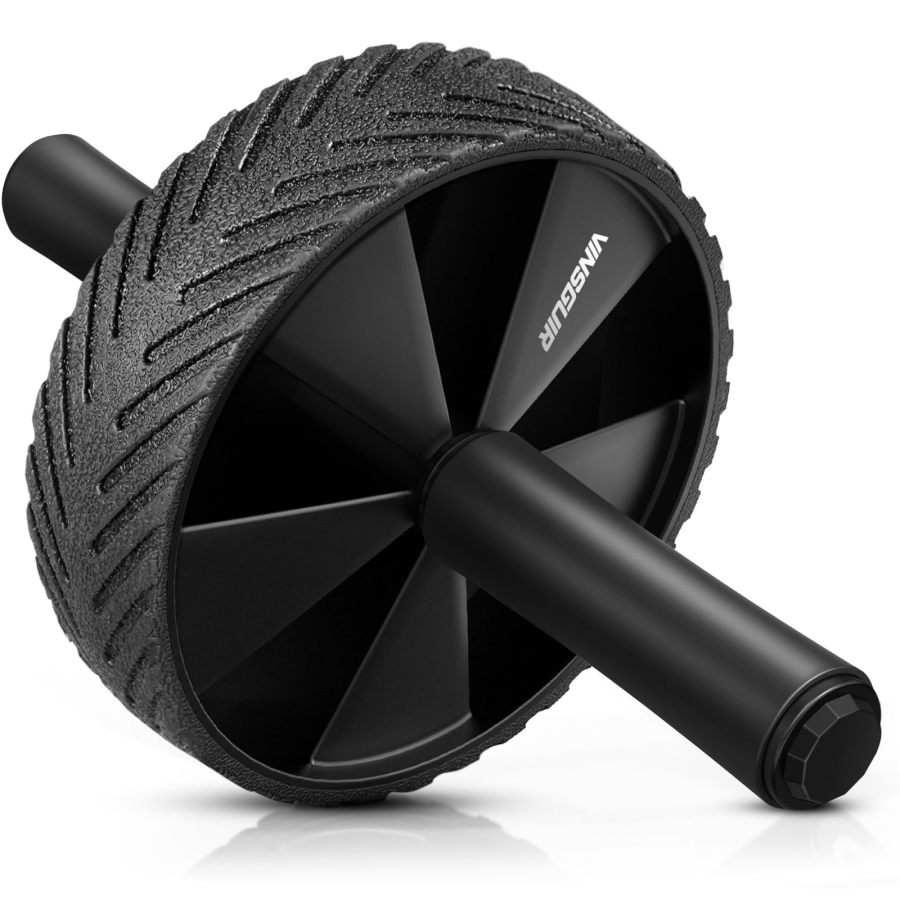
An abdominal wheel is a portable and efficient home fitness equipment primarily designed to strengthen the abdomen and core muscles through rolling motions, while also engaging the shoulders, back, and arms. The market offers diverse product forms, including classic single wheels, dual-wheel/four-wheel designs for enhanced stability, and advanced products integrated with features like auto-return, elbow support, or smart counting, aiming to meet different user needs for core training. The following table illustrates the key characteristics of consumer behavior in this category.
| Dimension | Segment | Description |
|---|---|---|
| Need Driver Type | Planned Purchase / Impulsive Purchase | Users primarily purchase abdominal wheels based on planned needs for health and body shaping goals, but may also be driven by immediate impulses due to the convenience of home workouts. |
| Purchase Frequency | Low Frequency | As durable fitness equipment, abdominal wheels are typically a one-time purchase or replaced only every few years, not a high-frequency repurchase item. |
| Decision Complexity | Medium | Consumers compare product stability, material, comfort, and additional features but do not require extensive time for deep research. |
| Price Sensitivity | Medium | Price is an important consideration, especially for basic models. However, users are willing to pay a reasonable premium for significant functional upgrades and quality improvements. |
| Emotional Dependency | Medium | Abdominal wheels primarily fulfill functional fitness needs but also provide positive emotions and self-value recognition associated with 'successful body shaping' and 'healthy discipline'. |
II. User Personas & Usage Scenarios
2.1 Home Fitness Beginner
🎯 Seeks to start core training conveniently and safely at home, with high demands for ease of use and protective features of fitness equipment.
| Typical Usage Scenarios | Core Pain Points | Primary Purchase Drivers |
|---|---|---|
|
|
|
2.2 Advanced User Pursuing Efficient Sculpting
🎯 Has a foundational fitness level, pursues higher training intensity and efficiency, and aims to finely sculpt abdominal lines using the abdominal wheel.
| Typical Usage Scenarios | Core Pain Points | Primary Purchase Drivers |
|---|---|---|
|
|
|
2.3 Practical Family Shopper
🎯 Price-sensitive but values comprehensive product functionality. Seeks an economical, practical abdominal wheel suitable for the whole family, preferably including necessary accessories.
| Typical Usage Scenarios | Core Pain Points | Primary Purchase Drivers |
|---|---|---|
|
|
|
III. User Needs Hierarchy (KANO Model)
3.1 Basic Needs (Must-Haves)
- Core Exercise Effectiveness: The abdominal wheel must effectively stimulate the abdomen and core muscles, allowing users to feel noticeable training effects.
- Smooth Rolling: The wheel should roll smoothly on various surfaces (hardwood floors, carpets) without jamming, noise, or side-slipping.
- Easy Assembly/Use: Product design should be simple and intuitive, allowing for quick and easy assembly and immediate use upon arrival.
- Sturdy and Durable: The product structure should be robust enough to bear the user's weight and daily training intensity, not easily damaged or falling apart.
3.2 Performance Needs (Linear Satisfiers)
- Comfortable Grip/Support: Grip material should be soft, shape ergonomic. If elbow support is included, it should effectively reduce pressure on wrists and elbows.
- Enhanced Stability: Multi-wheel designs (e.g., dual-wheel, four-wheel), widened wheelbase, or anti-tip designs provide greater balance and safety during use.
- Anti-Slip Design: Wheel surface and grips should have good anti-slip texture or material to prevent slipping during training and ensure safety.
- Compact and Portable: Product should be small in size, easy to disassemble and store, convenient for use at home, office, or while traveling.
- Knee Protection Pad: The included kneeling pad should provide sufficient thickness and comfort to effectively protect the knees and enhance the training experience.
3.3 Excitement Needs (Delighters)
- Auto-Return Mechanism: Built-in spring or resistance system provides resistance during rollout and assistance during return, lowering training difficulty, especially suitable for beginners.
- Versatility/Bundle: Includes additional fitness accessories like jump ropes, resistance bands, or push-up bars beyond the abdominal wheel, offering a more comprehensive training solution.
- Smart Counting/Timing: Built-in LCD screen or app connectivity displays real-time training reps, time, or calorie burn, recording fitness data.
- Design Aesthetics: Unique or stylish appearance design, such as color schemes or shapes, enhances overall product texture and appeal.
3.4 Unmet Needs & Opportunities
-
Thicker/Anti-Slip Knee Pad: Existing included knee pads are generally too thin with insufficient anti-slip properties. Users need thicker, more stable, larger-area knee pads for enhanced comfort.
User Reviews (VOC) The only downside is that some of the accessories feel a bit basic... // Thicker knee pad is made of NBR material for providing extra comfort and protect your knees from getting hurt.
-
Overall Durability Consistency: Some products claim high load capacity, but plastic parts are prone to breakage or produce noise during actual use, raising doubts about long-term reliability.
User Reviews (VOC) It creaks and pops when I roll out and back, but so far it's holding up, but I can easily see this failing in a year or so. // the jump rope breaks off and the equipment is cheaply made.
-
Grip Fixation/Comfort: Grips on some products easily slip or have overly hard materials, causing hand discomfort or even pain during prolonged use.
User Reviews (VOC) Customers have mixed opinions about the abdominal exerciser's comfort, with some finding it comfortable to use while others report being very sore during use. // The only downside is that some of the accessories feel a bit basic, but for the price, it's a great starter set for home workouts.
-
Smart Feature Stability: Some abdominal wheels with smart features have timers or counters that frequently malfunction, are inaccurate, or easily detach, impacting user experience.
User Reviews (VOC) 计时器功能缺陷 // 多位用户指出产品附带的计时器无法正常工作
IV. User Decision Drivers
4.1 Key Decision Factors
- Exercise Effectiveness: Users are most concerned about whether the product can effectively exercise core muscles and deliver visible body shaping results.
- Product Stability: Whether the product wobbles during use, provides sufficient support, and is anti-tip directly relates to training safety.
- Ease of Use/Learning Curve: Especially for beginners with insufficient core strength, whether the product is easy to master with correct form and convenient to operate is key.
- Durability: Whether the product material is sturdy enough to withstand long-term, high-intensity use, avoiding premature failure that affects experience and safety.
4.2 Secondary Decision Factors
- Comfort: Whether the material and design of grips and knee pads are comfortable, reducing pressure on wrists and knees.
- Additional Features/Accessories: Presence of features like auto-return, counters, thicker knee pads, or extra training accessories (e.g., jump rope, resistance bands).
- Value for Money: Whether the price is reasonable and offers good value, given that core needs and desired features are met.
- Portability/Storage: Whether the product is lightweight, easy to disassemble and store, convenient for home or travel use without taking up excessive space.
V. Selling Points & Competitive Landscape
5.1 Selling Point Analysis
5.1.1 Standard Features (Points of Parity)
- Core Training: Emphasizes comprehensive exercise effects on abs, core, shoulders, back, and more, helping users burn fat and shape their bodies.
- Easy Assembly/Use: Highlights simple installation and intuitive operation. Some products emphasize beginner-friendliness to lower the entry barrier.
- Home Fitness: Emphasizes compact and portable design, suitable for private spaces like home or office, saving users time and effort.
- Sturdy and Durable: Claims use of high-strength materials (e.g., stainless steel axle), strong load capacity, long-lasting durability, ensuring safe training.
5.1.2 Key Differentiators
- Multi-Wheel Design: Dual-wheel or four-wheel designs provide superior stability and anti-tip capability, enhancing training safety perception.
- Auto-Return: Built-in return mechanism assists users in completing the movement, lowering training difficulty, especially suitable for beginners to progress gradually.
- Comfortable Grip/Elbow Support: Ergonomic design with padded or specially shaped grips or elbow support reduces pressure on wrists or arms, enhancing comfort.
- Included Knee Pad: Including a kneeling pad with the product enhances training comfort, protects knees, and has become a common market accessory.
5.1.3 Unique Selling Propositions (USPs)
- Multi-Piece Bundle: Bundles the abdominal wheel with other fitness accessories like jump ropes, resistance bands, and push-up bars, offering an integrated solution and enhancing product value-add.
- Smart Counting/Timing: Some products feature built-in LCD screens or app connectivity, displaying real-time training reps, time, or calorie burn, providing data-driven training feedback.
- Patent Technology/App Connectivity: Some brands possess unique appearance patents or internal structural designs, or offer exclusive app connectivity, delivering value-added services.
5.2 Competitive Landscape
5.2.1 Market Maturity
The abdominal wheel market is relatively mature. Basic product functionalities are becoming homogenized, competition is intense, and price wars are common. To seek breakthroughs, many brands are pursuing differentiation and value enhancement by adding auxiliary features and expanding bundle contents.
5.2.2 Innovation Trends
Innovation trends are reflected in smart features (e.g., built-in counters, app integration), providing more ergonomic assistance (e.g., elbow support, more comfortable grips), and integrating abdominal wheels into more comprehensive home fitness bundles. These efforts aim to meet user needs for convenience, efficiency, safety, and diverse training, while lowering the entry barrier for beginners.
VI. Marketing Claims vs. Reality Check
The table below analyzes the gap between common marketing claims and actual user experiences in this category:
| Dimension | Marketing Claim | User Reality | Verdict |
|---|---|---|---|
| Load Capacity & Material | High-strength materials, supporting ultra-high load capacities up to 500-600 lbs. | User feedback often points to cheap plastic materials. Some products malfunction after light use or become unstable under heavy loads. The 'Maximum Load Recommendation' in product specifications shows obvious errors (e.g., 1.6 lbs), severely contradicting the advertised hundreds of pounds. | Sellers exaggerate load capacity and material strength to attract consumers, but the actual product materials and structural design fail to meet the promised standards, severely impacting user trust and safety perception. |
| Auto-Return Function | Intelligent auto-return, helping beginners start easily and shape efficiently. | Multiple users report unstable or failing auto-return functions, even causing rolling to be less smooth. Promised features like 'intelligent auxiliary braking' or 'smoother return' are not delivered. | As a promoted innovative selling point, the auto-return function lacks stability in practical application, becoming a user complaint instead. The 'smart' aspect turns into a superficial marketing gimmick. |
| Product Information Consistency | Clear, accurate product parameter descriptions. | Multiple products have contradictory key information (e.g., maximum load, material) between titles, bullet points, and specification parameters. For example, descriptions claim 500 lbs, while specs show 350 lbs or 150 lbs. | Confusing information descriptions directly damage seller professionalism and credibility, causing serious consumer confusion and distrust regarding core product performance. |
| Release Date & 'Newness' | 2024/2025 New Model, latest technology. | Some product titles claim '2025 New Product,' but the actual 'Date First Available' is in the future, or there is no clear link to substantive innovation in the product content. | Over-hyping the concept of 'new' but making low-level errors on dates, or lacking substantive innovation in the product itself. This marketing tactic easily makes consumers feel deceived. |
Key Takeaway: The market suffers from widespread parameter inflation and feature overstatement, especially regarding load capacity, materials, and smart functions. There is a significant gap between marketing promises and actual user experience.
VII. Supply-Demand Misalignment Analysis
The table below highlights mismatches between seller focus and buyer priorities:
| Dimension | Seller Behavior | User Focus | Verdict |
|---|---|---|---|
| Product Durability & Noise | Sellers commonly claim 'sturdy and durable,' 'high-strength materials,' 'stainless steel axle,' emphasizing products can bear hundreds of pounds. Some product titles emphasize '2025 New' or 'Upgraded.' | Users widely report a cheap plastic feel, 'creaking' noises during use, and even component damage within a short period. Expectations for 'quality' and 'durability' are unmet. | Sellers fail to deliver on the most basic quality promises, causing serious user doubt about the product's core value. This is a major source of negative reviews and returns. |
| Knee Pad/Grip Comfort | Most products include a knee pad and claim grips are 'comfortable and anti-slip.' Some emphasize ergonomic design and elbow support. | Users report included knee pads are too thin, slippery, and too small, failing to provide effective protection. Grip materials are hard or detachable, causing hand discomfort or even pain during prolonged use. | While sellers provide the function, they severely under-deliver on the experiential details. These features, meant to enhance comfort, become detractors from the overall user experience, impacting satisfaction. |
| Smart Feature (Counting/Return) Reliability | Some products heavily promote auto-return, smart counting/timing features as their differentiators and technological advantages. | Users report built-in timers malfunctioning, inaccurate counting, or unstable/failing auto-return functions. These 'smart' features become new points of complaint, seen as gimmicky. | Sellers blindly pile on immature technologies without ensuring their stability and user experience. The result not only fails to add product value but lowers overall ratings. |
Key Takeaway: Sellers overly focus on gimmicky selling points like smart features and multi-functionality, but collectively under-deliver on the fundamental durability, comfort, and accessory quality that users care most about, leading to a severe supply-demand mismatch.
VIII. Strategic Opportunities & Recommendations
8.1 Super-Durable Monolithic Core Training Abdominal Wheel
8.1.1 Target Audience & Pain Points
⚡️ Pain Points Addressed: Overall Durability Consistency, Grip Fixation/Comfort.
8.1.2 Action Plan
Use high-strength nylon + fiberglass composite or lightweight aluminum alloy for the core structure, employing monolithic molding to eliminate noise and looseness risks. Optimize bearing design for smooth rolling. Use high-density TPE soft rubber for grips to enhance comfort and anti-slip properties.
| Tech Complexity | Medium |
| Cost Impact | High Impact |
| Trade-off Warning | Premium materials or monolithic molding may slightly increase product weight or mold costs, requiring optimized design balance. |
| Price Band | Only viable above $29.99 |
8.1.3 Marketing Strategy
Emphasize 'Say goodbye to plastic feel, one investment lasts a decade'; highlight 'Professional-grade load capacity and durability testing'; promote 'Meticulous detailing, no noise, every roll is a pleasure.'
8.2 Beginner-Friendly 'Intelligent Stable Return' Abdominal Wheel
8.2.1 Target Audience & Pain Points
⚡️ Pain Points Addressed: Prone to Exercise Injuries, Incorrect Form, Smart Feature Stability.
8.2.2 Action Plan
Develop a more reliable, linearly adjustable spring-assist system ensuring stable and smooth return each time. Widen the elbow support area, use high-density comfortable foam, and optimize fixation. Integrate a high-precision rep counter to avoid timer failure issues seen in existing products.
| Tech Complexity | Medium |
| Cost Impact | Medium Impact |
| Trade-off Warning | The auto-return mechanism may increase internal complexity and maintenance needs, requiring ensured durability of mechanical parts. |
| Price Band | Only viable above $34.99 |
8.2.3 Marketing Strategy
Highlight 'Even beginners can master it easily, say goodbye to injury risk'; emphasize 'Intelligent assistance makes core training more efficient'; provide endorsement like 'Recommended by fitness coaches, the top choice for beginners.'
8.3 Premium Accessory 'Grand Slam' Fitness Bundle
8.3.1 Target Audience & Pain Points
⚡️ Pain Points Addressed: Accessory Quality Concerns, Thicker/Anti-Slip Knee Pad, Inconvenience of Additional Purchases.
8.3.2 Action Plan
The abdominal wheel adopts the same high-quality standard as Opportunity 1. All accessories in the bundle (jump rope, resistance bands, push-up bars, knee pad) use high-strength, high-comfort, high-durability materials, e.g., professional-grade PU jump rope, multi-level latex resistance bands, anti-slip stable push-up bars, 20mm thick high-density NBR knee pad.
| Tech Complexity | Low |
| Cost Impact | Medium Impact |
| Trade-off Warning | Upgrading quality for all accessories may slightly increase total bundle weight, requiring packaging design consideration for logistics costs. |
| Price Band | Only viable above $39.99 |
8.3.3 Marketing Strategy
Emphasize 'More than an abdominal wheel, it's a professional-grade home gym'; highlight 'Every piece is meticulously selected, say goodbye to gimmicky accessories'; communicate through 'Suitable for the whole family, a high-value long-term investment.'
8.4 Multi-Purpose Customizable Abdominal Wheel (with Personalized Guidance)
8.4.1 Target Audience & Pain Points
⚡️ Pain Points Addressed: Training Plateau, Lack of Targeted Stimulation, Monotonous Training.
8.4.2 Action Plan
Design an abdominal wheel with adjustable wheel width, detachable multi-function handles, and the ability to add weight, enabling personalized training intensity and modes. Pair with a high-quality app providing detailed training tutorials, exercise libraries (including advanced moves like oblique or one-handed), personalized training plans, and integrated community sharing features.
| Tech Complexity | Medium |
| Cost Impact | High Impact |
| Trade-off Warning | Customization features on the product body may increase structural complexity or require more complex manufacturing processes, increasing BOM. |
| Price Band | Only viable above $49.99 |
8.4.3 Marketing Strategy
Highlight 'Your abdominal wheel, your rules: Customizable training to break plateaus'; emphasize 'Professional coach-level guidance to unlock core potential'; promote 'App community interaction, share your fitness journey.'