Amazon US Market Analysis: Child Anti-Lost Harness & Leash Category
📊 Executive Summary
📈 Market Trends
Safety and convenience are core, with multi-functional integration becoming a trend. Demand for child anti-lost harnesses is strong, with parents generally seeking to ensure child safety while granting a degree of freedom. Products are evolving from single wristbands to multi-functional combinations integrating wristbands, harnesses, and waist belts to adapt to diverse outing scenarios. Technological innovation is primarily focused on safer lock mechanisms and more comfortable wearing experiences.
⚡ Major Pain Points
Insufficient durability and poor size fit are critical flaws; lock convenience needs improvement. User feedback highlighting product connection point fragility and short actual lifespan is prominent, eroding parental trust in safety products. Additionally, existing products perform poorly in size universality. Some locks, while secure, are inconvenient for adult operation, and the breathability issue during summer wear also urgently needs resolution.
💡 Selection Opportunities
Deeply address core safety pain points and optimize the full-scenario user experience. Market opportunities lie in developing an 'child-proof' intelligent anti-removal lock to completely solve parental anxiety about children removing the harness. Simultaneously, focus should be on enhancing product connection point durability, launching a 'Summer Breeze' breathable, sweat-resistant version, and refining size-specific fitting and special needs child-friendly designs. These improvements will directly address core user pain points, establish differentiated competitive advantages, and potentially enable product premium pricing.
I. Analysis Overview
1.1 Introduction & Report Scope
This report analyzes the 'Harnesses & Leashes' category (specifically child anti-lost harnesses & leashes) within the Amazon U.S. market, focusing on target user personas, core needs, decision drivers, market communication, and potential opportunities.
1.2 Category Snapshot
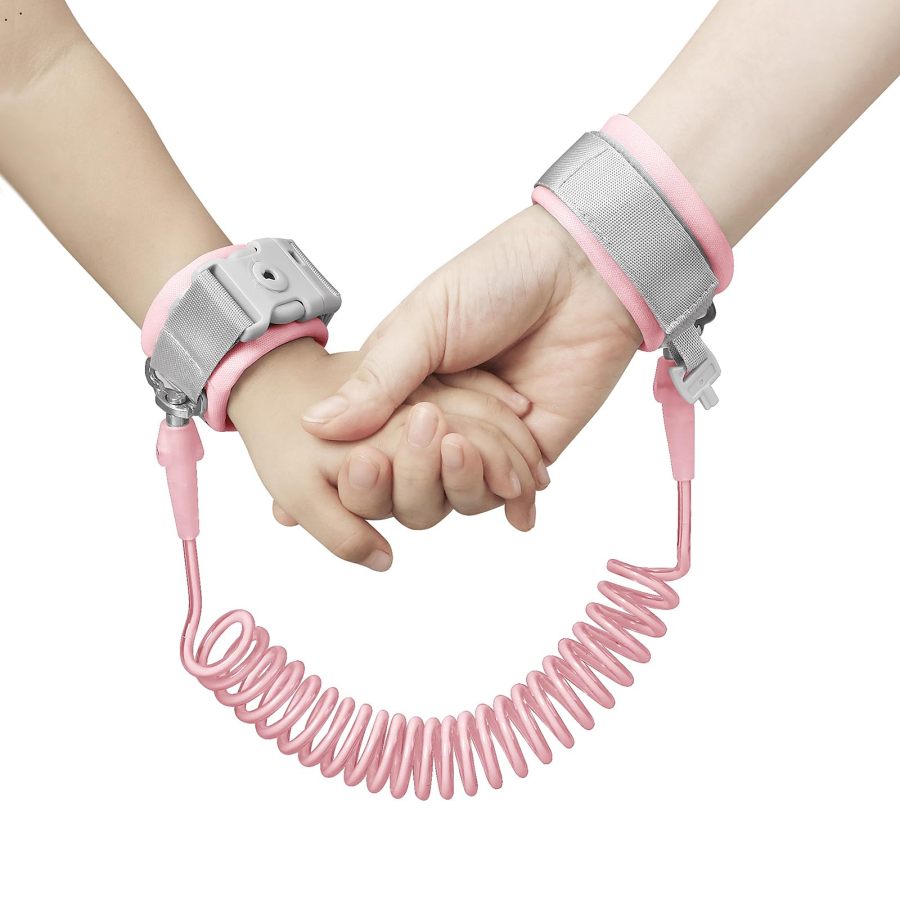
A child anti-lost harness & leash is a safety aid product specifically designed for toddlers and young children. Its primary purpose is to ensure the child remains within a safe distance from the caregiver in public or outdoor settings, preventing them from getting lost. These products typically include wristband-style, backpack/harness-style (some with small backpack functionality), and waist belt-style options, connected via a retractable or fixed leash. They provide parents with psychological peace of mind while granting children a degree of freedom to explore. It is not only a functional safety tool but also carries parents' expectations for their child's independent exploration and considerations of self-image. The following table illustrates the key characteristics of consumer behavior in this category.
| Dimension | Segment | Description |
|---|---|---|
| Need Driver Type | Planned Purchase / Emergency-driven Purchase | Purchase behavior is primarily driven by anticipated outings (e.g., travel, shopping) or the immediate need to address the practical problem of an active, easily-lost child, making it either premeditated or problem-solving oriented. |
| Purchase Frequency | Low Frequency | Typically purchased once per child, as it is a durable good. Repurchase rates are low unless the product breaks, the child outgrows it, or a new family member needs one. |
| Decision Complexity | Medium | Consumers compare differences in safety, comfort, ease of use, materials, and additional features but do not conduct deep technical analysis. |
| Price Sensitivity | Medium | Price is an important consideration. However, given the importance of child safety, consumers are willing to pay a relatively higher premium if the product offers significant performance advantages, enhanced safety, or superior comfort. |
| Emotional Dependency | Medium to High | Purchase behavior is heavily driven by strong emotional needs such as 'reducing anxiety,' 'ensuring child safety,' and 'gaining peace of mind.' The psychological value provided by the product is equally important as its functional value. |
II. User Personas & Usage Scenarios
2.1 Cautious Traveling Parents
🎯 Concerned about their child's safety in crowded or unfamiliar environments. They want their child to have some freedom while traveling or out and about but must remain in control.
| Typical Usage Scenarios | Core Pain Points | Primary Purchase Drivers |
|---|---|---|
|
|
|
2.2 Guardian of Active Kids / Special Needs Parent
🎯 Has an active, unpredictable child at home, or a child with special needs such as autism or ADHD, requiring higher-intensity, more reliable daily safety measures.
| Typical Usage Scenarios | Core Pain Points | Primary Purchase Drivers |
|---|---|---|
|
|
|
III. User Needs Hierarchy (KANO Model)
3.1 Basic Needs (Must-Haves)
- Basic Anti-Lost Function: The product must effectively connect the child to the caregiver, ensuring the child stays within a safe distance to prevent accidental loss. This is its core reason for existence.
- Easy to Put On/Take Off: Both adult and child should be able to quickly and easily put on and remove the product, avoiding fumbling in emergencies or daily inconvenience.
- Safe, Non-Toxic Materials: Materials in direct contact with the child's skin (wristband or harness) must be soft, non-irritating, non-toxic, and comply with infant product safety standards to protect delicate skin.
3.2 Performance Needs (Linear Satisfiers)
- Comfortable to Wear: Wristbands or harnesses should have soft, breathable padding that does not dig into the wrist or body, preventing skin sweating, chafing, or discomfort even during prolonged wear, thereby increasing the child's acceptance.
- High Durability: The leash and straps should use high-strength materials, such as a steel wire core, ensuring sufficient sturdiness to withstand daily pulling and wear from the child, preventing breakage and ensuring long-term effectiveness.
- Difficult for Child to Remove: The product should feature effective anti-child-removal designs, such as key locks, magnetic locks, or multi-layer heavy-duty Velcro, preventing the child from escaping on their own through curiosity or dexterity.
- Freedom of Movement: The leash length should be moderate, restricting the child to a safe range while allowing some space for activity. A 360-degree swivel function is also beneficial to prevent rope tangling and increase flexibility.
- Adjustable Size: Wristbands and/or harnesses should be flexibly adjustable to fit children and adults of different ages and sizes, ensuring a good fit for enhanced safety and comfort.
3.3 Excitement Needs (Delighters)
- Cute Cartoon Designs: Featuring fun designs like wings, dinosaurs, or butterflies that appeal to children can increase their willingness to wear it, transforming the safety tool into a beloved 'toy' or fashion accessory.
- Multi-Functional Combination: Offering combination products with various usage modes (wristband, harness, waist belt) provides flexibility for different scenarios, increasing product value and cost-effectiveness.
- Nighttime Reflective Design: Enhances the visibility of the product and child in low-light or nighttime conditions, further improving safety during evening outings and providing extra peace of mind for parents.
- Lightweight and Easy to Store: The product design should be compact, lightweight, and easy to fold and carry in a bag, not adding burden to travel or daily outings, making it readily available anytime, anywhere.
- Convenient Storage Space: Integrating a small backpack into harness-style designs to hold children's snacks, small toys, wipes, and other essentials enhances the product's practicality and convenience.
3.4 Unmet Needs & Opportunities
-
Broader Size Compatibility: Existing products have blind spots in size coverage. Some reviews mention the product is too small for specific age groups (e.g., 4-year-olds) or too large for others (e.g., infants under 1), leading to poor fit that compromises safety and comfort.
User Reviews (VOC) Small for a 4 year old. // Really small for a 4 year old. And not having a pocket really inconvenient // A little small // Too small // Very small for small children.
-
Breathability for Summer Wear: Despite claims of comfort, in hot weather, the padded material of wristbands or harnesses can cause children's wrists or backs to sweat and feel stuffy, highlighting a need for better breathability and heat dissipation solutions.
User Reviews (VOC) The strap is foamy and cushioned for comfort, but it also traps heat and can get uncomfortably warm in hot weather. // It does get a little sweaty but that's a given.
-
Balance Between Lock Convenience and Reliability: Some safety lock designs, while child-resistant, are not smooth or can jam during adult operation (e.g., magnetic locks occasionally failing, key unlocking being cumbersome), impacting quick response in emergencies.
User Reviews (VOC) Only issue is the chest clip loosens rather quickly // The only worry i have is that the locking mechanism on the leash feels a little fragile // sometimes the magnet doesn't want to open to take it off my child. // A little awkward unlocking with one hand
-
Child Acceptance Strategies and Guidance: Some children resist wearing a harness. Existing products lack effective psychological guidance or design elements to help children accept and enjoy wearing it from within, rather than passively complying.
User Reviews (VOC) Unfortunately my kid (3yo) does not care for it. // If your child does fuss, you can easily tuck the wristband under their jacket/coat/long sleeve top and they will quite quickly forget that they are wearing it!
IV. User Decision Drivers
4.1 Key Decision Factors
- Child Safety (Anti-Lost/Anti-Removal): This is the primary and core consideration for parents purchasing a child anti-lost harness. The product must effectively prevent the child from getting lost in public and be difficult for the child to remove on their own or for others to tamper with easily.
- Child Comfort: Whether the product's materials, padding, and strap design are soft, breathable, and non-chafing directly impacts the child's willingness to wear it and comfort during prolonged use, which in turn affects the product's usage frequency and effectiveness.
- Product Durability and Sturdiness: Whether the materials and construction of the leash, locks, and straps are robust enough to withstand the pulling of an active child and frequent daily use is key to ensuring long-term safety.
- Ease of Use: How convenient and quick it is for parents to put the product on the child and make adjustments, especially when the child is uncooperative or in an emergency, is crucial.
4.2 Secondary Decision Factors
- Design Appeal to Children: Whether the appearance-cartoon shapes, bright colors, fun themes-attracts the child, making them more willing to wear it actively and reducing resistance.
- Multi-Functional Combination: Whether the product offers various connection and wearing modes (wristband, harness, waist belt) to flexibly adapt to different scenarios and child needs, enhancing product versatility.
- Value for Money: Whether the product's price is reasonable and offers good value for money, assuming core safety and comfort needs are met.
- Portability and Storage: Whether the product is compact, lightweight, easy to fold, carry, and store, convenient for parents to put in a bag when not in use, without adding to the travel burden.
V. Selling Points & Competitive Landscape
5.1 Selling Point Analysis
5.1.1 Standard Features (Points of Parity)
- Anti-Lost Security: All products emphasize their core function of preventing child loss in crowded public places like supermarkets, parks, and airports, aiming to provide parents with psychological peace of mind.
- Comfortable and Adjustable: Commonly promoted features include soft materials (e.g., cotton, foam padding), breathability, and adjustable strap designs to fit different body types and ensure wearing comfort.
- Multiple Wearing Modes: Many products promote support for various usage modes, such as wristband-only, harness + leash, or harness + wristband, to meet different scenario needs.
- Suitable for Crowded Places: Listings frequently mention the product's applicability in high-traffic areas like zoos, theme parks, and malls, reinforcing its scenario-based value.
5.1.2 Key Differentiators
- Safety Lock Design: Some products use key locks (key on the adult's end) or magnetic sensor locks, emphasizing that the child cannot remove them, offering a higher level of anti-removal security.
- Anti-Cut Steel Wire Core: Some products highlight that the leash contains an inner stainless steel wire core wrapped in PU plastic, claiming resistance to being cut with a knife, enhancing physical security.
- Nighttime Reflective Strips: Some products integrate reflective materials on the wristband or leash to improve visibility in low-light or nighttime conditions, adding an extra safety layer.
- Cute Cartoon Shapes: Designs featuring child-favorite elements like wings, dinosaurs, or butterflies aim to increase the child's willingness to wear it and reduce resistance.
5.1.3 Unique Selling Propositions (USPs)
- Special Needs Child Friendly: Very few products directly or indirectly mention suitability and assistance for children with special needs like autism or ADHD, serving as a selling point for this specific niche market.
- Waist Belt Wearing Option: A few products offer a waist belt wearing option, providing more body attachment points and force distribution methods compared to common wristband and harness styles.
5.2 Competitive Landscape
5.2.1 Market Maturity
The child anti-lost harness market has reached medium-high maturity, with product functions and designs showing significant homogenization. Basic safety features and comfort have become standard. Competition now primarily manifests in price, aesthetic design, micro-innovations in lock safety mechanisms, and the richness of multi-functional combinations.
5.2.2 Innovation Trends
Current innovation focuses on enhancing anti-removal capabilities (e.g., key locks, magnetic locks), strengthening physical durability (e.g., anti-cut materials), optimizing wearing comfort (e.g., breathable fabrics, ergonomic design), and adding nighttime safety (reflective materials). Future trends may move towards more intelligent anti-lost solutions (e.g., integrated Bluetooth/GPS tracking), more discreet or fashionable designs, and more customized products for specific age segments and children with special needs.
VI. Marketing Claims vs. Reality Check
The table below analyzes the gap between common marketing claims and actual user experiences in this category:
| Dimension | Marketing Claim | User Reality | Verdict |
|---|---|---|---|
| Product Durability | Sturdy and durable, not easy to break, long-term use, anti-cut steel wire core. | Users commonly report the product is prone to damage, with connection points (e.g., locks, wristband-to-leash joints, stitching) breaking or wearing out after several uses, contradicting claims of 'durability.' | Sellers generally overstate the overall sturdiness and durability of the product. However, the materials or craftsmanship at critical stress points (e.g., connectors, stitching) fail to meet standards, causing the core safety promise to fall short in real-world use, directly eroding user trust. |
| Size Universality and Comfort | Universal for ages 1-5, adjustable design, soft, breathable, and comfortable. | Multiple users report the product is too small for 4-year-olds or too large for infants under 1, with harnesses or chest straps not fitting well. Other reviews mention discomfort from heat and sweating during summer wear, contradicting 'breathable comfort' claims. | Sellers' size claims are overly generalized, failing to adequately consider individual child differences and the physical characteristics of different age groups. Furthermore, breathability promises are not fulfilled in extreme environments, creating a gap in the wearing experience for some users. |
| Lock Design and Convenience | Key lock/magnetic lock, child cannot remove it, safe and reliable. | Some users report locks are inconvenient to operate (e.g., magnetic locks occasionally jam, key unlocking is cumbersome), or that young children can still figure out how to remove them. Losing the key also causes inconvenience. | While improving lock security, sellers have neglected the convenience of adult operation and the actual removal capabilities of children. This 'safety lock' fails to fully deliver on the promise of being 'impenetrable and hassle-free' in real use, leading to user pain points regarding the core safety feature's experience. |
Key Takeaway: The market commonly exhibits a gap between marketing claims and actual user experience, particularly regarding durability, size universality, and lock convenience. Sellers tend towards idealized promotion while overlooking genuine user pain points.
VII. Supply-Demand Misalignment Analysis
The table below highlights mismatches between seller focus and buyer priorities:
| Dimension | Seller Behavior | User Focus | Verdict |
|---|---|---|---|
| Product Durability and Connection Point Strength | Listings generally emphasize the product's overall 'durability' and 'sturdiness' but rarely specify or demonstrate reinforced design and test data for critical connection points (e.g., buckles, seam joints). | User reviews frequently mention the product is easily damaged, with connection points breaking or buckles failing, expressing significant disappointment with the actual durability, impacting long-term use. | Sellers have failed to translate the claimed 'durability' into reliable product quality assurance, especially at the weak points frequently highlighted in user feedback. This is a typical case of 'saying vs. doing,' leading to a loss of core trust. |
| Breathability and Comfort for Summer Wear | Sellers commonly promote 'soft and comfortable' materials but rarely mention or specifically address the issue of heat, sweating, and stuffiness caused by prolonged child wear during hot seasons. | Users complain that during summer or after activity, the child's wrist or back sweats and becomes uncomfortable, even hot, affecting the willingness to wear it. | Sellers have overlooked the product's user experience shortcoming in specific climatic scenarios, resulting in the product's comfort failing to meet user expectations during the important summer usage season. |
| Effectiveness of Child Anti-Removal Mechanisms | Sellers promote 'safety lock' designs like key locks and magnetic locks, emphasizing that children cannot remove them, creating an image of high security. | Users report that some children can still remove them, or that the locks are complex to operate, making quick release difficult in emergencies, casting doubt on the lock's actual safety and convenience. | Sellers' claim that 'children cannot remove it' is exaggerated, failing to fully deliver on the promise of 'absolute safety.' Simultaneously, they have neglected the importance of adult operation convenience for the overall safety experience. |
Key Takeaway: Sellers exhibit a supply gap in core safety elements like durability and anti-removal capability, while over-investing in secondary aspects like cartoon designs and multi-functional combinations, resulting in a misalignment between supply and demand focus.
VIII. Strategic Opportunities & Recommendations
8.1 'Child-Proof' Intelligent Anti-Removal Lock
8.1.1 Target Audience & Pain Points
⚡️ Pain Points Addressed: Child easily removes it themselves, balance between lock convenience and reliability, special needs child friendly.
8.1.2 Action Plan
Develop an intelligent lock with a unique mechanical structure or low-power Bluetooth sensing. The child's side has no operable buttons; unlocking is only possible from the adult's side (e.g., via a wristband with a special key or an app) through a non-force method. The lock material should be high-strength, tamper-resistant, and allow for easy one-handed quick locking/unlocking.
| Tech Complexity | Medium |
| Cost Impact | Medium Impact |
| Trade-off Warning | May slightly increase lock size or weight, but the value of enhanced safety far outweighs this sacrifice. |
| Price Band | Only viable above $24.99 |
8.1.3 Marketing Strategy
Emphasize 'Unbreakable, Unquestionably Safe.' Use animation to demonstrate the lock's ingenuity and child-proof testing. Position as 'Guarded by Technology, Your Child Has the Highest Level of Safety,' attracting price-insensitive parents with extreme safety demands.
8.2 Ultra-Durable & Anti-Removal Reinforced Connectors and Straps
8.2.1 Target Audience & Pain Points
⚡️ Pain Points Addressed: Inconsistent durability performance, insufficient connection point durability, straps easily loosen.
8.2.2 Action Plan
Upgrade the materials and craftsmanship of all connection points (e.g., D-rings, buckles, stitching). Use Ultra-High-Molecular-Weight Polyethylene (UHMWPE) fiber-reinforced stitching or one-piece molded, high-strength alloy buckles. Reinforce the connection between wristband/harness and leash with multiple layers. Obtain third-party pull-test certification (e.g., SGS).
| Tech Complexity | Low |
| Cost Impact | Low Impact |
| Trade-off Warning | No significant physical side effects; primarily involves material upgrades and process optimization. |
| Price Band | Only viable above $14.99 |
8.2.3 Marketing Strategy
8.3 'Summer Breeze' Breathable, Sweat-Resistant Comfort Harness
8.3.1 Target Audience & Pain Points
⚡️ Pain Points Addressed: Breathability for summer wear, mixed feedback on material comfort.
8.3.2 Action Plan
Use sandwich mesh, ice silk, or technical fabrics with moisture-wicking and breathability functions as lining. Incorporate large-area ventilation holes or use hollow gel padding to promote air circulation and heat dissipation. The product should also be machine washable and quick-drying for easy cleaning during high-frequency summer use.
| Tech Complexity | Low |
| Cost Impact | Low Impact |
| Trade-off Warning | May slightly sacrifice some padding softness, but this can be compensated for with more advanced mesh structures or gel padding. |
| Price Band | Only viable above $15.99 |
8.3.3 Marketing Strategy
Emphasize 'Summer Outings, Cool and Sweat-Free.' Show comparative breathability experiment visuals, highlighting 'Say Goodbye to Stuffiness, Let Kids Play Freely.' Position the product as a summer-specific or outdoor-sports exclusive to attract users with specific needs.
8.4 Precise Age/Size-Specific Sizing + Special Needs Child-Friendly Design
8.4.1 Target Audience & Pain Points
⚡️ Pain Points Addressed: Broader size compatibility, limited size coverage, sizes generally run small.
8.4.2 Action Plan
Move away from 'one-size-fits-all' claims. Instead, launch S/M/L sizes based on age and body type, providing detailed size charts and measurement guides. For special needs children, consider custom solutions like widened/thickened shoulder straps to distribute pressure, or use specific soft, seamless, non-irritating materials, and simplify buckles to reduce sensory stimulation.
| Tech Complexity | Low |
| Cost Impact | Medium Impact |
| Trade-off Warning | Increasing SKU count adds complexity to inventory management and production batches. |
| Price Band | Only viable above $16.99 |
8.4.3 Marketing Strategy
Emphasize 'Guardianship Tailored for Your Child.' Use real-life photos showing the fit on children of different sizes. Promote collaboration with child psychology experts in development, highlighting 'Understanding and Care,' to attract a broader range of parents with high-quality demands.