Amazon US Market Analysis: Bamboo Folding Dish Drying Racks Category
📊 Executive Summary
📈 Market Trends
Strong demand for natural materials and space optimization. Consumer requirements for kitchenware's eco-friendliness, aesthetics, and countertop tidiness are increasing. Bamboo folding dish drying racks are favored for their natural style and foldability. Multi-tier designs and integrated utensil holders have become mainstream, but the market generally lacks breakthrough innovation. New entrants should focus on deeply integrating aesthetics with functionalities that truly solve user pain points.
⚡ Major Pain Points
Bamboo mold, poor size fit, and structural instability. The core pain point of bamboo drying racks is their extreme susceptibility to mold and blackening in damp environments, creating a huge gap with user expectations of 'natural & eco-friendly,' severely impacting hygiene and lifespan. Secondly, existing products lack capacity compatibility, struggling to meet diverse dishware size needs. Simultaneously, some products have quality control issues like wobbling structures and dishware easily slipping, leading to poor user experience and concentrated negative reviews.
💡 Selection Opportunities
Deepen mold resistance technology and feature integration to enhance user trust. Market opportunities lie in improving competitiveness through the following paths: 1. Long-lasting antimicrobial & mold-resistant treatment, fundamentally solving the hygiene weakness of bamboo material. 2. Integrated drainage & non-slip base, optimizing countertop dryness and reducing user maintenance burden. 3. Wide slot / adjustable design, enhancing dishware compatibility and stability. 4. Launch a high-end teak series, meeting the niche market with extreme demands for quality and longevity. These improvements require strict cost control and precise market communication, translating selling points into trustworthy value propositions to stand out in this mature category.
I. Analysis Overview
1.1 Introduction & Report Scope
This report analyzes the 'Dish Racks' category (specifically bamboo folding dish drying racks) within the Amazon US market, focusing on target user personas, core needs, decision drivers, market communication, and potential opportunities.
1.2 Category Snapshot
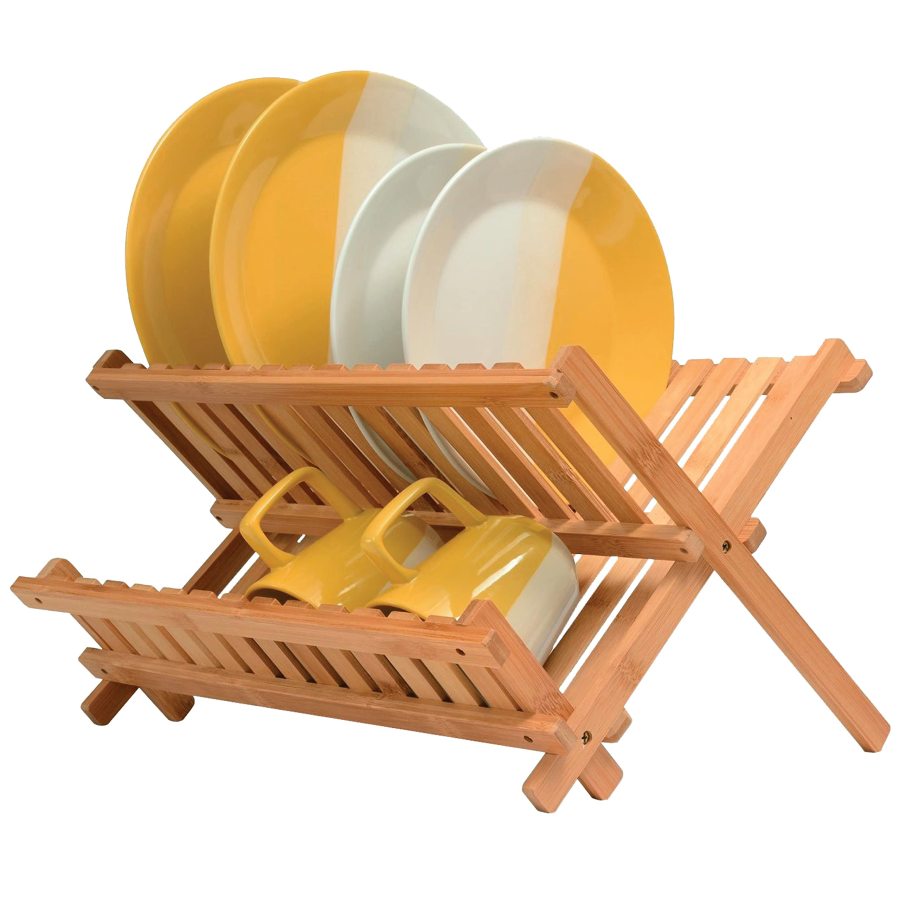
A bamboo folding dish drying rack (or bamboo/teak folding dish drying rack) is a kitchen countertop organizer primarily made from natural bamboo or teak. It is designed for air-drying hand-washed dishes or for everyday dishware storage. Its core selling points are the space-saving 'X'-shaped foldable design that conserves valuable counter space and the aesthetic value provided by natural materials. These products typically feature two or three tiers, with some integrating hanging utensil holders or including absorbent mats. The following table illustrates the key characteristics of consumer behavior in this category.
| Dimension | Segment | Description |
|---|---|---|
| Need Driver Type | Planned Purchase / Emergency-driven Purchase | Purchases are often driven by kitchen renovation needs, replacing traditional materials, or emergency situations like dishwasher failure, with clear expectations for countertop organization and aesthetics. |
| Purchase Frequency | Low Frequency | Dish racks are durable goods; users typically consider replacement only after several years unless significant quality issues arise. |
| Decision Complexity | Medium | Consumers compare information, weighing factors such as material aesthetics, actual dimensions, capacity, folding convenience, and mold resistance. |
| Price Sensitivity | Medium | Price is an important consideration, but users are willing to pay a reasonable premium for natural materials, design appeal, and claimed durability. |
| Emotional Dependency | Medium | The product primarily fulfills a practical function, but the natural beauty and eco-friendly attributes of bamboo/teak can provide emotional value through a sense of home warmth and environmental consciousness. |
II. User Personas & Usage Scenarios
2.1 Space-Conscious Modern Homemaker
🎯 Lives in an apartment or small home, values kitchen countertop tidiness and home aesthetics, prefers simple, natural-style kitchenware.
| Typical Usage Scenarios | Core Pain Points | Primary Purchase Drivers |
|---|---|---|
|
|
|
2.2 Eco-Conscious & Quality-Focused Home Enthusiast
🎯 Focuses on product material eco-friendliness, durability, and safety. Has high-quality standards for kitchenware, values a healthy lifestyle, and is willing to pay a premium for a better experience.
| Typical Usage Scenarios | Core Pain Points | Primary Purchase Drivers |
|---|---|---|
|
|
|
III. User Needs Hierarchy (KANO Model)
3.1 Basic Needs (Must-Haves)
- Effective Draining: Effectively drains water from washed dishware, prevents water pooling, and inhibits bacterial growth.
- Basic Load-Bearing: Stably holds everyday plates, bowls, and cups without easily tipping over or deforming, ensuring safety.
- Easy to Clean: Material surface is easy to wipe down, doesn't retain stains, facilitates daily maintenance, and keeps the product clean.
3.2 Performance Needs (Linear Satisfiers)
- Space Saving: Foldable or compact design allows for convenient storage when not in use, freeing up valuable kitchen counter space.
- Multi-Tier Categorization: 2-tier or 3-tier structure allows for categorizing different types of dishware, improving storage efficiency and drying speed.
- Aesthetic Design: Bamboo/teak texture coordinates with kitchen decor, enhancing overall aesthetics and home warmth.
- Utensil Holder Section: Includes a detachable or hanging utensil holder for conveniently drying small items like chopsticks, knives, and forks, preventing mixing.
- Included Drying Mat: Provides an absorbent mat to effectively catch drips, protecting the countertop from water stains and reducing extra cleaning.
3.3 Excitement Needs (Delighters)
- Antimicrobial & Mold-Resistant Treatment: Product undergoes special mold-resistant treatment or antimicrobial coating, effectively inhibiting mold growth, extending lifespan, ensuring hygiene, and providing greater user peace of mind.
- Multi-Purpose Expansion: Beyond draining, can be used for storing cutting boards, spice jars, or even as a decorative shelf, achieving versatility and enhancing product value.
- Smart Adjustable Structure: Features flexible height or width adjustment to accommodate different-sized dishware or kitchen spaces, providing a personalized user experience.
3.4 Unmet Needs & Opportunities
-
Long-Term Mold Resistance: Users commonly report that despite claims of natural moisture resistance, bamboo drying racks still easily develop mold and turn black in long-term damp environments, severely contradicting expectations.
User Reviews (VOC) I don't recommend this product. Creates mold fast. I wish I could get a refund // Product is moldy after a month of use. // This dish drainer started growing mold very quickly, not worth the money. // It turns black immediately within 1 week of use.
-
Size Compatibility: Existing product sizes inadequately support large plates, bowls, pots, or stemware, or don't match specific sink/cabinet spaces, leading to instability or wasted space.
User Reviews (VOC) Unless you use it only for flat plates (as shown), you'll run out of drying space pretty quick, its relatively small. // Does not open wide enough, some of my regular sized plates and bowls don't fit in the rack very well. // Large dishes do not fit well, 11+ inches in diameter are not supported as well.
-
Structural Stability & Dishware Slip Prevention: Some products are reviewed as wobbly with insecure connections; utensil holder design is unreasonable, leading to dishware slipping or holder loosening, affecting safety and user experience.
User Reviews (VOC) The utensil holder could be bigger. // Silverware has fallen through the attached holder. // The angles we're right, had to modify it to open it up a little bit more. // When I put it on the counter, I noticed it was wobbling.
-
Lack of Integrated Drainage Function: Most products do not provide a built-in or attached water collection tray/drainage channel. Drips fall directly onto the countertop, requiring users to lay down extra mats or wipe frequently, adding inconvenience.
User Reviews (VOC) no drainage spout, must put something underneath - towel. // I bought a drying mat to go underneath it, and extra dishes fit nicely there. // Only problem is that it leaves alot of water on my counter and i have yet to find a good dish mat to soak it all up.
IV. User Decision Drivers
4.1 Key Decision Factors
- Practicality & Capacity: Whether it can effectively drain various daily-washed dishware (plates, bowls, cups, pots) and has sufficient capacity to meet family or individual needs is a core factor in the purchase decision.
- Space Saving: Foldable or compact design, and whether it can be conveniently stored when not in use without permanently occupying valuable kitchen counter space, is particularly important for users in small homes.
- Material & Appearance: The aesthetic, natural kitchen ambiance brought by natural bamboo/teak material, whether it coordinates with home decor, and whether it avoids the rust-prone or cheap feel of traditional metal or plastic.
- Stability & Long-Term Durability: Whether the overall structure of the drying rack is stable and doesn't wobble, whether it can be used long-term without easily breaking or deforming, and most importantly, whether it can effectively resist mold growth, ensuring hygiene and lifespan.
4.2 Secondary Decision Factors
- Mold Resistance & Easy Cleaning: Whether the product is easy for daily cleaning and maintenance, and can effectively resist mold growth to maintain hygiene, is an important consideration for enhancing user satisfaction.
- Additional Features: Whether it has independent utensil holders, included absorbent mats, and other complementary features to enhance convenience and simplify kitchen workflow.
- Price: Whether the product price is competitive and meets psychological expectations, under the premise of satisfying core functionality and quality requirements.
- Brand Reputation / Reviews: Paying attention to other users' real usage feedback and the product's long-term performance, especially regarding mold and durability reviews, serves as a reference for purchase decisions.
V. Selling Points & Competitive Landscape
5.1 Selling Point Analysis
5.1.1 Standard Features (Points of Parity)
- Foldable Design: Universally emphasizes the X-shaped structure for space saving, easy storage when not in use, suitable for small kitchens and users pursuing countertop tidiness.
- Natural Bamboo Material: Highlights eco-friendliness, safety, absence of chemicals, and greater aesthetics compared to plastic or metal, catering to healthy, eco-conscious lifestyle concepts.
- Multi-Tier Capacity: Typically 2-tier or 3-tier design, claiming to hold multiple dishes, bowls, and cups for efficient drying and categorized storage.
- Easy to Clean: Claims a smooth surface, easy to hand-wash or wipe, keeping it clean and reducing maintenance burden.
5.1.2 Key Differentiators
- Included Utensil Holder: Provides an independent or hanging utensil holder for conveniently drying small items like chopsticks, knives, and forks; some claim to have drainage holes.
- Included Absorbent Mat: Offers an additional quick-dry absorbent mat to catch drips, protecting the countertop from moisture, presented as an integrated solution.
- 3-Tier Design: Compared to 2-tier, offers greater capacity and more categorization space, especially emphasizing placement for tall glasses or baby bottles, meeting large family needs.
- Teak Material: A few products use teak, emphasizing its superior water resistance, crack resistance, and durability compared to bamboo, along with its unique texture, positioning it in the high-end market.
5.1.3 Unique Selling Propositions (USPs)
- Specific Size Optimization: Some product titles or descriptions mention fitting specific plate sizes (e.g., 18 plates) or small spaces, emphasizing the 'perfect size' to attract precise users.
- 2-Year Warranty: Very few brands offer a relatively long warranty period (e.g., Kozy Kitchen), using this to enhance consumer purchase confidence and reduce decision risk.
- Upgraded Coating: Mentions product surface having 'special protective lacquer' or 'food-grade oil finish' to enhance durability, stain/moisture resistance, and ensure food contact safety.
5.2 Competitive Landscape
5.2.1 Market Maturity
The bamboo folding dish drying rack category market has matured, with high homogenization in product functionality and appearance design. Most products offer basic selling points like foldability, multi-tier design, and natural bamboo/teak material. Top products maintain competitiveness through accumulated reviews and optimized product details, but core pain points remain fundamentally unresolved.
5.2.2 Innovation Trends
Current innovation trends are mainly reflected in material upgrades (e.g., teak replacing bamboo to enhance moisture resistance), feature integration (e.g., built-in absorbent mats, more optimized utensil holder design, upgrading from 2 to 3 tiers), and improvements in antimicrobial/mold-resistant treatment processes. Some brands also attempt to build consumer trust by offering longer warranties, or engage in micro-innovations in details (e.g., bottom non-slip pads, sturdier connection methods), but no disruptive breakthroughs have yet formed.
VI. Marketing Claims vs. Reality Check
The table below analyzes the gap between common marketing claims and actual user experiences in this category:
| Dimension | Marketing Claim | User Reality | Verdict |
|---|---|---|---|
| Durability & Mold Resistance | Natural bamboo material, eco-friendly and durable, stain-resistant and easy to clean, suitable for long-term use, even advertising 'protective lacquer' to enhance durability. | Users commonly report the product developing mold, turning black, or even the wood cracking or coating peeling within a short period (1 week to 1 month), severely contradicting the advertised 'durability' and 'easy to clean' claims. | Sellers severely underestimate the natural disadvantage of bamboo being prone to moisture and mold in high-humidity kitchen environments. Through false claims or insufficient protective measures, they cause serious hygiene and lifespan issues for users, severely depleting consumer trust in natural materials. |
| Capacity & Dishware Compatibility | Large capacity design, can hold 18/30/51 pieces of dishware, suitable for the whole family, even emphasizing placement for tall glasses, pots. | Multiple users report the product size is too small; large plates (e.g., 11+ inches), wide bowls, or stemware are difficult to place stably; some utensil holder designs are unreasonable, small items (e.g., knives, forks, spoons) easily slip through gaps. | When advertising large capacity, sellers fail to fully consider the diversity of actual dishware sizes and users' need for placement stability, leading to product design being disconnected from core user scenarios, causing inconvenience and experience gaps. |
| Structural Stability & Craftsmanship | Sturdy and stable, uses X-shaped structure, durable, fine craftsmanship. | Some users report the product wobbles and is unstable; connection points are only secured with small nails or glue, easily coming loose; utensil holder mounting holes are misaligned or have design flaws causing tilting. | Product craftsmanship and structural details have obvious defects, leading to poor overall stability and durability, increasing the risk of dishware slipping, and damaging user confidence and the product's long-term value. |
Key Takeaway: The market generally suffers from excessive beautification and parameter inflation regarding the durability and mold resistance of bamboo drying racks, leading to a severe disconnect between user expectations and actual experience.
VII. Supply-Demand Misalignment Analysis
The table below highlights mismatches between seller focus and buyer priorities:
| Dimension | Seller Behavior | User Focus | Verdict |
|---|---|---|---|
| Long-Term Mold Resistance & Hygiene Assurance | Generally emphasize 'natural bamboo', 'eco-friendly, chemical-free', 'easy to clean', but are vague or evasive about the challenges of mold resistance and maintenance requirements in damp environments. Even advertising 'special protective lacquer' fails to effectively solve the problem. | "Mold is the biggest pain point, turned black after a month of use", "Mold spots reappear after cleaning, simply cannot be used in wet areas", "The hygiene condition of bamboo drying racks worries me a lot." | Sellers fail to squarely address the core weakness of bamboo material in high-humidity kitchen environments. This leads to user trust in 'natural' being severely depleted by mold issues, directly impacting the product's core functional value and user experience. |
| Dishware Compatibility & Load-Bearing Stability | Emphasize 'large capacity', 'multi-tier design', but lack detailed design and clear explanation regarding the stability and convenience of actually placing different-sized dishware. Also insufficiently address the utensil holder's slip-through problem. | "Large plates don't fit, can only lie flat", "Wine glasses are unstable, easily tip over", "Utensil holder design is awkward, small items always fall", "The drying rack wobbles a bit overall, afraid to put heavy items." | Sellers' understanding of 'capacity' remains at quantity stacking, neglecting users' deeper needs for dishware size diversity and overall drying rack stability, causing a perceived gap in core practicality. |
| Integrated Drainage & Countertop Protection | Most products do not mention built-in or attached water collection trays. A few provide absorbent mats but generally do not emphasize drainage convenience, defaulting users to solve countertop water pooling themselves. | "Must put a towel underneath, otherwise the countertop gets wet", "Water still pools under the absorbent mat, causing mold, needs frequent moving and cleaning", "Hope for a direct drainage function, worry-free and effortless." | Sellers fail to consider 'dry countertop' as an important factor in product design, shifting the responsibility of drainage to users, increasing user burden and potential countertop damage risk. |
Key Takeaway: Sellers over-invest marketing resources in the 'natural & eco-friendly' and 'foldable storage' aspects of bamboo drying racks, but collectively neglect users' urgent needs regarding long-term mold resistance of the material, size compatibility, and integrated drainage.
VIII. Strategic Opportunities & Recommendations
8.1 Long-Lasting Antimicrobial & Mold-Resistant Bamboo Drying Rack
8.1.1 Target Audience & Pain Points
⚡️ Pain Points Addressed: Bamboo drying racks easily develop mold and turn black in damp environments, posing hygiene risks and affecting product lifespan and user experience.
8.1.2 Action Plan
Collaborate with professional institutions to develop and adopt eco-friendly, food-grade long-lasting antimicrobial & mold-resistant coating technology certified by FDA/EPA. Optimize structural design to reduce water-trapping spots. Consider including a set of bamboo-specific cleaning and maintenance solution, and provide detailed daily care instructions.
| Tech Complexity | Medium |
| Cost Impact | Medium Impact |
| Trade-off Warning | Long-lasting antimicrobial coating must ensure food-grade safety without affecting bamboo's natural texture. May slightly increase product thickness, but significantly enhances user value. |
| Price Band | Only viable above $29.99 |
8.1.3 Marketing Strategy
Emphasize "Long-lasting antimicrobial, say goodbye to mold! Enjoy a persistently clean natural bamboo kitchen, worry-free health." Establish absolute advantage in hygiene and safety through authoritative lab mold test reports and explanations of the antimicrobial coating technology.
8.2 Multi-Functional Integrated Drainage Drying Rack
8.2.1 Target Audience & Pain Points
⚡️ Pain Points Addressed: Lack of integrated water collection tray leads to countertop water pooling, requiring extra absorbent mats, and potential bottom sliding.
8.2.2 Action Plan
Design a pull-out or channeled bottom water collection tray (using biodegradable PP or food-grade silicone). Ensure water drips directly into the sink or are collected centrally. Add embedded non-slip silicone pads on the bottom to enhance stability.
| Tech Complexity | Low |
| Cost Impact | Low Impact |
| Trade-off Warning | Integrated water tray may slightly increase overall product thickness or storage volume, but practicality far outweighs the sacrifice. |
| Price Band | Only viable above $19.99 |
8.2.3 Marketing Strategy
Highlight "Dry countertop, not a single drop! Say goodbye to water stain worries, enjoy a clean kitchen." Use comparison videos to showcase the significant difference in countertop dryness between racks without integrated drainage and this product. Emphasize the sense of security brought by the non-slip design.
8.3 Wide Slot / Adjustable Compatibility Drying Rack
8.3.1 Target Audience & Pain Points
⚡️ Pain Points Addressed: Poor size compatibility; large plates/bowls, stemware, or oddly shaped dishware are difficult to place stably; utensil holder anti-slip design is inadequate.
8.3.2 Action Plan
Increase the effective width and depth of the top plate slots to ensure stable placement of plates over 12 inches and deep bowls. Design adjustable or detachable utensil holders, raise sidewalls, and optimize bottom grids to prevent knives/forks from slipping. Provide detailed size compatibility guides in the listing.
| Tech Complexity | Medium |
| Cost Impact | Medium Impact |
| Trade-off Warning | Increasing slot width or adding adjustment mechanisms makes the product structure more complex, may slightly increase manufacturing cost and weight, but improves applicability. |
| Price Band | Only viable above $24.99 |
8.3.3 Marketing Strategy
Emphasize "All dishware sizes, one rack handles it! A highly efficient drying solution tailored for your kitchen, no more pickiness." Use real photos/videos of the product holding various large dishware and stemware to visually demonstrate its powerful compatibility.
8.4 High-End Teak Series Drying Rack
8.4.1 Target Audience & Pain Points
⚡️ Pain Points Addressed: Bamboo is prone to mold and lacks sufficient durability; users seek higher quality, longer-lasting materials while maintaining aesthetics.
8.4.2 Action Plan
Use Grade A Thai/Myanmar teak, highlighting its natural water resistance, crack resistance, decay/mold resistance, and unique luxurious grain. Optimize connection craftsmanship, use stainless steel screws instead of small nails, enhancing overall structural strength.
| Tech Complexity | Low |
| Cost Impact | High Impact |
| Trade-off Warning | Teak density is higher than bamboo, product may be slightly heavier; cost increases significantly, directly impacting price, requiring precise targeting of the high-end market. |
| Price Band | Only viable above $39.99 |
8.4.3 Marketing Strategy
Highlight "Selected Teak, a Kitchen Classic-Enduring Durability, Timeless Taste, Showcasing Your Sophisticated Lifestyle." Use high-end photography to showcase teak's unique grain and color, emphasize its maintenance advantages and lasting value far exceeding bamboo, crafting a luxurious taste image.