Amazon US Market Analysis: Pet Vehicle Ramps Category
📊 Executive Summary
📈 Market Trends
The pet vehicle ramp market values both portability and safety, but detailed user experience remains a pain point.** Market demand revolves around protecting pet joints and facilitating owner portability, making foldable, high-load, and anti-slip features standard. However, consumer expectations for actual slip resistance, structural stability, and operational ease are rising, which traditional designs struggle to meet. The market is evolving towards more refined, user-centric experiences. **Balancing 'Slip Resistance' with 'Lightweight/Stability' is a key challenge.
⚡ Major Pain Points
Inflated slip resistance claims, poor side door compatibility, and pinching during operation are frequent complaints. The user's most critical pain point is the severe discrepancy between product slip resistance and marketing claims, leading to pet slips and injuries. Secondly, most products fail to perfectly fit sedan/SUV side doors, greatly limiting usage scenarios. Simultaneously, there is a design conflict between lightweight and stability, and folding operations are often un-smooth and prone to pinching, severely impacting user experience and trust.
💡 Selection Opportunities
Deep dive into safety details, balance lightweight with stability, expand scenario compatibility. Market opportunities lie in: 1. Developing new high-grip, wear-resistant anti-slip surfaces to completely solve the pet slipping problem. 2. Innovating structures to achieve a balance of ultra-lightweight and ultra-stable to meet premium user needs. 3. Designing multi-dimension adjustable universal compatibility solutions to improve side door and multi-vehicle compatibility. 4. Optimizing folding mechanisms to ensure safe and smooth operation. These opportunity points focus on core pain points and have the potential, through technological upgrades and user experience optimization, to achieve product premiumization and market breakthrough.
I. Analysis Overview
1.1 Introduction & Report Scope
This report analyzes the 'Vehicle Ramps' category (Pet Vehicle Ramps) in the US Amazon market, focusing on target user personas, core needs, decision drivers, market communication, and potential opportunities.
1.2 Category Snapshot
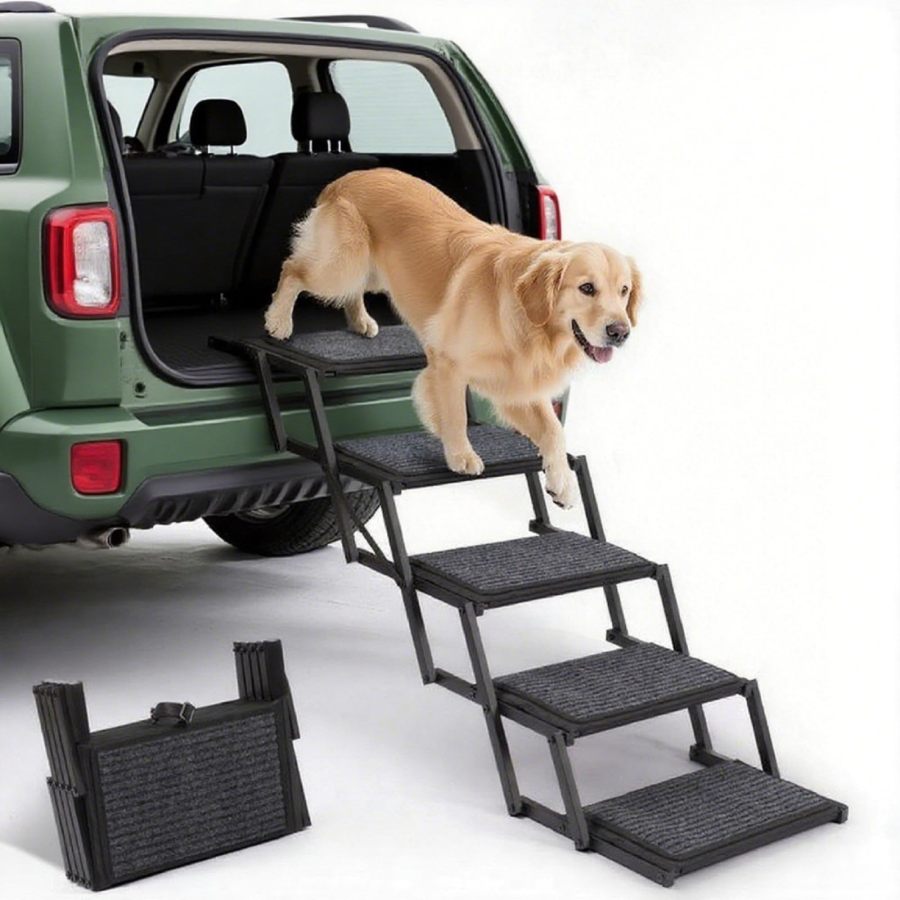
Pet vehicle ramps are products specifically designed to help pets safely and easily access high-clearance vehicles (like SUVs, trucks) or elevated furniture (like beds, sofas). The category is primarily divided into two forms: ramps and stairs/steps. They often feature foldable, lightweight designs to balance portability and storage, effectively protecting pet joint health and reducing owner burden. The following table illustrates the key characteristics of consumer behavior in this category.
| Dimension | Segment | Description |
|---|---|---|
| Need Driver Type | Planned Purchase / Emergency-driven Purchase | Purchases typically stem from solving an immediate problem of pet mobility (e.g., accidental injury) or as a preventive measure to protect pet joints (e.g., for senior dogs, puppy training). |
| Purchase Frequency | Low Frequency | It is a durable good with low purchase frequency. Purchases are usually triggered by a pet aging, getting injured, growing larger, or after acquiring a new high-clearance vehicle. |
| Decision Complexity | Medium / Moderately Complex | Consumers need to comprehensively evaluate product dimensions, stability, slip resistance, load capacity, and compatibility with their specific vehicle, involving multi-faceted considerations. |
| Price Sensitivity | Medium-High | Users are price-conscious but willing to pay a reasonable premium to ensure pet safety, comfort, and long-term health, especially demanding higher functionality and quality. |
| Emotional Dependency | High | Purchase decisions are strongly driven by deep affection for pet health and well-being. The product's ability to enhance the pet's quality of life and alleviate owner worry is a significant emotional value consideration. |
II. User Personas & Usage Scenarios
2.1 Caring Pet Owner (Senior/Injured Pet)
🎯 Owns a senior, injured, or mobility-impaired pet, views the pet as a family member, and highly values its health and comfort.
| Typical Usage Scenarios | Core Pain Points | Primary Purchase Drivers |
|---|---|---|
|
|
|
2.2 Outdoor Adventurer / Large Dog Owner
🎯 Active pet owner who frequently engages in outdoor activities or training with medium to large pets, demanding high product durability and compatibility with various vehicles.
| Typical Usage Scenarios | Core Pain Points | Primary Purchase Drivers |
|---|---|---|
|
|
|
III. User Needs Hierarchy (KANO Model)
3.1 Basic Needs (Must-Haves)
- Stable Support: The ramp must be sturdy, able to bear the pet's weight without shaking, bending, or tipping during use, providing the pet with a full sense of security and avoiding collapse or rollover.
- Reliable Slip Resistance: The surface material must provide sufficient friction to prevent the pet from slipping, especially in adverse conditions like wet, rainy, snowy, or muddy environments, ensuring safety.
- Easy to Store: The product should fold or retract easily, with a compact folded volume for convenient carrying and storage in the car trunk or a home corner, without taking up too much space.
3.2 Performance Needs (Linear Satisfiers)
- Ramp/Stair Comfort: Ramp design should be as gentle as possible; stair spacing and depth should suit the pet's gait, effectively reducing pressure on joints, especially for senior or injured pets.
- Lightweight Design: Product weight should be reasonably controlled for easy carrying and setup by the owner (especially women or those with less strength), reducing operational burden and physical exertion.
- Universal Vehicle Compatibility: The product should flexibly adapt to different heights of sedans, SUVs, pickups, and other vehicle types, meeting diverse usage scenarios like trunk and side door access.
- Material Durability: Use of high-quality durable materials like aluminum alloy or premium engineering plastics ensures the product resists damage and corrosion over long-term use, extending its lifespan.
3.3 Excitement Needs (Delighters)
- One-Click Quick Deployment/Folding: Provides an extremely convenient user experience, allowing quick setup and storage without effort or complicated steps, saving time and energy.
- Multi-Function Integration: Beyond vehicle access, it can also serve as a pet bed/sofa ladder, or even a simple workbench during camping, achieving multi-purpose use and adding value.
- Night Visibility & Safety: Integrated reflective strips, LED lighting, or fluorescent markings improve safety for nighttime use, protecting pets and owners in low-light conditions.
- Anti-Pinch/Anti-Scratch Design: Added protective measures at folding joints to prevent user pinching; soft anti-scratch pads on vehicle contact surfaces protect the vehicle's finish, enhancing user experience details.
3.4 Unmet Needs & Opportunities
-
Insufficient Slip Resistance: Although many products claim to be anti-slip, users commonly report that pets still slip during actual use, especially in wet weather or on steeper slopes, posing a safety hazard.
User Reviews (VOC) The ramp is a little slippery but that could be the shortened length and angle. // The rubber coating is slick so my 115 lbs chocolate lab has a hard time gripping it to walk up. // The carpet on the ramp does not offer the slightest amount of grip to any of my three dogs' paws.
-
Poor Side Door Compatibility: Most products do not fit well with sedan or SUV side doors, often being too wide or having too steep an angle for stable placement, limiting usage scenarios and convenience.
User Reviews (VOC) Too wide for our car door. // doesn't fit in SUV from the car door side. Would only work if planning on having pet in the back. // This is strictly for SUV. I bought it initially for a car but it won't fit. I then tried it on our Dodge Ram and it won't fit there either.
-
Difficulty Balancing Lightweight & Stability: Users generally want products that are both lightweight for portability and sturdy/stable without wobbling, but existing products often fail on one front, forcing users to compromise.
User Reviews (VOC) It is a bit heavy but it is sturdy. // It is heavy, cumbersome, and we have managed to pinch fingers while doing it. // While I did like that it was lighter than other options it also wasn't quite as sturdy as I would have liked.
-
Un-smooth Folding Operation or Pinch Risk: Some products have hinges that easily pinch fingers during folding/unfolding, or the operation is jerky and not smooth, affecting the user experience and perception of product safety.
User Reviews (VOC) Be careful when folding and unfolding the ramp-watch your fingers on the pinch points where the hinges are! // It is like a flimsy noodle except metal, heavy, and sharp. My first time using I pinched a finger and scratched my leg on a corner.
IV. User Decision Drivers
4.1 Key Decision Factors
- Product Stability: Whether the ramp wobbles, bends, or tips during use directly affects whether the pet dares to use it and the safety during use, making it the consumer's most critical consideration.
- Slip Resistance: Whether the surface friction is sufficient to effectively prevent the pet from slipping and falling under various weather conditions is directly related to pet safety and the owner's peace of mind.
- Load Capacity: Whether the product can safely and reliably support the pet's weight, especially for large, extra-large dogs, or multi-dog households, is a key indicator of product reliability.
- Pet Acceptance & Comfort: Whether the ramp/stair design is gentle and comfortable, the material is pet-friendly, and if there is any strange noise during use directly affects whether the pet is willing and happy to use it.
4.2 Secondary Decision Factors
- Storage Portability: The folded size, product weight, and the presence of a handle determine the convenience of storing the product in the car or at home and the ease of daily carrying.
- Vehicle Compatibility: Whether the ramp perfectly matches the height and width of the owner's vehicle (trunk/side door) directly impacts usage efficiency and convenience, avoiding extra adjustments.
- Material Durability: Whether the product material can withstand long-term use, wear, and resist outdoor environmental factors (e.g., sun, rain) determines product lifespan and cost-effectiveness.
- Ease of Setup: Whether setting up and putting away the ramp is simple and quick, ideally requiring no complex operations or tools, enabling fast deployment and storage, saving time.
V. Selling Points & Competitive Landscape
5.1 Selling Point Analysis
5.1.1 Standard Features (Points of Parity)
- Anti-Slip Surface: Most products emphasize anti-slip textures, rubber mats, or fabric surfaces to ensure safe pet climbing and reduce slip risks.
- Foldable & Portable: Almost all products highlight their foldable design for easy storage and carrying, emphasizing space-saving in vehicles and homes.
- Sturdy & Durable/High Load Capacity: Widespread promotion of aluminum alloy/metal frame structures with high load capacity (commonly claimed 150-250 lbs) to guarantee product stability.
- Joint Protection: Targeting senior, injured, or small dogs, emphasizing reducing joint pressure from jumping, promoting pet health, and alleviating owner concerns.
5.1.2 Key Differentiators
- Extra Long/Wide Design: Some products offer gentler slopes or larger activity space by increasing length or width, enhancing pet comfort and sense of security during use.
- Stair-Style Design: Differentiating from traditional ramps, providing a climbing experience closer to stairs, which some pets (especially those unaccustomed to ramps or smaller breeds) find easier to accept, reducing psychological resistance.
- Multi-Segment Folding: Evolving from traditional two/three-fold designs to four/five-fold or even more segments, achieving a more compact storage volume and more flexible height adjustment, enhancing portability.
- Easy Setup/Quick Deployment: Highlighting features like no assembly required, quick unfold/fold, and included safety attachment hooks (e.g., connecting to vehicle latch) to reduce setup and storage time.
5.1.3 Unique Selling Propositions (USPs)
- Night Reflective Strips/Visibility: A few products integrate reflective strips or lighting designs to improve nighttime use safety, ensuring visibility for pets and owners in low-light conditions.
- Vehicle Anti-Scratch Protection: Adding foam, EVA pads, or rubber sleeves on the ramp's vehicle contact surface to prevent paint scratches, protecting the vehicle's appearance and boosting user satisfaction.
- Paw Anti-Trap Design: For stair-style products, optimizing grid or step gap design to prevent pet paws from getting stuck, enhancing usage safety and comfort.
- Premium Comfort Fabric: Using materials like Oxford cloth with EPE pearl cotton padding, PVC loop fiber, or artificial turf to enhance pet walking comfort and traction, while being easy to clean.
5.2 Competitive Landscape
5.2.1 Market Maturity
The pet vehicle ramp market has reached a medium-high level of maturity. Core functions and basic selling points (e.g., anti-slip, foldable, high load capacity) are highly homogenized. However, some manufacturers still compete through differentiation in product form (ramp/stairs), dimensions (length/width), folding mechanisms, anti-slip materials, and added features (e.g., anti-pinch, night visibility). The price range is wide, from entry-level plastic ramps to high-end metal stairs, indicating a relatively competitive market.
5.2.2 Innovation Trends
Current innovation trends are mainly reflected in: 1. More Refined Slip-Resistance Technology: Evolving from simple sandpaper/rough surfaces towards composite materials with better grip and pet paw comfort, such as biomimetic textures or embedded rubber. 2. Modular/Multi-Segment Folding Design: Progressing from traditional two/three-fold to four/five-fold or even more segments, achieving a more compact storage volume and more flexible slope/height adjustment. 3. User Experience Detail Optimization: Increasing focus on anti-pinch features, vehicle paint protection, balancing lightweight and stability, and ease of use (one-hand operation, training-friendly), enhancing overall convenience and safety.
VI. Marketing Claims vs. Reality Check
The table below analyzes the gap between common marketing claims and actual user experiences in this category:
| Dimension | Marketing Claim | User Reality | Verdict |
|---|---|---|---|
| Slip Resistance | Professional anti-slip surface, high traction, will not slip under any weather conditions, ensuring safe pet climbing. | Users commonly report that product surfaces are actually slippery, especially when pet paws are wet, slopes are steep, or materials wear out, causing dogs to slip or even get injured, with grip far below advertised levels. | A typical case of marketing rhetoric disconnected from real-world experience. Sellers fail to fully understand the complexity of pet gait, paw shape, and actual usage environments, turning a core safety promise into a frequent user pain point. |
| Load Capacity & Structural Stability | 250-400 lbs ultra-strong load capacity, high-quality aluminum alloy/metal structure, sturdy with no wobble, suitable for all large dog breeds. | Multiple user feedback indicates products wobbling, mesh deforming, or even frame breaking after several uses (e.g., mesh deforming with an 85 lb dog, hinge bending when a person stands on it), severely contradicting claims of 'ultra-strong load capacity' and 'sturdy stability'. | Inflated load capacity claims or use of cheap metal components, stacking parameters at low cost, failing to deliver on core product promises of safety and reliability, severely eroding user trust. |
| Folding Operation Safety & Smoothness | Lightweight and easy to fold, quick setup, portable storage, simple operation. | Multiple reviews mention products being 'easy to pinch fingers', 'sharp hinges' during folding/unfolding; some products have jerky, cumbersome operations, failing to achieve 'quick setup' or 'smooth storage'. | Product design fails to adequately consider user operation details and safety, turning a convenience selling point into a potential injury risk, negatively impacting user perception of product ergonomics. |
Key Takeaway: The pet vehicle ramp market exhibits widespread parameter inflation and scenario-based experience exaggeration, especially regarding slip resistance, load capacity, and actual stability. There is a significant gap between marketing promises and user reality.
VII. Supply-Demand Misalignment Analysis
The table below highlights mismatches between seller focus and buyer priorities:
| Dimension | Seller Behavior | User Focus | Verdict |
|---|---|---|---|
| Actual Slip Resistance | Sellers generally heavily emphasize 'anti-slip surface', 'high traction' in listings, but mostly remain at the level of textual descriptions and generic images, lacking empirical support or technological innovation investment. | Users frequently complain about 'surface too slippery', 'dog afraid to walk', 'slippery on rainy days'-these are high-frequency, core pain points directly impacting use, not addressed by product performance. | Sellers market slip resistance as a standard feature but under-invest in product R&D, resulting in poor performance. This is a typical case of insufficient supply of a core function, causing strong user dissatisfaction. |
| Multi-Vehicle Side Door Compatibility | Sellers generally claim products are 'widely suitable for SUVs, trucks, sedans', but designs mostly focus on trunk use. Few products offer stable, safe adaptation solutions specifically for sedan or SUV side doors. | Users report products being 'too wide for the side door', 'cannot be used on a sedan's rear door', causing product failure in specific high-frequency scenarios and limiting its claimed universal value. | Sellers are overly optimistic in product universality claims, failing to deeply understand users' actual needs when using different vehicle models (especially sedans) from the side door, revealing a clear market blind spot. |
| Product Weight & Carrying Experience | Sellers generally emphasize product 'lightweight' or 'portability', but actual product weight (e.g., 13-20 lbs) still feels heavy to some users (especially the elderly), and lacks user-friendly carrying assistance design. | User feedback mentions products being 'a bit heavy', 'cumbersome to carry', especially with frequent use or for those with limited strength, where portability experience falls short of expectations, even causing frustration due to 'pinched fingers'. | When claiming lightweight, sellers overlook users' actual perception of 'lightweight' and the overall experience of 'easy carrying', failing to provide a truly burden-free solution, leading to a disconnect between marketing and experience. |
Key Takeaway: Sellers exhibit a collective supply gap on core pain points like slip resistance and vehicle compatibility, while over-supplying certain secondary features, leading to a significant misalignment between supply and demand focus.
VIII. Strategic Opportunities & Recommendations
8.1 New High-Grip, Wear-Resistant Anti-Slip Surface
8.1.1 Target Audience & Pain Points
⚡️ Pain Points Addressed: Insufficient slip resistance; pets still slip during use, lacking a sense of security.
8.1.2 Action Plan
Develop composite materials with high friction coefficients based on biomimetic principles, or adopt designs with embedded rubber strips/claw-like textures to ensure excellent grip in both dry and wet conditions. Consider introducing replaceable modular anti-slip pads for users to swap based on wear or specific scenarios. Ensure materials are wear-resistant and UV-resistant.
| Tech Complexity | Medium |
| Cost Impact | Medium Impact |
| Trade-off Warning | New materials may slightly increase thickness or cost, but offer immense user experience improvement. |
| Price Band | Only viable above $39.99 |
8.1.3 Marketing Strategy
Emphasize 'Innovative Biomimetic Anti-Slip Tech, Every Climb Steady as a Rock'; showcase through comparison videos pets climbing confidently on dry and wet surfaces; highlight 'All-Weather High Traction, Goodbye to Slip Anxiety' and 'Paw-Friendly Comfort, Long-Term Use Worry-Free'.
8.2 Ultra-Lightweight, High-Strength, Multi-Function Folding Solution
8.2.1 Target Audience & Pain Points
⚡️ Pain Points Addressed: Difficulty balancing product weight and stability; folding operation is cumbersome and poses a pinch risk.
8.2.2 Action Plan
Utilize advanced high-strength lightweight materials (e.g., T6 aerospace aluminum alloy), optimize truss structure design to achieve a balance of ultra-lightweight and zero wobble. Redesign hinges and folding joints, incorporating anti-pinch safety guards and automatic locking/one-hand quick-deploy mechanisms. Consider multi-segment folding for more compact storage.
| Tech Complexity | High |
| Cost Impact | High Impact |
| Trade-off Warning | Using aerospace-grade aluminum alloy or carbon fiber will significantly increase BOM cost, requiring a shift to the premium price segment; more complex folding mechanisms may slightly increase part count. |
| Price Band | Only viable above $89.99 |
8.2.3 Marketing Strategy
Position as 'Light as a Breeze, Steady as a Mountain'; showcase 'Aerospace-Grade Material, Load Capacity Worry-Free'; provide product extreme load and anti-twist test videos; emphasize 'One-Second Open/Close, Safe Anti-Pinch Design'; position as a high-end, high-performance, worry-free travel solution.
8.3 Multi-Dimension Adjustable, Universally Compatible Vehicle Ramp
8.3.1 Target Audience & Pain Points
⚡️ Pain Points Addressed: Poor side door compatibility; cannot effectively match the height and width of various vehicle types, limiting usage scenarios.
8.3.2 Action Plan
Design a platform with width adjustable horizontally to fit sedan side doors, SUV trunks, and pickup beds stably. Introduce multi-segment or stepless height and angle adjustment systems to ensure the gentlest, most comfortable slope at different vehicle heights. Add thick, replaceable anti-scratch buffer pads on vehicle contact surfaces.
| Tech Complexity | Medium |
| Cost Impact | Medium Impact |
| Trade-off Warning | Adding adjustment mechanisms may increase part count, slightly raising complexity or weight, but solves a core pain point. |
| Price Band | Only viable above $49.99 |
8.3.3 Marketing Strategy
Highlight 'Full Vehicle Line Seamless Compatibility, Height Adjustable at Will'; showcase product adaptation videos on various mainstream vehicles (sedan, SUV, pickup side door/trunk); emphasize 'Goodbye to Size Worries, One Ramp for All Travel Scenarios', solving user compatibility anxiety.
8.4 Customized Anti-Scratch & Easy-Clean Surface Design
8.4.1 Target Audience & Pain Points
⚡️ Pain Points Addressed: Lack of protection for vehicle paint; anti-slip surfaces are not easy to clean.
8.4.2 Action Plan
Upgrade the vehicle contact surface foam or rubber pads to more durable, replaceable, and optionally colored premium silicone or TPR material, designed with an easy-to-wipe surface texture. Use detachable, washable, quick-dry materials for the anti-slip pad for easy cleaning.
| Tech Complexity | Low |
| Cost Impact | Low Impact |
| Trade-off Warning | No significant physical side effects, mainly optimizing material selection and design details. |
| Price Band | Only viable above $29.99 |
8.4.3 Marketing Strategy
Emphasize 'Considerate Anti-Scratch Design, Cares for Your Vehicle'; highlight 'Easy-Clean Surface, Mud Disappears Without a Trace'; showcase the advantages of anti-scratch pads and easy-clean surfaces through detail close-ups, reinforcing the product's user-friendliness and practicality.