Amazon US Market Analysis: Plug-in Essential Oil Refills Category
📊 Executive Summary
📈 Market Trends
Consumer demand for home fragrance continues to grow, with a preference for long-lasting, convenient, and natural/healthy solutions. The market is dominated by a few major brands, with third-party compatible products competing on price. However, user demands for real product performance and information transparency are increasing, and tolerance for false advertising and poor quality is decreasing, driving the category towards greater focus on user experience and integrity.
⚡ Major Pain Points
Core pain points center on 'inflated longevity claims,' 'poor compatibility and leakage,' and 'fragrance irritation.' Users are generally disappointed with actual fragrance duration, feeling it doesn't match claims. Unstable compatibility and leakage issues with third-party refills severely impact user experience and safety. Additionally, some fragrances are too strong or chemical-smelling, causing discomfort for sensitive individuals. Confusing, inaccurate Listing information also severely damages brand trust.
💡 Selection Opportunities
The opportunity lies in returning to product fundamentals, deeply cultivating user experience details, and building brand trust through honesty and transparency. Product selection should focus on developing formulas that are truly long-lasting, stable, and evenly diffusing; solving structural issues with third-party compatibility and leakage to ensure safety; launching low-allergen products with precisely controllable fragrance intensity to meet sensitive user needs. Simultaneously, ensure Listing information is completely accurate, standing out in the competitive market through genuine product strength rather than exaggerated marketing.
I. Analysis Overview
1.1 Introduction & Report Scope
This report analyzes the 'Electric' category (plug-in essential oil refills) in the US Amazon market, focusing on target user personas, core needs, decision drivers, market communication, and potential opportunities.
1.2 Category Snapshot
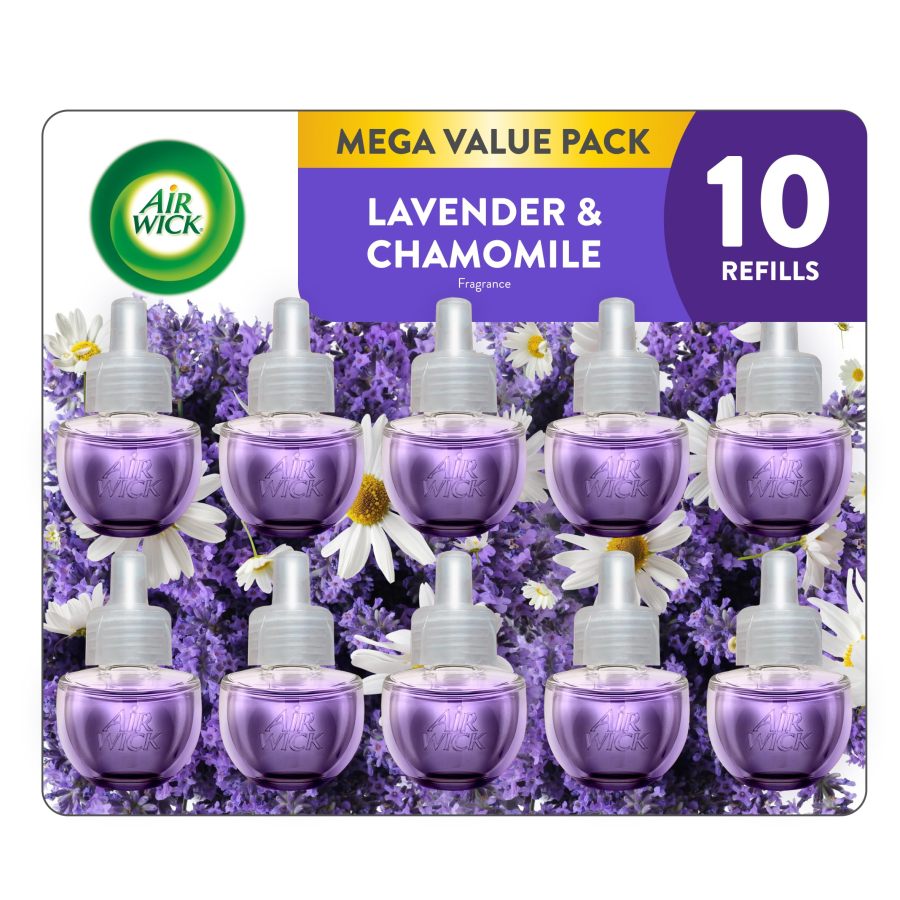
Plug-in essential oil refills are a type of household air freshener that continuously releases fragrance by plugging into a powered warmer, aiming to eliminate odors and improve indoor air quality. These products are typically sold in multi-packs, emphasizing long-lasting fragrance and a variety of scents. They are widely used in bedrooms, bathrooms, living rooms, kitchens, and office spaces, serving as a daily consumable for maintaining a comfortable home environment. The following table illustrates the key characteristics of consumer behavior in this category.
| Dimension | Segment | Description |
|---|---|---|
| Need Driver Type | Habitual Purchase / Planned Purchase | Users typically purchase based on long-term home air freshening needs or to replenish exhausted refills, exhibiting high repurchase rates and planned behavior. |
| Purchase Frequency | Medium Frequency | As a consumable, a single refill lasts for several weeks to months, placing purchase frequency between high-frequency (e.g., food) and low-frequency (e.g., major appliances), typically involving quarterly or semi-annual purchases. |
| Decision Complexity | Medium | Consumers compare scents, longevity, value for money, compatibility, and user reviews across different brands but do not engage in deep technical research. |
| Price Sensitivity | Medium-High | As daily consumables, users are price-sensitive, weighing unit cost, package size, and actual lifespan, seeking high value for money. |
| Emotional Dependency | Medium | The product not only provides functional odor elimination but also delivers psychological pleasure, relaxation, a sense of belonging, and control over the home environment through pleasant fragrances, enhancing overall quality of life. |
II. User Personas & Usage Scenarios
2.1 Urban White-Collar Workers Focused on Home Ambiance
🎯 They pursue a high quality of life, aiming to create a relaxing and pleasant home atmosphere through fragrance, with certain requirements for scent, brand, and product safety.
| Typical Usage Scenarios | Core Pain Points | Primary Purchase Drivers |
|---|---|---|
|
|
|
2.2 Housewives / Pet Owners Troubled by Odors
🎯 Spending long periods at home, they need to deal with daily odors from cooking, pets, dampness, etc., with high demands for odor elimination effectiveness, longevity, and value for money.
| Typical Usage Scenarios | Core Pain Points | Primary Purchase Drivers |
|---|---|---|
|
|
|
III. User Needs Hierarchy (KANO Model)
3.1 Basic Needs (Must-Haves)
- Effective odor removal: The product must significantly reduce or eliminate common household odors, not just mask them with fragrance.
- Non-irritating fragrance: The scent should not cause headaches, respiratory discomfort, allergies, or other physiological reactions, ensuring safe and comfortable use.
- Compatibility with mainstream plug-in warmers: Refills must fit plug-in warmers from major brands like Air Wick, Glade, and Febreze to ensure usability.
- No significant leakage risk: The product should not leak during normal use and transport, avoiding contamination of outlets, walls, or furniture and preventing safety hazards.
3.2 Performance Needs (Linear Satisfiers)
- Long-lasting, stable fragrance: The fragrance should maintain a relatively consistent intensity throughout the product's lifespan, avoiding strong initial scent that rapidly fades.
- Even fragrance diffusion: The fragrance should effectively cover the target room, not just the area near the outlet, providing a uniform scent experience.
- Adjustable fragrance intensity: Users should be able to adjust the scent concentration based on room size, ventilation, or personal preference for personalized control.
- Diverse scent options: Offering a variety of scents to meet user preferences for different seasons, moods, or rooms.
3.3 Excitement Needs (Delighters)
- Natural essential oil ingredients: Emphasizing natural, harmless ingredients to enhance a sense of security and product quality, meeting user pursuit of health and quality.
- Unique, premium scents: Distinct from common scents, offering personalization and pleasure, elevating the home environment's style.
- Low-level indicator function: An intelligent reminder to replace the refill enhances convenience and avoids the awkwardness of running out of fragrance.
- Eco-friendly packaging / ingredients: Using recyclable materials or eco-friendly formulas to meet the needs of environmentally conscious users.
3.4 Unmet Needs & Opportunities
-
Actual fragrance duration is far below claims: Users commonly report that the fragrance noticeably weakens or disappears well before the oil is depleted, or fails to last the advertised number of days even on the lowest setting, leading to frequent replacement and psychological disappointment.
User Reviews (VOC) The scent tends to fade over time, well before the oil runs out. // Within less than a week they were dry. All of them, all around the house. Plus, I had them set on the lowest setting. // I wish they lasted longer. You can adjust how much scent you want. I like a lot of scent so I use it more towards the higher side. However when doing that, they only last a couple weeks.
-
Unstable third-party compatibility and leakage risk: Third-party refills are not fully compatible with mainstream brand warmers, leading to unstable installation, malfunction, or leakage, which not only wastes product but can also contaminate outlets and furniture.
User Reviews (VOC) It does not fit into the regular Glade plug-in unit securely. Upon opening the cap, the liquid was leaking all over my hands. It was in the top of the cap and got it on my clothing. // The refills smell nice and they seem to fit my glade fragrance warmers. It's a good value for the money as well. Not giving it 5 stars yet because I'm not sure the refills actually do work in the warmers I have.
-
Polarizing fragrance intensity and irritation: Some users find the scent too strong and pungent, causing headaches or respiratory discomfort, especially in small spaces; while others find it not strong enough to effectively cover odors in large spaces.
User Reviews (VOC) The smell was overwhelming and overpowering! ... Gave me a headache and made me cough! // Scent is strong. Don't overwhelm the room. Dial down the intensity. // some finding it very strong while others say it's not strong enough.
-
Confusing and inaccurate Listing information: Some Listings have contradictory scent descriptions (e.g., claiming holiday scents that are actually floral/fruity), product capacity mismatches with titles, and even basic errors like 'Date First Available' showing future dates, severely damaging consumer trust.
User Reviews (VOC) The title, bullet points, and product specifications contain multiple inconsistencies and contradictions regarding the scent description (e.g., packaging non-holiday scents as 'Holiday Fragrance', 'Silver Fir' appearing in specs instead of 'Balsam Fir', and 'Mediterranean Fig' being incorrectly labeled as a color attribute). // The 'Date First Available' in the Listing shows a future date (e.g., December 29, 2025).
IV. User Decision Drivers
4.1 Key Decision Factors
- Genuine and effective odor elimination: Whether the product truly eliminates rather than just masks household odors is the core purchase driver, directly impacting home comfort.
- Fragrance longevity and stability: Whether the fragrance releases steadily over a long period, avoiding premature fading, is a key factor in measuring product value and user experience.
- Scent preference and acceptability: Whether the fragrance is pleasant, natural, and non-irritating is highly related to personal olfactory taste and health needs, often a decisive veto factor.
- Product safety (non-irritating / no leakage): No leakage and no irritation are basic safety requirements; any safety hazard will cause users to immediately abandon the purchase or return the product.
4.2 Secondary Decision Factors
- Brand trust and reputation: Well-known brands typically imply higher quality assurance and lower trial-and-error costs, especially for subjective experience products like fragrances.
- Value for money (cost per unit / day): Users consider package size, price, and actual longevity to choose products with lower long-term usage costs.
- Compatibility and universality: Whether the refill fits existing warmers at home determines purchase convenience and economy.
- Adjustable fragrance intensity function: Flexible scent adjustment meets different room sizes and personal preferences, enhancing personalized comfort.
- Environmental commitment and sustainability: Focus on eco-friendly materials and natural ingredients can attract specific environmentally-conscious consumers.
V. Selling Points & Competitive Landscape
5.1 Selling Point Analysis
5.1.1 Standard Features (Points of Parity)
- Long-lasting fragrance (X days on low setting): Almost all products emphasize the fragrance duration, often quantified as 'X days on the low setting,' a core selling point for the category.
- Compatibility with mainstream plug-in warmers: Third-party brands especially emphasize that their refills are compatible with warmers from mainstream brands like Air Wick and Glade to expand their market.
- Multi-scenario applicability (bedroom, bathroom, kitchen): Products are commonly advertised for use in various rooms at home, emphasizing versatility and broad coverage of odor/fragrance needs.
- Infused with natural essential oils: Many brands highlight that their products contain natural essential oils to enhance perceived quality, safety, and naturalness of the fragrance.
- Multi-level fragrance intensity adjustment: Offering 2-5 or more levels of fragrance intensity adjustment allows users to tailor concentration to their needs.
5.1.2 Key Differentiators
- Fade Defy Technology (Febreze): Febreze's proprietary technology claims to effectively prevent fragrance fade, maintaining 'Day 1 freshness' for up to 50 days, serving as its core differentiating point.
- Unique / Premium Scents (Cashmere Woods, Summer Delights): Brands launch distinctive signature scents, like Glade's 'Cashmere Woods' and Air Wick's 'Summer Delights,' to meet diverse user preferences for personalization.
- Extra-large capacity / Multi-packs: Offering 10-pack, 12-pack, or larger bundles emphasizes value for money and long-term use, attracting high-usage or stockpiling users.
- Free of specific harmful chemicals: Some brands emphasize that their products are free from phthalates, parabens, etc., to cater to growing consumer concerns about health and safety.
5.1.3 Unique Selling Propositions (USPs)
- Glade's 2x Adjustability: Some Glade products claim their warmers offer 2x the adjustability of older models, aiming to provide a more refined fragrance control experience.
- Febreze's Low-Level Indicator Light: Some Febreze warmers feature a low-level indicator light that intelligently reminds users to replace the refill, enhancing convenience.
5.2 Competitive Landscape
5.2.1 Market Maturity
The plug-in essential oil refill category is highly mature, dominated by a few major brands (e.g., Air Wick, Glade, Febreze). Products have reached a basic consensus on core odor elimination and fragrance functions. Most product selling points are converging around long-lasting fragrance, multi-scenario use, and natural oils, leading to intense homogeneous competition. Third-party compatible brands enter the market through price advantages but face widespread quality and trust challenges.
5.2.2 Innovation Trends
Current innovation trends in the category focus on enhancing user experience and addressing existing pain points. Examples include 'Fade Defy' technology to solve fragrance fade; launching more distinctive and layered scents; emphasizing natural, harmless ingredients to meet health demands; and optimizing compatibility and leak-proof design. In the future, smarter fragrance release, more eco-friendly materials, and more transparent product information will become new competitive points.
VI. Marketing Claims vs. Reality Check
The table below analyzes the gap between common marketing claims and actual user experiences in this category:
| Dimension | Marketing Claim | User Reality | Verdict |
|---|---|---|---|
| Fragrance Longevity | 'Up to 600 days of continuous fragrance' / 'Each refill provides up to 70 days of continuous fragrance.' | Users commonly report that in actual use, especially on high settings or in large spaces, the fragrance noticeably weakens or depletes within weeks (or even days), far below the advertised ideal values. | Typical 'lab data' marketing, using ideal values measured under extreme low settings, severely misaligned with real-world daily experience, misleading consumer expectations about product lifespan, and a frequent cause of negative reviews. |
| Third-Party Compatibility and Leakage Risk | 'Compatible with Air Wick and Glade brand plug-in fragrance warmers.' | Numerous user reports indicate third-party refills are not fully compatible with mainstream brand warmers, leading to unstable installation, malfunction, or severe leakage, contaminating outlets and walls. | Third-party brands, in pursuit of market share, make vague compatibility promises, but their product precision and sealing cannot match original equipment, posing high user risk and severely damaging product reputation. |
| Listing Information Accuracy and Scent Description | 'Holiday Sweet Fragrance' and scents like 'Cherry Blossom, Raspberry, Coconut.' | Multiple third-party Listings have severe contradictions in scent descriptions (e.g., claiming holiday scents that are actually floral/fruity), and basic information errors like 'Date First Available' showing future dates. | Serious Listing information management chaos not only misleads consumer expectations about scent but also damages brand credibility, directly causing low ratings and negative reviews, reflecting seller neglect of product information quality. |
| Fragrance Intensity and User Health | 'Gentle and non-irritating, no chemical odor, child and pet friendly.' | Some users report the fragrance is too strong and pungent, even causing headaches, coughing, and other discomfort, contradicting claims of 'gentle and non-irritating,' posing potential health risks for sensitive individuals and pets. | Sellers, in pursuit of fragrance concentration, fail to adequately balance its potential irritancy for sensitive individuals, over-promoting 'gentleness' and ignoring the biochemical paradox between chemical fragrances and human senses, leading to poor user experience and even health concerns. |
Key Takeaway: The market suffers from widespread 'longevity' parameter inflation and 'information chaos' among third-party brands, with a significant gap between marketing promises and actual experience, damaging consumer trust.
VII. Supply-Demand Misalignment Analysis
The table below highlights mismatches between seller focus and buyer priorities:
| Dimension | Seller Behavior | User Focus | Verdict |
|---|---|---|---|
| Actual Longevity and Fragrance Fade | Widespread promotion of 'X-day longevity,' but few brands provide real-world test data or solutions for different settings and room conditions, leading to significant user expectation gaps regarding sustained effectiveness. | 'The fragrance disappears before the oil runs out,' 'It didn't last a few days even on the lowest setting, felt cheated.' | Sellers are playing a numbers game chasing 'maximum days' rather than solving the user's core need for 'consistent, stable fragrance,' leading to user experience disappointment and being a primary reason users stop repurchasing. |
| Third-Party Compatibility and Leakage Risk | Third-party brands emphasize 'compatible with mainstream' but generally lack rigorous fit testing and leak-proof design, even using 'do not invert' as a disclaimer, shifting risk to users. | 'Won't fit at all when I got it,' 'Leaked oil and stained my outlet and wall.' | Sellers, to expand their market, make false compatibility promises, sacrificing product quality and user safety. This is a serious quality control failure that directly undermines user trust in third-party products. |
| Fragrance Intensity Control and User Health | Emphasizing multi-level adjustment but generally avoiding discussion of discomfort (headaches, irritation) from high concentration, failing to provide solutions for sensitive individuals. | 'Too strong, gave me a headache,' 'Have kids at home, don't dare keep it on.' | Sellers fail to capture users' deep need for a 'quiet, comfortable' outdoor experience; the noise issue is a common but unresolved pain point limiting product potential in more scenarios. Sellers fail to fully consider differences in user fragrance sensitivity and potential health risks from synthetic fragrances, leading to poor experience for some users. |
| Listing Information Accuracy and Transparency | Multiple Listings have basic information chaos like contradictory scent descriptions, incorrect release dates, and inflated capacity, lacking rigor and making it difficult for consumers to obtain accurate product information. | 'Received the wrong scent, not what I wanted at all,' 'Listing info is fake, how dare they sell it.' | Sellers are seriously negligent in the most basic product information communication, directly damaging user trust, increasing purchase risk, and posing a major long-term development hazard for the brand. |
Key Takeaway: The market is trapped in over-competition on 'long-lasting' claims but largely ignores users' deeper pain points regarding 'real longevity,' 'compatibility reliability,' and 'fragrance safety,' leading to a severe supply-demand mismatch.
VIII. Strategic Opportunities & Recommendations
8.1 Enhance Real Fragrance Longevity and Stability
8.1.1 Target Audience & Pain Points
⚡️ Pain Points Addressed: Actual fragrance duration is far below claims, fragrance fades prematurely.
8.1.2 Action Plan
Develop new slow-release fragrance formulas combined with more efficient, uniform wick materials to ensure stable fragrance release throughout the usage cycle; clearly label real duration times at different settings in product descriptions and Listings, not just the lowest setting.
| Tech Complexity | Medium |
| Cost Impact | Medium Impact |
| Trade-off Warning | Optimizing fragrance formulas and diffusion technology may slightly increase costs, but intelligent regulation can avoid overly strong scents. |
| Price Band | Only viable above $25.99 |
8.1.3 Marketing Strategy
Emphasize 'Say goodbye to fragrance cliff, lasting like new'; use third-party authoritative testing reports to quantify real duration at different settings; launch a 'Monthly Refresh Plan,' focusing on stability over inflated claims to build a trustworthy brand image.
8.2 Improve Third-Party Compatibility and Leak-Proof Design
8.2.1 Target Audience & Pain Points
⚡️ Pain Points Addressed: Unstable third-party compatibility, prone to leakage.
8.2.2 Action Plan
Conduct precise reverse engineering on mainstream brand warmer interfaces to develop more universal, better-sealed bottle necks and gaskets; introduce anti-inversion, leak-proof structural designs and conduct rigorous transport and insertion/removal testing.
| Tech Complexity | Medium |
| Cost Impact | Medium Impact |
| Trade-off Warning | Precise compatibility may increase mold costs and quality control difficulty but significantly enhances user experience and safety. |
| Price Band | Only viable above $22.99 |
8.2.3 Marketing Strategy
Emphasize 'Worry-free compatibility, drop-by-drop sealed'; provide detailed compatibility lists and installation guide videos; highlight 'Third-party quality, OEM experience' to alleviate user concerns about compatibility and safety.
8.3 Precise Scent Positioning and Honest Communication
8.3.1 Target Audience & Pain Points
⚡️ Pain Points Addressed: Confusing scent claims vs. actual experience, inaccurate Listing information.
8.3.2 Action Plan
Ensure high consistency in scent information across Listing title, bullet points, and product specifications, avoiding misleading terms; standardize Listing information entry, eliminating basic errors like dates and capacity; provide more concrete, realistic scent descriptions.
| Tech Complexity | Low |
| Cost Impact | Low Impact |
| Trade-off Warning | No physical side effects; primarily involves marketing strategy and information management optimization. |
| Price Band | No Price Band Jump |
8.3.3 Marketing Strategy
Use more concrete, realistic scent descriptions (e.g., 'freshness of a forest after rain' instead of 'holiday sweet'); offer sample packs or scent variety packs; build trust through user UGC (e.g., scent review videos) to enhance information transparency.
8.4 Gentle, Non-Irritating Fragrance Series
8.4.1 Target Audience & Pain Points
⚡️ Pain Points Addressed: Polarizing fragrance intensity/irritation, potential health discomfort risk.
8.4.2 Action Plan
Develop low-allergen, non-irritating fragrance formulas and conduct third-party skin irritation tests; provide a finer range of fragrance intensity adjustment, even introducing an 'ultra-low sensitivity' setting to meet extreme sensitivity needs.
| Tech Complexity | Medium |
| Cost Impact | Medium Impact |
| Trade-off Warning | Gentleness may mean slightly lower fragrance diffusion intensity, requiring balance with user demands for strength. |
| Price Band | Only viable above $30.99 |
8.4.3 Marketing Strategy
Emphasize 'Designed for sensitive families, breathe easy'; highlight certifications like 'non-irritating, allergen-free' (if available); use KOL reviews to demonstrate safe use in homes with children/pets, building a premium health-conscious image.