Amazon US Market Analysis: Children's Three-Wheel Kick Scooters Category
📊 Executive Summary
📈 Market Trends
Portability, interactivity, and growth adaptability are core market drivers. The children's three-wheel kick scooter market is saturated. Competition focuses on how to provide more fun features (e.g., light-up wheels, music) and longer use cycles (e.g., height adjustability, 2-in-1 design) while maintaining safety and stability. Consumer attention to product storage and portability is also increasing.
⚡ Major Pain Points
Durability is a critical flaw; control details need optimization. Users widely report quality issues like wheels easily detaching and handlebars breaking, severely undermining trust. Simultaneously, the lean-to-steer design presents a learning barrier for young children, and the reliability and user experience of some interactive features (e.g., lights, music volume) are poor, leading to a significant gap between seller marketing and actual experience.
💡 Selection Opportunities
Deepen quality details to create differentiated experiences. Market opportunities lie in building truly 'indestructible' high-quality scooters that address core pain points, and providing multi-mode smart steering systems adaptable to children of different ages. Additionally, optimizing the reliability and user controllability of existing interactive light/sound systems, and developing genuinely convenient one-touch folding designs, can effectively enhance product premium and user loyalty, breaking through homogeneous competition.
I. Analysis Overview
1.1 Introduction & Report Scope
This report analyzes the 'Kick Scooters' category (specifically children's three-wheel kick scooters) within the Amazon US market, focusing on target user personas, core needs, decision factors, market communication, and potential opportunities.
1.2 Category Snapshot
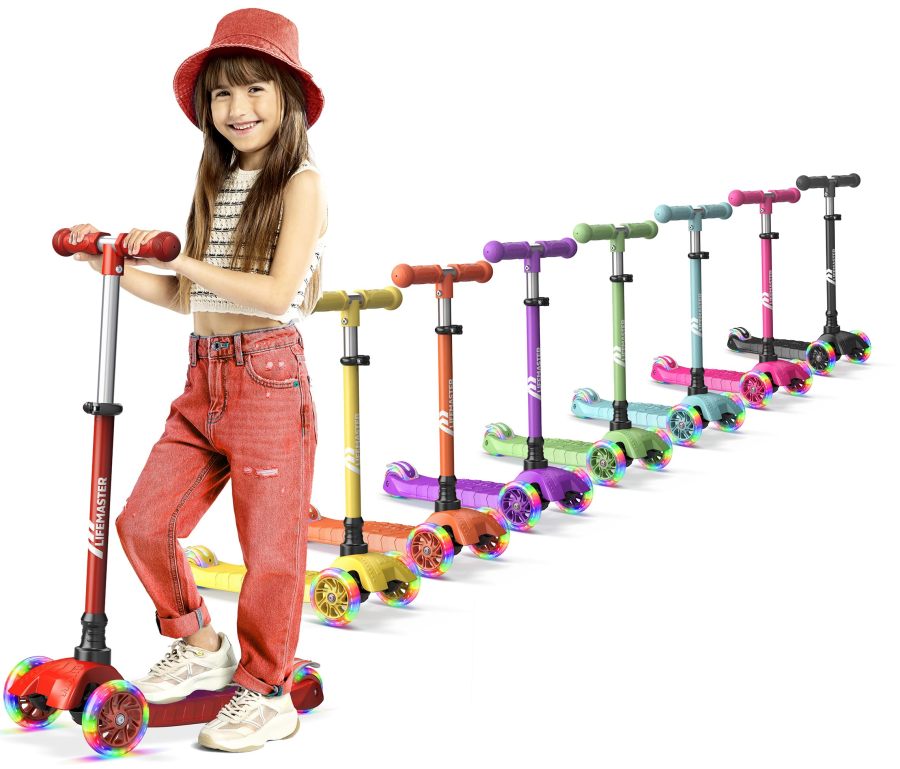
Children's three-wheel kick scooters are outdoor activity toys designed for children aged 2-8. Their primary feature is a three-wheel structure that provides superior stability and ease of learning, helping children develop balance and coordination. Common characteristics of this category include: height-adjustable handlebars to accommodate a child's growth, motion-activated LED light-up wheels to add fun and nighttime visibility, a wide anti-slip deck for secure standing, and a lean-to-steer design that encourages natural learning of control. Some products also offer a detachable seat for both sitting and standing use. The following table illustrates the key characteristics of consumer behavior in this category.
| Dimension | Segment | Description |
|---|---|---|
| Need Driver Type | Planned Purchase / Gift-giving | Primarily purchased as gifts for special occasions like holidays or birthdays, or as planned purchases by parents to encourage their child's outdoor activity and physical development. |
| Purchase Frequency | Low Frequency / Stage-based | Typically a one-time purchase for a child, or a stage-based upgrade as the child grows (e.g., from seated to standing-only, from three-wheel to two-wheel). |
| Decision Complexity | Medium / Relatively Complex | Parents need to comprehensively consider multiple dimensions: safety, durability, age appropriateness, functional design, brand reputation, and price. |
| Price Sensitivity | Medium | Parents seek the best value within their budget and are willing to pay a premium for higher safety, durability, and additional features. |
| Emotional Dependency | High | The product carries significant emotional value, associated with the child's playtime joy, childhood memories, and the parent's emphasis on their child's healthy growth and outdoor experiences. |
II. User Personas & Usage Scenarios
2.1 First-time Parents / Grandparents Focused on Safety
🎯 Purchasing a scooter for the first time for a toddler aged 2-4. They are most concerned with safety, stability, and ease of learning, expecting the product to serve as an introduction to physical activity for their child.
| Typical Usage Scenarios | Core Pain Points | Primary Purchase Drivers |
|---|---|---|
|
|
|
2.2 Parents Seeking Fun and Value for Money
🎯 Shopping for a child aged 4-8 with some riding experience. They expect a product with more interactive features, strong durability, and good value for money, capable of providing entertainment over a longer period.
| Typical Usage Scenarios | Core Pain Points | Primary Purchase Drivers |
|---|---|---|
|
|
|
III. User Needs Hierarchy (KANO Model)
3.1 Basic Needs (Must-Haves)
- Sturdy Stability: Three-wheel design, low center of gravity, and a wide anti-slip deck ensure the child is less likely to tip over or lose balance while riding.
- Effective Braking: A responsive rear-wheel brake allows the child to stop quickly and safely in an emergency.
- Safe, Non-toxic Materials: Product materials are non-toxic, odorless, and comply with children's toy safety standards.
- Easy to Learn: Simple operation, allowing beginners to learn and master basic riding skills quickly.
3.2 Performance Needs (Linear Satisfiers)
- Height Adjustability: Handlebar with multiple height adjustments to suit children of different ages and heights, extending the product's usable life.
- Smooth Ride Quality: High-quality bearings (e.g., ABEC-7) and wear-resistant PU wheels provide a smooth, low-noise riding experience with minimal bumpiness.
- Lightweight and Portable: The product is light enough for a child to move independently, and easy for parents to fold or disassemble for carrying and storage.
- Intuitive Steering Control: A lean-to-steer design that effectively helps children learn balance and coordination, with a steering process that is smooth and responsive.
3.3 Excitement Needs (Delighters)
- Cool Light-up Wheels: Motion-activated LED light-up wheels that flash while riding, adding visual appeal and fun, especially at night or in low-light conditions.
- Unique Aesthetic Design: Vibrant colors, cartoon IP themes (e.g., Paw Patrol, Disney Princess), 3D shapes, etc., to capture the child's attention.
- Multi-functional Modes: 2-in-1 design with a detachable or flip-up seat, allowing the child to switch between sitting and standing modes to suit different play needs and growth stages.
- Interactive Light & Sound Effects: LED light strips on the body, multi-mode lighting effects, or even built-in music functions to enhance interactive and immersive play.
3.4 Unmet Needs & Opportunities
-
Durability Issues: Widespread consumer feedback indicates that scooter wheels are prone to falling off, and handlebars become loose or break, affecting long-term use.
User Reviews (VOC) While some customers say it will last years, others report issues with wheels falling off. // Customers have mixed experiences with the scooter's durability, with some finding it durable while others report pieces breaking frequently. // The handle broke after only a month of use. // Pieces are already breaking off.
-
Poor Steering Feel: Some lean-to-steer designs are difficult for young children or beginners to control, with steering that feels too stiff.
User Reviews (VOC) For this scooter though, you have to lean the handle bar to the right or left, you cannot turn it. I personally don't like it this way. // Customers report issues with the scooter's steering, with one mentioning that the handlebars don't move well and another noting that it doesn't turn easily. // Turning is a little difficult.
-
Poor Reliability of Lighting Systems: Light-up wheels or body LED lights are prone to malfunction, failing to light up or not lasting.
User Reviews (VOC) The light from one wheel stopped working just a few days after it was delivered. // Customers report multiple issues with the scooter's lights, including them not working at all, not staying on, and not lighting up at all. // The wheel lights don't work at all. // The battery lights stopped working after a month of use.
-
Uncontrollable Music Volume: Some scooters with music features have excessively loud volume and lack adjustment options, potentially affecting children's hearing or causing noise pollution.
User Reviews (VOC) But 1 star off for not having a volumn control... it's super loud. // The only thing I would change about it - the music is a little loud and you can't control the volume of it. But you can turn it off.
-
Insufficient Folding Portability: Although marketed as detachable or foldable, the actual operation may still be inconvenient, or the folded size may not be compact enough.
User Reviews (VOC) My kid like it quality is very good and reliable one thing i should mention there should be an option to fold the scooter for travelling. // I took off one star because it can be difficult to remove the handle bar if needed for transporting.
IV. User Decision Drivers
4.1 Key Decision Factors
- Product Safety: The core factor of greatest concern to parents, encompassing the scooter's structural stability, braking performance, anti-slip design, and material safety (e.g., compliance with ASTM F963-17/EN71 standards).
- Durability & Quality: Assessing whether the product is sturdy enough to withstand daily wear and tear from children's play, avoiding damage or part detachment in a short time.
- Age Appropriateness & Growth Potential: Whether the product fits the child's current age and height, and if adjustable features can accommodate growth, extending its useful life.
- Ease of Use & Control: Whether the child can quickly and easily master riding and steering skills, enjoying the play process and minimizing frustration.
4.2 Secondary Decision Factors
- Fun & Appeal: Whether features like light-up wheels, vibrant colors, cartoon themes, and multi-mode lights attract the child and spark their enthusiasm for play.
- Ride Comfort & Smoothness: The smoothness of the wheels, shock absorption, and comfort of the deck and handlebars, providing a pleasant riding experience.
- Portability & Storage: Whether the product is lightweight, easy to fold, disassemble, or carry, facilitating outings and home storage.
- Brand Reputation & After-sales Service: Well-known brands typically inspire trust, and good after-sales service provides purchase assurance.
V. Selling Points & Competitive Landscape
5.1 Selling Point Analysis
5.1.1 Standard Features (Points of Parity)
- LED Light-up Wheels: A feature emphasized by almost all three-wheel scooters, using motion-activated lights to increase fun and nighttime visibility.
- Adjustable Handlebar Height: Emphasizes that the product can grow with the child, increasing its lifespan and value for money.
- Wide Anti-slip Deck: Provides a stable standing area, enhancing the child's sense of safety and confidence while riding.
- Lean-to-Steer Design: A mainstream steering mechanism promoted as helping to develop children's balance and coordination.
- Easy Assembly/Portability: Most products advertise one-touch installation and lightweight design for easy parent handling and transport.
- Sturdy, Durable Materials: Often uses aluminum alloy frames and PU wheels, emphasizing product quality and load capacity.
5.1.2 Key Differentiators
- 2-in-1 with Seat Mode: Offers both sitting and standing functions, meeting the needs of children at different ages (especially beginners), emphasizing versatility.
- Smoother Bearings/Suspension: Some products emphasize ABEC-7 bearings or shock absorption systems for a more stable and comfortable ride.
- One-touch Folding/Detachable Design: Further simplifies storage and carrying processes, enhancing convenience.
- Multi-mode Lights/Built-in Music: Beyond wheel lights, integrating LED light strips on the stem or deck, offering multiple flashing modes, or even built-in music to enhance interactivity.
- Optimized for Specific Age Groups: Precisely labeled as 'ideal for 2-5 years' or '3-8 years,' etc., targeting marketing to specific age groups as the 'ideal choice.'
5.1.3 Unique Selling Propositions (USPs)
- Licensed Cartoon IP Themes: e.g., Paw Patrol, Disney Princess, leveraging popular cartoon characters to attract children and their parents, providing strong emotional value and social currency.
- "Never Falls Over" Design: A unique stability structure claimed by individual products, aiming to eliminate parents' fears of their child falling.
- Includes Holiday Gift Box: Packaging the product with a holiday gift-giving scenario, offering a ready-to-gift experience without extra wrapping.
5.2 Competitive Landscape
5.2.1 Market Maturity
The children's three-wheel kick scooter market is quite mature, with product functions and aesthetics becoming increasingly homogenized. Competition is fierce, with brands primarily differentiating through price, light-up elements, height adjustability, and other common selling points. Traditional brands like Razor and Micro hold a market position based on good reputation, while newer entrants often attract consumers by integrating more flashy features (e.g., seats, music) and offering more competitive prices.
5.2.2 Innovation Trends
Current innovation mainly focuses on enhancing children's fun and interactive experience, such as more colorful LED lighting modes (RGB, racing rainbow lights) and products with built-in music. Simultaneously, to better adapt to different growth stages, 2-in-1 designs with detachable/flip-up seats are becoming mainstream. In terms of materials, lightweight and higher-strength aluminum alloy frames remain a key direction. However, these innovations still face challenges in reliability, usability, and consistent experience in practical application, as highlighted by user feedback on issues like fragile lighting systems, stiff steering feel, and uncontrollable music volume.
VI. Marketing Claims vs. Reality Check
The table below analyzes the gap between common marketing claims and actual user experiences in this category:
| Dimension | Marketing Claim | User Reality | Verdict |
|---|---|---|---|
| Product Durability | Sturdy and durable, built to last for years, growing with your child. | Users widely report issues like wheels easily falling off, handlebars becoming loose or breaking, with some products failing within a short period. | Sellers' promises regarding long-term product lifespan significantly diverge from actual user experience. Low-price strategies sacrifice core quality, severely impacting consumer trust. |
| Steering & Control | Lean-to-steer design, easy to learn and control, aids balance and coordination. | Some users, especially young children, report stiff, inflexible steering that is difficult to control effectively, hindering riding fun and the learning experience. | The lean-to-steer feature, marketed as a selling point, has not been sufficiently optimized in actual design and manufacturing for responsiveness and smoothness, creating a learning curve for beginners instead of lowering the barrier. |
| Reliability of Interactive Features | Cool LED light-up wheels, multi-mode lights, built-in music, providing endless fun. | Light-up wheels or body LED lights are prone to failure. Some products with music features have excessively loud volume without adjustment options. | Sellers overemphasize flashy features but neglect their reliability and user experience details, turning highlights into pain points and converting potential excitement needs into reasons for returns. |
Key Takeaway: The market exhibits a general tendency towards parameter inflation and exaggeration of scenario-based experiences, particularly regarding durability, functional reliability, and ease of use for young children.
VII. Supply-Demand Misalignment Analysis
The table below highlights mismatches between seller focus and buyer priorities:
| Dimension | Seller Behavior | User Focus | Verdict |
|---|---|---|---|
| Durability of Core Components | Commonly advertise products using 'sturdy materials' and 'high-quality construction,' but invest insufficiently in reinforcing critical vulnerable parts (e.g., wheel axles, handlebar connections) and ensuring long-term reliability. | Users are most concerned about whether the scooter is truly 'durable' and can withstand daily bumps and drops from children's play. The most common negative feedback currently revolves around wheels falling off and handlebars breaking. | Sellers collectively remain silent or gloss over the most critical aspect-'durability'-failing to address consumers' biggest purchase concern, leading to a severe mismatch between user experience and expectations. |
| Steering Adaptability for Young Children | All products emphasize that 'lean-to-steer' aids balance development, yet few sellers provide practical solutions or instructional guidance addressing the actual steering difficulty for 2-3 year old beginners. | Many parents complain that young children struggle to master lean-to-steer, leading to poor riding experiences or even falls, which discourages the child's learning enthusiasm. | While promoting the advantages of 'lean-to-steer,' sellers fail to fully consider its actual learning curve and operational threshold for children of different ages, creating a blind spot in the user experience for younger children. |
| User Experience Details of Interactive Features | Sellers heavily promote features like LED light-up wheels, multi-mode lights, or built-in music, but invest inadequately in the stability and user control details of these functions, leading to high failure rates and noise nuisance. | Users enjoy cool features but prefer them to work reliably and not cause additional trouble (e.g., overly loud music). When problems arise, these highlights become triggers for negative reviews. | In pursuit of eye-catching effects, sellers pile on features but neglect their reliability and user-friendliness in actual use, turning 'value-adds' into 'detractors.' This incurs BOM costs without delivering positive value. |
Key Takeaway: Sellers over-supply in terms of feature stacking and flashy effects, while significantly under-supplying in core product durability, the actual control experience for young children, and functional details (e.g., volume control).
VIII. Strategic Opportunities & Recommendations
8.1 Ultra-Durable Children's Three-Wheel Kick Scooter
8.1.1 Target Audience & Pain Points
⚡️ Pain Points Addressed: Durability issues (wheels falling off, handlebars breaking), product prone to wear and tear.
8.1.2 Action Plan
Utilize aerospace-grade aluminum alloy or high-strength steel for the main frame. Reinforce the design of wheel axles, handlebar connection points, and brake structures. Use high-load-bearing and wear-resistant PU wheels. Obtain certification from third-party authoritative laboratories through impact and fatigue testing. Offer an industry-leading 3+ year warranty.
| Tech Complexity | Medium |
| Cost Impact | High Impact |
| Trade-off Warning | Using sturdier metal materials and reinforced structures may slightly increase product weight, but the impact on the target user is acceptable. |
| Price Band | Only viable above $49.99 |
8.1.3 Marketing Strategy
Highlight 'Military-Grade Quality, Built to Last'; provide extreme scenario testing videos (e.g., child stomping, repeated drop tests); emphasize the value proposition of 'One Investment, Years of Companionship' and showcase detailed warranty policies.
8.2 Multi-mode Smart Steering Children's Kick Scooter
8.2.1 Target Audience & Pain Points
⚡️ Pain Points Addressed: High learning curve of lean-to-steer for young children, poor steering feel.
8.2.2 Action Plan
Design a simple-to-use knob or button offering three steering modes: 'Locked Straight' (suitable for absolute beginners), 'Assisted Turn' (gentle turning with limited angle), 'Free Lean-to-Steer' (suitable for proficient riders). Ensure smooth switching between modes and a comfortable feel.
| Tech Complexity | Medium |
| Cost Impact | Medium Impact |
| Trade-off Warning | Adding a steering mode switching mechanism may slightly increase component complexity but can be controlled through modular design. |
| Price Band | Only viable above $39.99 |
8.2.3 Marketing Strategy
Emphasize 'Phased Learning, Grows with Your Child'; use comparison videos showcasing the child's easy learning experience across different modes; promote the 'Scientific Parenting' concept, helping children progressively develop balance and coordination.
8.3 Reliable & Controllable Colorful Light & Sound Experience
8.3.1 Target Audience & Pain Points
⚡️ Pain Points Addressed: Lighting systems prone to damage, uncontrollable music volume, negatively impacting user experience.
8.3.2 Action Plan
Adopt industrial-grade high-brightness LED beads with better waterproof/dustproof sealing. Prioritize kinetic self-generating light-up wheels that require no batteries. For built-in music functions, must include a physical multi-level volume adjustment button or knob, and optimize sound quality to ensure compliance with children's product volume standards.
| Tech Complexity | Low |
| Cost Impact | Low Impact |
| Trade-off Warning | No significant physical side effects; primarily involves optimizing component selection and circuit design. |
| Price Band | Only viable above $29.99 |
8.3.3 Marketing Strategy
Emphasize 'Long-lasting Color, Safe Fun at Night'; promote 'Adjustable Music Volume, Protects Hearing'; showcase the lighting system's high brightness, longevity, and safety-compliant volume control to alleviate parental concerns.
8.4 One-touch Quick-Fold Children's Three-Wheel Kick Scooter
8.4.1 Target Audience & Pain Points
⚡️ Pain Points Addressed: Cumbersome product disassembly, insufficiently compact folded size, inconvenient for carrying and storage.
8.4.2 Action Plan
Develop a smoother, more reliable one-touch folding mechanism that minimizes volume when folded, facilitating one-handed carrying and fitting into car trunks. The folding joints should use high-strength materials and undergo rigorous durability testing.
| Tech Complexity | Medium |
| Cost Impact | Medium Impact |
| Trade-off Warning | The folding mechanism requires precise design to ensure long-term stability, with higher initial development costs. |
| Price Band | Only viable above $35.99 |
8.4.3 Marketing Strategy
Highlight 'Travel Essential, Folds in a Second'; emphasize 'Easy Storage, Saves Space'; use demonstration videos to showcase its convenient folding and compact size, aligning with the pace of urban family life.