Amazon US Market Analysis: Reusable Glass Straws Category
📊 Executive Summary
📈 Market Trends
Environmental awareness drives demand, experiential details become competitive battlegrounds. The reusable glass straw market has matured. While pursuing eco-friendly health, consumers now demand higher product durability, cleaning convenience, and aesthetics. Market trends show products evolving from simple functional replacements towards enhancing the overall user drinking experience, with customization and personalization needs becoming increasingly prominent.
⚡ Major Pain Points
'Chip-resistant' claims disconnect from actual experience; size compatibility is a widespread pain point. Despite sellers commonly claiming products are 'chip-resistant', user feedback still reports frequent breakage, causing a trust crisis. Simultaneously, the size compatibility issue between straws and lidded cups is prevalent, affecting user convenience. Child-use safety and packaging eco-friendliness are pain points highly noted by users but largely overlooked by the market.
💡 Selection Opportunities
Deepen real durability and precise compatibility; explore child safety and aesthetic premiumization. Market opportunities lie in developing truly 'ultimate drop-resistant' glass straws with comprehensive protection solutions; launching 'universal cup-compatible' combo sets to solve sizing frustrations. Additionally, launching dedicated product lines for child safety with fully eco-friendly packaging, or capturing the premium and gift market through 'aesthetic & personalized' designs will be key drivers for future growth.
I. Analysis Overview
1.1 Introduction & Report Scope
This report analyzes the 'Reusable Straws' category (specifically reusable glass straws) in the Amazon US market, focusing on target user personas, core needs, decision drivers, market communication, and potential opportunities.
1.2 Category Snapshot
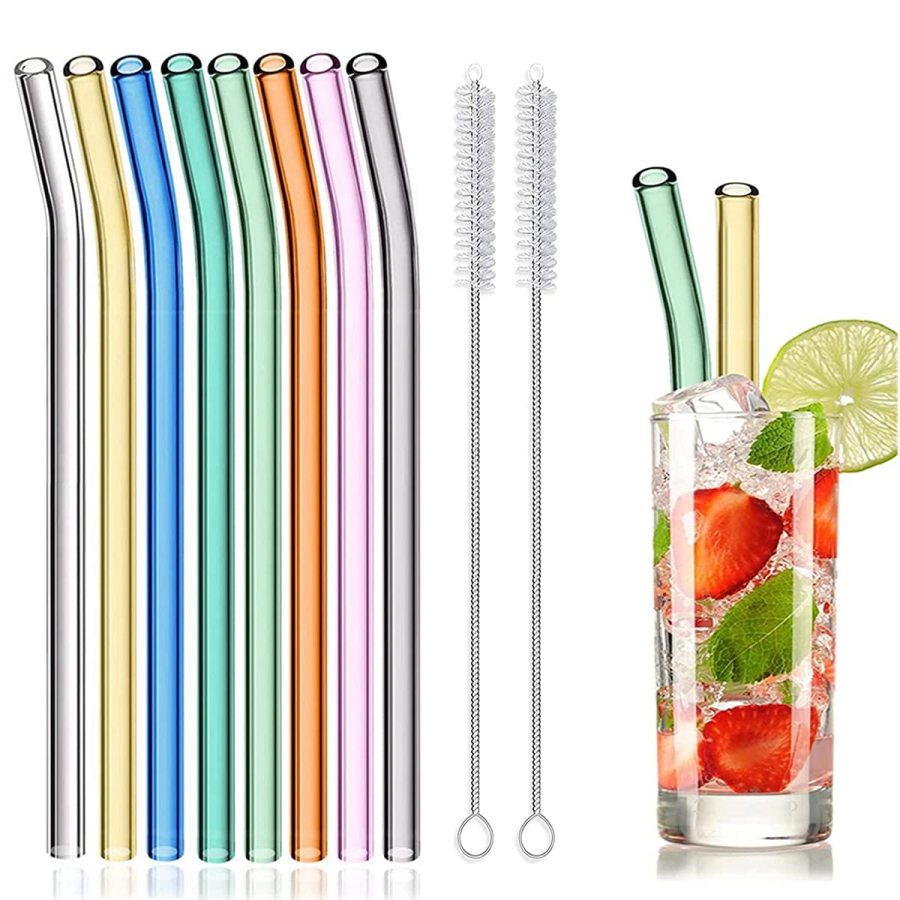
Reusable glass straws are an eco-friendly alternative to single-use plastic straws, primarily made from borosilicate glass. They emphasize being lead-free, BPA-free, and feature heat/cold resistance and easy cleaning. Market offerings are diverse, including transparent or colored designs, straight or bent shapes, typically sold in multi-pack sets with cleaning brushes. They cater to consumer needs for health, environmental consciousness, and aesthetic appeal in daily beverage consumption. The following table illustrates the key characteristics of consumer behavior in this category.
| Dimension | Segment | Description |
|---|---|---|
| Need Driver Type | Planned Purchase / Emergency-driven Purchase | Purchases are typically driven by environmental awareness, health considerations, or immediate needs to replace broken straws or match new drinkware. Consumers have clear expectations for durable, hygienic drinking tools. |
| Purchase Frequency | Low Frequency | As durable goods, consumers usually buy one set to meet long-term needs, resulting in a long repurchase cycle, unless driven by product damage or new feature requirements. |
| Decision Complexity | Medium | Consumers compare factors like material safety, durability, cleaning convenience, size compatibility, and price, requiring some level of trade-off and information evaluation. |
| Price Sensitivity | Medium | Price is an important consideration but not the sole deciding factor. Users are willing to pay a reasonable premium if the product offers superior quality, higher safety assurance, or unique added value. |
| Emotional Dependency | Medium | Beyond fulfilling the functional need for drinking, the product also delivers emotional pleasure and self-identity through the sense of environmental responsibility, drinking ritual, and aesthetic value it carries. |
II. User Personas & Usage Scenarios
2.1 Eco-conscious & Health-focused Lifestylers
🎯 Prioritize personal and environmental health, actively seeking eco-friendly alternatives for daily items, and pursue a pure, pollution-free drinking experience.
| Typical Usage Scenarios | Core Pain Points | Primary Purchase Drivers |
|---|---|---|
|
|
|
2.2 Beverage Connoisseurs & Aesthetes
🎯 Enthusiasts of various beverages who pursue high-quality drinking experiences, value the aesthetic design and practical compatibility of homeware, and enjoy enhancing life quality through details.
| Typical Usage Scenarios | Core Pain Points | Primary Purchase Drivers |
|---|---|---|
|
|
|
III. User Needs Hierarchy (KANO Model)
3.1 Basic Needs (Must-Haves)
- Reusable: The product must be reusable multiple times as an alternative to single-use straws, aligning with the eco-friendly purpose.
- Food-Grade Safety: The material must be safe and non-toxic, free from harmful substances like BPA and lead, ensuring drinking health.
- Easy to Clean: Must allow for convenient and thorough cleaning of the straw interior, and preferably be dishwasher-safe to save time and effort.
3.2 Performance Needs (Linear Satisfiers)
- Durable & Chip-Resistant: Made from materials like borosilicate glass, offering a degree of breakage resistance, long-lasting durability, and not easily damaged in daily use.
- No Aftertaste Residue: Ensures pure beverage taste, unaffected by plastic, metallic, or paper pulp aftertastes, preserving the original flavor.
- Suitable for Various Beverages: Moderate diameter allows easy sipping of water, coffee, juice, as well as thick smoothies, milkshakes, or bubble tea.
- Size Variety: Offers different lengths (e.g., 8.5, 10, 12.2 inches) to fit various cup heights, enhancing universality.
- Shape Options: Provides straight and bent straws to meet different drinking habits and cup pairing needs.
3.3 Excitement Needs (Delighters)
- Aesthetic Design: The straw's transparency, color, or special shapes (e.g., floral, wave) can enhance beverage visual appeal and user experience, adding life interest.
- Specific Cup Compatibility: Can perfectly fit the size and lid of popular brand cups (e.g., Stanley) or specific cup types (e.g., Mason jars), providing a seamless experience.
- Value-Added Accessories: Includes multi-functional cleaning brushes, portable storage cases, or silicone straw sleeves (for dust, heat, and breakage protection), enhancing convenience and product safeguarding.
3.4 Unmet Needs & Opportunities
-
Child-Use Safety: The fragility of glass poses a potential risk for families with children, urgently requiring safer alternatives or stronger breakage protection.
User Reviews (VOC) Not really kid friendly because they do break. // Although not intended for children if used by children they should be supervised by an adult at all times.
-
Extreme Drop Resistance: User feedback indicates that some glass straws marketed as 'chip-resistant' still break when dropped. Users expect stronger drop resistance, not just being sturdier than regular glass.
User Reviews (VOC) One was broken. // Unfortunately, one straw arrived broken, which was a little disappointing. // One came broken :/ but still have the others.
-
Broader Compatibility (Lidded Cups): Many straws cannot perfectly fit all lidded tumblers, causing user difficulty or inconvenience, especially with popular brand cup lids.
User Reviews (VOC) they're a bit too wide for my Yeti with a lid, so they don't fit perfectly there. // don't fit in all my tumbler lids. // the straw doesn't fit through the top. The straws are very good in an open glass, but they don't fit in any travel cups that have a lid.
-
Eco-Friendly Packaging: While the product itself is eco-friendly, some packaging still uses plastic, contradicting users' environmental values and harming the brand's overall eco-image.
User Reviews (VOC) It's a bit ironic that these reusable straws come individually wrapped in plastic (which is really wasteful) // the only thing I didn't like was that they were individually wrapped up in bubble wrap
-
Quiet Drinking Experience: Some users report that glass straws can produce unpleasant noise while drinking, affecting the pursuit of a quiet experience for some consumers.
User Reviews (VOC) Very good straw, but very noisy!
IV. User Decision Drivers
4.1 Key Decision Factors
- Durability & Chip Resistance: Consumers are most concerned about whether glass straws are prone to breakage, especially during daily use and cleaning. This directly impacts product lifespan and safety, forming a key baseline for purchase decisions.
- Ease of Cleaning: Whether the straw interior can be thoroughly cleaned, if it's dishwasher-safe, and the practicality of cleaning tools are important reasons users choose glass straws for hygiene assurance.
- No Aftertaste / Pure Flavor: Whether it affects the original beverage flavor like metal or plastic straws is a core consideration for users pursuing a pure drinking experience.
- Size Compatibility: Whether the straw length and diameter meet the needs of different beverages (e.g., smoothies, milk tea) and different cups (especially lidded ones), directly impacting ease of use.
4.2 Secondary Decision Factors
- Value for Money: Given quality assurance, the number of straws per set, price, and added value relative to cost are important factors users weigh.
- Aesthetic Appeal: Whether the straw's color, transparency, and design sense align with personal aesthetics can enhance the drinking experience and life ambiance.
- Environmental Ethos: Whether the product material, including packaging, is truly eco-friendly reflects the user's sense of social responsibility and value alignment.
- Added Value: Whether it includes additional practical accessories like cleaning brushes, storage pouches, or silicone sleeves increases the product's appeal.
V. Selling Points & Competitive Landscape
5.1 Selling Point Analysis
5.1.1 Standard Features (Points of Parity)
- Reusable & Eco-Friendly: Emphasizes the product's environmental friendliness as a healthy, eco-friendly alternative to single-use plastic straws, a common market consensus.
- Food-Grade Safety: Highlights being free from harmful substances like BPA, lead, using borosilicate glass to ensure safe, non-toxic drinking-a foundational selling point.
- Easy-Clean Design: Emphasizes dishwasher safety, transparent material for visual cleanliness check, and typically includes a cleaning brush to address hygiene concerns.
- Multi-Functional Use: Suitable for various hot/cold beverages like smoothies, milkshakes, coffee, juice, cocktails, etc., demonstrating product versatility.
5.1.2 Key Differentiators
- Durable & Chip-Resistant: By emphasizing glass thickness (e.g., 1.8mm thick glass) or special processes, promotes product sturdiness and long lifespan, attempting to stand out in a homogenized market.
- Set Variety & Combinations: Offers sets with different quantities (4-20 pieces), shapes (straight/bent), sizes (8mm/10mm diameter, various lengths) to meet different household or beverage needs.
- Color & Design: Offers multi-colored straws or decorative designs (e.g., floral, wave) to increase visual appeal and personalization, catering to aesthetic demands.
5.1.3 Unique Selling Propositions (USPs)
- Specific Cup Compatibility: Explicitly labels compatibility with popular cups (e.g., Stanley 30/40oz), offering a customized, seamless user experience that solves specific user pain points.
- Added Accessories: Includes silicone straw sleeves (for dust, heat, breakage protection), providing extra protection or convenience, enhancing product competitiveness.
- Gift-Ready Packaging: Emphasizes elegant packaging as a great gift option, increasing product added value and purchase rationale.
5.2 Competitive Landscape
5.2.1 Market Maturity
The reusable glass straw market is currently in the maturity stage. The basic functionality and eco-friendly concept are highly prevalent, with intense homogeneous competition. Key competitive points focus on product durability, cleaning convenience, value-for-money of different set configurations, and size compatibility with popular cups. Brands need to continuously seek differentiation in details and service to stand out.
5.2.2 Innovation Trends
Innovation trends are shifting from purely functional emphasis (e.g., eco-friendly, easy-clean, no aftertaste) towards stronger usage safety and durability assurance (e.g., genuine chip-resistant technology, providing silicone protective sleeves). Simultaneously, precise size compatibility (especially adaptation to popular tumblers like Stanley, Yeti) is becoming a new competitive battleground. Personalized aesthetic design (colors, shapes, decorations) and eco-friendly packaging are also emerging as important directions for attracting younger consumers and enhancing brand value.
VI. Marketing Claims vs. Reality Check
The table below analyzes the gap between common marketing claims and actual user experiences in this category:
| Dimension | Marketing Claim | User Reality | Verdict |
|---|---|---|---|
| Durability/Chip Resistance | Claims borosilicate glass is 'chip-resistant', 'sturdy and durable', 'very tough', implying the product is not easily damaged. | Users commonly report products breaking during shipping or from accidental drops in daily use, creating a clear gap with 'chip-resistant' claims. | A classic case of overstating material properties, failing to adequately inform consumers of the inherent fragility of glass products, leading to mismanaged user expectations, negative reviews, and returns. |
| Size Compatibility | Claims straws 'fit all cup types', 'perfectly compatible with mainstream cups', or only emphasizes large diameter for thick beverages. | Users report straws being too wide to fit some lidded cups (e.g., Yeti) or the length being unsuitable for certain tall cups, limiting usage. | Sellers fail to deeply understand actual user scenarios, making indiscriminate exaggerations about product size compatibility, overlooking the adaptation challenges posed by the diversity of mainstream cup dimensions. |
| Environmental Commitment | Products claim to be 'eco-friendly', 'reduce plastic waste', 'protect marine life', advocating a sustainable lifestyle. | Some user reviews point out products still use individual plastic bubble wrap packaging, creating a direct conflict with the core environmental message. | The brand contradicts its core environmental narrative; packaging is disconnected from the product ethos, damaging trust among environmentally conscious consumers. |
Key Takeaway: The market exhibits a tendency for widespread specification inflation and exaggerated scenario-based experiences, particularly regarding 'chip-resistant' claims and universal compatibility.
VII. Supply-Demand Misalignment Analysis
The table below highlights mismatches between seller focus and buyer priorities:
| Dimension | Seller Behavior | User Focus | Verdict |
|---|---|---|---|
| Actual Durability vs. Marketing | Widely market the use of borosilicate glass, emphasizing 'chip-resistant', 'sturdy', 'durable' to alleviate user concerns, but listings often lack specific drop tests or guarantees. | User feedback generally praises sturdiness, but there are also frequent comments mentioning product fragility, especially when dropped, indicating a gap between actual experience and expectations. | Sellers engage in conceptual blurring around the physical limits of glass, equating 'less likely to chip' with 'unbreakable', leading users to still face breakage risks during use, impacting the core experience. |
| Child-Use Safety | Most products only provide risk warnings like 'adult supervision required' for child use, lacking proactive child-safety solutions or designs (e.g., anti-swallow features, full-coverage silicone sleeves). | Parent users commonly express concern about the potential danger of glass straws for children or directly state they are not suitable for kids, indicating an unmet market demand. | The market largely overlooks safety pain points in child-use scenarios, failing to provide differentiated child-friendly solutions, missing a niche market opportunity. |
| Packaging Environmental Consistency | Emphasizes the product's eco-friendliness and plastic waste reduction, but actual packaging still commonly uses plastic bubble wrap or non-eco materials for individual wrapping. | Environmentally conscious users provide negative feedback, viewing the packaging as inconsistent with the product philosophy, reducing brand authenticity. | Brands' environmental narrative is superficial, failing to implement eco-friendly principles throughout the product lifecycle, damaging their image among core eco-conscious users. |
Key Takeaway: Sellers generally over-invest in 'chip-resistant' claims but fail to deliver on actual durability in real-world use, while also neglecting user concerns like packaging eco-friendliness and child safety, creating a supply gap.
VIII. Strategic Opportunities & Recommendations
8.1 Ultimate Drop-Resistant Glass Straw Set
8.1.1 Target Audience & Pain Points
⚡️ Pain Points Addressed: Inherent fragility of glass; extreme drop resistance; potential safety hazards.
8.1.2 Action Plan
Invest in R&D for borosilicate glass with higher impact resistance or innovative composite coatings, combined with structural designs like reinforced bottoms and edges. Simultaneously, include high-quality, full-coverage food-grade silicone protective sleeves or portable hard-shell cases as standard in the product set, providing comprehensive breakage protection.
| Tech Complexity | Medium |
| Cost Impact | Medium Impact |
| Trade-off Warning | Stronger magnetic force might make removal slightly more effortful, or leave slight marks on some extremely thin phone cases. |
| Price Band | Only viable above $12.99 |
8.1.3 Marketing Strategy
Emphasize 'Say goodbye to breakage worries, enjoy every sip!'; showcase high-impact test videos highlighting 'super-tough, drop-resistant glass'; offer a 'breakage-free replacement service' promise to build consumer trust.
8.2 Universal Cup-Compatible Glass Straw Combo Set
8.2.1 Target Audience & Pain Points
⚡️ Pain Points Addressed: Incompatible straw diameter; size incompatibility; broader compatibility.
8.2.2 Action Plan
Conduct market research to precisely collect data on straw hole diameters and lengths of mainstream tumblers (e.g., Stanley, Yeti). Design a combo set including 8mm, 10mm diameters and various lengths (e.g., 8, 10, 12 inches) in straight and bent options.
| Tech Complexity | Low |
| Cost Impact | Low Impact |
| Trade-off Warning | No significant physical side effects, mainly optimization of packaging and combination strategy. |
| Price Band | Only viable above $9.99 |
8.2.3 Marketing Strategy
Lead with 'Your cup, I can match!'; provide a 'Cup Compatibility Guide' or 'Size Selector' on the product detail page with clear diagrams to help users quickly find the right straw, eliminating purchase hesitation.
8.3 Child-Specific Safety Glass Straws (with Fully Eco-Friendly Packaging)
8.3.1 Target Audience & Pain Points
⚡️ Pain Points Addressed: Child-use safety; eco-friendly packaging.
8.3.2 Action Plan
Develop child-specific, thickened, chip-resistant glass straws, equipped with full-coverage food-grade silicone sleeves, considering built-in anti-swallow designs. Simultaneously, fully switch to plastic-free, 100% biodegradable packaging materials.
| Tech Complexity | Medium |
| Cost Impact | Medium Impact |
| Trade-off Warning | To ensure child safety, straws may be slightly thicker or heavier, but acceptable for safety and environmental goals. |
| Price Band | Only viable above $14.99 |
8.3.3 Marketing Strategy
Emphasize 'Designed for little hands, protecting the planet: Child-specific safety glass straws, eco-friendly and worry-free!'; highlight product safety certifications and packaging's environmental credentials, appealing to parents' concerns for child health and the environment.
8.4 Aesthetic & Personalized Design Glass Straw Series
8.4.1 Target Audience & Pain Points
⚡️ Pain Points Addressed: Lack of aesthetic appeal; aesthetic design; social sharing.
8.4.2 Action Plan
Collaborate with independent designers to launch straws with unique artistic styles (e.g., wave, spiral, gradient colors, intricate patterns), ensuring smooth edges. Consider limited-time/limited-edition releases or allow for user personalization/customization.
| Tech Complexity | Medium |
| Cost Impact | Medium Impact |
| Trade-off Warning | Complex shapes may increase cleaning difficulty (requiring more precise brushes) or slightly affect strength in extreme cases, but for target users, aesthetic value outweighs these minor trade-offs. |
| Price Band | Only viable above $9.99 |
8.4.3 Marketing Strategy
Highlight 'Customize your beverage aesthetics: One straw, illuminates your unique style, showcases distinctive taste.'; leverage social media platforms to display exquisite product images, encourage users to share creative drink pairings, creating a 'viral' effect.