Amazon US Market Analysis: Cherry Pitters Category
📊 Executive Summary
📈 Market Trends
Efficiency and convenience are core, multi-pit pitting is mainstream. The cherry pitter market is evolving towards higher efficiency and more convenient operation, with multi-pit pitting becoming the mainstream design. Consumers increasingly focus on time and effort savings during pitting, the integrity of the pitted fruit, and kitchen cleanliness. Market competition is intensifying, requiring brands to seek breakthroughs in detailed experiences.
⚡ Major Pain Points
Poor durability, incomplete pitting, and strenuous operation are major flaws. Users commonly complain about the fragility of existing plastic products, prone to breakage, contradicting seller claims of 'durability'. Simultaneously, unstable pitting results with frequent pit residue, the need for significant pressing force, and hygiene issues from difficult internal cleaning severely impact user satisfaction and product reputation.
💡 Selection Opportunities
Deeply address user experience pain points, create 极致 performance and hygiene. Market opportunities lie in solving product durability and strenuous operation issues through material upgrades (e.g., stainless steel pitting pins) and structural optimization, launching an 'Innovative Composite Material Pitter'. Simultaneously, ensuring thorough pitting through designing adjustable or more precise pitting holes for a 'Precise Multi-Size Cherry Pitter'. Additionally, providing an 'Easy Deep-Clean Modular Pitter' to eliminate hygiene dead spots can effectively enhance user value and build brand barriers.
I. Analysis Overview
1.1 Introduction & Report Scope
This report analyzes the 'Pitters' category (Cherry Pitters) in the Amazon US market, focusing on target user personas, core needs, decision factors, market communication, and potential opportunities.
1.2 Category Snapshot
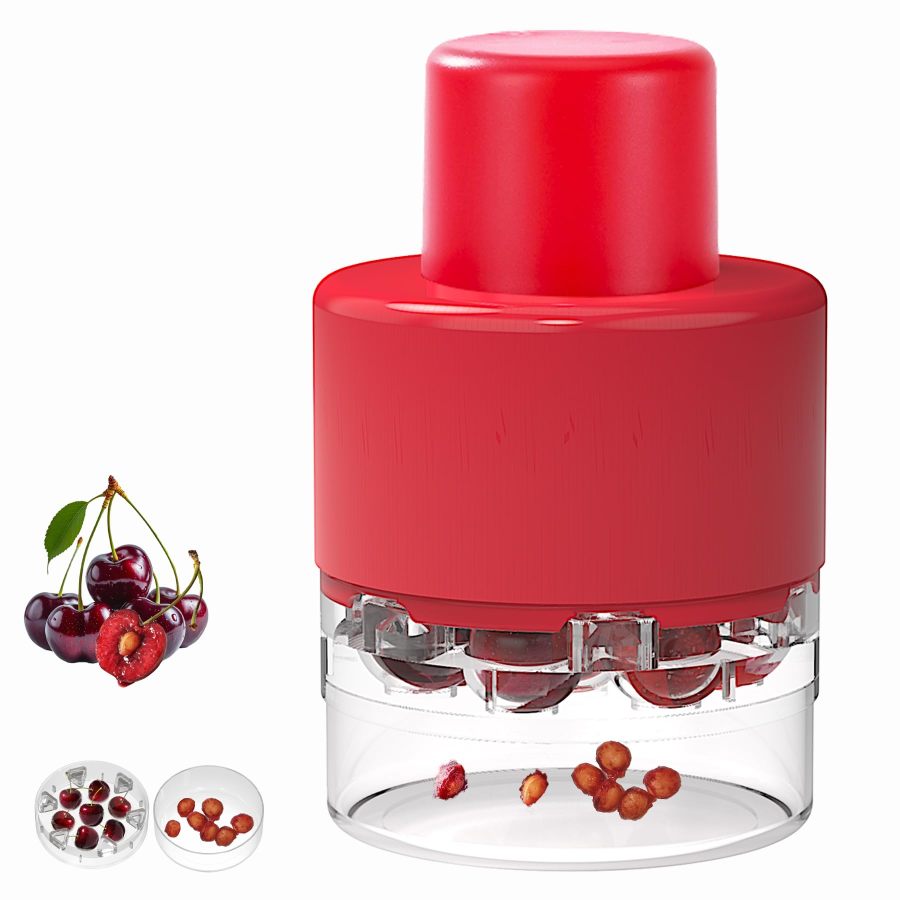
A Cherry Pitter is a small kitchen gadget primarily used to quickly and conveniently remove the pits from cherries (and sometimes other small fruits like olives or dates) for baking, making jams, juices, fruit salads, or safe consumption by children. Most products in this category feature a manual press design, often capable of processing multiple cherries at once to improve efficiency. The following table illustrates the key characteristics of consumer behavior in this category.
| Dimension | Segment | Description |
|---|---|---|
| Need Driver Type | Planned Purchase / Emergency-driven Purchase | Users often purchase during cherry season for planned bulk processing, or are triggered by emergency needs like child safety concerns. |
| Purchase Frequency | Low Frequency / Seasonal | Typically a one-time purchase, used mainly during cherry season, with long repurchase cycles. |
| Decision Complexity | Medium | As a low-priced kitchen gadget, the user decision process is relatively moderate, involving comparisons of efficiency, durability, and ease of use, but not deep research. |
| Price Sensitivity | Medium | Price is an important factor, but users are willing to pay a reasonable premium for higher efficiency, better experience, and reliability. |
| Emotional Dependency | Medium | Primarily based on functionality and practicality, but also provides emotional value through offering safe food for the family (especially children) and the sense of accomplishment from cooking. |
II. User Personas & Usage Scenarios
2.1 Home Baking/Cooking Enthusiast
🎯 Enjoys making baked goods, jams, or dishes, frequently handles large quantities of fresh fruit, especially during cherry season.
| Typical Usage Scenarios | Core Pain Points | Primary Purchase Drivers |
|---|---|---|
|
|
|
2.2 Health-Conscious Family User
🎯 Focuses on family dietary safety and health, especially children's snack safety, preferring to provide fresh, pitted fruit.
| Typical Usage Scenarios | Core Pain Points | Primary Purchase Drivers |
|---|---|---|
|
|
|
III. User Needs Hierarchy (KANO Model)
3.1 Basic Needs (Must-Haves)
- Effective Pitting: Ability to reliably remove cherry pits; this is the core function of the product.
- Easy Operation: Easy to use, requires no complex learning.
- Easy Cleaning: Detachable design for easy rinsing or dishwasher safe.
3.2 Performance Needs (Linear Satisfiers)
- Efficient Pitting: Processing multiple cherries at once, significantly saving time and effort.
- Intact Fruit Flesh: Pitted cherries retain their shape with minimal juice loss, not affecting taste or appearance.
- Splash Guard Design: Effectively reduces juice splatter, keeping the countertop and hands clean.
- Multifunctionality: Can handle other similarly sized fruits like olives and dates besides cherries.
3.3 Excitement Needs (Delighters)
- Effortless Pressing: Easy pitting without requiring significant force, suitable for all age groups, reducing hand fatigue.
- Automatic Pit Ejection: Pits automatically and smoothly fall into the collection container, requiring no manual intervention or residue cleanup.
- Material Upgrade: Key components use high-quality stainless steel or durable engineering plastics, significantly improving product lifespan.
3.4 Unmet Needs & Opportunities
-
Enhanced Durability: Most products (especially plastic ones) are prone to breaking, not sturdy, users worry about lifespan.
User Reviews (VOC) Every time I use it, I'm afraid the spokes that poke out the pit are going to break. // Not recommended - the top cracked on the first use.
-
Precise Pitting: Some users report incomplete pitting, with pits left behind or residual pits requiring manual removal.
User Reviews (VOC) Some of the pits don't get pushed all the way out. // I did have to go through them after the pitter with a skewer just to make sure the pits were out.
-
Thorough Cleaning: Internal structure traps dirt, especially the top lid is hard to open for cleaning, posing hygiene risks.
User Reviews (VOC) The pitting devices live inside the lid-- you push them down to pit the cherries, and then they go right back up to hiding in the lid... all covered in cherry juice. This makes cleaning tricky. // Also, there's no way to clean the inside of the top part. That will end up causing mold.
-
Operating Force: Existing products generally require significant pressing force, unsuitable for children, the elderly, or users with weaker hand strength.
User Reviews (VOC) I had to put so much pressure to push it down and I didn't think I was going to have enough strength to do it. // It does take a little pressure to push down to put the pits out.
IV. User Decision Drivers
4.1 Key Decision Factors
- Pitting Efficiency: Whether it can successfully remove multiple cherry pits at once and complete the task quickly is the primary reason users choose multi-pit pitters.
- Ease of Use: Whether the operation is smooth, the pressing is effortless, and the overall process is fluid directly impacts the user experience, especially in high-frequency usage scenarios.
- Pitting Effectiveness: Whether the pit is removed completely and cleanly without damaging the flesh or leaving residue, ensuring food safety and aesthetics.
- Cleaning Convenience: Whether the product is easy to disassemble and clean, avoiding juice residue and hygiene dead spots, reducing maintenance burden.
4.2 Secondary Decision Factors
- Product Durability: Whether the product material is sturdy, not easily damaged, and can be used long-term, affecting user purchase confidence and repurchase intent.
- Splash Guard Function: Whether it effectively prevents juice splatter, keeping the kitchen and clothes clean, enhancing user pleasure.
- Value for Money: Whether the product price is reasonable while meeting core functions and experience, a consideration for medium-decision users.
- Storage Convenience: Whether the product size is compact, has a locking design, facilitating storage in limited kitchen space.
V. Selling Points & Competitive Landscape
5.1 Selling Point Analysis
5.1.1 Standard Features (Points of Parity)
- Multi-Pit Pitting: Commonly emphasizes the ability to process 6-7 cherries at once as its core advantage over single-pit pitters.
- Time and Labor Saving: Promises to complete the pitting task quickly and easily, significantly saving prep time.
- Easy to Clean: Often detachable design, claimed to be dishwasher safe or easy to hand wash.
- Built-in Pit Collection Box: Built-in transparent container collects pits and juice, promoting countertop cleanliness.
- Food-Grade Materials: Emphasizes the use of safe, non-toxic materials like food-grade ABS plastic or stainless steel.
5.1.2 Key Differentiators
- Splash Guard Design: Some products highlight their splash guard or splatter protection feature, further reinforcing the cleanliness advantage.
- Ergonomic/Spring Mechanism: Emphasizes comfortable pressing, reducing hand fatigue, improving the operation experience.
- Multi-Fruit Compatibility: Promotes use for various small fruits like cherries, olives, dates, broadening product applicability.
- Compact and Portable: Emphasizes small product size for easy storage and outdoor portability (e.g., picnics).
5.1.3 Unique Selling Propositions (USPs)
- Brand Warranty: A few brands offer relatively long warranty services (e.g., 2 or 5 years) to boost consumer confidence, but this is rare.
- Flesh Retention Rate: Individual products claim to retain 98% of cherry flesh integrity as a quantifiable indicator of pitting precision.
- No-Handle Design: Some products use a top-press structure, differing from traditional handle designs, emphasizing simplicity.
5.2 Competitive Landscape
5.2.1 Market Maturity
The cherry pitter market has reached a medium maturity stage, with highly homogenous product functions; multi-pit pitting is mainstream. Competition is mainly reflected in price, brand awareness, optimization of user experience details, and material durability, rather than disruptive innovation.
5.2.2 Innovation Trends
Current innovation trends primarily revolve around core pain points: First, material upgrades and structural optimization to improve durability and ease of operation (e.g., metal pitting pins). Second, more precise pitting mechanisms to reduce pit residue. Third, more thorough cleaning solutions to address hygiene dead spots. Additionally, product integration with broader kitchen scenarios and compatibility with fruits of varying sizes are becoming new differentiation directions.
VI. Marketing Claims vs. Reality Check
The table below analyzes the gap between common marketing claims and actual user experiences in this category:
| Dimension | Marketing Claim | User Reality | Verdict |
|---|---|---|---|
| Material and Durability | High-strength ABS plastic, sturdy and durable, long-lasting. | Multiple users report product plastic parts breaking, cracking, or jamming after short-term use; plastic pitting pins lack sufficient strength. | Sellers, to control costs and simplify production, over-rely on plastic but fail to adequately consider the force applied during actual use, leading to products that violate basic physical principles in core durability, with a severe mismatch between claims and reality. |
| Operation Experience and Effortlessness | Ergonomic design, easy pressing, effortless and fatigue-free, suitable for children and the elderly. | Many users report needing 'a lot of force' or even 'full body strength' to operate, causing hand fatigue, unsuitable for weaker individuals. | Sellers' promotion of 'effortlessness' is detached from the actual physical force required, exaggerating product ease of use, failing to deliver on the promise of easy operation, creating a huge gap in user experience. |
| Pitting Precision | 100% pit removal, does not damage flesh, keeps fruit intact. | Users commonly report pit residue, incomplete pitting for some cherries, crushed or torn flesh, especially for large/small or varying hardness cherries. | The product design fails to effectively adapt to the natural shape variations and hardness changes of cherries, making the pitting mechanism unable to achieve the claimed 100% precision. This is a typical functional design limitation that severely impacts core value. |
Key Takeaway: The cherry pitter market is generally characterized by marketing exaggeration, especially regarding product durability, ease of operation, and pitting precision. Seller promises often diverge from the actual user experience.
VII. Supply-Demand Misalignment Analysis
The table below highlights mismatches between seller focus and buyer priorities:
| Dimension | Seller Behavior | User Focus | Verdict |
|---|---|---|---|
| Product Durability | Sellers often briefly mention 'durable', 'high-strength material' in listings but lack specific material upgrade details or reliability test data. | User reviews commonly complain about easy breakage of plastic parts and fragile products, which are core reasons for negative reviews and returns. | Sellers underinvest in durability and lack effective validation, treating 'durability' as a simple claimable feature rather than a core value that must be supported by solid product strength. |
| Effortless Operation and Comfort | Many products advertise 'ergonomic design', 'easy pressing', but the design is mostly simple direct pressing, lacking true effort-saving mechanisms. | Users strongly complain about needing 'a lot of force' to operate, especially unfriendly for the elderly and children, leading to poor user experience. | Sellers exhibit a degree of 'self-indulgence' regarding the 'effortless' function, packaging basic spring mechanisms as ergonomic selling points, but failing to fundamentally solve the operational resistance issue. |
| Thorough Cleaning of Internal Structure | Generally promote 'easy to clean', 'dishwasher safe', but rarely mention whether the internal pitting pin structure is easy to clean thoroughly. | Users report internal juice residue, water accumulation, difficulty in thorough cleaning, even potential mold growth, posing hygiene concerns. | Sellers equate surface cleaning with thorough cleaning, ignoring the cleanability of the product's internal structural design, leading to long-term user concerns about safety and hygiene. |
Key Takeaway: Sellers generally overemphasize the 'quantity' and 'speed' of multi-pit pitting, but collectively remain silent or downplay the user's most critical concerns: 'quality' (pitting thoroughness, flesh integrity), 'experience' (effortless operation, thorough cleaning), and 'reliability' (durability), leading to a severe misalignment between supply and demand focus.
VIII. Strategic Opportunities & Recommendations
8.1 Innovative Composite Material Pitter: Balancing Durability and Effortlessness
8.1.1 Target Audience & Pain Points
⚡️ Pain Points Addressed: Poor material durability, requires significant pressing force.
8.1.2 Action Plan
Use food-grade stainless steel for core pitting components; use high-strength reinforced engineering plastics (e.g., PC/ABS alloy) for the shell to enhance overall structural strength. Redesign the lever or spring mechanism to optimize force transmission efficiency, reducing required operating force by over 30%, while adding anti-jamming design.
| Tech Complexity | Medium |
| Cost Impact | High Impact |
| Trade-off Warning | Increasing strength may slightly increase product weight or require new molds, increasing cost. |
| Price Band | Only viable above $19.99 |
8.1.3 Marketing Strategy
Emphasize 'Hardcore Pitting, Effortlessly Easy, Like New for Years'; build user trust in product durability and effortlessness through visual force test data, material comparison charts, and long-term warranties (e.g., three years). Target children and elderly users by highlighting 'Easy one-handed operation, goodbye to hand fatigue'.
8.2 Precise Multi-Size Cherry Pitter
8.2.1 Target Audience & Pain Points
⚡️ Pain Points Addressed: Pitting effectiveness is not 100%, some pit residue occurs.
8.2.2 Action Plan
Design replaceable or adjustable cherry placement trays, providing precise positioning holes for large, medium, and small cherry sizes to ensure pitting pins accurately target the pit center. Optimize pitting pin head shape to ensure complete pit ejection and reduce flesh residue. Include a usage guide instructing users to select the correct hole based on cherry size.
| Tech Complexity | Medium |
| Cost Impact | Medium Impact |
| Trade-off Warning | Multi-size adaptable placement holes may slightly increase mold complexity and product size, but practicality is significantly improved. |
| Price Band | Only viable above $15.99 |
8.2.3 Marketing Strategy
Promote 'Precise for Every Cherry, Pit-Free Worries, Perfect Flesh'; showcase pitting effect comparisons for different cherry sizes through high-definition videos, emphasizing 100% pitting success rate. Highlight 'Say goodbye to double-checking, enjoy pure cherry flavor'.
8.3 Easy Deep-Clean Modular Pitter
8.3.1 Target Audience & Pain Points
⚡️ Pain Points Addressed: Internal structure traps dirt, difficult to clean thoroughly.
8.3.2 Action Plan
Design the pitter as fully detachable into 3-4 modules, ensuring all surfaces contacting juice are easily exposed and thoroughly cleaned, avoiding any cleaning dead spots. Optimize component joints to minimize juice seepage. Include a dedicated mini cleaning brush for assistance.
| Tech Complexity | Low |
| Cost Impact | Low Impact |
| Trade-off Warning | Modular design may slightly increase the number of assembly parts, but it greatly improves the user cleaning experience. |
| Price Band | Only viable above $12.99 |
8.3.3 Marketing Strategy
Emphasize 'Full-Coverage No-Dead-Spot Cleaning, Healthy and Hygienic, No Residue'; demonstrate its thorough cleaning convenience through disassembly videos. Highlight 'Bid farewell to bacterial growth, protect family health'.