Amazon US Market Analysis: Baby Bath Thermometers Category
📊 Executive Summary
📈 Market Trends
Safety and convenience are core, fun design is the entry ticket. The baby bath thermometer market is mature. Cartoon designs and basic audio/visual alerts are standard. Consumers increasingly focus on product multifunctionality, ease of use, and simplifying parenting through technology. However, the market generally prioritizes marketing over quality, leading to strong user dissatisfaction with product long-term reliability, waterproof performance, and battery management.
⚡ Major Pain Points
Durability and battery issues are the category's fatal flaws. User feedback consistently highlights product failure due to water ingress, screen malfunction, short battery life, inconvenient or impossible battery replacement within weeks or months, causing many products to become waste quickly. This not only damages user experience but severely undermines consumer trust in brands. Additionally, inaccuracies in added functions like room temperature measurement reduce overall product value.
💡 Selection Opportunities
Return to quality fundamentals, deeply address user pain points. Real market opportunities lie in: 1. Extreme Durability & True Waterproofing: Increase waterproof rating to IP68, enhance structural sealing, offer long-term warranty to solve the core user pain point. 2. Optimize Battery Management: Adopt Type-C rechargeable batteries or easily, safely replaceable standard batteries to extend product life. 3. Integrate Smart Functions: Accurate dual water/room temperature measurement with bath timer for comprehensive parenting assistance. Addressing these fundamental issues can differentiate in a homogenized market and win user trust.
I. Analysis Overview
1.1 Introduction & Report Scope
This report analyzes the 'Thermometers' category (Baby Bath Thermometers) in the US Amazon market, focusing on target user personas, core needs, decision drivers, market communication, and potential opportunities.
1.2 Category Snapshot
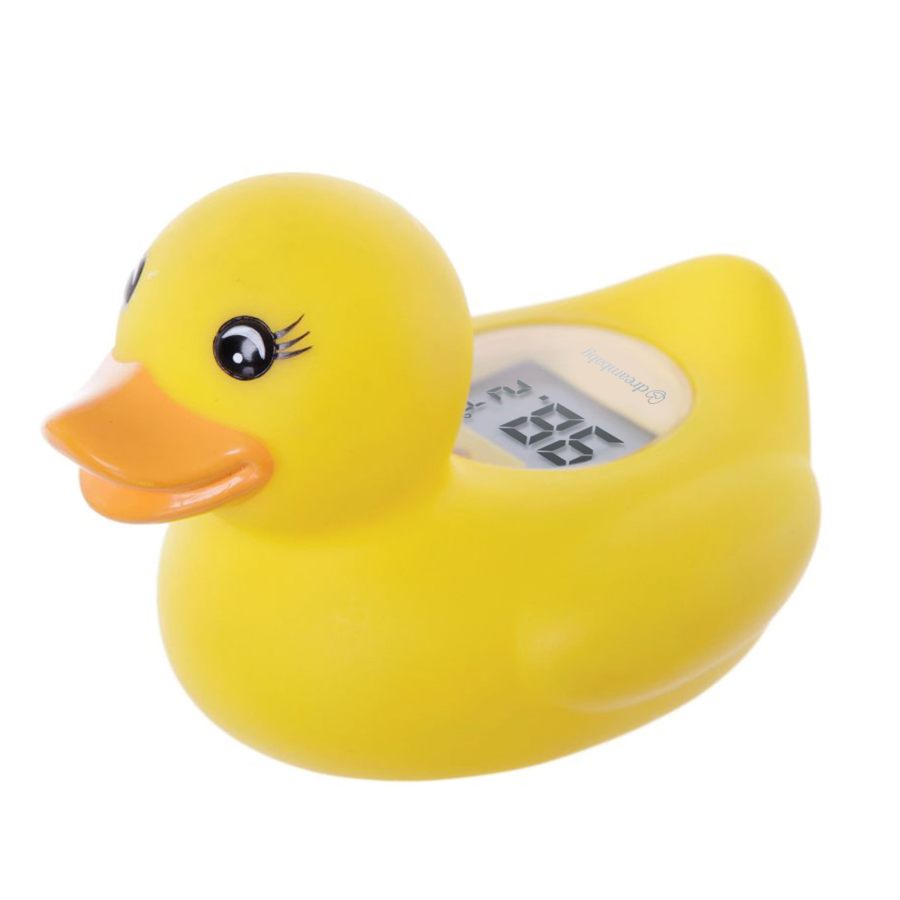
Baby bath thermometers are products specifically designed for infant bathing. Their primary function is to accurately measure water temperature to ensure bath water is safe and comfortable, avoiding extremes of hot or cold. Most products feature cute cartoon designs, doubling as floating toys, and some can also measure room temperature. These products typically use digital displays and integrate audio/visual alerts to intuitively indicate water temperature status, aiming to provide new parents with peace of mind and convenient parenting assistance. The following table illustrates the key characteristics of consumer behavior in this category.
| Dimension | Segment | Description |
|---|---|---|
| Need Driver Type | Planned Purchase/Emergency-driven Purchase | Purchases are typically driven by preparing necessities for a newborn, or by seeking a quick, reliable solution when concerned about potential harm from unsuitable water temperature for the baby. |
| Purchase Frequency | Low Frequency | This type of product is usually a one-time purchase, serving as a long-term infant care tool. Replacement cycles are more related to product lifespan or functional failure, rather than periodic repurchasing. |
| Decision Complexity | Medium | Consumers compare product safety, temperature measurement accuracy, ease of use, materials, additional features (e.g., toy, room temperature), and price, requiring moderate information gathering and trade-off analysis. |
| Price Sensitivity | Medium to High | While sensitive to the price of basic models, most parents are willing to pay a reasonable premium for more reliable, feature-rich products considering infant safety and parenting convenience. |
| Emotional Dependency | Medium to High | The product is directly related to the infant's health and comfort. The purchase decision carries profound parental love and responsibility, holding significant emotional value. |
II. User Personas & Usage Scenarios
2.1 Cautious New Parent
🎯 First-time parents lacking experience in infant care, especially worried about unsuitable bath water temperature causing burns or chills for the baby, placing extreme importance on product safety and convenience.
| Typical Usage Scenarios | Core Pain Points | Primary Purchase Drivers |
|---|---|---|
|
|
|
2.2 Practical Family Caregiver
🎯 Having multiple children or acting as grandparents/nannies, possessing some parenting experience, focusing more on product practicality, durability, and multifunctionality, expecting products to balance safety and fun.
| Typical Usage Scenarios | Core Pain Points | Primary Purchase Drivers |
|---|---|---|
|
|
|
III. User Needs Hierarchy (KANO Model)
3.1 Basic Needs (Must-Haves)
- Accurate water temperature measurement: Can quickly and accurately display bath water temperature, ensuring reliable readings. This is the product's most core, essential function, crucial for infant safety.
- Safe, non-toxic materials: Products must use BPA-Free and other non-toxic materials, posing no threat to infant health, complying with strict safety standards.
- Waterproof, leak-proof design: Can function normally in water without damage or safety issues from water ingress, ensuring product lifespan and use safety.
- Easy-to-read display: Clear digits, relatively large screen, visible even in dim light, allowing new parents to make quick judgments.
3.2 Performance Needs (Linear Satisfiers)
- Temperature alert function: Provides intuitive, convenient warnings through audio/visual signals (e.g., red/blue flashing lights, beeping) when water is too hot or cold, further ensuring safety.
- Auto on/off: Turns on automatically when placed in water and off when removed, simplifying operation and helping save battery life, enhancing user experience.
- ℃/℉ switch: Offers Celsius and Fahrenheit switching to meet different regional or user habits, improving product universality.
- Cute cartoon design: As a bath toy, a cute design attracts the baby's attention, increases bath fun and interactivity, reducing resistance.
- Fast response speed: Temperature updates display quickly (e.g., within 3-5 seconds), reducing parent waiting time for timely water adjustment.
3.3 Excitement Needs (Delighters)
- Dual water/room temperature measurement: Two-in-one, measuring both water and room temperature, increasing product utility and convenience, saving the trouble of an extra purchase.
- Bath timer function: Provides a timer to help parents control bath duration, preventing chills or dry skin, enabling scientific parenting.
- Long battery life/easy battery replacement: Battery life far exceeds expectations, or batteries are easy to replace with included spares and tools, preventing usage disruption from dead batteries.
- Anti-mold, anti-bacterial design: Material or structural design helps prevent mold growth after long-term water exposure, is easy to clean thoroughly, ensuring hygiene and boosting peace of mind.
3.4 Unmet Needs & Opportunities
-
Poor long-term stability and durability: Many products experience water ingress, display failure, battery compartment corrosion within months, have short lifespans, causing waste.
User Reviews (VOC) Lasted a month... the screen is so dim I can barely see what the temperature is. Super annoying. // Spent $14 just for it to stop working within 2 months of use and unfortunately the return window has closed. // Durability is a concern as it breaks after short use, and water intrusion is a significant issue with water getting inside the device. // not a reliable product... water got into the faceplate, and ultimately it stopped working about two months in. // after a couple uses moisture started to build up inside and shortly thereafter the temperature rate began to show in the high 100s before eventually not turning on at all. // Condensation got in and you cannot read the lcd screen to know what the temperature is.
-
Inconvenient/non-replaceable batteries: Many products have short battery life, but replacement is complex, some even have non-replaceable battery designs, leading to poor user experience and increased hidden costs.
User Reviews (VOC) Also, be mindful that the button battery isn't screwed in. You use a coin or whatever to turn the plate and get to the battery, which is a little scary because button batteries are so dangerous for kids. // Fills with water and sinks. doesn't turn on half the time does not have a user replaceable battery. Died after a few weeks. // Only lasted a year! ... no way to change the battery!!!!
-
Accidental activation/hard to turn off: Some products have poor auto on/off logic or poorly designed manual buttons, leading to battery waste or inconvenient operation, increasing usage friction.
User Reviews (VOC) The only downside is that it can be tricky to turn off, and sometimes it turns back on by itself, which drains the battery. // Very accurate. Very hard to turn off. // It is a pain in the but to turn off so it would get left on and the battery ran low real quick.
-
Display clarity and brightness: A few users report the display isn't clear or bright enough, especially under certain lighting, making temperature reading difficult and impacting efficiency.
User Reviews (VOC) Display was hard to read. // Hard to read, water inside. // Unfortunately, it barely lasted 3 months. Condensation got in and you cannot read the lcd screen to know what the temperature is.
IV. User Decision Drivers
4.1 Key Decision Factors
- Infant bath safety: Ensuring suitable water temperature to avoid burns or chills is the primary motivation and a deal-breaker for parents purchasing a baby bath thermometer.
- Measurement accuracy: Thermometer readings must be reliable and precise, without significant error, directly affecting parental trust in the product's safety function.
- Ease of use and intuitiveness: In busy parenting scenarios, simple operation and clear display for quick water temperature information are key to efficient parenting.
4.2 Secondary Decision Factors
- Product durability: Whether it can withstand frequent immersion and children's play affects the product's long-term value and repurchase intent.
- Battery life and replacement convenience: Avoiding frequent battery changes, sudden battery depletion, and the complexity of the replacement process are important factors affecting daily user experience.
- Cartoon appearance and interactivity: Cute designs attract babies, add bath fun, transforming a functional product into a toy, enhancing added value.
- Additional features: Features like room temperature measurement, timers, etc., can further enhance product added value and multifunctionality after meeting core needs, influencing final choice.
V. Selling Points & Competitive Landscape
5.1 Selling Point Analysis
5.1.1 Standard Features (Points of Parity)
- Safe, non-toxic materials: Emphasizing BPA-Free and other safe materials to protect infant health is a common promotional point and a basic market entry requirement.
- Fast, accurate temperature measurement: Highlighting the product's ability to quickly (within 2-5 seconds) and precisely display water temperature meets core needs and is a basic competitive element.
- Cute cartoon design: Products often feature animal shapes (ducks, crabs, seals, turtles, etc.), doubling as toys to attract children and increase parent-child interaction.
- Temperature alert function: Using different colored backlights or flashing lights to indicate suitable water temperature provides intuitive safety prompts, now a market standard.
- Auto on/off: Turns on automatically in water and off when removed, simplifying operation and helping save battery life, an important convenience selling point.
5.1.2 Key Differentiators
- Dual water/room temperature measurement: Some products offer both water and room temperature measurement, increasing product added value and meeting multi-use needs.
- IP67 high waterproof rating: Emphasizing higher waterproof ratings provides stronger expectations for durability and safety, serving as a product quality guarantee.
- Long battery life/included batteries: Promoting long battery life or including spare batteries alleviates user battery anxiety, improving long-term use experience.
- Specific design or brand IP: Incorporating brand-specific cartoon images (e.g., Dr. Brown's Temposaurus) enhances recognition and emotional connection, forming brand uniqueness.
5.1.3 Unique Selling Propositions (USPs)
- Bath timer: Few products offer a bath timer function, helping parents control bath duration for more refined parenting management.
- Suction cup storage: Includes a suction cup for easy hanging on bathroom walls or tub edges, facilitating storage and drying, enhancing daily convenience.
- Plastic net-zero certification: Emphasizing eco-friendly concepts, like Dr. Brown's Plastic Net-Zero, attracts environmentally conscious users and builds brand social responsibility.
- Dual-sealed battery compartment: Highlighting battery compartment sealing safety addresses water ingress concerns, boosting user trust and solving a key pain point.
5.2 Competitive Landscape
5.2.1 Market Maturity
The baby bath thermometer market has entered maturity. Basic safety features and cute designs are now standard. Brand competition mainly focuses on measurement speed, intuitiveness of temperature alerts, multifunctionality, and appearance design. Homogenization is evident, with intense price competition.
5.2.2 Innovation Trends
Category innovation trends are shifting from single function to smarter, more convenient parenting assistance tools, integrating timers, room temperature measurement, and optimized interaction. Simultaneously, improving product long-term stability and durability (especially waterproofing and battery management), along with eco-friendly concepts, are becoming new focus points for seeking differentiation.
VI. Marketing Claims vs. Reality Check
The table below analyzes the gap between common marketing claims and actual user experiences in this category:
| Dimension | Marketing Claim | User Reality | Verdict |
|---|---|---|---|
| Waterproof performance and durability | IP67/IPX7 high waterproof rating, durable for long-term use as a water toy. | Numerous user reports indicate products fail within weeks or months due to water ingress, blurred screens, battery corrosion, causing them to stop working. Waterproof sealing is a common defect. | Sellers over-promote waterproof ratings, but product structural design and manufacturing fail to deliver, causing core function failure and catastrophic user experience decline. This is the category's most critical fatal flaw. |
| Battery life and replaceability | Long-lasting battery, built-in battery lasts 1-2 years, or includes spare batteries. | Users report battery life far below expectations. Some products even have non-replaceable batteries or extremely cumbersome replacement processes, rendering the product useless after battery depletion. | Sellers promise long life but provide short-lived batteries or design non-replaceable batteries, violating basic user expectations for long-term use, causing resource waste and user dissatisfaction. |
| Multifunctionality (e.g., room temperature measurement) | 2-in-1 water/room temperature measurement provides comprehensive temperature monitoring. | Some products' room temperature measurement is inaccurate, with significant deviations from actual ambient temperature, rendering this added function useless or even misleading. | Added functions are superficial, failing to achieve claimed utility. Sellers overlook core accuracy verification when stacking features. |
Key Takeaway: The market is rife with exaggerated claims about product durability and waterproof performance, especially regarding battery life and actual lifespan. A severe disconnect exists between marketing promises and user experience.
VII. Supply-Demand Misalignment Analysis
The table below highlights mismatches between seller focus and buyer priorities:
| Dimension | Seller Behavior | User Focus | Verdict |
|---|---|---|---|
| Product long-term reliability | Sellers generally emphasize safe materials and instant temperature measurement in listings but avoid discussing potential long-term issues like water ingress or failure, or gloss over them with vague 'IPX7 waterproof' claims. | Users are most dissatisfied with products failing within a short period (1-3 months), frequently complaining about 'poor quality' and 'wasted money,' urgently needing durable, stable products. | Sellers fail to acknowledge and address the core user pain point of 'how long will it last,' leading to declining user trust in the entire category and inability to build long-term brand loyalty. |
| Battery management and replacement experience | Sellers often promote 'built-in battery' or 'includes batteries,' but few products clearly explain battery replacement convenience or adopt rechargeable designs; some are even non-replaceable. | Users complain about short battery life, troublesome and potentially hazardous replacement (button batteries), or inability to replace batteries leading to product disposal, increasing hidden costs and inconvenience. | Sellers adopt a 'short-term convenience' strategy on battery issues, neglecting user demands for sustainable use and battery safety, transferring use costs and risks to users. |
| Practicality of built-in mirror/room temperature measurement | Some products actively promote built-in mirrors or room temperature measurement as differentiation points. | User feedback on these added functions is mixed. Some find mirrors blurry or magnification unreasonable; others find room temperature measurement inaccurate, ultimately making the functions gimmicky. | Sellers over-invest in 'feature stacking' without truly understanding the actual scenario value and user experience details of these functions, causing resource investment to fail as effective selling points. |
Key Takeaway: Sellers overly focus on cartoon designs, simple operation, and basic alerts, collectively neglecting product long-term reliability and critical waterproofing/battery issues, leading to a severe mismatch between supply and demand focus.
VIII. Strategic Opportunities & Recommendations
8.1 Create an Extremely Durable & Truly Waterproof Bath Thermometer
8.1.1 Target Audience & Pain Points
⚡️ Pain Points Addressed: Poor product long-term stability and durability, insufficient waterproof/leak-proof performance, display clarity and brightness issues.
8.1.2 Action Plan
Adopt ultrasonic welding or advanced secondary injection molding to ensure IP68 waterproof rating (for prolonged immersion). Use high-transparency anti-fog panels and OLED displays for long-term clarity. Apply moisture/rust-proof treatment to key internal components.
| Tech Complexity | Medium |
| Cost Impact | Medium Impact |
| Trade-off Warning | Increasing waterproof rating may require more complex molds and sealing processes, slightly increasing product size or weight, but user value gain is significant. |
| Price Band | Only viable above $18.99 |
8.1.3 Marketing Strategy
Emphasize 'Five-year worry-free waterproofing, built to last.' Provide professional lab immersion test videos and long-term user testimonials. Highlight the 'One-time investment, lasting peace of mind' value proposition, solving core user pain points and building a trust barrier.
8.2 Design a Safe Thermometer with Easy-to-Replace/Rechargeable Batteries
8.2.1 Target Audience & Pain Points
⚡️ Pain Points Addressed: Inconvenient/non-replaceable batteries, generally short battery life, button battery safety hazards.
8.2.2 Action Plan
Adopt Type-C charging with built-in rechargeable lithium battery, or design a tool-free, safe AA/AAA battery replacement via twist or latch. Battery compartment must have dual child-proof mechanisms and include clear replacement instructions.
| Tech Complexity | Medium |
| Cost Impact | Medium Impact |
| Trade-off Warning | Rechargeable lithium batteries increase cost and volume. Easy-replace designs must ensure waterproof sealing, potentially slightly increasing mold complexity. |
| Price Band | Only viable above $22.99 |
8.2.3 Marketing Strategy
8.3 Multifunctional Smart Parenting Companion (Water Temp + Room Temp + Timer)
8.3.1 Target Audience & Pain Points
⚡️ Pain Points Addressed: Single function, lack of advanced parenting assistance; accidental activation/hard to turn off; inaccurate room temperature measurement.
8.3.2 Action Plan
Optimize sensors to ensure equal accuracy for water and room temperature. Integrate an intuitive bath timer with preset reminders. Design smarter anti-mistake physical buttons or touch areas, offering multiple wake/off modes. Future consideration for Bluetooth app connection for data logging and personalized settings.
| Tech Complexity | Medium |
| Cost Impact | Medium Impact |
| Trade-off Warning | Adding functions may slightly increase UI complexity. Room temperature sensor needs external exposure, posing minor challenges for waterproof design. |
| Price Band | Only viable above $24.99 |
8.3.3 Marketing Strategy
Emphasize 'Your all-in-one parenting assistant, smart tech caring for growth.' Demonstrate integrated usage scenarios for water temp, room temp, and timer. Highlight 'Scientific parenting, goodbye to chaos,' attracting educated young parents.
8.4 Optimize Auto On/Off Logic & Human-Machine Interaction
8.4.1 Target Audience & Pain Points
⚡️ Pain Points Addressed: Accidental activation/hard to turn off leading to battery drain; flaws in auto on/off logic.
8.4.2 Action Plan
Improve sensitivity and algorithm of auto on/off sensors to avoid accidental activation and failure to turn off after removal. Retain auto-on when immersed but add a long-press (e.g., 3 seconds) physical button for forced shutdown with intuitive feedback (e.g., indicator flash).
| Tech Complexity | Low |
| Cost Impact | Low Impact |
| Trade-off Warning | No significant physical side effects, mainly involves software logic and button design adjustments. |
| Price Band | Only viable above $14.99 |
8.4.3 Marketing Strategy
Highlight 'Smart and worry-free, one-button control.' Emphasize 'Goodbye to accidental activation, longer battery life.' Demonstrate its convenient, reliable operation through user scenarios, enhancing user peace of mind.