Amazon US Market Analysis: Food Vacuum Sealers Category
📊 Executive Summary
📈 Market Trends
Portability and efficiency are standard; performance reliability becomes the new battleground. The Food Vacuum Sealer market is maturing, with products commonly emphasizing compactness, multiple modes, and strong suction. Consumers not only seek fast, efficient preservation but also shift focus to product long-term reliability, wet food handling capability, and detailed feature practicality. Brands must evolve from 'having features' to 'features being usable and stable'.
⚡ Major Pain Points
Poor core function stability; durability and after-sales are major weaknesses. Users commonly complain about insufficient vacuum suction, unreliable seals, frequent issues especially with wet foods. High short-term failure rates, gimmicky convenience features like built-in cutters, unclear instructions, and lack of after-sales severely undermine user trust and purchase intent.
💡 Selection Opportunities
Deepen focus on quality and user experience to build a trustworthy kitchen assistant. Market opportunity lies in launching 'Flagship Performance & Reliability' products solving core vacuum and seal instability pain points, providing better wet food preservation solutions. Simultaneously, enhance user experience by optimizing built-in cutter design, strengthening intelligent temperature control, extending warranties, supplemented by clear usage guidance and responsive after-sales service, establishing brand differentiation in an increasingly homogenized market.
I. Analysis Overview
1.1 Introduction & Report Scope
This report analyzes the 'Vacuum Sealers' category (Food Vacuum Sealers) in the Amazon US market, focusing on target user personas, core needs, decision drivers, market communication, and potential opportunities.
1.2 Category Snapshot
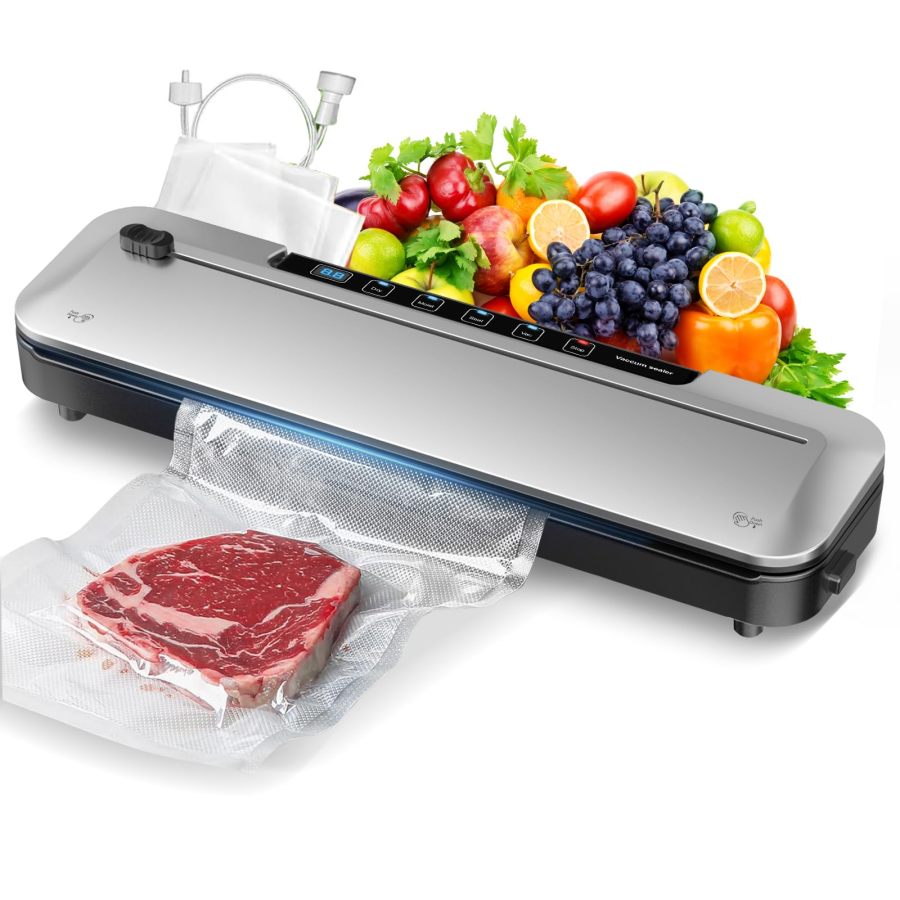
A Food Vacuum Sealer (or Food Preservation Sealer) is a kitchen appliance that extends the shelf life of various foods by extracting air from packaging bags and heat-sealing them. These products typically feature dry/wet food modes, built-in cutters, and bag roll storage. They aim to help households reduce food waste, optimize storage space, and support modern cooking methods like Sous Vide. The following table illustrates the key characteristics of consumer behavior in this category.
| Dimension | Segment | Description |
|---|---|---|
| Need Driver Type | Planned Purchase / Emergency-driven Purchase | Users often purchase for conscious food management needs (e.g., bulk buying, meal prep) but also for immediate preservation (e.g., leftovers). |
| Purchase Frequency | Low | As a durable kitchen appliance, purchase frequency is low, typically lasting for years after a single purchase. |
| Decision Complexity | Medium | Users compare suction power, function modes, size, brand, and user reviews to assess product performance and reliability. |
| Price Sensitivity | Medium | Price is an important consideration. Users seek value for money while ensuring functionality, but are willing to pay a premium for higher performance and reliability. |
| Emotional Dependency | Medium | Primarily driven by practicality and functionality, but reducing waste, healthy eating, and improving quality of life also provide emotional satisfaction. |
II. User Personas & Usage Scenarios
2.1 Budget-Conscious Homemaker
🎯 A daily cook focused on household expenses and food health, seeking efficient, hassle-free food preservation solutions.
| Typical Usage Scenarios | Core Pain Points | Primary Purchase Drivers |
|---|---|---|
|
|
|
2.2 Culinary Enthusiast / Healthy Lifestyle Advocate
🎯 Focuses on ingredient quality and cooking experience, pursues a healthy lifestyle, enjoys trying methods like Sous Vide, and engages in regular meal prep.
| Typical Usage Scenarios | Core Pain Points | Primary Purchase Drivers |
|---|---|---|
|
|
|
III. User Needs Hierarchy (KANO Model)
3.1 Basic Needs (Must-Haves)
- Effective Vacuuming: The product must stably remove air from the packaging bag. This is the core function; its absence renders the product valueless.
- Reliable Sealing: The seal must be firm and airtight, ensuring food isolation from external air to prevent recontamination and spoilage.
- Easy Operation: Intuitive button design and clear instructions enabling users to start quickly and complete vacuum sealing tasks easily.
- Dry/Wet Modes: Ability to provide appropriate vacuum and sealing durations based on food type (dry, wet), preventing liquid suction or weak seals.
3.2 Performance Needs (Linear Satisfiers)
- Powerful Suction: High vacuum pressure to quickly and thoroughly remove air, especially for large or multiple items, enhancing efficiency.
- Significantly Extended Shelf Life: Foods demonstrably last much longer in practical use compared to traditional methods, reducing waste.
- Built-in Cutter & Bag Roll Storage: Allows users to customize bag size based on food dimensions, reducing material waste and keeping countertops tidy.
- Compact, Easy-to-Store Design: Small product footprint, not occupying excessive counter space, easy to store in cabinets or drawers.
- Easy-to-Clean Design: Machine surface easy to wipe; removable drip tray facilitates cleaning liquids possibly spilled from moist foods.
3.3 Excitement Needs (Delighters)
- Multi-functional Attachment Compatibility: Compatibility with external attachments like vacuum canisters, wine stoppers, etc., providing a more comprehensive preservation solution.
- Quiet Operation: Low operating noise, not disturbing household life, improving overall user experience.
- Digital Countdown Display: LED screen clearly shows work progress and remaining time, enhancing user control and sense of technology.
- Dual Heat Seal Bars: Provides wider or double-layered seals for enhanced security, especially for liquids or long-term storage.
- High-Quality Aesthetic Design: Product uses premium materials (e.g., stainless steel), fashionable appearance, blending into modern kitchen aesthetics, elevating product tier.
3.4 Unmet Needs & Opportunities
-
Seal Consistency & Reliability: Users commonly report unstable seal success rates with some products, sometimes experiencing air leaks or loss of vacuum shortly after sealing.
User Reviews (VOC) The vacuum works only 1 out of 3-4 times! // It sucks most of the air from the plastic, but not all. // Sometimes it will vacuum seal (suck) sometimes it won't and then what it does is seals without sucking.
-
Wet Food Handling Capability: Machines easily suck in liquid when handling high-moisture foods, affecting performance or causing seal failure.
User Reviews (VOC) didn't work at all or fails to vacuum moist food // It removes all air without moisture leaks. Some caution is needed: the cutter bunches initially and is difficult to slide. The seal strip gets very hot.
-
Product Long-Term Durability: Users report product failures within short periods (weeks or months), such as reduced suction, inability to seal, or heating failure.
User Reviews (VOC) Doesn't last long. Haven't had it for a full year and it already stopped working. // This item did not meet expectations. Did not seal chip bags it melted them, yet was not hot enough to seal food saver bags. // I used it one to seal one part of the bag and then it just stopped working.
-
Built-in Cutter Practicality: Built-in cutter design on some products is unreasonable, cutting poorly or being completely ineffective, impacting user experience.
User Reviews (VOC) The only dislike I have is the cutter. It was completely useless, until I finally figured out that you have to start the cut on the plastic and NOT from either far end of the plastic edge (it only bunches without cutting). // The cutter is situated directly above one of the foam gaskets and doesn't seem to have a purpose. // It takes too long. Every seal takes at least25 seconds, then you have to wait ten seconds in between uses.
-
Instruction Clarity: Poor translation or insufficient detail in some product manuals makes it difficult for users to correctly use advanced features or attachments.
User Reviews (VOC) NO INSTRUCTIONS FOR THE ATTACHMENTS. // The instructions left a lot to be desired. // Instructions are poorly translated from who knows what language.
-
Low Batch Processing Efficiency: Users report needing to wait for cooling during continuous batch sealing, potentially causing machine overheating and affecting seal quality, reducing efficiency for large quantities.
User Reviews (VOC) The seal strip gets very hot. // The first time I tried to use it, the sealer melted the bag through completely. // after the 3rd bag it quit, I let it have a ln hour break and finished.
IV. User Decision Drivers
4.1 Key Decision Factors
- Thoroughness of Vacuum Effect: Users care most about effectively removing all air from the bag to prevent food oxidation and spoilage. This is the core purchase prerequisite.
- Seal Strength: Whether the seal line is sturdy and durable, ensuring the vacuum state doesn't leak, is key to measuring product reliability.
- Ease of Use: Whether the operation process is simple and intuitive, especially for first-time or elderly users, impacts daily usage frequency.
- Dry/Wet Mode Effectiveness: Ability to reliably handle foods with different moisture content, avoiding liquid backflow or seal failure.
4.2 Secondary Decision Factors
- Product Size & Storage: Small, compact, and easy-to-store design is a plus, especially for families with limited kitchen space.
- Noise Level: Operating sound level affects user experience; quieter or low-noise products are preferred.
- Included Accessories & Bags: Whether sufficient vacuum bags, external suction tubes, etc., are provided impacts initial user experience and perceived value.
- Built-in Cutter Function: Whether the cutter is sharp and easy to use determines convenience in customizing bag sizes.
- Brand Reputation & Warranty: Well-known brands and longer warranty periods increase consumer trust and reduce purchase risk.
- Price: While meeting basic function and performance, price remains a key final consideration for consumers.
V. Selling Points & Competitive Landscape
5.1 Selling Point Analysis
5.1.1 Standard Features (Points of Parity)
- Multiple Mode Options: Emphasizes dry/wet food modes, and options like vacuum, seal to meet different needs.
- Powerful Suction: Promotes high kPa suction (e.g., 75-95kPa), highlighting fast and thorough air removal.
- Extends Shelf Life: Core selling point, promising food stays fresh 5-8 times longer, reducing waste.
- Compact/Small Design: Emphasizes product doesn't take up space, easy to store.
- Includes Starter Kit: Includes vacuum bags/rolls, suction tubes, etc., for immediate use out of the box.
- Built-in Cutter: Allows users to customize vacuum bag size, reducing material waste.
5.1.2 Key Differentiators
- Digital Countdown Display: Provides visual work progress, enhancing user control and sense of technology.
- Dual Heat Seal Bars: Emphasizes wider or double-layered seals for stronger, safer sealing.
- One-Handed Operation/Easy-Lock Handle: Simplifies lid locking process, improving operational convenience.
- High-Power Motor: Promotes stronger motor wattage (e.g., 120W, 230W), implying more efficient performance.
- Removable Drip Tray: Facilitates cleaning, especially after handling wet foods.
- Longer Warranty Period: Offers 2-5 year warranty promise, building brand trust and consumer confidence.
5.1.3 Unique Selling Propositions (USPs)
- UV Sterilization Function: Mentioned by only one product, providing extra food safety assurance.
- Sloped Top Design Prevents Overflow: Specific product emphasizes its sloped design helps prevent liquid backflow, addressing wet food pain point.
- FoodSaver Accessory Compatibility: FoodSaver brand products emphasize compatibility with their full range of bags and accessories, leveraging brand ecosystem.
- Automatic Tear-Off Cutting: Unique selling point of a specific product, providing a clean tear line without manual effort.
5.2 Competitive Landscape
5.2.1 Market Maturity
The Food Vacuum Sealer market is currently in the mature stage. Numerous products exist with high homogenization in basic functions. Competition primarily revolves around suction power, ease of use (one-touch, built-in cutter, one-handed operation), function modes (dry/wet, external suction), and price range. Brands commonly attract consumers by emphasizing 'latest upgrade', 'stronger suction', or 'more included accessories'. However, overall innovation trends focus more on optimizing and combining existing features rather than disruptive innovation.
5.2.2 Innovation Trends
Current category innovation is mainly reflected in:
- Performance Parameter Transparency & Enhancement: Brands tend to directly label vacuum pressure (kPa) and power (W), continuously improving these parameters to meet user demand for efficiency and power.
- User Experience Detail Optimization: Evolving from simple 'one-touch operation' towards smarter, more user-friendly directions, such as digital countdown displays, removable cleaning parts, one-handed locking design, aiming to enhance daily convenience and comfort.
- Multi-function Integration & Scenario Expansion: Products are not limited to vacuum bag sealing but are expanding towards compatibility with external attachments like vacuum canisters, wine stoppers, and more refined food processing (e.g., Sous Vide, marinating).
- Durability & Reliability Enhancement: Some brands begin emphasizing longer warranties, using upgraded materials (e.g., silicone gaskets) and dual heat seal bars to address consumer concerns about product lifespan and stability.
VI. Marketing Claims vs. Reality Check
The table below analyzes the gap between common marketing claims and actual user experiences in this category:
| Dimension | Marketing Claim | User Reality | Verdict |
|---|---|---|---|
| Vacuum Suction & Seal Effectiveness | 90kPa or even 95kPa powerful suction, achieving professional-grade fast and thorough vacuum, ensuring strong seals. | Users commonly report insufficient suction, inability to fully remove air, or even vacuum function failure; wet foods easily cause liquid suction leading to seal failure or machine damage. | Sellers inflate or exaggerate suction parameters; the core function fails to deliver in practical use, causing serious user doubt about preservation capability, directly impacting purchase trust. |
| Product Durability & Lifespan | High-quality materials, 5-year warranty promise, long-lasting durability. | Numerous users report product failures within short periods (weeks or months), such as inability to heat, no suction, complete stoppage, with difficult after-sales contact. | Low-price products promoting high durability and long warranties create a physical paradox with actual material costs and quality control investment. Over-marketing leads to unmet user quality expectations. |
| Built-in Cutter Function | Built-in cutter, easily customizes bag size, convenient operation, saves time. | Users report built-in cutter cuts poorly, requires force, some products even have 'no blade' or are 'completely useless'. | Built-in cutter design is superficial, not based on actual user operation habits, resulting in a gimmicky or even counterproductive feature, weakening overall product ease-of-use perception. |
| Wet Food Handling Capability | Dry/Wet modes, easily handle various foods, prevent liquid suction. | Users report liquid still easily gets sucked into the machine in wet food mode, causing seal failure or even machine damage. | Pursuing simple 'dry/wet mode' functionality without sufficient technical investment to solve liquid backflow issues creates a contradiction between function design and actual scenario needs, sacrificing wet food preservation experience. |
Key Takeaway: The market exhibits widespread parameter inflation and scenario-based experience exaggeration, especially regarding battery life and magnetic compatibility.
VII. Supply-Demand Misalignment Analysis
The table below highlights mismatches between seller focus and buyer priorities:
| Dimension | Seller Behavior | User Focus | Verdict |
|---|---|---|---|
| Stability of Core Vacuum & Seal Performance | Sellers commonly emphasize '90kPa powerful suction', '5mm wide heat seal line', 'dual sealing' etc., but rarely mention stability guarantees during long-term use or complex environments in listings. | Users care most about whether suction is consistent, whether sealing succeeds every time, whether it leaks air, not just peak parameters. Frequent vacuum failures and air leaks are users' biggest pain points, directly causing returns. | Sellers over-focus on the 'high' of single parameters but neglect users' fundamental demand for 'stable' and 'reliable' core functionality, creating trust deficit at the most critical point. |
| Product Durability & After-sales Service | Some sellers promote 2-5 year warranties but provide insufficient detail on internal component durability and fail to establish efficient, convenient after-sales response channels, making warranty promises appear vague. | Users complain about high short-term failure rates and difficulties seeking after-sales support, leading to distrust of brands and the category. | Sellers fail to support their high warranty promises with concrete actions (e.g., robust quality control and responsive after-sales), leaving user demand for long-term peace of mind unmet, affecting word-of-mouth. |
| Practical Usability of Built-in Cutter | Most products market 'built-in cutter' as a convenient feature but lack in-depth explanation or optimization of its design details and cutting effectiveness. | Users report cutters are hard to use, not sharp, or cannot cut at all, necessitating manual scissors, rendering the feature useless or even a new pain point. | Sellers blindly pile on features without deep research into real user pain points and scenarios, resulting in invested cost not delivering actual value, typical ineffective competition. |
Key Takeaway: Sellers generally emphasize feature quantity and high parameters in marketing but collectively remain silent or gloss over core pain points like stability, reliability, and detailed usability, leading to supply-demand misalignment.
VIII. Strategic Opportunities & Recommendations
8.1 Flagship Performance & Reliability Vacuum Sealer
8.1.1 Target Audience & Pain Points
⚡️ Pain Points Addressed: Seal Consistency & Reliability, Product Long-Term Durability, Wet Food Handling Capability.
8.1.2 Action Plan
Adopt commercial-grade brushless vacuum pump for stable, sustained 95kPa+ suction. Upgrade dual heat bars to high-temperature resistant silicone material ensuring seal stability during continuous high-intensity use. Design large-capacity, removable, easy-to-clean anti-overflow tray. Introduce smart self-diagnostic system and provide detailed troubleshooting guides in an app.
| Tech Complexity | Medium |
| Cost Impact | High Impact |
| Trade-off Warning | Using sturdier metal housing and higher-quality pump may slightly increase product weight, but the performance and lifespan improvements are worthwhile. |
| Price Band | Only viable above $89.99 |
8.1.3 Marketing Strategy
Emphasize 'buy once, use for ten years' investment value; highlight exceptional performance in wet food, batch processing, and Sous Vide scenarios; promote certifications from authoritative bodies (e.g., UL, ETL) and rigorous durability test reports.
8.2 Intelligent Temperature Control & Overheat Prevention Vacuum Sealer with Built-in Cutter
8.2.1 Target Audience & Pain Points
⚡️ Pain Points Addressed: Built-in Cutter Practicality, Low Batch Processing Efficiency, Seal Bar Overheating Issue.
8.2.2 Action Plan
Redesign built-in cutter ensuring sharp blade, sturdy structure, smooth cutting, and accurate sizing for different bag thicknesses. Integrate smart temperature control chip to monitor heat bar temperature in real-time, adjusting work intervals or alerting users when overheating to prevent bag melting. Provide clear cutter usage video tutorials.
| Tech Complexity | Low |
| Cost Impact | Medium Impact |
| Trade-off Warning | Adding a cooling module may slightly increase internal space usage but significantly improves user experience. |
| Price Band | Only viable above $49.99 |
8.2.3 Marketing Strategy
Highlight 'one-cut solution, goodbye to scissors hassle' convenience; emphasize 'smart cooling, continuous operation without waiting' efficiency advantage; showcase smooth cutter experience via comparison videos.
8.3 User-Friendly Multi-function Entry-Level Vacuum Sealer
8.3.1 Target Audience & Pain Points
⚡️ Pain Points Addressed: Instruction Clarity, Limited Bag Size Variety in Starter Kit, Wet Food Handling Capability (basic).
8.3.2 Action Plan
Rewrite manual using clear, concise language, add diagrams and QR codes linking to multilingual operation videos. Include various vacuum bag sizes in starter kit (e.g., small portions, medium portions, roll) to meet different food storage needs. Provide basic anti-overflow design and clearly guide simple wet food handling techniques.
| Tech Complexity | Low |
| Cost Impact | Low Impact |
| Trade-off Warning | Improving manual quality and starter bag variety has no physical product impact, only increases design and packaging costs. |
| Price Band | Only viable above $29.99 |
8.3.3 Marketing Strategy
Emphasize 'Beginner-friendly, learn in minutes'; highlight 'Multiple bag sizes, ready to use out of the box'; provide 'Zero-Waste Recipes' or 'Weekly Meal Prep Plan' to guide usage and enhance perceived value.