Amazon US Market Analysis: Portable Nebulizers Category
📊 Executive Summary
📈 Market Trends
Strong Demand for Portability, but Quality Trust Under Pressure. Demand for portable nebulizers is robust, with consumers broadly seeking convenience features like compact size, quietness, multiple modes, and USB charging. However, market products are highly homogeneous and commonly plagued by core issues like poor quality reliability and exaggerated battery life, severely impacting user trust and brand reputation.
⚡ Major Pain Points
Frequent Device Failures, Exaggerated Battery Life, Leakage Troubles Users. The most critical pain point is products stopping working or failing to charge shortly after purchase, directly causing treatment interruption and high return rates. Secondly, severe discrepancies between actual and advertised battery life, along with medication leakage issues in some products, greatly damage user experience and confidence in product safety.
💡 Selection Opportunities
Deepen Quality Foundation, Rebuild User Trust. The product selection opportunity lies in completely solving product reliability issues, offering extended warranties, and clearly defining real battery life and power solutions to eliminate false advertising. Building on this, further optimize all-angle leak-proof design to improve medication utilization and provide intuitive, easy-to-understand cleaning and maintenance guidance, establishing a lasting competitive advantage in the crowded market through a differentiated strategy.
I. Analysis Overview
1.1 Introduction & Report Scope
This report analyzes the 'Nebulizers' category (specifically portable nebulizers) in the US Amazon marketplace, focusing on target user personas, core needs, decision drivers, market communication, and potential opportunities.
1.2 Category Snapshot
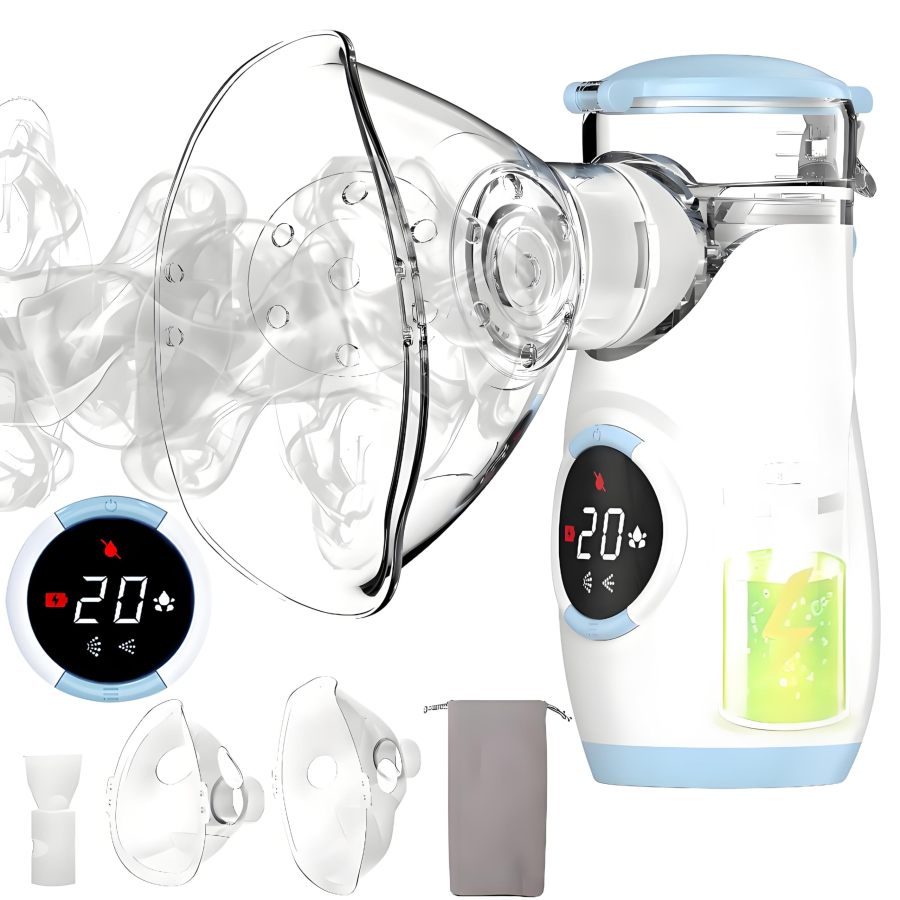
A portable nebulizer is a medical device that utilizes ultrasonic mesh technology to atomize liquid medication into a fine aerosol for inhalation, helping patients relieve respiratory symptoms. Characterized by its compact size, light weight, quiet operation, and cordless design, it is widely used in various settings such as home, travel, and office, providing convenient respiratory care for both adults and children. The following table illustrates the key characteristics of consumer behavior in this category.
| Dimension | Segment | Description |
|---|---|---|
| Need Driver Type | Emergency-driven / Planned Purchase | Users have both the emergency need to relieve acute respiratory symptoms and the planned need for daily health management and relapse prevention. |
| Purchase Frequency | Low / Medium-Low | The product itself has a low purchase frequency, but as a medical aid device, it may see medium-low repurchase due to device failure or use by multiple family members. |
| Decision Complexity | Medium | Users need to evaluate multiple dimensions including nebulization efficacy, portability, noise level, battery life, ease of use, cleaning/maintenance, and most crucially, quality reliability. |
| Price Sensitivity | Medium-High | As a medical-related device, users are willing to pay for efficacy and reliability, but price remains a significant consideration factor within the portable category. |
| Emotional Dependency | Medium-High | The product is directly linked to the user's health and comfort, especially for child patients, where the sense of security and convenience it provides holds high emotional value. |
II. User Personas & Usage Scenarios
2.1 Respiratory Patients & Their Families
🎯 Individuals or families who suffer long-term or seasonal respiratory issues such as asthma, bronchitis, colds, or sinusitis, especially those with children, requiring convenient, efficient, and unobtrusive nebulizer treatment.
| Typical Usage Scenarios | Core Pain Points | Primary Purchase Drivers |
|---|---|---|
|
|
|
2.2 Business Travelers & Mobile Lifestylers
🎯 Individuals who travel for work, leisure, or engage in frequent outdoor activities, needing to carry a nebulizer for sudden respiratory discomfort. They have high demands for extreme portability, long battery life, and durability.
| Typical Usage Scenarios | Core Pain Points | Primary Purchase Drivers |
|---|---|---|
|
|
|
III. User Needs Hierarchy (KANO Model)
3.1 Basic Needs (Must-Haves)
- Fine Mist & Efficient: Effectively converts liquid medication into fine particles (e.g., ≤5µm), ensuring full absorption by the respiratory tract and lungs.
- Easy Operation: One-button operation, easy assembly/disassembly of medicine cup and accessories, no complex settings, suitable for elderly and children.
- Suitable for Whole Family: Product includes adult and child-sized masks and mouthpieces to meet the needs of different age groups.
- Safe & Non-Toxic: All parts contacting medication and users are made of food-grade or medical-grade safe materials, with no harmful substance release.
3.2 Performance Needs (Linear Satisfiers)
- Portable & Compact: Lightweight, compact device size, easy to fit into a bag or hold, not occupying excessive space.
- Quiet Operation: Operating noise level below 30dB, not disturbing the surrounding environment, especially suitable for nighttime or child use.
- USB Charging / Dual Power: Supports USB-C charging or AA battery power, providing flexible power options for use without outlets.
- Multiple Nebulization Modes: Provides adjustable mist intensity (e.g., gentle/powerful) and treatment duration to adapt to different conditions and ages.
- Easy Cleaning & Maintenance: Detachable parts design, supports self-cleaning function, prevents medication residue clogging, ensuring hygiene and long-term performance.
3.3 Excitement Needs (Delighters)
- Hands-Free Wearable Design: Offers wearable or head-mounted masks, allowing users to free their hands for other activities or use while lying down.
- Smart LED Display: Clear LED screen showing real-time information like battery level, current mode, remaining treatment time, low-water alert.
- Extended Battery Life: A single full charge supports multiple long-duration treatments (e.g., 100 minutes or 10+ sessions).
- Fast Nebulization: Reduces single treatment time (e.g., completes in 4-10 minutes), improving treatment efficiency.
- Premium Travel Case: Includes a high-quality portable carrying case for the device and all accessories, enhancing user experience.
3.4 Unmet Needs & Opportunities
-
Poor Device Reliability: Numerous users report products stopping working within weeks or months of purchase, failing to charge or produce mist.
User Reviews (VOC) It would get very warm and show the green light but would not emit the mist. // it stops working out of nowhere and could not be used.
-
Unstable Battery Life: Some products have short battery life, actual usage time doesn't match claims, or battery compartment design flaws cause poor contact.
User Reviews (VOC) They go through batteries in one day and fall out of the device. // the battery won't hold charge and the battery door won't close.
-
Leakage Issues: Some users report medication leakage from the medicine cup or connections during nebulization, causing waste and inconvenience.
User Reviews (VOC) The nebulizer leaks // It does leak a little instead of creating vapor // I really like the portable nebulizer, but it leaks when it is finished.
-
Insufficient/Uneven Mist Output: Poor nebulization effect, low or inconsistent mist output, affecting drug delivery efficiency and treatment efficacy.
User Reviews (VOC) It barely produced any mist, and sometimes none at all. // Doesn't put out much mist
-
Unclear/Incomplete Cleaning Instructions: Self-cleaning function has limited effectiveness, or users lack clear guidance for thorough cleaning and maintenance, leading to clogs.
User Reviews (VOC) The instruction book says use " clean" distilled water and the little orange card says do not use distilled water which makes no clear sense. // My son did not keep up with the clean cycles and now it doesn't work.
IV. User Decision Drivers
4.1 Key Decision Factors
- Nebulization Efficacy: Whether medication can be effectively and quickly atomized and delivered deep into the respiratory tract, with noticeable treatment results.
- Product Reliability & Lifespan: Whether the device is durable, not prone to damage, works reliably during critical moments, ensuring long-term value.
- Portability & Ease of Use: Whether it's sufficiently lightweight and easy to operate, convenient for carrying and quick use in any setting.
- Noise Level: Whether operating noise is low enough not to disturb the environment, especially for children and nighttime users.
4.2 Secondary Decision Factors
- Battery Life & Charging Convenience: Whether the battery lasts long, and the charging method is universal and convenient (e.g., USB-C), reducing power anxiety.
- Cleaning & Maintenance Difficulty: Whether the device is easy to disassemble and clean, has an effective self-cleaning function, reducing user burden.
- Price & Value for Money: Whether the product price is reasonable, considering its features, quality, and lifespan, assessing if it's worth the cost.
- Accessory Completeness: Whether it includes necessary accessories like adult/child masks, mouthpieces, carrying case, providing a complete solution.
V. Selling Points & Competitive Landscape
5.1 Selling Point Analysis
5.1.1 Standard Features (Points of Parity)
- Portable & Compact Design: Widely promoted as lightweight, handheld, easy to carry, suitable for various scenarios like home and travel.
- Quiet Operation: Almost all products emphasize low-noise operation (typically below 20-30dB), not disturbing user rest or surroundings.
- USB Charging / Dual Power Mode: Highlights built-in rechargeable batteries or support for USB/AA battery power, offering power flexibility and convenience.
- Suitable for Adults & Children: Emphasizes inclusion of different sized masks and mouthpieces to meet the needs of the whole family.
- Efficient Fine Mist Technology: Promotes mesh or ultrasonic technology ensuring fine medication particles (e.g., ≤5µm) for easy absorption.
5.1.2 Key Differentiators
- Self-Cleaning Function: Offers a one-touch automatic cleaning mode, simplifying maintenance, preventing clogs, extending lifespan.
- Multiple Mist Intensity/Modes: Provides 2-3 adjustable mist speed settings (e.g., gentle, powerful) and treatment durations to adapt to different conditions and ages.
- Smart LED Display: Clearly displays battery level, mode, treatment time, low-water alert, enhancing user operation visibility.
- Long Battery Life: Promotes single charge supporting more uses (e.g., 10 sessions, 30 sessions, or hours of continuous use).
5.1.3 Unique Selling Propositions (USPs)
- Wearable Hands-Free Design: Very few products propose wearable or use while lying down without leakage, freeing hands (e.g., B0BWRTM8B7).
- Tilted Medicine Cup Design: Special medicine cup structure reduces medication residue, improving utilization (e.g., B0BWRTM8B7).
- FSA/HSA Eligible: Some products explicitly state eligibility for FSA/HSA (US medical savings accounts) payment, facilitating reimbursement for specific users (e.g., B0BWRTM8B7).
5.2 Competitive Landscape
5.2.1 Market Maturity
The portable nebulizer market is transitioning from growth to maturity. Basic selling points like portability, quietness, and efficient nebulization have become standard, leading to high product homogenization. The competitive focus is shifting towards product reliability, user experience details, and smart features to seek brand differentiation and user loyalty.
5.2.2 Innovation Trends
Innovation trends include: enhancing overall product stability and durability to address widespread user quality pain points; further optimizing quiet technology for a 'seamless' experience; adding smart features (e.g., more refined app control, treatment data tracking); and exploring more user-friendly wearing/usage methods (e.g., hands-free design) to adapt to diverse mobile scenarios and user needs.
VI. Marketing Claims vs. Reality Check
The table below analyzes the gap between common marketing claims and actual user experiences in this category:
| Dimension | Marketing Claim | User Reality | Verdict |
|---|---|---|---|
| Product Reliability & Lifespan | High quality, durable, providing lasting healthy breathing support for you. | Numerous user reports of products stopping working, failing to charge, or producing mist within weeks to months of purchase, even cases of overheating and deformation, indicating severe quality control defects. | Sellers fail to provide the basic quality assurance expected of a medical device. The widespread early failures directly destroy user trust, representing the most critical flaw in this category. |
| Battery Life & 'Rechargeable' Attribute | USB-C fast charging, long-lasting battery, all-day use, built-in rechargeable battery. | Some products advertise 'USB charging' but lack a built-in battery (only support plugged-in or dry batteries). Others have built-in batteries with far lower actual life than claimed, with issues like faulty charging ports or unstable batteries falling out. | Sellers use ambiguous wording to create a false impression of 'rechargeable' or excessively exaggerate battery life, directly misleading consumers' core expectation of portability, leaving users powerless in emergency situations. |
| Nebulization Efficacy & Leakage | Efficient mesh nebulization, ultra-fine particles for deep penetration, no residue, no leakage. | Users report insufficient, uneven mist output affecting drug absorption. Some products have medicine cup leakage, causing waste and inconvenience, starkly contrasting with claims. | Overstated nebulization efficiency, failure to provide stable, uniform mist output. Structural design flaws in some products cause leakage, impacting treatment efficacy and user experience, posing drug waste risks. |
Key Takeaway: The market exhibits widespread parameter inflation and scenario-based experience exaggeration, especially regarding battery life and product reliability. Some claims are directly misleading to consumers.
VII. Supply-Demand Misalignment Analysis
The table below highlights mismatches between seller focus and buyer priorities:
| Dimension | Seller Behavior | User Focus | Verdict |
|---|---|---|---|
| Core Product Function Reliability | Sellers generally avoid addressing fatal quality issues like products stopping working or failing to produce mist shortly after purchase, only vaguely promoting 'high quality'. | Users' core pain point is devices being prone to failure and not working, directly impacting treatment. This is not addressed by sellers, leading to high negative review rates. | Sellers collectively ignore the most critical quality defect, failing to provide the basic reliability guarantee expected of a medical device, which is the root cause of user trust collapse. |
| Real Battery Life & Power Attribute Transparency | Conflicting or self-contradictory battery life data in listings. Some products falsely advertise 'rechargeable', avoiding mention of non-built-in battery situations. | Users strongly desire longer-lasting batteries; quick depletion at high brightness is a frequent complaint. Misunderstanding 'rechargeable' leads to disappointment about portability upon discovering no built-in battery. | Sellers are opaque or even misleading about key power information, failing to provide clear, consistent battery life expectations, severely impacting the product's actual portability and user experience. |
| Self-Cleaning Function & Cleaning Maintenance Experience | Most products include a 'self-cleaning' function heavily promoted for convenience, but lack details on actual effectiveness, cleaning process specifics, and long-term maintenance guidance. | Users care about cleaning but prioritize 'ease of thorough cleaning' over 'automation' itself. Doubts about self-cleaning effectiveness or lack of clear instructions lead to clogs, making the feature seem gimmicky. | Sellers pile on the 'self-cleaning' feature but fail to deeply understand the real user need for 'thorough cleaning' and 'simple maintenance'. Function design and communication are disconnected; invested cost doesn't deliver sufficient value. |
Key Takeaway: Sellers overemphasize basic portability and minor feature stacking (e.g., self-cleaning, multiple modes), while failing to address core product reliability and real battery life pain points, leading to severe supply-demand misalignment.
VIII. Strategic Opportunities & Recommendations
8.1 Disruptive Quality Reliability Standard with Extended Warranty
8.1.1 Target Audience & Pain Points
⚡️ Pain Points Addressed: Poor device reliability; short product lifespan; low user trust in brands.
8.1.2 Action Plan
Select medical-grade, long-life mesh plates and higher-quality Battery Management Systems (BMS). Strengthen structural shock resistance and sealing design. Implement strict batch-by-batch lifespan testing and extreme environment testing to ensure at least one year of fault-free operation. Offer an industry-leading 2-3 year warranty promise and establish a responsive after-sales service channel.
| Tech Complexity | Medium |
| Cost Impact | High Impact |
| Trade-off Warning | Improving core component quality and assembly processes may increase unit cost, requiring a price premium, but has no physical side effects. |
| Price Band | Only viable above $39.99 |
8.1.3 Marketing Strategy
Highlight 'Medical-Grade Trust, Rock-Solid Quality Promise'. Use third-party lab test reports, durability videos of long-term use, user testimonials (e.g., nurse recommendations) to reinforce reliability. Emphasize worry-free warranty and fast after-sales service to rebuild consumer confidence.
8.2 Real Battery Life & Clear Power Solution, Eliminate Information Asymmetry
8.2.1 Target Audience & Pain Points
⚡️ Pain Points Addressed: Unstable battery life; false advertising of 'rechargeable' attribute; opaque power information.
8.2.2 Action Plan
Integrate high-quality rechargeable lithium batteries. Clearly label battery capacity (e.g., 1500mAh) and real usage time under different modes (e.g., 60 minutes high mode, 120 minutes low mode). Standardize on USB-C fast charging. If using AA batteries, clearly state no built-in charging function.
| Tech Complexity | Low |
| Cost Impact | Medium Impact |
| Trade-off Warning | Using higher capacity batteries may slightly increase product thickness or weight by 5-10 grams, requiring finding the optimal balance between portability and battery life. |
| Price Band | Only viable above $29.99 |
8.2.3 Marketing Strategy
Emphasize 'Say Goodbye to False Promises, Check Real Battery Life'. Use charts in listings and packaging to clearly show usage time per mode. Highlight 'USB-C Fast Charging, Quick Refill, Lasting Portability', providing confidence for different scenarios (e.g., long trips, multi-day outings).
8.3 All-Angle Leak-Proof Design, Optimize Medication Utilization
8.3.1 Target Audience & Pain Points
⚡️ Pain Points Addressed: Leakage issues; excessive medication residue.
8.3.2 Action Plan
Optimize medicine cup sealing structure, using softer, corrosion-resistant medical-grade silicone seals to ensure no leakage at various angles (e.g., lying down). Improve internal nebulizer tilt design to minimize medication residue (e.g., <0.05ml), maximizing utilization. Also, design the cup for easy observation of medication level and residue.
| Tech Complexity | Medium |
| Cost Impact | Medium Impact |
| Trade-off Warning | Redesigning medicine cup structure and seals may increase mold costs, but has no significant physical side effects. |
| Price Band | Only viable above $24.99 |
8.3.3 Marketing Strategy
Emphasize 'Not a Drop Wasted, Not an Ounce of Efficacy Lost'. Showcase multi-angle leak-proof test videos. Highlight 'Ultra-Low Residue, No More Waste', letting users feel the value of every drop of medication being fully utilized.
8.4 Intuitive Multimedia Cleaning Guidance & Modular Design
8.4.1 Target Audience & Pain Points
⚡️ Pain Points Addressed: Unclear/incomplete cleaning instructions; clogs and damage due to improper cleaning.
8.4.2 Action Plan
Redesign easily detachable modular medicine cups and accessories for manual deep cleaning. Provide detailed illustrated instructions in packaging, with a QR code linking to clear cleaning guidance videos (daily, deep cleaning, troubleshooting) in English. Clearly state the limitations of the self-cleaning function and recommend regular manual cleaning.
| Tech Complexity | Low |
| Cost Impact | Low Impact |
| Trade-off Warning | No significant physical side effects; primarily optimizes information delivery and user education. |
| Price Band | Only viable above $19.99 |
8.4.3 Marketing Strategy
Emphasize 'Visible Cleanliness, Peace of Mind Breathing'. Use videos to demonstrate the simple, intuitive cleaning process, reducing user maintenance anxiety. Highlight 'Extend Device Lifespan, Save on Repeat Purchases', enhancing perceived long-term value.