Amazon US Market Analysis: Portable Outdoor Projection Screen Category
📊 Executive Summary
📈 Market Trends
Strong demand for portable large screens, but quality and experience bottlenecks are prominent. The portable outdoor projection screen market continues to grow due to its flexibility and immersion. Consumer demand for large size, easy installation, and multi-scenario use is mainstream. However, current products suffer from severe homogenization. Low-price competition leads to uneven quality, while user expectations for 'true wrinkle-free' performance and outdoor stability are rising.
⚡ Major Pain Points
Wrinkles, unstable installation, and poor picture quality due to light transmission are core hard flaws. Users commonly report difficulty eliminating product creases, poor adhesion and easy detachment of included installation accessories, and thin, transparent screen materials that severely degrade picture quality in ambient light. These pain points directly impact product usability, viewing experience, and user trust, becoming primary causes for negative reviews and returns.
💡 Selection Opportunities
Focus on user pain points, build differentiation through 'real experience.' Market opportunities lie in addressing key pain points like 'true zero-wrinkle' and 'outdoor wind stability' through technological innovation, and developing 'ambient light rejection' screens to improve picture quality. Recommend launching a modular product line to meet different budgets and needs. Differentiate in the competitive market through high-quality, reliable practical value rather than false advertising, achieving price premiums.
I. Analysis Overview
1.1 Introduction & Report Scope
This report analyzes the 'Projection Screens' category (specifically Portable Outdoor Projection Screens) within the Amazon US market, focusing on target user personas, core needs, decision drivers, market communication, and potential opportunities.
1.2 Category Snapshot
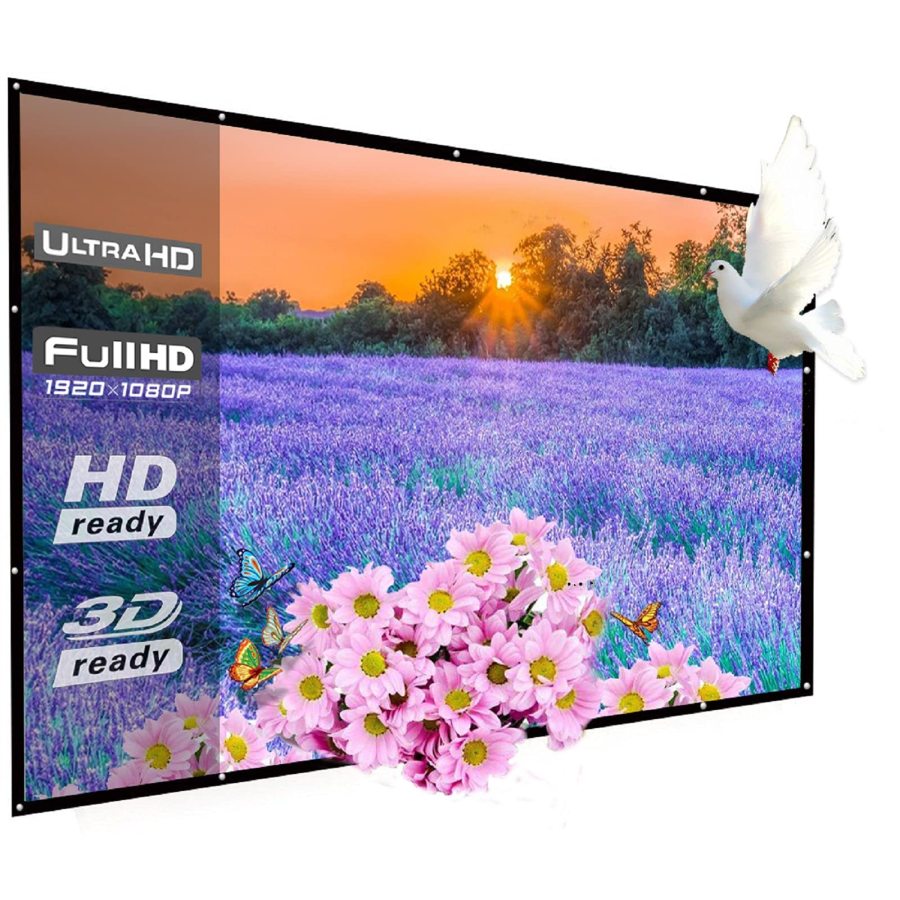
A portable outdoor projection screen is a product designed to provide a flexible, large-screen viewing experience. Its core function is to offer users a large, easy-to-carry, and quickly deployable projection medium for home, outdoor (e.g., backyard, camping), and business settings. Common sub-types include pure screens (requiring self-hanging) and screens with independent support stands. Sizes range from 100 inches to 300 inches, generally supporting HD display and emphasizing wrinkle resistance and portability. The following table illustrates the key characteristics of consumer behavior in this category.
| Dimension | Segment | Description |
|---|---|---|
| Need Driver Type | Planned Purchase / Impulsive Purchase | Primarily triggered by specific entertainment activities (e.g., parties, camping), but also includes spontaneous purchases driven by the desire for a large-screen experience. |
| Purchase Frequency | Low Frequency / Seasonal | As a durable good, repurchase cycles are long; however, purchasing peaks may occur during summer and holidays. |
| Decision Complexity | Medium | Users need to compare multiple dimensions such as size, material, installation method, and wrinkle resistance. |
| Price Sensitivity | Medium-High | Consumers are relatively price-sensitive, particularly focused on value for money, but are willing to pay a premium for functional upgrades. |
| Emotional Dependency | Medium-High | Purchase behavior is closely linked to social and family entertainment experiences, pursuing enjoyment and a shared atmosphere. |
II. User Personas & Usage Scenarios
2.1 Family Entertainment Organizer
🎯 Values family gatherings and outdoor activities, aiming to create immersive viewing experiences for family and friends.
| Typical Usage Scenarios | Core Pain Points | Primary Purchase Drivers |
|---|---|---|
|
|
|
2.2 Outdoor Activity Enthusiast
🎯 Enjoys watching movies, playing games, or watching sports outdoors, with high demands for product portability and adaptability.
| Typical Usage Scenarios | Core Pain Points | Primary Purchase Drivers |
|---|---|---|
|
|
|
2.3 Budget-Conscious Consumer
🎯 Seeks high-value-for-money solutions to meet basic projection needs, but still has certain expectations for quality and ease of use.
| Typical Usage Scenarios | Core Pain Points | Primary Purchase Drivers |
|---|---|---|
|
|
|
III. User Needs Hierarchy (KANO Model)
3.1 Basic Needs (Must-Haves)
- Clear Imaging: Ensuring projected content is clearly visible, without blurriness or graininess.
- Sufficient Size: Providing a larger display area than a standard wall, enhancing the visual experience.
- Easy Hanging: Allowing the screen to be quickly and conveniently fixed to a wall, stand, or other object.
- Portability: Product is foldable, lightweight, and easy to carry and store.
3.2 Performance Needs (Linear Satisfiers)
- Wrinkle-Resistant Material: Screen surface remains flat when unfolded, without significant creases affecting image integrity.
- HD Support: Compatible with 4K, 1080p, and other high-definition resolutions, delivering detailed picture quality.
- Double-Sided Projection: Supports projection from both the front and back of the screen, increasing usage flexibility.
- Durability: Material is sturdy, able to withstand outdoor use and frequent folding without damage.
- Image Brightness/Contrast Enhancement: Effectively improves the brightness and color contrast of the projected image, making it more vivid.
3.3 Excitement Needs (Delighters)
- Built-in Stand: Provides an independent and stable support structure, eliminating the need for additional hanging points.
- Quick, Tool-Free Installation: Screen setup and disassembly can be completed within minutes without any tools.
- Ambient Light Rejection: The screen effectively absorbs ambient light, maintaining good picture quality even in non-pitch-black environments (e.g., black backing design).
- Washable/Cleanable: Screen material supports washing, facilitating easy cleaning and maintenance to keep the screen clean.
3.4 Unmet Needs & Opportunities
-
Truly Wrinkle-Free: Many products advertise wrinkle resistance, but user feedback indicates noticeable creases upon receipt or after use, impacting the viewing experience.
User Reviews (VOC) This Skerell outdoor screen has the dimensions I wanted... Despite its robust material...there is room for improving this projector screen to prevent wrinkles/creases // Wrinkles that start right from shipping shows every fold and crease. // I DONT HAVE AN IRON!!!
-
Installation Accessory Quality and Adhesion: Included hooks or adhesive strips generally have poor adhesion and are prone to falling off, requiring users to replace or reinforce them, reducing convenience.
User Reviews (VOC) It came with Tape hook, just no glue on the tape. // the hooks that come with it aren't very sturdy- so I bought some better ones. // The adhesive ripped the paint off of my wall. // the clips that come with it are useless. The adhesive just doesn't stay on the back of the clip for more than 12 hours
-
Screen Thickness and Light Transmission: Some screen materials are too thin and highly transparent, causing the projected image to be affected by background color or resulting in insufficient brightness/contrast.
User Reviews (VOC) material too thin. // For the price...the material is too thin to reflect the light like a traditional projector screen, as if it were about 30 percent transparent. // it's too sheer. // This screen is just like all other low-quality priced ones. The seller advertises it as not being see-through, when in fact it is.
-
Insufficient Side Edge Securing: Insufficient number or poor design of grommets/holes around the screen edges prevents them from being stretched flat, causing sagging on the sides.
User Reviews (VOC) Need more holes on side, it just has top and corners holes l, so the side can't be straight. // it was hard to mount without either the spots between the eyelets sagging, or the corners ending up distorted and stretched to counteract the sag.
-
Stand Stability: Portable screens with stands still risk shaking or collapsing in light winds outdoors, indicating a need for improved stability.
User Reviews (VOC) Only problem was a very mild breeze kept knocking the screen down, so we watched our movie in the garage // It held up okay to wind, but we did need additional stabilization to prevent tipping.
IV. User Decision Drivers
4.1 Key Decision Factors
- Image Clarity and Brightness: Whether the projected image is sharp, colors are vibrant, and brightness is sufficient are users' primary concerns, directly impacting the viewing experience.
- Screen Flatness: The presence of wrinkles that severely degrade the viewing experience is a key metric for evaluating product quality, crucial for visual fluidity.
- Installation Convenience: The ability to quickly and easily complete installation and disassembly directly influences user willingness to use the product and experience efficiency.
- Size Applicability: Whether the screen size fits the intended use space (indoor/outdoor) and viewing distance is the first step in the purchase decision.
4.2 Secondary Decision Factors
- Material Thickness and Light Transmission: Whether the material is thick enough to effectively block background light affects image contrast and color accuracy.
- Portability and Storage: Volume and weight when folded, and ease of carrying and storing, are particularly important for outdoor users.
- Price and Value for Money: The balance between product features, quality, and price; seeking the best value option.
- Quality of Included Accessories: The adhesion of hooks, sturdiness of ropes, etc., directly impact installation effectiveness and user satisfaction.
- Stand Stability: For screens with stands, their wind resistance and overall stability in outdoor environments are important considerations.
V. Selling Points & Competitive Landscape
5.1 Selling Point Analysis
5.1.1 Standard Features (Points of Parity)
- Large Size Options: Offers various sizes like 100/120/150/200 inches to meet different space requirements.
- 16:9 Widescreen Ratio: Conforms to the mainstream aspect ratio for movies and videos.
- Foldable, Portable Design: Easy to store and carry, facilitating movement to different locations.
- Wrinkle-Resistant Material: Claims use of special materials to ensure a flat, wrinkle-free screen when unfolded.
- Indoor/Outdoor Versatility: Emphasizes product suitability for various scenarios like home theater, outdoor parties, and camping.
- Easy Installation: Typically includes installation tools like hooks and ropes to simplify setup.
- 4K HD Support: Supports high-resolution content projection for clear picture quality.
5.1.2 Key Differentiators
- Double-Sided Projection: Allows projection from both sides of the screen, increasing layout flexibility.
- Thickened Material: Uses thicker polyester or canvas to reduce light transmission and improve image quality.
- Black Backing: Features a black coating on the back to absorb stray light and enhance image contrast.
- Built-in Independent Stand: Provides a complete freestanding support structure, eliminating the need for walls or additional fixing points.
- 160° Wide Viewing Angle: Ensures good image quality even when viewed from the side, suitable for group sharing.
- Washable Fabric: Easy to clean and maintain, extending product lifespan.
5.1.3 Unique Selling Propositions (USPs)
- Enhanced Stand Base: Lengthened and weighted stand base with pre-drilled holes for ground stakes to improve outdoor stability. (e.g., AHOLON product)
- All-Metal Stand Structure: Uses durable metal components instead of plastic parts to increase overall sturdiness. (e.g., AHOLON product)
- Dedicated Storage/Carry Bag: Provides a high-quality, well-designed portable storage bag, enhancing product perceived value and user experience.
5.2 Competitive Landscape
5.2.1 Market Maturity
The market is in a moderately mature stage. Basic functions are highly homogenized, price competition is intense, with promotion primarily focusing on size, portability, and ease of installation. Simultaneously, some brands have begun seeking differentiation and innovation through materials, inclusion of stands, and additional features (e.g., black backing, washability), but a unified leading standard has not yet emerged. When making choices, consumers are increasingly focusing on actual user experience and product details, in addition to price.
5.2.2 Innovation Trends
Innovation trends are mainly reflected in improving picture quality (e.g., ambient light rejection, higher gain), optimizing portability and ease of use (e.g., tool-free quick setup, lighter weight), and enhancing durability and stability for outdoor use (e.g., reinforced stands, wind-resistant design). Additionally, user pursuit of 'truly wrinkle-free' screens is driving improvements in materials and packaging processes. Products with built-in, stable stands are becoming a new growth point.
VI. Marketing Claims vs. Reality Check
The table below analyzes the gap between common marketing claims and actual user experiences in this category:
| Dimension | Marketing Claim | User Reality | Verdict |
|---|---|---|---|
| Screen Flatness (Wrinkle Resistance Performance) | Foldable, wrinkle-resistant material ensures smooth picture quality. | Users commonly report noticeable creases upon receipt or after folding, requiring extra ironing or stretching to achieve moderate flatness, contradicting the advertised 'wrinkle-resistant' feature. | A typical case of substituting marketing concepts for physical common sense. Ordinary polyester materials struggle to regain complete flatness after folding, turning a core selling point into a user pain point. |
| Installation Convenience and Stability | Easy to install, includes hooks and ropes, setup completed in minutes. | Included self-adhesive hooks have poor adhesion and fall off easily. Users often need to purchase sturdier accessories or use nails. Installation is not 'minutes' easy, and stability is questionable. | Sellers overestimate the quality of included accessories, failing to understand the user's genuine need for 'easy and stable' installation, leading to a disappointing out-of-the-box experience. |
| Picture Quality (Light Transmission/Brightness) | 4K HD support provides clear, sharp, high-saturation images, suitable for indoor and outdoor use. | Most products use thin, transparent materials. Images are easily diluted or affected by background in ambient light. Some users report performance worse than projecting directly on a wall, with issues like blurriness and low contrast. | Pursuing '4K HD' and 'indoor/outdoor versatility' at low price points is a physical paradox. The material's light transmission directly limits its actual performance in non-darkroom environments, causing a significant gap between user expectations and reality regarding picture quality. |
Key Takeaway: The market exhibits widespread parameter inflation and exaggerated experience claims, particularly regarding wrinkle resistance, installation convenience, and picture quality.
VII. Supply-Demand Misalignment Analysis
The table below highlights mismatches between seller focus and buyer priorities:
| Dimension | Seller Behavior | User Focus | Verdict |
|---|---|---|---|
| Screen Flatness (Actual Wrinkle Resistance Effect) | Widely advertise 'wrinkle-resistant,' but actual product packaging (folding) and material properties fail to fundamentally solve the crease issue. | The most common user complaint upon receipt is severe wrinkles requiring significant effort to iron or stretch, often impossible to fully eliminate, impacting the viewing experience. | Sellers prioritize conceptual selling points over actual user experience. Their understanding and implementation of 'wrinkle resistance' diverge significantly from user expectations, necessitating disruptive innovation in product design and packaging. |
| Outdoor Use Stability | Widely emphasize 'outdoor usable' and 'portable,' but rarely or insufficiently mention solutions for product stability in complex outdoor conditions like wind (e.g., reinforced stands, additional securing). | Users of stand-included products report screens falling over in light breezes. Users of pure screens complain about difficulty achieving flatness and susceptibility to wind, generally concerned about safety and stability for outdoor use. | When promoting outdoor usage scenarios, sellers underestimate the complexity of outdoor environments and the stringent physical stability requirements, failing to provide adequate assurance, resulting in compromised user experience. |
| Picture Quality (Daytime/Ambient Light Performance) | Some products advertise '4K HD' and 'indoor/outdoor versatility,' but materials are generally thin and transparent, lacking ambient light rejection capability, downplaying actual performance in daytime scenarios. | Users commonly report poor image quality and severe light transmission in ambient light, sometimes worse than projecting directly on a wall, forming a stark contrast with HD and multi-scenario versatility claims. | Sellers attempt to achieve all-scenario coverage with cheap materials, sacrificing core picture quality. This is a typical case of feature stacking that overlooks the critical demand for image effectiveness in different scenarios, leading to user misperception of the product's actual value. |
Key Takeaway: Sellers excessively focus on piling up low-cost, generic selling points (e.g., size, portability) but underinvest in solving users' core experience pain points like screen flatness, installation reliability, and ambient light adaptability, leading to a severe misalignment between supply and demand focus.
VIII. Strategic Opportunities & Recommendations
8.1 True Zero-Wrinkle Roll-Up Portable Screen
8.1.1 Target Audience & Pain Points
⚡️ Pain Points Addressed: Truly wrinkle-free.
8.1.2 Action Plan
Develop and adopt new memory-type polymer fabrics, combined with innovative lightweight roll-up mechanisms or special folding techniques (e.g., instant flatness recovery after folding), to completely eliminate screen creases. Use hard cardboard tubes for rolling in packaging to avoid initial creases.
| Tech Complexity | Medium |
| Cost Impact | Medium Impact |
| Trade-off Warning | The roll-up mechanism slightly increases weight and storage volume, but users are willing to accept this for a wrinkle-free experience. Requires balancing portability. |
| Price Band | Only viable above $39.99 |
8.1.3 Marketing Strategy
Emphasize 'Say goodbye to ironing hassles, enjoy smooth cinema-quality pictures instantly'; use high-speed video comparisons of fold vs. roll-up screen deployment; highlight the value promise of 'One-time investment, permanent flatness.'
8.2 Enhanced Outdoor Wind-Resistant Stand Screen Kit
8.2.1 Target Audience & Pain Points
⚡️ Pain Points Addressed: Poor outdoor stability, lack of independent support.
8.2.2 Action Plan
Use aviation-grade aluminum alloy or thickened steel tube stands, strengthen connectors, design water/sand-fillable weighted bases or multi-point ground stake systems, and clearly indicate product wind resistance rating.
| Tech Complexity | Medium |
| Cost Impact | High Impact |
| Trade-off Warning | Stand weight and storage volume increase, assembly complexity slightly rises, but improvements in safety and stability can offset this impact. |
| Price Band | Only viable above $79.99 |
8.2.3 Marketing Strategy
Highlight 'Unafraid of outdoor breezes, steady as a rock'; demonstrate stability tests under simulated extreme weather; emphasize 'A one-stop outdoor cinema solution, calmly handling various challenges.'
8.3 Ambient Light Rejection (ALR/CLR) High-Gain Portable Screen
8.3.1 Target Audience & Pain Points
⚡️ Pain Points Addressed: Screen thickness and light transmission, poor picture quality in ambient light.
8.3.2 Action Plan
Develop flexible ALR/CLR (Ambient Light Rejection/Absorbing) screens suitable for portable scenarios, or at least use multi-layer composite materials with ultimate light-blocking treatment on the back to ensure high gain and contrast.
| Tech Complexity | High |
| Cost Impact | High Impact |
| Trade-off Warning | ALR materials are typically stiffer, limiting foldability, potentially sacrificing some portability, and are expensive. |
| Price Band | Only viable above $199.99 |
8.3.3 Marketing Strategy
Emphasize 'Watchable in daylight, no need to close curtains'; use comparison videos to showcase picture quality advantages in strong ambient light; highlight 'Professional-grade picture quality,颠覆ing traditional perceptions.'
8.4 Precision Grommets & Anti-Sag Design
8.4.1 Target Audience & Pain Points
⚡️ Pain Points Addressed: Poor installation accessory quality/adhesion causing user inconvenience; insufficient side edge securing causing poor flatness.
8.4.2 Action Plan
Optimize grommet/hole design on screen edges, increase quantity and use more durable metal eyelets. Provide reusable, high-adhesion, residue-free adhesive hooks or simple tension clips. Include detailed instructions on achieving even screen stretching.
| Tech Complexity | Low |
| Cost Impact | Low Impact |
| Trade-off Warning | No significant physical side effects, primarily optimizing structure and materials. |
| Price Band | Only viable above $14.99 |