Amazon US Market Analysis: Baby/Toddler Suction Divided Plates Category
📊 Executive Summary
📈 Market Trends
Portability, safety, and functional integration are mainstream; material innovation drives upgrades. The baby/toddler suction divided plate market is maturing, with consumers increasingly demanding higher standards for basic functions like safety, spill prevention, and easy cleaning. Simultaneously, the market is seeing more hybrid-material (stainless steel + silicone, ceramic + silicone) and integrated-function (with lid, matching utensils) products to meet diversified and high-quality needs.
⚡ Major Pain Points
Suction stability and silicone odor are critical user experience flaws. Despite widespread claims of strong suction, user feedback indicates insufficient stability on non-smooth surfaces or with active babies. Additionally, silicone plates easily retain detergent or food odors, severely impacting the dining experience. Stainless steel plates' susceptibility to scratches and microwave limitations, along with plate size incompatibility with highchair trays, are also frequent user complaints.
💡 Selection Opportunities
Deeply address core pain points to break through with differentiation and value chain strategies. Significant opportunities exist to develop an 'All-Surface Adaptive Strong Suction Plate' and a 'Pure Silicone Plate That Completely Eliminates Odor Retention' to solve users' most direct pain points. Furthermore, a 'Modular Growing Companion Plate System' and providing a 'Highchair Tray Size Compatibility Solution' can enhance product lifecycle and user satisfaction, serving as key strategies for building brand differentiation and premium positioning.
I. Analysis Overview
1.1 Introduction & Report Scope
This report analyzes the 'Plates' category (specifically baby/toddler suction divided plates) within the Amazon US market, focusing on target user personas, core needs, decision drivers, market communication, and potential opportunities.
1.2 Category Snapshot
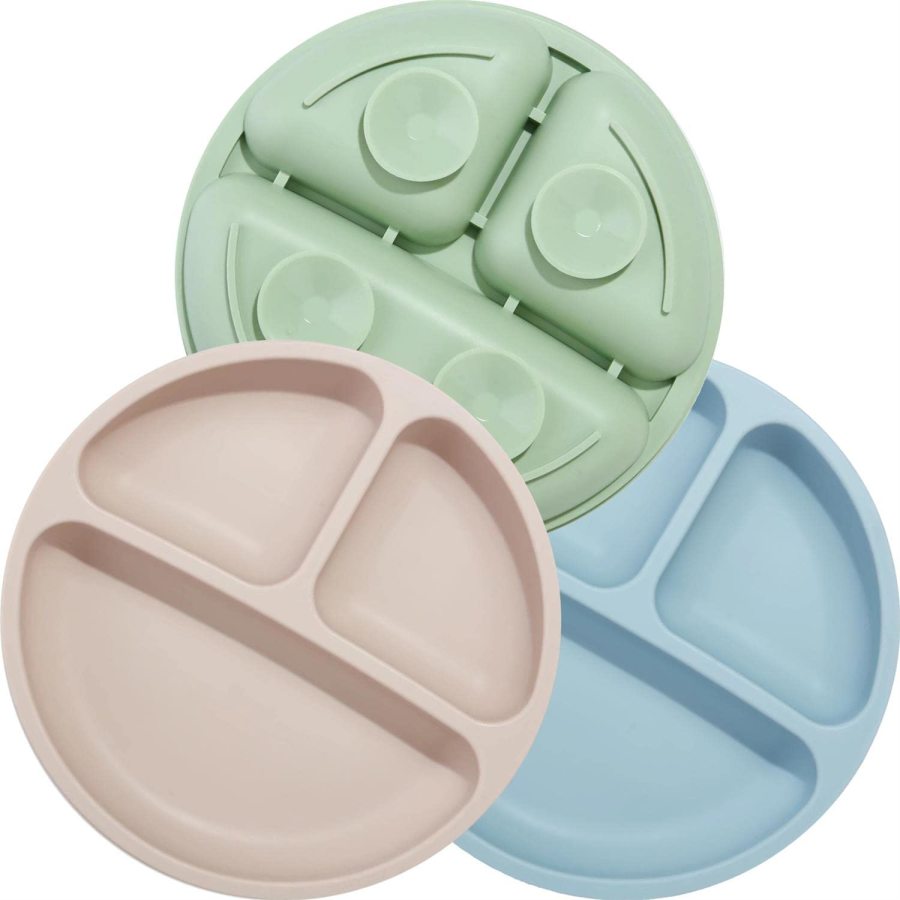
Baby/toddler suction divided plates are tableware specifically designed for infants and toddlers aged 0-3. Their core function is to be secured to a table or highchair tray via a bottom suction cup, preventing the child from knocking the plate over and creating a mess. The divided compartments aid in food separation and help cultivate the child's self-feeding habits. Primary materials include food-grade silicone, stainless steel (often paired with a silicone base), bamboo (paired with a silicone suction cup), and a small amount of ceramic. Emphasis is placed on being free from harmful substances like BPA, along with being easy to clean and durable. The following table illustrates the key characteristics of consumer behavior in this category.
| Dimension | Segment | Description |
|---|---|---|
| Need Driver Type | Planned Purchase / Emergency-driven Purchase | Parents typically purchase these when their baby begins introducing solid foods or the self-feeding stage (Planned Purchase), or as a solution when existing plates are easily tipped over (Emergency-driven Purchase). |
| Purchase Frequency | Low / Medium Frequency | Typically a one-time purchase of one set or a few pieces. Repurchase cycles are long unless items are damaged or there is an upgrade need. Newborn gifting or holidays may trigger concentrated purchases. |
| Decision Complexity | Medium | Parents need to weigh multiple factors including material safety, suction power, ease of cleaning, and functional design (compartments, lid) and conduct information comparisons. |
| Price Sensitivity | Medium to High | Price is a significant consideration, provided safety and core functionality are assured. However, parents are willing to pay a reasonable premium for quality products that ensure their child's health and reduce hassle. |
| Emotional Dependency | Medium | Primarily based on practical functionality, but there is also a degree of preference for product color, aesthetic design, and brand ethos (e.g., eco-friendliness), relating to a sense of security and the parenting experience. |
II. User Personas & Usage Scenarios
2.1 New/Pragmatic Parents
🎯 First-time parents, or those who prioritize practicality. They seek products to solve common pain points during feeding, pursuing high value for money and essential functionality.
| Typical Usage Scenarios | Core Pain Points | Primary Purchase Drivers |
|---|---|---|
|
|
|
2.2 Health/Quality-Conscious Parents
🎯 Have higher demands for product materials and aesthetic design, pay attention to details, and want to provide a healthier, more enjoyable dining experience for their baby.
| Typical Usage Scenarios | Core Pain Points | Primary Purchase Drivers |
|---|---|---|
|
|
|
III. User Needs Hierarchy (KANO Model)
3.1 Basic Needs (Must-Haves)
- Secure Suction: The plate must adhere firmly to smooth surfaces to prevent the baby from tipping it over. This is the core functional need, directly impacting the dining experience.
- Food-Grade Safe Materials: Free from harmful substances like BPA, PVC, phthalates, etc., ensuring the baby's eating safety. This is a non-negotiable baseline for parents.
- Easy to Clean: Smooth surface where food residue doesn't stick easily, dishwasher safe, simplifying daily chores and saving parents' time.
- Durable & Drop-Resistant: Can withstand daily use and being dropped by the baby, resistant to damage or deformation, ensuring long-term use and reducing replacement costs.
3.2 Performance Needs (Linear Satisfiers)
- Divided Compartment Design: Multiple sections to separate different foods, prevent flavor mixing, and facilitate the baby's independent choice and eating, especially helpful for picky eaters.
- Strong Suction Performance: Suction power must be strong enough to resist a playful baby's pulling and remain stable on various smooth surfaces (e.g., highchair trays, smooth tables).
- No Odor Retention: Material should not absorb detergent or food odors, preserving food's original taste and enhancing the dining experience and health perception.
- Size Compatibility: Moderate size compatible with most highchair trays and children's tables, avoiding the hassle and return risk of post-purchase incompatibility.
- Microwave/Freezer Safe: Safe for microwave heating and refrigerator storage, facilitating food preparation and storage, improving convenience, and adapting to modern fast-paced life.
3.3 Excitement Needs (Delighters)
- Matching Utensils/Lid Design: Includes matching baby-specific spoons/forks or a sealing lid, convenient for storing leftovers and carrying when out, providing a one-stop feeding solution and enhancing convenience.
- High Aesthetic Appeal: Features fashionable, soft, or cute colors and shapes that coordinate with home decor, increasing the baby's mealtime enjoyment and purchase appeal.
- Innovative Material Combinations: E.g., stainless steel insert paired with a silicone shell, combining health, durability, and anti-slip functions, offering multiple advantages and solving single-material pain points.
- Eco-Friendly & Sustainable: Using materials like bamboo, recycled content, etc., satisfying parents' pursuit of eco-friendly ideals and reflecting brand social responsibility, attracting specific customer groups.
3.4 Unmet Needs & Opportunities
-
Suction Power Stability: Suction cup performance varies greatly on different surfaces (e.g., wood, textured, or uneven surfaces), prone to detachment, leading to poor anti-spill effectiveness. This is a high-frequency user complaint.
User Reviews (VOC) The sturdiness of the clip is questionable you definitely have to play with the placement when putting your phone at different angles because it can fall off. // Magnet is not strong enough to hold your phone.
-
Silicone Material Odor Issue: Some silicone products retain soap or chemical smells after multiple washes or contact with certain foods, affecting food taste and the baby's appetite, lowering perceived purity.
User Reviews (VOC) Pessimo Não segura carga e a luz é fraca, esperava mt mais // Battery life receives mixed reviews, with some saying it lasts a long time while others report poor performance.
- Stainless Steel Scratches Easily/Unstable Insert: Stainless steel plates are prone to scratches in daily use, or the removable insert can be easily taken out by the baby, affecting aesthetics, hygiene, and convenience.
- Universal Size Compatibility: Some plate sizes are incompatible with specific highchair tray brands, rendering them unusable after purchase, causing inconvenience and returns.
IV. User Decision Drivers
4.1 Key Decision Factors
- Suction Effectiveness: Whether it effectively prevents the plate from tipping over is the primary and most valued factor for users, directly linked to convenience and cleaning burden.
- Material Safety: Whether the product is non-toxic and free from harmful substances like BPA is crucial for the baby's health. This is an absolute non-negotiable baseline for parents.
- Ease of Cleaning: Used frequently daily; whether it's easy and quick to clean, and dishwasher safe, directly impacts parents' daily chore burden.
- Durability: Whether the product is long-lasting, not easily damaged, and worth the long-term investment is an important measure of value for money, avoiding frequent replacements.
4.2 Secondary Decision Factors
- Food Separation Function: Whether the divided design meets picky eating needs, facilitates attractive food presentation, and impacts the dining experience.
- No Odor Retention: Whether tableware retains detergent or food odors, affecting the baby's dining experience and health perception, is a consideration for quality-conscious parents.
- Size Compatibility: Whether it fits the family's highchair tray or table, avoiding post-purchase inconvenience and reducing return risk.
- Additional Features (Lid/Set): Whether it includes a lid for storage or provides matching utensils, enhancing convenience and overall perceived value.
- Appearance Design & Color: Whether the product's color and shape are aesthetically pleasing, can attract the baby, and coordinate with the home environment, influencing purchase decisions and user mood.
V. Selling Points & Competitive Landscape
5.1 Selling Point Analysis
5.1.1 Standard Features (Points of Parity)
- Strong Suction: Commonly advertised that the bottom suction cup firmly adheres to surfaces, preventing the baby from tipping the plate and reducing mess.
- Divided Compartment Design: Most products feature 2-4 compartments for separating food, facilitating meal combinations, and suiting picky eaters and balanced nutrition.
- Safe Materials: Emphasis on 100% food-grade silicone or food-grade stainless steel, free from BPA, PVC, phthalates, and other harmful substances.
- Easy to Clean: Commonly claimed to have a smooth surface, dishwasher safe, convenient, quick, and leaves no stains.
- Durable & Drop-Resistant: Advertised that the material is resistant to breakage and deformation, can withstand the baby's daily use and drops, and is long-lasting.
5.1.2 Key Differentiators
- Multiple Material Choices: Beyond mainstream silicone, some products offer stainless steel, bamboo, and even ceramic (with silicone sleeve) options to meet different preferences.
- Lid Design: A few products include a sealing lid, convenient for storing leftovers and carrying when out, increasing product utility.
- Set Combinations: Offering sets that include matching spoons/forks or bowls, providing a one-stop feeding solution and enhancing purchase convenience.
- Microwave/Oven Safe: Some silicone products emphasize safe use in microwaves for heating or in ovens for baking, increasing usage flexibility.
5.1.3 Unique Selling Propositions (USPs)
- Removable Silicone Sleeve/Base: Stainless steel or ceramic plates paired with a removable silicone sleeve or suction cup base, combining material advantages while facilitating deep cleaning and versatile use.
- Multi-Point Suction Cup Design: Some products emphasize using 4-point or 5-point strong suction cups to enhance suction stability, differentiating from single suction cups.
- Eco-Friendly & Sustainable Materials: Using bamboo, recycled fiber packaging, etc., attracting environmentally conscious consumers and elevating brand image.
- Unique Shapes: E.g., star-shaped, flower-shaped, and other non-traditional round/square designs, increasing product fun and appeal.
- Non-Divided Design: A few products offer suction plates without compartments, catering to consumers who don't mind mixed food or have special use cases.
5.2 Competitive Landscape
5.2.1 Market Maturity
The baby/toddler suction divided plate category in the Amazon US market has reached medium to high maturity. Basic functions (suction, compartments, safe materials) are highly prevalent, and product homogenization is evident. Market competition now primarily manifests in material innovation, set combinations, optimization of suction performance details, and brand storytelling and aesthetic design. Consumer expectations have shifted from 'availability' to 'quality,' focusing more on detailed experience and long-term value.
5.2.2 Innovation Trends
Current innovation trends in the category are mainly reflected in material diversification and hybridization (e.g., stainless steel/silicone, ceramic/silicone combinations to address pain points of single silicone materials like odor retention and poor scratch resistance) and functional integration (e.g., lid designs, matching utensils) to provide more comprehensive feeding solutions. Additionally, bamboo products emphasizing eco-sustainability and designs pursuing high aesthetics and unique shapes have become emerging highlights, meeting the higher demands of health/quality-conscious parents.
VI. Marketing Claims vs. Reality Check
The table below analyzes the gap between common marketing claims and actual user experiences in this category:
| Dimension | Marketing Claim | User Reality | Verdict |
|---|---|---|---|
| Suction Power Stability & Universality | Strong suction cup, firm adhesion, prevents tipping, suitable for all smooth surfaces. | Users commonly report inconsistent suction effectiveness; suction cups easily detach on non-smooth surfaces (e.g., certain wood or textured tables) or with active babies, failing to reliably solve the anti-spill pain point. | Typical case of generalizing ideal lab results or performance on specific smooth surfaces into universal promises, ignoring the diversity of real-world usage scenarios. This leads to the core selling point failing in users' hands, directly triggering negative reviews. |
| Silicone Material Odor Retention | 100% food-grade silicone, healthy and worry-free, ensures food's original taste. | Some users report that silicone plates retain detergent or food odors after dishwasher cleaning or over time, affecting food taste and the baby's appetite. | Sellers highlight the advantages of silicone while avoiding its inherent tendency to absorb odors. They fail to provide effective solutions or manage expectations reasonably, leading to consumer disappointment regarding the 'pure, odorless' expectation. |
| Stainless Steel/Ceramic Plates' 'Indestructibility' & Microwave Compatibility | Stainless steel/ceramic is sturdy, durable, drop-resistant, and microwave safe. | Stainless steel plates are inherently not microwave safe, yet some listings misleadingly claim they are. Ceramic plates are fragile; silicone sleeves offer limited protection. Stainless steel surfaces scratch easily, affecting long-term aesthetics and hygiene. | Confuses material properties, exaggerating partial advantages as all-around capabilities. Particularly regarding microwave use, there is a clear contradiction with basic physical principles, posing potential for misleading claims or even safety hazards, damaging consumer trust. |
Key Takeaway: The market exhibits widespread parameter inflation and a tendency to exaggerate scenario-based experiences, particularly regarding suction power stability and inherent material flaws.
VII. Supply-Demand Misalignment Analysis
The table below highlights mismatches between seller focus and buyer priorities:
| Dimension | Seller Behavior | User Focus | Verdict |
|---|---|---|---|
| Suction Performance on Complex Surface Environments | Widespread promotion of 'strong suction,' but rarely explicitly guaranteeing or stating limitations on its effectiveness on non-smooth, textured, or wooden surfaces; overly optimistic about universality claims. | Users commonly complain that suction cups don't hold or easily detach on certain surfaces, causing the core function to fail in critical scenarios, resulting in continued mealtime mess. | Sellers oversimplify the application scenarios of the core suction function, failing to adequately address users' high expectations for product reliability in actual complex environments. This is the primary source of experience gap. |
| Odor Retention Issue in Silicone Plates | Sellers commonly emphasize silicone's safety and ease of cleaning but collectively remain silent on its inherent issue of absorbing detergent or food odors, lacking solutions or warnings. | Some users report that silicone plates have odors after washing, affecting food taste. This becomes a key hidden pain point affecting repurchase and recommendation but is not addressed by sellers. | Sellers avoid acknowledging the inherent flaw of silicone material, failing to proactively provide solutions or manage expectations reasonably. This damages user experience and erodes long-term trust. |
| Product Size & Highchair Tray Compatibility | Product size information in listings is often unclear, or lacks compatibility guidance for common highchair trays, requiring users to measure themselves and failing to provide convenient fitting solutions. | Users complain that plate sizes are incompatible with their highchair trays, preventing normal use or requiring additional adapters, causing inconvenience and returns-a significant purchase barrier. | Sellers fail to provide crucial compatibility information or solutions from the user's actual usage scenario perspective, increasing purchase risk and inconvenience, affecting decision-making efficiency. |
Key Takeaway: Sellers collectively remain silent or downplay core pain points (e.g., suction universality, silicone odor) while oversupplying feature-stacking and low-value details, leading to supply-demand misalignment.
VIII. Strategic Opportunities & Recommendations
8.1 All-Surface Adaptive Strong Suction Plate
8.1.1 Target Audience & Pain Points
⚡️ Pain Points Addressed: Insufficient suction stability, limited surface compatibility.
8.1.2 Action Plan
Invest in R&D for technology that achieves strong, lasting suction on various surface materials (e.g., finished wood, matte plastic, quartz, glass). Examples include innovative composite suction cup materials or unique multi-point/multi-chamber suction structures. Provide third-party multi-scenario suction test data.
| Tech Complexity | Medium |
| Cost Impact | Medium Impact |
| Trade-off Warning | Stronger suction technology may slightly increase base thickness or weight, requiring a balance with portability. |
| Price Band | Only viable above $19.99 |
8.1.3 Marketing Strategy
Emphasize 'Say goodbye to tipped plates, rock-solid on any surface!'; showcase product's superior suction on different surfaces via scenario-based videos; highlight 'patented technology' or 'smart suction solution' to build trust.
8.2 Pure Silicone Plate That Completely Eliminates Odor Retention
8.2.1 Target Audience & Pain Points
⚡️ Pain Points Addressed: Silicone material easily retains odors, affecting food taste.
8.2.2 Action Plan
Adopt the highest grade of medical-grade or platinum-cured silicone to ensure material purity, and use innovative surface treatment processes to fundamentally prevent odor absorption and retention. Pair with recommendations for fragrance-free, plant-based baby detergents.
| Tech Complexity | Medium |
| Cost Impact | Medium Impact |
| Trade-off Warning | Almost no significant physical side effects, primarily involving raw material costs and production process optimization. |
| Price Band | Only viable above $16.99 |
8.2.3 Marketing Strategy
Highlight 'Pure silicone, true food taste, free from odor worries'; provide third-party 'odorless test' certification; emphasize 'premium food-grade' material, promoting a healthy, pure feeding philosophy.
8.3 Modular 'Growing Companion' Plate System
8.3.1 Target Audience & Pain Points
⚡️ Pain Points Addressed: Low compartment flexibility, size tends to be small for older children, short product lifecycle.
8.3.2 Action Plan
Design a modular plate system that can be flexibly adjusted according to the baby's growth stages (early solids, self-feeding, toddler). For example, offer replaceable compartment inserts (deep/shallow), or a detachable suction base, or even expandable plate sizes to extend product lifespan.
| Tech Complexity | Medium |
| Cost Impact | High Impact |
| Trade-off Warning | Higher initial BOM cost, requires balancing design complexity with production costs to maintain a reasonable price point. |
| Price Band | Only viable above $29.99 |
8.3.3 Marketing Strategy
Emphasize 'One plate system, grows with your child, a smart, long-term parenting investment'; demonstrate dynamic usage scenarios from age 0 to 3+; highlight the selling points of 'multi-functional, customizable, personalized.'
8.4 Highchair Tray Size Compatibility Solution
8.4.1 Target Audience & Pain Points
⚡️ Pain Points Addressed: Poor universal size compatibility, uncertainty about fit before purchase.
8.4.2 Action Plan
Provide a detailed highchair tray measurement guide in product listings and create a 'common highchair brand compatibility list.' Consider launching a series of plates in multiple size specifications or offering an adjustable suction base with fine-tuning capabilities.
| Tech Complexity | Low |
| Cost Impact | Low Impact |
| Trade-off Warning | Primarily involves information service and potential SKU management complexity, no significant physical side effects. |
| Price Band | Only viable above $12.99 |
8.4.3 Marketing Strategy
Highlight 'No more size worries! Perfectly fits your baby's highchair, ready to use, goodbye return hassles!'; use clear diagrams, videos, and compatibility lists to reduce user purchase anxiety.