Amazon US Market Analysis: Rotating Turntables Category
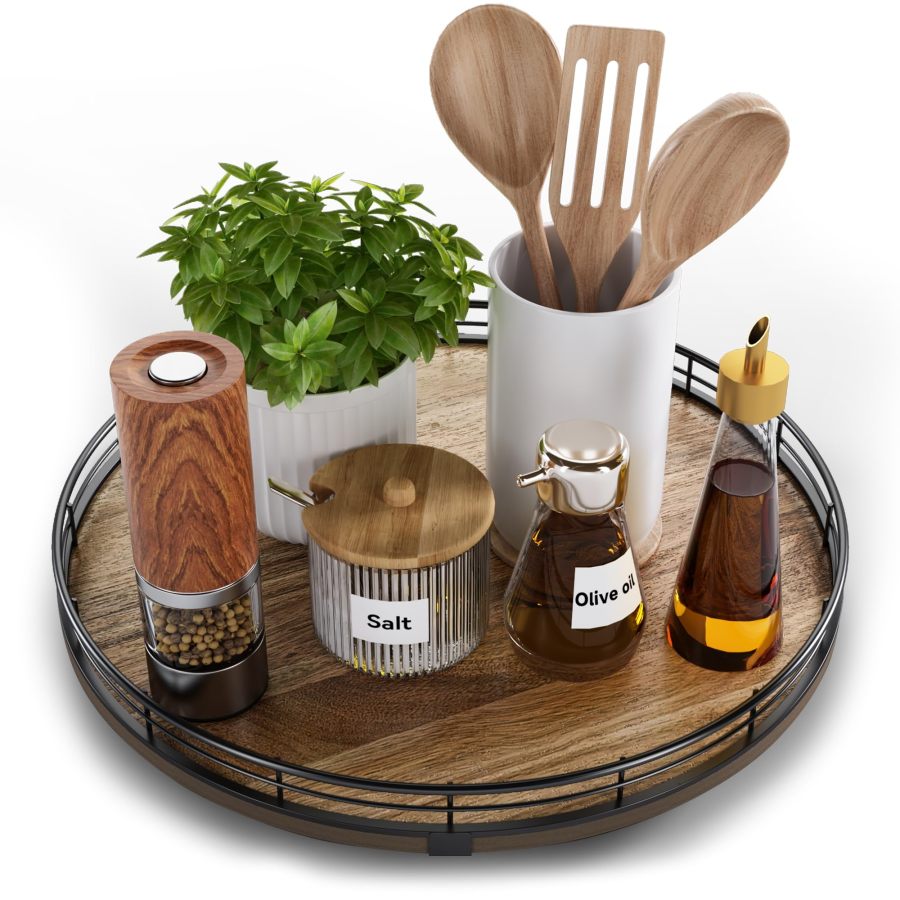
📊 Executive Summary
📈 Market Trends
Portable storage demand remains strong, natural wood style is mainstream. The Lazy Susan market is highly competitive. Consumers have high expectations for product aesthetics, material health/eco-friendliness, and multi-scenario applicability. Users increasingly prefer products that integrate with home decor, combining utility and decorative function, shifting the market from purely functional to experience-oriented.
⚡ Major Pain Points
Insufficient quality stability, room for improvement in size fit. The current market suffers from widespread core quality issues like poor rotation, wood warping/cracking, and base instability, severely impacting user experience. Additionally, limited size choices and inadequate guidance on real-world size fit lead to post-purchase disappointment and increased return risk.
💡 Selection Opportunities
Deepen quality details, expand customization services. Market opportunities lie in upgrading the rotation mechanism and wood finishing to build a premium, durable reputation; leveraging modular size and functional design to solve vertical space utilization pain points; and through ultimate aesthetics and themed collections to elevate brand premium, meeting consumer demand for personalization and high-quality lifestyle, thereby standing out in a homogeneous market.
I. Analysis Overview
1.1 Introduction & Report Scope
This report analyzes the 'Lazy Susans' category (rotating turntables) in the Amazon US market, focusing on target user personas, core needs, decision factors, market communication, and potential opportunities.
1.2 Category Snapshot
A Lazy Susan, or rotating turntable, is a circular rotating tray designed to provide 360-degree easy access. It is widely used in kitchen countertops, cabinets, dining tables, bathrooms, and offices to organize spices, condiments, toiletries, office supplies, or as a centerpiece, effectively enhancing space utilization and visual tidiness. The following table illustrates the key characteristics of consumer behavior in this category.
| Dimension | Segment | Description |
|---|---|---|
| Need Driver Type | Planned Purchase / Impulsive Purchase | Purchases typically stem from a clear need for home organization and beautification, but impulsive buying also occurs upon seeing well-designed or uniquely functional products. |
| Purchase Frequency | Low / Medium-Low | These products are typically durable and non-consumable, leading to low purchase frequency. However, medium-low frequency updates or additions may occur with changes in home decor style or new space needs. |
| Decision Complexity | Medium | Consumers compare multiple factors such as material, size, rotation smoothness, design aesthetics, and price, but no complex technical research is required. |
| Price Sensitivity | Medium | Price is an important decision factor, but users are willing to pay a premium for products that excel in material, design, and core functionality (e.g., smooth rotation, stability). |
| Emotional Dependency | Medium / Medium-High | Lazy Susans meet functional organizational needs while also enhancing home aesthetics through their material and design, providing users with emotional value from tidiness, order, and visual pleasure. |
II. User Personas & Usage Scenarios
2.1 The Home Organizer
🎯 Focuses on the tidiness and efficiency of the home environment, seeking practical storage solutions that enhance daily convenience.
| Typical Usage Scenarios | Core Pain Points | Primary Purchase Drivers |
|---|---|---|
|
|
|
2.2 The Aesthetic Lifestyler
🎯 Pursues style and beauty in the home environment, prefers natural materials and refined design, integrating practical items into the overall decor.
| Typical Usage Scenarios | Core Pain Points | Primary Purchase Drivers |
|---|---|---|
|
|
|
III. User Needs Hierarchy (KANO Model)
3.1 Basic Needs (Must-Haves)
- 360-Degree Smooth Rotation: Smooth, noiseless rotation mechanism for easy access to items in any direction, the product's core value.
- Stable, Non-Wobbling: Remains stable and doesn't tilt or wobble when loaded, preventing items from slipping, ensuring safety.
- Sufficient Load Capacity: Capable of bearing the weight of daily-use items like condiment bottles, cans, meeting basic storage needs.
- Durable Material: Material is sturdy, resistant to wear, cracking, or deformation, ensuring long-term use.
3.2 Performance Needs (Linear Satisfiers)
- Non-Slip Base: Includes anti-slip pads to prevent sliding on countertops or inside cabinets, enhancing safety.
- Appropriate Edge Height: Has a sufficiently high edge or guardrail to prevent items from falling during rotation while facilitating access.
- Easy to Clean: Smooth surface, material is easy to wipe, doesn't retain stains or odors, simplifying maintenance.
- Size Variety: Offers multiple diameter options to fit different tabletop, cabinet sizes, or storage needs, improving adaptability.
- Aesthetic Design: Appearance aligns with home aesthetics, material has natural texture, integrates with or enhances decor, adding pleasure.
3.3 Excitement Needs (Delighters)
- Ready-to-Use, No Assembly: Product requires no complex assembly, ready to use out of the box, saving time and effort, providing instant convenience.
- Unique Material Grain: Unique grain of natural wood adds personality and artistry, enhancing visual enjoyment and perceived uniqueness.
- Gift Box Packaging: Beautiful packaging suitable for housewarming, birthday, or holiday gifts, enhancing the gifting experience.
- Multi-Tier/Segmented Design: Offers multi-tier or adjustable segment options for more refined categorization, meeting complex organizational needs.
3.4 Unmet Needs & Opportunities
-
Consistent Rotation Mechanism Quality: Some users report rotation is not smooth, with noise or sticking, impacting the core user experience.
User Reviews (VOC) The smaller one doesn't rotate as smoothly as the larger one for some reason. // Would recommend, not sure if weight is making it not have a smooth rotation spin. Works but wish it would spin with ease.
-
Wood Warping/Cracking Prevention: Users report wooden products warping or cracking after some time, especially in humid environments.
User Reviews (VOC) Disappointing, Pretty and the perfect size but warped after 4 weeks of use and is unusable. // Customers report significant durability issues with the lazy Susan, including cracks within two months of use, falling apart, and corroded bearings.
-
Size Fitment Guidance: Users often feel disappointed due to size mismatch, needing more intuitive, detailed guidance on size application to avoid purchase errors.
User Reviews (VOC) The size receives mixed feedback, with one customer finding it too small. // Smaller than I thought it would be but still very pretty and useful.
-
Base Structure Stability: A few products are reviewed as 'wobbly' or 'unstable,' affecting user sense of safety and experience when placing items.
User Reviews (VOC) Customers have mixed experiences with the lazy Susan's stability, with some finding it sturdy while others report it being wobbly. // The wooden base gets slight imbalance when it's empty.
IV. User Decision Drivers
4.1 Key Decision Factors
- Rotation Smoothness: The core functionality of a Lazy Susan, directly impacting user experience of convenience and ease; poor smoothness leads directly to dissatisfaction.
- Overall Product Quality: Includes material, craftsmanship, durability. Users are highly sensitive to issues like wood cracking, loose structure, wobbling, which directly impact product lifespan and trust.
- Aesthetic Appeal: Whether the product is 'good-looking,' 'has texture,' and can integrate with home decor. For decorative use scenarios, this can be a deal-breaker.
- Stability & Non-Slip Properties: Ensures item safety during rotation, preventing tipping or the product sliding on surfaces, crucial for safety and surface protection.
4.2 Secondary Decision Factors
- Capacity & Size Fit: Whether it can hold desired items and if the size fits the target placement space (e.g., cabinet, countertop), affecting practical usability.
- Edge Protection: Whether it has a sufficiently high edge or guardrail to prevent items from falling during rotation, especially for taller or fragile items.
- Ease of Cleaning: How convenient daily maintenance is, directly impacting user burden, especially for kitchen items prone to grease.
- Value for Money: Whether the product price aligns with perceived value. In a market with functional homogeneity, reasonable pricing is a key competitive advantage.
V. Selling Points & Competitive Landscape
5.1 Selling Point Analysis
5.1.1 Standard Features (Points of Parity)
- 360-Degree Smooth Rotation: Almost all products emphasize this core function as the basis for convenient item access.
- Multi-Functional & Versatile: Widely promoted for use in kitchens, bathrooms, offices, dining tables, etc., emphasizing versatility.
- Natural Wood/Bamboo: Most products highlight eco-friendliness, health, and natural beauty, catering to consumer preference for natural materials.
- Space-Saving: Emphasizes efficient use of countertop, cabinet, pantry, and other spaces.
- Easy to Clean: Claims product surface is smooth, material easy to wipe, simplifying maintenance.
5.1.2 Key Differentiators
- Anti-Fall Edge/Guardrail: Features raised edges or metal guardrails to prevent items from falling during rotation, enhancing safety.
- Non-Slip Base Pads: Includes anti-slip pads on the bottom to enhance stability on surfaces and prevent sliding.
- No Assembly Required: Highlights ready-to-use convenience, saving user installation time.
- Unique Wood Grain: Highlights the uniqueness of natural wood, emphasizing each product is one-of-a-kind, adding a personalized selling point.
5.1.3 Unique Selling Propositions (USPs)
- Multi-Size Sets: E.g., two-piece or multi-piece sets offering different size combinations to meet diverse storage needs.
- Integrated Handle Design: Some products feature handles for easy carrying, enhancing portability.
- Waterproof Coating: Specifically notes treatment with oil immersion or paint, providing water/ moisture resistance, expanding usage scenarios.
5.2 Competitive Landscape
5.2.1 Market Maturity
The Lazy Susan market is at a medium-high maturity level. Core product functionality is highly homogeneous, with most sellers emphasizing 360-degree rotation, versatility, and natural materials. This indicates intense competition, consumer expectations for basic features, and a growing pursuit of higher-level quality, design, and specialized solutions.
5.2.2 Innovation Trends
Current innovation trends mainly manifest in material fusion (wood with metal, wood with plastic), enhanced design aesthetics (more refined finishes, unique shapes), and size/function optimization for specific scenarios (e.g., double-tier, with dividers). Eco-friendly, sustainable natural materials remain a mainstream trend.
VI. Marketing Claims vs. Reality Check
The table below analyzes the gap between common marketing claims and actual user experiences in this category:
| Dimension | Marketing Claim | User Reality | Verdict |
|---|---|---|---|
| Wood Durability & Warp/Crack Resistance | Claims 'high-quality natural wood, long-lasting, moisture and crack resistant,' implying the product remains intact long-term. | Multiple user reports of warping, cracking, coating peeling within a short period, especially in humid environments like kitchens/bathrooms or with frequent use. | Sellers overstate the durability of natural wood, failing to adequately communicate maintenance requirements or implement effective moisture/crack prevention, leading to a severe mismatch between user expectations and the product's physical limitations in real use. |
| Rotation Mechanism Stability & Smoothness | Widely emphasizes '360° smooth, silent rotation, stable and non-wobbly,' promising an excellent core user experience. | Some users report poor rotation, noise, or even wobbling/tilting when loaded. Some products are noted to use cheap plastic bearings, inconsistent with the overall wooden aesthetic. | The core 'rotation' function lacks stability in actual experience. Some sellers may cut corners on critical components (e.g., bearings) or have poor quality control to reduce BOM costs, directly impacting user trust and product reputation. |
| Product Size Perception vs. Actual Fit | Promotes size as 'large enough,' 'space-saving,' meeting diverse storage needs. | Users commonly report the product is 'smaller than expected,' or limited size options fail to meet specific space needs (e.g., deep cabinets, large countertops) or high-capacity storage demands. | Sellers lack precise user scenario guidance and diverse options in size descriptions, failing to fully understand and address the core pain point of actual space fit, leading to post-purchase size disappointment. |
Key Takeaway: The market exhibits a prevalent tendency to exaggerate material and functional experience, especially regarding wood durability, rotation mechanism stability, and size fit.
VII. Supply-Demand Misalignment Analysis
The table below highlights mismatches between seller focus and buyer priorities:
| Dimension | Seller Behavior | User Focus | Verdict |
|---|---|---|---|
| Wood Maintenance & Real Durability | Generally emphasizes 'natural wood,' 'beautiful and durable,' but rarely details cleaning/maintenance requirements or potential cracking/warping risks in listings. Even 'waterproof coating' claims are often contradicted by user feedback. | Users complain about wood being easily stained, hard to clean, cracking/warping quickly, showing a gap in understanding 'durability' compared to sellers, and product damage due to lack of proper care knowledge. | Sellers leverage the aesthetic appeal of natural materials but fail to honestly communicate maintenance costs and potential lifespan risks. Product design also inadequately addresses these issues, leading to failed expectation management and loss of trust. |
| Core Rotation Mechanism Material & Quality | Emphasizes '360° smooth rotation' but is vague about bearing material (e.g., plastic vs. steel balls) and quality control details, or uses cheap components in lower-priced products. | Frequent negative feedback on rotation smoothness and stability, especially mentioning cheapness and instability from plastic parts, creating a stark contrast with advertised 'stability.' | Sellers are not transparent about key component information affecting core user experience, or sacrifice quality for lower prices, leading to a noticeable quality gap upon product receipt, triggering negative word-of-mouth. |
| Precise Size Selection Fit | Most products offer single or limited size choices, generally described as 'large enough,' 'space-saving,' but lack guidance for fitting specific scenarios (e.g., particular cabinet depth, table size). | Users frequently report 'smaller than expected,' 'cannot meet large capacity needs,' or struggle with size choice before purchase, indicating sellers fail to provide sufficiently diverse size options and clear usage scenario matching guidance. | Sellers remain at generic size offerings without deeply exploring users' real needs in segmented scenarios, leading to mismatched size perception and reality, causing user purchase difficulty and dissatisfaction, missing opportunities to improve conversion rates. |
Key Takeaway: Sellers over-supply on material aesthetics and basic rotation function, but collectively under-communicate or under-supply on users' deeper pain points regarding real wood durability, core rotation mechanism quality, and precise size fit, leading to a supply-demand mismatch.
VIII. Strategic Opportunities & Recommendations
8.1 Upgrade Rotation Mechanism & Wood Finishing for Premium Durability
8.1.1 Target Audience & Pain Points
⚡️ Pain Points Addressed: Consistent rotation mechanism quality, wood warp/crack prevention, base structure stability.
8.1.2 Action Plan
Adopt full steel ball silent bearings for smooth, noiseless rotation. Use high-quality solid wood (e.g., walnut) that undergoes strict kiln-drying and multi-layer eco-friendly waterproof/crack-resistant coating. Reinforce the base and embed high-efficiency non-slip silicone pads for long-term stability under high loads.
| Tech Complexity | Medium |
| Cost Impact | Medium Impact |
| Trade-off Warning | No significant physical side effects; may slightly increase product weight, but experience improvement is substantial. |
| Price Band | Only viable above $29.99 |
8.1.3 Marketing Strategy
Emphasize 'museum-grade smooth, silent experience,' '10-year anti-crack warranty promise,' 'Authentic materials, craftsmanship beauty passed down through generations.' Use comparison videos to showcase rotation stability and high load capacity, highlight material certifications (e.g., food-grade coating).
8.2 Modular Size & Function Customization for Vertical Space Pain Points
8.2.1 Target Audience & Pain Points
⚡️ Pain Points Addressed: Size fitment guidance, single-tier capacity limitations, low space utilization.
8.2.2 Action Plan
Launch 'S/M/L' multi-size combo sets or stackable (with clips) two/three-tier designs. Provide size recommendation charts for specific scenarios (e.g., standard cabinet depth, corner dimensions). Add adjustable dividers for finer categorization.
| Tech Complexity | Medium |
| Cost Impact | Medium Impact |
| Trade-off Warning | Modular stacking may slightly affect access height to bottom items; requires design optimization like tiltable drawers. |
| Price Band | Only viable above $24.99 |
8.2.3 Marketing Strategy
Promote 'Flexible combinations, customize your storage solution,' 'Double the use of every inch,' 'Say goodbye to dead corners, unlock deep storage potential.' Use 3D renderings to showcase multi-size combos in various home scenarios, introduce a 'Space Customization Service' concept.
8.3 Ultimate Aesthetics & Themed Collections for Premium Pricing
8.3.1 Target Audience & Pain Points
⚡️ Pain Points Addressed: Mismatched home style, material aesthetic fatigue, lack of decorative appeal.
8.3.2 Action Plan
Collaborate with renowned interior designers or artists for limited editions. Introduce more premium woods (e.g., walnut, cherry) or unique finishes (e.g., matte paint, metal inlays). Design exclusive gift packaging and brand story cards to create a premium feel.
| Tech Complexity | Low |
| Cost Impact | Low Impact |
| Trade-off Warning | No significant physical side effects; primarily involves design investment and optimization of material surface treatment. |
| Price Band | Only viable above $34.99 |
8.3.3 Marketing Strategy
Emphasize 'Designer edition, limited release,' 'The artwork that brightens your living space,' 'The tasteful choice for gifting loved ones.' Use professionally shot high-quality scene photos, social media KOL collaborations to build an 'aesthetic blogger must-have' image for emotional marketing.
8.4 Provide Easy-Maintenance Wood Products to Reduce User Concerns
8.4.1 Target Audience & Pain Points
⚡️ Pain Points Addressed: Inconvenient cleaning/maintenance, easily damaged wood surface.
8.4.2 Action Plan
Use nano-level waterproof/oil-proof coating to enhance wood surface stain resistance and cleanability. Provide professional cleaning/maintenance guides, include a dedicated cleaning cloth or care oil. Prioritize wood species with high density and low moisture absorption/warping tendency.
| Tech Complexity | Medium |
| Cost Impact | Low Impact |
| Trade-off Warning | No significant physical side effects; mainly involves surface coating processes and material selection. |
| Price Band | Only viable above $19.99 |
8.4.3 Marketing Strategy
Emphasize 'Water and oil repellent, wipes clean instantly,' 'Say goodbye to wood maintenance worries, effortlessly enjoy natural beauty.' Use comparison videos to demonstrate superior stain resistance, provide authoritative eco-friendly, non-toxic test reports.