Amazon US Market Analysis: Uterine Heating Belt Category
📊 Executive Summary
📈 Market Trends
Portability and multi-functionality are core, FSA/HSA emerges as a new growth driver. The uterine heating belt market continues to emphasize cordless, portable, fast-heating designs, widely integrating vibration massage. FSA/HSA medical savings eligibility has become a unique selling point for some brands, attracting US consumers by enhancing product legitimacy and payment convenience in the healthcare space.
⚡ Major Pain Points
Battery life inflation and noise issues are prominent, durability is concerning. Consumers strongly complain about inaccurate battery life claims, noise from vibration modes, and products failing within a short period. Issues like uneven heating and localized overheating also pose occasional safety hazards. These core pain points severely damage user experience and trust in product quality.
💡 Selection Opportunities
Deepen core experience, build trust barriers. The opportunity lies in addressing the rigid demand for 'true long-lasting battery life' and 'ultra-quiet vibration,' requiring investment in technology and cost. Simultaneously, improve efficacy through 'intelligent, precise temperature control,' and rebuild brand trust with 'durability commitment and hassle-free warranty.' Use these improvements as a basis for premium pricing to stand out from homogeneous competition.
I. Analysis Overview
1.1 Introduction & Report Scope
This report analyzes the 'Heating Pads' category (specifically Uterine Heating Belts) within the US Amazon market, focusing on target user personas, core needs, decision factors, market communication, and potential opportunities.
1.2 Category Snapshot
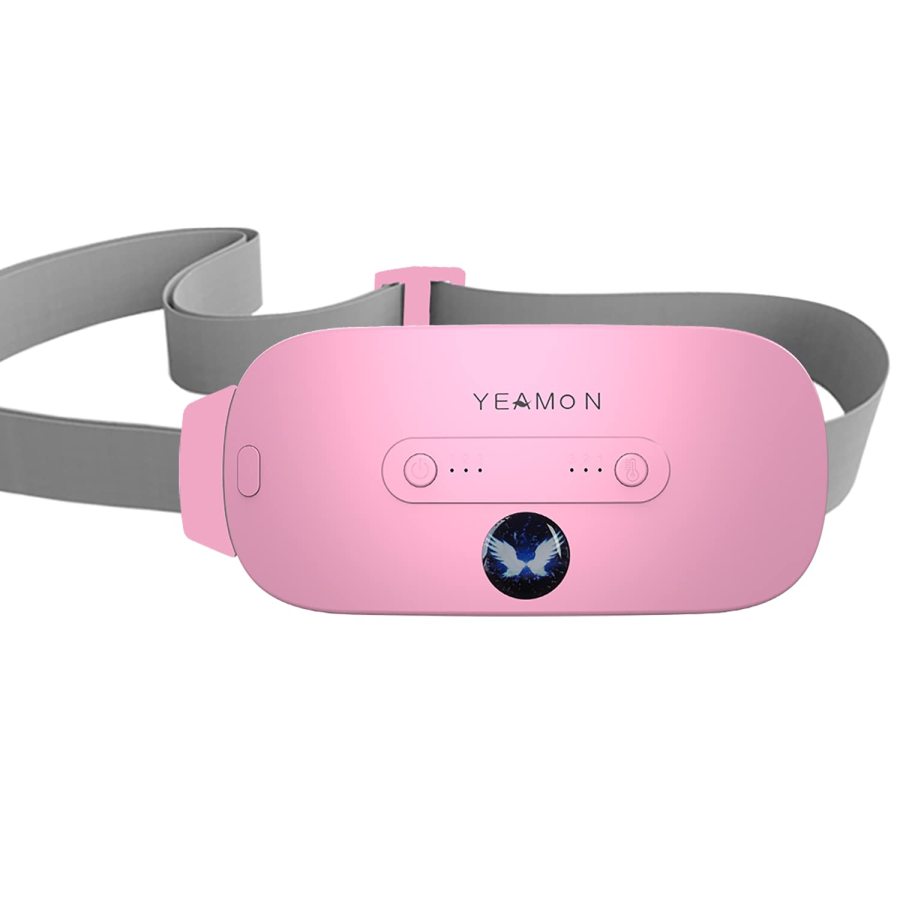
A uterine heating belt is a portable heating and massage device specifically designed for women to alleviate menstrual pain and abdominal/back discomfort. It typically features a cordless, rechargeable design with multiple heat settings and vibration massage functions, aiming to provide comfort and relief anytime, anywhere. This category emphasizes discretion, comfort, and fast pain relief, and has become an essential part of many women's daily care routines. The following table illustrates the key characteristics of consumer behavior in this category.
| Dimension | Segment | Description |
|---|---|---|
| Need Driver Type | Emergency-driven Purchase / Planned Purchase | Users primarily purchase to relieve acute menstrual pain or cyclical discomfort (emergency), but also as a planned purchase for regular abdominal/back care. |
| Purchase Frequency | Low Frequency / Medium-Low Frequency | Typically a one-time purchase. Repurchases are often due to product failure or for gifting. Some users may buy multiple units for backup or to keep in different locations. |
| Decision Complexity | Medium | Users compare heating effectiveness, battery life, massage functions, comfort, and price, and heavily reference user reviews. |
| Price Sensitivity | Medium-High | Although pain relief is a necessity, the market price range is wide. Consumers place significant weight on value-for-money once core functions are met. |
| Emotional Dependency | Medium-High | The product directly alleviates physical discomfort, is viewed as a 'lifesaver,' and significantly improves the user's quality of life during specific periods. |
II. User Personas & Usage Scenarios
2.1 Working Professional/Student with Dysmenorrhea
🎯 Suffers from menstrual pain and seeks continuous relief during work or study without disrupting daily activities.
| Typical Usage Scenarios | Core Pain Points | Primary Purchase Drivers |
|---|---|---|
|
|
|
2.2 Home-based Woman Seeking Comprehensive Comfort
🎯 Focuses not only on menstrual pain but also on relieving daily back/abdominal soreness and muscle tension, enjoying relaxation at home.
| Typical Usage Scenarios | Core Pain Points | Primary Purchase Drivers |
|---|---|---|
|
|
|
2.3 Gift-Giver Caring for Loved Ones
🎯 Purchases a thoughtful gift for a mother, wife, daughter, or girlfriend suffering from menstrual pain or back discomfort.
| Typical Usage Scenarios | Core Pain Points | Primary Purchase Drivers |
|---|---|---|
|
|
|
III. User Needs Hierarchy (KANO Model)
3.1 Basic Needs (Must-Haves)
- Safety & Reliability: Includes auto-shutoff, overheat protection, etc., ensuring safety, especially during sleep or extended use.
- Effective Heating: Can stably and continuously provide sufficient heat to effectively relieve pain.
- Portability: Cordless design with rechargeable battery for convenient, unrestricted use anywhere.
- Comfortable Wear: Soft, skin-friendly material that fits well, with an adjustable belt to accommodate different body types.
3.2 Performance Needs (Linear Satisfiers)
- Fast Heating: Reaches the set temperature within seconds for immediate relief.
- Multiple Heat Settings: Offers 3-7 adjustable heat levels to suit different pain intensities and personal preferences.
- Vibration Massage Modes: Multiple vibration patterns, combined with heat, to further relieve muscle tension.
- Long Battery Life: Battery lasts long enough for a complete pain relief cycle or several hours of use.
- Low Noise: Minimal noise during vibration mode, allowing use in public or quiet environments.
- Multi-area Applicability: Effective not only for the abdomen but also for relieving pain in the back, shoulders, neck, etc.
3.3 Excitement Needs (Delighters)
- LED Display: Visually shows battery level, temperature, and vibration mode, enhancing ease of use and tech appeal.
- Ultra-thin, Discreet Design: Slim and lightweight product that can be completely hidden under clothing for undetectable wear.
- FSA/HSA Eligibility: Can be purchased using medical savings accounts, providing additional convenience and value perception.
- Larger Heating Area: Provides broader heat coverage for enhanced overall pain relief.
- Dual-Zone Heating: Simultaneously heats both the abdomen and back, addressing multi-area discomfort.
- Premium Gift Box Packaging: Suitable for gifting, enhancing the product's perceived value and sentiment.
3.4 Unmet Needs & Opportunities
-
Battery Life Accuracy & Consistency: Many users report actual battery life is far below advertised claims, or that battery performance degrades significantly over time/becomes unable to charge.
User Reviews (VOC) Customers have mixed experiences with the heating pad's battery life, with some reporting it stays charged for a good amount of time, while others mention it only lasts one hour. // Customers have mixed experiences with the heating pad's battery life, with some reporting it lasts a long time and takes hours to charge, while others find it doesn't last very long.
-
Vibration Noise Control: While providing relief, the vibration function often produces noticeable noise, limiting its discreet use in public settings.
User Reviews (VOC) The vibrating is amazing and helps a lot. I will say I planned to take this on days I have cramps at work but the vibrating sound is a little loud for that. // The vibration is very loud.
-
Heat Uniformity/Stability: Some products suffer from uneven heating, localized hot spots, or even risk of skin burns, impacting user experience and safety.
User Reviews (VOC) The only issue that made us return it was that it didn't get hot enough. Sure, it gets slightly warm but we were hoping to find something that can give us more heat or just the choice of how hot the mask should be. // Unfortunately caused burn blisters. ... it heats very unevenly and has heat "spikes," which left me with burn blisters (one of them fairly severe).
-
Product Durability/Lifespan: Users report products ceasing to work or experiencing partial failure within a short period (e.g., a few months).
User Reviews (VOC) It worked for one day... It just worked one day How could a product be so useless. // It stopped working 3 months in! This is the 2nd one I bought.
-
Charging Time Optimization: Long charging times for some products contradict their short battery life, hindering immediate use.
User Reviews (VOC) The battery life is pretty short and it takes FOREVER to charge, so have a backup for when you need it. // The charge runs out sooo fast, and takes to long to charge.
-
Adjustable Vibration Intensity: Most products only offer pattern switching, not perceptible intensity adjustment.
User Reviews (VOC) Although there are five different *patterns* of vibrations, they are all equally strong. You cannot get milder vibration or stronger, just one strength.
IV. User Decision Drivers
4.1 Key Decision Factors
- Pain Relief Effectiveness: Ability to effectively, quickly, and continuously relieve menstrual and other body pains.
- Heating Speed & Temperature: Whether it heats up fast enough and can reach/maintain a comfortable, effective temperature.
- Portability: Whether the cordless design truly enables convenient, unrestricted use during daily activities.
- Safety: Safety features like auto-shutoff and overheat protection to prevent burns or other risks.
- Battery Life: How long a single charge lasts and whether it matches advertised claims.
4.2 Secondary Decision Factors
- Wearing Comfort: Material softness, belt fit/adjustability, and absence of pressure points.
- Multi-functionality: Presence and effectiveness of vibration massage functions.
- Discretion: Whether the design is slim enough to be undetectable under clothing, especially in public.
- Product Durability: Product quality and lifespan, susceptibility to damage or failure.
- Price & Value: Whether the price is reasonable and offers good value once core needs are met.
- Charging Convenience: Charging port type (e.g., USB-C), charging speed, and overall ease of charging.
V. Selling Points & Competitive Landscape
5.1 Selling Point Analysis
5.1.1 Standard Features (Points of Parity)
- Portable/Cordless Design: Emphasizes use anytime, anywhere, free from cable constraints.
- Fast Heating: Highlights reaching working temperature in a short time (3-5 seconds).
- Multiple Heat Settings: Offers various temperature options to meet personalized needs.
- Relieves Menstrual/Back Pain: Directly states the core function and target pain point.
- Adjustable Belt: Emphasizes fit for users of different body types.
- Auto Shut-off: Mentions safety feature to prevent risks from prolonged use or falling asleep.
- Soft, Comfortable Fabric: Highlights skin-friendly material for enhanced wearing comfort.
5.1.2 Key Differentiators
- Multiple Massage Modes (Vibration): Adds vibration function to heating for combined relief effects.
- Long Battery Life: Advertises large capacity battery and extended use to address range anxiety.
- FSA/HSA Eligibility: Highlights qualification for medical savings account payment as a value-added benefit.
- LED Display: Provides a visual interface for easy status and setting checks.
- Larger Heating Area: Emphasizes broader heat coverage for better pain relief.
- Ultra-thin Design: Highlights slim, lightweight profile for discreet, unnoticeable wear.
- Gift Appeal: Positions the product as a thoughtful gift for female loved ones.
5.1.3 Unique Selling Propositions (USPs)
- Dual-Zone Heating: Simultaneously heats both abdomen and back, addressing multi-area pain.
- Includes Herbal Patches: Combines with traditional herbal therapy for an added soothing experience.
- World-Class Customer Service: Brand promise of hassle-free after-sales service to boost consumer confidence.
5.2 Competitive Landscape
5.2.1 Market Maturity
The uterine heating belt market is moderately to highly mature. Basic heating functions are becoming standardized. Key differentiators now lie in battery performance, massage functions, convenience features (e.g., LED display), specific payment eligibility (FSA/HSA), and design details. Competition is intense, with new entrants often seeking a foothold by emphasizing feature combinations and value-for-money.
5.2.2 Innovation Trends
Category innovation trends primarily involve evolving from single-function heating to combined 'Heat + Vibration Massage' therapy for more comprehensive relief. Simultaneously, cordless portability remains a core evolution direction to meet user needs in mobile scenarios. Future trends may include smarter temperature control, personalized massage programs, longer battery life, and improved discretion in design.
VI. Marketing Claims vs. Reality Check
The table below analyzes the gap between common marketing claims and actual user experiences in this category:
| Dimension | Marketing Claim | User Reality | Verdict |
|---|---|---|---|
| Battery Life | Claims of 5-12 hours long-lasting battery, 3-5 hours use per charge. | Users widely report actual battery life at high settings is far below claims (often 1-2 hours or less). Some products experience battery failure shortly after purchase, requiring frequent charging or use while plugged in. | Typical misleading use of lab-ideal or minimum-brightness data. Fails to deliver on the core promise of long-lasting relief for work/study scenarios, severely impacting user trust. |
| Vibration Noise & Discretion | Low-noise operation, ultra-thin silent design, perfectly hidden under clothing for discreet use anytime, anywhere. | Users widely report noticeable noise from vibration modes (e.g., buzzing, phone-like ringing), making it difficult to achieve complete discretion in quiet or public settings. | Sellers fail to adequately consider the physical limitations of vibration motors and users' genuine expectations for 'silence.' This causes the core selling point to fall short in real-world use, limiting the product's value in specific scenarios. |
| Heat Uniformity & Safety | Safe, stable heating; graphene technology provides even heat; 30-minute auto shut-off prevents overheating. | Some users report uneven heating, localized hot spots, or even skin burns. Others find the heat insufficient for effective pain relief, impacting comfort and safety. | Product defects in thermal management design fail to ensure even heat distribution and precise temperature control. This leads to poor user experience and even safety hazards, severely undermining fundamental product trust. |
Key Takeaway: The market exhibits widespread parameter inflation and scenario-based experience exaggeration, particularly regarding battery life and vibration noise.
VII. Supply-Demand Misalignment Analysis
The table below highlights mismatches between seller focus and buyer priorities:
| Dimension | Seller Behavior | User Focus | Verdict |
|---|---|---|---|
| Actual vs. Claimed Battery Life Consistency | Listings have confusing or overly optimistic battery life data. They generally avoid addressing the real shortcomings under high-heat/vibration settings, lacking unified, credible battery life standards and testing conditions. | Users strongly desire longer-lasting batteries. Rapid power drain at high settings is a frequent complaint. Contradictory data causes confusion and concern. | Sellers generally fail to provide clear, consistent battery life expectations. This lack of trust on a key concern is a core driver of negative reviews and returns. |
| Vibration Noise Control & Discretion | They widely promote 'multiple vibration massage modes' as a differentiator but rarely mention or effectively address the noise issue, making overly optimistic promises about 'discreet use.' | Users complain that vibration modes are too loud, preventing use in offices, schools, or other public places, undermining the product's portability advantage. | Sellers generalize an ideal-state selling point, ignoring users' core need for quietness and discretion in complex, varied scenarios. This results in insufficient reliability for a core function. |
| Product Durability & Long-term Warranty | Sellers widely emphasize 'high quality' and 'durability' but generally lack clear product lifespan promises, long-term warranty policies, and effective solutions for short-term failure concerns. | Users complain about products ceasing to work or experiencing partial failure within months, leading to severe distrust in product quality and brand. | Insufficient seller investment in product quality and after-sales support leads to serious user doubts about long-term value and brand trust, increasing return rates and support costs. |
Key Takeaway: Sellers collectively ignore or downplay core pain points like battery life and vibration noise, while over-supplying feature stacking and low-value details, resulting in a supply-demand mismatch.
VIII. Strategic Opportunities & Recommendations
8.1 True Long-Lasting Battery & Smart, Transparent Power Management
8.1.1 Target Audience & Pain Points
⚡️ Pain Points Addressed: Battery Life Accuracy & Consistency, Charging Time Optimization.
8.1.2 Action Plan
Adopt higher-quality 1500-2000mAh lithium polymer batteries and optimize the power management chip to ensure real-world battery life of 3-4 hours at maximum heat/vibration settings. Introduce high-precision battery level display and prediction, showing remaining usage time via an app or LED screen. Support PD fast-charging protocol to significantly reduce charging time (e.g., 80% charge in under 1 hour).
| Tech Complexity | Medium |
| Cost Impact | High Impact |
| Trade-off Warning | Higher energy-density batteries may slightly increase product weight/thickness, but must be strictly controlled within acceptable limits, with optimized structural design to minimize perceived difference. |
| Price Band | Only viable above $34.99 |
8.1.3 Marketing Strategy
Emphasize 'Say goodbye to battery anxiety, enjoy uninterrupted comfort all day.' Provide real-world battery life data charts for different modes and third-party authoritative test reports in listings to eliminate user doubts with data. Highlight the convenience of fast charging.
8.2 Ultra-Quiet, Stepless Vibration Intensity Adjustment Module
8.2.1 Target Audience & Pain Points
⚡️ Pain Points Addressed: Vibration Noise Control, Adjustable Vibration Intensity.
8.2.2 Action Plan
Adopt brushless micro vibration motors and multi-layer sound-absorbing damping materials to reduce vibration noise below 20dB (equivalent to a whisper). Upgrade the vibration function from simple pattern switching to stepless intensity adjustment, allowing users to finely tune based on personal sensitivity and pain level. Offer a 'Library Mode' for ultra-quiet micro-vibration.
| Tech Complexity | Medium |
| Cost Impact | Medium Impact |
| Trade-off Warning | Using more precise, expensive micro-motors and noise-dampening structures may slightly increase cost and size, but significantly improves user experience. |
| Price Band | Only viable above $24.99 |
8.2.3 Marketing Strategy
Highlight 'Enjoy deep relaxation in silence, caring for every moment.' Demonstrate the ultra-quiet effect through ASMR-style videos. Emphasize 'customizable massage intensity' to solve social awkwardness in public, enhancing the product's 'scenario value.'
8.3 Intelligent Multi-Zone Temperature Control & Multi-area Flexible Fit Design
8.3.1 Target Audience & Pain Points
⚡️ Pain Points Addressed: Heat Uniformity/Stability, Limited Heating Area Coverage, Insufficient Multi-area Applicability.
8.3.2 Action Plan
Integrate multiple NTC temperature sensors for intelligent zoned temperature control, preventing localized overheating and ensuring even, stable heat distribution. Develop wider, longer flexible heating elements and a conformable structure to comfortably wrap around multiple body areas like the abdomen, waist, and shoulders/neck. Offer different sizes or modular extension straps for better fit.
| Tech Complexity | High |
| Cost Impact | High Impact |
| Trade-off Warning | Adding more temperature sensors and zoned heating elements increases product thickness and complexity, requiring more precise flexible heating materials and integrated design. |
| Price Band | Only viable above $49.99 |
8.3.3 Marketing Strategy
Emphasize 'Intelligent zoned temperature control, precisely caring for every pain point.' Use thermal imaging to demonstrate heat uniformity. Showcase effectiveness across different body parts (back, abdomen, etc.) through comparison images to highlight its 'comprehensive relief' professionalism.
8.4 Durability Commitment & Hassle-Free Warranty Service
8.4.1 Target Audience & Pain Points
⚡️ Pain Points Addressed: Product Durability/Lifespan, Charging Port Durability, Customer Service Experience.
8.4.2 Action Plan
Select high-quality, durable materials, especially reinforcing and rigorously testing vulnerable components like the battery, heating element, charging port, and cables (e.g., cycle testing, high/low temperature testing, drop testing). Extend the standard warranty to 12-24 months. Establish a responsive, efficient customer service team.
| Tech Complexity | Low |
| Cost Impact | Low Impact |
| Trade-off Warning | Upgrading internal components and casing material strength increases QC costs and may slightly raise retail price, but effectively reduces after-sales and return costs. |
| Price Band | Only viable above $22.99 |
8.4.3 Marketing Strategy
Highlight 'Built to last, quality guaranteed.' Prominently display 'Extended Warranty Promise' and '24/7 Support' in listings and brand pages, turning after-sales support into a core selling point to build consumer trust. Create durability testing videos.