Amazon US Market Analysis: Extendable Pole Feather Dusters Category
📊 Executive Summary
📈 Market Trends
Long telescopic poles are a must-have, multi-head sets are mainstream. The Amazon extendable pole feather duster category is fiercely competitive, with long reach and bendable heads as core selling points. The market trend is moving towards multi-function, replaceable-head sets to meet diverse cleaning needs, but product quality often fails to match claims.
⚡ Major Pain Points
Pole wobbles and breaks easily, high risk of tip scratches. Users complain most about pole wobbling, instability, and easy breakage when fully extended-the core pain points affecting safety and efficiency. Additionally, hard duster tips scratching surfaces, inability to hold bent angles, and inconvenient replacement head purchases are high-frequency complaints, severely damaging consumer trust and user experience.
💡 Selection Opportunities
Deepen stability and durability, optimize functional details. Market opportunities lie in developing the 'Enhanced High-Stability Telescopic Duster', solving the core pain point via more reliable locking systems and high-strength poles. Simultaneously, launch the 'Ultimate Anti-Scratch Multi-Function Duster Head Set', adding comprehensive soft-tip protection and ensuring easy replacement head purchase to enhance product value. Future potential includes the 'Modular, Easy-Clean Multi-Head Cleaning System', offering a more convenient, eco-friendly cleaning experience for differentiated competition and brand premium.
I. Analysis Overview
1.1 Introduction & Report Scope
This report analyzes the 'Feather Dusters' category (Extendable Pole Feather Dusters) within the Amazon US market, focusing on target user personas, core needs, decision drivers, market communication, and potential opportunities.
1.2 Category Snapshot
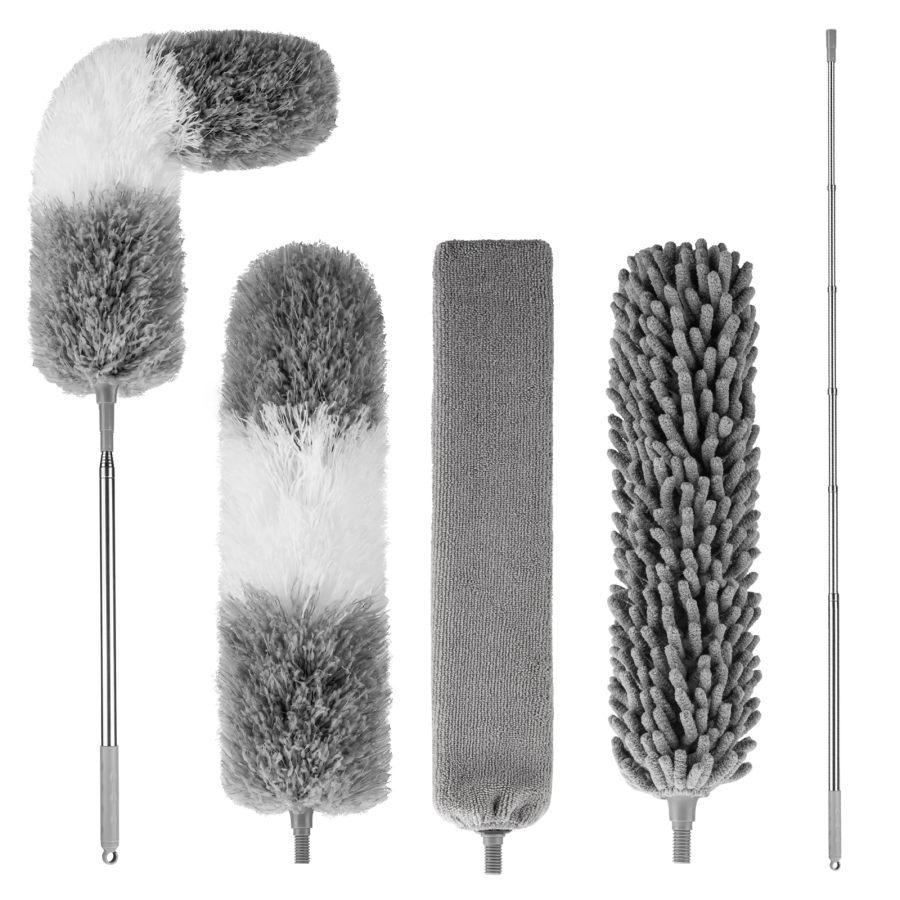
An extendable pole feather duster is a dusting tool with a telescopic handle, primarily made from microfiber or chenille material. It is designed to help users easily clean high places (such as ceilings, ceiling fans) and hard-to-reach areas, effectively capturing dust and cobwebs through static electricity. These products often integrate features like a bendable head and replaceable duster heads to enhance cleaning efficiency and versatility. The following table illustrates the key characteristics of consumer behavior in this category.
| Dimension | Segment | Description |
|---|---|---|
| Need Driver Type | Planned Purchase/Emergency-driven Purchase | Purchases are typically driven by routine cleaning plans or the immediate need to clean discovered dust or cobwebs in high places, with a clear purpose of solving practical cleaning problems. |
| Purchase Frequency | Low/Medium Frequency | The product itself is durable with a long replacement cycle, typically a low-frequency purchase; if the set includes replacement heads, repurchasing consumables may create medium-frequency buying. |
| Decision Complexity | Medium | Consumers compare extension length, pole material, cleaning head functionality, accessory variety, and price, involving multi-dimensional trade-offs in the decision-making process. |
| Price Sensitivity | Medium to High | Price is an important consideration, but users are willing to pay a premium for quality and functionality if the product significantly improves cleaning efficiency and safety. |
| Emotional Dependency | Low | Purchases are primarily based on practicality. The core value is the convenience and peace of mind from solving cleaning pain points, without strong emotional attachment. |
II. User Personas & Usage Scenarios
2.1 Efficient Home Cleaner
🎯 Values household cleanliness, pursues high-efficiency, low-risk cleaning methods, and has zero tolerance for dust and cobwebs in high and hidden places.
| Typical Usage Scenarios | Core Pain Points | Primary Purchase Drivers |
|---|---|---|
|
|
|
2.2 Multi-Scenario Home Cleaner
🎯 Has diverse cleaning needs beyond high places, including crevices and car interiors, values tool versatility and cost-effectiveness.
| Typical Usage Scenarios | Core Pain Points | Primary Purchase Drivers |
|---|---|---|
|
|
|
III. User Needs Hierarchy (KANO Model)
3.1 Basic Needs (Must-Haves)
- Effective Dust Capture: The duster head effectively traps and removes dust, cobwebs, etc., rather than just scattering them, and does not cause secondary dust clouds.
- Easy Extension/Retraction: The telescopic pole extends and retracts smoothly without sticking, meeting different cleaning height requirements.
- Detachable Duster Head: The duster head is easy to detach from the pole for separate washing and maintenance, ensuring hygienic reuse.
- Lightweight Design: The overall weight is light, minimizing arm fatigue during prolonged overhead cleaning.
3.2 Performance Needs (Linear Satisfiers)
- Long Reach: The telescopic pole easily reaches high ceilings, ceiling fans, top of tall cabinets, etc., without needing additional tools.
- Stable & Non-Wobbly: The telescopic pole remains stable when fully extended, without shaking, slipping, or rotating, ensuring precise operation.
- Multi-Angle Bending: The duster head flexibly bends into various shapes and holds its position to adapt to irregular surfaces and dead corners (e.g., fan blades).
- Non-Scratching Surface: Soft duster head material and well-protected tips safeguard cleaned items (walls, furniture, car paint) from damage.
- Enhanced Static Adsorption: The duster head material has strong static adsorption capability, effectively capturing fine dust and hair, reducing dust clouds.
- Rich Set of Attachments: Provides various replaceable heads (e.g., crevice brush, blind brush, cobweb brush) to meet diverse cleaning needs.
3.3 Excitement Needs (Delighters)
- Innovative Storage Solution: Unique compact storage design or aesthetically pleasing wall/stand mount that integrates the cleaning tool into home decor seamlessly.
- Self-Locking Extension Pole System: The telescopic pole automatically locks at any set length or has clear length markings, making use more intuitive and efficient.
- Smart Cleaning Guidance: (Conceptual) Recommends optimal times for dry/wet use or reminds of cleaning cycles via built-in moisture sensors or a companion app, enhancing professionalism and engagement.
3.4 Unmet Needs & Opportunities
-
Poor Pole Stability: Multiple users report the telescopic pole is prone to shaking, loose connections, or rotation when fully extended, making precise control difficult and affecting cleaning results.
User Reviews (VOC) The duster twirls around and can't be locked into one place which makes it difficult to use for dusting around the house. // The pole can feel slightly wobbly when fully extended.
-
Insufficient Product Durability: Pole easily breaks, duster head metal frame fractures, or fibers shed. Lifespan generally falls below user expectations, sometimes failing on first use.
User Reviews (VOC) Broken in less time. // the head snapped off after 5 months of use. // The wire that is inserted into the handle It got unlocked and even if you put it back in and turn it so that it grips the handle it no longer works the same.
-
Lack of Effective Tip Protection: Hard plastic tips or exposed metal frames on some products easily scratch walls, ceilings, or furniture surfaces, requiring users to add their own padding.
User Reviews (VOC) The very tip of the duster is hard plastic, and when I was dusting the cobwebs from the nooks and crannies, I left scuffs from the plastic tip. // The metal piece that sticks out of top of duster scratches furniture, wood work, ceiling fans, everything used on.
- Poor Fixation After Head Bending: Although the duster head can bend, it cannot effectively hold a specific angle during use, prone to springing back or changing shape, reducing cleaning efficiency.
-
Inconvenient Replacement Head Purchase: Users of multi-head sets report difficulty finding replacement heads for individual worn-out heads, forcing them to repurchase the entire set, causing waste.
User Reviews (VOC) replacement heads cannot be found and are needed.
IV. User Decision Drivers
4.1 Key Decision Factors
- Effective High Reach: The maximum length and actual reachable height of the telescopic pole are the user's primary considerations, directly determining if the core high-place cleaning pain point is solved.
- Pole Stability: Whether the telescopic pole is stable when fully extended, without shaking, sagging, or rotating, directly impacts cleaning convenience and safety, often a deal-breaker.
- Dust Capture & Adsorption Effectiveness: Whether the duster head effectively adsorbs and removes dust and cobwebs, rather than just pushing them aside or stirring them up, is a key purchase driver.
4.2 Secondary Decision Factors
- Head Bending Ability & Fixation: Whether the head can flexibly bend to fit various shapes and maintain that bend without springing back is important for enhancing cleaning efficiency.
- Surface-Friendly Material: Whether the duster head material is soft and the product tip has anti-scratch design to protect cleaned surfaces from damage.
- Easy Cleaning & Maintenance: Whether the duster head is easy to detach, wash, and reuse is a user concern regarding long-term maintenance cost and eco-friendliness.
- Richness of Set Attachments: Whether multiple replacement heads or special-function attachments (e.g., crevice brush) are provided to meet different cleaning scenarios.
- Product Value for Money: Whether the pricing is reasonable and offers good perceived value, assuming the above core and secondary needs are met.
V. Selling Points & Competitive Landscape
5.1 Selling Point Analysis
5.1.1 Standard Features (Points of Parity)
- Long Telescopic Pole: Commonly advertised as extending to 100-110 inches, easily reaching high ceilings, ceiling fans, etc.
- Bendable Duster Head: Highlights a built-in wire frame allowing flexible bending into different angles for corners and irregular surfaces.
- Microfiber Material: Emphasizes soft material with static adsorption capability, effectively trapping dust and hair.
- Washable & Reusable: Promotes detachable, hand-washable heads for eco-friendly, durable use, saving on consumables.
- Multi-Purpose Use: Suitable for multi-scenario cleaning in homes (ceilings, fans, furniture, blinds) and cars.
5.1.2 Key Differentiators
- Multi-Head Cleaning Set: Offers sets containing various head types (e.g., chenille, crevice brush, cobweb brush), claiming a one-stop solution.
- Thickened Stainless Steel Pole: Emphasizes upgraded pole material for greater sturdiness, reducing wobble and breakage risk.
- Anti-Scratch Tip Design: Claims to have soft rubber or silicone protective caps at the head tip to prevent surface scratches during cleaning.
- Dry & Wet Dual-Use Function: Some products emphasize the head can be used wet for enhanced adsorption or dry for quick dusting.
5.1.3 Unique Selling Propositions (USPs)
- Extra Mini Handle: Includes a short handle in addition to the long telescopic pole for convenient close-range detailed cleaning or car use.
- Dedicated Storage Bag/Pouch: Some multi-function sets include a storage bag for organizing and storing all accessories.
- Some Heads Machine-Washable: A few products (typically flat brushes or chenille cloths) claim to be machine-washable, further simplifying maintenance.
5.2 Competitive Landscape
5.2.1 Market Maturity
The extendable pole feather duster market is mature, with basic functions and core selling points highly homogenized. Sellers mainly compete on price, number of set accessories, and minor improvements to existing pain points.
5.2.2 Innovation Trends
Current innovation trends focus on product set diversification and multi-functionality, offering more types of replacement heads to cover broader cleaning scenarios. Some sellers are beginning to address pole stability and head usability as improvement areas. Future developments may involve more refined material applications and user-friendly structural designs.
VI. Marketing Claims vs. Reality Check
The table below analyzes the gap between common marketing claims and actual user experiences in this category:
| Dimension | Marketing Claim | User Reality | Verdict |
|---|---|---|---|
| Telescopic Pole Stability | Claims like 'thickened stainless steel body, sturdy and durable', 'no wobble, no rotation'. | Users commonly report the pole 'wobbles', 'is unstable', 'easily breaks' when fully extended; the head-to-pole connection 'loosens easily', 'rotates uncontrollably'. | Sellers overstate pole sturdiness, ignoring the physical mechanics challenges at full extension and actual connection mechanism stability, leading to a severe mismatch between user experience and promises. |
| Product Durability | Claims like 'high-quality stainless steel, long lifespan', 'washable and reusable, highly durable'. | Multiple users report products 'break after a few uses', 'pole snaps', 'duster head metal frame detaches', far below expected lifespan. | A significant gap exists between material claims and actual quality control. Cost-cutting sacrifices structural strength and connection craftsmanship of key components, causing core function failure and shattering user lifespan expectations. |
| Anti-Scratch Design | Claims like 'soft rubber tip, won't scratch walls/furniture'. | Users report hard plastic tips or exposed metal frames 'scratch walls/ceilings/furniture' during cleaning, some needing to add their own protection. | Sellers' anti-scratch design is superficial, failing to fundamentally address the hardness of the cleaning head tip. This leads to user disappointment on a core pain point, damaging the product's safety promise for sensitive surfaces. |
Key Takeaway: The market is rife with exaggerated product performance and promises misaligned with actual experience, especially regarding pole stability, durability, and scratch protection, resulting in low trustworthiness.
VII. Supply-Demand Misalignment Analysis
The table below highlights mismatches between seller focus and buyer priorities:
| Dimension | Seller Behavior | User Focus | Verdict |
|---|---|---|---|
| Pole Stability & Structural Durability | Sellers commonly emphasize 'stainless steel is sturdy', 'thickened design', but listings rarely include detailed technical specs or stability test data, collectively silent on wobble issues at full extension. | Negative feedback about the pole 'wobbling', 'being unstable', 'easily breaking', 'loose connections' is the highest-frequency complaint in user reviews, severely impacting user experience and product lifespan. | Sellers avoid addressing the core support structure, failing to acknowledge and solve the user's fundamental trust need for stability in overhead cleaning tools, leading to product reputation collapse on the most critical function. |
| Head Fixation After Bending | All sellers highlight the head is 'bendable', but few products mention it can 'hold its shape' or has 'angle locking' functionality, often implying high flexibility. | Users complain the bent head 'cannot hold an angle', 'easily springs back', 'rotates uncontrollably', making cleaning specific shapes (like fan blades) inefficient. | Sellers provide the 'bending' function but fail to solve the user's practical operational pain point of 'how to use it effectively after bending'. Function implementation lacks depth into user scenarios. |
| Replacement Head Availability | Some multi-head sets claim 'replaceable heads', 'reduce waste', but rarely provide links or options for purchasing individual replacement heads, forcing users to repurchase the whole set. | Users find they cannot buy individual replacements when a single head wears out, feeling the 'eco-friendly & economical' promise is unfulfilled, forced to repurchase the entire product. | Sellers market 'eco-friendliness' and 'economy' but don't provide practical replacement solutions, leading to user dissatisfaction in the later usage stage and undermining the product's sustainability value. |
Key Takeaway: Sellers universally over-promote basic features like 'long reach' and 'bendable head', while collectively ignoring or failing to effectively address the user's most critical core pain point: 'pole stability' and 'product durability', resulting in a severe supply-demand mismatch.
VIII. Strategic Opportunities & Recommendations
8.1 Enhanced High-Stability Telescopic Duster
8.1.1 Target Audience & Pain Points
⚡️ Pain Points Addressed: Poor pole stability, insufficient product durability, poor head fixation after bending.
8.1.2 Action Plan
Adopt a multi-segment spiral or high-strength snap-lock mechanism to ensure the telescopic pole locks firmly at any length without wobble; upgrade pole material to thicker-walled aerospace-grade aluminum alloy or high-carbon steel; add a fixed rotation lock at the head connection point to ensure bent angles stay locked.
| Tech Complexity | Medium |
| Cost Impact | High Impact |
| Trade-off Warning | Thickening the pole or upgrading the locking mechanism will slightly increase product weight (~50-100g) and overall production cost, but users are willing to pay for a more stable experience. |
| Price Band | Only viable above $24.99 |
8.1.3 Marketing Strategy
Emphasize 'Patented Stable Lock, Worry-Free High Cleaning'; showcase product stability under extreme extension through load-bearing test videos, anti-bending test data, highlighting the 'One Investment, Ten Years of Peace of Mind' durability promise.
8.2 Ultimate Anti-Scratch Multi-Function Duster Head Set
8.2.1 Target Audience & Pain Points
⚡️ Pain Points Addressed: Lack of effective tip protection, insufficient surface-friendly material.
8.2.2 Action Plan
Redesign the duster head front end, using integrated high-density soft silicone or micro-fleece fabric for full coverage, ensuring no hard parts directly contact surfaces. Also, develop multiple pole-compatible replacement heads (e.g., blade-specific wrap, crevice brush) and ensure easy online purchase of replacements.
| Tech Complexity | Low |
| Cost Impact | Medium Impact |
| Trade-off Warning | Adding a front soft rubber layer may slightly reduce head flexibility, but it's acceptable; high-quality replacement heads increase per-unit cost. |
| Price Band | Only viable above $17.99 |
8.2.3 Marketing Strategy
Highlight '360° Flexible & Anti-Scratch, Protecting Every Inch of Your Home'; use close-up shots to showcase the soft front-end material, emphasize 'Fear No Scratches, Clean with Confidence'; provide usage suggestions for different functional heads to extend product lifecycle.
8.3 Modular, Easy-Clean Multi-Head Cleaning System
8.3.1 Target Audience & Pain Points
⚡️ Pain Points Addressed: Inconvenient replacement head purchase, difficult cleaning maintenance, set attachments not well-matched to needs.
8.3.2 Action Plan
Optimize the combination logic of existing sets, removing low-frequency or overlapping accessories, focusing on core needs. Ensure all heads are easily detachable and machine-washable (except special materials, clearly labeled). Establish an online replacement head section offering various colors and functions to enhance user stickiness.
| Tech Complexity | Low |
| Cost Impact | Low Impact |
| Trade-off Warning | No significant physical side effects; mainly optimizes accessory design and supply chain management. |
| Price Band | Only viable above $14.99 (basic set, replacement heads sold separately) |
8.3.3 Marketing Strategy
Emphasize 'One-Stop Modular Cleaning, Mix and Match as You Like'; highlight 'Full Series Machine-Washable Design, Saves Time and Effort, More Hygienic'; encourage replacement head purchases through bundle deals or subscription models to increase LTV (Lifetime Value).