Amazon US Market Analysis: Household Battery Tester Category
📊 Executive Summary
📈 Market Trends
Intense low-price homogenized competition, user experience details becoming the breakthrough point. The household battery tester market shows high maturity and homogenization. Mainstream products commonly emphasize universal compatibility, easy operation, and cost savings. Consumer demand for more precise digital displays, no self-power requirement, and better durability is significant, indicating the market is shifting from basic function competition to competition over user experience details and functional upgrades.
⚡ Major Pain Points
Insufficient measurement accuracy and poor quality feel are core pain points. Current products perform poorly in testing accuracy for lithium and low-charge batteries, and generally lack load testing capability, preventing users from obtaining true usable battery capacity. Additionally, cheap product build and unstable battery fixation are frequent complaints, severely impacting user trust in the product's tool nature and user experience.
💡 Selection Opportunities
Focus on deep functionality and quality upgrades to open mid-to-high-end markets. Selection opportunities lie in developing a 'Multi-Function Smart Load Battery Tester' providing true capacity assessment and accurate lithium battery testing to meet professional user needs, enabling significant premium. Simultaneously, through 'Enhanced Quality & Ergonomic Design', improve product durability and operational smoothness, and launch a 'USB-C Rechargeable Backlit Digital Tester' to solve power supply and display pain points, building brand barriers in the details to win broader market recognition.
I. Analysis Overview
1.1 Introduction & Report Scope
This report analyzes the 'Battery Testers' category (household battery testers) in the US Amazon market, focusing on target user personas, core needs, decision drivers, market communication, and potential opportunities.
1.2 Category Snapshot
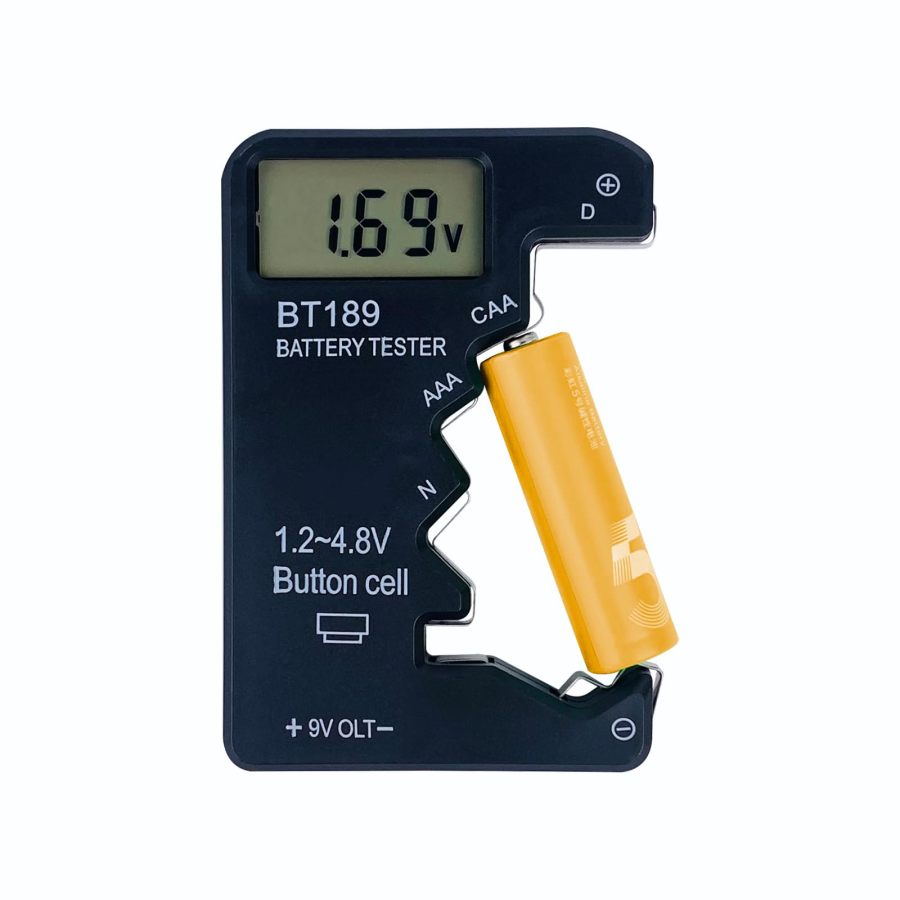
A household battery tester is a compact and convenient electronic device primarily used to quickly check the remaining charge or voltage status of various household dry cell batteries (such as AA, AAA, C, D, 9V, and button cells). This helps users determine if a battery is still usable, preventing waste or enabling timely replacement. Products in this category typically use analog needle gauges or digital LCD screens to display test results. The following table illustrates the key characteristics of consumer behavior in this category.
| Dimension | Segment | Description |
|---|---|---|
| Need Driver Type | Emergency-driven Purchase / Habitual Purchase | Users typically purchase to address emergency situations like sudden device power loss or uncertain battery status, or to fulfill habitual needs for daily household battery management and sorting. |
| Purchase Frequency | Low | As a durable tool, consumers have long repurchase cycles unless the product is damaged or new needs arise; it is not a high-frequency consumer good. |
| Decision Complexity | Simple | Product functionality is straightforward, prices are generally low, and user decision-making is rapid, typically based on basic features and value for money. |
| Price Sensitivity | High | Due to generally low product prices and relatively basic functionality, consumers are highly price-sensitive and pursue extreme value for money. |
| Emotional Dependency | Low | The primary purchase motivation is based on practicality and problem-solving; the product itself does not carry strong emotional value or identity. |
II. User Personas & Usage Scenarios
2.1 Household Efficiency Manager
🎯 A pragmatic consumer responsible for daily household maintenance, seeking to efficiently manage household supplies and avoid inconveniences caused by battery issues.
| Typical Usage Scenarios | Core Pain Points | Primary Purchase Drivers |
|---|---|---|
|
|
|
2.2 Casual Electronics Enthusiast / Detail-Oriented Lifestyler
🎯 A consumer interested in electronic devices and household gadgets, enjoys DIY problem-solving, and pursues a more precise and comprehensive understanding of battery status.
| Typical Usage Scenarios | Core Pain Points | Primary Purchase Drivers |
|---|---|---|
|
|
|
III. User Needs Hierarchy (KANO Model)
3.1 Basic Needs (Must-Haves)
- Universal Compatibility: The ability to test mainstream household battery types like AA, AAA, C, D, 9V is the basic threshold for product survival.
- Easy Operation: Plug-and-play, requiring no complex learning or setup; quick and easy use is a core requirement.
- Clear Status Indication: Can intuitively and clearly indicate whether a battery is 'Good', 'Low', or 'Replace', fulfilling the user's most basic information need.
- Compact & Portable: Small size and light weight, convenient for storage in drawers, toolboxes, or carrying around, a common expectation for daily tools.
3.2 Performance Needs (Linear Satisfiers)
- Reading Accuracy: Provides reliable battery voltage or charge level display, reduces misjudgment, and increases user trust in test results.
- No Built-in Battery Required: The tester operates using power from the tested battery, eliminating the need for installing or replacing its own battery, reducing maintenance costs.
- Durability: Product material is sturdy, not easily damaged by daily use or drops, extending product lifespan, aligning with its tool nature.
- Button Cell Support: Effectively tests various small button cells like CR series, LR44, expanding the product's application scope.
- Digital LCD Display: Compared to traditional analog displays, digital displays provide more intuitive and precise numerical values, improving information acquisition efficiency.
3.3 Excitement Needs (Delighters)
- Load Testing: Tests battery performance under a simulated load, providing a charge assessment closer to real-world usage, solving user pain points.
- Rechargeable Battery Compatibility: Accurately tests the status of rechargeable batteries like NiMH, NiCd, avoiding overcharging/discharging, meeting environmental and meticulous management needs.
- Backlit Display: Allows clear reading of screen information in low-light environments, enhancing user experience, especially in scenarios like garages or storage rooms.
- Magnetic Fixation Design: Stably adheres to the battery during testing, preventing slippage, improving operational convenience and safety, avoiding the hassle of two-handed operation.
- Broader Battery Type Support: Can test more special batteries like CR123A, CR2, 2CR5, CRP2, even 18650, meeting niche but professional needs.
3.4 Unmet Needs & Opportunities
-
Accurate Lithium Battery Testing: Existing testers lack sufficient understanding of lithium battery (e.g., CR series, 18650) voltage characteristics, leading to inaccurate assessment or incompatibility.
User Reviews (VOC) This is an excellent battery tester for alkaline and NiMh batteries. Remarkably simple to use, easy to read display, and, in my months of use, very accurate except for when it comes to lithium batteries. In almost all cases, it reports lithium batteries as 100% even if they're no longer working in the appliance. // The only battery I can't do is my 18650 batteries. That would make it perfect if you could do that one.
-
Charge Percentage Guidance: Digital voltage is precise, but users are unclear about what voltage constitutes 'good charge' or 'needs replacement' for different battery types, lacking intuitive percentage or text guidance.
User Reviews (VOC) Meter works well easily fit all the types or batteries... but no chart to tell you if that voltage is good or not so you will need to look that up online. That was a little annoying.
-
Sturdy Build & Battery Fixation: Multiple products are described as 'feeling cheap', 'not sturdy', and batteries are difficult to fix securely during testing, affecting operational experience and long-term reliability.
User Reviews (VOC) This thing feels really cheap and it is, but it works fairly well. // Very flimsy. Difficult keeping batteries in. // I think they work? ... they don't feel very sturdy or durable.
-
True Capacity / Load Testing: Products generally only display instantaneous voltage, lacking load testing for actual remaining capacity or estimated lifespan, unable to provide true performance assessment in real-world use.
User Reviews (VOC) This the device measures the voltage, but it doesn't do a load test this is something that advice needs very much. // This is not a tester. It doesn't apply a load.
IV. User Decision Drivers
4.1 Key Decision Factors
- Accurate Judgment: Whether the product can reliably and accurately determine a battery's actual charge state is the primary consideration for users, directly impacting its use value.
- Compatibility: Whether it supports most common battery types at home, especially various sizes and voltages (e.g., AA, AAA, C, D, 9V, button cells), determines its universality and convenience.
- Ease of Use: Whether operation is simple and intuitive enough for quick mastery and results is crucial for average household users.
- Value for Money: Whether the product price is reasonable and offers convenience and savings exceeding its low cost is the core driver for this low-decision category.
4.2 Secondary Decision Factors
- Display Intuitiveness: Digital displays are generally preferred over analog ones, providing precise numerical values and enhancing user understanding of charge level.
- Product Durability: Whether the product material and build quality are sturdy for long-term use, reducing the hassle of frequent replacement.
- Self-Power Method: User preference for testers that don't require additional battery power (self-powered), or the more convenient option with built-in rechargeable batteries, to reduce maintenance.
- Compact Portability: Convenient to store anywhere, ready for immediate use, without occupying much space.
V. Selling Points & Competitive Landscape
5.1 Selling Point Analysis
5.1.1 Standard Features (Points of Parity)
- Universal Compatibility: Most products advertise the ability to test various household battery types like AA, AAA, C, D, 9V, and button cells as a basic selling point.
- Easy to Use: Commonly emphasize simple, intuitive operation requiring no complex learning for quick mastery, meeting household user needs.
- Saves Money / Reduces Waste: Avoiding discarding usable batteries to save costs is a value proposition emphasized by almost all products.
- No Built-in Battery Required (Some): Many analog needle testers or some digital testers advertise powering via the tested battery, requiring no additional battery, as a convenience selling point.
- Compact & Portable: Products are generally designed compact and lightweight, easy to store and carry, emphasizing 'pocket-friendly' or 'drawer essential'.
5.1.2 Key Differentiators
- LCD Digital Display: Some products use LCD digital screens to display voltage, offering more precise readings than traditional analog needles as an upgrade point.
- Multi-Pack Bundling: Offering bundles of 2 or more testers to attract consumers with price advantages and multi-scenario coverage.
- Magnetic Fixation: A few products integrate magnetic functions, aiming to fix batteries more stably during testing, improving operational convenience.
- 18-Month Warranty: Some brands offer longer-than-standard warranty periods and customer service to build trust and brand differentiation.
- Specific Battery Compatibility: Some products explicitly support more special battery types like CR123A, CR2, expanding compatibility range.
5.1.3 Unique Selling Propositions (USPs)
- Self-Rechargeable Design: Very few high-end products have built-in rechargeable batteries (e.g., lithium-ion), charged via USB-C, eliminating reliance on tested batteries or additional dry cells, and supporting backlit displays.
- Voltage Selection Mode: Individual products allow users to select different measurement modes based on battery chemistry (e.g., Alkaline, NiMH, Lithium) for more accurate readings.
- Mention of Load Testing: Very few products imply or emphasize in marketing their ability to perform load testing for more realistic charge assessment, but actual functionality is often exaggerated.
5.2 Competitive Landscape
5.2.1 Market Maturity
The household battery tester market has entered a mature stage with highly homogenized product functionality. Basic selling points like universal compatibility, ease of use, and cost savings are now standard. Competition mainly manifests in price, display method (analog vs. digital), subtle functional optimizations (e.g., magnetic fixation, battery slot design), and brand premium.
5.2.2 Innovation Trends
Current innovation trends mainly involve evolution from analog needles to more precise digital LCD displays; development from purely self-powered to self-rechargeable (with backlit display) to enhance user experience; rising demand for compatibility with special battery types (e.g., small lithium batteries, 18650); and the market beginning to mention the concept of 'load testing' for charge assessment closer to real-world scenarios, though actual implementation still faces challenges.
VI. Marketing Claims vs. Reality Check
The table below analyzes the gap between common marketing claims and actual user experiences in this category:
| Dimension | Marketing Claim | User Reality | Verdict |
|---|---|---|---|
| Measurement Accuracy vs. Actual Utility | High-precision measurement, accurately displays battery health status, easily judges good/bad. | Users commonly report inaccurate, inconsistent readings, especially on low-charge and lithium batteries. Many testers only measure no-load voltage, unable to reflect true battery performance under load. | Sellers overstate product 'accuracy', overlooking physical limitations in practical application (e.g., lack of load testing), severely damaging user trust in test results, constituting core functional misguidance. |
| Contradiction Between 'No Battery Required' and 'Power Supply' | No internal battery required, activates upon use, energy-saving and eco-friendly. | Most analog testers indeed require no battery, but some products with LCD digital displays (e.g., Tenergy T-333, Dlyfull series) need an additional AAA battery to ensure display clarity and more features, conflicting with the general 'no battery required' claim. | This is a typical information mismatch. Sellers extend the advantages of basic models to all products, ignoring the additional power needs of digital displays, leading to post-purchase expectation gaps and dissatisfaction. |
| Product Build Quality & Durability | Premium structure, sturdy and durable, long-lasting. | Users commonly report cheap-feeling materials, strong plastic sense, rough workmanship, and easy damage. Difficulty fixing batteries during testing is also a frequent complaint, affecting operational experience. | Sellers package the concept of 'premium durability' under low BOM costs, but actual product quality and user experience fall far below the psychological expectations for a 'tool', limiting brand image and repurchase potential. |
Key Takeaway: The market generally exhibits tendencies towards functional exaggeration and performance overstatement, especially regarding 'accuracy' and 'universal compatibility', failing to fully meet user expectations.
VII. Supply-Demand Misalignment Analysis
The table below highlights mismatches between seller focus and buyer priorities:
| Dimension | Seller Behavior | User Focus | Verdict |
|---|---|---|---|
| True Battery Capacity & Load Testing | Sellers commonly promote 'accuracy' and 'saves money', but rarely mention if products can perform load testing or how to assess battery performance in actual devices. | Users need to know how long a battery will last in high-power devices (e.g., children's toys, flashlights); merely displaying voltage doesn't provide effective information. Reviews explicitly state 'Load test needed.' | Sellers equate 'voltage measurement' with 'capacity assessment', avoiding the technically complex and costlier load testing function, representing a strategic blind spot for the category's core functionality. |
| Compatibility & Accuracy for Lithium Batteries (especially 18650/CR series) | Sellers commonly claim 'universally compatible with all household batteries', but few products explicitly list support for special lithium batteries like 18650 or explain measurement accuracy on these batteries. | Some users explicitly state existing testers cannot test 18650 or give inaccurate readings for CR-series lithium batteries, leaving a gap in battery management for specific devices (e.g., e-cigarettes, flashlights, smart home). | As lithium batteries become more common in households, sellers' definition of 'universal compatibility' is too narrow, overlooking this growing segment demand, missing opportunities to expand user base. |
| Product Build Quality & Detail Experience | Sellers commonly emphasize 'compact & portable', 'easy to use', but rarely mention or promote key build details like material choice, structural design, stability of battery slots. | Users complain about products being 'cheap', 'fragile', 'difficult to fix batteries', 'strong plastic feel', which is far from the durability and reliability expected of a tool. | Sellers focus on low price and basic functions, sacrificing the quality feel and operational smoothness a product should have, leading users to frequently encounter friction in details during use, affecting long-term satisfaction. |
Key Takeaway: Sellers are collectively silent on core pain points (e.g., load testing, precise lithium battery detection) while excessively repeating marketing on basic functional points (e.g., no battery required, universal compatibility), leading to a supply-demand information mismatch.
VIII. Strategic Opportunities & Recommendations
8.1 Multi-Function Smart Load Battery Tester
8.1.1 Target Audience & Pain Points
⚡️ Pain Points Addressed: True capacity/load testing, charge percentage guidance, accurate lithium battery testing.
8.1.2 Action Plan
Develop a microcontroller with built-in switchable simulated load resistors and smart algorithms capable of measuring voltage under load. Calculate and display 'Remaining Capacity Percentage' based on battery type (Alkaline, NiMH, Li-ion) and voltage curves. Add a backlit LCD display and provide recommended 'Full/Low' voltage reference values for different battery types. Support mainstream lithium-ion batteries like 18650/21700.
| Tech Complexity | High |
| Cost Impact | High Impact |
| Trade-off Warning | Requires adding load circuitry and more complex microcontrollers, potentially leading to slightly thicker products or significantly higher costs. Further increases cost and complexity if integrating rechargeable battery and backlight. |
| Price Band | Only viable above $29.99 |
8.1.3 Marketing Strategy
Emphasize 'Professional-grade diagnostics, easy home use'; highlight 'Real-time load testing, goodbye to inflated charge readings'; use charts and videos to demonstrate its ability to predict real-world runtime in different devices, targeting advanced users who value quality and data.
8.2 Enhanced Quality & Ergonomic Battery Tester
8.2.1 Target Audience & Pain Points
⚡️ Pain Points Addressed: Sturdy build & battery fixation, ease of use, product durability.
8.2.2 Action Plan
Use higher-strength, more premium-feeling ABS or PC+ABS engineering plastics, optimize mold precision, reduce wobble between parts. Redesign battery slots using more stable spring-loaded mechanisms or integrate high-strength N52 magnets to ensure firm clamping of different-sized batteries during testing. Optimize contact design for one-handed operation ease. Clearly mark battery polarity.
| Tech Complexity | Low |
| Cost Impact | Medium Impact |
| Trade-off Warning | Using higher-quality engineering plastics or adding metal components may slightly increase product weight or thickness, but improved user satisfaction can offset this impact. |
| Price Band | Only viable above $14.99 |
8.2.3 Marketing Strategy
Highlight 'Sturdy, not cheap, superior feel'; showcase product materials and precise structure through detail close-ups, emphasize 'One-handed stable operation, goodbye to battery drops'; contrast with competitors' poor build quality to reinforce own high-quality image.
8.3 USB-C Rechargeable Backlit Digital Tester
8.3.1 Target Audience & Pain Points
⚡️ Pain Points Addressed: Requires its own power source, screen lacks backlight, display intuitiveness.
8.3.2 Action Plan
Integrate a small-capacity rechargeable lithium battery with a USB-C charging port, eliminating dry cell power. Equip with a backlit LCD digital display for clear charge reading in any lighting. Add charge percentage display and intuitive battery icons instead of pure voltage numbers.
| Tech Complexity | Medium |
| Cost Impact | Medium Impact |
| Trade-off Warning | Built-in lithium battery slightly increases cost and product volume; battery cycle life needs consideration. Providing USB-C charging interface aligns with mainstream trends. |
| Price Band | Only viable above $19.99 |
8.3.3 Marketing Strategy
Emphasize 'Built-in lithium battery, never out of power, convenient USB-C fast charging'; highlight 'Night-time backlight, clear reading even in dim environments'; promote it as an upgrade and convenience of a modern household tool.