Amazon US Market Analysis: Plush House Slippers Category
📊 Executive Summary
📈 Market Trends
个性化 and Convenience Needs Drive the Market. The plush house slippers market is evolving from basic comfort towards integrating fashionable design and multi-scenario applicability. Consumers seek personal expression and versatile footwear. Simultaneously, the market potential as holiday gifts is increasingly prominent, prompting brands to invest more in emotional value through packaging and marketing.
⚡ Major Pain Points
Memory Foam Flattening and Pile Shedding are Core Flaws. Users are 普遍 disappointed with the longevity of memory foam, perceiving rapid comfort degradation. Issues like shedding, inaccurate sizing, and foot sliding also significantly impact user experience and home hygiene, leading to high return rates and negative reviews, urgently requiring solutions.
💡 Selection Opportunities
Deepen Quality Details, Solidify User Experience Trust. Market opportunities lie in addressing the core pain points of memory foam 不耐用 and pile shedding through technical upgrades, creating 'Long-Last Cushion' and 'Anti-Shedding & Antibacterial' product lines. Simultaneously, optimizing size fitting guides and improving in-shoe stability can effectively reduce purchase risk and win consumer trust. Complemented with 精美 gift packaging, this can further expand the holiday gift market.
I. Analysis Overview
1.1 Introduction & Report Scope
This report analyzes the 'Slippers' category (specifically Plush House Slippers) in the US Amazon market, focusing on target user personas, core needs, decision factors, market communication, and potential opportunities.
1.2 Category Snapshot
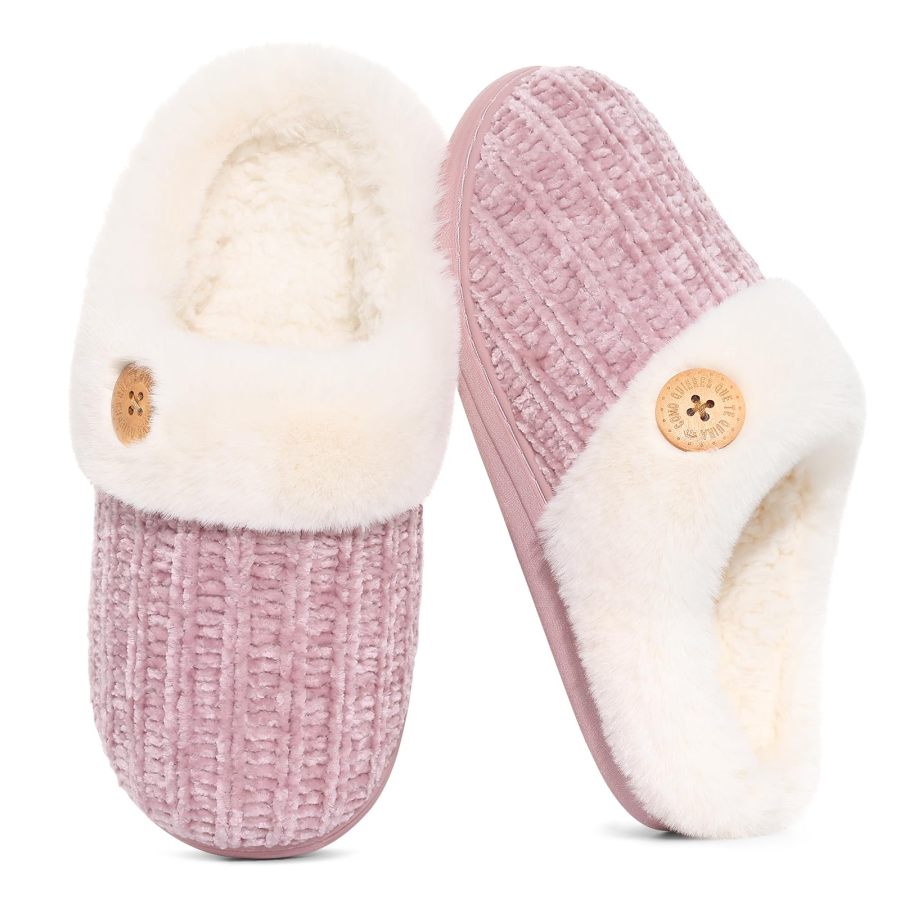
Plush house slippers are comfortable footwear designed for daily indoor and brief outdoor wear, typically featuring soft plush lining and memory foam insoles aimed at providing ultimate foot comfort and warmth. These slippers commonly have non-slip rubber or TPR soles, suitable for quick trips outside the home (e.g., getting mail, taking out trash). They are essential household items in autumn and winter and are increasingly chosen for personal expression and as gifts. The following table illustrates the key characteristics of consumer behavior in this category.
| Dimension | Segment | Description |
|---|---|---|
| Need Driver Type | Planned Purchase / Impulsive Purchase / Gift-giving | Primarily driven by the pursuit of home comfort, replacement of old slippers, and seasonal warmth; also influenced by novel styles and strong design appeal leading to impulsive purchases, or as gifts for relatives and friends during holidays. |
| Purchase Frequency | Medium-Low Frequency / Seasonal | Typically purchased once a year or every other year, with peak sales in autumn and winter. Purchase frequency may increase during holidays for gifting purposes. |
| Decision Complexity | Medium | Consumers compare comfort, warmth, slip resistance, appearance, and price, but do not conduct in-depth research, relying heavily on reviews and immediate impressions. |
| Price Sensitivity | Medium | Price is an important consideration, but users are willing to pay a reasonable premium for significant comfort, design appeal, or solutions to core pain points. |
| Emotional Dependency | Medium | The soft, warm texture provides a sense of relaxation and security; cute or fashionable designs can evoke feelings of self-satisfaction and pleasure. |
II. User Personas & Usage Scenarios
2.1 Comfort Seeker Pursuing Home Therapy
🎯 Values quality of home life, desires complete relaxation and care for feet after work, and has high demands for the softness, warmth, and support of slippers.
| Typical Usage Scenarios | Core Pain Points | Primary Purchase Drivers |
|---|---|---|
|
|
|
2.2 Fashion-Forward Individualist
🎯 Aims to maintain a stylish appearance even at home, pays attention to slipper design and color coordination, views them as part of home attire, and enjoys expressing personality through cute or unique styles.
| Typical Usage Scenarios | Core Pain Points | Primary Purchase Drivers |
|---|---|---|
|
|
|
2.3 Pragmatic Giver
🎯 Purchases primarily for gifting purposes, focuses on product practicality, quality, and gift value, hopes the gift conveys care while being useful daily, and values the recipient's experience.
| Typical Usage Scenarios | Core Pain Points | Primary Purchase Drivers |
|---|---|---|
|
|
|
III. User Needs Hierarchy (KANO Model)
3.1 Basic Needs (Must-Haves)
- Soft and skin-friendly: The inner material contacting the feet must be soft and non-irritating, providing basic comfort.
- Slip-resistant and safe: The sole must provide sufficient grip to prevent slipping on home surfaces, ensuring user safety.
- Easy on and off: Easy and quick to put on and take off, suitable for casual home use, saving time.
- Basic durability: Able to withstand daily wear without rapid damage, having a reasonable lifespan to avoid frequent replacement.
3.2 Performance Needs (Linear Satisfiers)
- Memory foam support: Provides better cushioning and arch support, reducing fatigue after prolonged standing or walking, enhancing comfort.
- Good warmth: Provides adequate warmth in cold seasons without causing overheating, maintaining a comfortable foot temperature.
- Breathability: Prevents stuffiness and sweating, keeping feet dry, reducing odor, and improving hygiene.
- Lightweight: Reduces walking burden, enhances the feeling of ease during wear, not feeling heavy over time.
- Machine washable: Facilitates easy daily cleaning and maintenance, ensuring hygiene and extending product life.
3.3 Excitement Needs (Delighters)
- Fashionable/cute design: Unique appearances like color blocking, animal shapes (cat paws, cows), smiley faces, etc., add emotional value,个性化 expression, and enhance home happiness.
- Multi-scenario suitability: Versatile use increases convenience, suitable for various indoor/outdoor occasions (e.g., getting mail, walking the dog), reducing the need for frequent shoe changes.
- Special arch support: Provides additional support and comfort for specific foot issues (e.g., flat feet, plantar fasciitis), alleviating specific pain.
3.4 Unmet Needs & Opportunities
-
Memory foam longevity: Users commonly report memory foam flattening quickly after short use (weeks to months), losing its cushioning and support, significantly differing from the initial experience.
User Reviews (VOC) The memory foam flattens out too quickly // Lost its cushion after a few weeks // Memory foam went flat after just a month
-
Pile shedding issue: Some plush styles shed严重, affecting user experience and home cleanliness, with lint adhering to feet and being hard to remove.
User Reviews (VOC) Sheds constantly, gets fluff everywhere // Shedding badly after only a few wears // Lint gets all over my house
-
Size accuracy: Significant size variations between brands, often described as 'runs large/small/wide', making online selection difficult and leading to high return rates.
User Reviews (VOC) The sizing is way off, runs too big // Too small, size up! // Not true to size, very wide
-
Stability of slip resistance: Despite non-slip claims, users still report slipping on specific surfaces (e.g., wet tile), indicating unreliable slip resistance.
User Reviews (VOC) Still slips on wet tile // Not as non-slip as advertised // Felt unsteady on certain floors
-
Foot slipping out issue: Feet tend to slide inside or even slip out of some slippers while walking, affecting stability and safety.
User Reviews (VOC) My foot keeps sliding out // Feet don't stay in place // Very loose fit, makes it hard to walk
-
Odor issue with long-term wear: Some users mention slippers developing odors quickly, especially in humid conditions or after prolonged use, impacting hygiene perception.
User Reviews (VOC) Develops an odor quickly // Not breathable, makes my feet sweat and smell // Smell bad after a short time
IV. User Decision Drivers
4.1 Key Decision Factors
- Footfeel comfort: Whether the slippers are soft, skin-friendly, and the cushioning/support effect of the insole is the core factor influencing purchase, directly affecting the wearing experience.
- Warmth: Especially in autumn/winter, the ability to effectively keep feet warm is a core need, avoiding cold discomfort.
- Slip resistance: Basic guarantee of safety for walking at home, preventing slips on smooth or wet floors, reducing accident risk.
- Overall quality & durability: Includes materials, craftsmanship, and the sturdiness of the sole-upper connection, determining product lifespan and long-term value.
4.2 Secondary Decision Factors
- Appearance design: Whether the style, color, and pattern match personal aesthetics and home decor, expressing personality, is an important加分项 influencing the final choice.
- Size fit: Whether it fits well (not too big/small/wide) affects comfort and walking stability, reducing return hassle.
- Indoor/outdoor versatility: Offers convenience, reduces frequency of shoe changes, meets needs for quick transitions between indoor/outdoor scenes.
- Ease of cleaning: Whether it can be easily cleaned (e.g., machine washable) maintains hygiene and extends product life.
- Cost-performance ratio: Whether the price is reasonable relative to the value provided, assuming core needs are met.
V. Selling Points & Competitive Landscape
5.1 Selling Point Analysis
5.1.1 Standard Features (Points of Parity)
- Soft and comfortable: Commonly emphasizes the skin-friendly softness from plush lining, faux rabbit fur, or fleece, and the overall comfortable experience.
- Memory foam insole: Almost all products advertise high-density memory foam insoles providing cushioning and support, creating a 'walking on clouds' feeling.
- Non-slip sole: Often uses rubber or TPR soles, emphasizing non-slip treads and indoor/outdoor versatility for safe walking.
- Easy slip-on: Highlights the slip-on design for convenience and speed, fitting casual home use habits.
- Gift potential: Most listings position the product as a 'great gift idea' suitable for various holidays or giving to亲友.
5.1.2 Key Differentiators
- Fashionable design: Features like cross straps, open toes, closed backs, color blocking, smiley faces, cat paw or cow prints, etc., increase visual appeal.
- Specific fabrics: Uses materials like chenille knit, corduroy, waffle knit, offering different visual and tactile sensations, enhancing perceived quality.
- Machine washable: Explicitly emphasizes easy cleaning and maintenance for convenient daily use and extended product life.
- Arch support: Some products mention additional support for specific foot needs, enhancing perceived professionalism.
5.1.3 Unique Selling Propositions (USPs)
- Cute animal shapes: Unique animal形象 designs like cat paws, cows, bunny ears, satisfying consumer demand for fun and个性化 expression.
- Unique smiley face patterns: Designs themed with retro or cartoon smiley faces inject positive emotional value, differentiating from traditional styles.
- Fashionable corduroy/waffle knit uppers: Uses unique fabrics like corduroy or waffle knit for the upper, providing differentiated texture and visual appeal, enhancing product质感.
5.2 Competitive Landscape
5.2.1 Market Maturity
The plush house slippers market is highly mature. Core features like softness, warmth, memory foam, and slip resistance have become standard, leading to significant product homogenization. This means merely claiming to 'have' these basic features is no longer sufficient to attract consumers. Market competition has shifted towards optimizing the 'depth and longevity of the experience' of these basic functions and innovating in 'design aesthetics'.
5.2.2 Innovation Trends
Current innovation trends in the category primarily manifest in two areas: Firstly, rising consumer demands for product durability and maintenance convenience are driving brands to seek breakthroughs in technical details like memory foam longevity, pile shedding resistance, and machine washability. Secondly, the rise of aesthetic and emotional value, such as incorporating more fashion elements, IP collaborations, creative shapes (e.g., animal paws, funny expressions), and eco-friendly materials, to meet consumer 个性化 and home aesthetics needs. Simultaneously, potential market opportunities exist for more accurate size matching and targeted foot health support.
VI. Marketing Claims vs. Reality Check
The table below analyzes the gap between common marketing claims and actual user experiences in this category:
| Dimension | Marketing Claim | User Reality | Verdict |
|---|---|---|---|
| Memory foam cushioning longevity | High-density memory foam provides cloud-like comfort, all-day support, retains shape even with long-term wear. | Users普遍反馈 memory foam flattens after short use (weeks to months), losing rebound and support, significantly differing from the initial experience. | Typical misleading of consumer expectations about product lifespan based on good initial experience; fails to deliver the core promise of 'long-lasting comfort', leading to rapidly declining user satisfaction. |
| Pile shedding resistance & durability | Luxuriously soft faux fur, skin-friendly comfort, reinforced anti-shedding treatment, long-lasting durability. | Many users report严重 shedding, affecting home cleanliness and product appearance, and pile becoming rough after washing, contradicting 'anti-shedding' and 'durable' claims. | Sellers overemphasize softness while ignoring the most common pain point of plush products – shedding. This information asymmetry severely damages user trust in product quality and hygiene perception. |
| Indoor/outdoor versatility & water resistance | Durable non-slip rubber sole, suitable for indoor and outdoor wear, fearless on wet/slippery surfaces. | Specifications for many products clearly state 'not waterproof', limiting use in kitchens, bathrooms, or outdoor rain/snow, contradicting the 'indoor/outdoor' convenience claim. | Sellers promote multi-functionality without fully considering practical usage limitations and material properties,刻意规避 the waterproofing defect, leading to experience gaps and safety concerns in damp scenarios. |
Key Takeaway: The market 普遍存在 exaggeration regarding comfort, durability, and versatility. Some products fail to deliver on core experience promises, showing clear'spec inflation'.
VII. Supply-Demand Misalignment Analysis
The table below highlights mismatches between seller focus and buyer priorities:
| Dimension | Seller Behavior | User Focus | Verdict |
|---|---|---|---|
| Long-term performance of memory foam cushioning | 普遍强调 'memory foam comfort', 'cloud-like feel', but rarely mention or guarantee the long-term resilience and durability of the memory foam. | Users are satisfied with initial feel but frequently report memory foam flattening quickly, feeling disappointed, perceiving short product lifespan. | Sellers package a one-time experience as a lasting selling point, ignoring the user's deeper need for 'lasting comfort', causing a break in the core value chain and a trust crisis. |
| Accuracy and guidance for size selection | 普遍提供 standard size charts, some mention 'runs large/small' suggestions, but lack unified standards and detailed measurement guides, especially lacking targeted solutions for wide feet. | Many users complain about inaccurate sizing (too big, too small, too wide), difficulty choosing the right size, leading to frequent returns/exchanges. | Sellers fail to provide sufficiently accurate size information and selection guidance, exposing users to high risk early in the purchase decision process, significantly impacting shopping experience and satisfaction. |
| Pile shedding control and odor prevention | 普遍强调 'soft', 'skin-friendly', but collectively avoid or downplay pile shedding and odor issues, lacking solutions. | Users frequently complain about严重 shedding, as well as new shoe odor or odors developing after long-term wear, affecting home hygiene and wearing experience. | Sellers片面强调 product advantages, ignoring inherent maintenance pain points of plush slippers, causing additional hassles for users during use, impacting perception of product hygiene and brand loyalty. |
Key Takeaway: Sellers exhibit 'over-promising, under-delivering' on core comfort and versatility, while collectively failing to address basic experience issues like size fitting, inadequately solving user pain points.
VIII. Strategic Opportunities & Recommendations
8.1 Develop High-Density Long-Lasting Memory Foam Slippers
8.1.1 Target Audience & Pain Points
⚡️ Pain Points Addressed: Memory foam flattens after prolonged wear, losing cushioning effect.
8.1.2 Action Plan
Invest in R&D for new high-density, slow-rebound memory foam, or adopt layered composite insole designs (e.g., memory foam top layer + high-support EVA/TPR bottom layer) to ensure comfort and cushioning are maintained after long-term wear.
| Tech Complexity | Medium |
| Cost Impact | Medium Impact |
| Trade-off Warning | Using higher density or composite structure memory foam might slightly increase insole thickness or product weight, but impact on overall portability is limited. |
| Price Band | Only viable above $24.99 |
8.1.3 Marketing Strategy
Emphasize 'Long-Lasting Cushion, Say Goodbye to Flattening'; use comparison videos to showcase slow-rebound effect; provide pressure test reports from professional institutions, highlighting 'Cloud-like Experience Day After Day'.
8.2 Launch Anti-Bacterial, Anti-Shedding Eco-Friendly Plush Slippers
8.2.1 Target Audience & Pain Points
⚡️ Pain Points Addressed: Pile shedding issue, odor issue with long-term wear.
8.2.2 Action Plan
Use high-quality, anti-shedding treated eco-friendly faux rabbit fur or microfiber plush materials; add antibacterial/anti-odor agents, or optimize structural design to improve breathability and inhibit bacterial growth.
| Tech Complexity | Medium |
| Cost Impact | Medium Impact |
| Trade-off Warning | No significant physical side effects; primarily involves material and process optimization, may slightly increase manufacturing cost. |
| Price Band | Only viable above $19.99 |
8.2.3 Marketing Strategy
Highlight 'Enjoy Plush, Worry-Free Feet: Fashionable & Shed-Free, Fresher & Healthier'; show close-up macro shots of pile fibers; provide third-party antibacterial/anti-odor test reports; emphasize eco-certifications and machine wash convenience.
8.3 Establish Accurate Size Fitting System
8.3.1 Target Audience & Pain Points
⚡️ Pain Points Addressed: Difficulty in size selection leading to high return rates.
8.3.2 Action Plan
Provide detailed foot length (cm/inches) and width measurement guide illustrations on the listing page, clearly标注 internal length/width; add a 'Size Selector' or buying advice for different foot types (standard, wide, high instep).
| Tech Complexity | Low |
| Cost Impact | Low Impact |
| Trade-off Warning | No physical side effects; primarily involves information optimization and customer support. |
| Price Band | Only viable above $14.99 |
8.3.3 Marketing Strategy
Emphasize 'Perfect Fit, No Guesswork'; provide clear measurement illustrations and video tutorials; include FAQ for common sizing questions; highlight 'Free Returns/Exchanges if Not Fitting' policy to eliminate purchase hesitation.
8.4 Optimize In-Shoe Slip Resistance & Foot Stability Design
8.4.1 Target Audience & Pain Points
⚡️ Pain Points Addressed: Feet sliding inside the slipper or slipping out, causing unstable walking.
8.4.2 Action Plan
Redesign lining material to increase friction coefficient; consider adding anti-slip textures or nubs to the arch or forefoot area of the insole to improve foot-shoe grip; optimize shoe last design to ensure better wrap for different foot shapes.
| Tech Complexity | Medium |
| Cost Impact | Medium Impact |
| Trade-off Warning | Might require adjusting lining material or adding friction structures, potentially slightly affecting softness; balance needed. |
| Price Band | Only viable above $16.99 |
8.4.3 Marketing Strategy
Highlight 'Stable & Non-Slip, Safe Every Step'; use close-up photos or videos to show in-shoe anti-slip details; emphasize 'Fits Foot Shape, Reduces Slip-Out Risk', enhancing user peace of mind.