Amazon US Market Analysis: Camping Sleeping Bags Category
📊 Executive Summary
📈 Market Trends
Portability and versatility are mainstream, but demand for precise temperature ratings and size options is growing. The camping sleeping bag market is highly competitive. Consumers generally focus on product lightness, water resistance, and multi-season applicability. Simultaneously, pursuit of detailed experiences like accurate temperature ratings, dedicated options for larger users, and convenient packing methods is increasing.
⚡ Major Pain Points
Zipper quality is a major concern, and inflated temperature ratings create a trust crisis. The market's biggest pain points currently are the extremely poor reliability of product zippers, frequently jamming or breaking, severely impacting user experience. Additionally, widespread overpromising on temperature ratings by sellers leads to a significant gap between actual warmth performance and advertising, greatly damaging consumer trust in brands. The insufficient space in some 'adult' sleeping bags for taller or larger users also limits market penetration.
💡 Selection Opportunities
Deepen focus on quality details to build professional trust barriers. Product selection opportunities lie in solving consumer pain points regarding trust in zipper reliability and true temperature ratings. For example, regaining market trust by adopting high-quality YKK zippers and providing EN/ISO certified accurate temperature ratings. Simultaneously, launching truly spacious and comfortable sleeping bags for tall and large users and innovating on packing experience can effectively tap into market gaps and achieve premium growth.
I. Analysis Overview
1.1 Introduction & Report Scope
This report analyzes the 'Sleeping Bags' category (Camping Sleeping Bags) within the Amazon US market, focusing on target user personas, core needs, decision drivers, market communication, and potential opportunities.
1.2 Category Snapshot
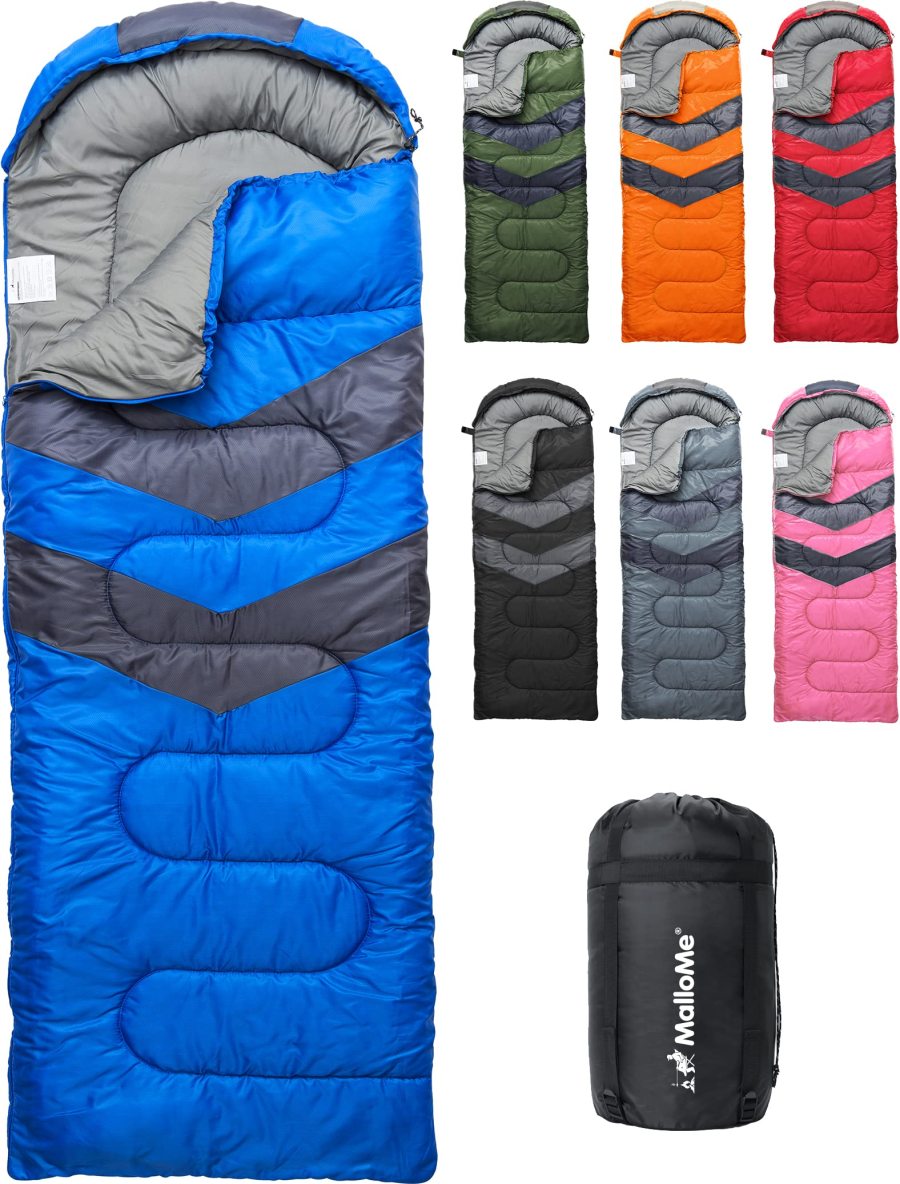
Camping sleeping bags are portable bedding designed to provide comfort and warmth for outdoor activities (e.g., camping, hiking, backpacking) and indoor temporary accommodations. Products in this category are typically differentiated by temperature rating, shape (envelope, mummy), and fill material (synthetic, cotton) to suit varying environmental needs and user preferences. The following table illustrates the key characteristics of consumer behavior in this category.
| Dimension | Segment | Description |
|---|---|---|
| Need Driver Type | Planned Purchase / Emergency-driven Purchase | Purchases typically stem from planned outdoor activities or travel needs, but also include emergency buys for unexpected overnight stays or due to damaged old gear. |
| Purchase Frequency | Low / Medium-Low Frequency | As durable goods, sleeping bags have a long replacement cycle, often purchased every few years. However, avid outdoor enthusiasts may purchase at a medium-low frequency for different seasons or activities. |
| Decision Complexity | Medium / Moderately Complex | Consumers need to consider multiple parameters including temperature rating, size, weight, material, portability, and durability, requiring a relatively comparative and deliberative decision process. |
| Price Sensitivity | Medium | Price is an important consideration, but consumers are more inclined to pay a reasonable premium for reliable warmth, comfort, and durability, rather than blindly seeking the lowest price. |
| Emotional Dependency | Low | Primarily driven by functionality (warmth, comfort), but a good outdoor sleep experience and product reliability contribute significantly to a sense of security and positive emotions. |
II. User Personas & Usage Scenarios
2.1 Leisure Campers
🎯 Engage in short-term camping, RV trips, or festival activities with family and friends. They prioritize comfort, spaciousness, and ease of use in a sleeping bag, with low demand for extreme performance.
| Typical Usage Scenarios | Core Pain Points | Primary Purchase Drivers |
|---|---|---|
|
|
|
2.2 Backpackers / Hiking Enthusiasts
🎯 Pursue lightweight and high-performance gear, frequently engage in long-distance hiking or backpacking trips. Sensitive to equipment weight and volume, requiring reliable performance at extreme temperature ratings.
| Typical Usage Scenarios | Core Pain Points | Primary Purchase Drivers |
|---|---|---|
|
|
|
2.3 Students / Budget-Conscious Beginners
🎯 Purchase for school camps, occasional overnight stays, or initial forays into outdoor activities. Price-sensitive, focusing on basic functionality and ease of use.
| Typical Usage Scenarios | Core Pain Points | Primary Purchase Drivers |
|---|---|---|
|
|
|
III. User Needs Hierarchy (KANO Model)
3.1 Basic Needs (Must-Haves)
- Basic Warmth: Provides sufficient heat to keep the body warm at expected temperatures, preventing chills.
- Internal Comfort: The lining material is soft and skin-friendly, feels comfortable to the touch, with no irritating odors.
- Smooth Zipper: The zipper opens and closes smoothly, without jamming or catching on fabric, allowing easy entry and exit.
- Easy to Carry: Comes with a storage sack, allowing for relatively easy packing and transport without creating extra burden.
3.2 Performance Needs (Linear Satisfiers)
- Temperature Rating Adaptability: Versatility to adapt to multiple seasons or specific temperature zones, especially performing stably in environments with large temperature variations.
- Moisture & Water Resistance: The outer fabric effectively blocks moisture and light water droplets, keeping the interior dry and enhancing comfort.
- Lightweight & Compact: While meeting warmth requirements, the bag is lightweight with a small compressed volume, easy for backpack carrying and space-saving.
- Ample Space: Spacious interior allowing the user to turn or stretch without feeling confined, ensuring good sleep.
- Long-Lasting Durability: Materials and stitching are robust, able to withstand outdoor wear and tear and multiple uses, extending product lifespan.
3.3 Excitement Needs (Delighters)
- Multi-Functional Combination: Can be separated into two single sleeping bags or used as a blanket, enhancing product utility and scenario adaptability.
- Intelligent Temperature Control: Foot zipper or adjustable openings for localized ventilation or heat dissipation, improving personalized comfort.
- Innovative Fill Material: Utilizes new lightweight, highly efficient insulating materials that reduce weight and volume while ensuring performance.
- User-Centric Design: Details that enhance convenience and a sense of security, such as built-in pillows, interior pockets, or adjustable hoods.
3.4 Unmet Needs & Opportunities
-
Zipper Reliability: The zipper quality of most products is criticized, being prone to damage or jamming, urgently needing improvement.
User Reviews (VOC) The zipper quality receives mixed reviews, with several customers reporting issues with it not zipping back up properly. // Customers report issues with the sleeping bag's zipper durability, with multiple customers mentioning that it broke.
-
Actual Temperature Rating Accuracy: The advertised temperature rating of some products does not match the actual user experience, especially in cold environments, leading to a significant gap between user expectations and reality.
User Reviews (VOC) This sleeping bag is NOT meant for cold temperatures. Anything lower than 55F at night and you WILL be cold. // customers report it's not warm enough for zero degrees or below
-
Space for Larger Users: Some 'adult' sleeping bags are still not spacious or comfortable enough for taller or wider users, limiting freedom of movement.
User Reviews (VOC) some mention it's not suitable for bigger people. // 6'1" 250lb... snug fit for me.
-
Packing Convenience: Although most come with a storage sack, the process of packing it back in still has room for improvement. Some users find the sack too small or poorly designed.
User Reviews (VOC) the carrying bag wasn't too durable. // bag takes some effort to repack.
IV. User Decision Drivers
4.1 Key Decision Factors
- Actual Warmth Performance: Users are most concerned about whether the sleeping bag provides sufficient warmth in real usage scenarios, especially its true performance in cold environments, directly impacting outdoor safety and comfort.
- Comfort & Space: Whether the sleeping bag interior is soft and skin-friendly, and has enough room for turning and stretching to avoid a cramped feeling, is a key factor affecting sleep quality.
- Portability: Includes the product's own weight, compressed volume, and ease of packing into the carrying sack, which is particularly important for outdoor trips.
- Product Quality / Durability: Includes fabric sturdiness, stitch durability, and especially the zipper's durability and smoothness, forming the foundation for long-term reliable use.
4.2 Secondary Decision Factors
- Price / Value for Money: Once core needs are met, users compare prices across products, seeking higher value that matches their budget.
- Applicable Season Range: Whether the sleeping bag can serve multiple purposes, adapting to temperature changes across different seasons outdoors or indoors, increasing product practicality.
- Water Resistance: The outer fabric's ability to keep the interior dry in damp environments, particularly important for rainy or dewy campsites.
- Ease of Cleaning: Whether the sleeping bag is machine washable or easy to wipe clean, facilitating daily maintenance and hygiene.
- Additional Features: Extra conveniences like fully unfolding into a blanket, foot ventilation zippers, interior storage pockets, etc., that enhance the user experience and product appeal.
V. Selling Points & Competitive Landscape
5.1 Selling Point Analysis
5.1.1 Standard Features (Points of Parity)
- All-Season / Multi-Season Use: Most products emphasize adaptability across different seasons, suitable for spring, summer, and fall, with some claiming winter use, covering a wide range of scenarios.
- Lightweight & Portable: Commonly highlights the product's light weight, ease of compression, and portability, often including a compression storage sack for convenient outdoor travel.
- Water-Resistant & Warm: Widely promotes outer fabric with water resistance (usually water-repellent) and inner fill (like polyester, hollow fiber) providing effective warmth to handle variable weather.
- Comfortable & Skin-Friendly: Emphasizes a soft inner lining that provides a comfortable sleep experience, enhancing sensory enjoyment.
- Easy to Clean / Machine Washable: Facilitates daily maintenance and cleaning, with some products specifically noting machine washability for hassle-free care.
5.1.2 Key Differentiators
- Spacious / Large Size: Some products target adults or larger users, offering wider interior space, emphasizing a non-restrictive feel, such as XXL or Big & Tall versions.
- Double Sleeping Bag / Separable: A few products offer dual-use for couples or the ability to separate into two single bags/blankets, meeting partner or family needs.
- Foot Zipper / Ventilation: Allows foot ventilation, enabling users to regulate localized heat or cooling based on ambient temperature, enhancing comfort.
- Anti-Snag Zipper: Optimized zipper design to reduce jamming or fabric catching during use, improving smoothness.
- Extreme Temperature Rating: A few products claim capability down to 0°F or lower as a performance selling point for harsh cold environments, though authenticity requires verification.
5.1.3 Unique Selling Propositions (USPs)
- Integrated Packing System: e.g., Coleman's Wrap 'N' Roll system, simplifying the packing process through clever design, eliminating the need for strenuous rolling.
- Flannel Lining: Provides a more homey, soft feel, significantly enhancing comfort, differentiating from standard polyester linings, as seen in the Coleman Heritage series.
- Unique Fill Material: e.g., Coleman's Holofill 808 insulation, emphasizing its advantages in warmth efficiency and compressibility.
5.2 Competitive Landscape
5.2.1 Market Maturity
The camping sleeping bag market is relatively mature, with product functions and basic selling points becoming homogenized. Most products emphasize core features like 'lightweight,' 'water-resistant,' and 'warm.' Market competition mainly focuses on price, aesthetic design, and optimization of user experience details, with relatively low brand loyalty.
5.2.2 Innovation Trends
Current innovation trends are mainly evident in two areas: first, user-experience-focused detail design, such as improving zipper smoothness, adding foot ventilation, and offering more functional combinations (e.g., double/separable bags); second, providing more precise size and comfort solutions for specific user groups (e.g., taller users). Simultaneously, market demand persists for more accurate, reliable temperature rating certifications and lightweight, efficient fill materials, suggesting potential future breakthroughs in material science and testing standards.
VI. Marketing Claims vs. Reality Check
The table below analyzes the gap between common marketing claims and actual user experiences in this category:
| Dimension | Marketing Claim | User Reality | Verdict |
|---|---|---|---|
| Temperature Rating vs. Warmth Performance | Claims of all-season use, even capability for 0°F or lower; or providing inflated comfort ratings like 30-50°F. | Numerous user reports indicate feeling cold at temperatures above 50°F or even 40°F, with actual ratings far higher than advertised; or feeling overly hot in mild weather. | A classic case of misleading consumers with ideal lab data or lowest-lumen figures, failing to deliver on the core promise for extended creation or meeting scenarios, severely impacting user trust. This over-marketing can lead to user discomfort or even hypothermia risk in outdoor settings. |
| Zipper Quality & Durability | Advertises features like 'smooth, snag-free zipper' or 'heavy-duty durable zipper.' | Users commonly report zippers jamming, breaking, derailing, or failing to close completely; some product zippers malfunction after just a few uses. | Sellers overpromise on a critical functional component, failing to deliver on 'smooth and durable' claims, causing significant user frustration at the most basic interaction level and severely damaging perceptions of product reliability. |
| Size & Fit | Claims like 'spacious and comfortable, fits all adults/children' or 'oversized.' | Some users over 6 feet tall or with wider builds report the sleeping bag interior feels cramped, making it difficult to turn or stretch; children's sizes may be too large. | Sellers' definition of 'spacious' significantly deviates from the actual needs of some users, failing to fully consider the differentiated needs of various body types, leading to poor post-purchase experiences. |
| Water Resistance | Promotes the product as having 'waterproof' material or 'waterproof design.' | User feedback indicates the sleeping bag only has limited water-repellent capability, unable to handle heavy rain or prolonged dampness, with some users reporting it 'absorbs water.' | Exaggerating the 'water-repellent' property of standard fabric to 'waterproof' violates basic material physical limits, misleads consumer expectations for protection in damp environments, and may lead to gear getting wet or even hypothermia. |
Key Takeaway: The camping sleeping bag market is rife with parameter inflation and exaggerated scenario-based performance claims, particularly regarding overpromising on temperature ratings and all-season applicability.
VII. Supply-Demand Misalignment Analysis
The table below highlights mismatches between seller focus and buyer priorities:
| Dimension | Seller Behavior | User Focus | Verdict |
|---|---|---|---|
| Transparency of True Temperature Rating Information | Sellers generally use vague, contradictory, or exaggerated temperature rating claims, e.g., 'all-season' or claiming extreme low temperatures, without providing authoritative test data or real-world performance data across different brightness levels. | Users strongly desire to understand the sleeping bag's true warmth performance at different temperatures, especially focusing on performance in actual cold environments, expressing confusion and dissatisfaction with false advertising. | Sellers fail to provide clear, consistent temperature rating expectations, leading to a lack of trust on the most critical concern-warmth performance-which is a core cause of negative reviews and potential risk. |
| Zipper Durability & Smoothness | Although some sellers mention 'anti-snag zippers,' it is generally not highlighted as a core competitive advantage, nor is sufficient investment made in product details, leading to frequent quality issues. | Zippers breaking or jamming is a high-frequency user complaint, directly impacting user experience and product lifespan. Users want zippers to be sturdy, durable, and operate smoothly. | Sellers underestimate the decisive impact of the zipper as a basic function on user experience, resulting in insufficient investment. This creates a critical flaw in core practicality, weakening overall reputation. |
| (Low-Price Tier) All-Season / Extreme Temperature Rating Claims | Low-price sleeping bags commonly claim 'all-season use' or have '0°F' extreme ratings, attempting to cover a broader market, despite materials and fill quantity being inadequate to support such promises. | Users are attracted by low prices and high-function claims at purchase, but find the product provides no warmth in cold conditions during actual use, feeling deceived by the mismatch between function and price. | Sellers engage in over-marketing to attract attention, detached from product BOM costs and physical limitations, creating false demand that ultimately leads to extreme user disappointment and brand trust erosion. |
Key Takeaway: Sellers collectively downplay or overpromise on core pain points like temperature rating claims and zipper quality, while over-supplying generic feature lists, leading to a mismatch between supply focus and user demand.
VIII. Strategic Opportunities & Recommendations
8.1 Enhance Zipper Quality, Build a 'Smooth & Durable' Core Selling Point
8.1.1 Target Audience & Pain Points
⚡️ Pain Points Addressed: Insufficient zipper reliability, prone to damage or jamming, affecting user experience.
8.1.2 Action Plan
Invest in sourcing high-quality, heavy-duty, anti-snag two-way zippers (e.g., YKK brand) and conduct rigorous durability testing during production. Increase the width and thickness of the zipper anti-snag tape.
| Tech Complexity | Low |
| Cost Impact | Low Impact |
| Trade-off Warning | No significant physical side effects; only requires replacing with higher-quality zipper components and optimizing stitching techniques. |
| Price Band | Only viable above $29.99 |
8.1.3 Marketing Strategy
Highlight 'Say goodbye to zipper nightmares-every open and close is smooth and reliable'; emphasize the zipper brand and material, provide demo videos of smooth zipper operation, reinforcing product reliability and peace of mind in the details.
8.2 Provide Accurate Temperature Rating Certification, Build a Trust Foundation
8.2.1 Target Audience & Pain Points
⚡️ Pain Points Addressed: Systematic discrepancy exists between advertised temperature ratings and actual warmth performance, leading to user distrust in product capabilities.
8.2.2 Action Plan
Avoid vague 'all-season' claims. Adopt international standards like EN/ISO for temperature rating testing and clearly label 'Comfort Temperature' and 'Limit Temperature' ranges. Develop product series targeting different temperature needs.
| Tech Complexity | Medium |
| Cost Impact | Medium Impact |
| Trade-off Warning | Achieving more accurate ratings may require using more expensive fill materials or increasing fill quantity, leading to slight increases in product cost and weight. |
| Price Band | Only viable above $39.99 |
8.2.3 Marketing Strategy
Emphasize 'Accurate Temperature Ratings-Your Choice for Outdoor Peace of Mind'; display third-party lab temperature rating test reports; use charts to explain comfort and limit ratings in detail, and provide scenario-based usage advice (e.g., 'Recommended for use between XX°C and YY°C').
8.3 Develop Truly Spacious 'Tall & Large Adult' Sleeping Bags
8.3.1 Target Audience & Pain Points
⚡️ Pain Points Addressed: Some 'adult' sleeping bags remain insufficiently spacious or comfortable for taller or wider users.
8.3.2 Action Plan
Design and launch oversized sleeping bags specifically built for users over 6'5" tall or with wider builds. Not only increase length but also provide extra width, shoulder, and foot room, clearly labeling recommended height and weight ranges.
| Tech Complexity | Low |
| Cost Impact | Medium Impact |
| Trade-off Warning | Increasing size slightly raises material costs and packed volume, potentially affecting competitiveness in the ultralight market. |
| Price Band | Only viable above $49.99 |
8.3.3 Marketing Strategy
Highlight 'Farewell to Cramped Spaces-Luxurious Sleep Space Tailored for Tall Frames'; provide internal space model demonstrations (using tall models), collect user testimonials like 'Finally can stretch my legs!' as proof, reinforcing a sense of exclusivity.
8.4 Optimize Packing Experience, Achieve 'Easy Packing'
8.4.1 Target Audience & Pain Points
⚡️ Pain Points Addressed: Insufficient packing convenience; users find the process of stuffing the bag back into its sack laborious.
8.4.2 Action Plan
Redesign the compression sack to have a larger opening and more elastic material, or adopt easier, quicker packing methods like roll-up or tie-down styles. Consider integrating a packing system into the sleeping bag itself.
| Tech Complexity | Low |
| Cost Impact | Low Impact |
| Trade-off Warning | Optimizing the storage sack design may slightly increase material costs but has no negative impact on overall product performance. |
| Price Band | Only viable above $24.99 |
8.4.3 Marketing Strategy
Emphasize 'Say Goodbye to Packing Nightmares-Pack in Seconds, Ready to Go'; provide clear, intuitive graphic or video tutorials guiding users on efficiently stuffing the sleeping bag back into its sack, transforming the packing process from a pain point into a selling point.