Amazon US Market Analysis: Stand-Up Weeder Category
📊 Executive Summary
📈 Market Trends
Portable stand-up tools are mainstream, user experience upgrades drive innovation. The manual weeder market is highly mature, dominated by long-handle stand-up designs emphasizing 'no bending' and 'root removal'. Growing consumer demand for effort-saving, efficiency, and eco-friendliness is driving innovation in materials, detailed features (e.g., ejection mechanisms), and durability. Competition is fierce, requiring brands to build on core functionality by offering more reliable and refined experiences.
⚡ Major Pain Points
Exaggerated durability claims and limited soil adaptability are two major flaws. Despite widespread seller claims of 'heavy-duty durability', user feedback highlights issues like easily broken handles and loose connections, severely impacting product reliability. Simultaneously, most products perform poorly in hard or rocky soil, limiting their application scope. Additionally, post-weeding soil holes and unresponsive ejection mechanisms degrade user experience, forming major points of dissatisfaction.
💡 Selection Opportunities
Deepen quality focus and expand application scenarios to achieve differentiated premium pricing. Market opportunities lie in creating a truly 'heavy-duty durable' flagship product to rebuild consumer trust through high-quality materials, structural optimization, and worry-free warranties. Developing a 'hard/clay soil specialist' weeder addresses specific user needs. Furthermore, optimizing for 'tidy' post-weeding results and smooth ejection mechanisms to provide a 'neat gardening' experience will be an effective path to enhance product added value and market competitiveness.
I. Analysis Overview
1.1 Introduction & Report Scope
This report analyzes the 'Manual Weeders' category (stand-up weeders) within the Amazon US market, focusing on target user personas, core needs, decision drivers, market communication, and potential opportunities.
1.2 Category Snapshot
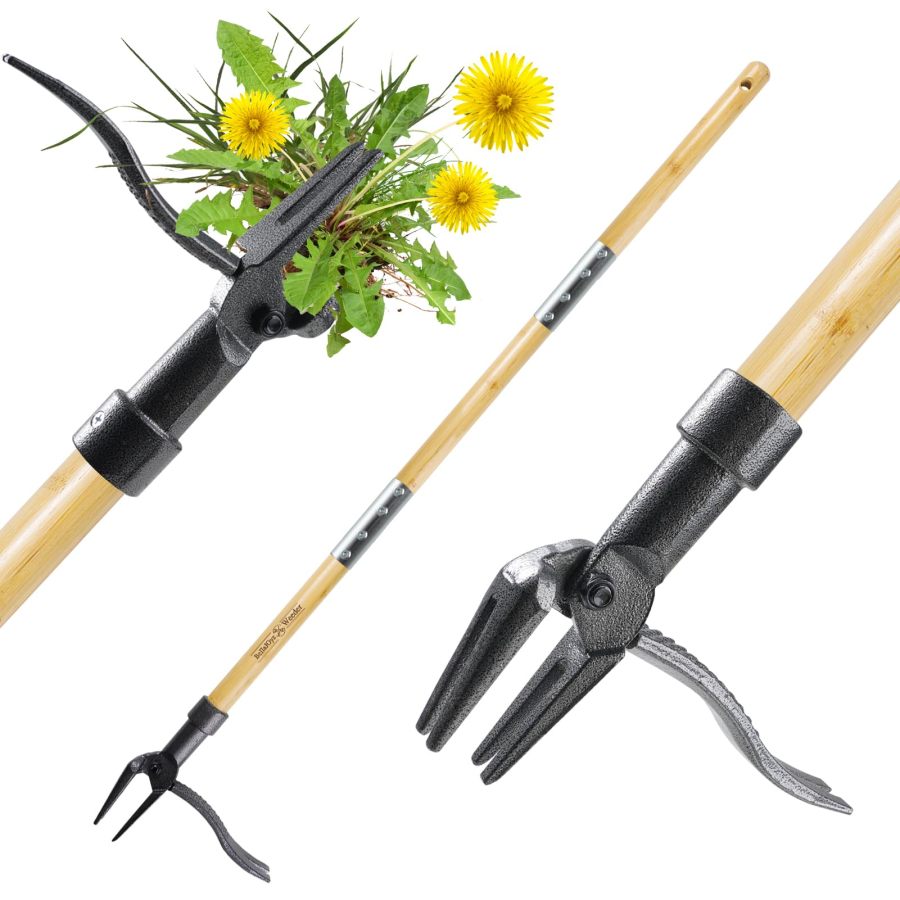
A stand-up weeder is a long-handled gardening tool designed to help users efficiently and thoroughly remove various weeds (e.g., dandelions, thistles) while standing upright. It uses a multi-claw head to penetrate the soil and leverage to pull weeds, eliminating the discomfort of bending or kneeling. It is an ideal choice for home garden and lawn maintenance. The following table illustrates the key characteristics of consumer behavior in this category.
| Dimension | Segment | Description |
|---|---|---|
| Need Driver Type | Planned Purchase / Emergency-driven Purchase | User purchases typically stem from planned needs for routine garden maintenance or immediate problem-solving needs triggered by stubborn weed growth. |
| Purchase Frequency | Low Frequency | As a durable gardening tool, its purchase frequency is low, typically once every few years, unless the product breaks or a functional upgrade is desired. |
| Decision Complexity | Medium | Consumers compare product materials, handle length, claw head design, the presence of an ejection mechanism, and user reviews, rather than making an impulse purchase. |
| Price Sensitivity | Medium | Users are somewhat price-sensitive but place greater value on the tool's actual weeding effectiveness, durability, and the long-term comfort it provides, and are willing to pay a reasonable premium for these benefits. |
| Emotional Dependency | Medium | The product not only provides a functional weeding solution but also delivers the emotional value of achievement from maintaining a tidy yard and the pleasure of easy gardening. |
II. User Personas & Usage Scenarios
2.1 Diligent Home Gardener
🎯 Cares about the neatness and aesthetics of their lawn and garden, prefers DIY maintenance, but seeks to reduce physical strain and the burden of repetitive tasks.
| Typical Usage Scenarios | Core Pain Points | Primary Purchase Drivers |
|---|---|---|
|
|
|
2.2 Health-Conscious Seniors or Individuals with Physical Limitations
🎯 Loves gardening but faces significant limitations in physical labor due to age, joint issues, or chronic pain. Seeks assistive tools to continue enjoying their hobby.
| Typical Usage Scenarios | Core Pain Points | Primary Purchase Drivers |
|---|---|---|
|
|
|
III. User Needs Hierarchy (KANO Model)
3.1 Basic Needs (Must-Haves)
- Effective Weed Removal: Core function: must effectively remove common weeds. This is the minimum user expectation and fundamental value of the tool.
- Long-Handle Stand-Up Operation: Must have a handle of sufficient length to allow weeding without bending or kneeling, meeting basic ergonomic needs.
- Basic Durability: The tool's structure should not easily break or deform during use, possessing a basic lifespan to avoid premature failure.
3.2 Performance Needs (Linear Satisfiers)
- Complete Root Removal: Users expect the tool to pull weeds out by the roots, effectively preventing rapid regrowth. This is a key differentiator from traditional methods and a basis for premium pricing.
- Effort-Saving Leverage Design: Utilizes clever leverage principles (e.g., foot pedals) to maximize weeding effect with minimal physical effort, reducing operational burden.
- Adaptability to Various Soils: Maintains good performance in soils of different hardness and moisture levels (e.g., wet, soft soil), not just under ideal conditions.
- Sturdy, Rust-Resistant Materials: Uses high-quality steel or alloy to ensure sharp, wear-resistant claws and a sturdy handle that resists bending or rust, extending product life and reducing maintenance.
3.3 Excitement Needs (Delighters)
- Automatic Ejection Mechanism: A one-button or simple action ejects pulled weeds from the tool, eliminating hand contact, greatly enhancing convenience and cleanliness. This is a key user experience highlight.
- Adjustable Handle Length: Handle with multiple length adjustments to suit users of different heights, providing a more personalized, comfortable experience and broader applicability.
- Lightweight Design: Minimizes tool weight while ensuring sturdiness, preventing fatigue during prolonged use, especially beneficial for seniors or users with less strength.
3.4 Unmet Needs & Opportunities
- Hard/Rocky Soil Compatibility: Most current products perform poorly in hard clay or rocky ground, struggling to penetrate effectively or being prone to damage, limiting their application scope.
- Precise Weeding Without Large Holes: Weeding leaves noticeable holes in the lawn, requiring users to refill soil, affecting lawn smoothness and aesthetics, and increasing subsequent maintenance work.
- Ejection Mechanism Stability & Smoothness: Some products have ejection features, but in practice, they may jam or operate poorly, still requiring manual cleanup, failing to fully deliver on the 'hands-free' promise.
- Multi-Section Handle Connection Sturdiness: Multi-section handles often become loose or even break with frequent use, impacting overall experience and safety, representing a significant product quality shortcoming.
IV. User Decision Drivers
4.1 Key Decision Factors
- Weeding Efficiency & Effectiveness: Users care most about whether the tool can truly quickly and effectively remove weeds by the roots, avoiding repetitive labor. This is directly tied to its core value.
- Effort-Saving & Comfort: Whether long-handle stand-up operation truly reduces pressure on the back and knees is the primary driver for purchasing this type of tool. Solving physical strain is the core appeal.
- Product Durability: Whether the tool is sturdy, durable, and resistant to breaking or deforming for long-term reliable use is the long-term value and return on investment users expect.
4.2 Secondary Decision Factors
- Ease of Use & Learning Curve: Whether it is easy to assemble, intuitive to operate, and has no complex learning curve, allowing users to master it quickly and use it efficiently.
- Material & Craftsmanship Quality: The material of the claw head and handle (e.g., stainless steel, bamboo, aluminum alloy) and its manufacturing quality impact product experience and lifespan, and are key indicators of value.
- After-Sales Service & Warranty: Whether the brand offers strong after-sales support, such as a lifetime warranty, significantly boosts purchase confidence and lowers perceived risk.
- Cleaning Convenience: Whether there is a convenient weed removal mechanism (e.g., automatic ejection) to reduce user contact with dirt and weeds, improving hygiene and efficiency.
V. Selling Points & Competitive Landscape
5.1 Selling Point Analysis
5.1.1 Standard Features (Points of Parity)
- No Bending/Kneeling: Most products emphasize the effortless, comfortable experience from the long-handle design, protecting back health.
- Root Pulling: Commonly highlights the ability to completely remove weed roots, effectively preventing regrowth for lasting cleanliness.
- 4-Claw Steel Head: Most products feature a four-claw design, emphasizing strong grip and effectiveness, representing the mainstream claw configuration.
- Easy to Use: Marketing focuses on being easy to learn and master quickly, lowering the user's learning barrier.
5.1.2 Key Differentiators
- Automatic Ejection Mechanism: Some products offer one-button or slide-action ejection to avoid manual cleanup, enhancing operational convenience.
- Adjustable Length Handle: Promotes handles with multiple length adjustments to suit users of different heights or specific scenarios, enhancing personalized experience.
- Material Upgrades: Highlights the use of manganese steel, stainless steel, cast steel, or aerospace-grade aluminum alloy to signal sturdiness and durability, elevating product quality perception.
- Classic Design/Century-Old Brand: Some brands (e.g., Grampa's Weeder) emphasize their long history and classic design to build trust and a sense of quality heritage.
5.1.3 Unique Selling Propositions (USPs)
- Real Bamboo/Wooden Handle: Emphasizes natural materials, offering a unique grip feel and aesthetic value, differentiating from mainstream metal/plastic handles.
- Family Business/USA Made: Specific brands attract users who value local manufacturing and ethos by emphasizing their regional and cultural identity, building an emotional connection.
- Patented Foot Pedal Design: Some products highlight the uniqueness of their foot pedal design and its superiority in providing leverage, enhancing operational efficiency.
5.2 Competitive Landscape
5.2.1 Market Maturity
The market is highly mature and fiercely competitive. Most products are homogenous in core functionality, with basic selling points becoming standard. Differentiation is primarily seen in material choices, detail design (e.g., smoothness of the ejection mechanism), and brand storytelling. Leading brands like Fiskars and Grampa's Weeder hold advantages through reputation and historical presence.
5.2.2 Innovation Trends
Innovation trends are primarily focused on enhancing user comfort and convenience, including: personalized handle length adjustments, smoother and more reliable weed ejection mechanisms, balancing lightweight and high-strength materials, and exploring performance breakthroughs in more complex soil environments (e.g., hard, rocky ground). Simultaneously, the eco-friendly, chemical-free concept continues to be reinforced, becoming a new marketing focus.
VI. Marketing Claims vs. Reality Check
The table below analyzes the gap between common marketing claims and actual user experiences in this category:
| Dimension | Marketing Claim | User Reality | Verdict |
|---|---|---|---|
| Product Durability | Heavy-duty durable design, high-strength steel, sturdy and unbreakable, offering a lifetime warranty. | Users frequently report that handles (especially multi-section types) or plastic components like foot pedals easily bend, loosen, or break, far from the advertised 'heavy-duty' and 'durable' claims. | Sellers commonly mislead consumers about the actual structural strength and material quality using the 'heavy-duty' concept, leading to unfulfilled core durability promises. This is a primary cause of negative reviews and trust crises. |
| Soil Adaptability | Suitable for all soil types, easily handles hard, compacted, or rocky soil. | Many product listings explicitly or implicitly state they are not suitable for hard clay or rocky surfaces. User feedback confirms poor performance in dry or compacted soil, often requiring pre-watering or loosening for effective use. | Sellers deliberately obscure product performance under ideal soil conditions, exaggerating its universality. This leads to severe user frustration when attempting to tackle stubborn or hard soil, failing to meet expectations of 'broad applicability'. |
| Weed Ejection Mechanism | One-click easy ejection, quick cleanup, no residue, no dirty hands. | Users report that automatic ejection mechanisms can jam, operate poorly, or still require manual cleanup after ejection, failing to fully deliver on the 'hands-free, smooth cleanup' convenience promise. | The automatic ejection feature is often superficial, failing to fully address the user's pain point of 'hands-free, smooth cleanup'. Instead, design flaws increase operational friction and reduce actual convenience. |
Key Takeaway: The market exhibits widespread parameter inflation and exaggeration of scenario-based experiences, particularly regarding product durability and soil adaptability.
VII. Supply-Demand Misalignment Analysis
The table below highlights mismatches between seller focus and buyer priorities:
| Dimension | Seller Behavior | User Focus | Verdict |
|---|---|---|---|
| Long-Term Durability & Quality | Commonly emphasize 'heavy-duty', 'sturdy', 'high-strength materials', even offering 'lifetime warranty' to promise durability and build consumer trust. | Users frequently complain about handles and plastic parts breaking easily, loose connections, perceiving a mismatch between 'heavy-duty/durable' claims and reality, leading to trust crises and returns. | Sellers position 'durability' as a primary selling point, but actual product quality fails to support this promise. This makes users feel deceived on a core value, damaging trust and representing the market's most significant supply-demand mismatch. |
| Hard/Complex Soil Adaptability | Most products explicitly or implicitly state they are not suitable for hard, rocky soil, or perform well only in moist, soft soil, failing to provide targeted solutions. | User reviews express a widespread need for handling weeds in hard soil, finding existing tools' applicability limited and desiring more versatile products. | Sellers, in both product design and marketing, fail to actively respond to the deep-seated user need for 'all-scenario weeding', abandoning market opportunities in complex soil conditions and limiting the product's potential user base. |
| Post-Weeding Ground Cleanliness | Almost no sellers mention the issue of small holes or large amounts of soil being left on the lawn after weeding, nor do they offer related solutions. | Users report that weeding leaves holes in the lawn, requiring extra soil filling or cleanup, affecting aesthetics and increasing subsequent maintenance work. | While focusing on improving weeding efficiency, sellers overlook users' latent concerns about overall lawn aesthetics and post-maintenance costs, failing to provide a more comprehensive 'tidy gardening' solution. |
Key Takeaway: Sellers are overly optimistic in product durability promises and collectively silent on key user pain points like hard soil adaptability, leading to a misalignment between supply focus and user demand.
VIII. Strategic Opportunities & Recommendations
8.1 Truly 'Heavy-Duty Durable' Flagship Stand-Up Weeder
8.1.1 Target Audience & Pain Points
⚡️ Pain Points Addressed: Weak handle durability, insufficient structural strength stability, quality mismatch with marketing, poor connection sturdiness in multi-section handles.
8.1.2 Action Plan
Adopt higher-strength materials (e.g., aerospace-grade aluminum or special alloy steel) for a monolithic shaft design to avoid multi-section loosening issues. Optimize structural design and material at key stress points (e.g., foot pedal-to-shaft connection) to ensure bending resistance. Provide authentic third-party compression/bend test reports.
| Tech Complexity | Medium |
| Cost Impact | High Impact |
| Trade-off Warning | May slightly increase product weight (approx. 200-500g), but users will accept this for reliability. Monolithic construction may increase mold costs. |
| Price Band | Only viable above $39.99 |
8.1.3 Marketing Strategy
Emphasize 'A one-time investment, a lifetime of worry-free gardening'; highlight the promise of 'Truly heavy-duty, never bends or breaks', building trust with rigorous test videos and genuine user cases of long-term, damage-free use. Promote an 'Unconditional Lifetime Warranty' policy with a simplified claims process as a core selling point.
8.2 Hard/Clay Soil Specialist Weeder
8.2.1 Target Audience & Pain Points
⚡️ Pain Points Addressed: Limited soil adaptability, poor performance in hard or rocky soil.
8.2.2 Action Plan
Redesign claw structure using narrower, sharper claws with special angles made from high-hardness, high-toughness alloy steel to enhance soil penetration and wear resistance. Optimize foot pedal contact area and material for more stable footing and greater leverage to meet high-intensity penetration needs.
| Tech Complexity | Medium |
| Cost Impact | Medium Impact |
| Trade-off Warning | Claws may need to be sharper and narrower, potentially reducing grip area in wet, soft soil, but acceptable to target users. May require more frequent cleaning. |
| Price Band | Only viable above $29.99 |
8.2.3 Marketing Strategy
Highlight 'Hard Soil Destroyer', 'Crushes rocks and weeds effortlessly', 'Specially designed for stubborn soil'; establish a professional image through comparison videos showcasing superior performance in hard soil environments and endorsements from expert gardeners.
8.3 'Tidy Gardening' Stand-Up Weeder
8.3.1 Target Audience & Pain Points
⚡️ Pain Points Addressed: Weeding pulls out large clumps of soil, leaving holes; ejection mechanism stability and smoothness are poor.
8.3.2 Action Plan
Redesign claw head shape and opening mechanism to concentrate on the weed root during grip, minimizing disturbance to surrounding soil, thereby pulling weeds without leaving large holes. Optimize ejection mechanism with more wear-resistant, low-friction materials and a more precise structure to ensure weeds are ejected quickly, cleanly, and smoothly, eliminating jams.
| Tech Complexity | Medium |
| Cost Impact | Medium Impact |
| Trade-off Warning | May require more precise operation or multiple attempts for extremely deep-rooted weeds, but overall outcome is superior. |
| Price Band | Only viable above $24.99 |
8.3.3 Marketing Strategy
Emphasize 'Weeds gone, lawn untouched', 'One-click ejection, goodbye dirty hands', 'The perfectionist's gardening tool'; convey a refined gardening philosophy through slow-motion videos showcasing the smooth ejection mechanism and the lawn's smoothness post-weeding.
8.4 Lightweight Smart Weeder
8.4.1 Target Audience & Pain Points
⚡️ Pain Points Addressed: Tools are generally heavy, causing fatigue during prolonged use, and are not senior-friendly.
8.4.2 Action Plan
Explore using carbon fiber or ultra-lightweight aerospace aluminum for the handle material to significantly reduce overall weight. Retain high-strength alloy steel for the claw head to ensure weeding effectiveness. Consider integrating a small LED light for use in low-light conditions.
| Tech Complexity | High |
| Cost Impact | High Impact |
| Trade-off Warning | Pursuing extreme lightweighting while ensuring structural strength and durability remains uncompromised typically requires more expensive, advanced materials (e.g., carbon fiber shaft), impacting cost. |
| Price Band | Only viable above $49.99 |
8.4.3 Marketing Strategy
Highlight 'Featherlight feel, master every inch of your garden', 'A boon for seniors, gardening is no longer a burden'; emphasize the comfort from lightweight design during extended use, supported by visuals highlighting material technology.