Amazon US Market Analysis: True Wireless Stereo Earbuds Category
📊 Executive Summary
📈 Market Trends
Competition in the budget market is intense, basic functions are highly homogenized. The TWS earbuds market is mature. Conventional selling points like sound quality, battery life, and Bluetooth version are saturated. Consumers already expect basic features like lightweight, portability, multi-color temperature adjustment. Brands need to find new growth points within increasingly transparent profit margins, especially in personalization and detailed experience.
⚡ Major Pain Points
Wearing comfort and real performance show significant gaps. Users 普遍抱怨 discomfort during long wear, poor fit for small ears, and earbuds easily falling out during sports. Battery life claims are 普遍 exaggerated, actual usage time at high brightness is far lower than advertised. Additionally, call quality in noisy environments and active noise cancellation 效果 fail to meet user expectations, becoming high-incidence areas for returns and negative reviews.
💡 Selection Opportunities
Deepen user experience, solidly address core pain points. Market opportunities lie in providing a 'Multi-Ear-Type Adaptive Comfort Fit Solution' to solve wearing pain points. Simultaneously, develop 'Affordable & Effective ANC TWS Earbuds' to meet commuting needs, and 'HD Call Quality TWS Earbuds for Complex Environments' to improve communication efficiency. These improvements can bring significant user value and premium potential to products, breaking the current homogeneous competition landscape.
I. Analysis Overview
1.1 Introduction & Report Scope
This report analyzes the 'In-Ear Headphones' category (True Wireless Stereo Earbuds) within the US Amazon market, focusing on target user personas, core needs, decision factors, market communication, and potential opportunities.
1.2 Category Snapshot
The True Wireless Stereo (TWS) earbuds category primarily offers highly portable, wireless personal audio solutions. Products generally feature an in-ear design, emphasizing sound quality performance, long battery life, comfortable wear, and portability. They are widely used in diverse scenarios such as daily commuting, fitness/sports, leisure/entertainment, and business calls. The sample also includes a small number of ear-hook designs, but the core user needs and competitive points remain consistent. The following table illustrates the key characteristics of consumer behavior in this category.
| Dimension | Segment | Description |
|---|---|---|
| Need Driver Type | Planned Purchase / Impulsive Purchase | User purchases are typically for replacing old devices, upgrading the experience, or meeting specific new needs (e.g., for sports). Some purchases are also impulsive, triggered by promotions or new features. |
| Purchase Frequency | Low Frequency / Medium Frequency | As durable goods, earbuds are typically purchased every few years unless lost, damaged, or due to technological iteration, though upgrade cycles may shorten. |
| Decision Complexity | Medium | Consumers compare core parameters like sound quality, battery life, comfort, and price, requiring some research and evaluation, but the process is not overly complex. |
| Price Sensitivity | Medium | Price is an important consideration, but users are willing to pay a reasonable premium for significant functional advantages or solutions to core pain points. |
| Emotional Dependency | Medium | The primary drivers are practical functionality and convenience, but brand, sound tuning, and design can also provide emotional value like 'self-indulgence' and 'personalization', as well as brand identity. |
II. User Personas & Usage Scenarios
2.1 Daily Commuter & Casual Listener
🎯 Seeks lightweight earbuds with good sound quality, adequate battery life, and comfortable wear for daily commuting, home relaxation, and basic calls.
| Typical Usage Scenarios | Core Pain Points | Primary Purchase Drivers |
|---|---|---|
|
|
|
2.2 Active Fitness Enthusiast
🎯 Requires earbuds with extremely secure fit, sweat/water resistance, excellent sound quality, and clear call quality, suitable for various sports scenarios.
| Typical Usage Scenarios | Core Pain Points | Primary Purchase Drivers |
|---|---|---|
|
|
|
2.3 Budget-Conscious Student / Secondary User
🎯 Seeks stable, reliable basic functionality and high cost-performance earbuds within a limited budget, with no hard requirements for advanced features.
| Typical Usage Scenarios | Core Pain Points | Primary Purchase Drivers |
|---|---|---|
|
|
|
III. User Needs Hierarchy (KANO Model)
3.1 Basic Needs (Must-Haves)
- Stable Bluetooth Connection: Earbuds should pair quickly with devices and maintain a stable connection, not easily disconnecting or stuttering.
- Basic Audio Playback: Provides clear sound output without obvious distortion or delay, meeting daily listening needs.
- Portable Charging Case: The charging case is compact and lightweight, provides multiple charges, and is convenient for daily carry and storage.
- Universal Charging Port: Uses a universal charging port like Type-C, allowing sharing of charging cables with other devices, reducing carry burden.
3.2 Performance Needs (Linear Satisfiers)
- High-Quality Sound Experience: Features powerful bass, clear mid/high frequencies, delivering immersive or balanced sound, enhancing music enjoyment.
- Long Battery Life: Sufficient single-use duration and total battery life with the charging case, reducing charging frequency, providing worry-free use.
- Comfortable and Secure Fit: Fits the ear canal comfortably for long periods, doesn't easily fall out during daily activities, enhancing the experience.
- Clear Call Quality: Microphone picks up sound clearly, effectively suppresses most ambient noise, ensuring smooth, unimpeded calls.
- IPX Water/Sweat Resistance: Possesses a certain water resistance rating, resistant to daily sweat, rain, and splashes, increasing usage scenarios, improving durability.
3.3 Excitement Needs (Delighters)
- APP Personalized Sound Tuning: Offers multiple EQ presets or custom sound effects via a companion app, catering to diverse listening preferences, enabling personalized experience.
- LED Digital Power Display: Charging case features a digital display showing remaining battery for earbuds and case, eliminating battery anxiety, improving convenience.
- Ultra-Low Latency Mode: Provides a low-latency mode for gaming or video, achieving high audio-visual synchronization, enhancing entertainment, especially for gamers.
- Find My Earbuds Feature: Helps locate lost earbuds via app or sound alerts, reducing loss anxiety, increasing peace of mind.
3.4 Unmet Needs & Opportunities
-
Effective Active Noise Cancellation (ANC): Most budget TWS earbuds currently only offer passive physical noise isolation. Users have a stronger need to block daily commuting noise and enhance immersion.
User Reviews (VOC) 希望能有更强的降噪效果,地铁上还是听不清 // 降噪效果一般,还不如我之前旧耳机
-
Universal Wear Comfort: Despite providing multiple ear tip sizes, many users still complain about earbuds being too large or the shape not fitting, especially users with small ears, causing pain during long wear or easy falling out. Lacks truly universal comfort design.
User Reviews (VOC) 耳机太大了,我的小耳朵戴着很不舒服,会掉 // 戴久了耳朵很痛,不适合我这种耳道小的
-
Call Clarity in Complex Environments: Even with AI noise-canceling mics, in complex environments like windy or noisy streets, the microphone's pickup and noise cancellation capabilities are still insufficient, making call quality hard to guarantee.
User Reviews (VOC) 风大的时候打电话对方根本听不清我说什么 // 麦克风效果一般,嘈杂的地方通话困难
-
Seamless Multi-Device Switching Experience: Users want quicker, smarter switching of earbuds between different Bluetooth devices (phone, tablet, computer), reducing the hassle of manual pairing and connection.
User Reviews (VOC) 每次换电脑都要重新连接,太麻烦了 // 不能自动切换设备,有点不方便
IV. User Decision Drivers
4.1 Key Decision Factors
- Sound Quality Performance: Including bass depth, treble clarity, and overall volume, is the core consideration when purchasing TWS earbuds, directly impacting the listening experience and satisfaction.
- Wearing Comfort and Stability: Whether the earbuds can be worn comfortably and unnoticeably for long periods, and remain secure during daily activities or sports, is key to user satisfaction and usage scenarios.
- Battery Life Capability: The single-charge usage time and total battery life provided by the charging case directly affect user convenience and peace of mind, avoiding battery anxiety.
- Product Value for Money: The comprehensive trade-off between product features, performance, brand, and price. Users expect the highest possible value experience at a reasonable price, especially in a competitive market.
4.2 Secondary Decision Factors
- Bluetooth Connection Stability: Bluetooth version, connection speed, and anti-interference capability ensure smooth audio playback, avoiding stuttering or disconnection, improving the basic experience.
- Call Quality and Noise Cancellation: Microphone pickup clarity and environmental noise cancellation effect in different environments, particularly important for users with call needs, affecting communication efficiency.
- Water/Sweat Resistance Rating: Determines if earbuds can be used during sports, outdoors, or in humid environments; a screening criterion for specific scenario users, related to product durability.
- Ease of Controls: Touch control responsiveness, function definition, and interaction experience with the phone app affect daily use convenience, reducing operational friction.
- Appearance Design and Color: The earbuds' appearance, color, and charging case design appeal to users' personalization and aesthetic needs, also part of brand identity.
V. Selling Points & Competitive Landscape
5.1 Selling Point Analysis
5.1.1 Standard Features (Points of Parity)
- Powerful Bass & High-Definition Sound: Most products emphasize deep bass and overall high-fidelity sound from large driver units, satisfying mainstream listening preferences.
- Long Battery Life & Fast Charging: Single-use battery life of 6-10 hours, total battery life with case up to 30-48 hours, and widespread support for USB-C fast charging, alleviating battery anxiety.
- Latest Bluetooth Version (5.3): Almost all products are upgraded to Bluetooth 5.3, emphasizing more stable connection, lower power consumption, and transmission latency.
- Lightweight & Ergonomic Design: Widely advertised as lightweight (single earbud 3-5 grams) with ergonomic design to enhance wearing comfort and reduce burden.
- IPX Water/Sweat Resistance: Emphasizes possession of IPX5 or higher water/sweat resistance to suit sports and daily splash-proof needs, extending product life.
5.1.2 Key Differentiators
- AI-Enhanced Calls / ENC Noise-Canceling Mic: Many brands highlight their microphones featuring AI algorithms or ENC noise cancellation technology, aiming to improve call clarity, especially in noisy environments.
- APP Personalization/Customization: Some products offer a companion phone app supporting EQ sound presets, custom controls, and other personalized features, meeting users' refined needs.
- LED Digital Power Display: Charging case equipped with an LED digital display, intuitively showing earbud and case battery levels, alleviating battery anxiety, improving visual convenience.
- Ultra-Low Latency Mode: A few products target gaming and video scenarios, promoting an ultra-low latency mode (as low as 0.02 seconds) to enhance the entertainment experience.
5.1.3 Unique Selling Propositions (USPs)
- Find My Earbuds Feature: Offered by a few brands like Soundcore; helps users find lost earbuds by emitting sound via the app, enhancing user peace of mind.
- VoiceAware Technology: Unique to some JBL products; allows users to adjust the volume of their own voice heard during calls, improving the call experience and avoiding the feeling of talking to oneself.
- Ear-Hook Secure Fit: Adopted by brands like NDO; focuses on extreme stability in sports scenarios, different from traditional in-ear styles, meeting professional sports needs.
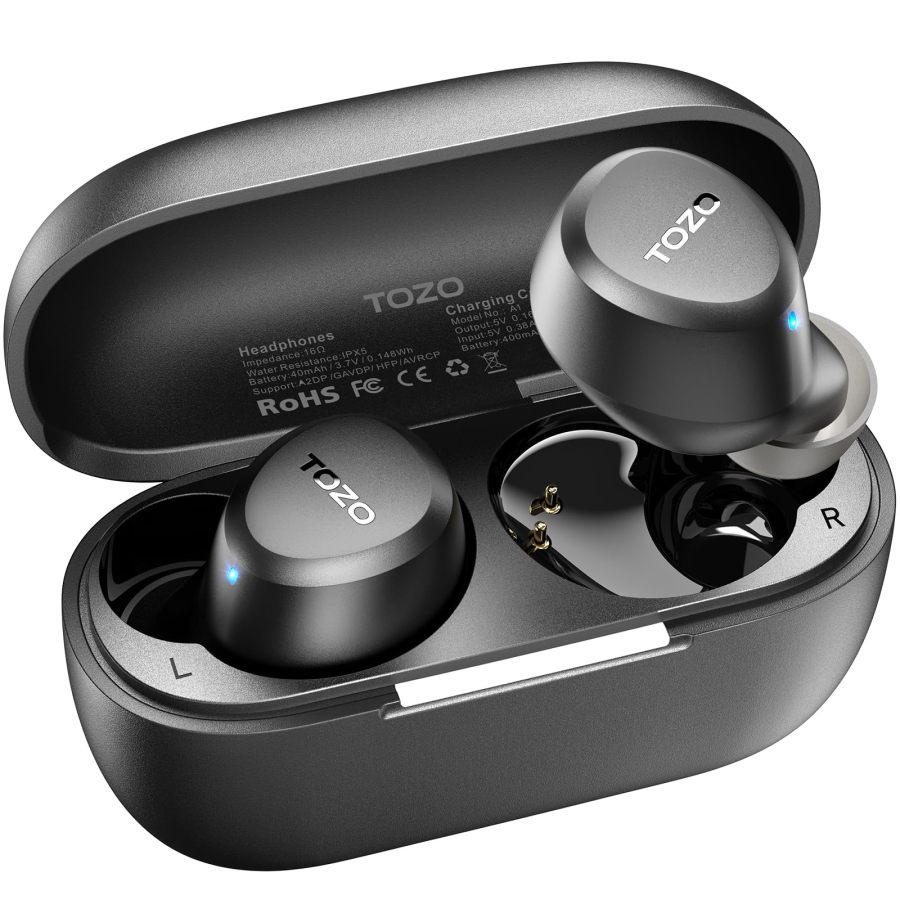
- Optimized for Small Ears: TOZO brand explicitly advertises its products (A1 series) as friendly for small-ear users, providing better fit, addressing a细分痛点.
5.2 Competitive Landscape
5.2.1 Market Maturity
The True Wireless Stereo earbuds market has entered a mature stage. Product homogenization is evident, especially in basic functions and core selling points. Brands mostly compete around conventional dimensions like sound quality, battery life, and Bluetooth version. Although there are a few innovation points, overall price competition is fierce, and profit margins are becoming transparent.
5.2.2 Innovation Trends
Category innovation trends are mainly reflected in several aspects: 1. Deepening Personalized Experience: Providing finer EQ adjustments and scene modes via apps to meet users' private customization needs for sound. 2. Call Noise Cancellation Upgrade: Evolving from simple ENC noise cancellation to AI-assisted multi-microphone HD calls, improving call quality in complex environments. 3. Segmentation in Wear Comfort: Providing more targeted structural designs for different ear shapes (e.g., small ears) or specific scenarios (e.g., sports). 4. Intuitive Interaction & Convenience: Such as LED power display, smarter touch controls, etc., enhancing user convenience in daily use.
VI. Marketing Claims vs. Reality Check
The table below analyzes the gap between common marketing claims and actual user experiences in this category:
| Dimension | Marketing Claim | User Reality | Verdict |
|---|---|---|---|
| Battery Life | Long-lasting battery life, all-day use, high brightness up to 110-200 minutes, total battery life up to 40-48 hours. | Users普遍反馈 that actual usage time at high brightness is far lower than claimed (e.g., Soundcore P20i only 20-45 minutes), some Listings have contradictory battery data, and the ratio of fast charging to total battery life doesn't match well. | Typical misleading use of lab ideal data or minimum brightness data, failing to deliver on the core promise of long usage scenarios, severely impacting user trust. |
| Sound Quality Performance | Powerful bass, Hi-Fi stereo sound, providing immersive high-quality audio. | Some products (e.g., JBL Vibe Beam) receive user feedback of average out-of-the-box sound, harsh highs, requiring reliance on in-app EQ adjustment for improvement; other products (e.g., NDO) are described as 'muddy' or 'muffled', and some budget products emphasize bass quantity at the expense of mid/high frequency clarity. | 'Powerful bass' is often achieved by emphasizing bass quantity, but if tuning is improper or driver unit quality is limited, it leads to unbalanced overall sound and lack of mid/high detail, creating a deviation from the promise of 'high-quality audio'. |
| Wearing Comfort and Stability | Ergonomic design, ultra-lightweight, comfortable fit, secure for sports without falling out, especially suitable for small ears. | Despite widespread claims of comfort, many users report earbuds being too large or ear tips uncomfortable; small-ear users still experience pain during long wear or easy falling out, and there's a risk of loosening during sports. | Generic ergonomic design struggles to fit all ear types universally. Different materials and structures greatly impact comfort. Sellers'宣传 of 'universal comfort' appears weak when faced with individual differences, damaging the core usage experience. |
Key Takeaway: The market 普遍存在 parameter inflation and over-exaggeration of scenario-based experiences, especially regarding battery life, sound quality details, and call noise cancellation, creating a gap with the actual user experience.
VII. Supply-Demand Misalignment Analysis
The table below highlights mismatches between seller focus and buyer priorities:
| Dimension | Seller Behavior | User Focus | Verdict |
|---|---|---|---|
| Real Battery Life & Data Transparency | Battery life data in Listings is混乱, Bullet Points and Specifications contradict each other. Sellers普遍回避 the real shortcoming under high brightness mode, lacking a unified, credible battery life standard. | Users strongly desire longer battery life; quick drain at high brightness is a高频槽点. Contradictory data causes confusion and concern. | Sellers普遍 fail to provide clear, consistent battery life expectations, leading to a lack of trust on a key user concern, becoming a core reason for negative reviews and returns. This is not a technical limitation but a lack of market integrity. |
| Effective Active Noise Cancellation (ANC) Feature | Most mid-to-low-priced products only advertise 'noise isolation' or 'ENC call noise cancellation', but the ANC feature is either missing or downplayed in product descriptions, failing to address the core user need in noisy environments. | Users strongly渴望 effective noise isolation during commuting, work, etc. The passive noise isolation effect of existing products falls far short of expectations, failing to provide immersion. | There is a普遍 supply gap for ANC functionality, especially in the budget segment. Sellers have not treated this as a core breakthrough, leaving a key user pain point unresolved. |
| Practicality of Built-in Features & Details | Some products堆砌 features like 'built-in makeup mirror', but the design details are detached from actual user needs (e.g., blurry, too small mirror), while ignoring more critical detail issues like charging port durability, touch control malfunctions, unclear L/R identification. | Users反馈 the mirror is gimmicky, while detail problems affecting daily use like charging port damage, touch failure, accidental operation are普遍存在. | Sellers堆砌 'gimmick' features but neglect 'friction points' in daily use, leading to无效内卷, investing resources in low-value areas while core experience details are heavily criticized. |
Key Takeaway: Sellers exhibit data ambiguity and over-promising on core pain points like battery life and sound quality, while supply is lacking or insufficient for user concerns like universal wear comfort, call quality in complex environments, and active noise cancellation, leading to a mismatch between supply and demand.
VIII. Strategic Opportunities & Recommendations
8.1 Multi-Ear-Type Adaptive Comfort Fit Solution
8.1.1 Target Audience & Pain Points
⚡️ Pain Points Addressed: Discomfort from long wear, poor fit adaptability, earbuds falling out during sports.
8.1.2 Action Plan
Develop ear tip kits optimized based on extensive ear shape data (S/M/L/XL, even semi-in-ear styles), using softer, skin-friendly medical-grade silicone. Consider adding detachable or adjustable micro ear wings/hooks to enhance sports stability.
| Tech Complexity | Medium |
| Cost Impact | Medium Impact |
| Trade-off Warning | Providing more sizes or softer silicone ear tips may slightly increase material costs, but no significant side effects. |
| Price Band | Only viable above $19.99 |
8.1.3 Marketing Strategy
Emphasize 'Your Ears, Your Exclusive Comfort'; provide detailed wearing guides and ear shape matching charts, highlight 'Comfortable for Long Wear, Secure and Won't Fall Out'; collect genuine positive reviews from small-ear users and target宣传 accordingly.
8.2 Affordable & Effective ANC TWS Earbuds
8.2.1 Target Audience & Pain Points
⚡️ Pain Points Addressed: Lack of active noise cancellation, insufficient immersive experience in noisy environments.
8.2.2 Action Plan
Integrate mature entry-level ANC chip solutions into existing products, focusing on optimizing cancellation of low-frequency noise (e.g., bus, airplane engine sounds). Provide 'Transparency Mode' and 'Noise Cancellation Mode' switching in the App.
| Tech Complexity | Medium |
| Cost Impact | High Impact |
| Trade-off Warning | Adding ANC modules increases internal space usage, potentially slightly affecting battery capacity or overall size, but consumers have high tolerance for this. |
| Price Band | Only viable above $29.99 |
8.2.3 Marketing Strategy
Highlight 'Commuting Essential, Enjoy Private Space Quietly'; demonstrate noise cancellation effectiveness in different noise scenarios through comparative experiments (e.g., dB value changes), avoid over-promising, emphasize 'Immersive Experience with Great Value'.
8.3 HD Call Quality TWS Earbuds for Complex Environments
8.3.1 Target Audience & Pain Points
⚡️ Pain Points Addressed: Poor AI smart call clarity, limitations of call microphone, high background noise during calls.
8.3.2 Action Plan
Upgrade to a four-microphone array design and incorporate more advanced AI call noise cancellation algorithms, focusing on optimizing wind noise reduction and voice separation. Support optimization for specific call scenarios (e.g., Outdoor Mode) at the firmware level.
| Tech Complexity | Medium |
| Cost Impact | Medium Impact |
| Trade-off Warning | Increasing the number of microphones or upgrading the DSP chip may slightly increase power consumption, marginally affecting battery life, but the improvement in call experience is significant. |
| Price Band | Only viable above $24.99 |
8.3.3 Marketing Strategy
Emphasize 'Crystal Clear Calls, Like Face-to-Face'; provide real call recording comparisons in windy/noisy environments, demonstrate 'Lowers Noise, Not Voice, Clearer Speech'; highlight their professional-grade call performance in business meetings and sports scenarios.