Amazon US Market Analysis: 2-in-1 Olive Oil Spray and Pour Bottles Category
📊 Executive Summary
📈 Market Trends
Healthy oil control and convenient cooking are mainstream; 2-in-1 design is standard. The 2-in-1 olive oil spray and pour bottle category on Amazon US is mature. Consumer demand for precise oil control, healthy eating, and efficient kitchen tools continues to grow. The market widely offers combined spray/pour functionality, trending towards glass materials and easy-cleaning designs.
⚡ Major Pain Points
Unstable spray, leakage, and poor durability are core weaknesses. Despite widespread functional claims by sellers, users commonly report unstable spray performance (often streams instead of mist), leakage from the bottle or nozzle, and easily damaged plastic parts. These core functional flaws severely impact user experience and product reputation.
💡 Selection Opportunities
Address core pain points deeply; win with reliability and health value. Market opportunities lie in providing 'Ultra-Stable Atomization & Long-Lasting Clog-Resistant Spray Heads' and 'Structurally Reinforced, Durable Oil Bottles' to thoroughly resolve user trust crises regarding spray and durability. Simultaneously, strengthen the healthy oil control value proposition via 'Precise Oil Measurement Marks & Transparent Compatibility Guides', and optimize 'Easy Full-Disassembly Cleaning' design to build differentiated competitive advantages in a homogeneous market.
I. Analysis Overview
1.1 Introduction & Report Scope
This report analyzes the 'Oil Sprayers' category (specifically 2-in-1 olive oil spray and pour bottles) in the US Amazon market, focusing on target user personas, core needs, decision factors, market communication, and potential opportunities.
1.2 Category Snapshot
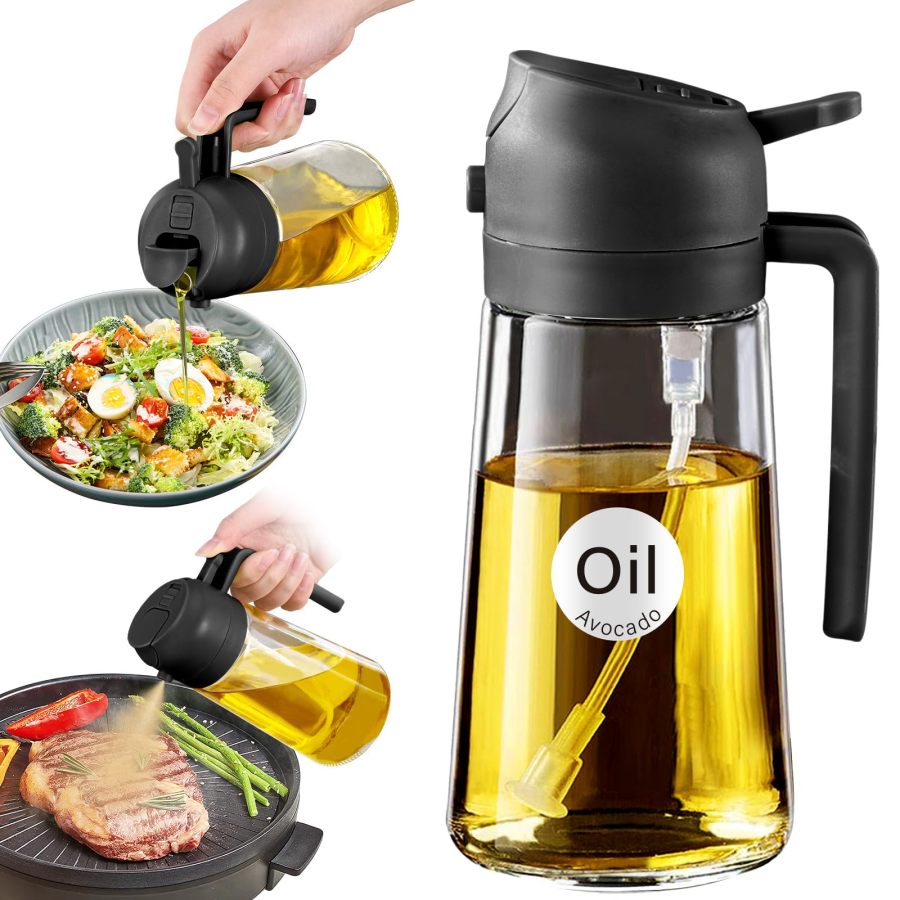
A 2-in-1 olive oil spray and pour bottle is a kitchen gadget that combines spraying and pouring functions, designed to meet the need for precise oil control in scenarios like cooking, baking, grilling, and salad dressing. These products typically feature a glass bottle of around 470ml capacity, paired with a food-grade PP plastic spray head, aiming to provide a healthy, convenient, and mess-free cooking experience. The following table illustrates the key characteristics of consumer behavior in this category.
| Dimension | Segment | Description |
|---|---|---|
| Need Driver Type | Planned Purchase / Emergency-driven Purchase | Purchases are typically driven by anticipated healthy eating or cooking needs, such as for air fryers or salad dressing. They also include emergency scenarios requiring immediate, flexible oil replenishment during cooking. |
| Purchase Frequency | Low Frequency / Replacement | As a durable kitchen tool, it's usually a one-time purchase, with repurchases only occurring if the product is damaged, malfunctions, or requires an upgrade. |
| Decision Complexity | Medium | Consumers actively compare key features like spray performance, leak-proof capability, material safety, and durability, and refer to user reviews, rather than making impulsive purchases. |
| Price Sensitivity | Medium-High | Price is an important consideration, but users are willing to pay a reasonable premium if the product excels in core experiences like spray stability, leak-proof performance, and durability. |
| Emotional Dependency | Medium | The product primarily solves functional problems, but the peace of mind, sense of control, and improved quality of life derived from 'healthy eating' and 'a tidy, efficient kitchen' also constitute significant emotional value. |
II. User Personas & Usage Scenarios
2.1 Health-Conscious Eater
🎯 Focuses on dietary health, pays attention to oil control, and pursues precise cooking; typically a home cook or fitness enthusiast.
| Typical Usage Scenarios | Core Pain Points | Primary Purchase Drivers |
|---|---|---|
|
|
|
2.2 Kitchen Efficiency Seeker
🎯 Seeks efficient, tidy kitchen tools to streamline cooking processes and reduce cleaning efforts; typically a busy individual.
| Typical Usage Scenarios | Core Pain Points | Primary Purchase Drivers |
|---|---|---|
|
|
|
III. User Needs Hierarchy (KANO Model)
3.1 Basic Needs (Must-Haves)
- Reliable Spray Function: The spray bottle must consistently produce a fine oil mist, not a stream, without clogging, ensuring basic even oiling functionality.
- Food-Grade Safe Materials: The product must be BPA-free and use safe materials like lead-free, heat-resistant glass to ensure food safety.
- Easy to Clean & Refill: Features a wide mouth for easy, spill-free refilling; has detachable parts for thorough cleaning to prevent oil residue buildup.
- Drip-Free Design: The spout and cap should not leak oil when pouring or stationary, keeping the bottle and countertop clean.
3.2 Performance Needs (Linear Satisfiers)
- Even & Fine Mist: The oil mist evenly coats food surfaces for ideal cooking results, like fine seasoning for roasted meats or salads.
- Precise Oil Control: Each spray delivers a controlled, consistent amount of oil (e.g., 0.15-0.2g), aiding in healthy eating management and calorie counting.
- Light-Blocking Bottle: Dark glass bottle effectively protects light-sensitive oils like olive oil from UV damage, extending freshness and preserving flavor.
- Good Durability: The glass bottle is sturdy and shatter-resistant; plastic parts like the spray head and handle are durable and don't break or loosen easily, ensuring long-term use.
- Smooth Mode Switching: Switching between spray and pour modes should be easy, smooth, and seamless, enhancing the user experience.
3.3 Excitement Needs (Delighters)
- Included Oil Labels: Provides waterproof labels with various oil names, helping users categorize different oils, improving kitchen organization and personalization.
- Aesthetic & Stylish Design: The product features a simple, fashionable, modern design that can serve as a kitchen decor item, enhancing overall style, not just as a tool.
- One-Handed Operation Convenience: Optimized design allows easy one-handed spraying or pouring, especially useful during busy cooking, further improving efficiency.
- Innovative Nozzle Technology: Offers patented or unique nozzle designs, such as adjustable spray patterns, specific mist shapes, or self-cleaning features.
3.4 Unmet Needs & Opportunities
-
Nozzle Clogging or Failure: Users commonly report unstable spray function, easy clogging, poor oil flow, or complete failure, rendering the product unusable.
User Reviews (VOC) The plunger to make the oil spray works horribly. It doesn't hold pressure so this is only good for pouring oil on food. // Doesn't spray oil // it doesn't work at all
-
Actual Leakage Issues: Despite seller claims of being leak-proof, many users complain about oil dripping from the cap, nozzle, or handle connection, dirtying the bottle and countertop.
User Reviews (VOC) Customers have mixed experiences with the olive oil dispenser's leakage: while some report it doesn't leak while spraying, others mention issues with the spray nozzle dripping. // it leaks everywhere. // it leaks around the top.
-
Poor Plastic Component Durability: Plastic components like handles, spray heads, or mode switches are prone to breaking, loosening, or failing within a short period, affecting product lifespan.
User Reviews (VOC) Customers have mixed experiences with the olive oil sprayer's durability, with some finding it solid while others report it breaking within 15 minutes of use. // The button on the top to allow you to pour the oil quit working. It got stuck and we rarely use it. // the handle feels a little flimsy.
-
Inconsistent Spray Performance: The product emits streams, single jets, or large oil drops instead of a uniform fine mist, failing to meet user expectations and affecting even oil distribution.
User Reviews (VOC) The spray comes out in 1 stream. I was hoping for a broader spray. // the spray pattern isn't very wide it comes out more like a narrow stream than a mist // it streams instead of misting properly.
IV. User Decision Drivers
4.1 Key Decision Factors
- Spray Function Reliability: Users care most about whether the spray bottle can consistently produce a fine mist, not streams or clogs, as this is core to ensuring cooking results and convenience.
- Leak-Proof Performance: Whether the product truly prevents drips, avoiding messes on countertops and hands, directly impacts kitchen cleanliness and user satisfaction, making it a decisive purchase factor.
- Material Safety & Durability: Consumers have high expectations for the glass bottle's impact resistance, durability, and the long-term lifespan of food-grade plastic parts, to ensure safety and value.
- Ease of Use: Includes easy refilling, effortless pumping, smooth mode switching, and easy cleaning – these are fundamental experiences users value most in daily use.
4.2 Secondary Decision Factors
- Oil Control Precision: Whether the product helps users precisely control oil amount, supporting healthy eating and calorie management, enhancing cooking precision.
- Oil Preservation Design: Whether features like dark glass effectively protect oil freshness and extend shelf life is a key consideration for added value.
- Aesthetic Design Appeal: Whether the product is aesthetically pleasing and fits kitchen decor style is an important bonus for consumers seeking quality of life.
- Value for Money: Given core functionality and good experience are met, whether the price is reasonable and effectively replaces disposable spray cans is a final consideration.
V. Selling Points & Competitive Landscape
5.1 Selling Point Analysis
5.1.1 Standard Features (Points of Parity)
- 2-in-1 Spray & Pour Function: Almost all products offer both spraying and pouring, emphasizing versatility to meet diverse cooking needs.
- Food-Grade Safe Materials: Widely claim the use of glass bottles and BPA-Free plastics to ensure food contact safety and alleviate user concerns.
- Easy to Clean & Refill: Products typically feature wide mouths and detachable parts for easy cleaning and refilling, reducing hassle.
- Multi-Purpose Cooking Scenarios: Extensively promoted for use in air frying, grilling, salads, baking, frying, etc., highlighting versatility.
5.1.2 Key Differentiators
- Precise Oil Control: Some products quantify spray amount (e.g., 0.15-0.2g per spray), emphasizing benefits for healthy eating and calorie management.
- Dark Light-Blocking Glass: Use of dark amber or green glass, promoted to protect olive oil from light, extending freshness – a key differentiator.
- Included Oil Labels: Some products provide pre-printed or blank labels for differentiating oils, enhancing personalized experience.
- Leak-Proof Design: Emphasize drip-proof, spill-proof features aimed at maintaining kitchen cleanliness, but actual performance varies.
5.1.3 Unique Selling Propositions (USPs)
- Patented Nozzle Design: Very few brands mention having patented or advanced atomizing nozzles for finer, more even spray, with promises of clog resistance.
- Lifetime Warranty Promise: A few leading brands offer lifetime customer service, significantly boosting consumer confidence and brand loyalty.
- Built-in Filter Screen: Very few products feature a built-in silicone filter screen to strain oil sediment, preventing nozzle clogs.
- Borosilicate Heat-Resistant Glass: Explicitly highlight the use of borosilicate glass, emphasizing high-temperature resistance for enhanced safety and applicability.
5.2 Competitive Landscape
5.2.1 Market Maturity
The market is in the mature phase. Most products are highly homogeneous in core functions (2-in-1, glass bottle, easy cleaning) and capacity. Competition is fierce, primarily differentiated through price wars, minor functional optimizations (like light-blocking design, included labels), and the extent to which core user pain points are addressed. Although there are some innovation points, they generally haven't formed disruptive advantages. Market competition focuses mainly on execution and detail optimization.
5.2.2 Innovation Trends
Category innovation trends primarily focus on enhancing core function stability and strengthening perceived health value. Specifically: First, strengthening oil preservation features, promoting superior light-blocking and oxidation resistance through naturally dark glass bottles (e.g., amber, dark green). Second, improving spray technology, such as claiming patented nozzle designs for more precise, even atomization, alongside improved anti-clog mechanisms. Additionally, offering diverse oil labels and more aesthetically designed appearances have become new directions for enhancing user experience and building brand premium. Some brands are starting to emphasize product durability claims and promises (e.g., lifetime warranty) to address common complaints about fragility.
VI. Marketing Claims vs. Reality Check
The table below analyzes the gap between common marketing claims and actual user experiences in this category:
| Dimension | Marketing Claim | User Reality | Verdict |
|---|---|---|---|
| Spray Performance | Claims like 'fan-shaped fine mist', 'even spray', 'precise oil control', delivering 0.15-0.2g per spray for perfect atomization. | Many users report streams, single jets, or large drops instead of fine mist, uneven spray that's hard to control, or complete failure to spray. | Typical marketing exaggeration, failing to fully consider oil viscosity, the physical limitations of pump mechanisms, and consistency challenges in real-world use, leading to a severe mismatch between the core selling point and user expectations. |
| Leak-Proof Design | Claims like '100% leak-proof', 'drip-free design', 'excellent sealing', ensuring clean bottles and countertops. | Numerous users complain about oil leakage or seepage from cap threads, the nozzle, or handle connections, causing greasy bottles and dirty surfaces. | Sellers fail to deliver on the 'leak-proof' promise in design and material selection. This is likely due to seal ring material, structural precision, or interface treatment compromises, trading low cost for unstable leak-proof performance. |
| Product Durability | Claims like 'sturdy and durable', 'thick glass, hard to break', some offering 'lifetime warranty'. | Users report glass bottles being fragile, and plastic parts like handles or spray heads breaking, sticking, or failing within a short time (weeks or months), falling short of expectations for daily kitchenware. | Pursuing lightweight and cost control sacrifices the structural strength of key plastic parts and the impact resistance of glass bottles, leading to easy damage in daily use – a classic case of design compromise and marketing polish. |
Key Takeaway: The market is rife with over-promises and specification inflation, especially regarding core function stability and durability. There's a significant gap between marketing copy and actual user experience.
VII. Supply-Demand Misalignment Analysis
The table below highlights mismatches between seller focus and buyer priorities:
| Dimension | Seller Behavior | User Focus | Verdict |
|---|---|---|---|
| Spray Function Stability | Sellers commonly emphasize functions like 'precise mist' and 'even spray', but listings rarely detail how these functions are maintained over long-term use or provide clear oil compatibility guidance. | The core user complaint is unstable spray function – prone to clogging, producing streams instead of mist, or failing quickly – perceived as failing to deliver the core value. | Sellers fail to provide sufficiently reliable solutions and convincing evidence for the core function that best reflects product technical prowess, leading to extremely low consumer trust in product performance. |
| Product Durability & Quality Promise | Some sellers claim 'sturdy and durable' or 'lifetime warranty', but generally lack in-depth details and design assurances regarding bottle material (glass thickness), structural strength, and impact resistance of plastic parts (handles, pump heads). | Users frequently report fragile glass bottles, easily broken handles, or malfunctioning buttons, expressing disappointment with short-term product failure and perceived low quality. | Seller communication about durability remains verbal promises, failing to provide sufficient information and guarantees from material selection, structural design, and quality control, leading to a severe disconnect between user experience and promises. |
| Light-Blocking Function & Glass Material Choice | Most sellers promote the 'light-blocking freshness' of dark glass bottles but often overlook differences in preservation effectiveness and durability between naturally dark glass and coated glass, and fail to emphasize the fragility risk associated with glass weight. | Users acknowledge the freshness benefit of dark glass, but some also complain about coating peeling off or worry about glass fragility. Users care more about the glass's inherent sturdiness, not just the color. | While promoting light-blocking freshness, sellers fail to educate users about subtle differences in glass types and fragility, causing users to overlook higher demands for structural strength and long-term durability when seeking freshness. |
Key Takeaway: Sellers generally over-communicate basic selling points like '2-in-1 function' and 'easy cleaning', but fail to effectively address user's most critical pain points like 'spray stability' and 'product durability', resulting in a severe supply-demand mismatch.
VIII. Strategic Opportunities & Recommendations
8.1 Ultra-Stable Atomization & Long-Lasting Clog-Resistant Spray Head
8.1.1 Target Audience & Pain Points
⚡️ Pain Points Addressed: Nozzle clogging/failure, inconsistent spray performance (streams vs. mist).
8.1.2 Action Plan
Redesign the spray pump head using higher-precision micro-nozzles and anti-clog reflux structures, ensuring consistent output of a fan-shaped fine mist with any low-viscosity cooking oil (e.g., olive oil, avocado oil). Consider adding physical or visual indicators for cleaning reminders or high oil viscosity.
| Tech Complexity | Medium |
| Cost Impact | Medium Impact |
| Trade-off Warning | Achieving more stable spray might require more precise nozzles and pump structures, slightly increasing head size or button travel, but not significantly affecting overall portability. |
| Price Band | Only viable above $18.99 |
8.1.3 Marketing Strategy
Emphasize 'Technology-Enabled, Perfect Fine Mist Every Time'; showcase real mist effect videos with different oils and scenarios (air fryer, skillet); provide data backing like '10,000 sprays without clogging test' to build user trust in core performance.
8.2 Structurally Reinforced, Durable 2-in-1 Oil Bottle
8.2.1 Target Audience & Pain Points
⚡️ Pain Points Addressed: Poor plastic part durability (easily broken handles, malfunctioning buttons), fragile glass bottle.
8.2.2 Action Plan
Use thicker borosilicate glass bottles, optionally with silicone sleeves. Optimize structural design of plastic handles and spray heads, selecting higher-strength, fatigue-resistant food-grade PC or ABS materials, reinforcing key stress points. Button design could use embedded styles or metal reinforcement for durability.
| Tech Complexity | Medium |
| Cost Impact | Medium Impact |
| Trade-off Warning | Reinforcing glass thickness or using shatter-resistant coating slightly increases weight; strengthening plastic parts might make them slightly bulkier, requiring a balance between feel and durability. |
| Price Band | Only viable above $16.99 |
8.2.3 Marketing Strategy
Highlight 'Unbreakable, Lasting Companion'; demonstrate exceptional durability through slow-motion drop tests, stress tests; promise '3-year warranty on core components' to boost purchase confidence, turning durability into a premium point.
8.3 Precise Oil Measurement Marks & Transparent Oil Compatibility Guide
8.3.1 Target Audience & Pain Points
⚡️ Pain Points Addressed: Imprecise oil control, user uncertainty about spray performance, lack of oil compatibility guidance.
8.3.2 Action Plan
Add clear, wear-resistant measurement marks on the bottle side, possibly with a simple reference chart (e.g., sprays per teaspoon). Include detailed instructions clarifying optimal spray performance suggestions for different viscosity oils, plus cleaning and maintenance guidelines.
| Tech Complexity | Low |
| Cost Impact | Low Impact |
| Trade-off Warning | No significant physical side effects, primarily involves design optimization and information provision. |
| Price Band | Only viable above $14.99 |
8.3.3 Marketing Strategy
Emphasize 'Quantify Health, Oil Control at Your Fingertips'; demonstrate oil control effects with intuitive charts, educate users on choosing the best spray method per oil; partner with nutritionists for promotion, enhancing product professionalism and trust.
8.4 Easy Full-Disassembly Cleaning & Multi-Functional Drip-Dry Design
8.4.1 Target Audience & Pain Points
⚡️ Pain Points Addressed: Inconvenient cleaning/maintenance (hand-wash limitation), internal tubes prone to oil residue.
8.4.2 Action Plan
Design fully detachable spray head, tube, and cap structures, with all parts dishwasher safe (especially PP parts need high heat resistance). Incorporate drip trays in the bottle base or cap interior to ensure quick drying after washing, preventing bacterial growth.
| Tech Complexity | Low |
| Cost Impact | Low Impact |
| Trade-off Warning | Adding detachable parts might slightly increase mold complexity but significantly improves user experience. |
| Price Band | Only viable above $15.99 |
8.4.3 Marketing Strategy
Promote 'Full-Circuit Dead-Spot Cleaning, Cleaner Than You Think'; provide clear disassembly/cleaning video tutorials; emphasize 'A Boon for the Lazy, Easy Maintenance, Lasts Like New', solving user pain points regarding cleanliness.