Amazon US Market Analysis: Egg Washers Category
📊 Executive Summary
📈 Market Trends
Fun shapes combined with functionality become mainstream, silicone material is the foundation. The egg washer market has matured. Consumers have high expectations for product appearance fun and multifunctionality. Food-grade silicone is widely recognized for its gentle cleaning and easy-clean properties as the core material. Competition is intensifying, with innovation focusing on user experience details and 附加 (additional) functions.
⚡ Major Pain Points
Dual challenges of size compatibility and cleaning power, breakage risk becomes a trust gap. Current products 普遍 (generally) have issues with egg size compatibility, unable to perfectly 适应 (adapt to) varying egg sizes, leading to poor cleaning or breakage. Cleaning power for dried stubborn stains is also questioned, and some products carry a high breakage risk, severely undermining user trust in the core promise of 'gentle cleaning.'
💡 Selection Opportunities
Deeply address pain points, break homogeneity with 'self-adapting size' and 'dual-effect stain removal'. Market opportunities lie in developing washers that intelligently adapt to multiple egg sizes, or launching 'dual-effect stain removal cleaning sets' combining stiff pre-treatment brushes, directly targeting the stubborn stain pain point. Simultaneously, by strengthening suction cup stability and improving wooden accessory durability, establish quality advantages in details. Truly solving user pain points rather than blindly stacking features wins market trust and premium pricing space.
I. Analysis Overview
1.1 Introduction & Report Scope
This report analyzes the 'Cleaning Brushes' category (Egg Washers) in the Amazon US market, focusing on target user personas, core needs, decision factors, market communication, and potential opportunities.
1.2 Category Snapshot
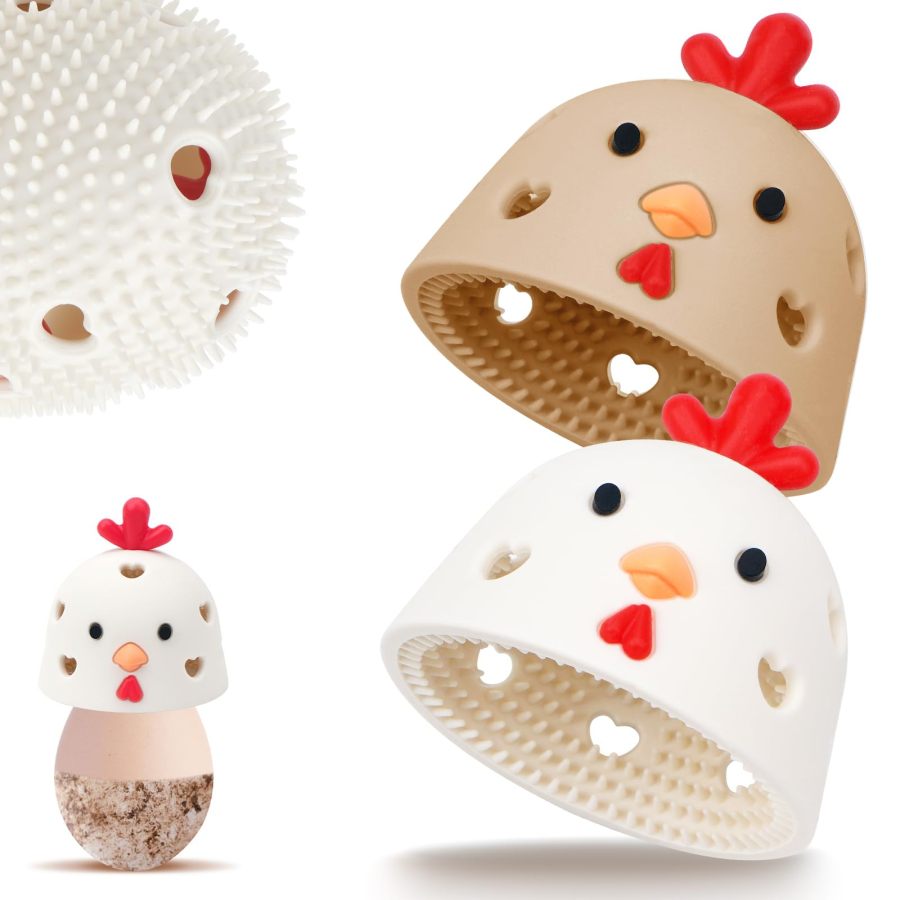
An egg washer is a small kitchen tool primarily made of food-grade silicone, designed to efficiently and gently clean fresh farm eggs. It uses internal soft bristles or bump structures to remove dirt, feces, feathers, and other stains from the eggshell surface without damaging the egg's natural protective layer. Most products feature compact and cute designs, with some also capable of cleaning fruits and vegetables, adding convenience and fun to daily kitchen cleaning. The following table illustrates the key characteristics of consumer behavior in this category.
| Dimension | Segment | Description |
|---|---|---|
| Need Driver Type | Planned Purchase/Emergency-driven Purchase | Primarily driven by the user's daily need to handle fresh farm eggs, but also exhibits an emergency nature for the immediate and convenient cleaning of dirty eggs. |
| Purchase Frequency | Low Frequency | As a durable kitchen tool, it is typically a one-time purchase with a long repurchase cycle, unless the product is damaged or functionally upgraded. |
| Decision Complexity | Medium | Consumers compare cleaning effectiveness, material safety, size compatibility, ease of use, and additional features, requiring simple comparative evaluation. |
| Price Sensitivity | Medium | Price is an important consideration, but users are more willing to pay a reasonable premium for efficient cleaning, eggshell protection, and fun design. |
| Emotional Dependency | Medium | The product is primarily based on practical function, but cute, fun exterior designs can evoke positive emotions and serve as social currency, enhancing purchase intent. |
II. User Personas & Usage Scenarios
2.1 Farmer/Backyard Chicken Enthusiast
🎯 Owns a small flock or a large number of poultry, requiring daily handling of large quantities of fresh, unwashed eggs, emphasizing cleaning efficiency and egg hygiene.
| Typical Usage Scenarios | Core Pain Points | Primary Purchase Drivers |
|---|---|---|
|
|
|
2.2 Quality-focused Home Cook/Lifestyler
🎯 Prefers buying farm-fresh or organic eggs, values the natural and healthy aspects of ingredients, enjoys the cooking process, and appreciates the convenience and fun brought by kitchen gadgets.
| Typical Usage Scenarios | Core Pain Points | Primary Purchase Drivers |
|---|---|---|
|
|
|
III. User Needs Hierarchy (KANO Model)
3.1 Basic Needs (Must-Haves)
- Gentle Cleaning: Effectively removing dirt without damaging the eggshell surface or stripping its natural protective layer is the product's most fundamental baseline requirement.
- Safe Materials: Must use non-toxic, harmless materials like food-grade silicone to ensure safety and reliability when contacting food.
- Easy Grip: The product design should be ergonomic, allowing comfortable, non-slip gripping and operation even with wet hands, preventing eggs from slipping and breaking.
- Easy to Clean (the Washer itself): The product itself must be easy to rinse clean, without hidden dirt traps, or be dishwasher safe for convenient daily maintenance and hygiene.
3.2 Performance Needs (Linear Satisfiers)
- Efficient Stain Removal: Internal bristles or bump structures should effectively and quickly remove various stains like dirt, feces, and feathers from eggshells, shortening cleaning time.
- Size Compatibility: The product should accommodate different egg sizes (e.g., standard chicken, large duck, small quail eggs), offering universal or size-specific options to avoid cleaning difficulties or breakage due to poor fit.
- Multifunctionality: Beyond cleaning eggs, if it can also handle cleaning fruits/vegetables (e.g., potatoes, carrots) or other small kitchen items, it increases the tool's utility and value for money.
- 360° All-around Cleaning: The design should ensure the egg is fully enveloped and can be rotated inside the washer for thorough, no-blind-spot cleaning.
- Durability: The product material and structure should be sturdy and durable, resistant to cracking, deformation, or wear, allowing long-term repeated use and reducing replacement costs.
3.3 Excitement Needs (Delighters)
- Cute Shape Design: Adorable and unique designs like chicken or dinosaur shapes add fun to daily chores, double as kitchen decor, and provide a sense of pleasure.
- Child-friendly Participation: Simple, safe operation that can attract children to participate in washing farm eggs, increasing parent-child interaction and life乐趣 (fun).
- Unique Storage Solution: Built-in suction cup for secure attachment to the sink edge, or unique hanging loop design for easy access and drying storage, keeping the kitchen tidy.
- Water/Detergent Saving: Features like a closed cavity design allowing reuse of small amounts of detergent, or optimized cleaning structure reducing water waste, reflecting eco-friendly理念 (concept).
3.4 Unmet Needs & Opportunities
-
Universal Size Compatibility: Some users report the product size is too loose for small eggs, leading to incomplete cleaning, or too tight for large eggs/duck eggs, even posing a breakage risk. They hope for better adaptation to all sizes to avoid breakage.
User Reviews (VOC) These work well for medium and larger eggs. It so well for smaller or jumbo size eggs. // The egg washer can only be one size and my eggs are all different sizes even from one end to the next so if you don't hold it completely firm all the way around it doesn't want to clean certain sections.
-
Cleaning Power for Stubborn Stains: For dried, heavily caked dirt or feces, soft silicone bristles sometimes lack sufficient power, requiring pre-soaking or harder brush heads for effective removal.
User Reviews (VOC) If the eggs are clean this product works great. If you have any blood spots in them it does not clean it off. // If your eggs are very dirty, this won't work, but seemed to clean slightly dirty eggs well by squeezing it around the eggs and rotating while under warm water.
-
Insufficient Suction Cup Stability: The suction cups on some products have poor adhesion, unable to firmly attach to sinks or countertops, causing inconvenience during use or easy slippage.
User Reviews (VOC) Suction cup doesn't hold to sink wall and if you put it on an egg and squeeze it around egg at all the egg will break... // The suction doesn't hold well on our marble backsplash - I've given up using the suction at all.
-
Durability of Wooden Components: For the few products with wooden brush handles or bases, the wooden parts are prone to moisture, mold, cracking, or discoloration. Users desire more durable materials or protective coatings.
User Reviews (VOC) the wooden brush hasn't held up to daily use. After two months of scrubbing dishes daily, the handle shows staining and water damage // Wooden brush handle isn't sealed or coated, so it stains and breaks down quickly.
IV. User Decision Drivers
4.1 Key Decision Factors
- Cleaning Effectiveness and Gentleness: Whether it can efficiently remove various dirt from eggshells while ensuring no damage to the shell and natural protective layer is the most critical factor for purchase and continued use.
- Ease of Use and Operational Comfort: Whether the product is simple to operate, comfortable to hold, non-slip, and makes the cleaning process effortless and efficient directly impacts the daily user experience.
- Food-grade Material Safety: As a food-contact tool, whether its material is safe and non-toxic is a fundamental requirement for user trust, influencing the purchase decision.
4.2 Secondary Decision Factors
- Size Compatibility: Whether the product can well adapt to different sizes of chicken/duck eggs, avoiding cleaning difficulties or breakage risks due to size mismatch.
- Product Durability and Ease of Cleaning (the Washer): Whether it is sturdy, durable, suitable for long-term repeated use, and whether the product itself is easy to clean and maintain affects long-term ownership cost and convenience.
- Design Aesthetics and Fun Factor: Cute, unique造型 (shape) designs can attract attention, add fun to the kitchen, and increase added value as a gift attribute.
- Multifunctionality and Set Value: Whether it can handle other kitchen uses like fruit/vegetable cleaning, or be sold as a set with other practical tools (e.g., wooden brush, stand) to enhance value for money.
- Price Reasonableness: Assuming core functions and quality needs are met, whether the product price is competitive is an important consideration affecting the final purchase decision.
V. Selling Points & Competitive Landscape
5.1 Selling Point Analysis
5.1.1 Standard Features (Points of Parity)
- Food-grade Silicone Material: Most products emphasize the use of safe, eco-friendly, flexible food-grade silicone to guarantee safety when contacting eggs.
- Gentle and Efficient Cleaning: Widely advertised as capable of easily removing eggshell dirt without damaging the shell and its natural protective layer.
- Multipurpose Use: Besides eggs, most products also claim usability for washing fruits and vegetables, increasing product applicability.
- Easy to Clean and Store: The product itself is easy to rinse, dishwasher safe, and features a compact design for convenient storage.
- Suitable for Farm-fresh Eggs: Accurately targets users, emphasizing cleaning effectiveness for freshly picked, stained farm eggs.
5.1.2 Key Differentiators
- Cute Shape Design: Attracts consumers with fun appearances like chicken or dinosaur shapes, increasing product趣味性 (fun factor) and decorative appeal.
- 360° All-around Cleaning: Emphasizes the layout of internal bristles or bumps for full egg envelopment and blind-spot-free cleaning.
- Non-slip Grip/Hanging Loop/Suction Cup: Enhances handling feel, stability, and storage convenience through wave textures, top hanging loops, or bottom suction cups.
- Size Compatibility Specification: Some products explicitly state compatibility with different egg sizes (e.g., chicken/duck eggs) or offer size options.
- Set Combination: Offering 2-packs, or sets combined with wooden brushes, ceramic stands, etc., to increase perceived value.
5.1.3 Unique Selling Propositions (USPs)
- Multi-layer Scraper Design: A few products (e.g., DOID TAG) emphasize having multiple scrapers and reinforcing ribs specifically for stronger cleaning power against stubborn stains, reducing scrubbing time.
- Closed Cavity Without Drain Holes: Individual products (e.g., DOID TAG) use a closed cavity, advertised to retain detergent for reuse 3-4 times, emphasizing eco-saving.
- Patented Design: Some brands (e.g., GoodEgg) explicitly mark the product as having a US patent, highlighting its originality and innovation.
5.2 Competitive Landscape
5.2.1 Market Maturity
The egg washer market is currently at medium maturity with a relatively active competitive landscape. Most products are becoming homogeneous in core functions and materials, i.e., providing gentle cleaning with food-grade silicone. However, product design is clearly seeking differentiation, especially in fun shapes and set combinations. Leading brands consolidate their position by emphasizing patented designs and specific features (e.g., enhanced cleaning layers), indicating the market is still evolving and segmenting, but no disruptive innovation has emerged yet.
5.2.2 Innovation Trends
Current market innovation trends focus on three areas: First, Design Fun-ification, using cute shapes like chickens or dinosaurs to attract consumers and enhance emotional value and gifting appeal. Second, Function Optimization and Integration, such as adding multi-layer scrapers to tackle stubborn stains, or designing closed cavities to save detergent, while commonly advertising multifunctionality (eggs + produce) to expand usage scenarios. Third, Refining User Experience Details, like optimizing non-slip grips, providing convenient storage solutions (suction cups, hanging loops), and offering multi-size compatibility options, aiming to solve practical problems users encounter.
VI. Marketing Claims vs. Reality Check
The table below analyzes the gap between common marketing claims and actual user experiences in this category:
| Dimension | Marketing Claim | User Reality | Verdict |
|---|---|---|---|
| Cleaning Effectiveness and Eggshell Safety | Gentle and efficient cleaning, doesn't harm eggshells, easily removes stubborn stains. | User feedback indicates insufficient cleaning power for dried, very dirty stains, requiring extra soaking or force, and improper force application can easily lead to shell breakage. Some users find it less effective than traditional cloths or sponges. | Sellers overemphasize the ideal state of 'gentle and efficient,' failing to fully explain the product's limitations in handling extremely dirty stains and fragile eggshells, leading to a severe disconnect between user expectations and actual experience. |
| Size Compatibility | Universal for all chicken/duck egg sizes, achieving perfect cleaning. | Users普遍 (commonly) complain the product size is too large for small eggs, leading to poor envelopment and incomplete cleaning; too tight for large eggs or duck eggs, causing operational difficulty or even breakage risk. | Attempting to solve diverse size needs with a single-size model defies common sense of physical fit, representing typical design laziness and marketing generalization, not genuine user-centric design. |
| Additional Accessory Durability/Functionality | High-quality wooden brush handles are long-lasting; suction cup design facilitates storage and fixation. | Wooden brush handles on some products lack sealing treatment; users report water stains, mold, and cracking after months of use; suction cups generally have insufficient吸力 (suction power), unable to牢固 (firmly) adhere to sinks or countertops. | Additional functions and material choices fail to withstand高频 (high-frequency) use in humid kitchen environments, representing typical cost-cutting leading to functional failure, which instead becomes a focal point for negative user reviews. |
Key Takeaway: The market 普遍 (commonly) exhibits a gap between functional claims and actual user experience perception, especially regarding exaggerated claims about cleaning power, size compatibility, and accessory durability.
VII. Supply-Demand Misalignment Analysis
The table below highlights mismatches between seller focus and buyer priorities:
| Dimension | Seller Behavior | User Focus | Verdict |
|---|---|---|---|
| Core Cleaning Efficacy and Applicable Scenarios | 普遍 (Generally) advertise 'gentle and efficient stain removal,' 'doesn't harm eggshells,' but rarely mention the limitations of silicone bristles against dried stubborn stains or provide solutions for extremely dirty conditions. | Users complain about insufficient cleaning power for 'super dirty' or 'blood-stained' eggs, requiring额外 (additional)处理 (handling), considering the product '鸡肋' (useless/chicken rib) or 'inferior to a cloth.' | Sellers fail to confront the product's true performance boundaries in 'extreme cleaning scenarios,' leading to user disappointment at the point where pain relief is most needed, undermining the delivery of core value. |
| Authenticity of Size Compatibility and Solutions | Listings frequently claim 'fits all egg sizes,' but provide no technical details or design ingenuity to support this universality, nor offer multi-size options. | User feedback highlights extremely poor size compatibility for different egg sizes (especially small eggs or duck eggs), leading to incomplete cleaning or broken eggs, a high-frequency complaint point. | Sellers make vague promises on core functional compatibility, failing to address user pain points through concrete design, instead exacerbating a trust crisis. |
| Multifunctionality vs. Core Value Weighting | 普遍 (Generally)突出 (highlight) 'multifunctionality (also washes produce, can be used as a hard-boiled egg container)' as an important selling point, even并列 (placing it) alongside 'cute design.' | The primary purchase motivation remains egg cleaning; mentions of multifunctionality are often secondary or辅助性 (supplementary) evaluations; some users find it inefficient as a produce brush. | Sellers attempt to increase product appeal through feature stacking but overlook users' rigid demand for the core function (egg cleaning) within this specific category,分散 (diverting) user attention and potentially投入 (investing) in ineffective BOM costs. |
Key Takeaway: Sellers over-invest effort in the relatively unimportant 'cute' 造型 (appearance), while collectively remaining silent or downplaying user's core concerns like 'actual cleaning power' and'size compatibility,' creating a strategic 供需 (supply-demand) mismatch.
VIII. Strategic Opportunities & Recommendations
8.1 Multi-size Self-Adapting Egg Washer
8.1.1 Target Audience & Pain Points
⚡️ Pain Points Addressed: Poor universal size compatibility, uneven cleaning for different egg sizes, or risk of breakage.
8.1.2 Action Plan
Design a double-layer silicone structure; the inner bristle part uses highly elastic yet supportive material to ensure adaptive envelopment from small quail eggs to large duck eggs. Consider adding adjustable clasps or elastic筋膜 (fascia) at the bottom/sides for more precise size adjustment. Alternatively, offer a set containing 2-3 washers of different sizes.
| Tech Complexity | Medium |
| Cost Impact | Medium Impact |
| Trade-off Warning | Designing a more complex elastic structure or mold would slightly increase costs, potentially making the product slightly larger or with more parts, but the user experience improvement is significant. |
| Price Band | Only viable above $14.99 |
8.1.3 Marketing Strategy
Emphasize 'Say goodbye to size worries, safely clean eggs of all sizes'; demonstrate perfect fit for different egg sizes via video; highlight 'One tool, multiple uses, comprehensive care for every fresh egg.'
8.2 Dual-Effect Pre-treatment + Gentle Cleaning Set
8.2.1 Target Audience & Pain Points
⚡️ Pain Points Addressed: Insufficient cleaning power for stubborn stains, requiring extra soaking or tools, leading to low efficiency and user dissatisfaction.
8.2.2 Action Plan
Develop a combo set: includes the existing silicone egg brush for daily gentle cleaning, plus a matching mini stiff brush (e.g., short, coarse nylon bristles) for pre-treating dried, caked dirt or feces. Include detailed usage guides in the packaging educating users on synergistic use of both tools to improve cleaning efficiency.
| Tech Complexity | Low |
| Cost Impact | Medium Impact |
| Trade-off Warning | Adding an auxiliary brush slightly increases packaging and storage costs, but it's manageable with no significant side effects. |
| Price Band | Only viable above $16.99 |
8.2.3 Marketing Strategy
Promote 'Bid farewell to stubborn stains, professional dual-effect cleaning'; demonstrate the pre-treatment brush's powerful removal of caked stains via comparison images/videos, complemented by the silicone brush's gentle cleaning, highlighting 'Thorough cleaning without damaging eggs.'
8.3 Enhanced Suction & Moisture-resistant Durable Accessories
8.3.1 Target Audience & Pain Points
⚡️ Pain Points Addressed: Insufficient suction cup stability, wooden accessories prone to moisture damage, affecting user experience and product lifespan.
8.3.2 Action Plan
For products with suction cups, use higher-quality silicone materials and structural design to ensure持久 (long-lasting) adhesion on wet/slippery surfaces. For wooden accessories in sets, mandate suppliers to apply moisture/rot-proof treatment (e.g., food-grade wood oil/lacquer), or consider直接 (directly) replacing them with durable, easy-clean food-grade hard silicone/plastic. Clearly emphasize these upgrades in listings.
| Tech Complexity | Low |
| Cost Impact | Low Impact |
| Trade-off Warning | Upgrading suction cup material and wood treatment processes slightly increases unit cost but can significantly boost user satisfaction and reduce after-sales rates. |
| Price Band | Only viable above $8.99 (single item) |
8.3.3 Marketing Strategy
Promote 'Stable and unmoving, clean with peace of mind' and 'Worry-free in water, like new with long use'; demonstrate strong suction on wet countertops via short videos, showcase the wooden handle's waterproof/mold-resistant properties, highlighting meticulous craftsmanship and reliability in product details.
8.4 Quality Control Upgrade & Fun Detail Refinement
8.4.1 Target Audience & Pain Points
⚡️ Pain Points Addressed: Product外观 (exterior) detail flaws (e.g., asymmetrical chicken eyes) lower user perception of overall quality, affecting emotional value.
8.4.2 Action Plan
Strengthen quality control on the production line, strictly checking外观 (exterior) details (e.g., symmetry of cartoon eyes, textures) to ensure every product meets design expectations upon leaving the factory. Consider introducing more precise injection molds or secondary processing to enhance the refinement of product details.
| Tech Complexity | Low |
| Cost Impact | Low Impact |
| Trade-off Warning | Adding QC steps and refining molds may slightly increase production costs, but there are no significant physical side effects, mainly boosting user satisfaction. |
| Price Band | Only viable above $7.99 |
8.4.3 Marketing Strategy
Highlight 'Exquisite and fun, crafted with quality'; display detail close-ups on the product page, emphasize high-standard QC, transform cute designs into symbols of trustworthy quality, enhancing the product's 'social currency' attribute.