Amazon US Market Analysis: Waist-Worn Fans Category
📊 Executive Summary
📈 Market Trends
Demand for waist-worn fans is strong, especially in high-temperature scenarios like outdoor work and leisure travel. Consumers have a sustained need for powerful wind, long battery life, and multifunctionality. However, market products are becoming homogenized, with competition mainly focused on parameter upgrades and marketing concept hype, failing to effectively address core user experience pain points.
⚡ Major Pain Points
The current category suffers from three major shortcomings: Noise Control Failure (excessive noise at high speeds, affecting indoor/outdoor experience); Wearing Dilemma (product weight causes a dragging sensation, clips are insecure, and clothing easily blocks the intake); Marketing Disconnect (inflated runtime data, concepts like 'AI' lack real implementation). These issues directly lead to poor user experience, impacting product reputation and repurchase intent.
💡 Selection Opportunities
The real opportunity lies in returning to the essence of user experience. Product selection should focus on: optimizing the attachment structure to ensure clip stability and prevent clothing interference, improving long-wear comfort; investing in noise reduction technology to deliver a perceptibly quiet experience at medium-high speeds; promoting realistic, honest runtime and building trust by improving actual working time at high speeds. These improvements will fundamentally enhance product strength, build differentiated competitive advantages in a homogenized market, and support a move into higher price tiers.
I. Analysis Overview
1.1 Introduction & Report Scope
This report analyzes the 'Personal Fans' category (waist-worn fans) in the Amazon US market, focusing on target user personas, core needs, decision factors, market communication, and potential opportunities.
1.2 Category Snapshot
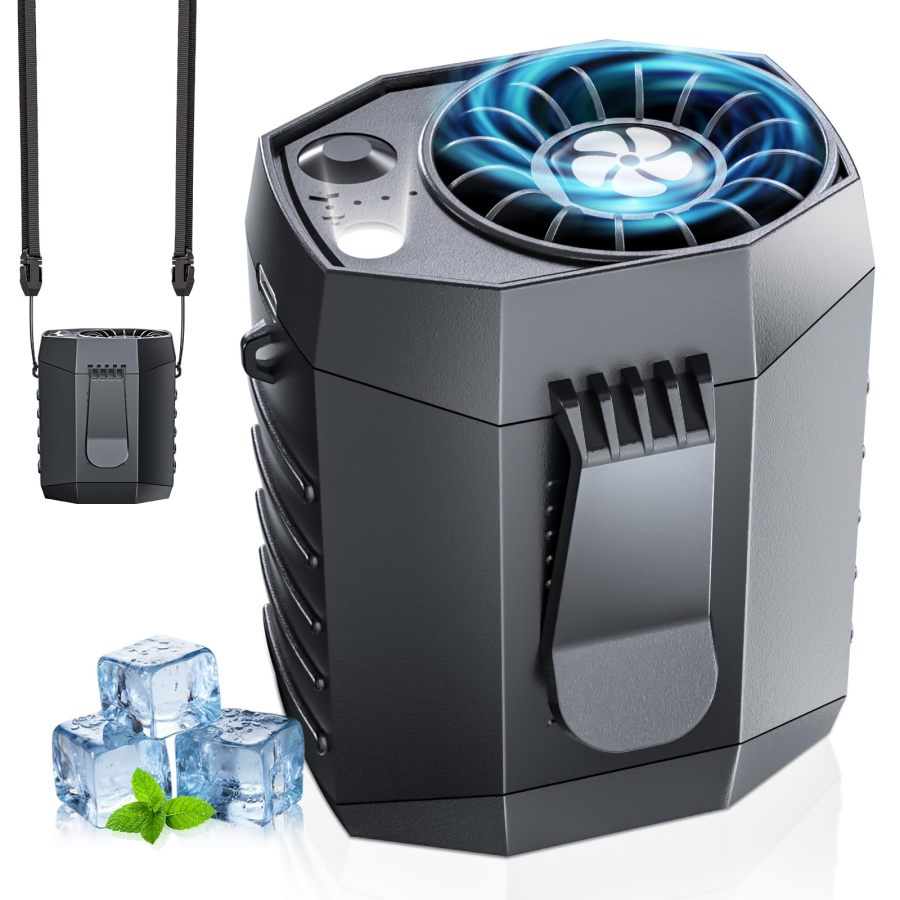
A waist-worn fan is a portable personal cooling device designed for outdoor work, sports, and daily activities. It attaches to a belt or clothing via a clip on the back, directing airflow under clothing, or can be worn as a neck fan using a lanyard, enabling hands-free continuous cooling. These products typically feature built-in rechargeable batteries and integrate functions like multi-speed settings, LED lighting, and emergency charging, aiming to provide a comfortable experience in hot environments. The following table illustrates the key characteristics of consumer behavior in this category.
| Dimension | Segment | Description |
|---|---|---|
| Need Driver Type | Planned Purchase/Emergency-driven Purchase | User purchases are primarily driven by pre-planning for heat prevention during outdoor work, travel, or summer activities, or by sudden heat needs. Some are also purchased as gifts. |
| Purchase Frequency | Low Frequency/Seasonal | Typically purchased before or during the summer season. As durable goods, the repurchase cycle is long, concentrated during seasonal demand spikes in spring and summer. |
| Decision Complexity | Medium | Consumers compare key metrics like wind power, battery life, multifunctionality, wearing comfort, and price, but do not conduct overly complex, in-depth research. |
| Price Sensitivity | Medium | Price is an important consideration, but users are willing to pay a reasonable premium for better experience (e.g., quiet operation, comfort) provided core cooling effectiveness and reliability are met. |
| Emotional Dependency | Medium | The product provides direct physiological cooling comfort and the emotional value of 'controlling body temperature' and 'working/playing with peace of mind' even in extreme heat. |
II. User Personas & Usage Scenarios
2.1 Outdoor Workers/Physical Laborers in Hot Environments
🎯 Engage in long hours of physical labor in scorching or high-temperature environments like construction sites, farms, delivery, or outdoor cooking, with a rigid demand for continuous, powerful hands-free cooling.
| Typical Usage Scenarios | Core Pain Points | Primary Purchase Drivers |
|---|---|---|
|
|
|
2.2 Recreational Outdoor Enthusiasts/Travelers
🎯 Seek to maintain comfort in hot weather during vacations, theme park visits, camping, hiking, or daily commutes. They prefer products with high portability, multifunctionality, and low noise.
| Typical Usage Scenarios | Core Pain Points | Primary Purchase Drivers |
|---|---|---|
|
|
|
III. User Needs Hierarchy (KANO Model)
3.1 Basic Needs (Must-Haves)
- Basic Airflow & Cooling: The fan must generate perceptible airflow, effectively alleviating body surface heat and providing a basic sense of coolness.
- Battery Powered & Rechargeable: As a portable device, it must have a built-in rechargeable battery supporting common charging methods (e.g., USB-C).
- Secure Attachment: Whether waist clip or neck lanyard, the fan must be firmly fixed, not easily detaching or swaying significantly.
- Simple Operation: Clear button functions, easy to use without complex learning.
3.2 Performance Needs (Linear Satisfiers)
- Powerful Wind & Multiple Speed Settings: Strong fan wind capable of quickly dissipating heat, with at least 3-5 speed settings to adapt to different environments and personal needs.
- Long Battery Life: Large battery capacity, capable of continuous operation for several hours even at medium-high speeds, meeting half-day to full-day outdoor use needs.
- Lightweight Design: Product weight controlled within a reasonable range, with no significant burden or pressure sensation during prolonged wear.
- Low Noise Operation: Especially at low speeds, noise should be within an acceptable range, not interfering with conversation or rest.
- Charging Efficiency: Support for fast charging, enabling full charge in a relatively short time, reducing waiting.
3.3 Excitement Needs (Delighters)
- Multifunction Integration (Power Bank/Lighting): Integrates power bank functionality (for charging phones) and LED flashlight/SOS light, enhancing the product's practical value and emergency capability.
- Precise Battery Level Display: LED digital screen or multi-segment indicator accurately shows remaining battery, helping users manage usage time and avoid battery anxiety.
- Enhanced Structural Durability: Utilizes designs like manganese steel clips, silicone protective sleeves to improve drop, shock, and slip resistance, extending product lifespan.
- 360° Flexible Airflow Direction: Fan head or clip rotates 360°, enabling more precise directional airflow to meet personalized needs.
3.4 Unmet Needs & Opportunities
-
Noise Control at High Speeds: Users commonly complain about significant fan noise at medium-high speeds, interfering with conversation or use in quiet environments. While a physical limitation of small, high-speed fans, there is still room for optimization.
User Reviews (VOC) The fans are loud! Can’t hear a word anyone is saying // Very noisy // It's kind of loud and pretty bulky
-
Waist Clip Stability & Clothing Interference Prevention: Clips easily loosen or detach during activity, and the fan intake can be blocked by clothing, affecting actual airflow efficiency, especially in dynamic scenarios.
User Reviews (VOC) The fans that go in the circles do not stay in place at all. If you tilt your head forward they fall out. // it kept sucking my shirt onto the bottom of the fan which blocked the air from being able to circulate through.
-
Wearing Comfort & Weight Balance: Some fans, after integrating large batteries and powerful motors, increase in weight, causing a dragging sensation or discomfort during prolonged wear, affecting freedom of movement.
User Reviews (VOC) Very heavy and pull on pants // Heavy and Loud // it is bulky and has a little bit of weight to it
-
Charging Port Durability: Some users report charging ports are prone to damage or poor contact, preventing normal charging and affecting the sustained use of the product's core function.
User Reviews (VOC) the port was broken // a defect with the USB port making it very very difficult to insert the cable
-
Cooling Efficiency in Extreme Environments: In extremely hot and humid conditions (e.g., 95°F+, 95% humidity), the air blown by the fan is perceived as 'hot, sticky air,' significantly reducing cooling effectiveness and failing to meet user expectations.
User Reviews (VOC) it worked great until it got to 95° with 95% humidity. Then it was just hot, sticky air.
IV. User Decision Drivers
4.1 Key Decision Factors
- Actual Cooling Effectiveness: Wind strength, airflow efficiency, and perceived coolness are the core drivers for purchase, determining if the product can effectively combat heat. Must deliver a perceptible cool sensation.
- Battery Life: Ability to support continuous use for extended periods (e.g., an 8-hour workday) at commonly used speeds, avoiding battery anxiety, is a key consideration for outdoor workers and travelers.
- Wearing Comfort & Stability: Product weight, clip security, impact on clothing and freedom of movement directly determine the experience and willingness for prolonged wear.
- Product Durability: Shock, damage, and wear resistance of core components like clips, buttons, and motors, ensuring reliable long-term use in complex outdoor environments.
4.2 Secondary Decision Factors
- Multifunctionality: Whether it integrates additional functions like power bank, LED/SOS lighting, which can enhance the product's overall value in outdoor and emergency scenarios, but is not core.
- Noise Level: Given adequate cooling, lower noise improves the experience in indoor or quiet environments, serving as a bonus.
- Charging Speed: Support for fast charging reduces wait time and enhances convenience.
- Size & Portability: Compact size and moderate weight facilitate carrying and storage, appealing especially to travelers and commuters.
- Price: After meeting the above core needs, price is an important comparative factor for consumers making final decisions among similar products.
V. Selling Points & Competitive Landscape
5.1 Selling Point Analysis
5.1.1 Standard Features (Points of Parity)
- Versatile Wearing Methods: Almost all products claim usability as waist, neck, desktop, or handheld fans, emphasizing multi-scenario adaptability.
- Powerful Wind & Multiple Speed Settings: Commonly emphasize high-speed brushless motors, high RPM, and multiple speed levels (4-6) to highlight efficient cooling capability.
- Long Battery Life: Large capacity batteries (e.g., 6000mAh, 8000mAh, 10000mAh) and extended runtime claims (20-40 hours) are core selling points aimed at alleviating user battery anxiety.
- USB-C Charging & Portability: Emphasize the convenience of fast charging via Type-C and the product's lightweight, compact design for easy carrying.
- Suitable for Outdoor/Workplace Use: Widely promoted as suitable for various outdoor and hot work environments like construction sites, gardening, camping, hiking, and travel.
5.1.2 Key Differentiators
- Emergency Power Bank Function: Some products highlight their ability to serve as a mobile power bank for charging devices like phones, adding outdoor emergency value.
- LED Lighting & SOS Function: Integrates LED flashlight and SOS distress signal light, enhancing nighttime visibility and safety in emergencies.
- Precise Battery/Speed Display Screen: Some products feature an LED digital screen displaying real-time battery percentage and fan speed, providing user control.
- Reinforced Durability Design: Emphasize features like silicone protective sleeves, manganese steel clips, drop/shock resistance, IPX4 splash resistance to withstand harsh outdoor use.
- AI Power-Saving Chip/Turbo Boost: Some brands introduce concepts like 'AI Power-Saving Chip' or 'Turbo Boost Airflow,' implying higher efficiency and stronger wind.
5.1.3 Unique Selling Propositions (USPs)
- 100-Level Stepless Speed Adjustment: Koonie brand's unique 100-level stepless speed system provides ultra-fine speed control for a highly personalized experience.
- Dual Motor/Dual Fan Design: A few high-end products like PANERGY use dual motors and fans, aiming to provide stronger, wider-range cooling.
- 360° Rotating Clip: Products like the Socool 14500mAh offer a 360° rotating clip for more flexible airflow direction adjustment.
5.2 Competitive Landscape
5.2.1 Market Maturity
The waist-worn fan category is in a fiercely competitive rapid growth phase. Core product functionalities have become homogenized, with most sellers competing on parameters like wind power (RPM), battery capacity (mAh), and runtime. Market maturity is moderate, but user focus is gradually shifting towards actual user experience (noise, weight, wearing stability). Brands need to move from mere parameter stacking to refining the user experience.
5.2.2 Innovation Trends
Future innovation trends will focus on solving existing pain points: improving quietness at medium-high speeds; optimizing attachment structures for stability and preventing clothing interference; achieving more extreme lightweighting while maintaining large battery capacity; and truly implementing 'smart' technology (e.g., automatic speed adjustment based on body temperature) rather than using it as a marketing gimmick. Additionally, stronger durability and water/dust resistance will be important upgrade directions for outdoor scenarios.
VI. Marketing Claims vs. Reality Check
The table below analyzes the gap between common marketing claims and actual user experiences in this category:
| Dimension | Marketing Claim | User Reality | Verdict |
|---|---|---|---|
| Fan Quietness | Claims of 'whisper-quiet,' 'almost no noise,' providing quiet, cool comfort. | Users widely report noticeable fan noise at high speeds (e.g., 'buzzing,' 'like a mini hair dryer'), disrupting conversation or the quiet outdoor experience. | The physical noise ceiling for small, high-speed fans is an objective reality. Sellers exaggerate quietness, failing to objectively present the physical trade-off between wind power and noise, leading to user disappointment. |
| Product Weight & Wearing Comfort | Claims of 'ultra-light design,' 'burden-free wear, light and comfortable.' | Multiple users report products (especially those with large batteries and powerful motors) as 'bulky,' 'heavy with a dragging sensation,' causing forehead pressure or neck discomfort during prolonged wear, even pulling down pants. | To stack large batteries and high-speed motors, lightweight design is inevitably sacrificed. Sellers over-promote 'lightness,' ignoring the physical impact of weight on wearable comfort, misleading user expectations. |
| Battery Runtime | Claims of 'up to 40/67/80 hours ultra-long runtime,' 'all-day continuous use.' | User-reported maximum runtime is typically only achievable at the lowest speed. At medium-high speeds, runtime drastically reduces to a few hours, far below the advertised maximum and the common user understanding of 'all-day.' | A classic case of using ideal lab data for marketing, failing to truthfully reflect actual performance under high-intensity use, leading users to misjudge the product's real capabilities. |
| Clip Structure & Clothing Interference | Dual-clip design, secure and anti-slip, effectively blows air under clothing. | Many users report clips easily loosening/detaching, or loose clothing being sucked into the intake, blocking airflow and preventing effective, continuous cooling. | The universal clip design, aimed at broad compatibility, fails to fully account for different clothing materials and user dynamic movement, causing the core 'hands-free cooling' experience to fall short. |
Key Takeaway: The market is rife with parameter inflation, concept-first marketing, and physical compromises. Sellers tend to excessively emphasize peak performance while downplaying potential user experience issues in actual use.
VII. Supply-Demand Misalignment Analysis
The table below highlights mismatches between seller focus and buyer priorities:
| Dimension | Seller Behavior | User Focus | Verdict |
|---|---|---|---|
| Noise Control | Most sellers avoid discussing noise issues or vaguely promote 'quietness' using only low-speed data. | Users commonly complain about loud noise at high speeds, affecting indoor use and outdoor conversation, reducing the product's applicability across scenarios. | Sellers fail to capture users' deep-seated need for a 'quiet, comfortable' outdoor experience. Noise has become a widespread but inadequately addressed pain point, limiting the product's potential in more scenarios. |
| Wearing Stability & Clothing Interference Prevention | Widely promote 'dual-clip design' and the convenience of 'hands-free,' but lack effective solutions for clip detachment and clothing blocking the intake. | Users complain about clips not being secure, fans easily falling off, clothing being sucked in and blocking airflow, directly undermining the core 'hands-free' value proposition. | Sellers have a blind spot regarding the most fundamental aspect of wearing reliability, failing to fully consider the friction and hindrances users might encounter during real dynamic activities. |
| Product Weight & Perceived Sensation | Commonly promote 'powerful and long-lasting' by stacking large capacity batteries and high RPM motors, while deliberately downplaying or avoiding discussion of the resulting weight increase. | Numerous users complain about products being 'bulky,' 'having a dragging sensation,' causing discomfort during prolonged wear, and limiting freedom of movement-contradicting seller claims of 'lightweight.' | To outdo competitors on parameters, sellers sacrifice the user's core expectation for a wearable device: 'unnoticeable wear.' This leads to a severe conflict between functionality and comfort. |
Key Takeaway: Sellers generally over-compete on parameters (e.g., wind RPM, battery mAh) while collectively neglecting user pain points that affect core experience, such as wearing comfort, noise control, and clip reliability.
VIII. Strategic Opportunities & Recommendations
8.1 Optimize Attachment Structure for Stability & Anti-Clothing Interference
8.1.1 Target Audience & Pain Points
⚡️ Pain Points Addressed: Waist clip is not secure, easily detaches; fan intake is easily blocked by clothing, affecting cooling effectiveness.
8.1.2 Action Plan
Redesign the waist clip structure using more elastic and wear-resistant manganese steel (or alloy) clips, adding anti-slip silicone lining to ensure a firm grip on different clothing materials. Add a raised mesh guard or baffle at the intake to prevent clothing suction and optimize airflow design.
| Tech Complexity | Medium |
| Cost Impact | Medium Impact |
| Trade-off Warning | Strengthening clip material and adding anti-suction structures may slightly increase mold cost and volume, but positively impacts core functionality. |
| Price Band | Only viable above $24.99 |
8.1.3 Marketing Strategy
Emphasize 'Multi-scenario anti-detachment, no clothing tangling'; use dynamic video to showcase the product's stability during vigorous activity and its continuous airflow unaffected by clothing, building a reliable, professional image.
8.2 Achieve Perceptible Quietness Optimization at Medium-High Speeds
8.2.1 Target Audience & Pain Points
⚡️ Pain Points Addressed: Significant fan noise at high speeds affects indoor use and conversation.
8.2.2 Action Plan
Upgrade to high-quality brushless motors and combine with fan blades and airflow channels designed by acoustic engineers. Use internal sound-absorbing materials and structural optimization to significantly reduce operating noise at medium-high speeds. Potentially include a 'Low-Noise Mode' that minimizes noise while maintaining decent airflow.
| Tech Complexity | High |
| Cost Impact | High Impact |
| Trade-off Warning | Using more precise, higher-cost brushless motors and acoustic-optimized fan blades/airflow channels may slightly increase product cost. However, user willingness-to-pay for a quiet experience is high. |
| Price Band | Only viable above $39.99 |
8.2.3 Marketing Strategy
Highlight 'Library-quiet, strong wind without disturbance'; provide third-party noise test reports and compare with competitor data; emphasize the product's ability to help users stay focused and immersed during work, study, or leisure without noise interference.
8.3 Promote Realistic Runtime & Improve Actual Runtime at High Speeds
8.3.1 Target Audience & Pain Points
⚡️ Pain Points Addressed: Exaggerated runtime claims; short actual runtime at high speeds, failing to meet user expectations.
8.3.2 Action Plan
Equip with genuine capacity batteries and optimize the power management chip to ensure at least 6-8 hours of stable runtime at medium-high speeds. Transparently list measured runtime at different speeds in the listing, e.g., 'X hours at highest speed, Y hours at medium speed.'
| Tech Complexity | Medium |
| Cost Impact | Medium Impact |
| Trade-off Warning | Using higher energy density or larger capacity lithium batteries (e.g., genuine 8000-10000mAh) will slightly increase cost and weight, but is manageable. |
| Price Band | Only viable above $29.99 |
8.3.3 Marketing Strategy
Emphasize 'Real Runtime, No More Anxiety'; use clear charts and data to show actual working time at different speeds, building a trustworthy brand image. Consider launching a 'Pro Max' series focused on genuine, long-lasting, powerful runtime.
8.4 Optimize Power Bank Function for Efficiency & Port Protection
8.4.1 Target Audience & Pain Points
⚡️ Pain Points Addressed: Power bank function carries failure risk, charging efficiency is mediocre, and charging ports lack protection.
8.4.2 Action Plan
Ensure stability and compatibility of the USB output port, providing at least 5V/2.4A output current to meet basic phone fast-charging needs. Add high-quality silicone or TPE dust/waterproof plugs for all charging and output ports to enhance outdoor durability.
| Tech Complexity | Low |
| Cost Impact | Low Impact |
| Trade-off Warning | Upgrading charging modules and interface materials is cost-effective; adding protective covers has minimal impact on volume. |
| Price Band | No Price Band Jump |
8.4.3 Marketing Strategy
Highlight 'More Reliable Emergency Charging, More Secure Port Protection'; use detail shots to showcase the port protection design, emphasizing the product's reliability in harsh environments to build user trust.