Amazon US Market Analysis: Digital Kitchen Timers Category
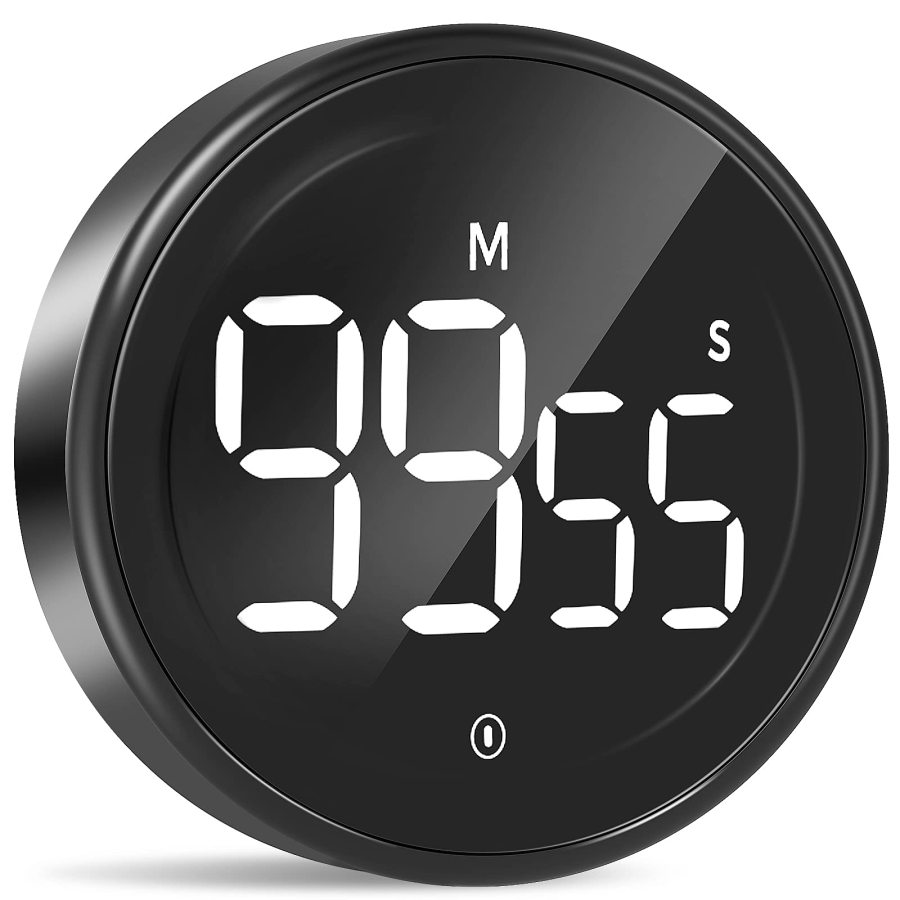
📊 Executive Summary
📈 Market Trends
Portability and intuitiveness are standard; multi-functional integration trend is significant. The digital kitchen timer market universally pursues large displays, magnetic attachment, and simple operation to meet basic timing needs in multi-scenarios like kitchen and study. Simultaneously, the market is evolving towards integrated features like multi-channel, personalized volume/brightness adjustment, and energy-saving design to enhance user experience.
⚡ Major Pain Points
Reliability and practical details are critical weaknesses. Users commonly report severe shortcomings in magnetic stability, long-term durability, and battery life, with frequent issues of slipping, short lifespan, and inflated battery claims, significantly impacting user experience. Additionally, time setting accuracy/completeness and alarm volume adaptability urgently need optimization.
💡 Selection Opportunities
Deeply address core pain points, establish a trust advantage with 'true reliability.' Market opportunities lie in launching high-quality timers with 'strong magnetic hold, durable' features, thoroughly resolving user concerns about product lifespan and placement stability. Simultaneously, enhance operational experience through 'user-friendly interface, full-time display.' Develop niche products like 'multi-channel color-coded/independent display' or 'minimalist smart silent/flash reminder' timers to meet specific user group needs and achieve differentiated competition.
I. Analysis Overview
1.1 Introduction & Report Scope
This report analyzes the 'Timers' category (Digital Kitchen Timers) within the Amazon US market, focusing on target user personas, core needs, decision factors, market communication, and potential opportunities.
1.2 Category Snapshot
A digital kitchen timer is an electronic device designed for precise time management. Its core functions include countdown and count-up timing, widely applied in daily scenarios such as kitchen cooking, baking, studying, exercise, and classroom management. These products typically integrate convenient designs like large screens, magnetic backings, and stands. They are further subdivided into sub-types such as single-channel, multi-channel, knob-style, or button-style based on functional complexity, serving as essential tools for boosting efficiency and achieving time discipline. The following table illustrates the key characteristics of consumer behavior in this category.
| Dimension | Segment | Description |
|---|---|---|
| Need Driver Type | Planned Purchase / Emergency-driven Purchase | User purchases typically stem from daily time management needs (e.g., cooking, studying) or emergency needs to address pain points with existing timing tools (e.g., insufficient functionality of stove-top timers). |
| Purchase Frequency | Low Frequency / Medium Frequency | As a durable kitchen gadget, its purchase frequency is low. Repurchase demand usually arises when an old item breaks, lacks functionality, or when expanding into new usage scenarios. |
| Decision Complexity | Medium | Consumers compare product differences in display quality, alarm volume, magnetic strength, multi-tasking capabilities, and price, but the decision-making process is relatively straightforward. |
| Price Sensitivity | Medium to High | The market price range is broad. Users are price-sensitive regarding basic features but are willing to pay a reasonable premium for significant experiential improvements or solutions to core pain points. |
| Emotional Dependency | Low | Purchases are primarily based on practical functionality and efficiency gains. Emotional value carries less weight, with more focus on the reassurance of operation and the certainty of time control. |
II. User Personas & Usage Scenarios
2.1 Home Cooking Enthusiast / Multi-Task Manager
🎯 Frequently cooks at home, needing to manage multiple dishes or tasks with different time requirements simultaneously, pursuing cooking efficiency and success rates.
| Typical Usage Scenarios | Core Pain Points | Primary Purchase Drivers |
|---|---|---|
|
|
|
2.2 Study / Work Efficiency Seeker
🎯 Students, remote workers, or professionals needing focused task management. They use timers to manage study/work sessions, improve concentration and efficiency, or practice the Pomodoro Technique.
| Typical Usage Scenarios | Core Pain Points | Primary Purchase Drivers |
|---|---|---|
|
|
|
2.3 Teacher / Parent
🎯 Operates in classroom or home environments, needing timers to manage children's activity times, classroom tasks, or daily routines. Emphasizes ease of use, visibility, and multi-scenario applicability.
| Typical Usage Scenarios | Core Pain Points | Primary Purchase Drivers |
|---|---|---|
|
|
|
III. User Needs Hierarchy (KANO Model)
3.1 Basic Needs (Must-Haves)
- Precise Timing: Accurate digital display with no errors, ensuring reliability in time management and avoiding losses due to inaccurate timing.
- Clear Large Display: Large digits, high-contrast screen for easy long-distance and quick time reading, especially suitable for those with impaired vision.
- Loud Alarm: Alarm sound is sufficiently loud to be heard in noisy environments or from different rooms, preventing missed important reminders.
- Countdown Function: Core functionality, allowing setting of specific times and counting down, meeting most time management scenarios.
- Simple Operation: Intuitive button layout or knob design, enabling easy use by children and the elderly, lowering the learning curve.
3.2 Performance Needs (Linear Satisfiers)
- Magnetic Backing: Strong magnetic function for secure attachment to metal surfaces like refrigerators, ovens, or whiteboards, saving space.
- Multiple Placement Options: Besides magnetic attachment, includes a retractable stand or hanging hole to adapt to different placement needs like desktops or walls, increasing flexibility.
- Volume Adjustment: Provides multiple volume levels (e.g., High/Medium/Low/Mute) to suit different usage environments and avoid disturbing others.
- Memory Function: Ability to save the last set time for convenient reuse, reducing the hassle of repeated settings and improving efficiency.
- Count-Up Function: Provides a stopwatch function to record elapsed time, meeting needs for exercise, studying, etc.
- Long Battery Life: Long battery runtime or support for rechargeable design, reducing battery replacement frequency for a more worry-free experience.
3.3 Excitement Needs (Delighters)
- Multi-Channel Timing: Manages 2-3 independent timing tasks simultaneously, especially suitable for multi-dish cooking or parallel activities, significantly boosting efficiency.
- Preset Quick Times: Provides commonly used preset times (e.g., 5/15/25 minutes for Pomodoro), enabling one-click quick starts, further simplifying operation.
- Brightness Adjustment / Backlight: Adjustable screen brightness or backlight function to adapt to different lighting conditions during day and night, enhancing visual comfort.
- Purely Visual Reminder: In silent mode, uses LED flashing for reminders without sound interference, suitable for places like libraries or meetings.
- Stylish Design: Product appearance is simple, modern, and integrates well into home or office environments, enhancing aesthetics and user experience.
3.4 Unmet Needs & Opportunities
-
Strong, Stable Magnetic Hold: Many users complain about insufficient magnetic strength, causing timers to easily slip or fall off metal surfaces, urgently needing improvement to ensure secure placement.
User Reviews (VOC) Customers have mixed opinions about the timer's magnet strength, with some finding them good and noting they adhere well to refrigerators, while others report that they aren't strong enough. // The magnet is not strong enough to hold the weight of the unit.
-
Long-Term Durability: Some product feedback indicates short lifespans, easy breakage, or sudden failure. Users expect more durable quality to reduce replacement frequency.
User Reviews (VOC) Customers report that the kitchen timer is fragile and falls multiple times, with one customer noting it doesn't stand up to water. // Customers report that the kitchen timer only lasts about a month before it stops working.
-
Fast, Accurate Setting: Knob-style timers can be imprecise when spun quickly; button-style timers require multiple presses; hour/minute setting can be complex.
User Reviews (VOC) Customers have mixed experiences with the timer's time setting: while some say it keeps fine time, others report that the entire device moves when trying to set it. // The twist knob can be sensitive when trying to set the time
-
Simultaneous Hour/Minute/Second Display & Full Timing Range: Some timers lack hour display, or switching between hours, minutes, and seconds is inconvenient, hindering long-duration task management.
User Reviews (VOC) I didn't give it 5 Stars because it doesn't display or count hours, but it's not a big issue. // It only measures whole minutes and hours rather than seconds.
-
Consistent Quality Control: Occasional reports of some timers in multi-packs being dysfunctional or damaged indicate room for improvement in quality control, affecting overall satisfaction.
User Reviews (VOC) Most of them worked. Would have been 5 stars, but the white one, its "off/on" switch doesn't work. // Even the replacement was defective, too.
IV. User Decision Drivers
4.1 Key Decision Factors
- Ease of Use: Intuitive operational logic, quick and convenient setting process, ensuring even children and the elderly can master it easily with no usage barrier.
- Display Clarity: Large size, high-contrast digital display that remains clearly readable under different lighting and distances, especially important for multi-tasking scenarios.
- Alarm Loudness & Modes: Whether the alarm sound is loud enough to avoid being missed, and whether it offers multiple reminder modes like silent or flashing to adapt to different environments.
- Placement Stability: Whether the magnetic force is strong enough to hold securely on metal surfaces without slipping; whether the stand is stable and not prone to tipping, ensuring the timer is safely usable.
- Timing Reliability: Whether the product can stably and continuously complete timing tasks without lag, freezing, or unexpected stoppages, avoiding losses from timing failures.
4.2 Secondary Decision Factors
- Multi-Functionality: Whether it supports multi-task timing, count-up, clock/calendar, etc., to meet broader usage needs and improve value for money.
- Aesthetic Design: Whether the product's materials, colors, and overall form align with personal aesthetics and integrate well into the home environment, enhancing lifestyle quality.
- Battery Life & Power Supply: Battery replacement frequency, support for rechargeability, and presence of power-saving modes to extend lifespan, reducing maintenance costs.
- Value for Money: Whether the product price is reasonable given the core needs are met, especially the unit price for multi-packs, influencing purchase intent.
- Memory / Preset Functions: Ability to save frequently used times or provide quick preset buttons, improving efficiency for repeated use and reducing repetitive operations.
V. Selling Points & Competitive Landscape
5.1 Selling Point Analysis
5.1.1 Standard Features (Points of Parity)
- Large Screen Display: Clear, easy-to-read digits for convenient long-distance viewing, a basic selling point emphasized by most products.
- Multiple Placement Options: Magnetic backing, stand, hanging hole to adapt to different scenario placements, providing usage flexibility.
- Loud Alarm: Ensures audibility in noisy environments, preventing forgetfulness, a core function of universal user concern.
- Countdown / Count-Up: Basic functions meeting forward and backward timing needs, covering a wide range of usage scenarios.
- Simple Operation: Intuitive button or knob design, easy for children and the elderly to use, emphasizing product universality.
5.1.2 Key Differentiators
- Multi-Channel Timing: Supports simultaneous setting and management of 2-3 independent timing tasks, meeting multi-tasking needs.
- Memory Function: Saves last set time or custom presets for convenient reuse, improving efficiency.
- Volume / Brightness Adjustment: Provides multiple volume choices or silent mode; adjustable screen brightness or backlight to adapt to different environments.
- Power-Saving Mode: Auto-shutdown or screen dimming to conserve battery life, reducing battery replacement frequency.
- Material & Aesthetics: Stainless steel panel or unique design enhances product texture and aesthetics, attracting buyers who value appearance.
5.1.3 Unique Selling Propositions (USPs)
- Pomodoro Presets: Provides quick presets like 5/15/25 minutes for efficiency management, targeting specific user groups.
- Up to 99-Hour Timing: Far exceeds the conventional 99 minutes, suitable for long-duration task management like slow cooking, fermentation.
- Keypress Feedback Sound On/Off: User can choose to enable or disable keypress sounds, offering a quieter experience suitable for noise-sensitive individuals.
- Post-Alarm Counting: After the timer ends, the alarm sounds and continues counting up, displaying overtime to help understand delays.
- Lifetime Warranty: Provides worry-free after-sales guarantee, emphasizing product reliability and building high trust.
5.2 Competitive Landscape
5.2.1 Market Maturity
The digital kitchen timer market has matured. Basic features (large screen, magnetic, countdown) are widely adopted. Product homogenization is evident. Competition primarily manifests in feature combinations, design details, operational convenience, and pricing strategies. Brands attract consumers by offering differentiated selling points like multi-channel, memory functions, and volume/brightness adjustments.
5.2.2 Innovation Trends
Timer innovation is moving towards multi-functional integration (e.g., multi-channel, clock/calendar), human-machine interaction optimization (e.g., knob+press setting, preset quick times), usage scenario expansion (emphasizing classroom, fitness, study), and quality & detail enhancement (e.g., stronger magnets, durable materials, rechargeability). Future opportunities lie in smarter, more precise, more personalized time management solutions, and higher standards of reliability and durability.
VI. Marketing Claims vs. Reality Check
The table below analyzes the gap between common marketing claims and actual user experiences in this category:
| Dimension | Marketing Claim | User Reality | Verdict |
|---|---|---|---|
| Battery Life & Charging Stability | Long-lasting battery life, durable rechargeable batteries, or power-saving modes enabling months of use. | Users commonly report actual runtime at high brightness is far below claims, or rechargeable batteries fail to charge or have short lifespans, e.g., B09W2K3RR8 review: 'won't take a charge and dies'. | Sellers mislead consumers with optimistic projections or ideal data, failing to deliver on promises of long-term stable use, directly impacting core functional reliability and user trust. |
| Magnetic Stability & Compatibility | Strong magnetic hold, firmly attaches to metal surfaces like refrigerators, strong universality, won't fall off. | User feedback indicates insufficient magnetic strength, especially prone to slipping or falling on thick phone cases or specific surfaces, e.g., B07D3BFY6R review: 'magnet is weak and too small'. | Sellers overstate magnetic performance, overlooking practical challenges from different surfaces, phone case thickness, or product weight, causing the core selling point to underperform for users, posing potential safety risks. |
| Product Durability & Quality Control Consistency | Sturdy and durable, high-quality materials, suitable for long-term use, consistent quality across multi-pack products. | Numerous user reports of short product lifespan, failing or breaking within months; occasional dysfunctional or damaged units in multi-packs, e.g., B09M46DWPJ review: 'only lasted about a month before it stops working'. | Widespread issues with inferior materials or structural design flaws lead to product lifespan far below consumer expectations; weak quality control undermines user trust in basic product quality and brand consistency. |
Key Takeaway: The market exhibits widespread parameter inflation and scenario-based experience exaggeration, particularly regarding battery life and magnetic compatibility, leading to significant gaps between user reality and seller claims.
VII. Supply-Demand Misalignment Analysis
The table below highlights mismatches between seller focus and buyer priorities:
| Dimension | Seller Behavior | User Focus | Verdict |
|---|---|---|---|
| True Battery Life & Durability | Conflicting battery life data in listings, with Bullet Points and Specifications contradicting each other. Sellers generally avoid addressing the real shortcoming under high-brightness mode, lacking unified, credible battery standards or commitments to product lifespan. | Users strongly desire longer battery life; rapid battery drain at high brightness is a frequent complaint. Short product lifespan (e.g., failing within months) consumes user time and effort for re-purchasing and setup, representing a deep-seated pain point. | Sellers fail to provide clear, consistent battery life expectations and do not address the core durability pain point, leaving users lacking trust in the most concerning aspects of basic quality and long-term value. |
| Magnetic Hold Strength | Widely emphasize 'strong magnetic hold' but rarely mention specific performance guarantees or solutions for thick phone cases, rough surfaces, or vigorous movement, being overly optimistic about universal claims. | Users complain about insufficient magnetic force, easy slipping, impacting placement convenience and safety. The gap between 'strong magnet' marketing and actual experience is large. | Sellers generalize the magnetic selling point based on ideal conditions, overlooking users' core demand for stability in complex, variable scenarios, leading to insufficient reliability in a core function. |
| Time Setting Accuracy & Completeness | Some products only emphasize 'easy to use' or 'knob setting' without deep optimization of accuracy. Some timers lack hour display or have cumbersome second setting. | Users report knobs being too sensitive for precise setting, or button operations being tedious; dissatisfaction with lack of hour timing function (e.g., 99-minute limit), especially for long-duration task management. | Sellers fail to provide deep optimization for the 'ease of use' of basic operations and do not fully cover users' practical needs for 'accurate' and 'complete' timing ranges. |
Key Takeaway: Sellers collectively remain silent or downplay user core pain points like battery life, magnetic stability, and product durability, while oversupplying feature stacking and low-value details, leading to supply-demand misalignment.
VIII. Strategic Opportunities & Recommendations
8.1 Strong Magnetic Hold, Durable Timer
8.1.1 Target Audience & Pain Points
⚡️ Pain Points Addressed: Insufficient magnetic connection stability, poor long-term durability, inconsistent quality control.
8.1.2 Action Plan
Utilize N52 neodymium magnet arrays, optimize magnetic circuit design and anti-slip silicone backing to ensure reliable hold on phone cases up to 5mm thick or smooth surfaces. Reinforce casing and internal structure with higher-impact, more wear-resistant premium ABS or stainless steel. Offer a five-year or lifetime warranty promise.
| Tech Complexity | Medium |
| Cost Impact | Medium Impact |
| Trade-off Warning | Stronger magnets or more robust casing may slightly increase product weight or volume, but users are willing to pay for reliability. |
| Price Band | Only viable above $19.99 |
8.1.3 Marketing Strategy
Emphasize 'Say goodbye to slip risk, secure like native.' Provide stability test videos with different phone case thicknesses or scenarios. Highlight 'Military-grade quality, five-year worry-free warranty.' For multi-packs, promise '100% QC pass rate' to build trust.
8.2 User-Friendly Interface, Full-Time Display Timer
8.2.1 Target Audience & Pain Points
⚡️ Pain Points Addressed: Inaccurate time setting, lack of hour display or inconvenient second switching, screen lacks backlight or has poor viewing angles.
8.2.2 Action Plan
Introduce a hybrid setting mode combining 'continuous knob + precise stepping + press to confirm,' or design a keypad layout to resolve the conflict between quick setting and precise adjustment. Equip with a high-brightness, wide-viewing-angle LED backlit screen with multi-level brightness adjustment for clear visibility under any lighting. Add a 'tap-to-wake' feature. Ensure all timers display hours, minutes, and seconds with quick switching, supporting up to 99-hour timing range.
| Tech Complexity | Medium |
| Cost Impact | Medium Impact |
| Trade-off Warning | No significant physical side effects, primarily involves optimizing structure and materials, may slightly increase cost. |
| Price Band | Only viable above $16.99 |
8.2.3 Marketing Strategy
Highlight 'Control time, effortlessly.' Emphasize 'Continuous precision adjustment, clear at a glance.' Use clear UI/UX demo videos to showcase 'HD LED backlight, full-time management' convenience.
8.3 Multi-Channel Color-Coded / Independent Display Timer
8.3.1 Target Audience & Pain Points
⚡️ Pain Points Addressed: Confusion in multi-task timing, easily mixed-up displays, disputes over alarm volume.
8.3.2 Action Plan
Design an LED display with independent display areas or different colored backlights to visually distinguish 2-3 independent timers. Each channel has independent volume adjustment and silent/flashing modes. Consider adding voice labeling for easy identification. Optimize product form factor to maintain reasonable size and aesthetics despite multi-functionality.
| Tech Complexity | High |
| Cost Impact | High Impact |
| Trade-off Warning | Adding displays or independent channels may increase product size or require more complex power management, affecting portability. |
| Price Band | Only viable above $24.99 |
8.3.3 Marketing Strategy
Emphasize 'Multi-tasking parallel, double efficiency.' Highlight 'Color-coded, clear at a glance.' Demonstrate through actual cooking or teaching scenarios to showcase its 'professional control' and 'goodbye to chaos' in complex task management.
8.4 Minimalist Smart Silent / Flash Reminder Timer
8.4.1 Target Audience & Pain Points
⚡️ Pain Points Addressed: Disputes over alarm volume, insufficient visual reminders in silent mode, lack of keypress feedback sound or noisy keys.
8.4.2 Action Plan
Provide multiple adjustable volume levels (including ultra-quiet) and enhance the effectiveness of LED flash reminders in silent mode to ensure effective prompting in quiet environments. Add optional keypress sound or touch-sensitive keys to avoid noise during setup. Optimize power-saving mode for intelligent screen wake-up.
| Tech Complexity | Low |
| Cost Impact | Low Impact |
| Trade-off Warning | No significant physical side effects, primarily involves optimizing structure and materials, may slightly increase cost. |
| Price Band | Only viable above $12.99 |
8.4.3 Marketing Strategy
Highlight 'Quietly enjoy time, silent reminders.' Emphasize 'Library, classroom exclusive, goodbye to disturbance.' Use comparison demos to showcase the reassuring effectiveness of LED flashes in silent mode for reminders without disturbing others.