Amazon US Market Analysis: No-Tie Elastic Shoelaces Category
📊 Executive Summary
📈 Market Trends
Convenience and peace of mind are core drivers, but market products are highly homogenized. The no-tie elastic shoelace market caters to consumer pursuit of efficiency and comfort, with products generally emphasizing basic selling points like quick on/off and elastic fit. However, most products show little differentiation in functionality and user experience, leading to intense brand competition and compressed profit margins.
⚡ Major Pain Points
Poor durability and complex installation are the two major user 'hard flaws.' Customer feedback frequently points out issues like locks breaking easily, laces fraying or snapping, and difficult initial installation processes lacking clear guidance. These pain points severely impact user satisfaction and are key reasons for negative reviews and low repurchase rates.
💡 Selection Opportunities
Deepen reliability and ease of use to craft an exceptional user experience. The real market opportunity lies in solving current products' core defects: develop Enhanced Lock & High-Toughness Lace Sets to improve durability; launch No-Cut, No-Melt, Ultra-Simple Installation Laces to lower the usage barrier. Simultaneously, explore differentiation directions like Invisible Aesthetic Customization or Professional Sports Cushioning to break through homogenized competition and win user trust and premium pricing space.
I. Analysis Overview
1.1 Introduction & Report Scope
This report analyzes the 'Shoelaces' category (No-Tie Elastic Shoelaces) within the Amazon US market, focusing on target user personas, core needs, decision factors, market communication, and potential opportunities.
1.2 Category Snapshot
No-tie elastic shoelaces are an innovative shoe accessory designed to replace traditional lacing methods. Utilizing elastic materials and special locking systems, they enable slip-on convenience. The core functionality is to enhance shoe-wearing efficiency while providing comfortable foot fit, applicable to various athletic shoes, casual shoes, and even some boots. The following table illustrates the key characteristics of consumer behavior in this category.
| Dimension | Segment | Description |
|---|---|---|
| Need Driver Type | Planned Purchase / Emergency-driven Purchase | Purchases typically stem from anticipated convenience needs, such as simplifying daily wear or addressing specific physical conditions. They may also be emergency purchases due to existing shoelace damage. |
| Purchase Frequency | Low Frequency / Replacement | Primarily serve as a replacement or upgrade for traditional laces. Repurchase cycles are long, often triggered by wear and tear or pairing with new shoes, not a high-frequency consumable. |
| Decision Complexity | Medium | Consumers compare different product types (elastic cord/silicone), locking mechanisms, installation methods, and durability, requiring some product information evaluation. |
| Price Sensitivity | Medium | Price is an important consideration. However, users are willing to pay a reasonable premium for significant convenience upgrades or solutions to core pain points. |
| Emotional Dependency | Medium | Primarily driven by function and practicality. However, the 'ease,' 'independence,' and 'clean appearance' provided by no-tie systems also offer important emotional value. |
II. User Personas & Usage Scenarios
2.1 Busy Parents & School-Age Children
🎯 Seek to simplify the child's shoe-wearing process, avoid safety hazards from untied laces, and foster the child's independence.
| Typical Usage Scenarios | Core Pain Points | Primary Purchase Drivers |
|---|---|---|
|
|
|
2.2 Convenience-Seeking Urban Lifestylers
🎯 Value life efficiency and personal comfort, seeking to transform everyday sneakers into easier-to-wear fashionable slip-ons.
| Typical Usage Scenarios | Core Pain Points | Primary Purchase Drivers |
|---|---|---|
|
|
|
2.3 Individuals with Mobility Challenges / Sports Enthusiasts
🎯 Require functional, supportive, and easy-to-operate shoelaces due to physical conditions (e.g., arthritis, disability) or athletic performance needs.
| Typical Usage Scenarios | Core Pain Points | Primary Purchase Drivers |
|---|---|---|
|
|
|
III. User Needs Hierarchy (KANO Model)
3.1 Basic Needs (Must-Haves)
- No-Tie Functionality: Core need: No need to repeatedly tie laces; shoes can be slipped on/off directly.
- Secure, Non-Slip Fit: Ensures laces do not come undone during daily wear or light activity, keeping shoes stable.
- Universal Compatibility: Adapts to most lace-up shoe styles and eyelets on the market, meeting diverse needs.
3.2 Performance Needs (Linear Satisfiers)
- Elastic Comfort: Provides just the right elasticity, conforms to foot shape, reduces localized pressure, and enhances comfort during prolonged wear.
- Easy Installation: Installation process is simple and intuitive, requiring no complex tools or skills, with clear instructions.
- Lace Durability: The lace itself resists fraying, pilling, or breaking, and withstands daily use and stretching.
- Locking Mechanism Reliability: The locking mechanism resists loosening or damage, provides lasting and reliable fixation, and operates smoothly.
- Aesthetic Appeal: After installation, shoes look neat, avoiding the bulky look of traditional tied knots, and may even appear more stylish than traditional laces.
3.3 Excitement Needs (Delighters)
- Invisible Design: The lock or fastener can be hidden, not affecting the shoe's overall aesthetics, achieving a 'seamless' look.
- Multi-Functionality: Beyond no-tie, offers additional features like foot support, quick micro-adjustment, or water resistance.
- Material Innovation: Uses advanced elastic materials like antimicrobial, quick-dry, skin-friendly options, or premium materials with special sheen/texture.
- Personalized Customization: Offers more unique colors, patterns, or custom services to satisfy consumers' desire for unique self-expression.
3.4 Unmet Needs & Opportunities
-
Lock/Clasp Prone to Damage/Detachment: Some products have locks/clasps with poor material or design, prone to breaking or detaching during daily use or stretching, failing to provide long-term reliable fixation.
User Reviews (VOC) While the laces work well for children's shoes, some customers report durability issues with them breaking after three days of use. // Customers report durability issues with the shoelaces, noting that the plastic clasps and ends break off after a week of use.
-
Complex/Unclear Installation Process: Some products are difficult to install, requiring trimming, melting ends, threading, or multiple adjustments, and lack clear pictorial/video instructions, being unfriendly to first-time users.
User Reviews (VOC) It is very tough to get these through the un-grommeted eyelets on both Vans and Nike shoes for two of my kids. // First problem, the package was missing a clip for the end of the string. Next problem, the round button for securing the string is about impossible for an older person to manage.
-
Poor Lace Body Durability: Elastic cords or silicone materials are prone to fraying, wear, breakage, or loss of elasticity after long-term use, friction, or frequent stretching, affecting product lifespan and appearance.
User Reviews (VOC) Customers have mixed experiences with the durability of these shoelaces, with some finding them durable while others report that they broke after 3 days or 1 month of use and started fraying almost immediately. // These seem to fray a little, so I had to use a lighter to melt the ends of the laces after trimming.
-
Inconvenient/Imprecise Tightness Adjustment: Some products are difficult to adjust dynamically for tightness after fixation, or have limited adjustment range, failing to meet personalized comfort needs for different scenarios or foot shapes.
User Reviews (VOC) Customers have mixed experiences with how the shoelaces sit on their feet, with some finding them snug while others report they are too tight or too small. // Didn't work for me. Made it difficult to get my shoe on but didn't keep the shoe tight enough.
IV. User Decision Drivers
4.1 Key Decision Factors
- No-Tie Effectiveness & Security: Whether the laces truly eliminate the need for tying and stay secure without slipping, maintaining stability across different activity levels, is the primary purchase consideration.
- Ease of Putting On/Taking Off: The ability to easily and quickly put on and take off shoes directly impacts daily user experience, especially crucial for busy individuals and those with mobility challenges.
- Wearing Comfort: Whether the elastic fit is good and whether there is pressure or discomfort during prolonged wear are core factors determining user acceptance and long-term use.
4.2 Secondary Decision Factors
- Product Durability: The lifespan of the laces and locks, susceptibility to breakage, wear, or failure, affects long-term product value and user repurchase intent.
- Installation Simplicity: Whether the product is easy to self-install and adjust, and has clear guidance, directly impacts the initial user experience and satisfaction.
- Appearance & Aesthetics: Whether shoes look good after installation, coordinate with shoe style, and offer rich color choices, affects users' personalized styling needs.
- Price & Value for Money: Given that core functionality and reliability are met, whether the product price is reasonable and offers good value is a key final decision factor.
V. Selling Points & Competitive Landscape
5.1 Selling Point Analysis
5.1.1 Standard Features (Points of Parity)
- No-Tie Design: Universally emphasizes the convenience of not tying laces, saving daily time.
- Elastic Comfort: Most products promote the comfortable, conforming fit and pressure distribution from elastic materials.
- Easy On/Off: Highlights the feature of turning lace-up shoes into slip-ons, enhancing life efficiency.
- Wide Applicability: Broadly advertised as suitable for various users: children, adults, elderly, athletes.
- Multi-Scenario Use: Emphasizes suitability for daily commute, sports, outdoor activities, etc., highlighting versatility.
5.1.2 Key Differentiators
- Different Locking Mechanisms: Various fixation methods like metal twist locks, plastic clasps, silicone segments, hidden fasteners offer different operational experiences and aesthetic effects.
- Enhanced Durability Claims: Some brands promote heavy-duty locks or premium elastic materials to extend product lifespan, addressing user pain points.
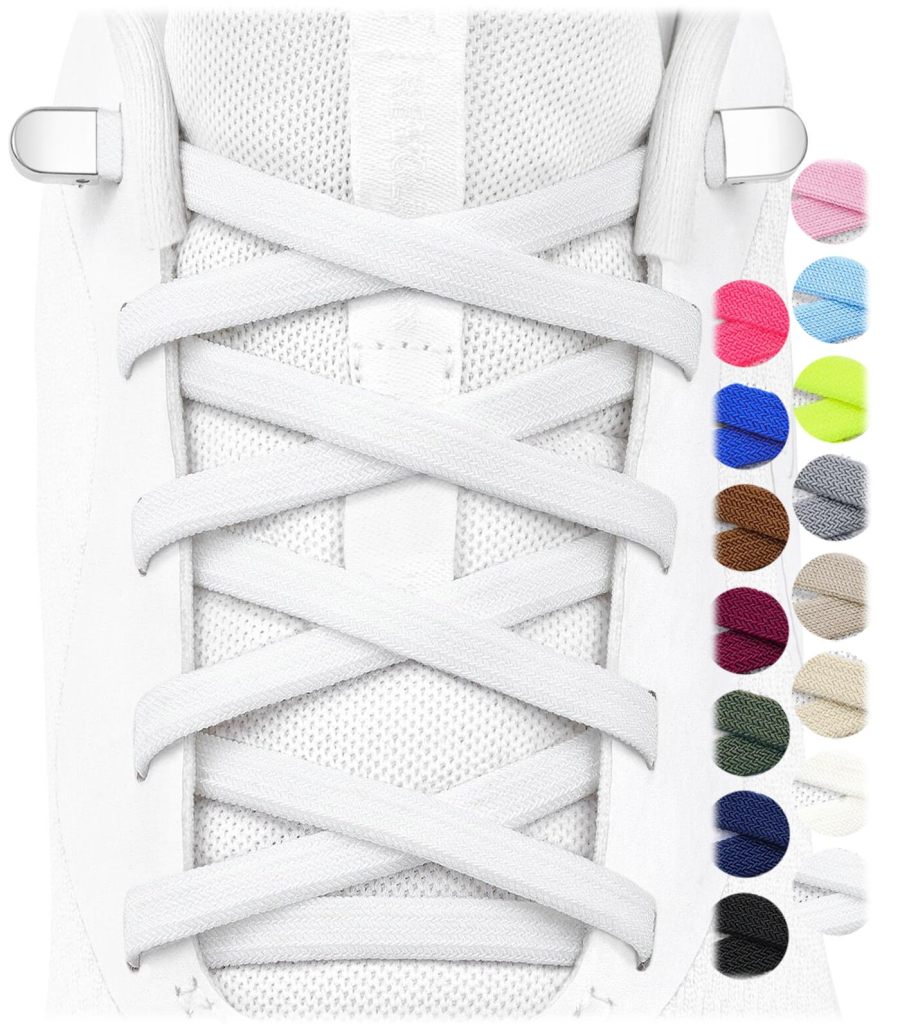
- Multi-Color/Multi-Pack Sets: Offering multiple color choices or multi-pair packs satisfies consumers' personalized matching or backup needs, enhancing perceived value.
- Length Adjustability: Achieving personalized length fit through trimming or offering segmented sizes improves product applicability.
5.1.3 Unique Selling Propositions (USPs)
- Medical-Grade Elastic Fiber: Very few products emphasize material特殊性, claiming to offer superior comfort and health benefits.
- Patented Locking System: Some brands highlight technological advantages and proprietary designs to establish product differentiation and brand reliability.
- Specific Shoe Type Adaptation: Longer versions or special fixation methods designed for high-top shoes or boots provide more specialized solutions.
- Reflective Design: Very few products integrate reflective elements for added safety at night, targeting outdoor night running scenarios.
5.2 Competitive Landscape
5.2.1 Market Maturity
The no-tie elastic shoelace market has entered a mature stage. Basic functionalities like no-tie and elastic comfort have become standard. Product homogenization is high. Competition primarily focuses on price, brand reputation, aesthetic design, and the degree to which core pain points (like durability, ease of installation) are addressed. New product introductions mostly involve incremental innovation or optimization of existing features.
5.2.2 Innovation Trends
Current innovation trends mainly revolve around enhancing user experience details: optimizing lock design for more concealed/secure fixation (e.g., Lock Laces' patented system), adopting more durable, fatigue-resistant elastic materials, and simplifying user installation processes (e.g., providing clearer installation guides or pre-assembled solutions). Additionally, specialized products targeting specific functional needs (e.g., dynamic micro-adjustment during sports, high-intensity abrasion resistance) are gradually becoming a direction for differentiation.
VI. Marketing Claims vs. Reality Check
The table below analyzes the gap between common marketing claims and actual user experiences in this category:
| Dimension | Marketing Claim | User Reality | Verdict |
|---|---|---|---|
| Product Durability | High-quality elastic material, heavy-duty lock, long-lasting durability, lifetime warranty. | User feedback commonly reports locks breaking easily, laces fraying or wearing out, failing within weeks or months, far below 'long-lasting' expectations. | Sellers over-promise on product lifespan and material reliability, failing to meet consumer expectations for basic durability, directly leading to high negative reviews and loss of trust. |
| Installation Ease | Simple 3-minute installation, slip on/off in a second, no tools needed. | Some users report difficult installation requiring trimming, melting ends, or even using tools to thread eyelets or fasten locks; most products lack clear guidance. | Marketing deliberately oversimplifies installation complexity, ignoring differences in user practical ability, leading to a high initial experience barrier that creates negative conflict with the core 'convenience' selling point. |
| Magnetic Stability & Compatibility | Strong magnetic attraction, compatible with MagSafe and all phones with included magnetic ring, secure and won't fall off. | This is a template error; the current analyzed product is 'No-Tie Elastic Shoelaces.' For the shoelace category, similar misalignment exists in claims like 'one size fits all' not matching actual lengths, or 'secure and non-slip' yet still having loosening risk during vigorous activity. | Such exaggeration of universality and stability ignores individual differences and scenario limitations in actual use, leading users to have overly high expectations of product functionality. |
Key Takeaway: The market shows a widespread tendency to over-glamorize product experience and exaggerate specifications in marketing claims, especially regarding durability and installation ease, which severely diverges from actual user feedback.
VII. Supply-Demand Misalignment Analysis
The table below highlights mismatches between seller focus and buyer priorities:
| Dimension | Seller Behavior | User Focus | Verdict |
|---|---|---|---|
| Product Durability | Commonly emphasize 'high quality,' 'premium materials,' 'heavy-duty lock,' but lack specific supporting data or consumer-perceivable details, and avoid discussing potential durability issues. | User reviews frequently mention negative feedback like 'breaks easily,' 'wears out,' 'clasp falls off,' clearly indicating durability is a major pain point. | Sellers fail to acknowledge and address consumer concerns about the product's core durability, creating a fatal trust gap between marketing communication and actual user needs. |
| Installation & Adjustment Experience | Most sellers advertise 'easy installation,' 'slip on/off in a second,' but ignore complex steps like trimming, melting ends, adjusting tightness, or lack of instructions. | Users complain about 'difficult installation,' 'no instructions,' 'can't fix after trimming,' 'inconvenient adjustment,' reflecting installation as the first major hurdle. | Sellers overlook the user's initial installation pain point during the sales process, failing to provide complete solutions or clear guidance, leading to poor initial user experience. |
| Aesthetic Design & Material Diversity | While offering multiple colors, product forms and materials (e.g., flat elastic cord, silicone segments) tend to be homogeneous, with little deep innovation in aesthetics or novel materials. | Some users desire more invisible, premium, or fashionable options, or have reservations about the 'non-traditional lace' look of silicone versions. | The market over-focuses on basic colors and traditional materials, failing to deeply explore consumers' latent demand for personalization, premium aesthetics, and innovative materials, resulting in products lacking unique appeal. |
Key Takeaway: Sellers excessively emphasize the basic 'no-tie' function but collectively under-communicate or remain silent on user's most critical pain points like 'actual durability' and 'painless installation.'
VIII. Strategic Opportunities & Recommendations
8.1 Enhanced Lock & High-Toughness Lace Set
8.1.1 Target Audience & Pain Points
⚡️ Pain Points Addressed: Lock prone to damage/detachment, poor lace body durability, inconvenient tightness adjustment.
8.1.2 Action Plan
Use aerospace-grade aluminum alloy or high-polymer materials for locks, optimizing structural design for ultimate anti-slip and durability. Upgrade laces to multi-layer woven high-strength elastic fiber, increasing abrasion and stretch resistance. Design a stepless adjustment system for one-handed quick micro-adjustment of tightness.
| Tech Complexity | Medium |
| Cost Impact | Medium Impact |
| Trade-off Warning | Increasing lock strength may slightly increase its size or weight, but impact on overall wearing experience is minimal. High-toughness material may slightly reduce ultimate softness, requiring balance. |
| Price Band | Only viable above $8.99 (per pair) |
8.1.3 Marketing Strategy
Emphasize 'Military-Grade Durability, Never Slips Off'; provide 10,000-stretch test video showcasing reliability in extreme scenarios; highlight the promise of 'Sports-Level Security, Daily Peace of Mind.'
8.2 No-Cut, No-Melt, Ultra-Simple Installation Laces
8.2.1 Target Audience & Pain Points
⚡️ Pain Points Addressed: Complex/unclear installation process requiring manual cutting and melting.
8.2.2 Action Plan
Design laces in multiple pre-set lengths, combined with detachable, embedded lock systems, enabling plug-and-play installation without cutting or melting. Provide detailed, easy-to-understand AR installation guide app or physical model to simplify user operation.
| Tech Complexity | Medium |
| Cost Impact | Medium Impact |
| Trade-off Warning | Pre-set lengths may not perfectly fit all shoe models, requiring multiple length options. No-cut design may prevent complete hiding of lace ends, requiring optimized aesthetic solutions. |
| Price Band | Only viable above $7.99 (per pair) |
8.2.3 Marketing Strategy
Lead with 'Zero-Skill Installation, No Cutting, Done in 30 Seconds'; use comparison videos to show efficiency gap vs. traditional installation; emphasize 'Worry-Free, Effortless, Anyone Can Easily Change Them.'
8.3 Invisible Aesthetic Custom Elastic Laces
8.3.1 Target Audience & Pain Points
⚡️ Pain Points Addressed: Poor aesthetic appeal, lack of personalized customization, visually obtrusive silicone versions.
8.3.2 Action Plan
Launch elastic laces in various colors and textures (e.g., linen-look, matte). Design smaller or internally concealable locks to ensure laces blend seamlessly with the shoe upper. Consider collaborations with streetwear designers for co-branded or IP-customized editions to elevate fashion attributes.
| Tech Complexity | Low |
| Cost Impact | Low Impact |
| Trade-off Warning | Invisible design may require more complex or slender fasteners, potentially affecting some strength; balance between aesthetics and function is needed. |
| Price Band | Only viable above $12.99 (per pair) |
8.3.3 Marketing Strategy
Emphasize 'Seamless Style, Fashion Upgrade'; showcase styling effects through fashion bloggers, highlight 'Your Shoes, Your Style'; provide online DIY color tool to satisfy personalized needs.
8.4 Professional Sports Cushioning Elastic Laces
8.4.1 Target Audience & Pain Points
⚡️ Pain Points Addressed: Uneven foot pressure, insufficient support during intense activity.
8.4.2 Action Plan
Use elastic materials with gradient pressure distribution or localized thickening designs to provide more professional arch support and cushioning. Design locks allowing quick micro-adjustment during activity to accommodate foot swelling and shape changes.
| Tech Complexity | Medium |
| Cost Impact | Medium Impact |
| Trade-off Warning | Special cushioning or support structures may slightly increase lace thickness or stiffness, potentially affecting compatibility with some shoe models; trade-off between function and universality is needed. |
| Price Band | Only viable above $10.99 (per pair) |
8.4.3 Marketing Strategy
Highlight 'Sport-Specific, Cushioning Enhanced'; use sports science data or professional athlete endorsements to emphasize advantages in boosting performance and reducing foot fatigue.