D-FantiX Battery Tester, Universal Battery Checker Small Battery Testers for AAA AA C D 9V 1.5V Button Cell Household Batteries Model BT-168
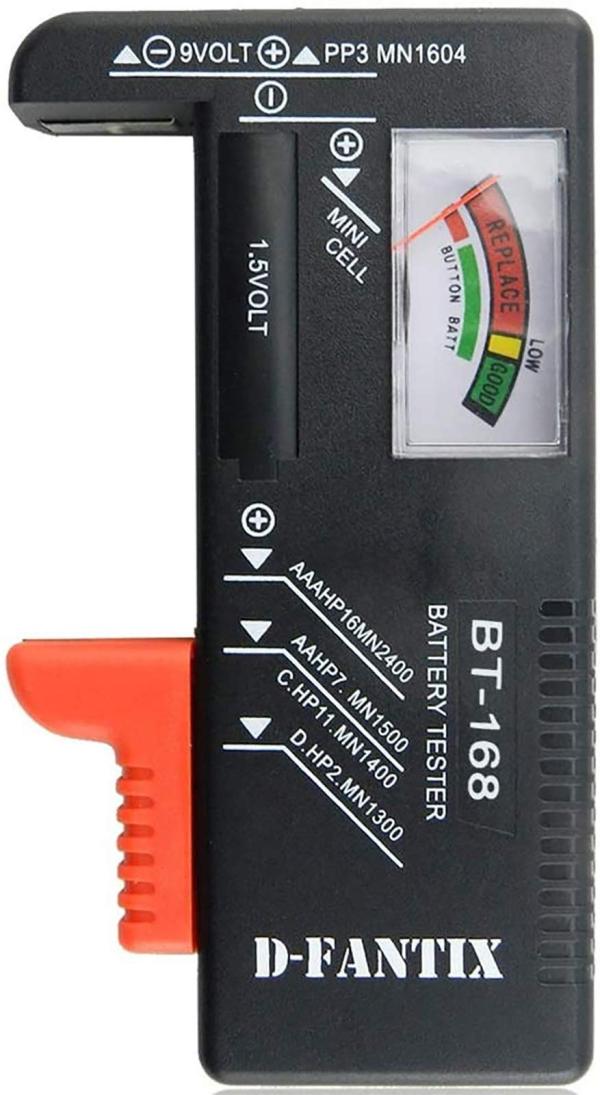
Brand: D-FantiX
ASIN: B014FEM0X6 ✓ Copied!
PASIN: B014FEM0X6
Price: $7.99
About this item
- SMALL & PRACTICAL - Simple but effective battery tester checker for home (BT-168) , compact size and lightweight,easy to carry
- BATTERY TESTER FOR ALL BATTERIES - The universal battery tester works with standard and rechargeable household batteries: AA, AAA, C, D, 1.5V,9V and button type
- REQUIRE NO BATTERY TO OPERATE - Easy-to-read ,the analog display needle moves on a color-coded, calibrated scale to quickly identify "good" (green), "low" (yellow), and "replace/recharge" (red) battery status. No batteries required.It is activated by the battery being checked
- PERFECT FOR HOME USE - Great small battery tester can tell you if your battery is good, low, or needs to be replaced.A must buy for anyone who uses regular or rechargeable batteries on a regular basis
- SAVE BATTERIES - You can simply test battery voltage to determine whether the capacity of the battery is low or high. It won't directly detect the battery capacity precisely. This will keep us from wasting perfectly good batteries by throwing out good ones
Core Selling Points Analysis
🎯 Universal battery tester, compatible with various common household batteries
🎯 No additional batteries required for operation, self-sufficient
🎯 Simple, intuitive operation, effectively saves batteries
Pros & Cons Analysis
Product Pros
-
No External Power Required
Self-sufficient, powered directly by the battery being tested, eliminating the cost and hassle of additional batteries, superior to competitors that require their own power source. -
Wide Battery Compatibility
Supports various common household battery types like AAA, AA, C, D, 9V, 1.5V button cells, etc., offering versatility and broad coverage with one device. -
Intuitive and Simple Operation
Features a color-coded analog needle display for quick battery status identification (Good/Low/Replace), requiring minimal user learning, making it ideal for home use. -
Strong Economic Practicality
Provides basic testing functionality at a highly competitive price ($7.99), effectively preventing the disposal of batteries that still have charge, thereby saving household expenses. -
Compact and Portable Design
Small and lightweight (1.76 oz), easy to use, store around the house, or carry along, offering greater flexibility compared to bulky multi-meters.
Product Cons
-
Lacks Precise Capacity Reading
Only provides a voltage status judgment (Good/Low/Replace), unable to display the remaining battery capacity percentage, less precise and accurate than digital competitors. -
Perceived Average Quality
Some users report the product feels cheaply made with subpar tactile feedback; long-term durability may not match that of higher-end or more established brands. -
Reading Consistency Issues
There are user reports of inaccurate readings or inconsistent results due to poor battery contact, affecting its reliability for critical judgments. -
Limitations of Analog Dial
The analog needle display lacks the precision of digital readouts, potentially leading to unclear judgments for batteries in borderline states and causing ambiguity. -
Difficult Battery Contact
Some users note difficulty aligning contact points for certain batteries (e.g., AA) during testing, which can impact testing efficiency and user experience.
🕵️♂️ Are these common issues in the category or isolated cases? View Related Category Analysis for industry-level insights.
Related Category Analysis
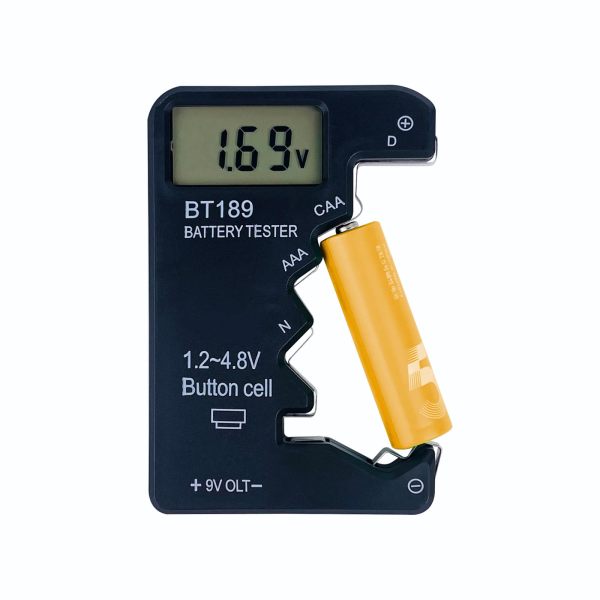
Amazon US Market Analysis: Household Battery Tester Category
Intense low-price homogenized competition, user experience details becoming the breakthrough point. The household battery tester market shows high maturity and homogenization. Mainstream products commonly emphasize universal compatibility, easy operation, and cost savings. Co