Battery Tester Checker, Seven Type Universal Battery Checker for C AA AAA D N 9V (6F22) and 1.5V Button Cell Household Batteries (Requires No Battery for Operating)
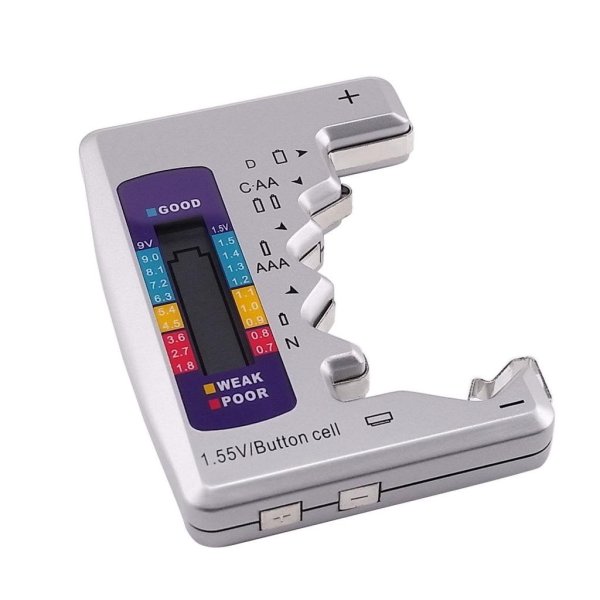
Brand: Gain Express
ASIN: B00M93QQ3G ✓ Copied!
PASIN: B00M93QQ3G
Price: $8.90
About this item
- ★ HIGH COMPATIBILITY Testing Range: C, AA, AAA, D, N, 9V (6F22) and 1.55V button battery
- ★ LCD SCREEN: Easy-to-use analyzer shows what you need to know about your battery’s health, it will accurately shows whether the battery is in poor, weak, or good condition of voltage.
- ★ No batteries required. The Battery Tester is activated by the battery being checked. Keep test times as short as possible to avoid unnecessary battery drain.
- ★ REMARKABLY COMPACT: Suitable for carbon, zinc, alkaline
- ★ WHAT YOU GET -1 x Battery Tester, 1 x English Instruction Manual ,Blister type standard packaging
Core Selling Points Analysis
🎯 Multi-type battery compatibility, intuitive LCD display
🎯 No battery required for operation, ready to use
🎯 Compact and portable, easy to store
Pros & Cons Analysis
Product Pros
-
Broad Compatibility
Supports various household batteries including C, AA, AAA, D, N, 9V, and 1.5V button cells, offering significantly wider compatibility than most basic competitors. -
No External Power Required
The tester itself requires no batteries; it is activated by the battery being tested, avoiding the common issue of the tester being unusable due to its own dead battery. -
Intuitive LCD Display
Directly displays battery status as 'Bad/Weak/Good' on an LCD screen, making it easier for average users to understand compared to needle gauges or purely numerical displays. -
Extreme Portability
Compact dimensions of only 3x2x1 inches and a light weight of 1.41 ounces make it highly portable and easy to store, outperforming bulkier similar products. -
High Cost-Effectiveness
Offers core functionality and broad compatibility at the low price of $8.90, widely perceived by customers as offering good value for money and possessing price competitiveness.
Product Cons
-
Questionable Reading Accuracy
Customer feedback includes complaints about inconsistent or unstable readings, which represents a core functional weakness for a battery tester. -
9V Battery Compatibility Conflict
Product marketing claims support for 9V batteries, but some users explicitly report inability to test them, constituting a serious discrepancy between advertised and actual functionality. -
Limited Display Information
The LCD only provides a three-stage status judgment, lacking precise voltage values or remaining capacity percentage, failing to meet the needs of professional users for detailed data. (Inferred based on experience with similar products) -
Lack of Support for Special Models
Some users report inability to test specific battery models like MN21/A23, limiting the applicability of its 'universal' attribute. -
Absence of Advanced Features
Lacks advanced functions such as internal resistance testing or capacity estimation, putting it at a disadvantage when competing with more professional or high-end alternatives. (Inferred based on experience with similar products)
🕵️♂️ Are these common issues in the category or isolated cases? View Related Category Analysis for industry-level insights.
Related Category Analysis
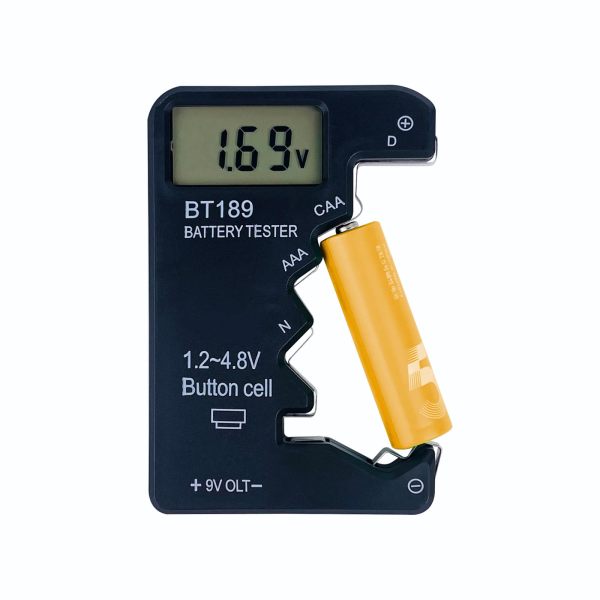
Amazon US Market Analysis: Household Battery Tester Category
Intense low-price homogenized competition, user experience details becoming the breakthrough point. The household battery tester market shows high maturity and homogenization. Mainstream products commonly emphasize universal compatibility, easy operation, and cost savings. Co