Amazon US Market Analysis: Maternity Belly Bands Category
📊 Executive Summary
📈 Market Trends
Diverse user needs, but severe product homogenization. The maternity belly band market covers various segmented needs like prenatal support, clothing extension, and postpartum recovery, but existing products generally compete on generic selling points like 'comfort & breathability' and 'adjustability'. The market lacks products that truly solve core pain points and offer unique value; innovation focuses on marketing language rather than substantive functional breakthroughs.
⚡ Major Pain Points
Velcro failure, rolling/slipping, and size mismatch are high-frequency user complaints. Despite brands claiming anti-slip, durability, and one-size-fits-all, users commonly report poor Velcro adhesion, bands rolling up or slipping down, and 'one-size' failing to adapt to diverse body types, leading to poor wear experience and compromised functionality. Additionally, breathability and support strength often fall short of expectations.
💡 Selection Opportunities
Deepen focus on user pain points, improve materials and structural craftsmanship. Market opportunities lie in developing a Long-Lasting High-Adhesion Anti-Slip Belly Band to solve Velcro and rolling issues, enhancing product durability. Next is launching a Precision-Sized Customized Cooling Support Band, optimizing comfort through segmented sizing and cooling materials. For the premium market, consider a Postpartum Wound Protection & Diastasis Recti Recovery Binder, offering a professional-grade solution. Simultaneously, Multi-Scenario Invisible Belly Support Leggings/Undergarment can meet the needs of daily pregnant women seeking aesthetics and convenience.
I. Analysis Overview
1.1 Introduction & Report Scope
This report analyzes the 'Belly Bands' category (Maternity Belly Bands) in the US Amazon market, focusing on target user personas, core needs, decision factors, market communication, and potential opportunities.
1.2 Category Snapshot
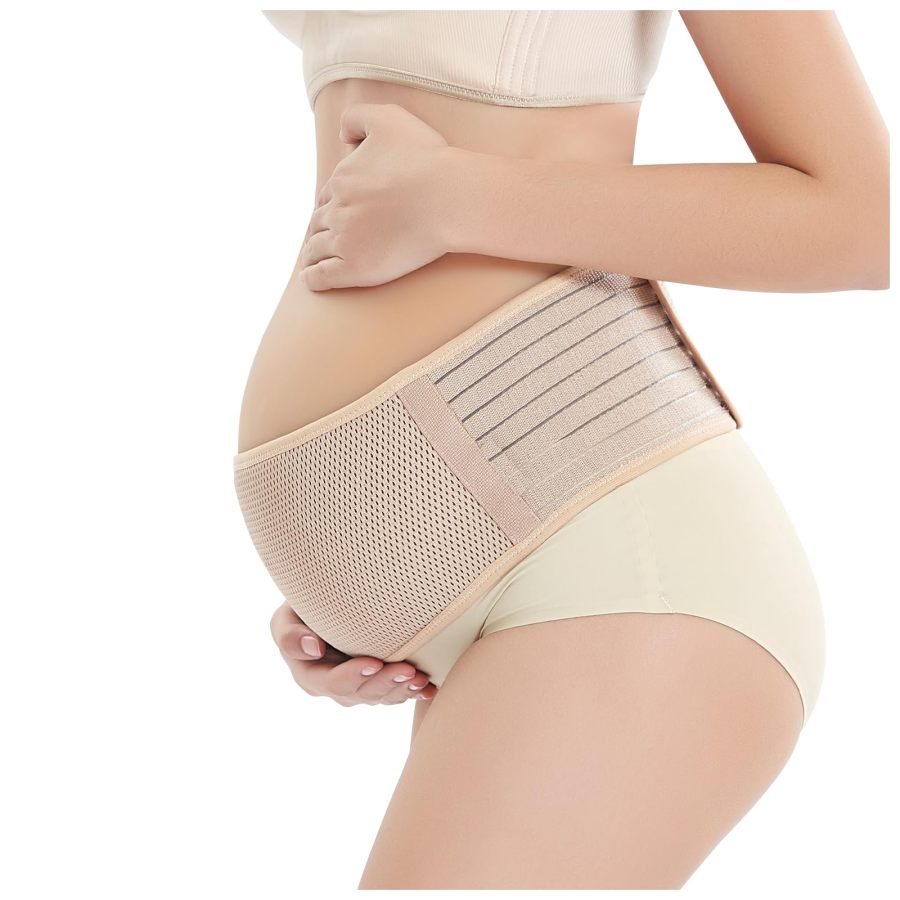
Maternity belly bands (also known as prenatal/postpartum support bands) are functional apparel accessories specifically designed for women during pregnancy and after childbirth. Their core function is to provide physical support, alleviating discomfort in the lower back, pelvis, and round ligaments caused by the growing abdomen during pregnancy. They can also serve as extenders for existing clothing or be used postpartum for abdominal tightening and C-section wound recovery. Product forms vary, including elastic tubular bands and multi-panel adjustable belts. The following table illustrates the key characteristics of consumer behavior in this category.
| Dimension | Segment | Description |
|---|---|---|
| Need Driver Type | Emergency-driven/Planned Purchase | Primarily driven by immediate purchases due to physical discomfort during pregnancy, but also includes planned needs for extending clothing lifespan or postpartum recovery. |
| Purchase Frequency | Low Frequency/Stage-specific | Typically purchased once during the second or third trimester; some users may purchase again due to changes in pregnancy stage or postpartum needs. |
| Decision Complexity | Medium | Users need to compare support effectiveness, comfort, material breathability, size fit, and reviews, requiring some research effort. |
| Price Sensitivity | Medium | To alleviate pain and ensure comfort, users are willing to pay a reasonable premium for high-quality or well-reviewed products. |
| Emotional Dependency | Medium-High | The product directly impacts quality of life during pregnancy/postpartum, with a strong emotional value derived from the comfort and security of effective support. |
II. User Personas & Usage Scenarios
2.1 Pain-Relief Seeking Expectant Mother
🎯 In the mid-to-late stages of pregnancy, suffering from lower back, pelvic, and round ligament pain,渴望 immediate and effective physical support to maintain daily activities.
| Typical Usage Scenarios | Core Pain Points | Primary Purchase Drivers |
|---|---|---|
|
|
|
2.2 Practical & Budget-Conscious Expectant Mother
🎯 Focuses on practicality and value for money, hoping to continue wearing existing non-maternity clothes during pregnancy to avoid buying a large amount of maternity wear, while pursuing basic comfort and coverage.
| Typical Usage Scenarios | Core Pain Points | Primary Purchase Drivers |
|---|---|---|
|
|
|
2.3 Postpartum Recovery Mother
🎯 Recently gave birth, hoping to use a binder to accelerate uterine involution, tighten abdominal muscles, provide support for C-section wounds, and reshape the body.
| Typical Usage Scenarios | Core Pain Points | Primary Purchase Drivers |
|---|---|---|
|
|
|
III. User Needs Hierarchy (KANO Model)
3.1 Basic Needs (Must-Haves)
- Comfort & Breathability: Soft, skin-friendly fabric that is not stuffy, suitable for long-term wear, avoiding skin irritation.
- Easy to Wear: Easy to put on and adjust independently, simple to operate, requiring no assistance, especially when mobility is limited.
- Basic Fit: Can cover the pregnant or postpartum abdomen, providing basic snugness, not overly loose or tight.
3.2 Performance Needs (Linear Satisfiers)
- Effective Support: Provides effective physical support for the lower back, abdomen, and pelvis, significantly alleviating pain and heaviness.
- Anti-Slip & Anti-Roll: Does not slip or roll up at the edges after wearing, requiring minimal adjustment, maintaining stability.
- Invisible & Flattering: Can be worn under regular clothes without looking bulky, maintaining aesthetics, not affecting outfits.
- Durability: Secure Velcro, long-lasting fabric elasticity, supporting use throughout pregnancy and postpartum, not easily damaged.
- Multi-Dimensional Adjustability: Allows for multi-dimensional, precise tightening/loosening adjustments to accommodate the rapid size changes of the abdomen during different pregnancy stages.
3.3 Excitement Needs (Delighters)
- Multi-Functionality: Not only suitable for pregnancy but also usable postpartum as a binder or clothing aid (e.g., jeans extender), enhancing value and lifespan.
- Aesthetic Design: Offers fashionable colors, patterns, or more refined styles, catering to pregnant women's desire for beauty, enhancing the wearing experience.
- Additional Resources: Includes professional prenatal health guides, postpartum exercise advice, or online consultation services, adding product value.
- Personalized Customization: Provides more tailored solutions and size recommendations for petite, plus-size, twin pregnancies, etc., improving fit.
3.4 Unmet Needs & Opportunities
-
Velcro Wear & Tear: Multiple product reviews indicate Velcro loses adhesion after some use, affecting fixation and rendering the product ineffective.
User Reviews (VOC) Velcro wears out // the Velcro doesn't stick anymore // the bottom part had no Velcro instead it was all stitched up
-
Rolling Up/Slipping Down: Some products tend to roll up or slip down after wearing, requiring frequent adjustment, severely impacting comfort and user experience.
User Reviews (VOC) rolls up constantly throughout the day // it rolls up terribly, rides up, and slides everywhere on the body.
-
Inaccurate Sizing/Poor Compatibility: 'One-size-fits-all' or limited sizing cannot accommodate all body types, especially plus-size or petite women, leading to poor fit and insufficient support.
User Reviews (VOC) Sizing could be described better. This band doesn't come in enough sizes. // Not great quality control. The sizing is off between products. // Not suitable for long torsos or plus-size customers.
-
Thick & Non-Breathable: Some products use thick materials, especially in summer or during prolonged wear, causing stuffiness, sweating, and skin discomfort.
User Reviews (VOC) the material felt scratchy. I would prefer something softer and more comfortable and that provides more support. // the material isn't breathable or comfortable! I can't wear mine for long time as it feels tight over my belly is more of shapewear.
-
Insufficient Support Strength: Some products only offer surface coverage rather than effective support, failing to alleviate severe back or pelvic pain, not meeting core user expectations.
User Reviews (VOC) doesn't give support though so I'd say these are best as belly covers. // Can't get it tight enough to actually support my baby bump, it slouches as I walk and hurts my lower back.
IV. User Decision Drivers
4.1 Key Decision Factors
- Pain Relief Effectiveness: Whether it can effectively reduce lower back, pelvic, round ligament pain, and abdominal heaviness is the primary driver for purchase.
- Comfort: Whether it is skin-friendly, breathable, and non-restrictive during long-term wear, directly affecting willingness to use and daily experience.
- Support Strength: Whether it can stably support the abdomen, providing sufficient physical lift, giving pregnant women a sense of security.
- Adjustability: Whether it can be easily adjusted for tightness as the abdominal size changes during pregnancy, maintaining a consistent fit for different stages.
4.2 Secondary Decision Factors
- Anti-Slip/Anti-Roll: Whether the product stays in place after wearing, not requiring frequent adjustments, impacting daily convenience and comfort.
- Invisible Effect: Whether it appears unobtrusive under everyday clothing, meeting users' concerns about appearance and styling needs.
- Durability: Whether the Velcro and fabric can last through the entire pregnancy or longer, affecting product value and repurchase intent.
- Multi-Functionality: Whether it can be used for postpartum recovery or as a clothing aid (e.g., pants extender), increasing product utility value.
- Price: Consideration of value for money under the premise of meeting core needs, especially for budget-conscious consumers.
V. Selling Points & Competitive Landscape
5.1 Selling Point Analysis
5.1.1 Standard Features (Points of Parity)
- Comfort & Breathability: Emphasizes soft, skin-friendly materials ensuring comfort for extended wear, avoiding stuffiness.
- Adjustability: Highlights the product's ease of adjustment according to abdominal changes, achieving personalized fit.
- Pain Relief: Promotes relief for lower back, pelvic, abdominal heaviness, and round ligament pain.
- Multi-Functionality: Emphasizes dual-use for prenatal support and postpartum recovery (common '3-in-1'), some mention clothing extension.
- Invisible Wear: Claims it can be worn under clothes without looking bulky, maintaining aesthetics and not affecting daily outfits.
5.1.2 Key Differentiators
- Ergonomic Design: Emphasizes 360° or Ergonest back support, more precise pressure distribution, providing structured support.
- Multiple Sizes/One-Size Optimization: Offers a wider range of size options, or optimizes 'one-size' for better fit (e.g., includes extender belt).
- Anti-Slip Design: Built-in silicone strips or special materials to prevent slipping or rolling, reducing adjustment frequency.
- Additional Accessories: Includes jeans extenders or prenatal guidebooks, adding product value.
- Professional Recommendation/Guidance: Marketed as doctor-recommended or includes prenatal/postpartum guides, enhancing professional endorsement.
5.1.3 Unique Selling Propositions (USPs)
- C-Section Specific Recovery: Explicitly designed for C-section wound protection and abdominal recovery, offering targeted solutions.
- Seamless One-Piece Design: Emphasizes ultimate invisibility and ease of wear, no extra straps, reducing friction and marks.
- Extended Wearable Scenarios: Explicitly mentions suitability for yoga or light exercise, helping pregnant women stay active.
- Pants/Top Extender: Core function for some products is as an extender for existing clothes, helping pregnant women continue wearing non-maternity wear.
5.2 Competitive Landscape
5.2.1 Market Maturity
The current maternity belly band market has medium-high maturity, with severe product homogenization. Mainstream selling points are highly convergent, competition mainly focuses on price and basic function claims. Some brands are attempting differentiation through detailed feature optimization, customization for specific groups (e.g., postpartum), and added value (e.g., guides).
5.2.2 Innovation Trends
Innovation trends lean towards more refined 'Ergonomic Support Design' to enhance pain relief, and 'Multi-functional 3-in-1' products covering the full cycle from pregnancy to postpartum. Simultaneously, attention to 'Seamless Invisibility' and 'Material Breathability' is increasing, aiming to optimize daily wear experience. However, these innovations remain at the claim level, with significant room for improvement in actual user experience.
VI. Marketing Claims vs. Reality Check
The table below analyzes the gap between common marketing claims and actual user experiences in this category:
| Dimension | Marketing Claim | User Reality | Verdict |
|---|---|---|---|
| Anti-Slip & Fixation Effectiveness | Firm silicone anti-slip, no rolling or slipping, stays securely in place all day. | Numerous user reviews report the product still tends to roll up or slip during daily activities, requiring frequent adjustment, even products with silicone strips. | Sellers overstate anti-slip effectiveness, ignoring the complexity of human movement and body shape variations, causing the core selling point to fail in users' hands, severely impacting wear experience. |
| Material Breathability & Comfort | Super soft, breathable, skin-friendly fabric, cool and comfortable even in summer. | Some users report rough material, scratchy feel, or feeling stuffy and non-breathable in summer, suggesting not to wear directly against skin, contradicting 'super soft' and 'cool' claims. | Breathability is often sacrificed to ensure support strength and control costs, yet sellers exaggerate comfort. This material compromise is masked in marketing, leading to unmet user expectations for comfort. |
| Size Compatibility & 'One-Size' Adaptability | One-size adjustable, fits all pregnancy stages, perfect fit for any body shape. | Users report limited size options or inconsistent sizing between products, especially poor fit and insufficient support for petite or plus-size body types, even causing a 'reverse muffin top' effect. | The 'one-size' concept fails against complex human body shape variations. Sellers try to cover broad needs with a single size but sacrifice fit and effective support for specific user groups, representing a design logic flaw. |
Key Takeaway: The market exhibits widespread parameter inflation and exaggeration of scenario-based experiences, particularly regarding support stability, material comfort, and actual support effectiveness. User feedback shows a clear gap with claims.
VII. Supply-Demand Misalignment Analysis
The table below highlights mismatches between seller focus and buyer priorities:
| Dimension | Seller Behavior | User Focus | Verdict |
|---|---|---|---|
| Velcro Durability & Fixation Effectiveness | Sellers generally emphasize Velcro's 'adjustability' but rarely mention its durability and anti-fraying capability over long-term use. For example, some claim 'improved reinforced Velcro', but reviews still mention wear issues. | Users report Velcro loses adhesion, comes loose easily after some use, directly causing the product to fail to provide effective support, becoming a core pain point requiring frequent replacement. | Sellers neglect the lifecycle management of Velcro as the core fixation mechanism. Its short effective lifespan creates a huge gap with user expectations for long-term value, a classic unsolved 'short-board effect'. |
| Actual Anti-Slip/Anti-Roll Design | Sellers heavily promote 'silicone anti-slip strips', 'seamless invisible' to guarantee no rolling/slipping, but generally fail to deliver on this promise. | Users frequently complain the product rolls up or slips down when sitting, walking, or during significant movement, requiring constant manual adjustment, causing ongoing frustration and discomfort. | Anti-slip design is superficial, failing to fundamentally address friction and biomechanical issues in dynamic wearing scenarios, causing users repeated frustration regarding core comfort and convenience. |
| 'One-Size' vs. Actual Body Fit | Some sellers promote 'one-size' as a selling point, claiming adaptability to all pregnancy stages and body shapes, but lack sufficient sizing guidance or innovative design to achieve true universality. | Users report 'one-size' often doesn't fit petite or plus-size bodies well, leading to insufficient support or excessive tightness, even inability to wear, expressing strong dissatisfaction with fit. | Sellers are overly optimistic about 'one-size', ignoring the diversity and complexity of pregnant body shapes, leading to structural defects in basic fit, wasting R&D and marketing resources. |
Key Takeaway: Sellers generally oversupply on generic selling points like 'comfort & breathability' and 'multi-functionality', but are collectively silent or fail to provide effective solutions for core user pain points like 'Velcro durability', 'actual anti-slip effectiveness', and 'precise size fit'.
VIII. Strategic Opportunities & Recommendations
8.1 Long-Lasting High-Adhesion Anti-Slip Belly Band
8.1.1 Target Audience & Pain Points
⚡️ Pain Points Addressed: Velcro wear & tear, Rolling up/Slipping down.
8.1.2 Action Plan
Adopt military-grade or medical-grade durable Velcro, tested for over 10,000 open/close cycles while maintaining over 90% adhesion; embed flexible memory alloy boning or innovative dot-matrix silicone at edges for multi-directional anti-roll support; provide machine-washable protective bag to extend product life.
| Tech Complexity | Medium |
| Cost Impact | Medium Impact |
| Trade-off Warning | Using more durable Velcro or anti-slip materials may slightly increase product stiffness or cost, requiring balance with material softness. |
| Price Band | Only viable above $24.99 |
8.1.3 Marketing Strategy
Emphasize 'Lasting Stability, Say Goodbye to Constant Adjustments'; demonstrate superior anti-slip/anti-roll performance and durability through lab test data and real-user dynamic scenario videos; offer a 5-year Velcro quality guarantee.
8.2 Precision-Sized Customized Cooling Support Band
8.2.1 Target Audience & Pain Points
⚡️ Pain Points Addressed: Inaccurate Sizing/Poor Compatibility, Thick & Non-Breathable.
8.2.2 Action Plan
Offer 6-8 sizes, provide personalized size recommendation tool based on waist/hip measurements and pregnancy week; use high-elastic Lycra blended with bamboo fiber/cooling yarn for cooling fabric, add laser-perforated breathable zones; offer short-torso/long-torso versions to optimize fit.
| Tech Complexity | Medium |
| Cost Impact | Medium Impact |
| Trade-off Warning | A finer size system increases SKU management complexity and inventory pressure; cooling fabric typically costs more than standard fabric, requiring high-value suppliers. |
| Price Band | Only viable above $29.99 |
8.2.3 Marketing Strategy
Promote 'Custom-Grade Cooling Support, Breathe Freer'; publish detailed size selection guide charts, even offer AI online size assistant; highlight the sensory advantage of innovative cooling fabric in hot climates; invite KOLs of different body types for review feedback.
8.3 Postpartum Wound Protection & Diastasis Recti Recovery Binder
8.3.1 Target Audience & Pain Points
⚡️ Pain Points Addressed: Postpartum abdominal looseness/weakness, C-section wound pain, Body image anxiety, Insufficient professionalism of existing products.
8.3.2 Action Plan
Design soft padding and antimicrobial layer specifically for C-section wounds; adopt zoned progressive compression structure, supplemented by diastasis recti support panels advised by orthopedic specialists; material should balance breathability and stable support, ensuring comfort for long-term wear.
| Tech Complexity | High |
| Cost Impact | High Impact |
| Trade-off Warning | Multi-zone segmented compression design increases mold and production process complexity, may affect breathability; medical-grade material costs are higher, may require FDA etc. certification. |
| Price Band | Only viable above $39.99 |
8.3.3 Marketing Strategy
Emphasize 'C-Section Specialized, Scientifically Accelerated Recovery'; collaborate with OB/GYNs or postpartum recovery specialists for endorsement, provide professional guidebooks and online courses; demonstrate diastasis recti repair effects via comparison images, highlight the product's medical-grade support and safety assurance.
8.4 Multi-Scenario Invisible Belly Support Leggings/Undergarment
8.4.1 Target Audience & Pain Points
⚡️ Pain Points Addressed: Belly band visibility, questionable pants fixation.
8.4.2 Action Plan
Develop one-piece high-waisted belly support tights or seamless camisoles with built-in gentle support structure and anti-slip edges, ensuring smooth transition from abdomen to waist, leaving no lines; offer multiple colors to match different outfits.
| Tech Complexity | Low |
| Cost Impact | Low Impact |
| Trade-off Warning | One-piece design limits flexibility in pairing with different pants but offers stronger overall invisible effect. |
| Price Band | Only viable above $19.99 |
8.4.3 Marketing Strategy
Promote 'Seamless & Invisible, Styling Worry-Free'; demonstrate its invisible effect under fitted dresses or jeans via model wear shots; emphasize its value as a fashionable base layer, helping pregnant women look stylish during pregnancy.