Amazon US Market Analysis: Boot & Shoe Scrapers/Cleaners Category
📊 Executive Summary
📈 Market Trends
Heavy-duty and efficiency are category cornerstones; convenience and durability are future directions. The Amazon Boot & Shoe Scraper/Cleaner market is fiercely competitive. Consumers have high baseline demands for cleaning power and sturdiness. Future trends involve improving stability of no-installation use, broadening footwear compatibility, and moving towards modular, easy-maintenance, aesthetically-designed products.
⚡ Major Pain Points
Durability misrepresentation, installation instability, and size limitations are core complaints. Seller claims of 'heavy-duty durability' often conflict with reality of fast bristle wear, metal rust, wood cracking. 'No-installation' designs perform poorly in actual stability. Products commonly lack sufficient fit for large footwear and have cleaning dead spots at toes/heels, severely impacting user experience.
💡 Selection Opportunities
Deeply address user pain points to win with 'real stability' and 'long-term value'. Selection opportunities lie in developing an 'Extra-Wide Heavy-Duty Self-Stabilizing' cleaner to solve large footwear compatibility and no-install stability issues. Launching a 'Modular Replaceable Brush Head' system emphasizes eco-friendliness and economy, addressing bristle wear pain points. Implementing ergonomic 'No Dead Spot' design thoroughly solves heel/toe cleaning blind spots. These improvements will significantly boost user satisfaction and build brand trust and market differentiation.
I. Analysis Overview
1.1 Introduction & Report Scope
This report analyzes the 'Shoe Brushes' category (Boot & Shoe Scrapers/Cleaners) in the Amazon US market, focusing on target user personas, core needs, decision factors, market communication, and potential opportunities.
1.2 Category Snapshot
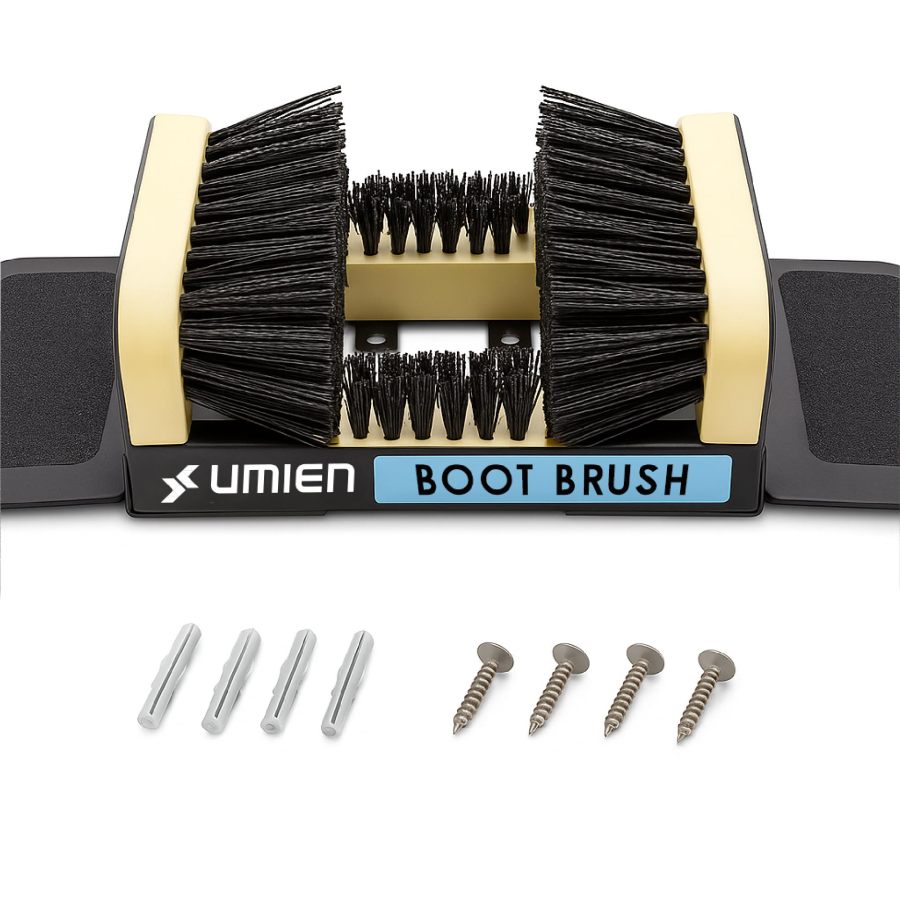
A Boot & Shoe Scraper/Cleaner (also known as a boot brush, boot scraper) is a heavy-duty outdoor cleaning tool primarily used to efficiently remove mud, dust, snow, grass clippings, and gravel from various footwear like boots, work shoes, hiking boots, and golf shoes before entering indoors. It typically consists of a sturdy metal frame and stiff bristles, often designed for permanent mounting or stable use via a foot-operated side wing to effectively maintain indoor cleanliness. The following table illustrates the key characteristics of consumer behavior in this category.
| Dimension | Segment | Description |
|---|---|---|
| Need Driver Type | Emergency-driven Purchase / Planned Purchase | Users often have an immediate cleaning need after footwear gets heavily soiled, while others proactively purchase the product in advance to maintain long-term indoor cleanliness. |
| Purchase Frequency | Low Frequency / Seasonal | Purchase frequency is typically low (once every few years), but demand may rise during rainy/snowy seasons or among those engaged in outdoor work. |
| Decision Complexity | Medium | Users compare cleaning effectiveness, durability, installation method, size compatibility, and brand reputation, requiring some information evaluation. |
| Price Sensitivity | Medium to High | Price is an important consideration, but users are more inclined to pay a reasonable premium for products with good cleaning power and long-term durability. |
| Emotional Dependency | Low | Primarily based on functional utility, emotional dependency is low. However, the peace of mind and indoor cleanliness resulting from efficient cleaning enhance satisfaction. |
II. User Personas & Usage Scenarios
2.1 Heavy-Duty Outdoor Worker
🎯 Resides on farms, in rural areas, or works in construction, landscaping, field exploration, etc. Boots are constantly exposed to harsh environments like mud, dust, and manure.
| Typical Usage Scenarios | Core Pain Points | Primary Purchase Drivers |
|---|---|---|
|
|
|
2.2 Outdoor Enthusiast / Pet Owner Who Values Quality of Life
🎯 Frequently engages in outdoor activities like hiking, golf, trail running, or has pets that need walking. Values personal appearance and a clean home environment.
| Typical Usage Scenarios | Core Pain Points | Primary Purchase Drivers |
|---|---|---|
|
|
|
III. User Needs Hierarchy (KANO Model)
3.1 Basic Needs (Must-Haves)
- Powerful Cleaning Ability: Must effectively remove various contaminants like mud, dust, snow, grass from shoe soles and sides.
- Stable, Non-Wobbly Structure: Product should be stable during use, not easily shifting or tipping over, ensuring safety and cleaning efficiency.
- Simple, Intuitive Operation: Users should be able to clean footwear easily without complex learning or bending over.
- Includes Necessary Mounting Hardware: If designed for permanent use, must include high-quality screws, wall plugs, etc.
3.2 Performance Needs (Linear Satisfiers)
- Excellent Weather Resistance: Materials should withstand long-term outdoor exposure to sun, rain, frost without rusting, corroding, or cracking.
- Long-Lasting, Wear-Resistant Bristles: Bristles should be tough, not easily deforming, flattening, or falling out, maintaining cleaning power long-term.
- Broad Footwear Compatibility: Should easily accommodate different sizes, widths, and styles, especially large work boots, hiking shoes.
- Multi-Directional Deep Cleaning: Bristle design should clean soles and sides simultaneously, effectively reaching toe and heel areas.
- Easy Cleaner Maintenance: The product itself should be easy to clean; accumulated dirt should be easily dumped or rinsed off.
3.3 Excitement Needs (Delighters)
- No-Installation Self-Stabilizing Design: Achieves stability via its own weight or clever footplate design, no drilling required, easy to move and deploy.
- Replaceable Brush Head Mechanism: Worn bristles can be replaced by purchasing a new brush head separately, extending product life and lowering long-term cost.
- Sleek, Refined Aesthetics: Fashionable design that blends into modern home or patio settings, not just a tool but a practical and stylish outdoor accessory.
3.4 Unmet Needs & Opportunities
-
Poor Large Boot/Shoe Fit: Brush slot too narrow, ineffective for cleaning large or wide boots, causing inconvenience or incomplete cleaning.
User Reviews (VOC) The width is too narrow. // very difficult to use with large items and the width is too narrow.
-
Heel & Toe Cleaning Dead Spots: Current brush layouts inefficiently clean toe and heel areas, requiring awkward foot positioning, reducing cleaning convenience.
User Reviews (VOC) You have to twist your foot into odd positions to clean the toe area and heal. // it does not clean the heals, which are the dirtiest part after walking across fields.
-
Bristle/Structure Durability Issues: Bristles wear out quickly, fall out easily; or metal welds break, wooden parts crack, affecting long-term cleaning and lifespan.
User Reviews (VOC) bristles wear quickly. // broken after a week. // welds breaking instantly on first use.
-
Poor-Quality Mounting Hardware: Included screws are low quality (strip easily), wall plugs don't match or are missing, causing installation difficulty or instability.
User Reviews (VOC) some reporting missing screws and one customer noting that the screws weren't set deep enough. // the mounting screws are made of extremely soft metal.
-
Lacks Dirt Collection & Cleanup Mechanism: Scraped-off mud piles up around it, still requires manual cleanup, not worry-free, and can dirty the surrounding area.
User Reviews (VOC) It could leave mud, but it was so much better than what I'd had before. // it make a mess, but I guess that would be true of any scrapper not housed on some sort of tray.
IV. User Decision Drivers
4.1 Key Decision Factors
- Core Cleaning Effectiveness: Whether the product can efficiently and thoroughly remove various stubborn dirt from soles and sides is the primary 'buy or not' factor.
- Product Structural Durability: Consumers are highly concerned about the sturdiness of the main body (frame) and bristles, and whether it can withstand long-term outdoor use without damage.
- Stability During Use: Whether fixed or not, the product must be stable and not wobble during use to ensure safety and cleaning convenience.
- Footwear Size Compatibility: Users verify if their common footwear (especially large or wide boots) can fit in and be cleaned effectively.
4.2 Secondary Decision Factors
- Overall Material Weather Resistance: Focus on whether metal is rust-proof, wood is rot/crack-resistant, to adapt to outdoor placement in various climates.
- Installation Ease & Flexibility: Prefer products with simple installation or no-installation features, considering ease of moving or fixing in different locations.
- Brand Reputation & Price: Once core functions are met, users weigh brand reputation against product price, seeking value for money.
- Cleaning & Maintenance Convenience: Whether the product itself is easy to clean of accumulated dirt, reducing user hassle.
V. Selling Points & Competitive Landscape
5.1 Selling Point Analysis
5.1.1 Standard Features (Points of Parity)
- Heavy-Duty, Sturdy Construction: Commonly emphasize use of thick metal frames, hardwoods, or high-density composite plastics, claiming ability to withstand harsh weather and intense use.
- Efficient Removal of Stubborn Dirt: Highlight powerful bristles and scraper design that effectively remove mud, snow, grass, gravel from soles and sides, keeping indoors clean.
- Indoor/Outdoor Versatility: Promote placement on porches, gardens, farms, job sites, garages, or indoor entryways, suitable for multiple scenarios.
- Easy Installation or Use: Most products emphasize easy installation (includes screws) or intuitive operation; some highlight no-installation self-stabilizing design.
- Broad Footwear Compatibility: Claim suitability for various footwear including work boots, hiking shoes, athletic shoes, golf shoes, emphasizing versatility.
5.1.2 Key Differentiators
- No-Installation, Foot-Operated Stability: Features foldable or integrated side footplates for stable use without drilling, offering mobility advantage.
- Extra-Wide Brush Slot Design: Specifically provides a wider cleaning area for large or wide-foot boots, solving the common narrow slot problem.
- Special Bristle Material/Arrangement: Uses specific hardness nylon, composite plastic bristles, or unique three/four-sided bristle layouts to enhance cleaning efficiency and durability.
- Anti-Slip Safety Design: Adds non-slip rubber pads, sandpaper texture to footplate or base to improve safety during use.
5.1.3 Unique Selling Propositions (USPs)
- Made in the USA: A few brands emphasize US design and manufacturing, promoting higher quality standards and support for the domestic economy.
- Replaceable Brush Head Components: Very few products offer replaceable brush heads, extending main product life and emphasizing eco-friendliness and economy.
- Patented Design / 'Original' Claim: Use 'The Original' or patented design to emphasize market pioneer status and unique advantages, building brand trust.
5.2 Competitive Landscape
5.2.1 Market Maturity
The Boot & Shoe Scraper/Cleaner category has high market maturity, with core cleaning functions and product forms becoming standardized. Competition mainly revolves around material choice (metal, wood, composite plastic), detail design (mounting method, bristle layout), and brand positioning. While homogenization is common, sellers still strive for differentiation through features like 'no-installation' and 'extra-wide'.
5.2.2 Innovation Trends
Current innovation trends focus on enhancing user convenience and product long-term durability. First, improving the stability and portability of no-installation products for tool-free, flexible use. Second, optimizing for different footwear types (especially large boots) to improve compatibility. Third, focusing on long-term product ecosystem value, such as replaceable brush head designs that extend product life and align with eco-friendly principles. Fourth, exploring more efficient dirt collection and cleanup mechanisms to reduce user maintenance hassle.
VI. Marketing Claims vs. Reality Check
The table below analyzes the gap between common marketing claims and actual user experiences in this category:
| Dimension | Marketing Claim | User Reality | Verdict |
|---|---|---|---|
| Durability & Material Lifespan | Heavy-duty, durable, suitable for all-weather outdoor use, resistant to corrosion and cracking. | User feedback reports bristles wear/fall out easily, wooden parts crack/rot, even metal welds break, actual lifespan far below expectations. | Sellers overemphasize 'heavy-duty' and 'weather-resistant', but actual material choices (e.g., untreated wood, thin metal frames) and craftsmanship (e.g., poor welding) fail to support the promise, leading to poor performance on core durability, severely damaging user trust. |
| No-Installation Design vs. Actual Stability | No installation needed, side footplate self-stabilizing design, ready to use immediately. | Many users report the product slides, wobbles, or even tips over when not fixed, reducing cleaning efficiency, forcing users to find their own fix or endure inconvenience. | Sellers market 'no-fixing' as a core selling point but fail to provide sufficient design to ensure actual stability in an unfixed state. This turns what should be an 'excitement' feature into a 'pain point', causing a severe mismatch between user experience and expectations. |
| Footwear Size Compatibility | Extra-wide design, compatible with all shoe types, fits large boots. | Many users complain the brush slot is still too narrow for normal or even large boots, difficult to fully insert or clean, reducing cleaning efficiency. | Sellers make overly optimistic promises on compatibility, failing to fully consider the actual shoe size distribution of the user base, especially overlooking the pain points of large-footwear users, leading to significantly reduced cleaning effectiveness. |
Key Takeaway: The market exhibits widespread parameter inflation and exaggerated scenario-based experience claims, especially regarding durability, compatibility, and installation stability.
VII. Supply-Demand Misalignment Analysis
The table below highlights mismatches between seller focus and buyer priorities:
| Dimension | Seller Behavior | User Focus | Verdict |
|---|---|---|---|
| Long-Term Bristle/Structure Durability | Commonly emphasize 'heavy-duty', 'weather-resistant', but rarely elaborate on specific details and long-term performance of bristle material, fastening methods, metal rust-proofing. Almost never offer replaceable brush head solutions. | Users frequently complain about fast bristle wear/fall-out, metal rusting, wood cracking, weld breaks, wanting products to last longer and have replaceable parts. | Sellers list 'durability' as a selling point but lack substantive investment and communication on how to achieve true long-term durability, failing to address user concerns about product lifespan and long-term cost-effectiveness. |
| Actual Stability Post No-Installation | Many products advertise 'no installation needed' but lack specific engineering design to ensure absolute stability in an unfixed state, or only provide simple 'footplate' solutions. | Many users report the product slides, wobbles, or tips over when not fixed, forcing them to find their own fix or endure inconvenience, contradicting the 'no-installation' convenience expectation. | Sellers market the perceived value point of 'no installation' but fail to fully engineer the product for stability, creating a disjointed user experience that turns a convenience advantage into a safety and efficiency liability. |
| Full Compatibility & Cleaning Dead Spots for Large Footwear | Sellers generally promote 'broad footwear compatibility' and 'thorough cleaning', but very few products offer specialized designs or solutions addressing insufficient width for large footwear or heel/toe cleaning blind spots. | Users frequently complain about narrow brush slots, difficulty cleaning large boots, and dirt remaining on toes/heels requiring extra manual effort. | Sellers make broad claims about general compatibility but fail to identify and solve the specific pain points of large-footwear users and the coverage blind spots in existing products, missing differentiation opportunities. |
Key Takeaway: Sellers generally gloss over details on product durability and actual use stability while overemphasizing 'claimed versatility', failing to address users' deep-seated needs for large-size compatibility and thorough cleaning of blind spots.
VIII. Strategic Opportunities & Recommendations
8.1 "Extra-Wide Heavy-Duty Self-Stabilizing" Boot & Shoe Cleaner
8.1.1 Target Audience & Pain Points
⚡️ Pain Points Addressed: Poor large boot/shoe fit; insufficient stability when not fixed.
8.1.2 Action Plan
Use thickened cast iron base or heavy-gauge steel plate, add large-area non-slip rubber to bottom, design extra-wide brush slot (at least 25% wider than mainstream). Bristle spacing could be adjustable for further compatibility. Ensure easy accommodation of men's size 13+ wide boots.
| Tech Complexity | Medium |
| Cost Impact | High Impact |
| Trade-off Warning | Increased size/weight may affect 'portability' perception, but core trade-off is sacrificing some portability for ultimate stability. |
| Price Band | Only viable above $39.99 |
8.1.3 Marketing Strategy
Emphasize 'Solid as a Rock, Unfazed by Giant Boots'. Use video to showcase extreme stability on muddy, wet surfaces. Highlight contrast visuals of easily cleaning large footwear, targeting heavy outdoor users.
8.2 Modular "Full Lifecycle" Boot & Shoe Cleaning System
8.2.1 Target Audience & Pain Points
⚡️ Pain Points Addressed: Bristle durability issues; lacks dirt collection/cleanup mechanism.
8.2.2 Action Plan
Adopt standardized, easy-to-hand-disassemble modular brush head and dirt collection tray design. Upgrade bristles to high-strength, wear-resistant synthetic fibers. Offer different hardness brush heads (e.g., for mud, golf cleats). Tray should be easily removable for dumping or have drainage holes.
| Tech Complexity | Medium |
| Cost Impact | Medium Impact |
| Trade-off Warning | Modular structure may slightly increase initial weight/volume, but long-term value is significant. |
| Price Band | Only viable above $29.99 |
8.2.3 Marketing Strategy
Highlight 'Lasts a Lifetime, Brush Heads Stay Fresh'. Emphasize 'Eco-Sustainable, End Waste'. Use graphics to explain easy brush head replacement. Promote 'Easy Cleanup, No Lingering Dirt' maintenance advantage.
8.3 Ergonomic "No Dead Spot" Heel/Toe Cleaner
8.3.1 Target Audience & Pain Points
⚡️ Pain Points Addressed: Heel and toe cleaning dead spots.
8.3.2 Action Plan
At product front/back, use angled or curved bristle arrays to ensure effective cleaning of toes/heels during a straight step. Consider adding dedicated scrapers or denser small brush clusters.
| Tech Complexity | Low |
| Cost Impact | Low Impact |
| Trade-off Warning | No significant physical side effects. |
| Price Band | Only viable above $24.99 |
8.3.3 Marketing Strategy
Emphasize 'Say Goodbye to Dead Spots, All-Around Clean'. Use GIFs or comparison photos to show toe/heel cleaning results. Highlight 'One-Step, No Bending' convenience.