Amazon US Market Analysis: Shoe Dryers Category
📊 Executive Summary
📈 Market Trends
Portability and multi-functionality are mainstream, but a trust crisis exists regarding core performance. The shoe dryer market is trending towards offering diverse portable, foldable, multi-purpose products, some integrating deodorizing or even aromatherapy functions. However, while pursuing functional diversification, consumers demand higher actual drying efficiency, durability, and safety, especially among low-power portable products, where the gap between claimed and actual performance has led to widespread dissatisfaction.
⚡ Major Pain Points
Inefficient drying and unstable quality are critical flaws. Users' core pain points are that many products cannot effectively and thoroughly dry heavily soaked footwear, especially low-power portable models. Additionally, inconsistent product quality, numerous fragile components, and questionable durability are issues. Excessive noise, lack of intuitive operational feedback (e.g., power switch/indicator), and some exaggerated marketing claims collectively form major post-purchase concerns and return triggers.
💡 Selection Opportunities
Deeply address core pain points, deliver on user experience. Market opportunities lie in providing truly efficient, quiet, and durable shoe drying solutions. Specifically: 1) Develop solutions that can truly efficiently dry heavy footwear, meeting professional and extreme needs; 2) Significantly improve product materials and craftsmanship, offer long-term warranties, rebuilding consumer trust; 3) Integrate efficient deodorizing/sterilization technology with an ultimate quiet experience, creating a premium home care solution; 4) Optimize the actual performance of portable products with mobile power, achieving truly 'anytime, anywhere' efficient drying. These opportunity points must be pursued with commercial feasibility in mind, avoiding ineffective competition.
I. Analysis Overview
1.1 Introduction & Report Scope
This report analyzes the 'Shoe Dryers' category in the Amazon US market, focusing on target user personas, core needs, decision drivers, market communication, and potential opportunities.
1.2 Category Snapshot
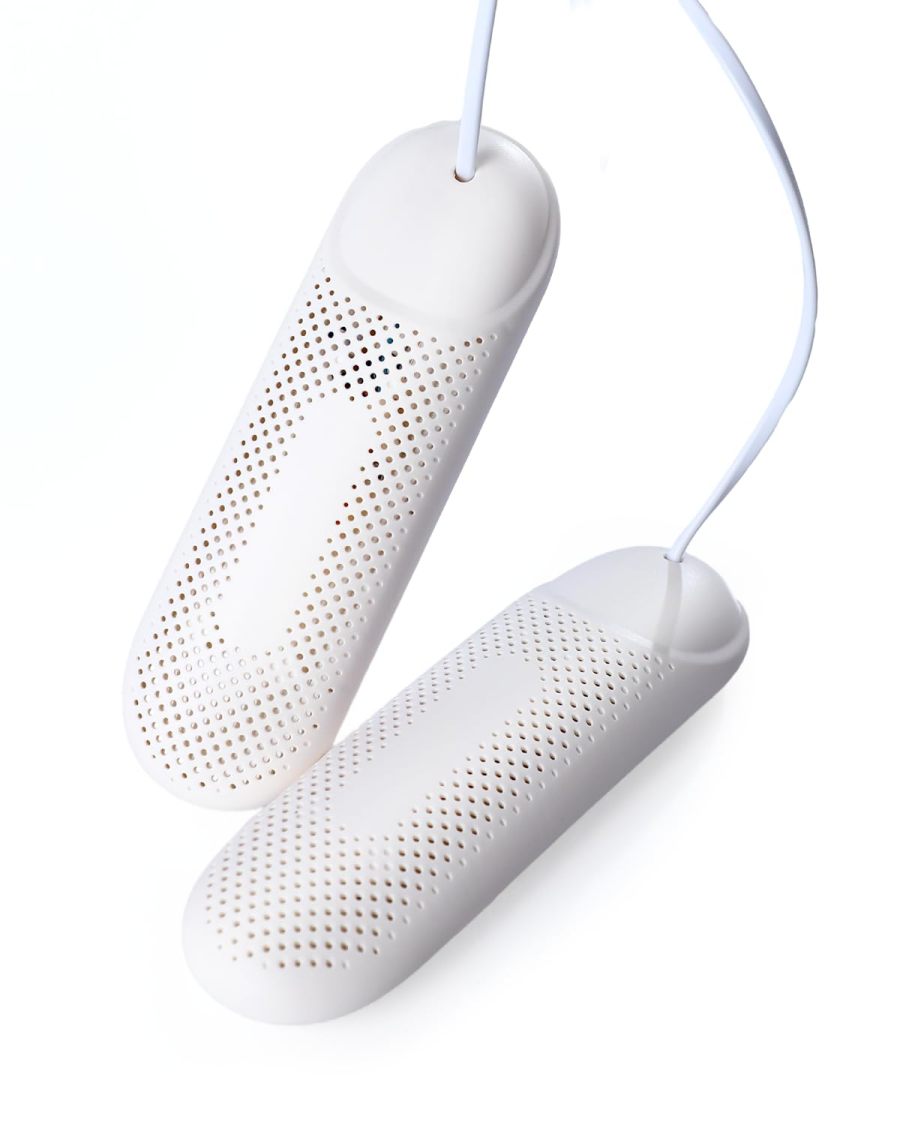
Shoe dryers (or boot dryers) are small household appliances designed to remove moisture from the interior of shoes, boots, gloves, socks, and other small clothing accessories through heating and/or airflow, eliminating odors and providing pre-warming functionality. They come in various forms, including plug-in, foldable portable models for travel, and upright stand types, with heating methods encompassing convection heating and forced hot air. The following table illustrates the key characteristics of consumer behavior in this category.
| Dimension | Segment | Description |
|---|---|---|
| Need Driver Type | Emergency-driven / Planned Purchase | Primarily triggered by immediate issues like sports-induced sweating or rain-soaked shoes, but also includes long-term, premeditated needs for coping with winter cold, maintaining daily dryness, and eliminating odors. |
| Purchase Frequency | Low Frequency | As durable small appliances, purchase frequency is low, typically occurring when there is a clear need or when an existing product fails, generally every few years. |
| Decision Complexity | Medium | Consumers compare drying speed, deodorizing effectiveness, noise level, portability, safety, and price, requiring a comprehensive evaluation of multi-dimensional information. |
| Price Sensitivity | Medium | Price is an important consideration, but users are willing to pay a reasonable premium for superior drying performance, additional deodorizing features, low noise, and brand reliability. |
| Emotional Dependency | Low to Medium | The core driver is functional utility, but enjoying dry, warm, odor-free footwear provides significant comfort and peace of mind, enhancing daily emotional value. |
II. User Personas & Usage Scenarios
2.1 Outdoor Sports Enthusiasts / Daily Commuters
🎯 Frequently engage in outdoor sports (e.g., skiing, hiking, running) or have daily commutes requiring prolonged footwear wear, leading to easily dampened shoes, boots, and gloves. They pursue fast, thorough drying and a comfortable experience.
| Typical Usage Scenarios | Core Pain Points | Primary Purchase Drivers |
|---|---|---|
|
|
|
2.2 Home Users Focused on Quality of Life
🎯 Concerned about home environmental hygiene and quality of life, with children or household members whose footwear easily gets damp. They value the safety, quietness, versatility, and ease of operation of drying equipment.
| Typical Usage Scenarios | Core Pain Points | Primary Purchase Drivers |
|---|---|---|
|
|
|
III. User Needs Hierarchy (KANO Model)
3.1 Basic Needs (Must-Haves)
- Basic Drying Function: Effectively removing moisture from the interior of damp footwear to achieve a wearable, dry state is the product's most fundamental value.
- Safe Operation Guarantee: The product must have overheat protection mechanisms to prevent damage to shoe materials or safety risks from prolonged operation or blockage.
- Broad Material Compatibility: The device must safely dry most common types and materials of footwear on the market, such as athletic shoes, leather shoes, snow boots, rubber boots, and synthetic fibers.
3.2 Performance Needs (Linear Satisfiers)
- Fast & Efficient Drying: Completing the drying process in a relatively short time (e.g., within a few hours) to meet users' need for quick reuse, especially for sports or outdoor scenarios.
- Significant Deodorizing Effect: The product should have a noticeable ability to remove odors like sweat and mildew from inside shoes, enhancing the wearing experience and personal hygiene.
- Low-Noise Operation: Device operating noise should remain at a low level, not disturbing user rest, work, or the home environment.
- Multi-Item Applicability: Beyond footwear, it can also dry gloves, socks, hats, helmets, and other small items, increasing the product's practical value.
- Portability & Easy Storage: Compact, small, foldable, or easily disassembled design, convenient for user travel and daily home storage without taking up space.
3.3 Excitement Needs (Delighters)
- Smart Timer & Auto Shut-Off: Provides precise, adjustable timing functions, even intelligently judging shoe moisture levels and automatically stopping operation, significantly reducing manual intervention and enhancing convenience.
- Pre-Warming Comfort Experience: Offers a shoe/boot pre-warming function in cold weather, allowing users to put on warm, comfortable footwear before going out, providing surprise and delight.
- Ozone/Negative Ion Deep Purification: Beyond basic deodorizing, provides ozone or negative ion sterilization/disinfection functions, more thoroughly addressing hygiene issues and offering health reassurance.
- Multi-Power Mode Flexibility: Supports USB or car cigarette lighter power supply, greatly expanding usage scenarios to enjoy dryness even in mobile environments like outdoors or in vehicles.
3.4 Unmet Needs & Opportunities
-
Durability Needs Improvement: Users commonly complain about cheap, easily damaged plastic materials, and motors or heating elements failing within a short period, leading to a product lifespan far below expectations and high repair costs.
User Reviews (VOC) Worked wonderfully for just over a month and now the ionization doesn't work. It's the whole reason I selected this one. // It seems like it's made out of the cheapest plastics available. I can't imagine it lasting more than 2 seasons.
-
Insufficient Airflow/Heat Uniformity: Some products have uneven heat distribution or weak airflow, leaving parts of the footwear, especially deep areas like the toe or heel, incompletely dry, affecting drying effectiveness.
User Reviews (VOC) Does not get to 110 degrees. Does fine as a dryer // I needed to stuff something behind them to force them to stay about in the middle of the shoe.
-
Gap Between Noise Control Claims & Actual Experience: Many products claim to be quiet, but actual operation produces noticeable noise (e.g., fan whine, grinding sounds), affecting the user experience in bedrooms or quiet environments.
User Reviews (VOC) I gave it 4 stars because it is a little bit loud. It sort of sounds like a tiny vacuum, but it really isn't that bad. // Customers have mixed opinions about the boot dryer's noise level, with some finding it super quiet while others report very noisy sounds.
-
Unclear Power Switch/Indicator: Some shoe dryers lack a separate power switch or clear working indicator light, preventing users from intuitively determining the device's status, leading to misuse and safety concerns.
User Reviews (VOC) I do wish it had an on/off switch or at least a power indicator light so I could tell when it's on. // Lo único que tal vez tenga en contra es que no tiene ni siquiera un LED para indicar que está funcionando.
-
Insufficient Drying Efficiency for Extremely Damp, Heavy Footwear: For completely soaked work boots, ski boots, or heavy gloves, most shoe dryers (especially low-power portable models) still cannot achieve thorough drying within a reasonable timeframe.
User Reviews (VOC) This may work great for boots, but it is worthless for gloves. // If you really want to dry boots you probably need something with a fan which of course is much bigger and more expensive. These will do just fine for occasional use or for travel.
IV. User Decision Drivers
4.1 Key Decision Factors
- Actual Drying Thoroughness: Whether it can truly and completely remove moisture from inside footwear, especially in deep areas like the toe box and sole, is decisive for purchase intent. If ineffective, other features are meaningless.
- Deodorizing Effectiveness: Whether the product can effectively eliminate odors inside shoes and maintain freshness is a core consideration for most users, especially for athletic shoe and work boot users.
- Durability & Quality: The product's material, structural sturdiness, ability to withstand long-term use without damage, and the brand's warranty service directly impact user purchase trust and satisfaction.
- Operational Safety: Whether the device has reliable overheat protection, stable power connections, and no obvious safety hazards during use is a prerequisite for users to use it with peace of mind.
4.2 Secondary Decision Factors
- Drying Speed: Given thorough drying is ensured, the shorter the time required to complete drying, the better, directly impacting user efficiency and convenience.
- Noise Level: The noise level during product operation, especially whether it can be used at night or in quiet environments without disturbing others, is an important consideration for enhancing user experience.
- Portability & Storage: Product size compactness, foldability, or ease of disassembly determine convenience for home space usage and travel portability.
- Price & Value for Money: Given the above core and secondary needs are met, whether the product's pricing is reasonable and can provide value beyond expectations is the balancing point for users' final choice.
V. Selling Points & Competitive Landscape
5.1 Selling Point Analysis
5.1.1 Standard Features (Points of Parity)
- Fast & Efficient Drying: Sellers commonly emphasize the ability to quickly remove moisture from inside shoes, restoring footwear to a dry, wearable state in a short time (often claimed as a few hours or overnight).
- Multi-Function Applicability: Claim the product is not limited to footwear but can also dry gloves, socks, hats, helmets, and other small clothing accessories, with wide material compatibility.
- Portable/Foldable Design: Highlight the product's small size, lightweight, foldable or collapsible nature, easy for travel and home storage without taking up much space.
- Dehumidifying & Deodorizing: Promote its ability to effectively remove moisture while reducing or eliminating odors inside shoes, maintaining freshness.
5.1.2 Key Differentiators
- Quiet Operation: Some products emphasize fanless convection heating or low-noise fans, providing a quiet user experience suitable for nighttime use.
- Timer Function: Provide adjustable automatic shut-off timers, allowing users to set drying duration conveniently and avoid over-drying or energy waste.
- Constant Temperature Protection: Promote intelligent temperature control technology, maintaining a constant, moderate drying temperature (e.g., 45-60°C) to prevent overheating damage to shoe materials.
- 360° Hot Air Circulation: Emphasize even distribution of heat and airflow inside the footwear for dead-spot-free drying, improving overall effectiveness.
5.1.3 Unique Selling Propositions (USPs)
- Ozone Sterilization/Negative Ion Purification: A few products integrate ozone or negative ion generators, providing deeper deodorizing and sterilization functions, raising hygiene standards.
- USB/Car Power Supply: Some portable products support USB or car cigarette lighter power, expanding usage scenarios for outdoors and travel, increasing convenience.
- Extendable/Flexible Stands: Stands are adjustable in length and angle, flexibly adapting to different heights and shapes of footwear and gloves, improving universality.
- Aroma Liquid Additive: Very few products support adding scented liquids, imparting personalized fragrance to dried footwear, providing additional emotional value.
5.2 Competitive Landscape
5.2.1 Market Maturity
The shoe dryer category market is in a mature stage. Product functions are increasingly rich, but homogenization is severe, and price competition is intense. The market features various product forms and heating methods, from simple portables to fully-featured upright models, covering different consumer needs. Leading brands hold a certain market share based on long-term accumulated reputation and technical advantages, but numerous small and medium brands have entered through price competitiveness and unique features (e.g., USB power, ozone), creating a fragmented competitive landscape, while issues of inconsistent product quality are increasingly prominent.
5.2.2 Innovation Trends
Future innovation trends will focus on improving drying efficiency and energy consumption balance, achieving more thorough deodorizing and sterilization, and enhancing product durability and safety. Specific manifestations include: exploring more efficient and gentle heating technologies to adapt to various materials; developing more precise intelligent temperature control and humidity sensing for 'on-demand drying'; strengthening quiet design to improve home user experience; and optimizing portable product performance through modular design or higher-power mobile power solutions, making them no longer a 'compromise' choice in mobile scenarios.
VI. Marketing Claims vs. Reality Check
The table below analyzes the gap between common marketing claims and actual user experiences in this category:
| Dimension | Marketing Claim | User Reality | Verdict |
|---|---|---|---|
| Drying Efficiency vs. Power Matching | USB-powered/low-power (e.g., 6W-10W) products claim 'fast drying', '360° warm air', and the ability to thoroughly dry shoes quickly. | Users commonly report such products dry extremely slowly or are ineffective at drying soaked shoes (e.g., requiring 15 hours or producing no heat), with some users receiving defective units. The physical reality is that 6-10W power is insufficient to generate adequate effective heat and airflow to quickly remove significant moisture from inside shoes. | A classic case of over-marketing that violates basic physics. Low-power portable products fundamentally fail to deliver on the 'fast and efficient' promise for heavily soaked footwear, leading directly to user negative reviews and returns. |
| Product Durability & Material Safety | Products claim to use 'high-quality heat-resistant materials', 'V0 flame retardant', and emphasize durability. | User feedback reports issues like melted plastic, broken stands, motor failure, and easily damaged wires. Some users report products smoking or failing within a short time, even damaging shoes. | Sellers engage in false advertising regarding critical safety and durability attributes. Inferior materials and fragile structures not only affect product lifespan but also pose potential safety hazards, severely damaging user trust and brand reputation. |
| Ozone Deodorizing Function Stability | Products emphasize 'ozone deodorizing technology', effectively eliminating odors and keeping gear fresh. | Some users report the ozone function fails after a period of use, or the ozone smell is too strong, creating a new 'odor', failing to provide reliable, lasting deodorizing effects. | Ozone technology is overestimated in marketing, with actual effectiveness and stability being problematic. Some products may fail to achieve stable ozone generation or proper concentration control, leading to functional failure or new discomfort, representing a disconnect between technical implementation and advertised results. |
Key Takeaway: The market exhibits widespread parameter inflation and scenario-based experience exaggeration tendencies, especially among low-power portable products, where functional claims are severely disconnected from actual performance.
VII. Supply-Demand Misalignment Analysis
The table below highlights mismatches between seller focus and buyer priorities:
| Dimension | Seller Behavior | User Focus | Verdict |
|---|---|---|---|
| Drying Efficiency & Heavy Wet Footwear Handling Capability | Many sellers use 'fast drying' as a universal selling point, even for low-power products, but rarely specify actual drying times or effectiveness for heavily soaked work boots or ski boots. | Users' greatest pain point is soaked shoes not drying thoroughly or drying too slowly, especially after outdoor sports or for workwear needs, where the definition of 'fast' far exceeds seller expectations. | Sellers fail to address users' core needs in extreme damp scenarios, oversimplifying the 'fast drying' concept, leading to subpar experience when it matters most. |
| Product Durability & Manufacturing Quality | Sellers typically mention 'durable materials' in listings but lack specific material certifications or long-term quality commitments (except for a few leading brands), focusing more on feature stacking. | Users commonly complain about products feeling cheap, being easily damaged, and having short lifespans, lacking confidence in shoe dryers' long-term stable use, viewing many as 'cheap goods'. | Sellers have not sufficiently invested in improving fundamental quality and durability in product development and marketing, leading to user trust loss due to product failures and increasing after-sales costs and negative word-of-mouth risk. |
| Quiet Operation Claims vs. Actual Noise Levels | Many fan-equipped shoe dryers claim 'quiet operation' or 'whisper quiet' in listings, obscuring actual decibel levels. | Users report these products are noisy during operation, some sounding like 'a small vacuum', others having 'grinding sounds' or 'high-pitched whining', severely affecting use at night or in quiet home environments. | Sellers' marketing on noise control is detached from reality, over-promising 'quietness', leading to significant post-purchase experience gaps and hindering product adoption in home scenarios. |
Key Takeaway: Sellers generally focus on marketing 'portability' and 'basic drying function', but overlook users' core concerns regarding 'actual drying thoroughness', 'product long-term durability', and 'authenticity of quiet operation', leading to a supply-demand mismatch.
VIII. Strategic Opportunities & Recommendations
8.1 Multi-Speed Intelligent Air-Drying & Deodorizing All-in-One Unit
8.1.1 Target Audience & Pain Points
⚡️ Pain Points Addressed: Low drying efficiency, dampness/odor & hygiene issues, gap between noise control claims and actual experience, lack of intelligent control functions.
8.1.2 Action Plan
Adopt a high-efficiency quiet centrifugal fan, provide multiple speed modes (e.g., high-speed drying, medium standard, low-speed quiet), and integrate low-concentration ozone/UV-C lamps for deep deodorizing and sterilization. Equip with precise humidity sensors and timers to achieve 'dry-stop' intelligent drying, preventing over-drying, ensuring thorough drying of soaked shoes within 2-4 hours.
| Tech Complexity | Medium |
| Cost Impact | High Impact |
| Trade-off Warning | Increasing fan power and quiet design will increase product size and weight, but this is manageable. Integrating ozone/UV-C requires additional attention to safe operation and ventilation. |
| Price Band | Only viable above $49.99 |
8.1.3 Marketing Strategy
Emphasize 'Tech-Enabled Deep Drying, Silent Deodorizing'; use comparison videos to showcase speed and noise level advantages; highlight health benefits of deodorizing/sterilization, e.g., 'Say Goodbye to Athlete's Foot, Farewell to Odors'; for family users, promote 'Health Guardian, Quiet Enjoyment'.
8.2 Extremely Durable Modular Heavy-Duty Boot Drying System
8.2.1 Target Audience & Pain Points
⚡️ Pain Points Addressed: Durability needs improvement, insufficient drying efficiency for extremely damp heavy footwear, insufficient airflow/heat uniformity.
8.2.2 Action Plan
Adopt industrial-grade ABS or metal frames, reinforce connection points and stand load-bearing capacity to ensure stable support for heavy work boots and ski boots. Design modular stands with replaceable drying tubes of different lengths and shapes to adapt to various high-top boots and gloves. Offer a 5+ year extended warranty and include a removable drip tray for easy cleaning and maintenance.
| Tech Complexity | Medium |
| Cost Impact | High Impact |
| Trade-off Warning | Using metal or reinforced engineering plastics will increase cost and weight, potentially sacrificing some portability, but provides reliable assurance for heavy-duty use. |
| Price Band | Only viable above $69.99 |
8.2.3 Marketing Strategy
Emphasize 'Born for Professionals, Fearless of Challenges'; showcase product robustness through extreme scenario test videos (e.g., load-bearing, drop tests); highlight the 'once-and-for-all' value from the extended warranty and modular design; for the workwear market, emphasize 'Professional Gear, Performance Upgrade'.
8.3 High-Power USB-C PD Portable Shoe Dryer
8.3.1 Target Audience & Pain Points
⚡️ Pain Points Addressed: Insufficient multi-power mode flexibility, low efficiency of USB-powered products, slow drying speed.
8.3.2 Action Plan
Develop a shoe dryer supporting USB-C PD 30W-60W fast charging, equipped with efficient PTC heating elements and a micro quiet fan, ensuring effective drying even when powered by car or power banks. Optimize internal thermal flow design for even heat distribution. The product must be compatible with mainstream fast-charging protocols and include high-quality USB-C cables and a car charger.
| Tech Complexity | Medium |
| Cost Impact | Medium Impact |
| Trade-off Warning | Increasing power may require larger heat dissipation structures or heavier components, necessitating a balance between slim portability and high efficiency. |
| Price Band | Only viable above $29.99 |
8.3.3 Marketing Strategy
Promote 'Dry Comfort on the Go, Plenty of Power'; emphasize the 'true fast charging' and 'efficient drying' enabled by USB-C PD, differentiating it from low-power USB products on the market; highlight its convenience using travel/outdoor scene imagery, e.g., 'One Power Bank, Shoes Dry Overnight'.
8.4 Intelligent Power & Status Feedback Shoe Dryer
8.4.1 Target Audience & Pain Points
⚡️ Pain Points Addressed: Unclear power switch/indicator, complex or unsafe operation, lack of intelligent control functions.
8.4.2 Action Plan
All shoe dryers must be equipped with easily accessible physical power switches (or more intuitive push-button switches) and clear working status indicator lights (e.g., multi-color LEDs showing heating/drying/complete). Consider adding a simple digital display to show remaining timer time or operating mode, enhancing user peace of mind and convenience.
| Tech Complexity | Low |
| Cost Impact | Low Impact |
| Trade-off Warning | Adding indicator lights and physical switches has minimal impact on product structure and cost, with almost no downside. |
| Price Band | Only viable above $19.99 |
8.4.3 Marketing Strategy
Highlight 'Clear at a Glance, Operate with Peace of Mind'; emphasize its intuitive, user-friendly design, e.g., 'Easy for Seniors to Use'; demonstrate the practicality of switches and indicators through clear diagrams and videos, solving user uncertainty about 'whether it's working'.