Amazon US Market Analysis: Reptile Heat Lamps Category
📊 Executive Summary
📈 Market Trends
Portability and multi-function integration are current hotspots, but core quality issues are prominent. The reptile heat lamp market generally pursues features like compactness, multi-color temperature adjustment, and built-in reflectors. Consumer demand for seamless connectivity and multi-functional, all-in-one devices continues to grow, driving product evolution towards greater integration and smart features. However, the market has failed to effectively address the deep-seated pain points of core product safety and reliability.
⚡ Major Pain Points
Short bulb lifespan, safety hazards, and UVB misrepresentation are industry-wide hard problems. Users are generally skeptical of seller claims about bulb lifespan and UVA/UVB effectiveness, with a large gap between actual experience and marketing. More seriously, cases of products overheating, melting, or even causing fires are not uncommon, constituting fatal safety hazards. Incomplete timer functions and fragile fixture bodies are also frequent complaints, severely impacting user trust and brand reputation.
💡 Selection Opportunities
Return to basics, rebuilding trust with safety and reliability. The most promising product selection opportunities lie in developing products with ultimate safety and long lifespan, addressing users' core safety concerns through high-quality materials and multiple protection mechanisms. Simultaneously, providing verifiable UVA/UVB effectiveness to rebuild product trust. Future development can move towards smart ecosystem timers and modular designs, enabling efficient, fine-grained multi-zone management to meet the advanced needs of experienced keepers, thereby standing out in fierce competition.
I. Analysis Overview
1.1 Introduction & Report Scope
This report analyzes the 'Heat Lamps' category (specifically reptile heat lamps) in the Amazon US market, focusing on target user personas, core needs, decision drivers, market communication, and potential opportunities.
1.2 Category Snapshot
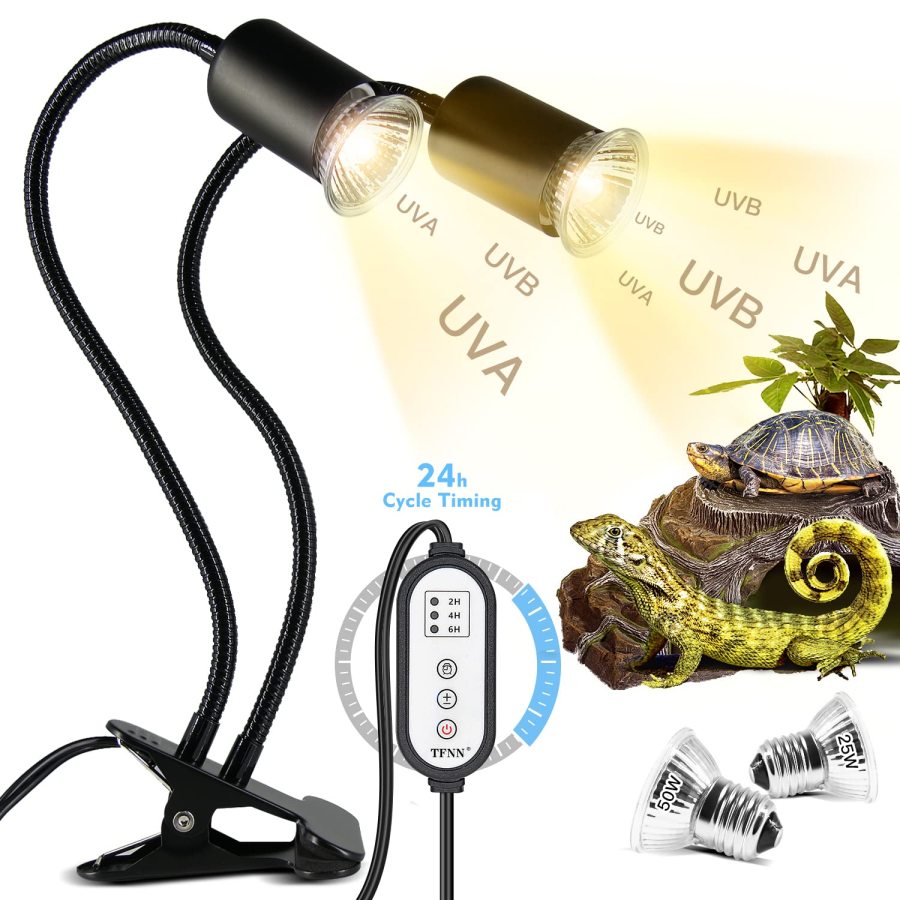
Reptile heat lamps are devices specifically designed to provide heat and simulate sunlight (UVA/UVB) for reptiles (such as turtles, lizards, snakes, geckos, bearded dragons, etc.) and other small amphibians and plants. Their core function is to maintain a pet's appropriate body temperature, promote metabolism, calcium absorption, and skeletal health. Common products on the market typically feature a clamp-on design with a flexible goose-neck hose, 360° adjustability, and are often available in single or dual-head configurations, usually including replaceable bulbs. The following table illustrates the key characteristics of consumer behavior in this category.
| Dimension | Segment | Description |
|---|---|---|
| Need Driver Type | Planned Purchase / Emergency-driven Purchase | Purchases typically stem from anticipated pet-keeping needs (Planned Purchase), but sudden situations like bulb burnout or equipment failure can also trigger emergency replacement purchases (Emergency-driven Purchase). |
| Purchase Frequency | Medium-Low Frequency | Bulb lifespan typically ranges from several weeks to a few months, requiring periodic replacement; the main lamp fixture itself is replaced less frequently. However, considering the widespread quality issues, the actual repurchase cycle may be shorter. |
| Decision Complexity | Medium | Consumers compare wattage, UVA/UVB effectiveness, timer/dimmer functions, installation convenience, safety, and price, but do not conduct deep technical research. |
| Price Sensitivity | Medium-High | Consumers are somewhat price-sensitive, but for the health and safety of their pets, they are willing to pay a reasonable premium above the lowest price point for products that offer reliable functionality and quality assurance. |
| Emotional Dependency | High | This product is directly related to the pet's health and survival. Users invest significant emotion and responsibility in their pets, resulting in low tolerance for product failures or safety issues. |
II. User Personas & Usage Scenarios
2.1 Responsible Reptile Beginner/Intermediate Keeper
🎯 First-time reptile owner or has limited experience, highly responsible for pet health but lacks extensive experience in equipment selection and maintenance.
| Typical Usage Scenarios | Core Pain Points | Primary Purchase Drivers |
|---|---|---|
|
|
|
2.2 Diverse Reptile Expert Keeper
🎯 Keeps multiple or large reptiles, possesses extensive knowledge, and pursues efficient, precise, and personalized environmental management solutions.
| Typical Usage Scenarios | Core Pain Points | Primary Purchase Drivers |
|---|---|---|
|
|
|
III. User Needs Hierarchy (KANO Model)
3.1 Basic Needs (Must-Haves)
- Provides Heat: Capable of efficiently and consistently providing the stable heat required for a reptile to maintain its core body temperature and support basic physiological activities.
- UVA/UVB Light: Must emit UVA/UVB rays beneficial for reptiles, simulating natural sunlight to promote vitamin D3 synthesis and calcium absorption, enhancing appetite and vitality.
- Secure Mounting: The clamp must be sturdy and reliably attach to the enclosure edge or stand, preventing accidental falls or shaking, ensuring the safety of both pet and equipment.
- Easy Installation: Simple operation, allowing for quick setup without complex tools, plug-and-play, reducing user difficulty.
3.2 Performance Needs (Linear Satisfiers)
- Long-Lasting Bulbs: Bulbs have a long lifespan, reducing the hassle and cost of frequent replacement and ensuring continuity of heat and light supply.
- Smart Timer Function: Ability to set automatic on/off times, simulating natural day/night cycles for convenient daily management without manual intervention.
- Adjustable Brightness/Temperature: Features multi-level dimming, allowing flexible adjustment of heat and light intensity based on pet needs and ambient temperature for a more comfortable environment.
- 360° Rotatable Goose-Neck: Flexible goose-neck design allowing free adjustment of the irradiation angle and distance to precisely cover basking areas or avoid obstacles.
- High-Quality Heat-Resistant Materials: Uses metal housing and ceramic lamp sockets, ensuring the product is heat-resistant, durable, and has good heat dissipation, reducing safety risks.
3.3 Excitement Needs (Delighters)
- Dual/Multi-Head Design: A single fixture can simultaneously provide heat and light for multiple zones or pets, expanding coverage, saving space and cost, and improving efficiency.
- UVB Test Card/Meter: Includes a simple testing tool, allowing users to visually verify the bulb's UVB output, enhancing trust and perceived professionalism.
- Overheat Auto-Shutoff Protection: Built-in safety chip that automatically cuts power when the fixture body or ambient temperature is too high, further ensuring safety and alleviating user concerns.
- Smart App Control: Supports remote control via a smartphone app for on/off, timing, dimming, and viewing environmental data, enabling a smart pet-keeping experience.
3.4 Unmet Needs & Opportunities
-
Bulb Lifespan & Reliability: Widespread feedback indicates bulbs have a very short lifespan, with the main fixture often failing within months, resulting in a high functional failure rate, far below reasonable expectations.
User Reviews (VOC) bulbs burn out after short periods of use // stopped working after three months // only lasted 2 months // only lasted about 6 months // The bulbs only lasted about 3 weeks each
-
Verification of UVA/UVB Effectiveness: Some products advertise UVA/UVB, but users find through testing that the effect is poor or contains no UVB at all, affecting pet health, indicating a lack of transparency.
User Reviews (VOC) uv did not work // These bulbs dud not turn uv card purple // no uvb at all // this light is strictly heat. No useful light waves.
-
Overall Product Durability: Components like wiring connections, switches, and goose-necks are prone to damage, leading to a short overall product lifespan, inconsistent with claims of being 'sturdy and durable'.
User Reviews (VOC) cheap and very poorly made // wiring is too small and often will fail // bulb would consistently move out of place // flexible part attached to the clip does not really work well together
-
Overheating & Fire Safety: Multiple reviews note the lamp surface gets extremely hot, with risks of melting plastic or even causing a fire, indicating insufficient safety warnings or design flaws.
User Reviews (VOC) will melt any plastic they come in contact with // lamp gets extremely hot // fire hazard // started smoking! // smells like it's burning the house down
-
Timer Function Completeness: Some timers lack flexibility (e.g., missing 12-hour cycles) or have functional defects like failing to turn on automatically after setting or resetting after a power outage.
User Reviews (VOC) The ONLY con I have towards this product is the timer. 2, 4, and 6 hour lighting cycle is pointless in a reptile enclosure where you want a 12 hour on-and-off cycle. // timing function, it does not work. It will turn it off, but it will not turn it back on // timer seems odd and will turn the light off prematurely
IV. User Decision Drivers
4.1 Key Decision Factors
- Product Safety: Whether the lamp overheats during prolonged use, has fire hazards, or uses flame-retardant materials is the primary concern and a non-negotiable red line for users, directly related to pet and household safety.
- UVA/UVB Effectiveness: Whether it can truly simulate sunlight, promote Vitamin D3 synthesis and calcium absorption, directly impacts the reptile's health and survival. This is the core benefit users care about most and a key differentiator for product quality.
- Heat Output & Temperature Control: Ability to provide stable, appropriate temperature gradients and have precise adjustment capabilities to meet the temperature needs of different reptile species and environments, directly affecting pet comfort and health.
- Bulb Lifespan & Overall Reliability: Whether bulbs are durable and not prone to burning out, and whether the fixture body can work stably long-term, reducing replacement frequency and unexpected failures, ensuring continuity of heat and light supply. This is a core long-term consideration for users.
4.2 Secondary Decision Factors
- Timer & Dimming Functions: Provide convenient automated management, simplifying daily care routines and improving user experience, but considered after basic functionality and safety are assured.
- Flexible Adjustability: Whether the goose-neck and multi-head design allow for convenient adjustment of irradiation range and angle to adapt to different enclosure setups and layouts, improving ease of use.
- Price & Value for Money: Seeking a reasonable price while meeting core functionality and safety, aiming for maximum value, but not sacrificing safety and reliability for a low price.
- Clamp Firmness: Whether the clamp is strong enough to securely attach to the enclosure, preventing slippage and accidents, is an important factor for safety and user experience.
V. Selling Points & Competitive Landscape
5.1 Selling Point Analysis
5.1.1 Standard Features (Points of Parity)
- UVA/UVB Simulates Sunlight: Most products advertise providing the UVA/UVB rays reptiles need to promote calcium absorption and health. This is a basic functional selling point for the category.
- Clamp-On Design: Widespread use of clamp designs for easy attachment to enclosure edges or stands, emphasizing installation convenience.
- 360° Rotatable Goose-Neck: Almost all products claim to have a flexible goose-neck hose allowing 360° adjustment of irradiation angle and distance to adapt to different layouts.
- Suitable for Various Reptiles: Products advertise broad applicability, compatible with various pets like turtles, lizards, snakes, bearded dragons, as well as amphibians and plants.
- Includes Bulbs: Most products include heat bulbs of different wattages (e.g., 25W, 50W, 75W) as a complete solution.
5.1.2 Key Differentiators
- Smart Cycle Timer: Some products offer a timer function that can be set once for daily automatic on/off cycles, simulating natural day/night cycles, eliminating manual operation, and enhancing convenience.
- Multi-Level Brightness/Temperature Adjustment: Offers multiple brightness or temperature levels (e.g., High, Medium, Low), or even stepless dimming, meeting seasonal changes and personalized pet needs.
- Dual/Multi-Head Design: A single fixture body with 2-3 independent lamp heads, expanding the irradiation area to meet heating and lighting needs for multiple pets or zones.
- High-Quality Metal/Ceramic Socket: Emphasizes the use of heat-resistant, fireproof metal housing and ceramic sockets, contrasting with plastic materials, to enhance product safety and durability.
- Different Wattage Bulb Combinations: Includes bulb sets with various wattages (e.g., 25W + 50W), allowing users to choose flexibly based on needs.
5.1.3 Unique Selling Propositions (USPs)
- Upgraded Bell-Mouth Design: Few products claim a special bell-mouth design aimed at providing a wider and more uniform UVA/UVB irradiation range.
- UVB Test Card: Very few products include a UVB test card, allowing users to preliminarily verify the bulb's UVB output as evidence for trust-building.
- Proprietary Heat Dissipation Design: Some products claim a unique heat dissipation structure (e.g., 'air duct design'), making them cooler than traditional lamps to reduce overheating risks.
5.2 Competitive Landscape
5.2.1 Market Maturity
The reptile heat lamp market has entered a mature stage, with significant product homogenization. Mainstream products all emphasize UVA/UVB simulation, timers/dimmers, and multi-angle adjustment. Competition primarily revolves around price, feature combinations, material claims, and brand premium. There is a lack of disruptive innovation, but widespread issues with product reliability and safety have become major pain points.
5.2.2 Innovation Trends
Current innovation trends mainly focus on addressing existing pain points, including attempts to improve the precision and verifiability of UVB spectrum (e.g., including test cards), optimizing product materials and structure for better durability and safety (e.g., reinforced ceramic sockets, heat dissipation designs), and exploring more reliable timer functions and potential App remote control for smart features. However, these innovations are still in the trial phase and have not yet formed unified standards or significant advantages across the category.
VI. Marketing Claims vs. Reality Check
The table below analyzes the gap between common marketing claims and actual user experiences in this category:
| Dimension | Marketing Claim | User Reality | Verdict |
|---|---|---|---|
| Bulb Lifespan | Long-lasting bulbs, averaging 2000-3000 hours, can last for months or even a year. | Users widely report bulbs burning out within weeks or even days, far below advertised lifespan. Frequent replacement is a high-frequency complaint. | Typical false advertising, misleading consumers with ideal lab data, failing to deliver on the most basic product lifespan promise, severely damaging user trust. |
| UVA/UVB Effectiveness | Provides 97% UVA and 3% UVB light, simulating sunlight to promote calcium absorption and skeletal health. | Multiple users found via testing that some products' advertised UVB function is missing or extremely weak, completely failing to meet the physiological needs for promoting pet health. Some products even have contradictory titles and specs (e.g., claiming UVA/UVB but listing the light source as LED or Halogen). | Sellers misuse professional terminology, exaggerate product health benefits, yet fail to provide real, effective UVB output, posing potential harm to pet health. The lack of transparency creates decision-making risks for users. |
| Product Safety | Uses high-quality, heat-resistant materials (metal/ceramic), built-in safety design, good heat dissipation, safe and durable. | Numerous user reports indicate the lamp operates at extremely high temperatures, even melting plastic parts, scorching wires, smoking, or sparking, posing serious fire and burn hazards. Some products also risk emitting UVC light. | Using non-heat-resistant materials or designs to cut costs leads to serious safety flaws when the product operates in high-temperature environments. This completely contradicts the 'safety design' claim, constitutes a fatal defect, and is an intolerable red line. |
Key Takeaway: The market exhibits a widespread tendency towards parameter misrepresentation, functional exaggeration, and concealment of safety risks, especially regarding bulb lifespan, UVA/UVB effectiveness, and product durability. Consumer trust in basic promises is extremely low.
VII. Supply-Demand Misalignment Analysis
The table below highlights mismatches between seller focus and buyer priorities:
| Dimension | Seller Behavior | User Focus | Verdict |
|---|---|---|---|
| Core Function (Fixture Body) Durability | Sellers heavily emphasize bulb longevity and material sturdiness in listings but generally avoid or are vague about the lifespan and reliability of the fixture body itself (wiring, switches, socket connections). | Users widely complain that the entire fixture stops working within months, with wires scorched or switches broken, finding the product very cheap and easily broken, far below expectations. This is a core reason for returns and negative reviews. | Sellers fail to understand users' expectations of the product as a long-term investment. Quality issues with core components lead to a complete collapse of trust in overall product reliability, a typical 'short-sighted' product strategy. |
| Transparency & Verifiability of UVA/UVB Effectiveness | Sellers commonly advertise UVA/UVB provision but rarely provide specific wavelength/intensity data or third-party test reports, and seldom include testing tools, leaving the effectiveness for users to guess. | Users are skeptical about the authenticity of UVA/UVB, worried pets aren't getting needed light. Some even buy UVB test cards to verify, finding poor or no effect. They need clear evidence and guarantees. | Sellers market using information asymmetry, lacking a scientifically rigorous approach, leading to a loss of user trust in the product's core health value. This misses the opportunity to build brand authority through transparency. |
| Practicality of Smart Timer Function | Most sellers list 'smart cycle timer' as a key selling point, emphasizing its convenience, but rarely mention timer cycle options (2/4/6/8 hours) or power outage memory function. | Users report existing timer cycles are unreasonable (e.g., lacking the 12-hour cycle needed for reptile daily routines) and settings are lost after power outages, preventing use with smart plugs, actually adding operational complexity. | Sellers invest in 'smart' features, but design details are detached from actual user care needs (e.g., a stable 12-hour day/night cycle), resulting in features that appear advanced but are actually ineffective, failing to truly solve user pain points. |
Key Takeaway: Sellers generally over-supply on feature stacking (e.g., timers/dimmers, multi-head designs) and vague safety claims, while collectively neglecting users' core demands for basic product reliability, verifiable UVA/UVB effectiveness, and clear fire safety assurances, leading to a severe supply-demand mismatch.
VIII. Strategic Opportunities & Recommendations
8.1 Ultimate Safety & Long-Lasting Reptile Heat Lamp
8.1.1 Target Audience & Pain Points
⚡️ Pain Points Addressed: Short bulb lifespan, poor overall product reliability, overheating and fire safety hazards.
8.1.2 Action Plan
Adopt aviation-grade ceramic sockets, high-purity copper wiring, built-in smart temperature control chip (with auto-shutoff). Use all-metal heat dissipation design for lamp head housing, reinforce the goose-neck connection structure. Increase average bulb lifespan to over 6 months and provide true wattage.
| Tech Complexity | Medium |
| Cost Impact | High Impact |
| Trade-off Warning | Using higher-quality flame-retardant materials and heat dissipation structures may slightly increase product volume and weight, and likely raise costs. Impact needs to be offset through optimized design and efficient production. |
| Price Band | Only viable above $29.99 |
8.1.3 Marketing Strategy
Emphasize the core promise of 'Worry-Free Safety, Guarding Your Beloved Pets'. Highlight authoritative certifications like UL/CE, showcase product safety performance under extreme heat tests, offer a five-year warranty, and stress 'One Investment, Long-Term Peace of Mind'.
8.2 Verifiable UVA/UVB Effect Professional Reptile Lamp
8.2.1 Target Audience & Pain Points
⚡️ Pain Points Addressed: Doubt about actual UVA/UVB effectiveness, lack of user verification means.
8.2.2 Action Plan
Collaborate with professional reptile brands to develop high-quality, spectrally precise UVA/UVB bulbs. Include a simple UVB test card in the product kit with clear instructions and result interpretation. Display third-party UVB spectrum test reports in the listing.
| Tech Complexity | Medium |
| Cost Impact | Medium Impact |
| Trade-off Warning | Improving UVB effect may require more professional bulb technology (e.g., metal halide), increasing cost. Including test cards adds packaging cost. |
| Price Band | Only viable above $24.99 |
8.2.3 Marketing Strategy
Emphasize 'Scientific Pet Care, Seeing is Believing'; use demonstration videos with the test card to visually present UVB effect. Promote the bulb's professional spectral characteristics, provide care advice, and build professional trust.
8.3 Smart Ecosystem Timer & Temperature Control Reptile Lamp
8.3.1 Target Audience & Pain Points
⚡️ Pain Points Addressed: Incomplete timer function, power outage reset, lack of 12-hour cycle; lack of fine-grained temperature control.
8.3.2 Action Plan
Develop a smart timer with power outage memory, supporting complete cycle settings (2/4/6/8/10/12 hours, etc.) and customizable time periods. Offer stepless dimming and temperature control, support external temperature probes for precise environmental feedback regulation, and consider integrating Wi-Fi/Bluetooth for App control.
| Tech Complexity | Medium |
| Cost Impact | Medium Impact |
| Trade-off Warning | Integrating more complex timing and temperature control chips increases BOM cost and may slightly enlarge the fixture's controller. Need to ensure UI/UX is simple and user-friendly, avoiding logical paradoxes. |
| Price Band | Only viable above $34.99 |
8.3.3 Marketing Strategy
Promote 'Smart Caretaker, Hassle-Free Pet Keeping'; showcase the App interface and customizable lighting curves, highlight advantages in automation and fine-grained management, freeing users' hands and providing a more stable ecological environment for pets.
8.4 Modular Multi-Head Heating Lamp System
8.4.1 Target Audience & Pain Points
⚡️ Pain Points Addressed: Equipment redundancy, inconvenient multi-zone temperature control, insufficient clamp stability.
8.4.2 Action Plan
Design a universal main clamp supporting 2-4 independent, pluggable lamp head modules, each controllable individually (wattage, UVA/UVB type, dimming). Use high-strength snap-fit and multi-point power contacts between heads and main clamp for security and safety. Offer modular bulbs with different wattages and spectra (e.g., dedicated UVB, infrared night light).
| Tech Complexity | Medium |
| Cost Impact | High Impact |
| Trade-off Warning | Increases mold complexity and interface standards, raising initial design and production costs. Need to ensure physical stability and electrical safety of modular interfaces, potentially increasing main clamp load-bearing. |
| Price Band | Only viable above $49.99 |
8.4.3 Marketing Strategy
Emphasize 'One Device, Multiple Uses, Customize Your Reptile World'; showcase application scenarios of the multi-head lamp in large or complex habitats, highlight its flexibility, scalability, and personalized configuration capability, reducing total cost of ownership.