Amazon US Market Analysis: Baby Portable Bottle Warmer Category
📊 Executive Summary
📈 Market Trends
Portability and efficiency are mainstream; smart integration is the direction. The baby portable bottle warmer market is maturing, with consumers having rigid demands for portability, fast heating, and precise temperature control. Future trends will focus on battery life stability, charging efficiency improvement, and integration of multi-functions like built-in sterilization and milk volume monitoring to meet new-generation parents' higher expectations for baby care products.
⚡ Major Pain Points
Exaggerated battery life, slow heating, and leaks are critical flaws. Users widely complain actual battery life is far lower than advertised, depleting quickly on high brightness. Simultaneously, many products fail to deliver promised 'fast, uniform heating,' with refrigerated milk taking too long. Additionally, leaks and cleaning difficulties are frequent complaints, severely impacting user experience and product trust.
💡 Selection Opportunities
Deep dive into real pain points, deliver on performance and experience. Market opportunities lie in providing 'genuine article' efficient, uniform heating solutions to solve the refrigerated milk heating challenge; developing 'worry-free all-day' long-lasting, stable battery products to eliminate power anxiety; designing 'drip-free' and 'easy-clean' structures to enhance hygiene safety. Furthermore, explore the 'family-shared' smart beverage companion positioning to broaden product usage scenarios and lifecycle.
I. Analysis Overview
1.1 Introduction & Report Scope
This report analyzes the 'Bottle Warmers' category (Baby Portable Bottle Warmers) in the US Amazon market, focusing on target user personas, core needs, decision drivers, market communication, and potential opportunities.
1.2 Category Snapshot
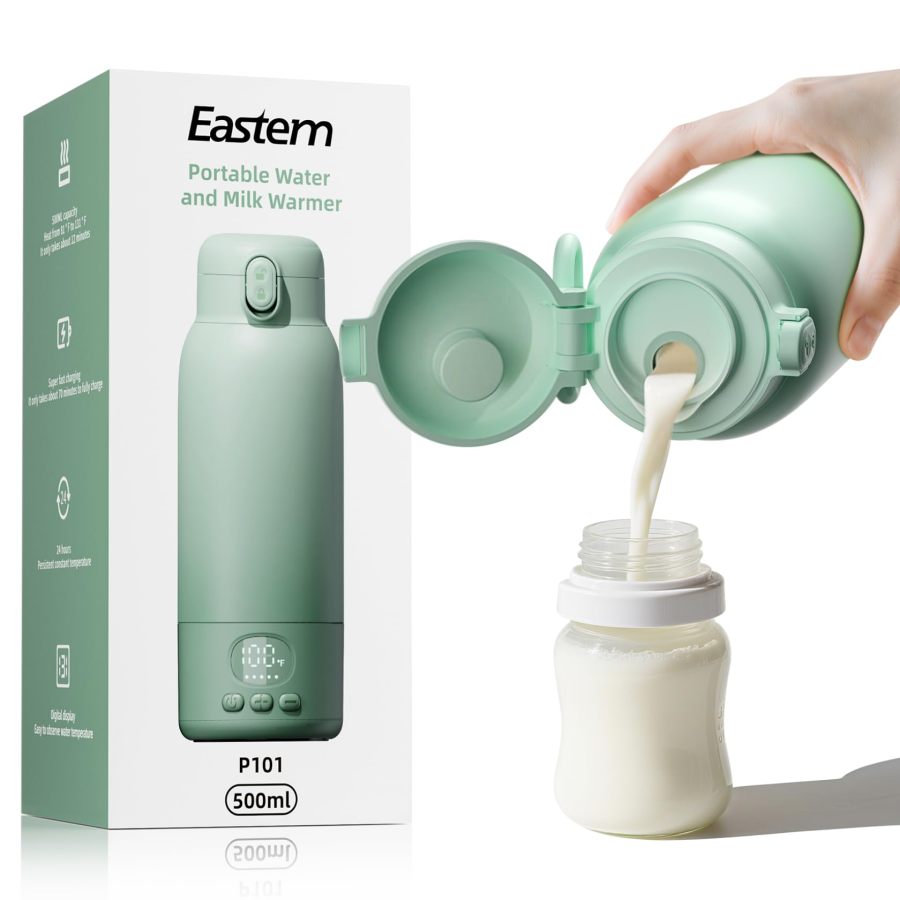
Baby portable bottle warmers are heating devices, typically battery-powered, designed for on-the-go or nighttime feedings. Their purpose is to quickly and safely warm breast milk, formula, or water to a suitable temperature. The main product forms on the market include: 'thermos cup' style (e.g., with a stainless steel inner liner) for directly pouring in milk to heat, and 'sleeve/wrap' style that heats an external bottle, catering to parents' needs for convenient feeding in various scenarios. The following table illustrates the key characteristics of consumer behavior in this category.
| Dimension | Segment | Description |
|---|---|---|
| Need Driver Type | Emergency-driven / Planned Purchase | Purchases are often driven by the baby's sudden hunger (at night/while out) or pre-planning for travel/outdoor activities, prioritizing immediate, barrier-free feeding. |
| Purchase Frequency | Low Frequency | As a durable baby care accessory, it's typically purchased before or shortly after the baby's birth, with low repurchase rates, mainly for the first purchase or as a gift. |
| Decision Complexity | Medium | Consumers compare core factors like heating speed, temperature accuracy, battery life, portability, leak-proof safety, and materials, but usually don't conduct deep research. |
| Price Sensitivity | Medium | Price is an important consideration, but users are willing to pay a reasonable premium for products that offer significant feeding convenience, safety assurance, and reliable performance. |
| Emotional Dependency | High | The product directly relates to the infant's health, comfort, and parental anxiety. It provides a strong sense of reassurance, convenience, and control, carrying high emotional value weight. |
II. User Personas & Usage Scenarios
2.1 Outdoor Parents as 'Mobile Homemakers'
🎯 Active participants in parent-child outdoor activities and family travel who value efficiency and quality. They need a device that provides a reliable bottle-warming solution in any scenario.
| Typical Usage Scenarios | Core Pain Points | Primary Purchase Drivers |
|---|---|---|
|
|
|
2.2 New Parents as 'Nighttime Guardians'
🎯 First-time parents facing childcare challenges, especially feeling exhausted by nighttime feedings. They crave simplified processes, reduced burden, and ensuring the baby falls asleep quickly.
| Typical Usage Scenarios | Core Pain Points | Primary Purchase Drivers |
|---|---|---|
|
|
|
III. User Needs Hierarchy (KANO Model)
3.1 Basic Needs (Must-Haves)
- Safe Materials: The product must use food-grade, BPA-free materials like 316L stainless steel, ensuring milk does not contact harmful substances, safeguarding infant health.
- Appropriate Temperature: The core heating function must ensure milk reaches a suitable drinking temperature (37-40°C), preserving nutrients without burning the baby's mouth.
- Reliable Leak-proofing: As a portable product, it must be strictly leak-proof during daily carrying, tilting, or shaking to avoid milk waste and soiling bags or clothes.
- Stable Functionality: The product must provide consistent, stable heating and heat retention, not failing due to battery fluctuations or external environmental factors.
3.2 Performance Needs (Linear Satisfiers)
- Fast Heating: Heating refrigerated or room-temperature milk to the target temperature within minutes (e.g., 2-5 minutes) to address the baby's immediate hunger cries.
- Precise Temperature Control: Features adjustable, accurately displayed temperatures to meet different babies' temperature preferences and heating requirements for different milks (breast milk/formula).
- Long Battery Life: A single charge supports multiple warmings (e.g., 4-8 times or more), meeting the needs of a full day out or multiple nighttime feedings.
- Lightweight & Portable: Compact size, moderate weight, easy to fit into a diaper bag, stroller storage, or car cup holder without adding travel burden.
- Broad Compatibility: Adapts to mainstream brands and sizes of bottles on the market (for wrap-around styles), reducing user cost and hassle of buying extra adapters.
3.3 Excitement Needs (Delighters)
- Efficient Fast Charging: Supports mainstream fast-charge protocols like USB-C PD or QC, allowing full charge in a short time, significantly reducing wait time.
- Built-in Sterilization: Provides additional steam sterilization function for small accessories (e.g., nipples, pacifiers) beyond warming, enhancing hygiene convenience.
- Smart Real-time Display: LED screen clearly shows real-time temperature, battery level, heating mode, offering an intuitive, convenient user experience.
- Multi-scenario Versatility: Beyond baby bottle warming, can also be used to heat adult coffee or tea, expanding usage scenarios for the whole family, increasing product versatility.
3.4 Unmet Needs & Opportunities
-
Insufficient Heating Uniformity: Multiple products have uneven heating issues, causing localized overheating or underheating of milk, affecting nutrition and taste.
User Reviews (VOC) When I pulled it out, some areas of the bottle felt warmer than others. // It took over 30 minutes to reach my desired temperature and even then did not heat the milk in the bottle. The bottle itself was very hot, but milk wasn't.
-
Poor Battery Life Decay & Reliability: User feedback indicates battery life significantly declines after a period of use, with issues like inability to charge or sudden shutdown, severely impacting portability value.
User Reviews (VOC) after 2 months of occasional use it stopped charging. // The battery will only last 3 warmings and each take about 10-15 min to warm the milk. // The battery life is really short. i will charge it overnight and can only use it twice before the battery level is on the last level.
-
Persistent Leakage Issues: Despite many products claiming leak-proofing, users complain of leaks, especially at adapter connections, when O-rings age, or when tilted, causing milk waste.
User Reviews (VOC) multiple leaks despite screwing on the adapter tight, which wasted about .5 - 1 oz of milk each time. // If you don't tighten the lid, the milk will spill.
-
Incomplete Cleaning & Maintenance: Some products have complex internal structures, dead corners, or non-detachable parts, leading to incomplete cleaning, bacterial growth, and long-term hygiene issues.
User Reviews (VOC) It is a little tricky to clean, so have sanitizing wipes or breast milk wipes ready to wipe it down after each use. // The top part doesn't come off and you can't get the bottom part with the buttons wet so it makes cleaning a hassle.
-
Low Actual Heating Efficiency/Exaggerated Claims: Sellers commonly claim 'fast heating' (e.g., 2-5 minutes), but numerous user reviews report actual heating of refrigerated milk takes 10-25 minutes, severely contradicting marketing.
User Reviews (VOC) It took over 10 minutes just to warm 100ml of breastmilk from the fridge, which feels far too slow when a hungry baby is waiting. // It took use more like 20-25 min to warm up the 6 oz bottle, so make sure you plan accordingly.
IV. User Decision Drivers
4.1 Key Decision Factors
- Heating Speed & Efficiency: When the baby is hungry, parents' core demand is obtaining suitably warm milk in the shortest time (e.g., 2-5 minutes), directly impacting the baby's mood and feeding experience.
- Temperature Accuracy & Uniformity: Ensuring milk temperature is appropriate and uniform-neither burning the baby nor maximizing breast milk nutrient retention-is a core safety concern for parents.
- Safety & Leak-proof Performance: Whether at home, in the car, or on a flight, the product must guarantee no milk leakage to avoid wasting precious breast milk/formula and prevent safety hazards like short circuits.
- Portability & Adaptability: Whether the product size is reasonable, weight is light, fits easily into a diaper bag/car cup holder, and works stably in various scenarios without external power is the core value of 'portability'.
- Battery Life & Stability: The number of warmings per charge, along with battery stability over long-term use and charging system reliability, directly impacts convenience and core function reliability for outings.
4.2 Secondary Decision Factors
- Bottle Compatibility (for wrap-around style): For wrap-around warmers, whether they adapt to mainstream brands and sizes of bottles the user already owns, reducing the cost and hassle of buying extra adapters or bottles.
- Ease of Cleaning: Whether the product structure is simple, allowing for thorough, convenient cleaning to avoid milk residue and bacterial growth, is an important long-term hygiene consideration.
- Product Durability: As a frequently used baby care product, users expect it to withstand daily cleaning, carrying, and occasional bumps, functioning stably long-term.
- Price & Brand Reputation: After meeting core functionality and safety, seeking reasonable pricing and referencing other parents' real usage reviews and brand trust.
- Added Function Value: Features like built-in sterilization, night light, milk volume monitoring, fast-charge tech, heat retention duration, and adult-use expansion can enhance convenience and overall product value.
V. Selling Points & Competitive Landscape
5.1 Selling Point Analysis
5.1.1 Standard Features (Points of Parity)
- Portable & Travel-Friendly: The vast majority of portable bottle warmers emphasize their compact, cordless design, suitable for 'anytime, anywhere' feeding scenarios like travel, car use, and outdoors-their most basic selling point.
- Fast Heating Capability: Commonly advertised to heat milk or water quickly within minutes (e.g., 2-5 minutes) to address the baby's immediate hunger, a core functional promise attracting parents.
- Precise Temperature Control: Ads highlight multi-level temperature settings, LED real-time display, aiming to let parents precisely control milk temperature, ensuring suitability and nutrient retention, enhancing feeding safety.
- Long-lasting Battery: Most products emphasize large-capacity batteries (e.g., 6000mAh-18000mAh), supporting multiple warmings per charge to reduce frequent charging hassle, meeting long outing needs.
- Safe, Food-grade Materials: Widely promoted use of 316L stainless steel liners or BPA-free plastic, ensuring baby health and alleviating parental concerns about material safety.
5.1.2 Key Differentiators
- Dual Heating Modes: Some products offer different heating modes for breast milk vs. formula, promising optimized nutrient retention and heating efficiency for different milk types.
- Built-in Sterilization Function: A few high-end portable warmers integrate steam sterilization, providing extra hygiene assurance and reducing the need to carry other sterilizing devices, e.g., Papablic Pro.
- Large Capacity Design: Offers 12-17 oz (~350-500ml) large capacity, meeting multi-feeding or multi-baby family needs, reducing frequent water/milk refills, e.g., JIYUZEST.
- Extensive Bottle Compatibility: Includes multiple adapters to fit mainstream bottle brands (e.g., Dr. Brown's, Philips Avent, Comotomo), enhancing product versatility, e.g., MOMFANN.
- Fast-charge Technology Support: Advertises support for mainstream fast-charge protocols like USB-C PD/QC, significantly shortening charging time and improving efficiency, e.g., JIYUZEST, YIGU claiming 2-3 hour full charge.
5.1.3 Unique Selling Propositions (USPs)
- Milk Volume Monitor Window/Graduations: Very few products feature a transparent window or clear graduations, allowing parents to visually monitor remaining milk, avoiding over/under-feeding, e.g., B0DJY39ZFP's 'Milk Volume Monitor'.
- Soft Night Light Function: Some products integrate a soft night light for convenient nighttime operation without disturbing the baby, offering a more user-friendly experience, e.g., B0DJY39ZFP.
- Adult Beverage Heating Expansion: Some products advertise their temperature control can also heat adult coffee or tea, expanding usage scenarios for the whole family and increasing purchase value, e.g., JIYUZEST.
5.2 Competitive Landscape
5.2.1 Market Maturity
The baby portable bottle warmer market has entered a mature stage. Core functions like fast heating, precise temperature control, and portability are now standard. Competition is mainly reflected in performance optimization of these basic functions (e.g., heating speed, battery life), multi-function integration, and differentiation in user experience details. Product homogenization is evident, but leading brands still compete for market share through reputation and innovative details.
5.2.2 Innovation Trends
Current innovation trends revolve around several areas: First, improving heating efficiency and uniformity, especially performance with refrigerated breast milk. Second, strengthening battery technology, including higher energy density, more stable life, and faster charging (e.g., PD 45W). Third, function integration, like built-in sterilization, milk volume monitoring, night light. Fourth, material upgrades, more use of 316L food-grade stainless steel liners to emphasize safety and durability. Finally, some products attempt to expand into adult beverage heating to attract broader household users.
VI. Marketing Claims vs. Reality Check
The table below analyzes the gap between common marketing claims and actual user experiences in this category:
| Dimension | Marketing Claim | User Reality | Verdict |
|---|---|---|---|
| Heating Speed & Efficiency | Claims 2-minute/3-minute fast heating of refrigerated milk to meet baby's immediate needs. | Users widely report actual heating of refrigerated milk takes 10-25 minutes or more, far exceeding claims. Wrap-around heating is slower, with users noting uneven heating-bottle hot but milk not. | This is a typical physics paradox. Low-power battery devices struggle to uniformly heat a large volume of cold liquid in a short time. Sellers mislead consumers with ideal test data or best-case scenario data, causing severe mismatch between user expectations and actual experience. |
| Battery Life & Longevity | Claims one charge can heat up to 16-20 times or support all-day use. | Users widely report actual battery life supports only 2-5 heatings, with performance noticeably degrading after months of use, even failing to charge or shutting down automatically. | Sellers overstate battery capacity and ideal life, neglecting long-term reliability issues like battery degradation and charging port durability, causing the product's core portability value to drop significantly in long-term use. |
| Leak-proof Design & Adaptability | Claims double-layer sealing, includes multiple adapters, promises no leaks, compatible with all mainstream bottles. | Multiple products frequently cited by users for leaks, especially at adapter connections, after O-ring aging, or when tilted. Some have unstable magnetic seals or loose connections, causing milk waste or seepage into charging ports. | Sellers underinvest in leak-proof design or overstate universal compatibility, failing to fully account for differences in bottle material, thickness, and connection interfaces. This results in unfulfilled core safety promises, causing user frustration and waste. |
Key Takeaway: The market is generally characterized by parameter inflation and scenario-based experience exaggeration, especially regarding battery life, fast heating, and leak-proofing. There's a significant gap between marketing claims and actual user experience.
VII. Supply-Demand Misalignment Analysis
The table below highlights mismatches between seller focus and buyer priorities:
| Dimension | Seller Behavior | User Focus | Verdict |
|---|---|---|---|
| Actual Heating Efficiency | Sellers commonly emphasize '2-minute/3-minute fast heating' in listing titles and bullet points as a core selling point to grab attention. | User reviews frequently complain actual heating time for refrigerated milk far exceeds expectations, with babies crying impatiently. They care more about heating speed and uniformity in 'real-world scenarios.' | Sellers overpromise on the most core function and fail to deliver. This information asymmetry easily leads to user experience gaps, eroding product trust, turning the 'fast heat' selling point into a 'slow heat' pain point. |
| Long-term Battery Reliability | Sellers commonly advertise large-capacity batteries and multiple heatings per charge (e.g., 16-20 times), focusing on initial performance. | Beyond initial life, users frequently mention fast battery degradation, charging failures, inability to power on after use-issues directly impacting portability value. | Sellers focus only on 'quantity' (battery capacity) but neglect the 'quality' users care more about (long-term battery stability, charging system durability). This lack of long-term reliability leads to product abandonment and brand trust damage. |
| Internal Cleaning Convenience | Some sellers briefly mention 'easy to clean' but rarely detail or emphasize how the internal structure facilitates thorough cleaning or avoids dead corners. | Users complain about internal dead corners, non-detachable parts, or burnt-on milk residue on heating plates being hard to clean, worrying about hygiene. They desire truly no-dead-corner, simple cleaning solutions. | Sellers underestimate parents' rigid demand for hygiene in baby products, offering only superficial claims. Cleaning dead corners easily breed bacteria; accumulated milk residue is a serious health hazard, directly impacting post-purchase satisfaction and repurchase intent. |
Key Takeaway: Sellers' marketing generally focuses on surface features like 'fast heating' and 'long battery life,' overlooking user focus and experience regarding deeper pain points like 'actual heating efficiency,' 'long-term battery stability,' and 'worry-free leak-proof cleaning.'
VIII. Strategic Opportunities & Recommendations
8.1 The 'Genuine Article' Efficient & Uniform Warmer
8.1.1 Target Audience & Pain Points
⚡️ Pain Points Addressed: Slow, uneven heating; low efficiency heating refrigerated milk.
8.1.2 Action Plan
Adopt a 100W+ high-power heating system with 360° surround heating technology, optimizing internal heat conduction structure. Integrate multi-point temperature sensors to ensure uniform milk heating, achieving 37°C for 4 oz refrigerated breast milk within 5 minutes. Publish authoritative third-party test reports on heating efficiency and uniformity.
| Tech Complexity | Medium |
| Cost Impact | High Impact |
| Trade-off Warning | Improving heating efficiency and uniformity may require more advanced heating elements and complex structures (e.g., double-wall vacuum heating chamber), possibly slightly increasing size and weight. |
| Price Band | Only viable above $59.99 |
8.1.3 Marketing Strategy
Emphasize 'Say goodbye to waiting, truly efficient.' Use clear comparison videos to showcase the rapid, uniform heating process of refrigerated milk. Highlight the professional promise of 'Every drop of nutrition preserved,' addressing parental anxiety over both efficiency and nutrition.
8.2 The 'Worry-Free All-Day' Long-lasting & Stable Warmer
8.2.1 Target Audience & Pain Points
⚡️ Pain Points Addressed: Short battery life, fast degradation, charging failures.
8.2.2 Action Plan
Use high-quality, customized lithium-polymer cells (e.g., 15000mAh+), integrate smart BMS (Battery Management System) to optimize charge/discharge cycles and extend battery life. Introduce PD 65W fast-charge technology to reach 80% charge within 1 hour. Offer a 3-year battery warranty and clearly label real-life battery data under different brightness/modes.
| Tech Complexity | Medium |
| Cost Impact | Medium Impact |
| Trade-off Warning | Increasing battery capacity and using high-quality cells will slightly increase product cost and weight, requiring a trade-off between extreme thinness/lightness and battery life. |
| Price Band | Only viable above $49.99 |
8.2.3 Marketing Strategy
Emphasize 'Battery worry-free, all-day protection.' Highlight 'Long-lasting power, reliable from morning till night.' Use user testimonials and data charts to demonstrate long-term stable battery performance, alleviating parental concerns about life and reliability.
8.3 The 'Drip-Free' Easy-Clean Portable Warmer
8.3.1 Target Audience & Pain Points
⚡️ Pain Points Addressed: Frequent leakage issues, difficult internal cleaning.
8.3.2 Action Plan
Redesign the integrated heating liner and sealing ring system to minimize interfaces and gaps. Develop a detachable, no-dead-corner internal structure that is dishwasher-safe (or directly integrates UV sterilization). For wrap-around styles, upgrade silicone O-ring material and adapter tightening mechanism to ensure a tight fit with mainstream bottles. Include a dedicated cleaning brush and provide clear cleaning tutorial videos.
| Tech Complexity | Low |
| Cost Impact | Low Impact |
| Trade-off Warning | Optimizing sealing structure and detachable design may slightly increase mold costs but offers huge user experience benefits with no significant drawbacks. |
| Price Band | Only viable above $39.99 |
8.3.3 Marketing Strategy
Emphasize 'Not a drop wasted, peace of mind guaranteed.' Highlight 'Completely easy to clean, goodbye to milk residue.' Showcase authoritative leak-proof certifications and practical cleaning videos, addressing parental pain points about hygiene and waste.
8.4 The 'Family-Shared' Smart Beverage Companion
8.4.1 Target Audience & Pain Points
⚡️ Pain Points Addressed: Single-function product, short usage cycle, low perceived value.
8.4.2 Action Plan
While ensuring baby bottle warming safety standards, add higher temperature settings (e.g., 60-70°C) to accommodate heating adult coffee, tea, or instant food. Include clear switching indicators for 'Adult Mode' vs. 'Baby Mode' in the design. Optionally include adapters or drinking lids for adult cups in accessories.
| Tech Complexity | Low |
| Cost Impact | Low Impact |
| Trade-off Warning | Expanding adult functions on a baby product base requires ensuring safety isolation in materials, temperature range, and usage methods, with basically no negative physical impact. |
| Price Band | Only viable above $69.99 |
8.4.3 Marketing Strategy
Emphasize 'More than just for baby, it's for the whole family.' Highlight 'One device, multiple uses-from infant to adult, covering the full lifecycle.' Use warm family scenes and outdoor activity scenarios to showcase product versatility, enhancing perceived value and long-term utility.