Amazon US Market Analysis: Potato Masher Category
📊 Executive Summary
📈 Market Trends
Sturdiness and ergonomics are core market selling points, with versatility being highly sought after. The potato masher market is maturing. Consumers have stable demand for basic functions (effective mashing, easy cleaning) and increasingly focus on material reliability and handle comfort. Multipurpose, integrated designs that handle various ingredients enhance product appeal.
⚡ Major Pain Points
Insufficient structural durability and imbalanced handle comfort are critical flaws. Despite widespread seller claims of 'Heavy Duty' and 'Ergonomic,' user feedback frequently reports product bending, handle breakage, and loosening. Existing handle designs also fail to be universally comfortable for all hand types. Additionally, oversized products causing storage hassles and food residue in cleaning dead spots significantly degrade the user experience.
💡 Selection Opportunities
Deepen focus on quality details, solve core user pain points, and seek differentiation for premium pricing. Market opportunities lie in launching a True Heavy-Duty One-Piece Masher to fundamentally address durability issues. Developing an Adjustable or Multi-Size Ergonomic Handle to enhance user comfort and optimize storage. Simultaneously, targeting segmented texture needs with a Dual-Head Interchangeable Set, and simplifying cleaning through an Innovative Scraper-Integrated Design to create differentiated competitive advantages in a homogeneous market.
I. Analysis Overview
1.1 Introduction & Report Scope
This report analyzes the 'Potato Mashers' category on the Amazon US market, focusing on target user personas, core needs, decision factors, market communication, and potential opportunities.
1.2 Category Snapshot
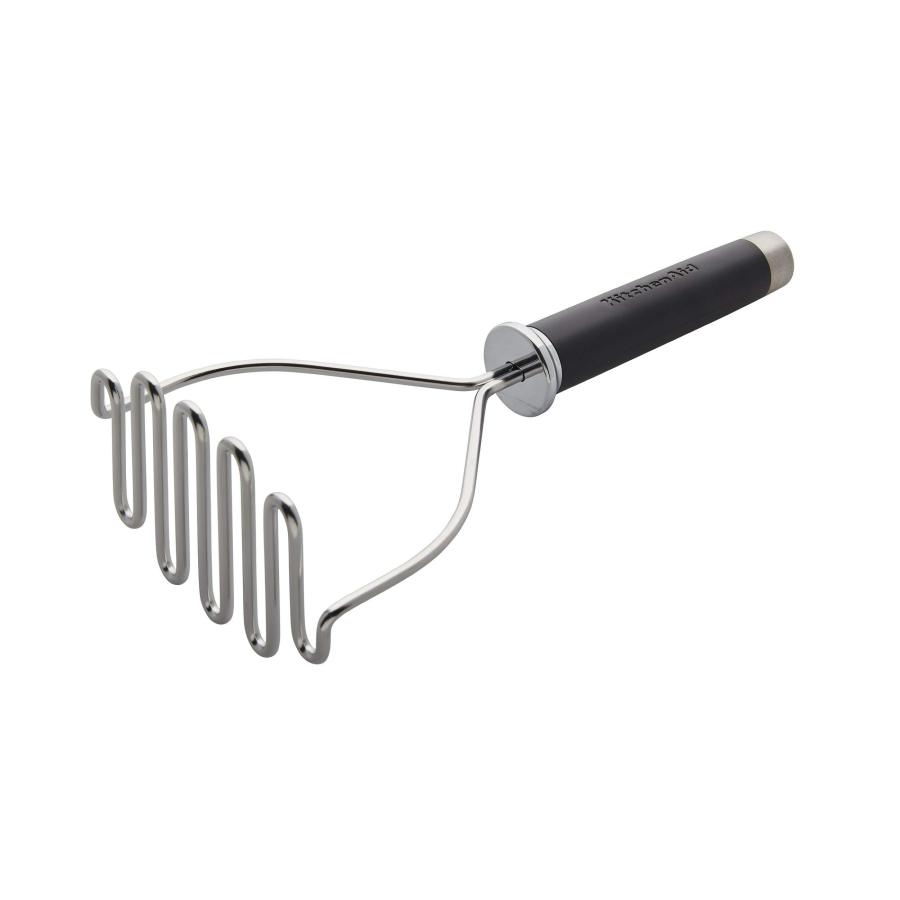
A potato masher is a handheld kitchen tool primarily used to mash or crush soft, cooked ingredients like potatoes, sweet potatoes, avocados, and beans into a pulp or chunky consistency. These products typically feature a sturdy stainless steel mashing head combined with an ergonomic handle design to provide an efficient and comfortable user experience. Common head types on the market include wire, flat plate (with holes), and innovative designs like wavy or honeycomb patterns, catering to users' varying preferences for texture fineness. The following table illustrates the key characteristics of consumer behavior in this category.
| Dimension | Segment | Description |
|---|---|---|
| Need Driver Type | Planned Purchase/Emergency-driven Purchase | Purchases are typically made for everyday cooking or holiday meal preparation, with occasional urgent replacements due to old product failure. |
| Purchase Frequency | Low Frequency | As durable cookware, purchase frequency is generally low, unless the item breaks or needs upgrading, though demand may increase before holidays. |
| Decision Complexity | Medium | Consumers compare materials, sturdiness, mashing effectiveness, handle comfort, and cleaning convenience, but do not require extensive research. |
| Price Sensitivity | Medium | Users are price-sensitive but willing to pay a reasonable premium for better durability, comfort, and mashing performance. |
| Emotional Dependency | Low | Purchases are primarily based on functional utility, though a high-quality tool can significantly enhance cooking efficiency and satisfaction. |
II. User Personas & Usage Scenarios
2.1 Everyday Home Cook
🎯 Focuses on cooking efficiency and the practicality of kitchen tools. Desires a durable, easy-to-clean, and versatile masher to simplify daily meal prep.
| Typical Usage Scenarios | Core Pain Points | Primary Purchase Drivers |
|---|---|---|
|
|
|
2.2 Food Enthusiast/Holiday Chef
🎯 Has high standards for food texture, especially during holiday feasts. Pursues smooth or uniquely textured mashed potatoes and other dishes, valuing tool professionalism and design aesthetics.
| Typical Usage Scenarios | Core Pain Points | Primary Purchase Drivers |
|---|---|---|
|
|
|
III. User Needs Hierarchy (KANO Model)
3.1 Basic Needs (Must-Haves)
- Effective Mashing: Capable of easily and effectively mashing cooked potatoes, sweet potatoes, avocados, and other soft ingredients into a pulp or chunky consistency.
- Sturdy and Durable: The mashing head and handle are securely connected, resistant to bending, breaking, or detachment, and can withstand sustained heavy pressure.
- Food-Grade Materials: Parts in contact with food must be made of food-grade stainless steel, ensuring non-toxicity, no odor, and safe use.
- Easy to Clean: Simple structure where food residue does not easily get trapped, allowing for quick rinsing or dishwasher cleaning.
3.2 Performance Needs (Linear Satisfiers)
- Comfortable Grip Handle: Handle should be ergonomic, providing a non-slip, pressure-reducing comfortable grip that minimizes fatigue during extended use.
- Variety of Mashing Head Designs: Offering different head types like wire, flat plate, or serrated to meet users' specific needs for smooth or chunky textures.
- Multipurpose Use: Effective for processing various ingredients beyond potatoes, such as avocados, beans, vegetables, fruits, and ground meat.
- Dishwasher Safe: The entire product is dishwasher-safe, further simplifying the cleaning process and enhancing daily convenience.
- Hang Hole Design: A hole at the end of the handle for hanging storage, saving space in kitchen drawers.
3.3 Excitement Needs (Delighters)
- One-Piece Construction: Seamless connection between the mashing head and handle, eliminating cleaning dead spots and breakage risks, fundamentally improving hygiene and durability.
- Unique Mashing Efficiency: Innovative head designs (e.g., wavy, honeycomb) significantly increase mashing speed and uniformity, providing a more effortless experience.
- Lifetime Warranty: Brand commitment to product quality with a worry-free after-sales guarantee, greatly boosting consumer purchase confidence.
- Aesthetically Pleasing Design: Fashionable and attractive product design that complements modern kitchen decor, enhancing user pleasure and kitchen style.
3.4 Unmet Needs & Opportunities
-
Significant Variation in Handle Comfort: Some products have poorly designed handles, such as sharp edges on the hang hole, overly hard materials, or sizes unsuitable for all hand types, causing discomfort or even pain during grip.
User Reviews (VOC) The loop, used for hanging,at the end of the handle digs in to one's hand making it uncomfortable and should be eliminated. // It's a little too big for me but otherwise, strong study device that could probably mash anything.
-
Inconsistent Durability: Despite many products claiming to be 'Heavy Duty' or 'Sturdy,' some user feedback indicates bending, weld point failure, or handle loosening shortly after initial use.
User Reviews (VOC) The handle came right off in my hand. // Customers have mixed experiences with the potato masher's sturdiness, with some finding it sturdy and saying it should last a long time, while others report that the handle broke apart after first use and the masher came apart.
-
Storage Space Consumption: Some mashers have oversized heads or overly long handles, making them difficult to fit into standard kitchen drawers, leading to inconvenient storage.
User Reviews (VOC) Huge masher - doesn't fit in drawer. // It's a little too big for me but otherwise, strong study device that could probably mash anything.
-
Cleaning Residue Issues: Wire mashers can still trap small amounts of food residue at wire intersections and in the crevices where the handle connects to the head, making thorough cleaning difficult.
User Reviews (VOC) I notice it gets dirtier and is harder to clean than the basic plastic ones that I've used in the past. // The loop, used for hanging,at the end of the handle digs in to one's hand making it uncomfortable and should be eliminated.
IV. User Decision Drivers
4.1 Key Decision Factors
- Sturdiness and Durability: Whether the product resists deformation or bending under heavy pressure, and if welds and handle connections are secure, is the user's top concern, directly impacting lifespan and safety.
- Mashing Effectiveness and Efficiency: The ability to easily and quickly mash ingredients to the desired texture (e.g., lump-free, uniformly smooth) and whether the operation is low-effort is the primary purpose of the purchase.
- Handle Comfort: The grip feel, slip resistance, and whether prolonged use causes hand fatigue or pain directly impact user experience and willingness to use the tool.
- Ease of Cleaning: Whether the product structure is easy to clean, if food residue is easily removed, and dishwasher compatibility are pain points in daily maintenance.
4.2 Secondary Decision Factors
- Material Safety: Whether the stainless steel is truly rust-resistant and handle materials are non-toxic are basic requirements for health and hygiene.
- Versatility: The ability to mash various other ingredients besides potatoes, such as avocados and beans, increases the product's value for money.
- Product Size and Storage: Whether the product size fits the user's pots and kitchen drawers, and if it's convenient for hanging storage, affects kitchen tidiness.
- Brand Reputation and Price: Well-known brands typically offer higher trust, while price becomes a balancing consideration after the above needs are met.
V. Selling Points & Competitive Landscape
5.1 Selling Point Analysis
5.1.1 Standard Features (Points of Parity)
- Stainless Steel Material: Emphasizes the product body is made of stainless steel for rust resistance and durability, a mainstream material that enhances perceived quality.
- Ergonomic Handle: Promotes a comfortable, non-slip, easy-to-grip handle aimed at reducing fatigue and improving the operational experience.
- Multipurpose Use: Highlights use for mashing potatoes, avocados, beans, vegetables, fruits, and more, expanding usage scenarios and increasing perceived value.
- Dishwasher Safe: Promises the product is dishwasher-safe for convenient and quick cleaning, a basic expectation for modern kitchen tools, simplifying the cleaning burden.
- Sturdy and Durable: Widely emphasizes the product's heavy-duty construction and robust design, resistant to bending or damage, to alleviate user concerns about product lifespan.
5.1.2 Key Differentiators
- Different Mashing Head Shapes: Offering wire, flat plate, or innovative serrated/honeycomb heads to achieve differentiation in mashing results or efficiency, meeting specific needs.
- One-Piece Construction: Emphasizing no rivets, seamless connection to enhance product strength, hygiene, lifespan, and reduce breakage risk.
- Set Sales: Offering 2-piece sets with different heads or sizes to cater to diverse user needs, enhance shopping value perception, and increase purchase appeal.
- Brand Story/History: Well-known brands like KitchenAid and OXO leverage their long history and quality heritage in marketing to build trust and command premium pricing.
- Specific Handle Materials: Materials like silicone or rubber for soft-touch handles provide extra comfort and increase product distinctiveness compared to ordinary plastic handles.
5.1.3 Unique Selling Propositions (USPs)
- Unique Ergonomic Design: For example, OXO's wide, flat horizontal handle claims to distribute pressure more effectively, offering a unique user experience and operational advantage.
- German Standards: Restaurantware products emphasize 'German Standard' quality and design, implying high-end manufacturing and rigorous quality, building a professional image.
- Lifetime Warranty/Worry-Free Replacement: Some brands offer long-term warranties or unconditional replacement promises as the ultimate endorsement of product quality, greatly boosting purchase confidence.
- Pet Food Use: A few users mention using it for making pet food, though not a mainstream seller point, representing a potential niche direction and marketing angle.
5.2 Competitive Landscape
5.2.1 Market Maturity
The potato masher market is relatively mature, with product forms and core functions standardized. Competition primarily revolves around material upgrades, ergonomic optimization, and value for money. Product homogenization is high, with brands competing for market share by emphasizing durability, ease of use, and versatility.
5.2.2 Innovation Trends
Innovation trends are mainly seen in minor adjustments to head design for optimized mashing results (e.g., wavy shapes or dual-head combinations) and improvements in handle materials and structure to enhance grip comfort and product durability. Simultaneously, some brands are focusing on one-piece construction to reduce cleaning dead spots and improve hygiene. Longer handle designs are also gaining attention to accommodate deeper pots and larger quantities of ingredients.
VI. Marketing Claims vs. Reality Check
The table below analyzes the gap between common marketing claims and actual user experiences in this category:
| Dimension | Marketing Claim | User Reality | Verdict |
|---|---|---|---|
| Durability and Structure | Heavy-duty stainless steel structure, sturdy and durable, resistant to bending or breaking, one-piece construction with no loosening. | Multiple users report product handles breaking, loosening, or heads bending during initial (or even first) use, contradicting the 'Heavy Duty' and 'one-piece' claims. | Sellers overstate product structural strength, failing to deliver on the core promise of 'Heavy Duty durability,' leading to user disappointment in basic functionality and directly triggering low ratings and returns. |
| Handle Material and Comfort | Ergonomically comfortable handle, soft-touch, non-slip, reduces hand fatigue. | Handle materials on some products (e.g., ABS plastic) do not match the advertised 'stainless steel' or 'soft-touch'; users report the hang hole edge digging into hands, or handles being too large/small, causing discomfort. | Sellers provide confusing or insufficiently considered information regarding handle materials and design, failing to achieve true universal ergonomics, resulting in poor experience for some users during actual use. |
| Dishwasher Compatibility | Dishwasher safe, for quick and easy cleaning. | Some products claim 'Dishwasher Safe' in bullet points but explicitly state 'Hand Wash Only' in specifications, creating self-contradictory information that may mislead consumers. | Sellers exhibit severe information inconsistency regarding cleaning method claims, directly impacting a core selling point of convenience and damaging brand integrity. |
Key Takeaway: The market exhibits a general tendency towards exaggerated claims regarding parameters and user experience, especially concerning 'Heavy Duty' and 'Ergonomic' assertions, with a gap between actual performance and user expectations.
VII. Supply-Demand Misalignment Analysis
The table below highlights mismatches between seller focus and buyer priorities:
| Dimension | Seller Behavior | User Focus | Verdict |
|---|---|---|---|
| True Structural Durability | Sellers commonly heavily promote 'Heavy Duty,' 'Sturdy,' and 'one-piece construction' in listings but fail to provide specific structural process details or authoritative test reports, rendering 'sturdiness' an empty slogan. | User reviews repeatedly mention product bending, handle breakage, and weld failure, indicating actual durability falls far short of expectations and casting doubt on 'Heavy Duty' claims. | Sellers over-promise on durability while product quality fails to support it, damaging user trust and leaving the core pain point unresolved. |
| Handle Size and Grip Universality | Sellers commonly claim 'ergonomic handle,' but most products have fixed handle sizes, and the hang hole design often interferes with grip, lacking detailed consideration for different hand sizes or usage habits. | Some users complain about handles being too large or small, the hang hole edge digging into hands, and discomfort during prolonged use, indicating 'ergonomic' does not hold true for all users. | Sellers adopt a 'one-size-fits-all' strategy in ergonomic design, failing to meet users' diverse hand comfort needs, making 'comfort' a pain point for some. |
| Segmented Mashing Results | Market products are mostly general-purpose mashers. While they emphasize versatility, there is insufficient promotion and product support for segmented mashing results like 'ultra-smooth' or 'retained chunkiness.' | Users have clear preferences for mashed potato texture, desiring either lump-free smoothness or a chunky, hearty consistency, but existing products often fail to precisely satisfy these. | Sellers fail to deeply understand users' nuanced needs for food texture, missing the potential to enhance product premium and market segmentation by offering customized mashing results. |
Key Takeaway: Sellers generally emphasize superficial claims of 'sturdiness' and 'comfort' but overlook users' deeper concerns about the real-world quality and universal applicability behind these core promises, leading to a supply-demand mismatch.
VIII. Strategic Opportunities & Recommendations
8.1 True Heavy-Duty One-Piece Masher
8.1.1 Target Audience & Pain Points
⚡️ Pain Points Addressed: Inconsistent durability, product prone to damage.
8.1.2 Action Plan
Use higher-grade 304 or 18/8 food-grade stainless steel and optimize one-piece construction processes (e.g., laser welding instead of spot welding) to ensure no breakage risk at the handle-head joint. Increase wire thickness of the mashing head to 5mm or above and conduct rigorous bending strength tests.
| Tech Complexity | Medium |
| Cost Impact | Medium Impact |
| Trade-off Warning | Pursuing extreme sturdiness may sacrifice lightweight design, slightly increasing product weight. |
| Price Band | Only viable above $14.99 |
8.1.3 Marketing Strategy
Highlight the promise of 'Buy Once, Worry-Free for Life.' Use comparison videos to demonstrate the product's resistance to deformation under heavy pressure. Emphasize aerospace-grade welding processes to eliminate breakage risks. Offer a 5-year or even lifetime warranty to build exceptional brand trust.
8.2 Adjustable/Multi-Size Ergonomic Handle Masher
8.2.1 Target Audience & Pain Points
⚡️ Pain Points Addressed: Significant variation in handle comfort, storage space consumption.
8.2.2 Action Plan
Develop handles with adjustable length or angle (ensuring secure locking) or offer models with two different handle sizes (e.g., for large/small hands). Consider a foldable design and use medical-grade silicone for handle material to enhance slip resistance and pressure relief.
| Tech Complexity | Medium |
| Cost Impact | Medium Impact |
| Trade-off Warning | Adjustable/folding mechanisms may increase structural complexity and cleaning difficulty, requiring design balance. |
| Price Band | Only viable above $24.99 |
8.2.3 Marketing Strategy
Emphasize 'Customized Comfort, Perfectly Fits Your Hand.' Showcase the product's grip for users with different hand sizes or its ultra-compact storage advantage when folded. Reinforce professionalism through authoritative certifications (e.g., ergonomic certification).
8.3 Dual-Head Interchangeable Mashing Set
8.3.1 Target Audience & Pain Points
⚡️ Pain Points Addressed: Insufficient segmentation of mashing results, cleaning residue issues.
8.3.2 Action Plan
Design a universal handle paired with at least two quickly interchangeable mashing heads: one with a fine-mesh flat plate for silky mashed potatoes and baby food; another with a coarse wire or serrated head suitable for chunky mashes or mashing ground meat. Optimize the head-handle connection clip to ensure no cleaning dead spots.
| Tech Complexity | Medium |
| Cost Impact | Medium Impact |
| Trade-off Warning | Interchangeable design may increase part count, requiring a balance between easy swapping and connection stability. |
| Price Band | Only viable above $19.99 |
8.3.3 Marketing Strategy
Promote 'One Tool, Multiple Uses, Texture at Your Command.' Showcase side-by-side images of ingredients mashed with different heads, emphasizing 'From Smooth to Chunky, Satisfying Discerning Palates.' Include multi-scenario recipe cards to inspire user creativity.
8.4 Innovative Scraper-Integrated Anti-Stick Masher
8.4.1 Target Audience & Pain Points
⚡️ Pain Points Addressed: Cleaning residue issues, limited mashing efficiency.
8.4.2 Action Plan
Integrate a movable or fixed silicone scraper on the exterior of the mashing head to automatically scrape food residue off pot walls or the head during use, reducing sticking. Optimize head surface treatment with a non-stick coating (ensuring food safety and durability).
| Tech Complexity | Medium |
| Cost Impact | Medium Impact |
| Trade-off Warning | The scraper structure may slightly increase head volume, requiring design balance to not affect mashing force. |
| Price Band | Only viable above $17.99 |
8.4.3 Marketing Strategy
Emphasize 'Zero Residue, Instant Clean.' Demonstrate the scraper's cleaning effectiveness during the mashing process in comparison videos. Highlight 'Say Goodbye to Food Sticking, Clean and Easy Every Time' to enhance user perception of cleaning convenience.