Amazon US Market Analysis: Digital Handheld Microscopes Category
📊 Executive Summary
📈 Market Trends
The portable digital microscope market suffers from severe functional homogenization and intense price competition. Mainstream products generally offer 2-3 inch color screens, USB PC connection, and built-in LED lighting, but are mostly based on entry-level fixed-focus designs. Consumer demand is growing for products combining portability, image quality, and ease of use, with particular focus on applications in children's education and specific professional scenarios.
⚡ Major Pain Points
Magnification inflation, rigid focusing, and poor handheld stability are core deficiencies. Sellers commonly promote high magnification, but actual optical performance is disappointing. Fixed focal length limits product utility for 3D objects and scenarios requiring working distance. Simultaneously, portable design fails to address handshake issues at high magnification, causing image blur and severely impacting user experience and purchase trust.
💡 Selection Opportunities
Focus on core pain points to break through with differentiated experiences. Opportunities lie in developing True Optical Zoom & Anti-Shake Handheld Microscopes to meet professional users' demands for high clarity and operational flexibility. Simultaneously, creating Multi-Functional App-Linked Children's Science Exploration Kits can enhance edutainment value for the children's market. For the mass market, Outdoor Long-Battery-Life Portable All-in-One with Stand and Wide-Angle, High-Depth-of-Field Fixed Focus Upgrades can respectively address battery life pain points and field-of-view limitations, achieving substantive improvements in product experience.
I. Analysis Overview
1.1 Introduction & Report Scope
This report analyzes the 'USB Microscopes' category (digital handheld microscopes) within the US Amazon marketplace, focusing on target user personas, core needs, decision factors, market communication, and potential opportunities.
1.2 Category Snapshot
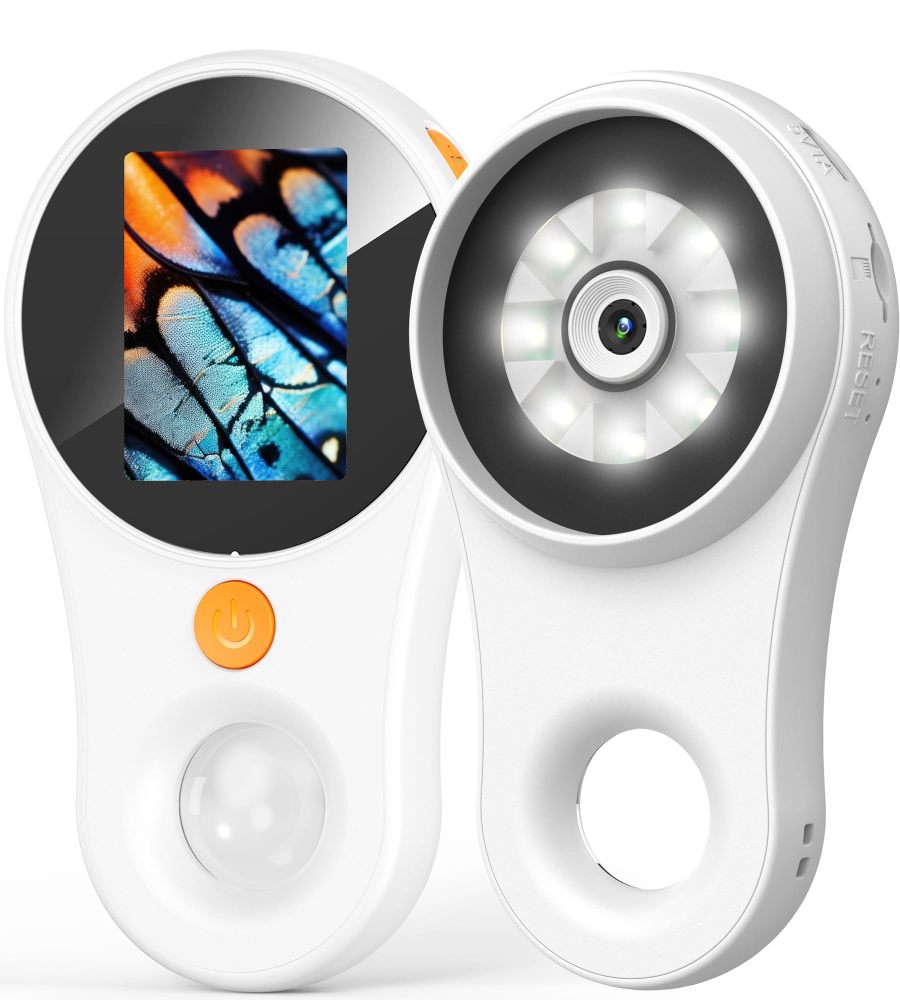
A digital handheld microscope is a portable device integrating high-magnification, real-time screen display or PC connectivity, and LED illumination. These products are designed to be compact and lightweight for easy handling, primarily used for microscopic inspection of coins, jewelry, plants, and electronic components. They are also commonly used as tools for children's science education and daily vision assistance. Their core value lies in visualizing microscopic details difficult to see with the naked eye and supporting image and video recording. The following table illustrates the key characteristics of consumer behavior in this category.
| Dimension | Segment | Description |
|---|---|---|
| Need Driver Type | Planned Purchase / Interest-driven / Emergency-driven Purchase | Purchases are often driven by hobbies (collecting, scientific exploration) or educational needs. There is also demand for solving specific microscopic inspection problems on an emergency basis. |
| Purchase Frequency | Low Frequency | As durable tools, they are typically purchased once for long-term use, with a long repurchase cycle, not being fast-moving consumer goods. |
| Decision Complexity | Medium | Consumers compare magnification, screen display, ease of use, PC compatibility, and price, but the decision-making time invested aligns with the product price. |
| Price Sensitivity | Medium to High | Consumers are sensitive to the balance between product features and price, tending to choose products with high cost-performance, but willing to pay a premium for clear functional advantages. |
| Emotional Dependency | Medium | The product stimulates curiosity, provides the joy and sense of achievement of exploration, while meeting practical problem-solving needs, balancing emotional and functional value. |
II. User Personas & Usage Scenarios
2.1 Family Science Enthusiasts (Parents & Children)
🎯 Aim to cultivate children's interest in science and nature through interactive and fun methods, enjoying parent-child exploration time together.
| Typical Usage Scenarios | Core Pain Points | Primary Purchase Drivers |
|---|---|---|
|
|
|
2.2 Precision Work Assistants (Collectors / Tech Enthusiasts / Vision Assistants)
🎯 Require high-magnification tools to inspect collectible details, perform fine repairs, monitor plant health, or assist in reading small print, pursuing clarity and practicality.
| Typical Usage Scenarios | Core Pain Points | Primary Purchase Drivers |
|---|---|---|
|
|
|
III. User Needs Hierarchy (KANO Model)
3.1 Basic Needs (Must-Haves)
- Clear Magnification Function: The product must provide clearer, higher-magnification effects than the naked eye or ordinary magnifying glasses, meeting the user's need to observe microscopic details.
- Built-in Illumination: Equipped with LED light source to ensure sufficient illumination of the observed object under various lighting conditions, making details visible and avoiding issues with insufficient ambient light.
- Portable & Lightweight: The product is small in size and light in weight, convenient for single-handed holding and carrying anywhere, anytime, without adding burden.
- Simple & Intuitive Operation: Core functions (like power on/off, brightness adjustment) should be easy to understand and operate, avoiding complex setups and lowering the barrier to use.
3.2 Performance Needs (Linear Satisfiers)
- HD IPS Display: A 2-3 inch IPS color screen providing real-time images with true colors and wide viewing angles, reducing eye strain during prolonged observation and enhancing viewing comfort.
- Actual Usable Magnification: Providing effective magnification that meets users' actual needs (e.g., 100x-500x), not inflated numbers from pure digital zoom, ensuring real-world effectiveness.
- PC/Mac Connectivity: Stable connection to a computer via USB cable for observing, recording, and sharing images/videos on a large screen, facilitating in-depth analysis and collaboration.
- Good Battery Life: Built-in rechargeable battery supporting at least 1.5 hours of continuous use per charge, meeting general exploration durations and reducing frequent charging.
- Image/Video Storage: Supporting photo capture and video recording, with built-in storage or expandable capacity via memory card, facilitating long-term recording and review.
3.3 Excitement Needs (Delighters)
- Auto-Focus Function: Achieving true auto-focus, eliminating the hassle of manual adjustment, especially enhancing the experience when observing irregular surfaces or fast-moving objects, significantly improving efficiency.
- Integrated Multiple Light Sources: Adding special light sources like UV light alongside white LEDs, expanding applications in areas like currency anti-counterfeiting, gemstone appraisal, and plant detection, increasing professionalism.
- Higher-Resolution Image Sensor: Providing a higher pixel camera to ensure excellent clarity and detail when displayed on a large screen, meeting professional-grade demands.
- Included Memory Card: Including a microSD card in the product packaging, allowing users to use it out of the box without additional purchases, enhancing the shopping experience and user satisfaction.
3.4 Unmet Needs & Opportunities
-
Poor Depth of Field & Focusing Flexibility: Fixed focal length or extremely shallow depth of field requires the device to be pressed directly against the observed object, making it difficult to see non-flat objects with height variations (like circuit board components, live insects), limiting its applicability.
User Reviews (VOC) Didn't work for me at all. You have to put it right onto of coin or brooch, not like a loop where you can move in and out. Just didn't work for me. // This device is only suitable for eg flat prints or texiles with the frame touching // The marketing imagery shows this being used, ostensibly for electronics repair or observation. But you cannot change the focal point or alter the focus itself so the microscope needs to be nearly in full contact with whatever you're observing. This means anything, like a PCB; which will have lots of components of varying heights right next to each other, will render this thing functionally worthless.
-
Narrow Field of View Hinders Overall Observation: Users commonly report that the screen only shows a small part of the observed object at a time, requiring frequent device movement to see the whole picture, affecting efficiency and overall perception.
User Reviews (VOC) Viewing area too small. Too small to accomplish tasks. Magnification is good, but viewing is only a small portion at a time. // No way to lower the magnification or zoom out. I bought it to look for minor flaws in postage stamps and you can only see about 1/5 of the stamp at a time.
-
Insufficient Handheld Operation Stability: Although portable, slight hand tremors in handheld mode cause image blur, especially at high magnification, lacking effective image stabilization mechanisms or accompanying stands.
User Reviews (VOC) My problem is that holding this perfectly still is very difficult. The tiniest fraction of movement and your out of focus, so it was hard for me get much of a look at what I was trying to view. // Not as advertised, only useful on a few simple objects, the illumination seems to be aimed incorrectly or the focus is in the wrong place. A bit frustrating to use.
-
PC Connection Functionality Flaws: In PC connection mode, the device's own buttons often become disabled, requiring all operations through computer software. Some users report image transmission lag or resolution degradation.
User Reviews (VOC) The product buttons cannot be used in computer usage mode,which is normal. // Would not connect to computer.
-
Actual Magnification Does Not Match Claims: Claims of '500x' or higher magnification by some products are questioned by users as false or merely digital zoom. The actual optical magnification effect is far below expectations, leading to post-purchase disappointment.
User Reviews (VOC) The listed magnification is 500x, which is an overstatement. The actual magnification can easily be measured by looking at a metric ruler. At the lowest magnification, ~9mm gets magnified to the ~65mm of the screen width and at the highest magnification we only see 4.5mm. This translates to a linear magnification of 7-14x and if we take the square, we get an area magnification of 50x to 200x.
IV. User Decision Drivers
4.1 Key Decision Factors
- Image Clarity & Detail Presentation: Users care most about whether they can obtain sufficiently clear, sharp images after magnification to see microscopic details. This is the core factor driving purchase, directly impacting the product's practical value.
- Actual Usable Magnification: Consumers carefully evaluate whether the claimed magnification is genuine and effective, meeting their specific observation needs, rather than simple number stacking, to avoid false advertising.
- Ease of Operation: Including ease of focusing, intuitiveness of button functions, and low learning curve, especially crucial for non-professional users or children, affecting usage frequency.
- Portability & Handheld Stability: Whether the product size and weight are suitable for handheld carrying, and whether the image remains stable without shaking in handheld mode, are key factors affecting the high-magnification user experience, determining its value for mobile use.
4.2 Secondary Decision Factors
- Screen Size & Display Quality: Screen size, color performance, and viewing angles affect viewing comfort and detail presentation, but are not deal-breakers.
- Battery Life: Duration of use per charge directly impacts convenience for outdoor exploration or prolonged work, but users have backup solutions (like power banks).
- PC Connectivity & Experience: Ease of connecting to a computer, system compatibility, image fluidity, and additional functions (like photo/video capture) on a large screen enhance professionalism and shareability.
- Price & Value for Money: Given that core functions are met, whether the product price is reasonable and offers a value-added user experience influences the final choice.
- Types of Additional Light Sources: Beyond standard white LED, whether UV or other special light sources are provided to meet more professional inspection needs, enhancing product uniqueness.
- Storage & Sharing Functions: Ability to conveniently capture images/videos, support built-in storage or TF card expansion, and ease of exporting and sharing, facilitating user data management.
V. Selling Points & Competitive Landscape
5.1 Selling Point Analysis
5.1.1 Standard Features (Points of Parity)
- 2-3 Inch IPS Color Screen: Provides real-time preview and observation, promoted for clarity, true colors, and reduced eye strain, considered a standard feature.
- High Magnification: Commonly claims 500X (some 100X) magnification, emphasizing the ability to see microscopic details as a core selling point to attract users.
- Built-in LED Illumination: Equipped with 8 LED lights, promoted to provide bright, natural light with adjustable brightness to adapt to different lighting environments.
- PC Connection Support: Connects to Windows/macOS computers via USB cable for large-screen viewing, photo capture, and video recording, expanding application scenarios.
- Portable Handheld Design: Emphasizes compactness and lightness for easy carrying, suitable for outdoor and mobile use, aligning with the product form factor.
- Multi-Scenario Applicability: Promoted for use in various scenarios like coins, jewelry, plants, electronic repair, and children's learning, appealing to a broad audience.
- Built-in Rechargeable Battery: Uses Type-C charging, providing about 1.5-2.5 hours of battery life, ensuring basic portability.
5.1.2 Key Differentiators
- Fixed Focus or Claimed Auto-Focus: Some products emphasize the ease of use from fixed focus (no-focus), while others claim auto-focus (often actually preset fixed focus) to simplify operation.
- Multiple Light Source Modes: Some products additionally offer UV light to meet specific needs like counterfeit detection or fluorescent substance inspection, increasing professionalism.
- Higher Pixel Sensor: Emphasizes 2MP or higher pixel cameras to improve image recording clarity, attracting users with higher quality demands.
- Included Memory Card: Some sellers include an extra TF card, providing an out-of-the-box storage solution, enhancing user experience.
- Ergonomic Design: Emphasizes comfortable handle grip for prolonged use, improving user satisfaction.
- 2-in-1 Functionality: A few products integrate a traditional optical magnifier alongside the digital microscope, adding backup or low-magnification observation functions, increasing practicality.
5.1.3 Unique Selling Propositions (USPs)
- Unique Appearance/Colors: For example, launching cartoon-shaped or specific color (like purple) products targeting the children's market, enhancing product appeal and differentiating from homogeneous products.
5.2 Competitive Landscape
5.2.1 Market Maturity
The digital handheld microscope market is currently at medium maturity, with product form factors and core functions becoming standardized. Major players compete with similar hardware configurations and selling points, leading to significant product homogenization. Innovation is more evident in minor functional optimizations or bundled sales (like including an SD card) rather than disruptive technological breakthroughs. Price competition is intense, and consumer focus on value for money is high.
5.2.2 Innovation Trends
Current innovation trends primarily focus on enhancing user experience: First, optimizing focus and image stability, shifting from promoting 'high magnification' to actual 'high clarity.' Second, improving connectivity experience on PC or mobile apps, transforming it into a smarter tool rather than a simple magnifier. Third, providing customized features and content for specific user groups (like children's education, professional appraisal), such as integrated learning modules or professional analysis tools. Fourth, attempting to introduce more diverse lighting methods (like UV light) to broaden application scenarios.
VI. Marketing Claims vs. Reality Check
The table below analyzes the gap between common marketing claims and actual user experiences in this category:
| Dimension | Marketing Claim | User Reality | Verdict |
|---|---|---|---|
| Magnification Inflation | Claims of 500X or higher digital magnification, able to clearly see all details of the microscopic world. | User feedback indicates actual optical magnification is far lower than claimed (often 7-14x). High magnification is merely digital zoom stretching, resulting in blurry, grainy images. | Typical misleading of consumers with ideal lab data or digital stretch effects, failing to deliver on the core promise of high-clarity microscopic observation. Severely impacts user trust, downgrading the product to an ordinary magnifier. |
| Focus Range & Depth of Field Limitations | Portable microscopes are suitable for various scenarios like PCB soldering and 3D insect observation, easy to operate, no focusing needed. | Most products use a fixed focal length design, requiring the lens to be pressed directly against the observed object's surface for clear imaging. This prevents observation of 3D objects with height variations or scenarios requiring working distance (like PCB soldering), limiting application scope. | Sellers oversimplify the physical limitations of microscopic observation, equating the convenience of fixed focus with universality, which severely misaligns with actual usage scenarios, causing misjudgment and disappointment among professional users. |
| Poor Handheld Stability | Lightweight and portable, can be handheld to explore the microscopic world anytime, anywhere. | At high magnification, handheld operation is highly susceptible to slight shaking causing image blur. Users struggle to maintain stable focus, and the product lacks effective anti-shake mechanisms or accompanying stands. | While sellers emphasize portability, they overlook the high demand for handheld stability at high magnification. The lack of necessary physical or electronic assistance significantly diminishes the product experience in core usage scenarios, reducing its practical value. |
Key Takeaway: The market generally exhibits tendencies of parameter inflation and exaggeration of scenario-based experiences, especially regarding the practical application of magnification and fixed focal length.
VII. Supply-Demand Misalignment Analysis
The table below highlights mismatches between seller focus and buyer priorities:
| Dimension | Seller Behavior | User Focus | Verdict |
|---|---|---|---|
| Actual Magnification Effect vs. User Expectations | Universally emphasize '500X high magnification' and 'HD pixels,' using digital zoom and screen resolution as primary selling points. | Users actually care about whether they can truly see microscopic details, not just paper specifications. They feel very disappointed and misled by the blurriness caused by fixed focus and digital zoom. | Sellers over-promote numerical parameters, failing to effectively translate and deliver on users' genuine expectation for 'clear microscopic details,' resulting in a severe mismatch between perceived core value and actual experience. |
| Focus Flexibility & Scenario Applicability | Promote product suitability for various scenarios like coins, jewelry, repair, but avoid discussing the limitations fixed focus imposes on observing 3D, irregular objects. | Users complain about inability to focus on objects with height variations or perform fine operations like PCB soldering requiring working distance, feeling the product is 'more like a toy' with far narrower applicability than advertised. | Sellers fail to acknowledge the product's physical limitations in optical design. Generalized promotion leads to 'functional failure' for users in specific professional scenarios, losing potential advanced users. |
| Handheld Stability Solutions | Universally emphasize 'handheld portability' but lack effective solutions (like anti-shake tech, easy-to-use stands) for image blur caused by handshake. | Users struggle to keep hands steady at high magnification, experiencing severe image shake, reducing the enjoyment and efficiency of portable use, urgently needing solutions. | Sellers position 'lightweight portability' as an advantage but ignore the rigid demand for 'stable imaging' at high magnification, creating a shortcoming in the core user experience. |
Key Takeaway: Sellers collectively remain silent or downplay core experience pain points like magnification and fixed focal length, while oversupplying generic features and parameter stacking, leading to supply-demand misalignment.
VIII. Strategic Opportunities & Recommendations
8.1 True Optical Zoom & Anti-Shake Handheld Microscope
8.1.1 Target Audience & Pain Points
⚡️ Pain Points Addressed: Actual magnification not matching claims, poor depth of field and focusing flexibility, insufficient handheld operation stability.
8.1.2 Action Plan
Develop a lens system with 30-100X true optical zoom and multi-level digital zoom, integrating miniature Optical Image Stabilization (OIS) or high-performance Electronic Image Stabilization (EIS), paired with a high-pixel CMOS sensor and optimized algorithms to ensure stable, clear, and deep-depth-of-field images even when handheld. Provide longer effective working distances (e.g., 10-20mm).
| Tech Complexity | High |
| Cost Impact | High Impact |
| Trade-off Warning | Integrating optical zoom lenses and anti-shake modules may slightly increase product volume, weight by 20-30 grams, and significantly raise costs. Requires balancing portability and performance. |
| Price Band | Only viable above $69.99 |
8.1.3 Marketing Strategy
Emphasize 'true magnification, what you see is what you get.' Use comparison videos to showcase the 'shake-free, full-depth-of-field' observation experience, highlighting its professional advantages in precision inspection and dynamic observation. Provide professional test data for specific application scenarios like PCB soldering.
8.2 Multi-Functional App-Linked Children's Science Exploration Kit
8.2.1 Target Audience & Pain Points
⚡️ Pain Points Addressed: Complex operation, short battery life, lack of in-depth educational content.
8.2.2 Action Plan
Develop a dedicated App wirelessly (or via Bluetooth) connecting to the microscope, providing a child-friendly interactive interface, AR (Augmented Reality) recognition features, an embedded science knowledge base, observation tasks, and games. The App should support one-touch photo capture and sharing to the parent's device, optimize battery management for extended life, and could include a child-specific drop-resistant silicone case and a beautifully designed exploration booklet.
| Tech Complexity | Medium |
| Cost Impact | Medium Impact |
| Trade-off Warning | Minimal hardware changes to the product itself. Main costs lie in App development and content creation. Must ensure App compatibility and long-term maintenance. |
| Price Band | Only viable above $29.99 |
8.2.3 Marketing Strategy
Position as 'The Science Explorer Who Puts the Microscopic World in Your Pocket.' Emphasize the interactive learning fun of the App, the immersive AR experience, and parent-child co-learning value. Showcase videos of children happily learning through exploration in home settings, highlighting product safety and durability.
8.3 Outdoor Long-Battery-Life Portable All-in-One with Stand
8.3.1 Target Audience & Pain Points
⚡️ Pain Points Addressed: Short battery life, insufficient handheld operation stability, poor PC connection experience.
8.3.2 Action Plan
Increase built-in battery capacity to at least 1000-1500mAh, achieving 3-5 hours of real-world battery life. Design an integrated, foldable, adjustable-angle mini stand allowing the device to be placed stably on a desk or attached to other objects for observation. Optimize PC connection mode to ensure device buttons can still control some functions (like photo capture) when connected, and improve transmission fluidity.
| Tech Complexity | Medium |
| Cost Impact | Medium Impact |
| Trade-off Warning | Increasing battery capacity may slightly increase device thickness and weight. Integrating a folding stand may add structural complexity but can significantly improve usability. |
| Price Band | Only viable above $24.99 |
8.3.3 Marketing Strategy
Emphasize 'Enduring Power, Stable Observation, Worry-Free Outdoor Exploration.' Showcase the product in scenarios like observing plants/minerals in the wild or prolonged desktop work (like coin appreciation), highlighting its balance between portability and practicality.
8.4 Wide-Angle, High-Depth-of-Field Fixed Focus Upgrade
8.4.1 Target Audience & Pain Points
⚡️ Pain Points Addressed: Narrow field of view hinders overall observation, limited focusing range.
8.4.2 Action Plan
While maintaining the ease of use of fixed focus, optimize optical design using custom wide-angle lenses to significantly expand the field of view and improve depth of field. This allows observing a larger area at once and tolerates slight surface irregularities. May sacrifice some maximum magnification while maintaining clarity.
| Tech Complexity | Medium |
| Cost Impact | Medium Impact |
| Trade-off Warning | Wide-angle, large-depth-of-field lenses are typically more expensive, may increase lens module size, requiring redesign of the optical structure. Must find the optimal balance between fixed focus and wide angle. |
| Price Band | Only viable above $34.99 |
8.4.3 Marketing Strategy
Emphasize 'See the Entire Microscopic World at a Glance, No Need for Frequent Movement.' Use comparison images to show the field of view difference between wide-angle and traditional lenses, especially highlighting its advantage in overall coin/stamp observation. Focus on 'Efficient, Convenient Macro-Micro Integrated Observation.'