Amazon US Market Analysis: Smart Color-Changing Light Bulbs Category
📊 Executive Summary
📈 Market Trends
Protocol upgrades and AI empowerment are future trends. The smart color-changing bulb market is maturing. The Matter protocol is becoming the new standard for cross-platform interoperability, and some products are beginning to integrate AI for smarter lighting recommendations. Consumer demand for hub-free, multi-functional integration continues to grow, driving product evolution towards better interoperability and intelligence.
⚡ Major Pain Points
Unstable connections and poor App experience are the core user pain points. Despite rich feature promotion, users commonly report frequent Wi-Fi disconnections and failure to reconnect automatically after power loss, breaking the smart experience. Additionally, complex and non-intuitive companion Apps, insufficient brightness in color mode, and color distortion at low brightness are major factors affecting user satisfaction and product reputation.
💡 Selection Opportunities
Return to basics, enhance stability and user experience. Market opportunities lie in deeply improving connection stability and App usability, such as developing a 'seamless' stable connection bulb. Simultaneously, launching a 'high-brightness, accurate color' product can create differentiation by addressing brightness and color issues in color mode. In the long term, actively embracing the Matter protocol to create a truly cross-ecosystem, user-friendly smart lighting experience is a key strategic direction.
I. Analysis Overview
1.1 Introduction & Report Scope
This report analyzes the 'LED Bulbs' category (specifically Smart Color-Changing Light Bulbs) in the Amazon US market, focusing on target user personas, core needs, decision factors, market communication, and potential opportunities.
1.2 Category Snapshot
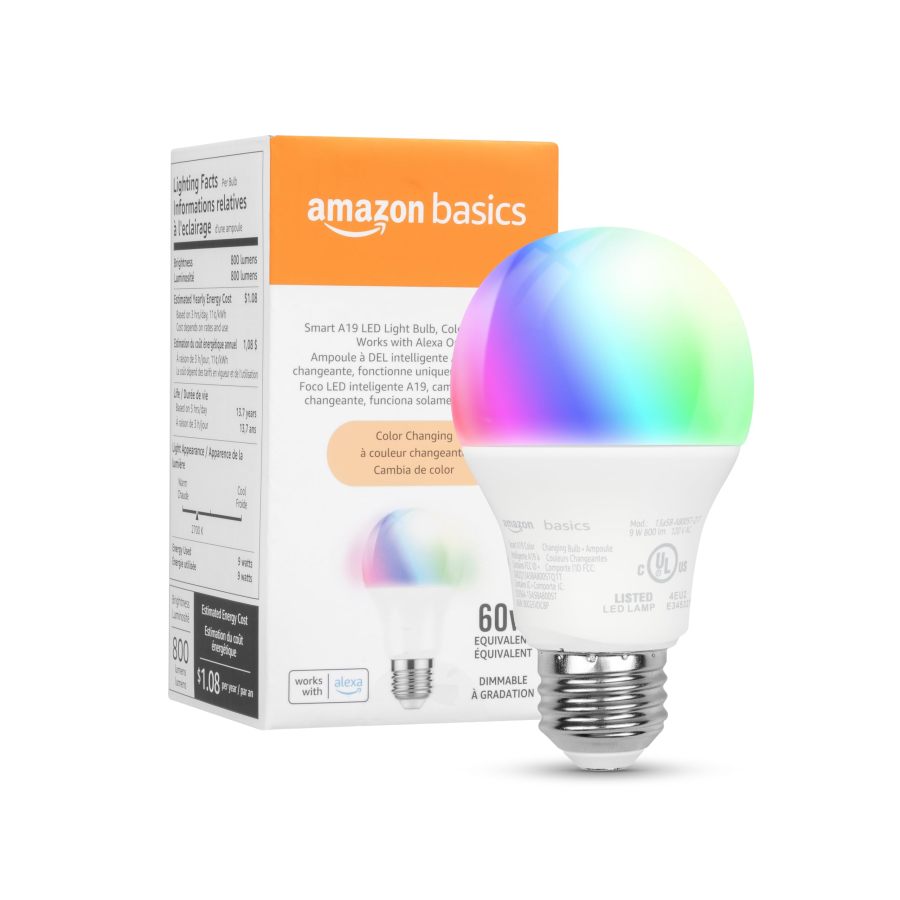
Smart color-changing light bulbs are home products that combine LED lighting with smart control technology. They offer 16 million RGB colors and adjustable white light (warm to cool) and enable remote control via App or voice commands through Wi-Fi/Bluetooth, aiming to create personalized atmospheres and enhance the intelligence and convenience of home life. Common types include A19 and E12 bulbs. The following table illustrates the key characteristics of consumer behavior in this category.
| Dimension | Segment | Description |
|---|---|---|
| Need Driver Type | Planned Purchase / Emotion-Driven | Users typically purchase smart bulbs as part of an active upgrade to their home lighting system or to create specific atmospheres (e.g., for parties, home theater, relaxation), driven by personalized needs and smart home trends. |
| Purchase Frequency | Low Frequency / Supplementary | Smart bulbs are not frequently repurchased. They are primarily bought in bulk for the initial replacement of traditional bulbs or for functional expansion within an existing smart home ecosystem. |
| Decision Complexity | Medium | Consumers compare different brands, compatibility (Alexa/Google Home/Matter), connection methods (Wi-Fi/Bluetooth), feature richness (music sync, automation), and user reviews before purchase, requiring some research effort. |
| Price Sensitivity | Medium | Price is an important consideration, and consumers expect good value for money. However, users are willing to pay a reasonable premium for products offering significant connection stability, superior App experience, or brand recognition. |
| Emotional Dependency | Medium to High | Smart color-changing bulbs significantly impact indoor ambiance and user emotional experience. They are important tools for enhancing quality of life, expressing individuality, and enjoying technological benefits, holding high emotional value. |
II. User Personas & Usage Scenarios
2.1 Smart Home Enthusiast
🎯 Curious about smart technology, they are average household users looking to experience smart living with a low entry barrier and gradually build their personal smart ecosystem.
| Typical Usage Scenarios | Core Pain Points | Primary Purchase Drivers |
|---|---|---|
|
|
|
2.2 Ambiance Designer
🎯 They value home aesthetics and personal expression, aiming to create diverse mood spaces through precise lighting changes to enhance the texture of home life.
| Typical Usage Scenarios | Core Pain Points | Primary Purchase Drivers |
|---|---|---|
|
|
|
III. User Needs Hierarchy (KANO Model)
3.1 Basic Needs (Must-Haves)
- Basic Illumination Function: Provide stable daily lighting with sufficient brightness to meet living needs, effectively replacing traditional incandescent bulbs.
- Standard Base Compatibility: Compatible with universal screw bases like E26/E12/A19, ensuring they fit most existing light fixtures without changing sockets.
- Energy Efficiency & Long Lifespan: Benefits of LED technology: low energy consumption and an expected lifespan of 25,000+ hours, reducing replacement frequency and electricity costs.
3.2 Performance Needs (Linear Satisfiers)
- Voice/App Remote Control: Support mainstream voice assistants like Alexa, Google Assistant, and mobile Apps for remote on/off, dimming, and color changing anytime, anywhere.
- Adjustable Color & Color Temperature: Offer 16 million RGB colors and 2700K-6500K warm white to cool white adjustment to meet different scene atmosphere needs.
- Stepless Dimming: Support smooth brightness adjustment from 1% to 100%, allowing precise control of light intensity to adapt to different routines or activities.
- Hub-Free Direct Connection: Connect directly to the network via 2.4GHz Wi-Fi without needing an additional smart hub, simplifying installation and reducing costs.
3.3 Excitement Needs (Delighters)
- Music Sync Mode: Lights pulse or change rhythm with music, creating an immersive entertainment experience and enhancing party or home theater atmosphere.
- Automation Schedules & Scenes: Support advanced automation features like sunrise/sunset simulation, scheduled on/off, and Biorhythm (circadian rhythm) lighting for seamless smart living and optimized routines.
- Matter Protocol Compatibility: Enable unified management across platforms (Apple Home, SmartThings, etc.), representing the future trend of smart homes and offering broader ecosystem interoperability.
- Wi-Fi Failover to Bluetooth: When Wi-Fi is down, basic functions remain controllable via Bluetooth locally, ensuring usability and avoiding complete loss of control.
3.4 Unmet Needs & Opportunities
-
Poor Wi-Fi Connection Stability: Users commonly report bulbs easily disconnecting, failing to reconnect automatically after power loss, or even flashing continuously, severely impacting daily smart experience and reliability.
User Reviews (VOC) They keep losing their connection. // Customers report significant connectivity issues with these light bulbs, including complete disconnection, repeated disconnections
-
Poor App User Experience: Companion Apps have non-intuitive interfaces, complex features, or fragmented experiences across different brands, leading to high learning costs and inconvenient operation.
User Reviews (VOC) The app has some minor flaws BUT the app is excellent and the lights are highly programmable. // Customers have mixed experiences with the light bulb's app, with some finding it super friendly and cool to use, while others report that it is hard to navigate.
-
Insufficient Brightness in Color Mode: Brightness in color mode is significantly lower than in white light mode, limiting practicality for ambiance creation and making it unsuitable as primary lighting.
User Reviews (VOC) the bulb gets A LOT dimmer when you are using a colour outside of the standard 'white' spectrum // the brightness isn't that bright, description says 80watt equivalent but more like 60max in my opinion
-
Color Distortion at Low Brightness: At lower brightness levels, colored light (especially warm tones) tends to appear reddish or unnatural, affecting visual effects.
User Reviews (VOC) color options are become limited at low brightness, with many shades appearing *very* red. // when it's on white that's the brightest it gets
-
Product Reliability & Lifespan Concerns: Some users report bulbs failing, not working, or entering abnormal modes within months to a year, far below the expected lifespan of LED bulbs.
User Reviews (VOC) One of them stopped working within 1 month of purchase // multiple customers reporting that their bulbs died within months of use.
IV. User Decision Drivers
4.1 Key Decision Factors
- Connection Stability & Reliability: Whether the bulb maintains a stable connection to the Wi-Fi network, can quickly and automatically reconnect after power loss, and avoids frequent disconnections or flashing. This is the cornerstone of a reliable smart experience.
- Smart Platform Compatibility: Whether it seamlessly integrates into the user's existing Alexa or Google Home smart ecosystem, enabling unified voice/App control and reducing the hassle of managing multiple Apps.
- Ease of Installation & Setup: Whether the initial installation and pairing process is simple and intuitive, requiring no complex operations or extra technical knowledge, lowering the user entry barrier.
4.2 Secondary Decision Factors
- Brightness & Color Performance: Whether the brightness in white mode is sufficient, and the vibrancy, accuracy, and low-brightness performance of colored light.
- App User-Friendliness: Whether the companion App's interface is clean, its functions are easy to understand and use, minimizing learning curve and enhancing daily control convenience.
- Feature Richness: Whether it supports advanced features like music sync, automation scenes, group control, and biorhythm lighting to meet personalized and entertainment needs.
- Cost-Effectiveness: Whether the product price is reasonable while meeting core needs, especially considering the total cost for multi-pack purchases.
- Product Quality & Durability: Trust in the brand, and the actual product lifespan and failure rate, aiming to reduce long-term maintenance and replacement costs.
V. Selling Points & Competitive Landscape
5.1 Selling Point Analysis
5.1.1 Standard Features (Points of Parity)
- Voice/App Remote Control: Most products emphasize compatibility with Alexa and Google Home, and basic control functions like remote on/off, dimming, and color changing via mobile App.
- 16 Million Colors + Adjustable White: Widely offer rich RGB color choices and 2700K-6500K warm to cool white adjustment to meet different scene atmosphere needs.
- Hub-Free Direct Wi-Fi Connection: The vast majority highlight their hub-free design, connecting directly via 2.4GHz Wi-Fi, lowering the entry barrier for smart lighting.
- Energy Efficient & Long Lifespan: As LED bulbs, they commonly promote low energy consumption (60W or 100W equivalent, actual ~9W) and a lifespan of 25,000+ hours.
- Timer/Scene Automation: Support setting scheduled on/off, preset scenes, and daily routines for automated light management.
5.1.2 Key Differentiators
- Music Sync Mode: Some products offer a mode where lights pulse or change rhythm with music detected by the phone's microphone, enhancing entertainment atmosphere.
- Matter Protocol Compatibility: A few emerging products are beginning to emphasize cross-ecosystem compatibility with broader smart home platforms like Apple Home and SmartThings, aiming to break down brand barriers.
- Wi-Fi Failover to Bluetooth: Some products provide a Bluetooth backup connection feature, ensuring local control remains possible during Wi-Fi outages.
- Higher Brightness (100W Equivalent): Some products offer high lumen output up to 1000-1350 lumens to meet the needs of larger spaces or higher illumination requirements.
- High Color Rendering Index (CRI90+): A few products emphasize a higher CRI (Color Rendering Index) to provide more true-to-life and natural color reproduction.
5.1.3 Unique Selling Propositions (USPs)
- AI-Generated Lighting: Utilizes Large Language Models (LLM) to intelligently generate professional lighting effects based on user mood and activities, as seen in the Lepro B1 AI Smart Bulb.
- Biorhythm Function: Simulates natural light changes to optimize user circadian rhythms and promote health. Some products (e.g., ANGELHALO) are beginning to integrate this feature.
- Included Physical Remote: Very few products (e.g., Vanance) include a physical remote control alongside smart control options, catering to traditional users.
5.2 Competitive Landscape
5.2.1 Market Maturity
The smart color-changing bulb market is relatively mature. Core features (e.g., voice/App control, adjustable color/color temperature, hub-free) have become standard. Product homogenization is evident, with intense price competition. Consumer demand for basic functions has shifted from 'having them' to 'them being easy to use, stable, and reliable'.
5.2.2 Innovation Trends
The adoption of the Matter protocol is the current major innovation trend, aiming to break down smart home ecosystem barriers and simplify device interoperability. Simultaneously, integrating AI technology for smarter, more personalized lighting solutions, and improving offline control and overall connection reliability are new directions for product differentiation.
VI. Marketing Claims vs. Reality Check
The table below analyzes the gap between common marketing claims and actual user experiences in this category:
| Dimension | Marketing Claim | User Reality | Verdict |
|---|---|---|---|
| Connection Stability | Always online, stable connection, 3x faster setup, Bluetooth backup when Wi-Fi is down. | Users commonly report bulbs frequently disconnecting, struggling to reconnect automatically after power loss, or even flashing continuously. Setup for some products is not smooth, requiring manual separation of Wi-Fi bands. | Sellers overstate the ideal connection performance and fail to deliver on the core promise of 'always online'. In actual user experience, unstable connection is a fatal flaw for smart bulbs, directly causing functional failure and user frustration. |
| Brightness in Color Mode | 16 million dazzling colors, creates any atmosphere, 800-1350 lumen high brightness output. | Users widely report that brightness drops significantly in color mode, far below advertised lumen values (often less than 50% of white mode brightness), making them impractical as primary lighting. | This is a paradox between LED physics and marketing claims. Colored light inherently involves filtering or combining white light, resulting in lower brightness. Sellers fail to clearly communicate this physical limitation, leading to inflated user expectations about the practicality of colored light. |
| Product Lifespan & Reliability | 25,000-50,000 hour ultra-long lifespan, durable and long-lasting. | Numerous user reviews report bulbs failing (e.g., stop working, cannot pair) within just a few months to a year, far short of the advertised lifespan. | Long lifespan is a core selling point for LED bulbs. However, premature failure in some branded products directly exposes issues with product quality control and component quality, severely damaging user trust in the brand. |
Key Takeaway: The market is generally characterized by parameter inflation and over-promising on scenario-based experiences, with a significant gap between marketing claims and user reality, especially regarding connection stability and brightness performance.
VII. Supply-Demand Misalignment Analysis
The table below highlights mismatches between seller focus and buyer priorities:
| Dimension | Seller Behavior | User Focus | Verdict |
|---|---|---|---|
| Core Function Stability | Sellers commonly promote 'easy setup' and 'stable connection' as selling points, but few brands genuinely solve the high-frequency complaints about disconnections, flashing, and the need to reset. | Users care most about 'the bulb not disconnecting and working reliably all the time', not about 'working occasionally' or 'fast setup once'. Unstable connections lead to frequent frustration and functional failure. | Sellers have not allocated resources to the most fundamental, core aspect: 'reliability'. They remain at the level of feature claims, resulting in a severe discrepancy between user experience and promises, which is the root cause of negative reviews and returns. |
| App User Experience & Logic | Most sellers rely on generic Apps (e.g., Smart Life, Tuya) or their own Apps, but generally lack deep optimization for App interaction logic, usability, and multi-device management experience. | Users complain about confusing App interfaces, redundant features, and non-intuitive operations, making it difficult to quickly find needed functions or manage device groups, thereby increasing usage difficulty. | The App is the core interaction medium for smart bulbs. However, sellers have not invested sufficient effort in creating a user-friendly App experience, making smart control more complicated and undermining the overall perceived value of the product. |
| Advanced Feature Practicality & Priority | Sellers heavily promote advanced and novel features like 'music rhythm', 'AI-generated lighting', and 'billions of colors' to attract attention. | When basic connection and brightness needs are unmet, users are not impressed by these 'nice-to-have' features and may even find them gimmicky. The music sync function often performs poorly due to microphone limitations. | The market is trapped in 'feature one-upmanship', blindly piling on advanced features before foundational experience is satisfactory. This not only increases product BOM costs but also dilutes the core selling points, failing to truly address the users' most critical pain points. |
Key Takeaway: Sellers fail to effectively address core user pain points (e.g., connection stability, App usability, actual brightness), while over-investing in feature bloat and promoting emerging protocols, leading to a severe misalignment between supply focus and user demand.
VIII. Strategic Opportunities & Recommendations
8.1 "Seamless" Stable Connection Smart Bulb
8.1.1 Target Audience & Pain Points
⚡️ Pain Points Addressed: Poor Wi-Fi connection stability, settings not retained after power loss, concerns about product reliability and lifespan.
8.1.2 Action Plan
Adopt more stable Wi-Fi/Bluetooth chipsets, optimize firmware logic to achieve automatic recovery of settings and fast reconnection after power loss. Strengthen the power management module to enhance overall device reliability and anti-interference capability. Provide a simple troubleshooting tool within the App.
| Tech Complexity | Medium |
| Cost Impact | Medium Impact |
| Trade-off Warning | Optimizing chipsets and power management modules may slightly increase costs, with minimal impact on product size and weight. |
| Price Band | Only viable above $18.99 |
8.1.3 Marketing Strategy
Emphasize 'Rock-solid connection, goodbye to disconnection woes'; highlight 'Automatic recovery after power loss, no need for repeated setup'; quantify product reliability through durability tests and MTBF (Mean Time Between Failures) data.
8.2 High-Brightness, Accurate Color Smart Bulb
8.2.1 Target Audience & Pain Points
⚡️ Pain Points Addressed: Insufficient brightness in color mode, color distortion at low brightness.
8.2.2 Action Plan
Use multi-channel RGBWW LED arrays to improve luminous efficacy and brightness in color mode, minimizing the gap with white mode brightness. Optimize color calibration algorithms to address low-brightness color distortion. Provide more precise color temperature/color adjustment sliders.
| Tech Complexity | Medium |
| Cost Impact | High Impact |
| Trade-off Warning | Increasing color brightness may require higher-power LED arrays and more efficient heat dissipation solutions, potentially leading to a slightly larger bulb size or significantly higher costs. |
| Price Band | Only viable above $24.99 |
8.2.3 Marketing Strategy
Highlight 'High brightness in full color, lighting up every scene'; showcase real-life comparison photos of colored light illuminating a room; emphasize 'Professional-grade color reproduction, what you see is what you get' to attract users seeking high-quality ambiance.
8.3 Matter-Native App Experience Optimized Bulb
8.3.1 Target Audience & Pain Points
⚡️ Pain Points Addressed: Poor App user experience, flawed grouping control with smart assistants, fragmentation across multiple Apps.
8.3.2 Action Plan
Develop a clean, intuitive, and responsive native App (or optimize an existing one) specifically for the Matter protocol, focusing on managing Matter devices and advanced features. Simplify the pairing process, provide clear group and scene setup interfaces, and reduce feature redundancy.
| Tech Complexity | Low |
| Cost Impact | Low Impact |
| Trade-off Warning | Primarily involves software optimization and UI/UX design, with no significant physical side effects. |
| Price Band | Only viable above $15.99 |
8.3.3 Marketing Strategy
Emphasize 'One App to control all Matter devices'; highlight 'Minimalist operation, goodbye to App anxiety'; use comparison videos to showcase the App's smoothness and ease of use, boosting user confidence.
8.4 Physical Switch-Friendly Smart Bulb
8.4.1 Target Audience & Pain Points
⚡️ Pain Points Addressed: Settings not retained after power loss, incompatible with traditional dimmers, unable to work with smart switches.
8.4.2 Action Plan
Design a power-loss memory function to ensure the bulb restores to its last smart settings when powered on after the physical switch is turned off. Incorporate a 'Physical Switch Anti-Misoperation Mode' in the firmware to prevent the bulb from entering pairing/reset mode due to rapid on/off toggling. Consider offering solutions compatible with smart switches.
| Tech Complexity | Low |
| Cost Impact | Low Impact |
| Trade-off Warning | May require adding a small capacitor or memory module inside the bulb, slightly increasing size, but the impact is minor. |
| Price Band | Only viable above $16.99 |
8.4.3 Marketing Strategy
Emphasize 'Physical switch friendly, smart settings preserved'; promote 'Easy control for all family members'; educate users on the proper combination of physical switch and smart control to reduce usage confusion.