Amazon US Market Analysis: Electric Mason Jar Vacuum Sealer Category
📊 Executive Summary
📈 Market Trends
Portability and automation are mainstream, but competition is highly homogeneous. The Electric Mason Jar Vacuum Sealer market is maturing. Consumers favor the convenience of compact, cordless, one-touch operation. Most products have similar functions, with significant price competition, but demand for multi-scenario (e.g., outdoor) use continues to rise.
⚡ Major Pain Points
Unreliable core sealing and insufficient product durability are major flaws. Users commonly complain about low sealing success rates, easy air leakage, and many devices failing within a short time. Poor liquid food sealing and difficult opening leading to lid damage severely impact user experience and trust in the product's long-term value.
💡 Selection Opportunities
Deepen core functional reliability and provide differentiated value. Market opportunities lie in: 1) Investing in core sealing technology to ensure perfect sealing every time; 2) Developing anti-overflow sealing solutions for liquid foods; 3) Optimizing the opening experience and providing durable lids; 4) Enhancing long-term product durability and offering transparent warranties. These improvements can effectively address user pain points, build brand trust, and create premium opportunities in the mid-to-high-end market.
I. Analysis Overview
1.1 Introduction & Report Scope
This report analyzes the 'Canning' category (Electric Mason Jar Vacuum Sealers) in the Amazon US market, focusing on target user personas, core needs, decision drivers, market communication, and potential opportunities.
1.2 Category Snapshot
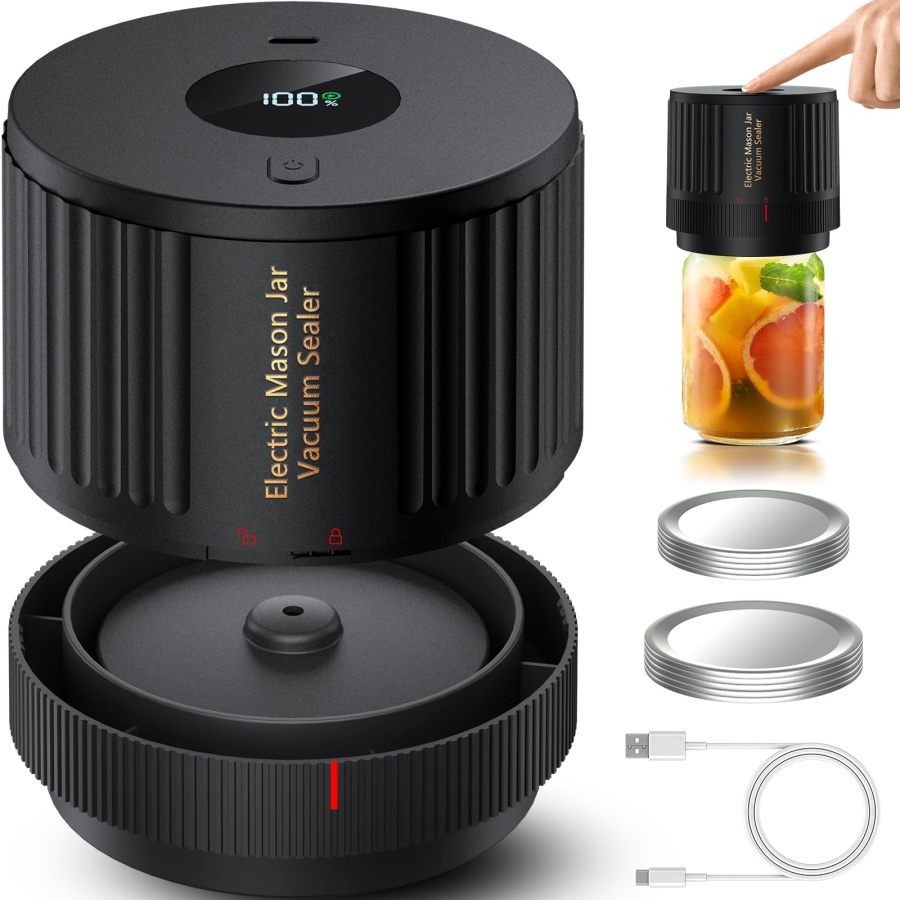
An Electric Mason Jar Vacuum Sealer is a compact, portable kitchen appliance designed specifically for Mason jars. It uses an electric pump to quickly remove air from the jar, achieving an airtight seal for food preservation. Products in this category commonly emphasize being cordless, rechargeable, and compatible with both wide-mouth and regular-mouth Mason jars. They aim to simplify traditional food preservation processes and extend the storage life of dry goods, fresh produce, leftovers, and more. The following table illustrates the key characteristics of consumer behavior in this category.
| Dimension | Segment | Description |
|---|---|---|
| Need Driver Type | Planned Purchase / Impulsive Purchase | Purchases are typically driven by planning for food preservation (e.g., bulk storage, reducing waste), but can also be impulsive due to operational convenience or promotional offers. |
| Purchase Frequency | Low Frequency | As a durable small kitchen appliance, it is typically purchased once for long-term use, with a long repurchase cycle. Repurchases mainly occur when the product breaks or for functional upgrades. |
| Decision Complexity | Medium | Consumers actively compare key parameters like suction strength, battery life, compatibility, and reviews, but do not engage in prolonged, in-depth research. |
| Price Sensitivity | Medium to High | Price is an important decision factor. However, users are willing to pay a reasonable premium if the product delivers reliable preservation, long-term durability, or significant convenience. |
| Emotional Dependency | Low to Medium | Purchases are primarily driven by functional benefits. However, the peace of mind from successfully extending food freshness and reducing waste, along with a sense of control over a healthy lifestyle, also holds emotional value. |
II. User Personas & Usage Scenarios
2.1 Savvy Homemaker
🎯 A daily cook who focuses on household expenses and food health, seeking efficient and hassle-free food preservation solutions.
| Typical Usage Scenarios | Core Pain Points | Primary Purchase Drivers |
|---|---|---|
|
|
|
2.2 Outdoor Enthusiast / Emergency Prepper
🎯 Enjoys outdoor activities, travels frequently, or focuses on household emergency preparedness, requiring portable and reliable food storage solutions.
| Typical Usage Scenarios | Core Pain Points | Primary Purchase Drivers |
|---|---|---|
|
|
|
III. User Needs Hierarchy (KANO Model)
3.1 Basic Needs (Must-Haves)
- Effective Sealing: The product must consistently and stably vacuum seal Mason jars (both wide-mouth and regular-mouth). This is its core function; failure to seal renders the product worthless.
- Ease of Use: One-touch start, automatic stop, no complex setup or excessive attachments, ensuring all users (including the elderly) can easily operate it.
- Wide-Mouth/Regular-Mouth Compatibility: Must be compatible with the two most common Mason jar sizes on the market, meeting diverse household storage needs and avoiding the need for users to purchase multiple devices.
3.2 Performance Needs (Linear Satisfiers)
- Long-Lasting Freshness: Significantly extends the shelf life of dry goods, fresh produce, cooked foods, etc., reducing food spoilage waste and improving ingredient utilization.
- Long Battery Life: A single charge allows for multiple sealing operations (e.g., dozens or even hundreds), reducing the hassle of frequent charging and enhancing convenience.
- Fast Vacuum Pumping: Completes the seal in a relatively short time (e.g., 30-60 seconds), improving efficiency, especially when processing jars in batches.
- Compact and Portable: Small in size and light in weight, convenient for kitchen storage and carrying, suitable for various scenarios like home kitchens, RVs, and camping.
3.3 Excitement Needs (Delighters)
- Multi-Function Expansion: Beyond Mason jars, can also be compatible with vacuum bags, wine bottles, and sealed containers via attachments, providing a more comprehensive preservation solution for one-device versatility.
- Quiet Operation: Low noise during operation, not disturbing the home environment (e.g., preserving food while watching TV in the living room), enhancing user comfort.
- Smart Display and Interaction: An LED screen clearly displays battery level, progress, vacuum strength, etc., adding a sense of technology and control, boosting user confidence.
- High-Quality Aesthetic Design: The product uses premium materials with a stylish, minimalist appearance that integrates into modern kitchen aesthetics, combining practicality and beauty to elevate home decor.
3.4 Unmet Needs & Opportunities
-
Sealing Consistency and Reliability: Users widely report inconsistent sealing success rates, with some jars or older lids failing to seal effectively, sometimes failing within a short period, leading to food spoilage.
User Reviews (VOC) Customers have mixed experiences with the vacuum sealer's performance: while some report it works perfectly every time, others mention it only works on vacuum bags and doesn't function with regular mouth jars. // Customers have mixed experiences with the vacuum sealer's durability, with some reporting it makes items last for months while others mention it breaks after only a month of use.
-
Liquid Food Sealing Stability: Current products have limitations sealing liquid foods with high water content. Users worry about liquid being sucked into the machine causing failure, or poor seals due to small pressure differentials.
User Reviews (VOC) I bought this specifically to vacuum seal fresh juices and other liquids. And of course solids if I have a need to. Juice got into the mechanism just one time and it never worked the same again. // To ensure a good seal, do not fill liquid food too full and ensure that the bottle mouth and lid remain dry. Excessive liquid can cause a small pressure difference between the inside and outside of the tank, leading to sealing failure.
-
Long-Term Durability: Some users report product failures within a short time (weeks or months), with loss of suction or inability to charge, severely impacting lifespan and trust, akin to a disposable product experience.
User Reviews (VOC) Worked great until just after my return date option...then it just quit sucking for no reason. Now I'm even stuck with bags and jars that I purchased. // Customers have mixed experiences with the vacuum sealer's longevity, with some reporting that items like strawberries last a whole week, while others mention that it dies after ten seconds of use.
-
Ease of Opening: Jar lids are difficult to open after vacuum sealing, often requiring tools and easily damaging the lids, reducing lid reusability and adding operational friction.
User Reviews (VOC) The vacuum action is so strong that a couple of times, when I had knocked the lids ajar while placing the unit on top of the jar, the suction righted the lid and the seal was secure. // Only downside is that the lids become deformed when removed from the jars so can't be reused many times, it'd be good if this device could also be used to remove the lids from the jars without damaging them by equalising the vacuum between it and the jar as it already does but with an added mechanism to lift the lid within the device while maintaining the equal negative pressure.
IV. User Decision Drivers
4.1 Key Decision Factors
- Sealing Effectiveness and Success Rate: Users are most concerned about whether the product can provide a strong, reliable vacuum seal every time, preventing air leakage. This is the core driver for purchasing an Electric Mason Jar Vacuum Sealer, directly determining food preservation success.
- Ease of Use and Operational Convenience: Whether the operation is simple and intuitive (e.g., one-touch start, auto-stop, no complex attachments), allowing all household members to use it easily, is a key factor in measuring user experience.
- Wide-Mouth/Regular-Mouth Compatibility: Consumers want one device to meet all their Mason jar sealing needs without extra attachments or frequent part changes, ensuring efficiency and convenience.
4.2 Secondary Decision Factors
- Battery Life and Charging Convenience: How long a single charge lasts and whether charging is convenient and fast (e.g., USB-C port) directly impact the smoothness and worry-free experience of daily use.
- Actual Shelf Life Extension: Whether the advertised shelf life extension is credible, how long food actually stays fresh in use, and if it's significantly better than traditional preservation methods.
- Product Size and Storage: A compact, portable, space-saving design is a plus, facilitating storage in limited kitchen space or for outdoor use.
- Value of Included Accessories: Extra provided accessories like jar lids, openers, and labels can increase perceived product value and reduce the need for additional purchases.
- Product Durability: Consumers expect the product to work stably over the long term, avoiding short-term failures, reflecting deeper consideration of product quality and value for money.
V. Selling Points & Competitive Landscape
5.1 Selling Point Analysis
5.1.1 Standard Features (Points of Parity)
- Auto Shut-off / One-Touch Operation: Most products emphasize simple operation with no manual stop required, enhancing user convenience and efficiency.
- Compatible with Wide-Mouth/Regular-Mouth Mason Jars: Universally highlights compatibility with the two main jar sizes on the market, meeting the needs of the vast majority of households.
- Extends Shelf Life: As the core value proposition of the category, all products promise to significantly extend the freshness of food, especially dry goods.
- Portable / Cordless Design: Emphasizes the product's compact, cordless nature, convenient for use anywhere at home or in outdoor scenarios, increasing flexibility.
- USB Charging: Most products use a universal USB-C port for convenient, fast charging, compatible with daily electronic devices, reducing cable clutter.
- Includes Jar Lids: As part of the set sale, a certain number of wide-mouth and regular-mouth jar lids are typically included, allowing users to start using it immediately.
5.1.2 Key Differentiators
- Upgraded Motor / Strong Suction: Some products emphasize stronger sealing capability by claiming higher vacuum levels (e.g., -60Kpa, -80Kpa) or an 'upgraded motor' to improve sealing performance.
- Longer Battery Life: By increasing battery capacity (e.g., 2000mAh) or optimizing power management, promises more jar seals per charge, reducing charging frequency and improving efficiency.
- Multi-Functionality: A few products offer 3-in-1 functionality, not only for Mason jars but also compatible with vacuum bags, wine bottles, and sealed containers, providing a more comprehensive preservation solution.
- LED Display: Provides visual information like battery level, working time, and progress, enhancing operational intuitiveness and user control, adding a sense of technology.
- Anti-Slip Design / Premium Materials: Emphasizes ergonomic design (e.g., anti-slip grooves) and food-grade materials, improving safety and grip comfort.
- After-Sales Service / Warranty: Builds consumer trust and reduces purchase concerns by offering 24/7 customer support or longer warranty periods (e.g., 12-36 months).
5.1.3 Unique Selling Propositions (USPs)
- Compatibility with Existing Vacuum Sealers: Very few products offer adapters to work with larger vacuum machines like FoodSaver, achieving ecosystem compatibility.
- Magnetic Attachment Storage: Some products integrate the main device with external attachments (e.g., suction tube, wine stopper) via magnetic design for consolidated storage, reducing kitchen clutter.
- 2025 Latest Upgraded Model: Some products emphasize being the '2025 Latest Upgraded Model' in titles or descriptions, aiming to convey a technologically leading and iterated product image, attracting trend-conscious users.
- Original Patent Declaration: A few products emphasize being 'Original USA Patents Pending,' aiming to establish brand authority and technological barriers, differentiating from other similar products.
5.2 Competitive Landscape
5.2.1 Market Maturity
The Electric Mason Jar Vacuum Sealer market is in its mature stage. Products on the market show high homogeneity in core functions and appearance design. Competition mainly focuses on price, battery life, suction strength, and differentiation through included accessories. Brands attract consumers by emphasizing 'latest upgrade,' 'stronger suction,' or 'longer battery life,' but overall innovation trends are not significant. It's more about optimizing and combining existing features, with product parameter stacking being common.
5.2.2 Innovation Trends
Current category innovation trends are mainly reflected in the following points:
- Integration and Convenience: Moving away from the cumbersome traditional vacuum machine + hose setup towards integrated, handheld, cordless charging designs. Most products emphasize being compact and portable, with no need for complex tubing.
- Smart Experience Upgrade: Adding LED displays, battery indicators, auto-stop, adjustable vacuum time, etc., to enhance operational intuitiveness and convenience.
- Multi-Scenario Applicability Expansion: Beyond traditional home kitchen use, also emphasizing portability for outdoor scenarios like camping, picnics, and travel to meet diverse lifestyle needs.
- Compatibility and Adaptability: Products generally support both wide-mouth and regular-mouth Mason jars. Some even offer compatibility accessories for other vacuum devices (e.g., FoodSaver), aiming to cover a broader user base and usage habits.
- Enhancing Core Reliability: Although innovation often focuses on user experience, improving sealing success rates, product durability, and effective handling of liquid foods are the most vocal unmet needs from consumers, representing a key implicit innovation direction.
VI. Marketing Claims vs. Reality Check
The table below analyzes the gap between common marketing claims and actual user experiences in this category:
| Dimension | Marketing Claim | User Reality | Verdict |
|---|---|---|---|
| Core Sealing Function Stability | Powerful suction, perfect seal, firmly preserves every time. | Numerous user reports of low sealing success rates, especially with regular mouth jars or when jars have thick protective sleeves; magnetic attachment is unstable. Multiple products have experienced suction loss or failure to seal within a short period. | Sellers overstate core performance, ignoring the complexity of real usage scenarios and deficiencies in their own quality control, severely damaging user trust. |
| Battery Life and Performance | Large capacity battery, ultra-long battery life, can seal hundreds of times on a single charge. | Users commonly report actual battery life under high brightness or frequent use is far below claims, sometimes requiring recharging after just a few dozen seals. Some listing data is self-contradictory. | Typical misleading of consumers with ideal lab data or minimum power consumption states, failing to deliver on promises of prolonged continuous use, causing a severe mismatch between user experience and expectations. |
| Multi-Functionality and Liquid Sealing Capability | 3-in-1 multi-function, compatible with dry/wet foods, vacuum bags, wine bottles, etc., for comprehensive preservation. | Multiple products explicitly warn that overfilling with liquid food may cause sealing failure; user feedback indicates liquid entering the machine causes corrosion damage, and sealing success rate with vacuum bags is not high. | Sellers fail to adequately disclose technical limitations when promoting multi-functionality, especially regarding liquid handling. The design cannot effectively address basic physics, misleading users and even causing property damage. |
Key Takeaway: This category market suffers from widespread parameter inflation and over-promising on scenario-based experiences, especially regarding core sealing performance and product durability. Marketing often diverges from user reality.
VII. Supply-Demand Misalignment Analysis
The table below highlights mismatches between seller focus and buyer priorities:
| Dimension | Seller Behavior | User Focus | Verdict |
|---|---|---|---|
| Core Sealing Function Reliability | Generally emphasizes 'powerful suction' (e.g., -60Kpa, -80Kpa), 'automatic sealing,' creating an impression of high efficiency and stability, but remains vague about sealing success rates and longevity guarantees in real-world scenarios (e.g., varying lid wear, liquid spills). | Users' core pain points are sealing failure, easy air leakage, and short-lived preservation. They complain about 'won't suck,' 'doesn't work,' 'leaks air in a few days,' creating a huge experiential gap with sellers' emphasis on 'strong suction.' | Sellers are collectively silent on the most fundamental aspect of functional reliability, emphasizing 'capability' but failing to guarantee 'results.' This leaves users' deepest preservation needs unmet, causing a steep decline in trust. |
| Product Long-Term Durability | Most sellers rarely mention long-term warranties or durability testing in their marketing. When mentioned, it's often vague like 'high-quality materials,' lacking specific promises or evidence. New product titles often tout '2025 latest,' giving an impression of fast iteration but poor durability. | Numerous users report product failures within weeks or months-stops working, loss of suction, inability to charge. They complain the product is 'like a brick,' 'doesn't last,' and are tired of the economic loss from frequently replacing small appliances. | Sellers generally ignore users' deep-seated need for long-term product value, sacrificing durability for low-price strategies. This leads users to form a negative perception of the product as 'disposable,' damaging the overall category reputation. |
| Liquid Food Preservation Solution | Some sellers list 'compatible with dry/wet foods' as a selling point or expand multi-functionality to 'vacuum bags, wine bottles,' implying comprehensive preservation for all food types, but fail to provide clear solutions or protective designs for liquid overflow or machine ingress. | Users find that liquid is easily sucked into the machine during use, causing corrosion and damage, or that overfilling with liquid directly causes sealing failure. They are very concerned about the preservation effectiveness for 'wet foods' and even leave negative reviews due to machine failure. | Sellers over-promote to broaden functional coverage without providing real technical solutions for liquid preservation. This leads users to encounter physical paradoxes upon trying, causing them to question the product's functionality. |
Key Takeaway: Sellers are generally immersed in self-congratulatory 'feature stacking' and 'performance exaggeration,' collectively ignoring or failing to effectively address users' most critical strategic blind spots like 'core sealing reliability' and 'product long-term durability,' leading to a severe supply-demand mismatch.
VIII. Strategic Opportunities & Recommendations
8.1 Core Sealing Technology Upgrade and Reliability Commitment
8.1.1 Target Audience & Pain Points
⚡️ Pain Points Addressed: Insufficient sealing consistency and reliability; high short-term failure rate.
8.1.2 Action Plan
Adopt a higher-suction (e.g., above -80kPa), more stable, longer-life brushless motor; optimize sealing ring material and structure to improve compatibility with lids of varying age/wear; add smart pressure sensors to ensure automatic stop upon reaching optimal vacuum and support error sealing alerts.
| Tech Complexity | Medium |
| Cost Impact | Medium Impact |
| Trade-off Warning | Upgraded high-quality sealing rings may require more precise mold fitting, but there are no negative physical side effects. |
| Price Band | Only viable above $29.99 |
8.1.3 Marketing Strategy
Highlight 'Laboratory-grade sealing, 100% success rate promise'; showcase long-term vacuum hold test data; emphasize 'Peace of mind with every jar, goodbye to food waste'; provide quality certifications and comparison charts for core components (motor, sealing ring).
8.2 Liquid Anti-Overflow Vacuum Mode and Structural Optimization
8.2.1 Target Audience & Pain Points
⚡️ Pain Points Addressed: Poor sealing performance for liquid foods, easily causing machine failure.
8.2.2 Action Plan
Develop dedicated sealing adapters with liquid collection trays or anti-overflow valves to prevent liquid from being sucked into the motor; or design a staged vacuum program for gentle air extraction on wet foods. Add a 'Liquid Mode' option to the user interface with detailed operating instructions.
| Tech Complexity | High |
| Cost Impact | High Impact |
| Trade-off Warning | May require more complex internal structural design, slightly increasing product volume or weight, but this is a trade-off to solve the core pain point. |
| Price Band | Only viable above $39.99 |
8.2.3 Marketing Strategy
Emphasize 'Innovative liquid preservation technology, goodbye to overflow worries'; demonstrate through videos how to safely and efficiently seal homemade soups and sauces; highlight 'Professional-grade anti-overflow design, ensuring machine longevity.'
8.3 Smart Pressure Release for Opening and Durable Lid Set
8.3.1 Target Audience & Pain Points
⚡️ Pain Points Addressed: Difficulty opening jars damages lids; poor lid reusability.
8.3.2 Action Plan
Integrate an independent pressure release button on the device for quick vacuum release with a light press, facilitating easy removal of the device and lid. Simultaneously, develop and include a set of more durable, reusable high-quality lids (e.g., thickened stainless steel or food-grade silicone edges).
| Tech Complexity | Low |
| Cost Impact | Low Impact |
| Trade-off Warning | Integrating a pressure release button may slightly increase mold complexity but significantly improves user experience. |
| Price Band | Only viable above $24.99 |
8.3.3 Marketing Strategy
Highlight 'One-touch pressure release, damage-free opening'; emphasize 'Lid reuse, eco-friendly and cost-saving'; provide instructional videos demonstrating the easy, convenient opening experience and promise the durability of included lids.
8.4 Enhanced Warranty and Transparent Durability Testing
8.4.1 Target Audience & Pain Points
⚡️ Pain Points Addressed: High short-term product failure rate, user concerns about long-term durability.
8.4.2 Action Plan
Beyond the current baseline, improve procurement standards and quality control processes for core components like batteries and motors. Clearly extend the product warranty period to 24 months (or longer) and prominently display this on listings and packaging. Establish a responsive customer service team to ensure fault resolution within 48 hours.
| Tech Complexity | Low |
| Cost Impact | Low Impact |
| Trade-off Warning | Mainly reflected in supply chain management and after-sales investment, no direct physical side effects. |
| Price Band | Only viable above $27.99 |
8.4.3 Marketing Strategy
Emphasize 'Two-year worry-free warranty, visible quality commitment'; publish durability test reports for core components (e.g., motor operational lifespan, battery charge/discharge cycles); showcase a transparent after-sales service process to build brand trust.