Amazon US Market Analysis: Ironing Boards Category
📊 Executive Summary
📈 Market Trends
The ironing board market trends show portability and integration are mainstream, with magnetic designs becoming standard. The category is mature. Tabletop models and mats are favored for space savings, but competition is highly homogenized. Growing consumer demand for multifunctionality and seamless storage drives product design towards more user-friendly and detail-optimized directions.
⚡ Major Pain Points
Insufficient structural stability and surface marking are core weaknesses. Despite sellers commonly promoting 'sturdiness,' user complaints about wobbling, warping, and surface marks persist, severely impacting the ironing experience and garment appearance. Additionally, the inconvenience of small boards for large items and weak magnetic adhesion on mats are frequent pain points.
💡 Selection Opportunities
Deeply cultivate the 'True Stability' and 'Smart Portability' niche demands. Opportunities lie in developing genuinely stable, durable freestanding boards for power users' professional needs; simultaneously, upgrade portable mats to solve insulation and magnetic adhesion issues, creating a mark-free ultimate experience. For tabletop boards, exploring 'size-adaptive' designs that balance portability with large-item ironing efficiency could achieve breakthroughs in higher price segments.
I. Analysis Overview
1.1 Introduction & Report Scope
This report analyzes the 'Ironing Boards' category in the US Amazon market, focusing on target user personas, core needs, decision factors, market communication, and potential opportunities.
1.2 Category Snapshot
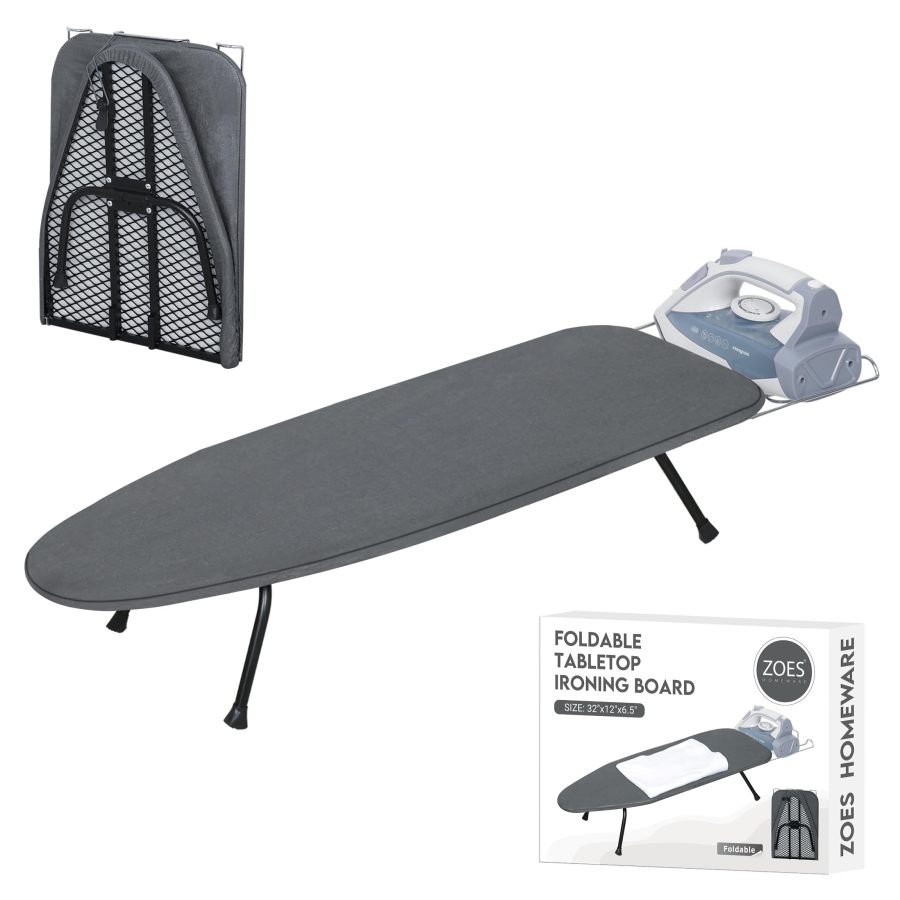
An ironing board is a household tool that provides a flat, heat-resistant surface for ironing, primarily used for smoothing clothes and fabrics. The category features diverse product forms, mainly including tabletop ironing boards for small spaces, portable ironing mats, and more comprehensive, height-adjustable freestanding ironing boards. With changes in living spaces, portability and multifunctionality have become new points of focus. The following table illustrates the key characteristics of consumer behavior in this category.
| Dimension | Segment | Description |
|---|---|---|
| Need Driver Type | Planned Purchase / Emergency-driven Purchase | User purchasing behavior is driven by daily garment care needs, but also often triggered by the need for quick, impromptu ironing or specific craft projects. |
| Purchase Frequency | Low Frequency | It is a durable good, typically replaced every few years or even over a decade, with no clear repurchase cycle. |
| Decision Complexity | Medium | Users need to weigh factors like size, stability, storage convenience, and price, requiring some information comparison and consideration. |
| Price Sensitivity | Medium | Price is an important consideration; users seek a balance between quality and price, and are wary of prices that are too low or too high. |
| Emotional Dependency | Low | Decisions are primarily based on function and practicality, with low weight given to emotional value, although a good ironing experience enhances satisfaction. |
II. User Personas & Usage Scenarios
2.1 Space-Constrained Daily Ironer
🎯 Consumers living in apartments, dorms, or small homes who need to iron clothes regularly but have limited space.
| Typical Usage Scenarios | Core Pain Points | Primary Purchase Drivers |
|---|---|---|
|
|
|
2.2 Efficiency-Seeking Professional Homemaker / Crafter
🎯 Consumers who frequently handle large volumes of laundry or engage in sewing, quilting, etc., requiring high efficiency, board stability, and professional results.
| Typical Usage Scenarios | Core Pain Points | Primary Purchase Drivers |
|---|---|---|
|
|
|
III. User Needs Hierarchy (KANO Model)
3.1 Basic Needs (Must-Haves)
- Flat Ironing Surface: Provides a smooth, non-sagging surface for ironing.
- Basic Heat Insulation: Prevents iron heat from damaging the underlying table or floor.
- Easy Storage: Can be folded or rolled up for basic storage, not permanently occupying space.
- Basic Stability: Does not easily tip over or wobble severely during use.
3.2 Performance Needs (Linear Satisfiers)
- Portable & Lightweight: Allows users to move, carry, and deploy it easily.
- Efficient Ironing Area: Provides a sufficiently large ironing area to reduce the need for repositioning clothes, enhancing efficiency.
- Excellent Stability: Remains solid and wobble-free during use, ensuring ironing safety and results.
- High-Quality, Heat-Resistant Cover: Thick, high-temperature resistant, smooth surface, and removable/washable.
- Integrated Iron Rest: Provides a safe, convenient area to place a hot iron.
- Height Adjustability: Height can be adjusted according to user height or usage scenario (standing/sitting), improving comfort.
3.3 Excitement Needs (Delighters)
- All-in-One Storage Solution: Product includes built-in hooks, iron storage slots, or wall-mount design, maximizing space savings.
- Advanced Ironing Technology: Such as heat-reflective technology, DripLock moisture protection, speeding up ironing and protecting garments.
- Quiet Operation: Smooth, noiseless opening/closing mechanism enhances the user experience.
- Stylish Aesthetic Design: Unique colors, patterns, or shapes, making the ironing board part of the home decor.
3.4 Unmet Needs & Opportunities
- Poor General Stability: Many portable or mid-to-low-priced ironing boards commonly suffer from wobbling and insufficient support, affecting the user experience and safety.
- Surface Prone to Marks / Insufficient Insulation: Padding on some boards is too thin, causing metal grid marks on clothes after ironing or heat penetrating to the surface below, affecting garment appearance and usage safety.
- Limitations of Small Size / Lack of Professional Details: Portable boards save space but are inconvenient for ironing large items (like shirts, pants) and often lack dedicated areas for cuffs or collars.
- Durability Concerns / Contradictory Information: Some products use plastic boards or inferior frames prone to warping or damage under high heat; conflicting material descriptions in listings create consumer misperceptions about product quality.
- Insufficient Magnetic Stability: The magnetic force of magnetic ironing mats is not strong enough, causing them to slide or shift during ironing, hindering operation.
IV. User Decision Drivers
4.1 Key Decision Factors
- Stability: The user's most critical consideration, directly related to ironing safety, results, and experience; wobbling is a primary reason for negative reviews.
- Size & Applicability: Whether it meets daily ironing needs (small/large items, crafts), balancing portability and ironing area is key.
- Storage Convenience: Ease of folding, lightweight, and effective storage within limited space.
- Price: An important decision factor for most consumers, seeking value for money after basic functions are met.
4.2 Secondary Decision Factors
- Cover Quality: Whether it is thick, smooth, heat-resistant, removable/washable, and resistant to leaving marks.
- Durability: Whether the product materials and structure are robust enough to withstand long-term use and high temperatures.
- Additional Features: Such as iron rests, height adjustment, non-slip feet, wall-mounting, enhancing convenience.
- Appearance Design: Whether the product color, pattern, etc., are aesthetically pleasing and blend into the home environment.
V. Selling Points & Competitive Landscape
5.1 Selling Point Analysis
5.1.1 Standard Features (Points of Parity)
- Foldable / Easy Storage: Product design emphasizes easy folding or rolling to save storage space.
- Compact / Space-Saving: Highlights the product's small size, suitable for space-limited homes or dorms.
- Lightweight & Portable: Emphasizes light weight for easy movement and travel.
- Heat-Resistant Cover: Promotes surface material's ability to withstand high temperatures without damage.
5.1.2 Key Differentiators
- Iron Rest Area: Product features a dedicated area to safely place a hot iron, enhancing convenience (found on most tabletop and some freestanding models).
- Large Ironing Surface: Offers a larger ironing area compared to standard sizes to improve efficiency (mainly for freestanding models).
- Height Adjustability: Allows users to adjust the board height for comfort based on height or preference (mainly for freestanding models).
- Thick Padding: Emphasizes the thickness of the padding under the cover for a smoother ironing experience and mark prevention.
5.1.3 Unique Selling Propositions (USPs)
- Magnetic Adhesion Design: Unique to ironing mat products, uses magnets to adhere to metal surfaces for support-free use.
- Integrated Iron Storage: Built-in storage space within the board for the iron, enabling all-in-one storage, e.g., Joseph Joseph brand.
- Wall-Mount Storage: Includes hooks for hanging the board on walls or doors, enabling vertical storage to maximize space savings.
- DripLock Technology: Advanced cover technology for handling heavy steam and preventing water penetration, improving efficiency and board lifespan.
- EU-Made / Heavy-Duty Frame: Emphasizes origin and structural sturdiness to differentiate from generic products, enhancing perceived quality and trust.
5.2 Competitive Landscape
5.2.1 Market Maturity
The ironing board market is generally mature, with core functions widely adopted. Subcategories include tabletop, freestanding, and ironing mats. With shrinking living spaces and rising demand for convenience, the portable and multifunctional segments show new growth potential, but homogenization is evident, especially in the mid-to-low-end market.
5.2.2 Innovation Trends
Current innovation focuses on enhancing portability, storage efficiency (e.g., wall-mounting, integrated storage), and user convenience (e.g., iron rests, height adjustment). Material-wise, some products incorporate heat-reflective or moisture-resistant technologies to improve results and durability. Design-wise, optimizing folding mechanisms for reduced thickness is another trend. However, disruptive innovation is scarce; most efforts involve optimizing and refining existing feature combinations.
VI. Marketing Claims vs. Reality Check
The table below analyzes the gap between common marketing claims and actual user experiences in this category:
| Dimension | Marketing Claim | User Reality | Verdict |
|---|---|---|---|
| Material & Structural Reliability | Lightweight Steel Frame / Heavy-Duty Stable Structure / All-Metal Construction. | Amazon Basics Compact specifications show top board and frame as 'Plastic'; Amazon Basics Full-Size top board is 'Plastic', user reports indicate susceptibility to warping under heat; multiple products receive user feedback about wobbling and cheap construction. | Sellers mislead on critical material information, promoting plastic components as metal or overstating the 'sturdiness' of lightweight products, severely misguiding consumer expectations regarding product quality and durability. |
| Ironing Area & 'Full-Size' Claims | Full-Size Ironing Board / Provides a Near Full-Size Ironing Experience. | Actual dimensions of many products (e.g., 43x13 inches or 54x13 inches) are significantly smaller than high-end 'full-size' products (e.g., 62x19 inches); users commonly report the actual size being too small for large items. | Sellers exploit the 'full-size' concept, failing to accurately convey the actual ironing coverage area, leading to efficiency and convenience gaps when consumers handle large garments. |
| Stability of Magnetic Ironing Mats | Magnetic Design Ensures Stable, Non-Slip Ironing. | User feedback indicates insufficient magnetic strength, causing mats to slide or shift during ironing. | Magnetic mat products overpromise on magnetic stability, failing to address pain points like magnetic force decay or weak adhesion to different surfaces, resulting in unmet expectations for the core selling point. |
Key Takeaway: The market suffers from widespread vague claims regarding 'sturdiness' vs. 'portability' and opaque material information, leading to a disconnect between consumer expectations and actual experience.
VII. Supply-Demand Misalignment Analysis
The table below highlights mismatches between seller focus and buyer priorities:
| Dimension | Seller Behavior | User Focus | Verdict |
|---|---|---|---|
| Product Stability | Most products emphasize 'Sturdy', 'Stable Structure', 'Heavy Duty' as a core selling point. | Users frequently complain in reviews about products being 'Wobbly', 'flimsy', 'not sturdy', perceiving a mismatch between actual experience and claims. | Sellers commonly make verbal promises about 'stability,' but the actual product design and material choices fail to support these claims, causing significant user dissatisfaction during core usage and creating a trust crisis that needs urgent resolution. |
| Practicality & Safety of Built-in/Integrated Iron Rests | Many tabletop and some freestanding boards promote built-in iron rests, emphasizing convenience and safety. | Some users report that iron rest materials are too soft/unstable, posing a risk of the iron falling; the functional design is often superficial, not fully meeting expectations for safety and convenience. | As an added feature, some sellers design iron rests superficially without adequate consideration for material strength and stability, compromising safety and practicality, and failing to provide genuine peace of mind. |
| Magnetic Force of Ironing Mats | Portable ironing mats commonly promote 'Magnetic Design, Stable Adhesion'. | Users report insufficient magnetic force, causing sliding during ironing, not achieving the claimed 'stable, non-slip' effect. | Sellers of ironing mats overpromise on 'magnetic force,' failing to deliver the stability users expect, significantly diminishing the core convenience benefit and forcing users to find alternative securing methods. |
Key Takeaway: Sellers persistently emphasize portability and space-saving as selling points but generally overlook or fail to effectively address the users' deep-seated need for 'actual ironing stability,' leading to a supply-demand misalignment.
VIII. Strategic Opportunities & Recommendations
8.1 Ultra-Stable Freestanding Ironing Board
8.1.1 Target Audience & Pain Points
⚡️ Pain Points Addressed: Poor general stability.
8.1.2 Action Plan
Utilize high-strength alloy steel tubes, design a patented cross-leg support structure for stable center of gravity and high load capacity; employ multi-segment adaptive rubber feet for better grip on various floors; optimize the opening/locking mechanism to ensure zero wobble during use.
| Tech Complexity | Medium |
| Cost Impact | High Impact |
| Trade-off Warning | Might slightly increase product weight, affecting portability for some users, but acceptable trade-off for ultimate stability. |
| Price Band | Only viable above $89.99 |
8.1.3 Marketing Strategy
Emphasize 'Aerospace-Grade Stability' with impactful videos demonstrating zero wobble under extreme conditions; highlight 'Durable, Craftsmanship Quality,' providing structural strength test data and long-term warranty.
8.2 Innovative No-Mark, High-Insulation Ironing Mat
8.2.1 Target Audience & Pain Points
⚡️ Pain Points Addressed: Surface prone to marks / insufficient insulation, insufficient magnetic stability.
8.2.2 Action Plan
Adopt a three or four-layer composite structure: top layer is scorch-resistant and durable, middle layer is high-density, high-resilience memory foam, bottom layer is highly insulating and waterproof, integrated with reinforced magnet arrays or silicone anti-slip dots for firm adhesion on various surfaces (washer, table). Include a mini cuff/collar section.
| Tech Complexity | Medium |
| Cost Impact | Medium Impact |
| Trade-off Warning | Might slightly increase mat thickness or weight, but portability must be maintained. |
| Price Band | Only viable above $24.99 |
8.2.3 Marketing Strategy
Highlight 'Tech Garment Care, No-Mark Ironing'; demonstrate insulation tests comparing damage to surfaces vs. ordinary mats; use demo videos to emphasize stability and wrinkle-removal efficiency in tight spaces.
8.3 Extendable-Size Tabletop Ironing Board
8.3.1 Target Audience & Pain Points
⚡️ Pain Points Addressed: Limitations of small size / lack of professional details, material durability concerns.
8.3.2 Action Plan
Design a patented extension mechanism allowing the board to extend from a compact tabletop size (e.g., 20x12 inches) to a medium size (e.g., 40x12 inches), ensuring a flat, seamless surface when extended and excellent stability. Use a lightweight aluminum alloy frame, integrate a detachable mini board for cuffs/collars.
| Tech Complexity | High |
| Cost Impact | High Impact |
| Trade-off Warning | Structural complexity may increase failure rates; the extendable part might not be ultra-thin to ensure stability. |
| Price Band | Only viable above $69.99 |
8.3.3 Marketing Strategy
Emphasize 'One Board, Two Sizes, Handles All'; use GIFs/videos to showcase smooth extension and ironing scenarios at different sizes; highlight multifunctionality in small spaces and professional-level ironing capability.
8.4 Durable, Warp-Resistant Tabletop Ironing Board
8.4.1 Target Audience & Pain Points
⚡️ Pain Points Addressed: Material durability concerns / contradictory information, structural stability concerns.
8.4.2 Action Plan
Upgrade the tabletop board's top panel material from plastic to perforated metal mesh or high-strength composite wood, ensuring it resists warping, sagging, or damage under high heat and steam. Reinforce stand connection points to enhance overall structural stability and prevent wobbling.
| Tech Complexity | Medium |
| Cost Impact | Medium Impact |
| Trade-off Warning | Replacing with a metal panel might slightly increase weight, but the gains in durability and stability are a worthwhile trade-off. |
| Price Band | Only viable above $29.99 |
8.4.3 Marketing Strategy
Highlight 'Sturdy Core Material, Fearless of Heat Warping'; provide durability test data for the panel and stand; emphasize 'One Investment, Ten Years of Peace of Mind,' addressing user concerns about cheap tabletop board quality.