Amazon US Market Analysis: Travel Shoe Bags Category
📊 Executive Summary
📈 Market Trends
Portability & practicality dominate, homogenized competition intensifies. The travel shoe bag market has entered maturity. Products commonly emphasize lightweight, waterproof/dustproof, and multifunctionality. Magnetic designs and multi-color temperature adjustments are popular in other accessories, but the shoe bag category mainly revolves around basic storage functions. Market innovation pace is slow, leading to severe product homogenization and intense price wars.
⚡ Major Pain Points
Exaggerated capacity and questionable durability are core pain points. Users are generally disappointed with sellers' claims about large capacity and material durability, especially when storing large-size shoes or with frequent use, where bags easily tear or zippers fail. Additionally, current products perform poorly in odor control, relying only on physical isolation without effectively addressing odor issues from shoes like sneakers.
💡 Selection Opportunities
Deeply address user pain points, break through with 'real performance'. Market opportunities lie in solving the trust crisis consumers face regarding actual compatibility for large-size shoes, product reliability/durability, and effective odor control. For example, developing 'Multifunctional Expandable Large-Capacity Shoe Bags' and 'Active Odor Control & Breathable Drying Shoe Bags', complemented by 'High-Quality Durable & Precision-Crafted' and 'Balancing Visibility & Privacy' designs, to build brand moats in practical functionality and quality details, escaping the low-price race to the bottom.
I. Analysis Overview
1.1 Introduction & Report Scope
This report analyzes the 'Shoe Bags' category (Travel Shoe Bags) in the Amazon US market, focusing on target user personas, core needs, decision factors, market communication, and potential opportunities.
1.2 Category Snapshot
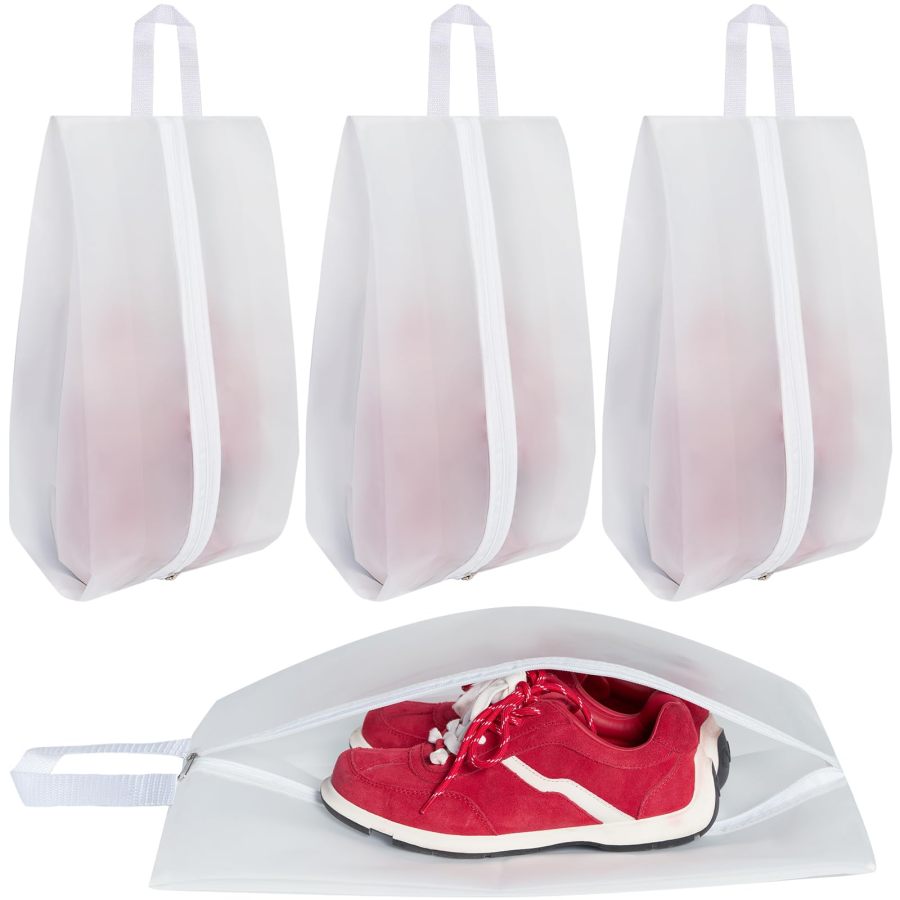
Travel shoe bags are portable storage tools specifically designed for footwear, primarily used during travel, sports, or daily storage to isolate dust, stains, and odors from shoes, preventing them from contaminating clothes or other items, while also protecting shoes from scratches. These products come in diverse materials, often feature drawstring or zipper closures, and are typically sold in multi-pack sets, emphasizing portability, dust/water resistance, and multifunctional use. The following table illustrates the key characteristics of consumer behavior in this category.
| Dimension | Segment | Description |
|---|---|---|
| Need Driver Type | Planned Purchase / Emergency-driven Purchase | Purchases are primarily driven by planned needs for travel, sports, or home organization, with occasional emergency-driven purchases triggered by sudden situations like dirty or odorous shoes. |
| Purchase Frequency | Low Frequency / Medium Frequency | As durable goods, a single product can be used long-term. However, medium-to-low frequency repurchases or supplementary purchases occur due to wear and tear, an increase in family members, or new travel needs. |
| Decision Complexity | Medium | Consumers engage in relatively rational comparisons, weighing key factors such as size, material, pack quantity, closure method, and price. |
| Price Sensitivity | Medium-High | Price is a significant decision factor. Consumers tend to choose high-value products that meet basic functionality and acceptable quality standards. |
| Emotional Dependency | Low | Purchases are primarily based on practical functionality, with low emotional attachment. However, a tidy, efficient, and worry-free user experience can indirectly contribute to satisfaction and peace of mind. |
II. User Personas & Usage Scenarios
2.1 Frequent Traveler / Business Professional
🎯 Frequently travels for business or leisure, values luggage tidiness and space optimization, dislikes shoes soiling clothes, and pursues an efficient, worry-free packing experience.
| Typical Usage Scenarios | Core Pain Points | Primary Purchase Drivers |
|---|---|---|
|
|
|
2.2 Fitness Enthusiast / Outdoor Adventurer
🎯 Passionate about fitness, running, hiking, ball sports, etc. Shoes often get muddy, sweaty, or develop odors, requiring a convenient, hygienic, and durable storage solution.
| Typical Usage Scenarios | Core Pain Points | Primary Purchase Drivers |
|---|---|---|
|
|
|
III. User Needs Hierarchy (KANO Model)
3.1 Basic Needs (Must-Haves)
- Dirt Isolation: Effectively prevents dirt, dust, and bacteria from shoe soles from contaminating clothes or other luggage items, maintaining cleanliness and hygiene.
- Portability: Product is lightweight, foldable, easy to carry and store, without adding extra luggage burden or occupying excessive space.
- Sufficient Capacity: Can accommodate one or more pairs of commonly sized shoes, such as sneakers or casual shoes, meeting basic storage needs.
- Easy Open/Close: Drawstring or zipper design should be smooth, not prone to jamming, allowing users to quickly retrieve or store items without wasting time.
3.2 Performance Needs (Linear Satisfiers)
- Durability: Materials are sturdy, not easily torn; zippers/drawstrings are long-lasting, supporting repeated use and providing long-term value.
- Waterproof/Moisture-Resistant: Effectively blocks moisture from shoes or external dampness, protecting shoes and surrounding items, keeping them dry and clean.
- Multiple Size Options: Offers bags in different sizes to fit various shoe types (high heels, boots, men's large sizes, etc.), improving adaptability.
- Transparent/Semi-Transparent Window: Allows users to quickly identify contents, saving search time and enhancing organization efficiency.
- Odor Isolation: Materials effectively block odors generated by shoes, preventing them from spreading and contaminating other items or the environment.
3.3 Excitement Needs (Delighters)
- Multi-Layer/Compartment Design: Features additional internal compartments or dividers, allowing simultaneous storage of multiple pairs of shoes (e.g., main shoes + slippers) or separating main shoes from socks and other small items, enhancing organization efficiency and precision.
- Hangable Design: Includes handles or hooks for convenient hanging on suitcase handles, closet rods, or locker room hooks, further freeing up hands and improving ease of use.
- Personalized Aesthetics: Offers various fashionable colors, patterns, or premium material choices to satisfy users' pursuit of aesthetics and personalization, making them part of the travel gear.
- Suitcase Handle Sleeve: Backside designed with a structure to slide onto a suitcase pull handle, conveniently securing the shoe bag, reducing hand-carrying burden, and improving travel mobility efficiency.
3.4 Unmet Needs & Opportunities
- Large-Size Shoe Compatibility: Even with large-size options, user feedback indicates poor compatibility for men's large shoes (e.g., US sizes 12-14) or high-top boots, often requiring individual packing per shoe or inability to fit completely. // This company need to stop scamming people these is a 10 and half I did the side to fit two shoes and you will damage your shoes more if you have to keep trying to force them in this lil bag one barely fit
- Odor Control Efficacy: Current market products have room for improvement in completely isolating strong odors from shoes like sneakers and providing internal drying functions, lacking truly effective deodorizing or breathable drying solutions. // These bags are great for separating my dirty shoes but they don't do much for keeping odors from spreading. // Wish it had some kind of ventilation or odor-absorbing feature.
- Material Durability Consistency: Some products claim durability, but actual user feedback reports issues with thin materials prone to tearing or zipper damage, especially with frequent use or heavier loads, indicating room for improvement in quality stability. // The drawstring broke after the third use. // The zipper on one of the bags ripped off after only two trips.
- Visibility Utility vs. Privacy Protection: Some products feature transparent windows for easy identification but sacrifice some privacy; solid-colored products require opening to see contents. Users desire solutions that balance efficient identification with privacy protection.
IV. User Decision Drivers
4.1 Key Decision Factors
- Size Compatibility: Whether the bag can fit the user's shoes, especially large men's shoes, high heels, or boots, is the primary consideration before purchase, directly impacting product usability.
- Dirt/Water Resistance Effectiveness: Whether the product can effectively isolate dirt, mud, and moisture from shoe soles to avoid contaminating other luggage items is a core functional requirement.
- Durability: Whether the product material is sturdy, the zipper/drawstring is reliable, and it can withstand multiple uses without damage, reflecting user expectations for long-term value.
- Value for Money: Evaluates the comprehensive value of product price, pack quantity, and expected lifespan, seeking maximum utility within budget constraints.
4.2 Secondary Decision Factors
- Transparent/Semi-Transparent Design: Facilitates quick identification of bag contents, reduces search time, and enhances organization efficiency, but requires balancing privacy needs.
- Easy to Clean: Whether the shoe bag is easy to wash, wipe, or machine-wash after getting dirty directly impacts daily maintenance convenience.
- Portability: Whether the product is lightweight, space-saving, and easy to pack and carry, especially important for frequent travelers.
- Appearance/Color: Whether the product design and color align with personal aesthetics and preferences, and coordinate with luggage or clothing.
V. Selling Points & Competitive Landscape
5.1 Selling Point Analysis
5.1.1 Standard Features (Points of Parity)
- Essential for Travel/Daily Use: Most products emphasize suitability for various scenarios like travel, fitness, and daily home storage, highlighting versatility.
- Waterproof/Dustproof: A commonly mentioned core protective function aimed at isolating dirt, dust, and moisture from shoe soles to protect other items.
- Multifunctional Use: Claimed to be usable for storing diverse items like shoes, clothes, toiletries, and cosmetics, adding product value.
- Lightweight & Portable: Emphasizes the product's space-saving, lightweight, and easy-to-carry characteristics, enhancing travel convenience.
- Large Capacity/Appropriate Size: Promotes that the product size is sufficient to fit various shoe types (e.g., sneakers, high heels) or that a single bag can hold multiple pairs.
5.1.2 Key Differentiators
- Transparent/Semi-Transparent Design: Highlights the feature of allowing users to quickly identify bag contents, saving search time, a common differentiation tactic.
- Durable Material: Emphasizes the use of high-quality materials like oxford cloth, PE, PVC for sturdiness and durability, differentiating from low-cost competitors.
- Strong Zipper/Drawstring: Highlights the smoothness and reliability of the closure mechanism, such as 'professional custom zippers,' 'thickened drawstrings.'
- Multi-Pack Sets: Offers sets in various quantities and size combinations (e.g., 4-pack, 12-pack, 20-pack) to meet different family or travel needs.
- Washable: Emphasizes the convenience of easy-to-clean or machine-washable materials, simplifying user maintenance.
5.1.3 Unique Selling Propositions (USPs)
- Multi-Layer/Compartment Design: Features independent internal compartments or dividers, allowing simultaneous storage of multiple shoe pairs or separating main shoes from slippers/socks (e.g., B0F1MXFKVK).
- Satin Material: Uses special materials like satin to provide extra luxury feel and finer protection for shoes, enhancing texture (e.g., B0D9XM1NHZ).
- Suitcase Handle Sleeve: Backside designed with a sleeve to slide onto a suitcase pull handle, conveniently securing the shoe bag, further freeing hands (e.g., B0F1MXFKVK).
- Additional Hook/Handle Design: Besides built-in handles, includes additions like carabiners for easy hanging on backpacks or closets, further enhancing portability (e.g., B0CCNNV4Y1).
5.2 Competitive Landscape
5.2.1 Market Maturity
The travel shoe bag market has reached moderate maturity. Product core functionalities are highly homogenized, and price competition is intense. Market demand primarily focuses on practicality, portability, and basic protection. Leading products seek differentiation through material upgrades, detail optimization, and diversified combinations, but overall innovation pace is relatively slow.
5.2.2 Innovation Trends
Current innovation trends mainly revolve around 'enhancing organization efficiency' (e.g., multi-layer compartments, suitcase handle sleeve designs), 'improving user experience' (e.g., transparent designs, easy-clean materials), and 'material optimization' (e.g., more wear-resistant, premium satin, more effective waterproof/odor-isolating materials). Additionally, optimizing compatibility for large-size shoes has become a new focus to meet segmented needs.
VI. Marketing Claims vs. Reality Check
The table below analyzes the gap between common marketing claims and actual user experiences in this category:
| Dimension | Marketing Claim | User Reality | Verdict |
|---|---|---|---|
| Capacity Compatibility | Large capacity design, suitable for all shoe types, can easily accommodate men's size 14 boots or multiple shoe pairs. | Users commonly report that despite 'large capacity' claims, space remains tight for large men's shoes (e.g., US sizes 12-14), high-tops, or boots, often requiring individual packing per shoe or difficulty fitting completely. | Sellers are overly optimistic in capacity claims, failing to fully consider shoe type diversity and actual user needs, causing the core selling point to fall short in users' hands and triggering negative feedback. |
| Material Durability | Uses high-quality, durable materials, sturdy and tear-resistant, equipped with strong, smooth zippers, ensuring long-term use. | Some users report products have thin materials, zippers prone to jamming or breaking, drawstrings easily snapping, especially with frequent use or slightly heavier loads, creating a significant perceived gap from the advertised 'durability.' | Promises regarding material quality and detail craftsmanship are not fulfilled, impacting product long-term value and user trust, a key factor driving negative reviews and reduced repurchase rates. |
| Odor Control Efficacy | Effectively isolates odors, keeping luggage fresh. | Products mostly rely on physical isolation designs, lacking active deodorizing or breathable mechanisms. For shoes with strong odors like sneakers, mere sealing may 'trap' odors inside the suitcase, exacerbating the issue, failing to provide a truly effective solution. | Sellers oversimplify the odor control problem. Physical isolation alone struggles to meet users' deeper need for complete odor elimination, presenting a misleading claim. |
Key Takeaway: The market exhibits a widespread tendency towards scenario-based experience exaggeration and parameter generalization, especially regarding capacity compatibility and material durability, leading to a gap between user expectations and actual experience.
VII. Supply-Demand Misalignment Analysis
The table below highlights mismatches between seller focus and buyer priorities:
| Dimension | Seller Behavior | User Focus | Verdict |
|---|---|---|---|
| Actual Compatibility for Large-Size Shoes | Commonly promote 'large capacity, fits all shoe types,' but listings lack real-world demonstrations with large shoe types (e.g., men's US sizes 12-14, high-top boots) or detailed size guides, being overly optimistic about universality. | Users complain that large shoes don't fit or get deformed, or require packing individually, with actual experience not matching 'large capacity' claims. | Sellers fail to accurately identify the core pain points of large-size shoe users, resulting in products not meeting the high expectations of key users in a critical function, a primary driver of negative reviews. |
| Authentic & Credible Material Durability | Commonly emphasize 'premium materials,' 'sturdy zippers,' but lack specific strength metrics, third-party test certifications, or long-term warranty commitments, and fail to effectively address user concerns about vulnerable components (zippers, drawstrings). | Users commonly report thin materials, easily broken zippers, snapping drawstrings, lacking confidence in long-term use, perceiving 'cheap quality.' | Sellers' quality promises remain superficial, failing to build user trust through concrete evidence, leading to a gap between user expectations for durability and actual experience, damaging brand reputation. |
| Effective Odor Control Solution | Only advertise 'odor isolation' or 'odor-proof,' without providing details on active deodorizing, antimicrobial coatings, or breathable drying mechanisms, collectively ignoring the deep-seated odor issue from shoes like sneakers. | Users complain that physical isolation doesn't solve odor problems, sometimes even intensifying odors in enclosed spaces, feeling the product fails to address the real issue. | Sellers underestimate the actual intensity of user demand for odor control, failing to provide technologically sophisticated solutions, resulting in a severe mismatch between functional claims and user expectations. |
Key Takeaway: Sellers overemphasize basic 'multifunctionality' and 'transparent visibility' as non-core differentiators, while failing to effectively address users' core pain points regarding actual compatibility for large-size shoes, reliable durability, and genuine odor control, leading to a supply-demand mismatch.
VIII. Strategic Opportunities & Recommendations
8.1 Multifunctional Expandable Large-Capacity Shoe Bag
8.1.1 Target Audience & Pain Points
⚡️ Pain Points Addressed: Large-size shoe compatibility, multi-shoe type storage pain point, insufficient luggage space.
8.1.2 Action Plan
Design bottom or side expandable zipper structure for flexible capacity and height adjustment, ensuring easy accommodation of men's US size 14 sneakers or high-top boots. Add removable elastic internal dividers to store 2-3 shoe pairs simultaneously. Incorporate a suitcase handle sleeve design.
| Tech Complexity | Medium |
| Cost Impact | Medium Impact |
| Trade-off Warning | Bottom or side expansion design may slightly increase product thickness or occupied space, but the functional improvement far outweighs the sacrificed portability. |
| Price Band | Only viable above $12.99 |
8.1.3 Marketing Strategy
Emphasize 'One bag fits all footwear, fearless of large boots'; showcase capacity difference before/after expansion via comparison videos; highlight 'Smart compartments, goodbye luggage chaos' for a convenient experience.
8.2 Active Odor Control & Breathable Drying Shoe Bag
8.2.1 Target Audience & Pain Points
⚡️ Pain Points Addressed: Insufficient odor control efficacy, moisture accumulation, sneaker odor nuisance.
8.2.2 Action Plan
Develop shoe bags with integrated activated carbon adsorption layers, antimicrobial linings, or composite materials using one-way breathable waterproof membranes, effectively isolating odors and liquid seepage while promoting internal moisture evaporation. Consider offering replaceable dehumidifier/deodorizer packs.
| Tech Complexity | Medium |
| Cost Impact | Medium Impact |
| Trade-off Warning | Integrating special materials or breathable structures may slightly increase product thickness/complexity and require balancing waterproofing with breathability, but market demand for this function is strong. |
| Price Band | Only viable above $14.99 |
8.2.3 Marketing Strategy
Highlight 'Say goodbye to stench and dampness, your sports gear deserves drier cleanliness'; provide lab test data on odor/moisture control; emphasize 'Antimicrobial technology ensures shoe hygiene.'
8.3 High-Quality Durable & Precision-Crafted Shoe Bag
8.3.1 Target Audience & Pain Points
⚡️ Pain Points Addressed: Poor material durability consistency, low-quality perception, easily damaged zippers/drawstrings.
8.3.2 Action Plan
Use higher denier count (e.g., 300D+) oxford cloth or high-density nylon, strengthen stitching and zipper quality control, use self-locking or branded zippers like YKK. Offer long-term warranty.
| Tech Complexity | Low |
| Cost Impact | Medium Impact |
| Trade-off Warning | Using higher-quality materials and zippers may slightly increase cost and weight, but has no significant negative side effects, instead improving user experience. |
| Price Band | Only viable above $9.99 |
8.3.3 Marketing Strategy
Emphasize 'Long-lasting durability, like new for years'; highlight 'Brand-grade zippers, millions of open/close tests'; showcase material and craftsmanship superiority through detail close-ups and comparison images.
8.4 Smart Shoe Bag Balancing Visibility & Privacy
8.4.1 Target Audience & Pain Points
⚡️ Pain Points Addressed: Transparent design sacrifices privacy, solid-color design makes searching inconvenient.
8.4.2 Action Plan
Design semi-transparent main bag with concealable flap (e.g., frosted PVC) or side small transparent window, enabling quick identification while protecting privacy when needed. Offer multiple colors for differentiation and include writable tags.
| Tech Complexity | Low |
| Cost Impact | Low Impact |
| Trade-off Warning | Integrating flap or adjustable transparency designs may slightly increase structural complexity but has no significant negative impact. |
| Price Band | Only viable above $8.99 |
8.4.3 Marketing Strategy
Highlight 'See everything clearly, while protecting your secrets'; emphasize 'Easy identification, goodbye rummaging'; utilize color and tags for assisted categorization, boosting organization efficiency.