Amazon US Market Analysis: Automatic Soap Dispensers Category
📊 Executive Summary
📈 Market Trends
The automatic soap dispenser market is highly mature. Touch-free operation and USB charging are baseline configurations. Consumer emphasis on product hygiene and pursuit of convenience is increasing. Market innovation focuses on refined dispensing, material upgrades, and add-on smart features, but core pain points remain inadequately addressed.
⚡ Major Pain Points
Product 'short lifespan' and 'inflated battery life claims' are users' biggest pain points. Numerous users report products failing within months or a year, with actual battery life far below claims. Additionally, insufficient dispensing precision, poor soap compatibility, and leakage issues are widespread, severely impacting user experience and brand trust.
💡 Selection Opportunities
Return to product fundamentals, deeply address core pain points. Market opportunities lie in creating 'super reliable, long-lifespan' flagship products, building brand trust by improving core component quality and delivering true long battery life. Simultaneously, addressing practical user pain points through 'precise dispensing & full-scenario soap compatibility' and 'fully waterproof & easy-maintenance' designs enables differentiated competition and captures premium pricing in the mid-to-high-end market.
I. Analysis Overview
1.1 Introduction & Report Scope
This report analyzes the 'Countertop Soap Dispensers' category (specifically automatic soap dispensers) in the US Amazon marketplace, focusing on target audience personas, core needs, decision drivers, market communication, and potential opportunities.
1.2 Category Snapshot
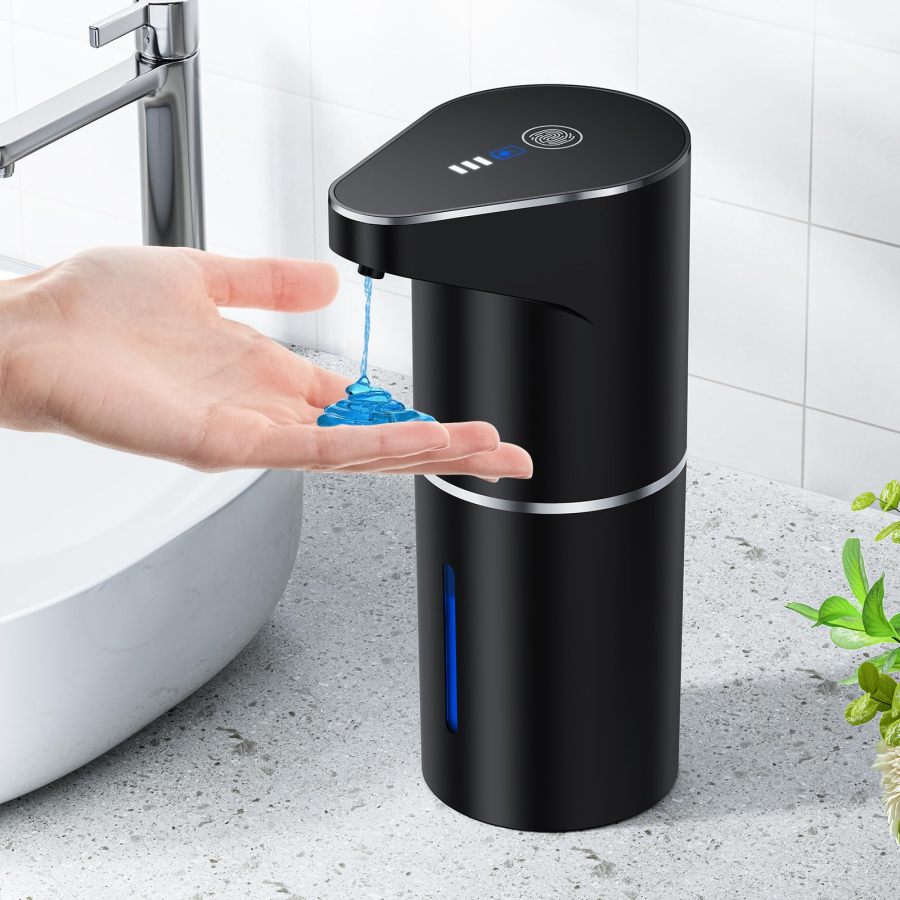
Automatic soap dispensers (or touchless soap dispensers) are smart home devices that use infrared sensing technology to enable touch-free dispensing of soap. Their core function is to provide a hygienic and convenient handwashing or cleaning experience, effectively reducing cross-contamination. Products in this category are primarily divided into liquid and foaming soap dispensers. Most feature USB charging, adjustable dispensing settings, and dual-use (countertop/wall-mount) capabilities. They are widely used in home kitchens, bathrooms, and public spaces. The following table illustrates the key characteristics of consumer behavior in this category.
| Dimension | Segment | Description |
|---|---|---|
| Need Driver Type | Planned Purchase / Emergency-driven Purchase | Purchases are typically driven by a plan to improve home hygiene and quality of life, or by an emergency need for touchless convenience in specific scenarios (e.g., cooking, having children). |
| Purchase Frequency | Low Frequency | As durable small home appliances, purchase frequency is low. Repurchases are typically considered only when an existing product breaks down, for an upgrade, or during new home renovations, with no distinct seasonality. |
| Decision Complexity | Medium | Consumers compare functionality (dispensing mode, battery life), appearance, price, reviews, and brand reputation, conducting a certain amount of information research and evaluation. |
| Price Sensitivity | Medium | Price is an important consideration, but users are willing to pay a reasonable premium for more reliable quality, more practical features, and superior design. |
| Emotional Dependency | Low to Medium | Primarily based on practical functions (hygiene, convenience). However, modern design, a sense of cleanliness, and symbolic meaning for a healthy lifestyle can also provide emotional value and self-satisfaction. |
II. User Personas & Usage Scenarios
2.1 Modern Household Users Prioritizing Home Hygiene
🎯 Concerned about family health, pursuing high-quality life details, especially emphasizing cleanliness and convenience in bathrooms and kitchens. Often have children or elderly family members.
| Typical Usage Scenarios | Core Pain Points | Primary Purchase Drivers |
|---|---|---|
|
|
|
2.2 Kitchen Enthusiasts Seeking Efficiency & Quality
🎯 Frequent cooks, especially when handling raw ingredients. Value kitchen operation efficiency, hygiene, and the practicality and durability of tools.
| Typical Usage Scenarios | Core Pain Points | Primary Purchase Drivers |
|---|---|---|
|
|
|
2.3 Budget-Conscious Environmentalists
🎯 Focus on long-term cost of ownership and environmental impact. Prefer energy-efficient, reusable, and durable products. Emphasize value for money.
| Typical Usage Scenarios | Core Pain Points | Primary Purchase Drivers |
|---|---|---|
|
|
|
III. User Needs Hierarchy (KANO Model)
3.1 Basic Needs (Must-Haves)
- Sensor-Activated Dispensing: Quick response, touch-free operation ensuring hygiene and convenience, the core foundational function of an automatic soap dispenser.
- Non-Clogging: The soap pump should dispense smoothly, avoiding clogs due to soap viscosity or design flaws that hinder normal use.
- Easy to Refill: Wide-mouth design allows users to refill soap quickly and cleanly, minimizing spills and hassle.
- Stable & Anti-Slip: Stays firmly in place on the countertop without tipping or sliding, ensuring safety, especially in wet environments.
3.2 Performance Needs (Linear Satisfiers)
- Adjustable Dispensing Amount: Users can adjust the amount of soap dispensed per use based on need (handwashing, dishwashing) and scenario (adults, children), reducing waste.
- Long-Lasting Rechargeable Battery: A single charge supports months of use, avoiding frequent charging or disposable battery replacement, lowering maintenance frequency.
- IPX Waterproof Rating: Sufficient waterproofing protects internal electronics from water splashes and moisture, suitable for damp bathroom and kitchen environments.
- Drip-Free Design: No residual dripping after dispensing, keeping the countertop clean and hygienic, preventing soap residue buildup.
- Quiet Operation: Low pump noise during dispensing, not disturbing the user experience or home environment, especially at night or in quiet settings.
3.3 Excitement Needs (Delighters)
- Smart Digital Display: Real-time display of battery level, current dispensing mode, or time, enhancing tech appeal and convenience for monitoring device status.
- Dual Installation Modes: Supports both countertop placement and wall-mounting, flexibly adapting to different space needs, saving counter space, and improving home tidiness.
- Premium Materials & Aesthetics: Features like stainless steel brushed finish, matte plastic, elevating product grade and home aesthetics, matching modern decor styles.
- Self-Cleaning Function: Automatically flushes internal tubing, extending product life, reducing maintenance burden, and ensuring a clean, unclogged spout.
- Broad Soap Compatibility: Compatible with various viscosity soaps (including foaming soap and dish soap) without needing dilution, or provides optimal dilution guidance.
3.4 Unmet Needs & Opportunities
-
Long-Term Durability: Many users report products stop working after several months or a year, lacking long-term stability, leading to repeat purchases and waste.
User Reviews (VOC) Worked great for a few months but 5 months in and it completely stopped working. // Stopped working after 5 months. // Only worked for 5 months // I've been using this dispenser for several years and really like it. It looks nice and is very convenient to use. Each one usually lasts about a year before I need to replace it.
-
Dispensing Precision & Consistency: Even at the lowest setting, dispensing is sometimes still excessive, or diluted soap produces insufficiently thick foam, leading to waste or poor effectiveness.
User Reviews (VOC) At the lowest setting it dispenses more liquid soap than I want. // I do wish I could turn down the amount it put out a little more than it lets you. // The amount of soap dispensed at the shortest setting is just right. // I use about 1/4 Dove body wash to 3/4th's water, but it was a bit thin to dispense enough soapy foam at the "1 gear" setting (shortest dispensing time) to lather well.
-
Leak-Proof Reliability: Despite leak-proof claims, users still experience soap dripping, causing countertop contamination and impacting daily use experience and hygiene.
User Reviews (VOC) Customers report significant leakage issues with the soap dispenser, noting that it drips after dispensing and spills soap on the floor. // The only other downside is the drippage - it gets a little "snot" dangle developing periodically as the surface tension of the dispensed soap breaks partway and a little bit clings to the nozzle and dries there, then a little more gets added each time it dispenses until it's big enough to fall off or you wipe it off.
-
Charging Port Long-Term Water Resistance: Users worry the charging port may fail after prolonged use in humid environments, affecting charging convenience and product lifespan.
User Reviews (VOC) If I were to put this in a bathroom without a fan system or anywhere that would get moist or steamy I would have my doubts if the electronics would last. // The only real gripe I have is instructions on programming the amount of soap dispensed is non-existent. I figured out one has to short press the power button to scroll through the dispensing duration times (1,2,3,4); the higher the number, the more soap it puts out. Keeping the amount low saves on soap and reduces mess beneath the spout. #1 works just fine for us. Decent, clear instructions on using it would add another star to this otherwise handy device.
IV. User Decision Drivers
4.1 Key Decision Factors
- Functional Reliability & Consistency: Whether the sensor is responsive, dispensing is stable and smooth, and if it clogs or leaks easily are users' core concerns, directly impacting daily experience.
- Hygiene & Convenience: The hygiene advantage of touch-free operation and the convenience level in daily use, especially in kitchens handling food or households with children.
- Battery Life & Charging Method: Battery durability and charging convenience (USB charging preferred over disposable batteries) directly affect maintenance frequency and user cost.
- Ease of Use: Whether installation, refilling, and operation are simple and intuitive, especially for families with children and elderly users, lowering the learning curve.
4.2 Secondary Decision Factors
- Design Aesthetics & Materials: Whether the product's appearance integrates with home decor, and if materials are premium and easy to clean, enhancing overall home style and perceived quality.
- Adjustable Dispensing Amount: Ability to precisely control soap amount to meet different usage scenarios and user habits, avoiding waste, reflecting personalization.
- Soap Compatibility: Ability to handle different types and viscosities of soap (liquid, gel, foam), expanding the product's application range.
- Durability & Warranty: Product lifespan and after-sales guarantee are key factors influencing long-term purchase intent and brand trust.
- Price & Value for Money: Price reasonability relative to meeting the above functional and quality requirements is the final balancing point in user decision-making.
V. Selling Points & Competitive Landscape
5.1 Selling Point Analysis
5.1.1 Standard Features (Points of Parity)
- Automatic Sensor, Touch-Free: Nearly all products emphasize the hygiene and convenience brought by infrared sensing technology for touch-free operation.
- USB Rechargeable, Long Battery Life: Most products feature built-in rechargeable batteries and USB charging, claiming months of use per charge, highlighting eco-friendliness and eliminating battery replacement hassle.
- Large Capacity, Easy to Refill: Typical capacities range from 300-500ml, emphasizing transparent viewing windows and wide-mouth designs to reduce refill frequency and ease maintenance.
- Adjustable Dispensing Amount: Most products offer 2-6 or more adjustable settings to meet different dispensing needs and prevent waste.
- Multi-Scenario Applicability: Emphasizing suitability for kitchens, bathrooms, offices, etc., to increase product versatility.
5.1.2 Key Differentiators
- Countertop/Wall-Mount Dual Use: Some products offer both installation methods to adapt to different spatial layouts and user preferences, saving counter space.
- Foam/Liquid Soap Compatibility: Some products clearly specify support for liquid or foaming soap; a few claim compatibility with multiple types (often liquid soap diluted for foam), catering to different soap preferences.
- Stainless Steel Material: Some mid-to-high-end products use stainless steel, emphasizing durability, premium feel, and ease of cleaning to enhance perceived quality.
- IPX Waterproof Rating: Ratings from IPX4 to IPX7 are used to enhance product reliability in humid environments and prevent water splash damage.
- Smart Digital Display: Some products feature an LCD screen showing battery, mode, time, etc., enhancing tech appeal and user experience convenience.
5.1.3 Unique Selling Propositions (USPs)
- 2025 Upgraded Pump Head, Anti-Clogging Patent Duckbill: A few products claim innovative pump head design, tested 50,000+ times to ensure ultra-smooth dispensing, addressing the common clogging pain point.
- 10-Second Continuous Dispensing Mode: A special function designed for high-volume scenarios like dishwashing, providing continuous dispensing to boost efficiency.
- Self-Cleaning Mode: One-touch activation for internal tubing self-cleaning, extending product life, reducing maintenance burden, and ensuring dispensing hygiene.
- Brand Ecosystem & Proprietary Soap: Brands like Simplehuman emphasize using their own proprietary soap for optimal performance, creating a product ecosystem.
5.2 Competitive Landscape
5.2.1 Market Maturity
The automatic soap dispenser market has entered maturity, with high product function homogenization. Basic selling points like touch-free operation, USB charging, large capacity, and multi-level dispensing adjustment are now standard. Competition primarily revolves around price, brand reputation, and optimization of user experience details (e.g., materials, leak control, dispensing precision).
5.2.2 Innovation Trends
Current innovation trends focus on enhancing the long-term stability of core functions and user experience details, such as more precise sensing and dispensing, longer real-world battery life, and more reliable comprehensive waterproofing (especially for charging ports). Simultaneously, material upgrades (stainless steel), added smart features (digital display, self-cleaning), and better soap compatibility (foam/liquid, adaptive viscosity) are also directions for differentiation. However, these innovations must balance cost and actual effectiveness, avoiding feature overload that neglects the product's most fundamental reliability.
VI. Marketing Claims vs. Reality Check
The table below analyzes the gap between common marketing claims and actual user experiences in this category:
| Dimension | Marketing Claim | User Reality | Verdict |
|---|---|---|---|
| Battery Life | Long-lasting battery, single charge lasts 100+ days or up to 3-4 months/120 days. | Users widely report actual battery life under high brightness or frequent use is far lower than claimed, often weeks or even shorter. Battery data on some Listings is self-contradictory. | Typical misrepresentation using ideal lab standby data or lowest brightness data, failing to deliver on the core promise for long-term, real-world usage scenarios. Severely impacts user trust and product reputation. |
| Product Lifespan & Reliability | High-quality and durable, long-lasting use, with a 1-year warranty. | Numerous users report product failures (sensor malfunction, no dispensing, pump failure) within several months to a year and a half, viewing them as 'disposable' products. | Despite offering warranties, the widespread short lifespan issue exposes design or material flaws in core electronic components or pumps, failing to meet consumer expectations for durable goods. This is the category's biggest trust crisis. |
| Soap Compatibility & Clog Prevention | Compatible with various liquids, anti-clog pump head, smooth dispensing. | Some products explicitly do not support foaming soap or thick liquids. Even when supported, issues like clogging at low settings, poor flow, or dripping occur. Clear dilution ratio guidance is often lacking. | Sellers overlook the physical properties of different soaps and practical user operations when promoting compatibility, leading to inconsistent product performance across soap types. Users must experiment, impacting ease of use. |
Key Takeaway: The market generally exhibits tendencies of parameter inflation and scenario-based experience exaggeration, especially regarding battery life and product long-term reliability. There is a significant gap between marketing promises and actual user experience.
VII. Supply-Demand Misalignment Analysis
The table below highlights mismatches between seller focus and buyer priorities:
| Dimension | Seller Behavior | User Focus | Verdict |
|---|---|---|---|
| Real Battery Life & Expectation Management | Battery life data in Listings is confusing, often exaggerated. Sellers avoid discussing the real shortcomings under high-frequency or high-setting use, lacking a unified, credible testing standard. | Users strongly desire longer-lasting batteries; fast battery drain at high brightness is a frequent complaint. Contradictory data causes confusion and concern, leading to loss of trust. | Sellers fail to provide clear, consistent battery life expectations, causing users to lack trust on a key concern. This is a core reason for negative reviews and returns. Focus should be on real-world usage performance. |
| Product Long-Term Durability | Commonly emphasize 'high quality' and 'durability,' but actual product failure rates are high. Marketing does not effectively address widespread user concerns about 'short-lived' products, and warranty policies do not fully compensate. | Users report products stop working after months or a year, complaining they are 'disposable' and expressing disappointment in long-term value. | Sellers generalize ideal-state durability, overlooking users' high actual expectations for product lifespan. This results in insufficient reliability in core functions, a key factor in user churn. |
| Add-on Smart Features vs. Core Experience Priority | Some products add 'digital displays' (showing time, battery) and highlight them as key selling points, while core pumping, sensing, or leak-proof functions remain problematic. | Users show some interest in novel features. However, if core functions are unstable or frequently fail, these add-ons become superfluous or even increase dissatisfaction, as they don't solve the fundamental pain points. | Sellers pile on 'Excitement Needs' features without first resolving 'Basic Needs' and 'Performance Needs' shortcomings. Investing BOM costs without delivering core value is typical ineffective competition and strategic misalignment. |
Key Takeaway: Sellers commonly exhibit 'inflated claims' or 'avoidance of key issues' regarding core pain points like battery life and long-term product reliability, while oversupplying on some low-perceived-value add-on features.
VIII. Strategic Opportunities & Recommendations
8.1 Launch a 'Super Reliable, Long-Lifespan' Flagship Model
8.1.1 Target Audience & Pain Points
⚡️ Pain Points Addressed: Long-term durability, high product failure rate, battery life contradictions with claims.
8.1.2 Action Plan
Adopt brushless silent motors and medical-grade ABS/304 stainless steel body to enhance pump head and sensor corrosion/aging resistance. Integrate higher capacity (2000mAh+) Grade A lithium batteries and optimize power management IC to ensure at least 3-6 months of real-world battery life under frequent use. Offer a 2-3 year free warranty with a clear 'worry-free replacement' service.
| Tech Complexity | High |
| Cost Impact | High Impact |
| Trade-off Warning | Using more durable brushless motors and high-quality waterproof electronics may slightly increase product size/weight, but is manageable. |
| Price Band | Only viable above $49.99 |
8.1.3 Marketing Strategy
Emphasize 'Say goodbye to short life, one investment, ten years of peace of mind'; showcase product durability test videos, core component material proof; highlight 'Flagship quality, premium peace of mind'; reinforce trust through real user long-term usage cases. Can reference Simplehuman's brand positioning.
8.2 Precise Dispensing & Full-Scenario Soap Compatibility Solution
8.2.1 Target Audience & Pain Points
⚡️ Pain Points Addressed: Insufficient dispensing precision & consistency, poor soap compatibility.
8.2.2 Action Plan
Design with more settings (6-8) for stepless or fine-tuned dispensing control, adding memory function. Develop a smart dilution system with built-in measuring cup or provide clear, multilingual dilution ratio guides to ensure optimal foaming. Introduce liquid/foam dual-use pump heads (or replaceable pump modules) to enhance compatibility.
| Tech Complexity | Medium |
| Cost Impact | Medium Impact |
| Trade-off Warning | More precise pump heads may slightly increase manufacturing cost, but no significant usage side effects. |
| Price Band | Only viable above $24.99 |
8.2.3 Marketing Strategy
Highlight 'Every drop is just right, say goodbye to waste'; demonstrate perfect dispensing with different soaps (liquid, foam, dish soap); emphasize 'Smart adaptation, no guesswork'; provide quantified data like 'Saves 30% soap' to attract eco-conscious and budget-minded users.
8.3 Fully Waterproof & Easy-Maintenance Smart Soap Dispenser
8.3.1 Target Audience & Pain Points
⚡️ Pain Points Addressed: Long-term charging port water ingress risk, poor leak-proof reliability, troublesome countertop maintenance.
8.3.2 Action Plan
Upgrade charging port to magnetic or wireless to eliminate water ingress risk; optimize spout with drip-proof silicone valve and add smart retraction function. Adopt modular, detachable, washable design for easy user cleaning of internal tubing, incorporating a one-touch self-cleaning mode.
| Tech Complexity | Medium |
| Cost Impact | Medium Impact |
| Trade-off Warning | Magnetic or wireless charging increases BOM cost; self-cleaning may slightly increase pump complexity. |
| Price Band | Only viable above $34.99 |
8.3.3 Marketing Strategy
Emphasize 'Fearless of water, fully protected'; visually demonstrate charging port waterproof details and self-cleaning process; highlight 'Countertop stays spotless, maintenance is worry-free'; showcase scenarios of stable long-term operation in humid environments. Comply with FCC/UL/CE electronics standards.