Amazon US Market Analysis: AI Real-Time Translation Earbuds Category
📊 Executive Summary
📈 Market Trends
Portable integration and AI empowerment are mainstream; the no-subscription-fee model is highly sought after. The AI real-time translation earbud market is trending towards integrating multiple functions like translation, music, and calls into one device, while actively embracing intelligent services like AI assistants. Consumers show a strong preference for the no-subscription-fee model, driving the market towards products with better cost-performance and long-term value.
⚡ Major Pain Points
Core translation function fails to meet expectations; app connection obstacles are numerous. Users are generally deeply dissatisfied with 'poor accuracy' and 'significant delays' in translation, which are fatal flaws causing product failure. Initial setup issues like app binding failures and invalid QR codes severely hinder usage. Additionally, insufficient noise cancellation in noisy environments and false waterproof claims frequently trigger negative reviews.
💡 Selection Opportunities
Deeply address core translation pain points; optimize usability experience. Market opportunities lie in investing resources to tangibly improve translation accuracy and reduce latency for core language pairs, rather than blindly stacking language counts. Simultaneously, significantly simplify app connection and setup processes to improve out-of-box experience. Develop more effective adaptive noise cancellation technology for noisy environments. Strictly eliminate falsehoods from product claims to build brand trust through reliability and authenticity.
I. Analysis Overview
1.1 Introduction & Report Scope
This report analyzes the 'Foreign Language Translators' category (AI real-time translation earbuds) in the US Amazon marketplace, focusing on target user personas, core needs, decision drivers, market communication, and potential opportunities.
1.2 Category Snapshot
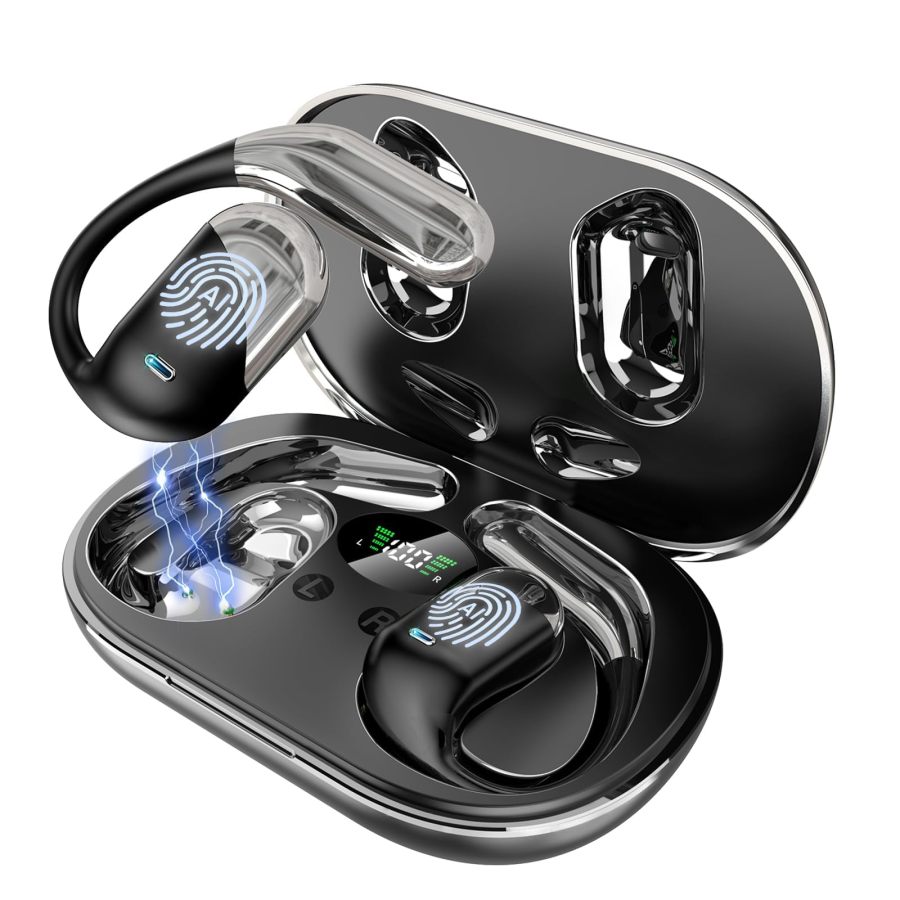
AI real-time translation earbuds are smart wearable devices that integrate AI translation technology with Bluetooth earbud functions (music playback, calls). They aim to break down language barriers and enable smooth cross-language communication through real-time speech recognition and translation. This category features diverse product forms, commonly including in-ear, open-ear, and ear-clip styles, primarily serving scenarios such as international travel, business communication, and language learning. The following table illustrates the key characteristics of consumer behavior in this category.
| Dimension | Segment | Description |
|---|---|---|
| Need Driver Type | Planned Purchase / Emergency-driven Purchase | User purchases typically stem from anticipated content creation or video conferencing needs, or emergency scenarios like low-light shooting, with clear expectations for immediate fill light. |
| Purchase Frequency | Low Frequency | As durable electronics, users typically use them for an extended period after purchase, resulting in a long repurchase cycle. |
| Decision Complexity | Medium | Consumers compare key features like translation accuracy, real-time performance, multi-language support, wearing comfort, and battery life across different products but do not conduct deep research. |
| Price Sensitivity | Medium | Price is an important consideration, but the utility and reliability of translation have higher priority; users are willing to pay a reasonable premium for products that effectively solve their pain points. |
| Emotional Dependency | Medium | The product not only provides functional translation but also delivers a sense of security and confidence from removing communication barriers, with emotional value carrying significant weight. |
II. User Personas & Usage Scenarios
2.1 International Business Professionals & Cross-Cultural Workers
🎯 Frequently engage in international business travel or multinational team collaboration, emphasizing communication efficiency and professional image.
| Typical Usage Scenarios | Core Pain Points | Primary Purchase Drivers |
|---|---|---|
|
|
|
2.2 Global Travelers & Language Learners
🎯 Love exploring the world, enjoy experiencing different cultures, or are actively learning a new language, seeking convenient auxiliary tools.
| Typical Usage Scenarios | Core Pain Points | Primary Purchase Drivers |
|---|---|---|
|
|
|
III. User Needs Hierarchy (KANO Model)
3.1 Basic Needs (Must-Haves)
- Stable Bluetooth Connection: Earbuds can quickly and stably connect to phones or other devices, ensuring basic functionality is available.
- Secure Fit (Not Prone to Falling): Earbuds stay securely in place whether stationary or in motion, avoiding loss or interrupted use.
- Clear Audio Output: Translated speech and music playback have clear, discernible sound quality without noise.
3.2 Performance Needs (Linear Satisfiers)
- High-Accuracy Real-Time Translation: Translation results are accurate with proper semantic understanding, maintaining high standards especially with colloquial speech or complex contexts.
- Fast Response Without Delay: Smooth translation process with short intervals between dialogues, approaching the experience of natural human-to-human conversation.
- Support for Multiple Languages & Dialects: Coverage of mainstream languages and the ability to recognize common accents and variants.
- Long Battery Life: Single-use battery life and total battery life with the charging case meet the needs of prolonged use, such as all-day travel or business meetings.
- Wearing Comfort: No ear pressure or discomfort during extended wear, with skin-friendly materials.
- Multiple Translation Modes: Support for different scenario modes like face-to-face, call, simultaneous interpretation, photo translation, etc.
3.3 Excitement Needs (Delighters)
- Offline Translation Function: Perform basic translation without an internet connection, enhancing reliability during travel or emergencies.
- Integrated AI Assistant: Provide value-added services like AI Q&A, smart chat, meeting summaries, etc., elevating product intelligence.
- Charging Case Display Screen: Charging case directly displays earbud and case battery levels, eliminating the need to check the phone app, offering convenience and intuitiveness.
- No Subscription Fees: Commitment to lifetime free use of translation functions, with no hidden charges, increasing user purchase intent.
3.4 Unmet Needs & Opportunities
-
Translation Accuracy & Latency: Users remain skeptical about translation accuracy and real-time performance, especially under fast speech, professional terminology, or complex contexts. Some users bluntly state translations are 'completely wrong'.
User Reviews (VOC) Customers report issues with translation accuracy, noting that translations take 5+ seconds and are not reliable, with one customer mentioning that the app setup for call translation is confusing. // not the most accurate for translating. Its a bit slow and a lot of words were not able to translate or completely wrong
-
App Connection & User Experience: Some users report difficulties with app binding, unreadable QR codes, or the translation function being overly dependent on and cumbersome to use via the app, hindering core functionality.
User Reviews (VOC) I can't get the binding code to work. Its an issue that's been reported several times. Do not buy // Couldn't set it up. QR code doesn't work
-
Call/Translation Quality in Noisy Environments: Despite claims of noise cancellation, in noisy environments, the quality of user voice input and translation output significantly degrades, affecting practical usability.
User Reviews (VOC) Can't hardly hear from them when there is noise around you // Noises and music mess them up and you hear random ghost words.
IV. User Decision Drivers
4.1 Key Decision Factors
- Translation Accuracy & Fluency: This is the core product value. Users care most about 'can it really understand/be understood,' which directly determines the purchase decision.
- Wearing Comfort & Stability: As a device worn for extended periods, comfort directly impacts user experience. Discomfort or ease of falling out can be an immediate deal-breaker.
- Ease of Operation & Learning Curve: Especially for non-tech-savvy users, the product needs to be plug-and-play, avoiding complex app setup or multi-step operations.
- Battery Life: Ensures uninterrupted power during long scenarios like travel or meetings, avoiding failure at critical moments.
4.2 Secondary Decision Factors
- Language Support Range: After meeting core language translation needs, supporting more languages with broader coverage becomes more attractive.
- Sound Quality & Noise Cancellation Effectiveness: While meeting translation needs, good music and call sound quality, along with effective environmental noise cancellation, are pluses.
- Appearance Design & Portability: Fashionable, lightweight design and an easily portable charging case enhance overall product appeal.
- No Additional Subscription Fees: For users, clear lifetime free service removes concerns and increases long-term usage value.
- Multi-Function Integration: Beyond translation, integrated features like AI assistant, image translation, voice-to-text transcription provide added convenience.
V. Selling Points & Competitive Landscape
5.1 Selling Point Analysis
5.1.1 Standard Features (Points of Parity)
- Real-Time Two-Way Translation: Frequently promoted core feature, supporting up to 144-198 languages.
- 3-in-1 Multi-Function: Integrates translation, music playback, and HD calling, emphasizing versatility.
- Multiple Translation Modes: E.g., face-to-face, earbud+phone, simultaneous interpretation, recording, photo translation, covering multiple scenarios.
- Long Battery Life: 8-13 hours on a single charge, 40-90 hours total with charging case, meeting prolonged use needs.
- Bluetooth 5.x Connection: Emphasizes the latest Bluetooth version for stable, low-latency connection. Some products even falsely claim 6.1.
- No Subscription Fees: Most products emphasize permanently free use of the app and translation functions.
5.1.2 Key Differentiators
- AI Smart Assistant: Integrates AI chat, AI image generation, AI Q&A, etc., enhancing intelligent experience, but actual user perception is low.
- Open-Ear / In-Ear Design: Some products emphasize open-ear design for situational awareness and comfort; others emphasize in-ear noise cancellation effectiveness.
- Charging Case LED Display: Visually displays earbud and case battery levels without needing the phone app, improving convenience.
- ANC Active Noise Cancellation / ENC Environmental Noise Cancellation: Emphasizes maintaining clear calls and translation in noisy environments, but actual results vary.
- Hi-Fi Sound Quality / Large Driver Units: Emphasizes providing superior auditory experience for music playback.
5.1.3 Unique Selling Propositions (USPs)
- Charging Case with Color Touchscreen: A few products (e.g., B0G1XVBS1V, B0FPCLV3JW) offer a charging case with a color screen, enabling more independent operations and personalized settings, enhancing tech appeal and interactivity.
5.2 Competitive Landscape
5.2.1 Market Maturity
The AI real-time translation earbud market is still in a rapid development phase, with severe product homogenization. Most sellers' functional marketing is highly convergent, primarily focusing on basic attributes like language count, translation modes, battery life, and Bluetooth version. Although some brands are beginning to explore AI integration and differentiated wearing experiences, there remains a widespread bottleneck in breakthroughs in core translation technology and solving user pain points.
5.2.2 Innovation Trends
Current innovation trends are mainly reflected in the following aspects: First, deeper integration of AI capabilities, expanding from simple translation to AI assistants, AI chat, and even AI image generation, though often just conceptual claims. Second, refinement of user experience, such as more comfortable wearing designs (open-ear, ear-clip) and more intuitive battery displays (charging case LED screen). Third, continuous optimization of core translation accuracy and real-time performance, though this remains a challenge. Fourth, a shift towards a 'no subscription fee' model to reduce long-term user costs.
VI. Marketing Claims vs. Reality Check
The table below analyzes the gap between common marketing claims and actual user experiences in this category:
| Dimension | Marketing Claim | User Reality | Verdict |
|---|---|---|---|
| Translation Accuracy & Response Speed | 98-99% accuracy, 0.1-0.5 second real-time response, like a professional interpreter, enabling seamless communication. | Users commonly report translation delays of 5-10 seconds, even stating translations are 'completely wrong' or 'not suitable for business meetings.' High-priced products (e.g., Timekettle) are not immune, with lower-priced products performing worse. | Sellers severely overstate core performance metrics, avoiding discussion of AI translation's technical limitations, leading to completely unmet user expectations of the product's core value. This is the root cause of negative reviews and returns. |
| False Bluetooth Version Claims | Equipped with cutting-edge Bluetooth 6.1 technology, achieving lightning-fast transmission speeds and rock-solid connections. | Bluetooth 6.1 is not a version that exists in current industry standards (latest is 5.4). Claims by some products (e.g., B0FZBL1Q4H) directly contradict technical facts. | This fabricated claim of 'leading technology' exposes brand dishonesty in technical marketing, severely damaging trust among professional user groups and the entire category. |
| Conflict Between Noise Cancellation & Open-Ear Design | Open-ear design balances situational awareness and comfort while supporting Active Noise Cancellation (ANC), providing clear calls and translation in noisy environments. | Open-ear earbuds are designed not to block the ear canal, making efficient ANC physically difficult to achieve. User feedback like 'can hardly hear when there is noise' confirms the physical paradox of open-ear design with ANC. | Attempting to bundle marketing of physically incompatible features not only misleads user expectations but also reveals ignorance or deliberate disregard for basic physical principles of product design. |
| App Binding & Core Function Activation Barriers | Download the app to use all translation functions, no subscription fees, simple and quick setup. | Multiple users report 'QR code doesn't work,' 'binding code missing,' or the app not functioning properly (e.g., B0G1R5NM33, B0G1RH31FT), preventing translation function activation and nullifying the product's core value. | The product's core function is completely blocked by basic initial setup obstacles, a fatal flaw in product usability that directly nullifies user purchase value and severely damages trust. |
| False or Misleading Waterproof Rating Claims | IPX7 waterproof rating, suitable for sports, rainy days, and other scenarios. | Some products (e.g., B0FT7NT5JL) claim IPX7 but have user feedback of failure after cautious water exposure. Another (B0FRSBDKF7) claims suitability for outdoor sports but its specifications state 'not waterproof.' | Waterproof rating claims significantly deviate from actual performance, even containing contradictory information, giving users a false sense of security and risking product damage. This is typical false marketing. |
Key Takeaway: The market exhibits widespread tendencies for parameter inflation, technical misrepresentation, and feature stacking, especially regarding core translation performance, Bluetooth versions, and additional AI functions. There is a significant gap between marketing promises and actual user experience.
VII. Supply-Demand Misalignment Analysis
The table below highlights mismatches between seller focus and buyer priorities:
| Dimension | Seller Behavior | User Focus | Verdict |
|---|---|---|---|
| Language Coverage Quantity vs. Core Language Translation Quality | Commonly emphasize 'supports 164/188 languages,' believing bigger numbers are better, using this as a core selling point. | Users genuinely care about 'is English-Spanish translation accurate and smooth?' and 'can it solve daily communication problems?' rather than how many obscure languages are supported. Frequent complaints are about inaccurate translation and delays. | Sellers are trapped in an 'arms race' over language count, ignoring users' need for 'depth of quality' in the most commonly used languages, creating a misalignment in value delivery. |
| Stacking Advanced AI Features vs. Basic Function Stability | Many products emphasize advanced AI features like AI chat, AI image generation in listings, attempting to create an image of an all-in-one tech product. | User reviews almost never mention these AI features. Instead, they complain about basic function issues like translation delays, inaccuracies, and app binding failures. | Sellers force-feature conceptual AI functions onto low-priced products, which don't actually deliver value to users. This diverts resources from optimizing the foundational experience and is a classic case of 'marketing hype over substance.' |
| Diversification of Wearing Styles vs. Translation/Call Clarity in Noisy Environments | The market offers various wearing styles like open-ear, in-ear, ear-clip, emphasizing comfort. However, descriptions of solutions for 'how to ensure translation and call quality in noisy environments' are insufficient. | Users complain 'can hardly hear translation when there is noise' and 'noises and music mess up translation,' indicating the core pain point remains unsolved regardless of wearing style. | Sellers innovate in physical form but fail to simultaneously address the core functional shortcomings in specific usage scenarios (high-noise environments), preventing a comprehensive improvement in user experience. |
| No Subscription Fees vs. App Activation Barriers | Widely promote 'no subscription fees,' 'lifetime free,' using this as a competitive advantage to lower the purchase barrier. | However, the core translation function is hindered by primary app setup issues like 'QR code invalid' or 'binding failure,' rendering the product unusable and nullifying user purchase value. | The 'free' value promised by sellers is negated by the 'high barrier' of initial setup, directly killing the user experience. This is a severe disconnect between marketing highlights and actual usability. |
Key Takeaway: Sellers excessively pursue feature breadth and numerical exaggeration but collectively neglect users' basic demands for core translation function stability and ease of use, leading to a severe supply-demand mismatch.
VIII. Strategic Opportunities & Recommendations
8.1 Enhance Core Language Translation Accuracy & Ultra-Low Latency
8.1.1 Target Audience & Pain Points
⚡️ Pain Points Addressed: Translation accuracy & latency, communication delays impacting efficiency, misunderstandings due to inaccurate translation.
8.1.2 Action Plan
Invest in proprietary or deeply customized top-tier AI translation engines. Optimize models for high-frequency language pairs (e.g., English-Spanish, English-Chinese), focusing on context understanding and accent recognition. Introduce edge computing capabilities to reduce cloud dependency and improve real-time performance. Strengthen data privacy protection.
| Tech Complexity | High |
| Cost Impact | High Impact |
| Trade-off Warning | No significant physical side effects. Mainly increases computational resource and AI model R&D costs, potentially leading to slightly increased product heat and battery consumption. |
| Price Band | Only viable above $199.99 |
8.1.3 Marketing Strategy
Emphasize 'professional-grade simultaneous interpretation experience, goodbye communication barriers.' Provide extensive real-world test videos (multi-accent, fast-speech scenarios). Highlight security protocols for business privacy. Obtain relevant authoritative translation accuracy certifications (e.g., MT-Bench). Products must have FCC/CE certifications.
8.2 Simplify App Connection & Usage Process, Improve Out-of-Box Experience
8.2.1 Target Audience & Pain Points
⚡️ Pain Points Addressed: App connection & user experience, complex device operation.
8.2.2 Action Plan
Simplify app registration and binding processes. Offer multiple connection methods (e.g., NFC tap-to-pair, Bluetooth quick pairing). Ensure app compatibility and stability across all mainstream operating systems, reducing bugs. Provide clear, multilingual illustrated quick-start guides in packaging and online video tutorials.
| Tech Complexity | Low |
| Cost Impact | Low Impact |
| Trade-off Warning | None. |
| Price Band | Only viable above $19.99 |
8.2.3 Marketing Strategy
8.3 Develop Multi-Scenario Adaptive Noise Cancellation to Improve Translation/Call Quality in Noisy Environments
8.3.1 Target Audience & Pain Points
⚡️ Pain Points Addressed: Call/translation quality in noisy environments, difficulty with accent recognition, insufficient privacy protection.
8.3.2 Action Plan
For in-ear or semi-in-ear designs, integrate high-quality hybrid ANC, paired with CVC 8.0/DNN call noise cancellation algorithms. Develop dedicated noise suppression modes for translation scenarios, such as directional voice pickup, to reduce environmental interference on speech recognition.
| Tech Complexity | Medium to High |
| Cost Impact | Medium Impact |
| Trade-off Warning | Effective ANC may require an in-ear design, sacrificing some of the 'situational awareness' advantage of open-ear designs. This necessitates differentiation within the product line. Adding microphones and chips may slightly increase earbud size and weight. |
| Price Band | Only viable above $79.99 |
8.3.3 Marketing Strategy
Emphasize 'the essential tool for communication in noisy environments, worry-free meetings and live streaming.' Provide noise comparison test data. Highlight multi-microphone array design and AI noise cancellation technology principles. Products must comply with UL/CE electrical safety standards.
8.4 Offer More Differentiated Wearing Comfort Options & Transparent Claims
8.4.1 Target Audience & Pain Points
⚡️ Pain Points Addressed: Individual differences in wearing comfort, discomfort during long-term wear, limited comfort during sports activities.
8.4.2 Action Plan
Develop wearing solutions for different ear shapes and usage scenarios, such as lightweight open-ear clip designs for long-term wear, or more secure ear-hook designs for sports. Provide multiple ear tip sizes. Strictly label waterproof ratings, avoiding exaggeration.
| Tech Complexity | Low |
| Cost Impact | Low Impact |
| Trade-off Warning | No significant physical side effects. Primarily involves optimization of design and material selection. |
| Price Band | Only viable above $24.99 |
8.4.3 Marketing Strategy
Emphasize 'custom-level comfort, imperceptible all-day wear.' Use comparison charts to showcase advantages of different wearing styles. Highlight use of skin-friendly materials (e.g., medical-grade silicone). Provide IPX7 waterproof rating certification to meet needs for sports and sweating.