Amazon US Market Analysis: Computer Wrist Rest Mouse Pad Set Category
📊 Executive Summary
📈 Market Trends
Portability and Integration are Mainstream, Aesthetic Design is Standard. The wrist rest mouse pad market is evolving from single-function products towards integrated, aesthetic, multi-functional desktop sets. Consumers not only pursue ergonomic comfort but also pay more attention to overall desktop coordination and personalization, driving continuous evolution in product form and design.
⚡ Major Pain Points
Odor, Cleaning Difficulties, and Actual Color Discrepancies are Critical Flaws. Users commonly complain about chemical odors in new products, the promised easy-cleaning effectiveness not meeting expectations, and actual product colors not matching pictures. These core pain points severely impact purchase satisfaction and brand trust, being frequent causes of returns and negative reviews.
💡 Selection Opportunities
Deep Dive into Health and Customized Experiences to Break Homogeneous Competition. Market opportunities lie in addressing consumers' core demands for safe, odor-free products, easy cleaning, and precise fit. Through solutions like the Zero-Odor, High-Efficiency Clean Desktop Set and the Precision-Fit, Adjustable Ergonomic Wrist Rest, differentiation can be established by enhancing health and personalized experiences, capturing the high-end segment.
I. Analysis Overview
1.1 Introduction & Report Scope
This report analyzes the 'Wrist Rests' category (Computer Wrist Rest Mouse Pad Sets) in the US Amazon market, focusing on target user personas, core needs, decision drivers, market communication, and potential opportunities.
1.2 Category Snapshot
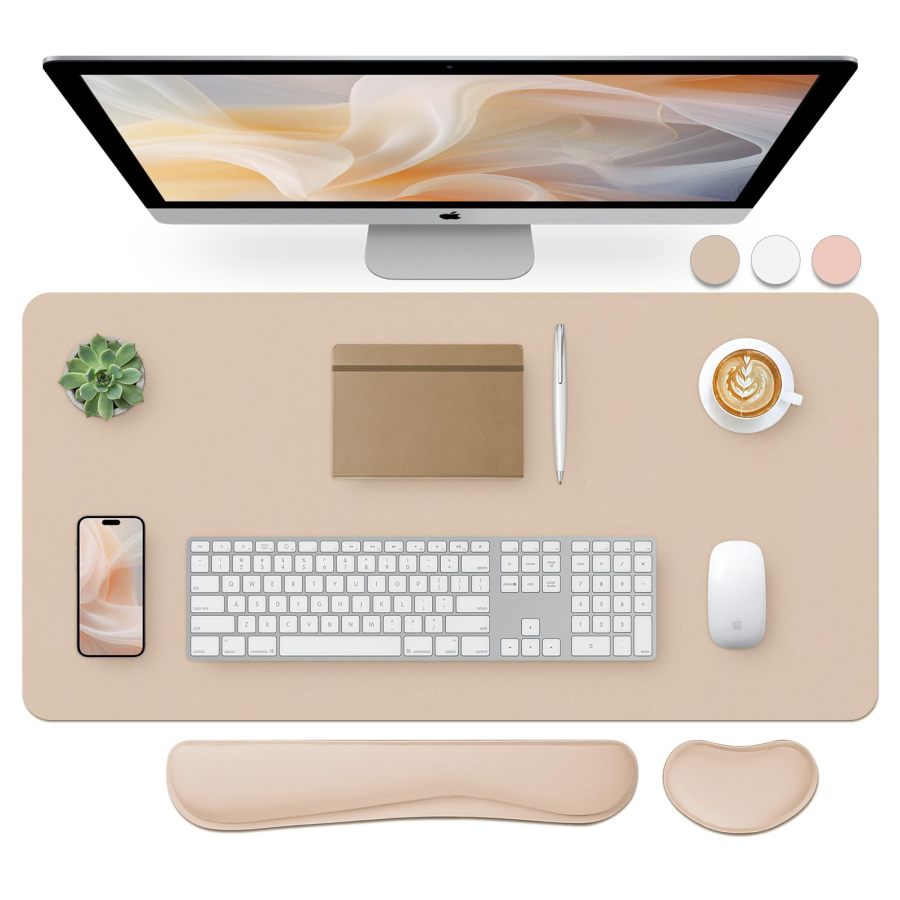
Computer Wrist Rest Mouse Pad Sets primarily provide wrist support for users who spend long hours on computers, aiming to alleviate fatigue, prevent pain, and optimize posture. These products are typically sold as multi-piece sets. In addition to keyboard and mouse wrist rests, they often include large desk mats and cup coasters. They not only offer ergonomic comfort but also enhance desktop aesthetics and organization, becoming essential accessories for office and gaming setups. The following table illustrates the key characteristics of consumer behavior in this category.
| Dimension | Segment | Description |
|---|---|---|
| Need Driver Type | Planned Purchase / Emergency-driven Purchase | Purchases typically stem from discomfort caused by long-term computer use, as part of a new desk setup or desktop aesthetic upgrade, or for immediate relief from acute wrist pain. |
| Purchase Frequency | Low Frequency | As durable goods, repurchase cycles are long unless the product wears out, is damaged, or the user changes their desktop style. Not a high-frequency consumer item. |
| Decision Complexity | Medium | Consumers compare materials, dimensions, set completeness, design aesthetics, and price, but typically do not conduct in-depth technical research. |
| Price Sensitivity | Medium | Price is an important consideration, but users are willing to pay a reasonable premium if the product offers significant comfort improvement, aesthetic value, or solves a core pain point. |
| Emotional Dependency | Medium | The product satisfies the functional need to relieve fatigue while also providing emotional value and self-satisfaction through 'a clean, beautiful desktop' and 'personalized expression'. |
II. User Personas & Usage Scenarios
2.1 Prolonged Computer Users / Office Workers
🎯 Individuals who need to use computers for extended periods daily for work or study. They are highly concerned about wrist and arm health, seeking effective ways to relieve fatigue and prevent occupational injuries.
| Typical Usage Scenarios | Core Pain Points | Primary Purchase Drivers |
|---|---|---|
|
|
|
2.2 Desktop Aesthetics Enthusiasts / Remote Workers
🎯 Individuals who value the overall aesthetics and personalization of their desktop environment. They want wrist rest sets to be not only functional but also part of the desktop decor, creating a comfortable and pleasant atmosphere.
| Typical Usage Scenarios | Core Pain Points | Primary Purchase Drivers |
|---|---|---|
|
|
|
III. User Needs Hierarchy (KANO Model)
3.1 Basic Needs (Must-Haves)
- Effective Wrist Support: Effectively elevates and supports the wrist, keeping it roughly level with the keyboard/mouse, reducing wrist suspension or pressure on hard surfaces, providing fundamental support.
- Stable and Non-Slip: The wrist rest base should have reliable non-slip design to ensure it does not move or slide during use, guaranteeing operational stability and safety.
- Basic Comfortable Material: Surface material needs to be soft and skin-friendly; internal filling (e.g., memory foam) should have basic elasticity, providing non-irritating, fundamental comfort.
3.2 Performance Needs (Linear Satisfiers)
- Significant Fatigue Relief: Effectively reduces wrist, arm, and shoulder fatigue and pain from prolonged computer use, helps prevent carpal tunnel syndrome, and improves health experience.
- Good Resilience and Durability: Memory foam or gel should maintain its shape and resilience after long-term use, resisting sagging or deformation, ensuring long-term support effectiveness.
- Versatile Size Compatibility: Keyboard wrist rest length should fit mainstream keyboard sizes (e.g., full-size, TKL); mouse wrist rest size should be moderate, not interfering with flexible mouse operation.
- Easy to Clean and Maintain: Surface material should have water-resistant or easy-wipe properties, facilitating daily cleaning and maintenance, not prone to stubborn stains, keeping the product clean and new-looking.
3.3 Excitement Needs (Delighters)
- Complete Desktop Set: Provides an integrated set including keyboard wrist rest, mouse wrist rest, large desk mat, cup coaster, etc., with unified style and color, significantly enhancing overall desktop aesthetics and coordination, offering a one-stop solution.
- Unique Aesthetic Design: Adopts unique, fashionable, or personalized patterns and colors, such as floral, marble, world map, fluid art, making the product a highlight of desktop decoration and satisfying personalized expression needs.
- Innovative Comfort Experience: Adds massage points to the wrist rest surface or incorporates cooling gel, providing extra relaxation, further alleviating fatigue, and enhancing sensory comfort.
3.4 Unmet Needs & Opportunities
-
Color/Pattern Realism vs. Marketing Discrepancy: Users report significant differences between the actual product color/pattern and the listing images, or color inconsistencies among different components within the same set, affecting overall aesthetics and user expectations.
User Reviews (VOC) 实物颜色比图片暗淡很多,有点失望. // 鼠标垫和腕托颜色有细微差别,套装感不强.
-
Product Odor Affects User Experience: Some new products have strong chemical or rubber odors, requiring extended airing before use, impacting initial user experience and health perception.
User Reviews (VOC) 刚打开时一股刺鼻的橡胶味,放了两天才敢用. // 味道有点大,闻着不舒服.
-
Cleaning Performance Falls Short of Expectations: Despite claims of being easy-to-clean and water-resistant, some stains (e.g., coffee, ink) remain difficult to remove completely. Products look dirty and worn after prolonged use, creating a gap with user expectations.
User Reviews (VOC) 咖啡洒上去擦不干净,还是留下印子了. // 虽然说防水,但用久了还是感觉脏脏的,洗也洗不掉.
-
Size Compatibility Needs Improvement: Some users report keyboard wrist rests being too short for their keyboard or the height being unsuitable; mouse wrist rests sometimes restrict mouse movement space, affecting universality and personalized experience.
User Reviews (VOC) 我的全尺寸键盘,腕托两边还是空一截. // 鼠标腕托有点高,感觉手抬起来了,没有平放舒服.
IV. User Decision Drivers
4.1 Key Decision Factors
- Comfort and Effectiveness of Wrist Support: Users are most concerned about whether the wrist rest is soft and comfortable, and if it can genuinely and effectively relieve wrist pressure and pain. This is the core purchase driver, determining the product's fundamental value.
- Stability on the Desktop: Whether the product base has reliable non-slip properties to ensure it remains stable and doesn't move during use is a key factor for ensuring smooth, safe operation and avoiding interference.
- Material Safety and Skin-Friendliness: Whether the filling and surface materials are safe and odor-free, and if prolonged skin contact causes discomfort or allergies, directly impacts user health perception and confidence in use.
4.2 Secondary Decision Factors
- Design Aesthetics and Desktop Coordination: Whether the product's color, pattern, and overall design align with personal aesthetics and coordinate with the desktop environment's style, enhancing mood and overall desktop appeal.
- Set Completeness and Value for Money: Whether keyboard wrist rest, mouse wrist rest, and large desk mat can be purchased at once, and if the price of the set combination is competitive, affecting purchase convenience and economy.
- Product Size Compatibility: Whether the wrist rest size perfectly matches the user's keyboard and desktop space, not appearing too large or too small, ensuring flexibility in the usage scenario.
- Daily Cleaning Convenience: Whether the product is easy to wipe and maintain daily, not prone to staining, keeping it clean and aesthetically pleasing long-term, reducing user maintenance burden.
V. Selling Points & Competitive Landscape
5.1 Selling Point Analysis
5.1.1 Standard Features (Points of Parity)
- Ergonomic Design: Vast majority of products emphasize being designed according to ergonomic principles, aiming to match the natural curve of the wrist to provide comfortable support and prevent fatigue and discomfort.
- Memory Foam Filling: Widespread use of memory foam as internal filling, highlighting its softness, comfort, and good slow-rebound properties, effectively relieving wrist pressure.
- Non-Slip Base: Extensively promoted as having a non-slip rubber or PU base to ensure the product stays firmly in place on the desktop, providing a stable user experience.
- Pain Relief and Prevention: All products explicitly state their ability to relieve wrist and hand fatigue and pain, and help prevent long-term health issues like carpal tunnel syndrome.
5.1.2 Key Differentiators
- Multi-Piece Set Combinations: Most products offer combinations including keyboard wrist rest, mouse wrist rest, and often large desk mats, cup coasters, or even can sleeves, meeting one-stop desktop beautification and functional needs.
- Diverse Surface Materials: Promote microfiber fabrics like Lycra, Spandex, Neoprene, emphasizing smoothness, breathability, and skin-friendliness; some products use PU leather for different textures and appearances.
- Rich Patterns and Colors: Offer diverse fashionable patterns (e.g., floral, marble, world map, fluid art) and vibrant colors, emphasizing the product's decorative and personalized nature.
- Easy-to-Clean / Water-Resistant Features: Promote surfaces having water-resistant coatings or easy-wipe properties, facilitating daily cleaning and maintenance, extending product life, attracting users focused on practicality.
5.1.3 Unique Selling Propositions (USPs)
- Massage Point Design: A few wrist rests integrate massage points or textures on the surface, providing a slight massaging sensation during use, aiming to further relieve fatigue and promote blood circulation (e.g., B0CDK4SKT6, B0CNVLJ2W2).
- Foldable and Portable: Very few products feature a foldable design for easy storage or travel, meeting mobile office scenario needs (e.g., B0D9JYG2G3).
- Gel Cooling Technology: Individual brands use cooling gel filling and design ventilation channels, aiming to keep hands cool and dry, reducing discomfort from prolonged use (e.g., Kensington B07JQT15G8).
5.2 Competitive Landscape
5.2.1 Market Maturity
The Computer Wrist Rest Mouse Pad Set category has a relatively high market maturity, with core product functionalities becoming homogenized. Competition between brands is mainly reflected in material details, ergonomic micro-innovations, design aesthetics, and the richness of set combinations. Consumers have a clear understanding of basic functions and are now seeking superior experiences and more personalized products.
5.2.2 Innovation Trends
The market is evolving from single-function wrist rests towards integrated, aesthetic, multi-functional desktop sets to meet consumer demand for overall desktop environment coordination. Simultaneously, attempts are being made to introduce more refined ergonomic designs (e.g., massage points, adjustable structures) and usability improvements (e.g., stronger water resistance, portability, antimicrobial properties) to provide differentiated value, but truly breakthrough technological innovations are scarce.
VI. Marketing Claims vs. Reality Check
The table below analyzes the gap between common marketing claims and actual user experiences in this category:
| Dimension | Marketing Claim | User Reality | Verdict |
|---|---|---|---|
| Color/Pattern Mismatch with Reality | Beautiful patterns add personality and vibrancy to your desktop; vibrant, saturated colors, what you see is what you get. | Users commonly report actual product colors being dull, significantly different from pictures; noticeable color differences among components within the same set; patterns being blurry or prone to wear. | Typical disconnect between marketing imagery and actual product quality control. Sellers underestimate user expectations for visual consistency and pattern durability, leading to unfulfilled aesthetic promises. |
| Cleaning and Maintenance Ease | Water-resistant and easy to clean, just wipe with a damp cloth, stays clean and new-looking for a long time. | User feedback indicates most products only resist splashes; stubborn stains like coffee or ink are difficult to remove completely; products look dirty and old after prolonged use; some wrist rests are explicitly not water-resistant and susceptible to sweat stains. | Sellers oversimplify the challenges of cleaning and maintenance. Actual water resistance is limited to surface splash protection, failing to address deep stains and material absorption issues. This is a conflict between material properties and marketing claims. |
| Product Odor | Uses high-quality, environmentally friendly materials, no pungent odor (often an implicit claim). | Numerous users report strong chemical or rubber odors upon opening new products, requiring extended airing before use, impacting initial experience and health perception. | Sellers overlook the control of volatile organic compounds (VOCs) in raw material selection and production processes, directly impacting the unboxing experience and contradicting 'high-quality' claims, damaging brand perception and user trust. |
Key Takeaway: The market exhibits a widespread tendency towards specification inflation and scenario-based experience exaggeration, especially regarding color/pattern realism, actual cleaning and maintenance effectiveness, and material odor. There is a gap between marketing promises and actual user perception.
VII. Supply-Demand Misalignment Analysis
The table below highlights mismatches between seller focus and buyer priorities:
| Dimension | Seller Behavior | User Focus | Verdict |
|---|---|---|---|
| True Color and Design Consistency | Generally emphasize 'beautiful patterns' and 'diverse colors' but fail to strictly control color differences and printing quality in the supply chain and production, leading to discrepancies between actual products and marketing images. | Users complain about products not matching pictures, color inconsistencies among set components, and patterns being prone to wear, affecting desktop aesthetics and personalized experience. | While pursuing visual differentiation, sellers neglect fundamental quality control management, causing aesthetic promises to go unfulfilled and instead become obstacles to user trust. |
| Long-Term Cleaning and Stain Resistance | Widely promote 'water-resistant and easy to clean,' but few products offer solutions that truly tackle stubborn stains or cleaning difficulties after long-term use, lacking deep understanding of actual maintenance scenarios. | User feedback indicates stains like coffee are hard to remove completely, products look dirty and old after prolonged use, cleaning results are unsatisfactory, and maintenance burden is heavy. | Sellers' functional promotion remains superficial, failing to provide lasting, effective solutions for users' deep-seated pain point of 'fearing dirt and difficulty cleaning,' leading to a disconnect between user expectations and actual experience. |
| Initial Product Odor | Most sellers avoid or fail to mention potential odor issues in their promotions, or only vaguely emphasize 'high-quality materials,' without fundamentally addressing or clearly informing about it. | Users strongly complain about new products having pungent chemical smells, requiring long airing before use, affecting health perception and unboxing experience. | This is a typical case of cost control leading to quality sacrifice, neglecting users' basic requirements for health and unboxing experience, damaging brand perception and user trust. |
Key Takeaway: Sellers excessively focus on surface-level feature stacking and low-value detail promotion, collectively neglecting users' deep-seated experiential pain points regarding true product aesthetics, long-term cleaning effectiveness, and initial odor, leading to a supply-demand mismatch.
VIII. Strategic Opportunities & Recommendations
8.1 Zero-Odor, High-Efficiency Clean Desktop Set
8.1.1 Target Audience & Pain Points
⚡️ Pain Points Addressed: Product odor affects user experience, cleaning performance falls short of expectations, color/pattern realism vs. marketing discrepancy.
8.1.2 Action Plan
Procure memory foam/gel certified for low VOCs (Volatile Organic Compounds); adopt non-toxic printing and dyeing processes; develop nano-coatings or special fiber fabrics to achieve true stain and antimicrobial resistance, easy wiping and washing; establish strict pre-shipment airing procedures and color calibration standards to ensure high color consistency across all set components.
| Tech Complexity | Medium |
| Cost Impact | Medium Impact |
| Trade-off Warning | Initial procurement cost for eco-friendly, odor-free materials may be slightly higher; nano-coating treatment may add complexity to the production process, requiring a balance with production efficiency. |
| Price Band | Only viable above $24.99 |
8.1.3 Marketing Strategy
Emphasize 'Odor-Free Technology, Healthy Breathing,' 'Wipes Clean Instantly, Stays Fresh Longer,' 'What You See Is What You Get, Desktop Artwork.' Provide third-party eco-friendly, odor-free certification reports. Use dynamic videos to demonstrate cleaning effectiveness, reinforcing material safety and easy-maintenance features.
8.2 Precision-Fit, Adjustable Ergonomic Wrist Rest Set
8.2.1 Target Audience & Pain Points
⚡️ Pain Points Addressed: Size compatibility needs improvement.
8.2.2 Action Plan
Design a base with stackable pads or a swivel/tilt stand structure to achieve multi-level height/angle adjustment; offer modular design where keyboard wrist rests can be assembled in segments to fit different keyboard lengths; strengthen the durability of adjustment mechanisms to ensure stability and reliability.
| Tech Complexity | Medium |
| Cost Impact | High Impact |
| Trade-off Warning | Structural components may add slight volume and weight, requiring a balance with portability; the durability of adjustment mechanisms needs rigorous testing to avoid loosening after long-term use. |
| Price Band | Only viable above $34.99 |
8.2.3 Marketing Strategy
Promote 'Customized for Everyone, Find Your Perfect Fit,' 'Freely Adjustable, Find Your Perfect Support,' 'No More Compromises, Precise Care.' Use diagrams or videos to showcase the adjustment mechanism and user experience under different settings, highlighting how the product provides personalized support based on user needs.
8.3 E-Sports Grade, High-Performance, Ultra-Durable Wrist Rest Set
8.3.1 Target Audience & Pain Points
⚡️ Pain Points Addressed: Suboptimal mouse tracking compatibility, average surface durability, lack of advanced gaming features.
8.3.2 Action Plan
Adopt surfaces with low friction coefficient and high tracking precision, such as CVD coatings or specific woven fabrics; use nano-adhesive materials with stronger grip on the base to ensure no movement during intense operation; employ laser-cut edges with high-density binding to prevent fraying and splitting.
| Tech Complexity | Medium |
| Cost Impact | Medium Impact |
| Trade-off Warning | Pursuing ultimate performance may sacrifice some surface softness; the tactile feel of specific materials may differ from standard products, requiring market education. |
| Price Band | Only viable above $29.99 |
8.3.3 Marketing Strategy
Emphasize 'Millisecond Response, Precision for Victory,' 'Wear-Resistant, Built for Endurance,' 'Professional E-Sports Certified, Your Edge in Battle.' Showcase mouse tracking test data, highlight performance improvements from materials and craftsmanship, and emphasize the product's advantages in competitive scenarios.
8.4 Multi-Function Integrated & Smart Expansion Set
8.4.1 Target Audience & Pain Points
⚡️ Pain Points Addressed: Enhances added value and functionality, meeting specific users with demands for desktop intelligence.
8.4.2 Action Plan
Seamlessly integrate wireless charging modules (Qi standard) into the desk mat or mouse wrist rest; add a built-in USB-C Hub for convenient peripheral connection; consider integrating ambient light sensors to sync with smart home systems for automatic lighting adjustment. Design must prioritize heat dissipation and safety.
| Tech Complexity | High |
| Cost Impact | High Impact |
| Trade-off Warning | Integrating electronic components may increase thickness and weight; heat dissipation in wireless charging areas needs consideration; added functionality may increase product failure rates. |
| Price Band | Only viable above $49.99 |
8.4.3 Marketing Strategy
Promote 'Your Desk is a Charging Station, Efficiency Multiplied,' 'One-Cable Connection, Eliminate Clutter,' 'Smart Integration, Personalized Workflow.' Use scenario-based imagery to showcase the product's convenience and tech appeal, highlighting its enhancement to efficiency and quality of life.