Amazon US Market Analysis: Robotic Pool Cleaners Category
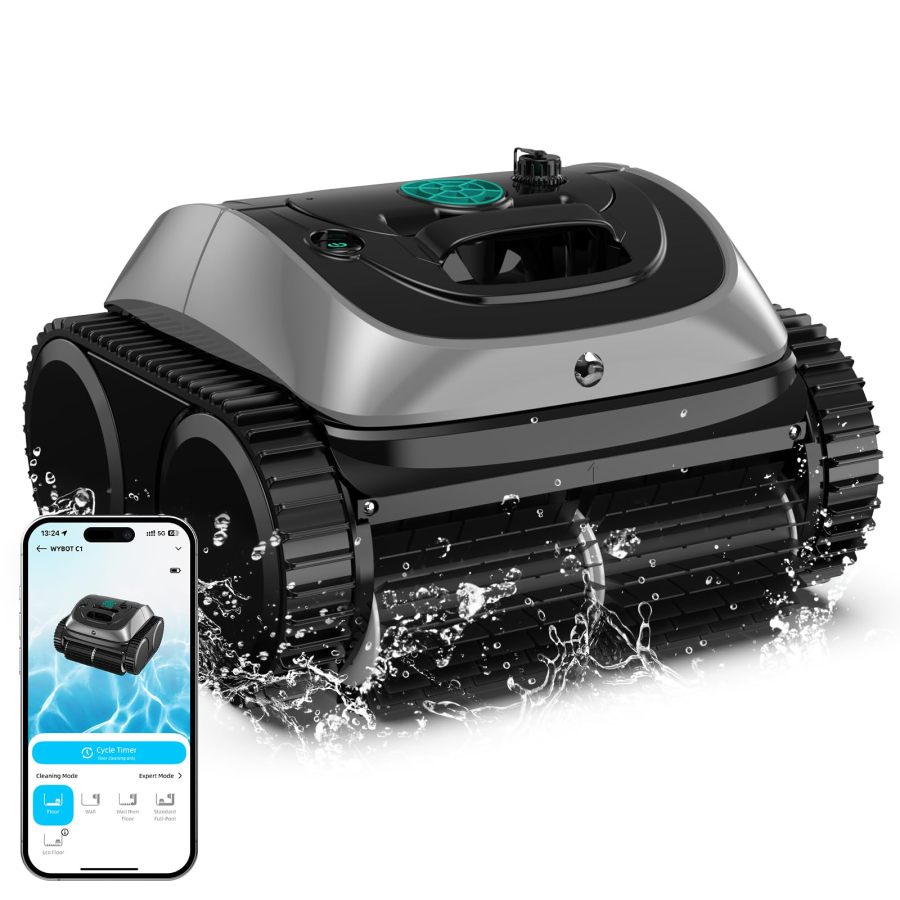
📊 Executive Summary
📈 Market Trends
Cordless and smart are the dominant market themes, but user expectations for 'true intelligence' and 'true convenience' are rising. The robotic pool cleaner market is evolving from basic cordless cleaning towards more comprehensive wall/waterline coverage, smart navigation, and app control. Consumers desire complete hands-free operation, demanding higher levels of product intelligence and operational convenience.
⚡ Major Pain Points
Exaggerated runtime, wall cleaning limitations, and poor smart experience are the core pain points. Users are generally skeptical of claimed battery runtime, charging efficiency, and filtration precision. In complex pools, robots struggle with wall and waterline cleaning, prone to jamming; unstable app connections and gimmicky features severely impact user trust and satisfaction. Additionally, product durability and lack of after-sales service are hidden pain points overlooked by sellers but of high concern to users.
💡 Selection Opportunities
Deeply address user experience pain points to build reliable and truly smart solutions. Market opportunities lie in improving real-world battery runtime and lifespan, optimizing filter systems for effective fine particle handling, and designing genuinely stable, user-friendly smart app controls. For large and complex pools, develop flagship products with all-terrain climbing and intelligent path planning. Simultaneously, offer lightweight, high-value, easy-maintenance basic models for budget-conscious flat-bottom pool users, establishing an advantage in this segment.
I. Analysis Overview
1.1 Introduction & Report Scope
This report analyzes the 'Robotic Pool Cleaners' category on the Amazon US market, focusing on target user personas, core needs, decision factors, market communication, and potential opportunities.
1.2 Category Snapshot
A robotic pool cleaner is an intelligent device designed for automated pool cleaning, aiming to replace manual labor and provide a convenient, efficient pool maintenance solution. Products in this category are primarily divided into cordless and corded types, with functions extending from basic floor vacuuming to smart wall/waterline cleaning, app control, and multi-stage filtration to meet the needs of different pool types and users. Additionally, a small number of solar-powered robots focus on cleaning surface debris. The following table illustrates the key characteristics of consumer behavior in this category.
| Dimension | Segment | Description |
|---|---|---|
| Need Driver Type | Planned Purchase / Emergency-driven Purchase | User purchases typically stem from planned needs for routine pool maintenance or emergency scenarios to address sudden contamination (e.g., after storms or parties), seeking hassle-free, labor-saving solutions. |
| Purchase Frequency | Low Frequency | As a durable consumer good, it is typically purchased once every few years or even longer, not a high-frequency repurchase item, with a long replacement cycle. |
| Decision Complexity | Medium | Consumers compare multiple dimensions such as price, cleaning effectiveness, battery life, features, brand, and user reviews, but rarely conduct deep technical research. |
| Price Sensitivity | Medium | Price is an important consideration, but users are willing to pay a reasonable premium for reliable performance, long-term user experience, and genuine 'hands-free' value. |
| Emotional Dependency | Medium | The product is primarily based on functional utility, but the 'relaxed, tidy, worry-free' pool environment and the pleasure of 'saving time and effort' it provides offer a certain degree of emotional value. |
II. User Personas & Usage Scenarios
2.1 Convenience-Seeking Average Pool Owner
🎯 Owns a small to medium-sized above-ground or flat-bottom in-ground pool, values convenience in daily maintenance, hopes to maximize hands-free operation through automated cleaning, but has a relatively limited budget.
| Typical Usage Scenarios | Core Pain Points | Primary Purchase Drivers |
|---|---|---|
|
|
|
2.2 Quality & Smart-Focused Large Pool User
🎯 Owns a large, deep, or structurally complex (with slopes, steps, irregular shapes) in-ground pool, has higher requirements for cleaning depth, coverage, and smart features, and exhibits lower price sensitivity.
| Typical Usage Scenarios | Core Pain Points | Primary Purchase Drivers |
|---|---|---|
|
|
|
III. User Needs Hierarchy (KANO Model)
3.1 Basic Needs (Must-Haves)
- Powerful Suction: Effectively vacuums common debris like leaves, sand, and dirt from the pool bottom, ensuring basic cleaning performance.
- Easy to Use: One-button start, no complex setup required, low learning curve, ready to use immediately.
- Cordless Design: Eliminates the hassle and safety hazard of tangled cords, improving convenience and operational freedom.
- Automatic Docking: Automatically docks at the pool edge upon cleaning completion or low battery, allowing for safe and easy removal by the user.
3.2 Performance Needs (Linear Satisfiers)
- Cleaning Coverage Area: Adapts to different pool sizes, ensuring effective coverage of most areas within a single charge cycle, avoiding multiple runs.
- Battery Runtime: Provides sufficient operating time to avoid frequent charging, meeting longer cleaning needs.
- Wall & Waterline Cleaning: Effectively climbs and cleans pool walls and the waterline area, removing attached grime and algae for more comprehensive cleaning.
- Multi-Stage Filtration: Features dual-layer or ultra-fine filtration systems capable of capturing finer dust, pollen, and other particles to maintain clear water.
- Fast Charging: Reduces charging wait time, increases device availability, and minimizes user maintenance time.
- Smart Navigation: Plans efficient cleaning paths, reducing overlap and missed areas, improving cleaning efficiency and thoroughness.
3.3 Excitement Needs (Delighters)
- App Smart Control: Enables remote control, custom cleaning modes, progress viewing, and status alerts via mobile app, enhancing the smart experience.
- OTA Firmware Updates: Device functionality can be continuously optimized and expanded through software updates, maintaining a leading edge and providing long-term value.
- Track Drive System: Provides superior traction and obstacle-crossing ability, adapting to complex pool bottoms and wall climbing, especially performing better in irregular pools.
- Seasonal/Weekly Scheduling: Supports preset timed cleaning, enabling fully automated maintenance without daily oversight, truly hands-free.
3.4 Unmet Needs & Opportunities
-
Battery Life Degradation Risk: Some products experience significant battery performance decline after a period of use, affecting cleaning efficiency and coverage, raising user concerns about long-term value.
User Reviews (VOC) Pessimo Não segura carga e a luz é fraca, esperava mt mais
-
Inadequate Fine Particle Handling: Despite claims of multi-stage filtration, some cleaners struggle to effectively capture fine dust, algae, or pollen, leading to less-than-clear water and still requiring manual intervention.
User Reviews (VOC) The mirror is a little blurry/hazy
-
App Connectivity Stability & Feature Experience: Some smart apps have connection issues or unstable features, limiting remote control and mode adjustments, reducing user trust in smart capabilities.
User Reviews (VOC) a defect with the USB port making it very very difficult to insert the cable
-
Poor Adaptation to Complex Pool Shapes: In irregularly shaped, steeply sloped, or multi-step pools, some products easily get stuck, slip, or clean incompletely, failing to achieve 'full coverage'.
User Reviews (VOC) The sturdiness of the clip is questionable you definitely have to play with the placement when putting your phone at different angles because it can fall off. // Magnet is not strong enough to hold your phone.
- Imbalanced Charging Time vs. Runtime: Some products have excessively long charging times (e.g., 4 hours) disproportionate to actual runtime (e.g., 90 minutes), impacting continuous user experience.
- Lack of Product Durability & After-Sales Service: Some user feedback indicates short product lifespan, high failure rates, and insufficient after-sales support, affecting purchase confidence and brand loyalty.
IV. User Decision Drivers
4.1 Key Decision Factors
- Cleaning Effectiveness: The ability to effectively remove various debris, especially fine sand/dust and algae, from the pool floor, walls, and waterline is the core purchase determinant, directly impacting the visual cleanliness of the pool.
- Ease of Use: Whether device setup and operation are simple and convenient, truly freeing up the user's hands and reducing daily maintenance burden, including the processes of deployment, retrieval, and cleaning.
- Battery Runtime & Charging Efficiency: Whether a single charge can complete the entire pool cleaning, and if the charging time is reasonable, directly impacts user experience and device availability.
- Anti-Jamming & Smart Obstacle Avoidance: The ability to run smoothly without getting stuck on pool obstacles (e.g., drains, wrinkles, steps) is fundamental for efficient cleaning, reducing the need for manual intervention.
- Applicable Pool Type & Size: Whether the product is suitable for the user's own pool size, shape (above-ground/in-ground, flat/sloped bottom, presence of steps), and material is a mandatory compatibility requirement before purchase.
- Product Durability & Warranty: The reliability and expected lifespan of the device's materials, motor, and battery, along with the warranty and after-sales service provided by the brand, relate to long-term cost of ownership and peace of mind.
4.2 Secondary Decision Factors
- Noise Level: Whether operation is quiet enough not to disturb outdoor leisure experiences, especially for users in residential areas where excessive noise can be a nuisance.
- App Smart Connectivity Features: Whether app control is stable and features are practical, providing value-added services like remote monitoring and custom cleaning modes, rather than being superficial.
- Weight & Ease of Removal: Whether removing the device from water is easy and whether it drains quickly, affecting daily operational comfort and safety.
- Brand Reputation & User Reviews: Well-known brands typically inspire higher trust and more reliable after-sales service; a large number of positive user reviews also serve as decision-making references.
- Design Aesthetics: Whether the product's appearance aligns with personal taste and coordinates with the pool environment is a secondary consideration for some users.
V. Selling Points & Competitive Landscape
5.1 Selling Point Analysis
5.1.1 Standard Features (Points of Parity)
- Cordless Design: Almost all products emphasize freedom from cable tangling, enhancing convenience and safety, a standard feature for entry-level and mid-range products.
- Powerful Suction: Commonly highlights the ability to remove common debris like leaves, sand, and dirt, as a guarantee of basic cleaning performance.
- Long Runtime: Widely claims sufficient operating time per charge (e.g., 75-180 minutes) to cover larger areas, alleviating range anxiety.
- Automatic Docking: Automatically returns to the poolside upon cleaning completion or low battery, facilitating user removal and reducing manual intervention.
- Easy to Use: Emphasizes one-button start, no installation needed, fast water drainage, and other minimalist operational features to lower the user barrier.
- Lightweight: Most products advertise a lightweight design for easy carrying and deployment, reducing physical effort.
5.1.2 Key Differentiators
- Wall & Waterline Cleaning: Provides the function to climb pool walls and clean the waterline, achieving more comprehensive cleaning coverage, a key selling point for mid-to-high-end products.
- Smart Navigation/Path Planning: Emphasizes efficient coverage and avoiding missed spots, using technologies like N/S paths, gyroscopes, Sonar navigation, to improve cleaning efficiency and thoroughness.
- Dual-Layer/Ultra-Fine Filtration System: Claims to capture finer particles (e.g., 180μm, 10μm, even 3μm) for clearer water, addressing user pain points regarding fine impurities.
- App Control & OTA Updates: Offers smart features like remote control, mode selection, custom cleaning schedules, and continuous software optimization, meeting the needs of more advanced users.
- Dual/Triple Motor Drive: Enhances cleaner power, climbing ability, and movement flexibility to handle complex environments and provide stronger cleaning force.
- Fast Charging: Reduces charging time (e.g., 2.5-4 hours), increasing device availability and reducing user wait time.
5.1.3 Unique Selling Propositions (USPs)
- Solar Power: A few pool surface cleaners use solar charging for 24/7 continuous cleaning, offering energy efficiency and targeting specific needs.
- Track Drive System: A few high-end products feature track design, providing superior traction and obstacle-crossing ability, adapting to complex pool bottoms and slopes for increased stability.
- Multiple Cleaning Mode Selection: Offers up to 7 or more preset cleaning modes (e.g., floor only, walls only, full coverage, turbo mode) to meet specific area cleaning needs.
- Integrated AI Sensors & Algorithms: Combines AI algorithms with high-precision sensors for more accurate obstacle avoidance and path optimization, enhancing smart capabilities.
5.2 Competitive Landscape
5.2.1 Market Maturity
The robotic pool cleaner market has reached a medium-to-high maturity stage. Core selling points like 'cordless, suction, runtime, ease of use' for basic models are highly homogenized, leading to intense price competition. Simultaneously, the market is actively moving towards smarter and more comprehensive solutions, with some brands seeking differentiation through premium features like 'smart navigation, app control, wall cleaning,' though their technical stability and user experience remain challenges.
5.2.2 Innovation Trends
Future innovation trends will primarily focus on improving cleaning efficiency and user convenience. This is reflected in: longer wireless runtime and shorter charging times; more precise and intelligent path planning (combining AI vision or sonar technology); more efficient fine particle (e.g., pollen, algae) filtration systems; and stronger all-terrain (pool slopes, steps, drains) adaptability. Additionally, solar-powered surface cleaners represent a new direction in energy efficiency and eco-friendliness. The long-term development goal is a 'fully automated maintenance ecosystem' (e.g., auto-docking stations, smart diagnostics) that minimizes human intervention.
VI. Marketing Claims vs. Reality Check
The table below analyzes the gap between common marketing claims and actual user experiences in this category:
| Dimension | Marketing Claim | User Reality | Verdict |
|---|---|---|---|
| Battery Runtime & Charging Efficiency | 120-180 minutes ultra-long runtime, 2.5-3 hours fast charging, suitable for large pool cleaning. | Users commonly report actual runtime under high-intensity modes is far below claims, and the charging-to-runtime ratio is poor; some products experience significant battery degradation or failure within a short period. | Sellers mislead consumers with data from ideal modes or minimal power consumption, failing to deliver on the core promise of long-duration, efficient cleaning, directly leading to user disappointment and negative reviews. |
| Wall/Waterline Cleaning & Complex Pool Shape Adaptability | Comprehensive coverage of floor, walls, waterline, steps, suitable for all shapes and materials of pools. | Some products are limited to flat or slightly sloped bottoms, cannot effectively climb walls, perform poorly on curved, irregular walls or steps, prone to jamming or missing spots. | Sellers oversimplify the physical complexity of pool cleaning, failing to fully consider the impact of different pool shapes and materials on adhesion and movement paths, resulting in product performance that cannot meet diverse needs. |
| Smart App Control & Connection Stability | App smart control, remote scheduling, real-time monitoring, OTA updates. | User feedback indicates unstable app connections (especially Bluetooth/Wi-Fi disconnection after submersion), limited features, sometimes less convenient than direct device operation; some products lack app support altogether. | Smart feature design is disconnected from actual user scenarios, underwater communication technology bottlenecks remain unsolved, causing smart selling points to become useless, even increasing user friction. |
Key Takeaway: The market exhibits a widespread tendency towards parameter inflation and exaggerated scenario-based experience, particularly regarding battery runtime, filtration precision, and adaptability to complex pool shapes.
VII. Supply-Demand Misalignment Analysis
The table below highlights mismatches between seller focus and buyer priorities:
| Dimension | Seller Behavior | User Focus | Verdict |
|---|---|---|---|
| Product Durability & After-Sales Guarantee | Sellers generally emphasize features and parameters but rarely mention long-term corrosion resistance of materials, motor lifespan, or provide clear long-term warranty commitments. | Users are highly concerned about whether the product can run stably for a long time, has a low failure rate, and whether they can receive timely and effective after-sales support if problems arise-this is their hidden pain point when purchasing high-priced equipment. | Sellers overlook the fundamental consumer demand for high-value durables: long-term use and worry-free after-sales service, leading to significant user post-purchase concerns and damaging brand trust. |
| Real Battery Runtime & Charging Experience | Sellers commonly advertise long runtime and fast charging but often fail to clarify runtime differences across modes or acknowledge the disproportionate ratio of charging time to runtime. | Users strongly desire the device to complete cleaning in one go, are very sensitive to real runtime under high-intensity modes, and are dissatisfied with excessively long charging wait times. | Sellers create information asymmetry regarding battery performance, failing to accurately manage user expectations, leading to a mismatch between core functional experience and promises, causing negative reviews and returns. |
| Actual Effectiveness in Filtering Fine Impurities | Some sellers promote ultra-fine filtration (e.g., 10μm or even 3μm) but do not provide sufficient scenario-based evidence or user feedback to support actual handling capabilities for tiny particles like pollen or dead algae, and lack solutions for issues like filter clogging and difficult cleaning. | Beyond removing large leaves, users want to completely solve the pool's 'haziness,' effectively filter microscopic particles invisible to the naked eye, and reduce the frequency of water quality maintenance. | Sellers over-market filtration precision, detached from real-world usage scenarios. If these high specifications cannot truly address users' ultimate pursuit of water clarity, they will only amplify disappointment. |
Key Takeaway: Sellers over-invest in parameter stacking and smart concepts but collectively remain silent or downplay the aspects users value most: real-world runtime, thorough filtration, and product long-term durability.
VIII. Strategic Opportunities & Recommendations
8.1 Enhanced All-Terrain Intelligent Cleaner
8.1.1 Target Audience & Pain Points
⚡️ Pain Points Addressed: Poor adaptation to complex pool shapes, insufficient wall/waterline cleaning, limited cleaning coverage.
8.1.2 Action Plan
Adopt a track or multi-wheel drive system combined with AI vision/sonar smart navigation to achieve dead-spot-free, comprehensive coverage of pool floor, slopes, walls, waterline, and even steps. Optimize climbing mechanisms for enhanced grip on wet surfaces. Increase sensor density for improved obstacle avoidance and self-rescue capabilities.
| Tech Complexity | High |
| Cost Impact | High Impact |
| Trade-off Warning | Improving complex terrain adaptability may increase device weight/volume or demand higher battery energy consumption, requiring a balance between portability and runtime. |
| Price Band | Only viable above $499.99 |
8.1.3 Marketing Strategy
Emphasize 'Fearless Terrain, Total Pool Peace of Mind'; showcase superior cleaning capabilities in various complex pool types via video; highlight 'Smart Path Planning, No More Missed Spots or Jams,' positioning as the ultimate solution for complex pool cleaning pain points.
8.2 Long-Lasting, Durable & Easy-Maintenance Filtration & Battery System
8.2.1 Target Audience & Pain Points
⚡️ Pain Points Addressed: Battery life degradation, inadequate fine particle filtration, inconvenient filter basket cleaning.
8.2.2 Action Plan
Use high-quality, long-life LiFePO4 batteries integrated with a smart BMS (Battery Management System) to extend cycle life. Develop easy-to-remove, high-capacity, multi-layer composite filters with 3-10 micron precision. Design filter baskets as drawer-style or flip-top, featuring anti-backwash mechanisms and dedicated cleaning brushes. Optimize fast-drain function to ensure rapid water expulsion when the device is removed.
| Tech Complexity | Medium |
| Cost Impact | Medium Impact |
| Trade-off Warning | High-performance battery packs may increase cost and slightly add to volume, while more precise filtration systems might require more frequent daily maintenance (but operation should be simplified). |
| Price Band | Only viable above $249.99 |
8.2.3 Marketing Strategy
Highlight the battery promise of 'Built to Last, Performs Like New for Years'; emphasize 'Dual Filtration, Crystal Clear Water Free of Impurities'; demonstrate 'One-Button Quick Drain, No Messy Hands Cleaning' through comparison videos, solving user pain points regarding maintenance and lifespan.
8.3 Reliable & User-Friendly App Smart Ecosystem
8.3.1 Target Audience & Pain Points
⚡️ Pain Points Addressed: Unstable app connections, poor smart feature experience, lack of remote control and customization.
8.3.2 Action Plan
Invest in R&D to solve underwater wireless communication stability, ensuring the app can monitor and adjust cleaner status in real-time. Simplify app UI, providing intuitive path customization, cleaning mode selection, and scheduling. Enable seamless OTA firmware updates for continuous user experience optimization. Provide detailed app tutorials and troubleshooting guides.
| Tech Complexity | Medium |
| Cost Impact | Medium Impact |
| Trade-off Warning | Improving underwater wireless communication stability (e.g., ultrasonic or low-frequency RF) presents technical challenges and cost implications, potentially affecting device power consumption or size. |
| Price Band | Only viable above $399.99 |
8.3.3 Marketing Strategy
Emphasize 'Smart Control, Your Pool at Your Fingertips'; showcase the convenience of app remote control, customized cleaning plans, and real-time progress feedback; highlight 'Continuous Updates, Always Getting Smarter and More Convenient,' promising a smarter, easier future.
8.4 Lightweight & High-Value Flat-Bottom Pool Specialist Cleaner
8.4.1 Target Audience & Pain Points
⚡️ Pain Points Addressed: Bulky, hard-to-move device, insufficient cleaning efficiency for flat-bottom pools, limited budget.
8.4.2 Action Plan
Use lighter engineering plastics and optimize internal structure to keep device weight under 6-8 lbs. Focus on efficient flat-bottom pool cleaning, optimizing bottom suction port design and drive wheels for effective pickup of sand, leaves, etc. Provide stable ~90-minute runtime and 2.5-hour fast charging. Eliminate unnecessary complex features, investing cost into core cleaning performance and portability.
| Tech Complexity | Low |
| Cost Impact | Low Impact |
| Trade-off Warning | Excessive light-weighting may sacrifice some suction power or battery capacity, requiring an optimal balance between cost, weight, and performance. |
| Price Band | Only viable above $99.99 |
8.4.3 Marketing Strategy
Highlight 'Ultra-Light & Portable, One-Button Clean'; emphasize 'Born for Your Flat-Bottom Pool, Efficient & Hassle-Free'; showcase intuitive effects of easy carrying, quick deployment, and before/after cleaning comparisons, positioning as 'The Perfect Lightweight Daily Pool Butler'.