Amazon US Market Analysis: Night Running Safety Lights Category
📊 Executive Summary
📈 Market Trends
Portability and safety are core, homogenization intensifies competition. The Night Running Safety Lights market features products that are generally lightweight, clip-on, USB-charged, with converging functional selling points. Consumer demand for hands-free, high-visibility solutions continues to grow. Market innovation primarily focuses on upgrading detailed experiences and improving reliability.
⚡ Major Pain Points
Unreliable clips and inflated battery life claims are major flaws. Users are generally dissatisfied with the attachment security of existing products, which easily detach during vigorous exercise. Simultaneously, there is a vast gap between advertised and actual battery life in high-brightness mode, coupled with a lack of precise battery indicators, leading to user anxiety and a trust crisis. Vulnerable charging ports and poor operational logic are also frequent complaints.
💡 Selection Opportunities
Deeply address user pain points, strengthen core functionality, enhance reliability. Market opportunities lie in developing a High-Strength Anti-Detachment Clip System to definitively solve wearing stability. Launching a True High-Brightness Long-Runtime USB-C Direct-Plug Safety Light to transparently communicate battery performance and provide convenient charging. Furthermore, establishing differentiation and brand trust in a competitive market through Multi-Function Emergency Modes & Extreme Weather Design, and optimizing details like Anti-Accidental Activation Buttons and Reinforced Charging Ports.
I. Analysis Overview
1.1 Introduction & Report Scope
This report analyzes the 'Hands Free Flashlights' category (Night Running Safety Lights) in the US Amazon market, focusing on target user personas, core needs, decision drivers, market communication, and potential opportunities.
1.2 Category Snapshot
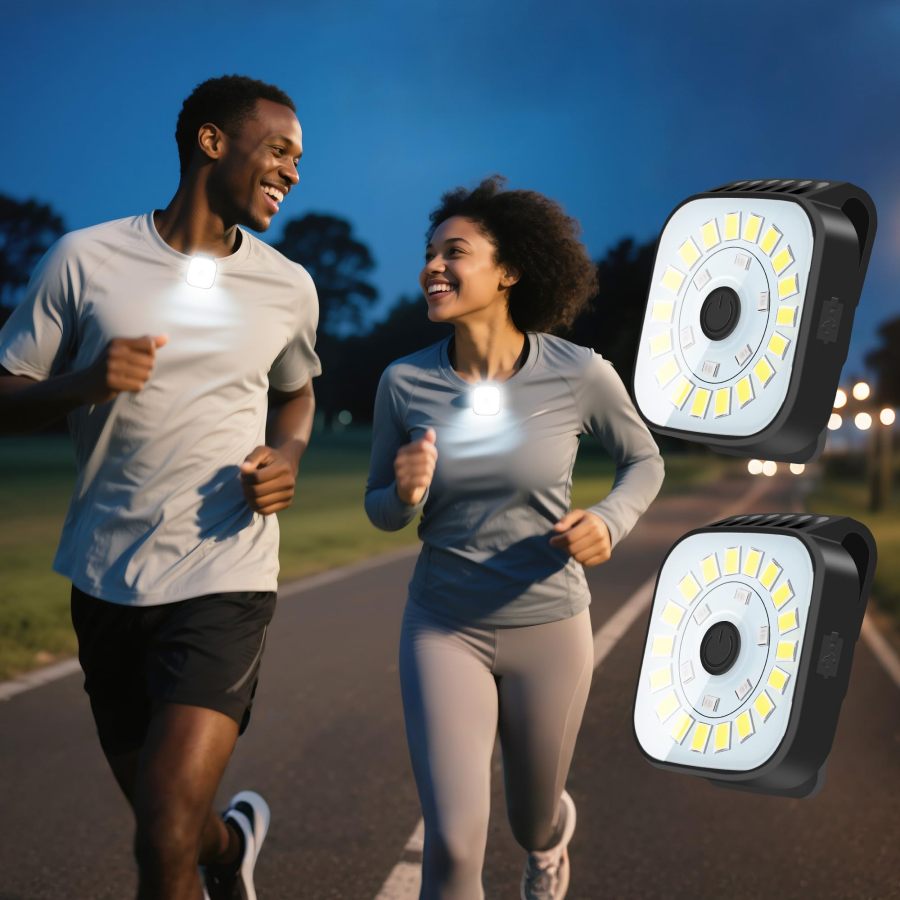
A night running safety light is a small, lightweight, clip-on or magnetic LED lighting device primarily targeting users engaged in outdoor activities at night, such as running, hiking, dog walking, and cycling. Its core function is to provide self-visibility and forward path illumination to enhance the user's safety in low-light conditions. These products typically feature USB charging and offer multiple lighting modes (e.g., steady white, red, flashing). The following table illustrates the key characteristics of consumer behavior in this category.
| Dimension | Segment | Description |
|---|---|---|
| Need Driver Type | Planned Purchase / Emergency-driven Purchase | Users primarily purchase proactively due to safety needs from regular nighttime activities (e.g., running, dog walking) or impulsively due to immediate needs from seasonal light changes. |
| Purchase Frequency | Medium-Low Frequency | Purchases typically occur when the product is lost, damaged, or a superior alternative emerges. It is not a high-frequency repurchase item, but safety is a long-term need. |
| Decision Complexity | Medium | Consumers rationally evaluate and compare brightness, battery life, attachment method, charging convenience, and price before making a decision. |
| Price Sensitivity | Medium | Price is an important consideration, but reliability and safety are prioritized more. Users are willing to pay a reasonable premium for high quality and superior experience. |
| Emotional Dependency | Medium | The primary drivers are functional utility and a sense of security, but compact aesthetics and ease of use can also contribute to a sense of pleasure and peace of mind. |
II. User Personas & Usage Scenarios
2.1 Urban Night Runner
🎯 Urban individuals focused on a healthy lifestyle with a habit of nighttime running, pursuing athletic performance and safety.
| Typical Usage Scenarios | Core Pain Points | Primary Purchase Drivers |
|---|---|---|
|
|
|
2.2 Dog Walker / Late-Night Commuter
🎯 Users accustomed to walking dogs at night or commuting late, prioritizing personal and pet safety, seeking convenient auxiliary lighting for daily use.
| Typical Usage Scenarios | Core Pain Points | Primary Purchase Drivers |
|---|---|---|
|
|
|
III. User Needs Hierarchy (KANO Model)
3.1 Basic Needs (Must-Haves)
- Stable Illumination: The product must emit light consistently and stably after being turned on, without flickering or suddenly shutting off. This is fundamental for a safety lighting device.
- Functional On/Off Switch: The button must respond sensitively to turn the light on and off, avoiding sticking or failure.
- Portability: The product must be compact and lightweight for easy carrying in a pocket or bag, without adding extra burden, meeting the need for ready use.
3.2 Performance Needs (Linear Satisfiers)
- High Brightness & Visibility: Provide sufficient lumens to ensure the user can see the path ahead clearly and effectively increase their own visibility at night, ensuring travel safety.
- Multiple Lighting Modes: Feature high, medium, low white light, as well as red light and flashing modes to meet different lighting and warning needs for activities like running, dog walking, and cycling.
- USB Convenient Charging: Built-in lithium battery supporting USB charging for quick and easy power replenishment, reducing the hassle and cost of battery replacement.
- Reliable Attachment Method: The clip or magnetic design should be secure and reliable, not easily shaking or detaching during sports or daily activities, ensuring device safety and user experience.
- Good Weather Resistance: Possess certain water resistance (IPX4 or higher) or sweat resistance to adapt to variable outdoor weather conditions like light rain or snow.
3.3 Excitement Needs (Delighters)
- Integrated Direct-Plug Charging: The product body has a built-in USB or USB-C plug, allowing direct charging from an adapter without a charging cable, offering ultimate charging convenience.
- Uniform Wide-Angle Floodlight: In addition to a spotlight, provide broad, uniform floodlighting using technologies like COB to enhance close-range visibility comfort and safety, such as on park trails.
- Red-Blue Warning Flash: Offer a red-blue alternating flash mode similar to police lights for stronger visual warnings in emergencies, but potential compliance risks must be noted.
- Robust Impact Resistance: Use drop-resistant, impact-resistant materials and structural design to ensure normal operation even after accidental falls, enhancing product durability in outdoor environments.
3.4 Unmet Needs & Opportunities
-
Clip/Magnetic Attachment Security: Many users report that existing clips or magnets easily detach during vigorous exercise, lacking reliability, leading to device loss or safety risks.
User Reviews (VOC) Customers have mixed experiences with the clip safety of the running light: while some report it attaches securely to their scrub top, others mention it falls off fairly easily. // Customers have mixed experiences with the flashlight's stability: while some report it stays put when running and clipped to waist bands, others mention it falls off easily during use.
-
Insufficient High-Brightness Mode Battery Life: Actual battery life in high-brightness mode is generally short, failing to meet some users' needs for extended use, leading to frequent charging and anxiety.
User Reviews (VOC) Customers have mixed experiences with the flashlight's battery life, with some reporting it lasts forever while others find it stops taking charge or wears out too quickly. // Unfortunately, each light lasts a little under 3 hours each when kept at the dimmest white-light setting.
-
Lack of Precise Battery Indicator: Users desire more accurate battery level display or low-battery warning functions to prevent the light from suddenly shutting off, affecting outdoor activity planning.
User Reviews (VOC) Low batt indicator would be nice.
-
Poor Operational Logic: Some products require cycling through all modes to turn off or do not remember the last used mode. Users expect one-touch shutdown or mode memory.
User Reviews (VOC) The two issues I have are that the clips are super stiff and nearly impossible to attach to clothing, especially when you're in a hurry to get out the door. The second is that you have to cycle through all the options in order to turn it off, which isn't a huge deal, just an inconvenience. I wish these little lights had a button for on/off and another for mode.
-
Non-Standardized Charging Ports: Some products still use Micro-USB instead of the more common USB-C port. Users expect a unified and convenient charging experience to reduce cable carrying burden.
User Reviews (VOC) I wish it came with a charging cord, but it uses the same size as my Kindle. // The USB charging slot got pushed in so that I couldn't charge it any more.
IV. User Decision Drivers
4.1 Key Decision Factors
- Lighting Effect & Visibility: Light brightness, beam pattern (spot/flood), and the prominence of warning lights directly impact whether users can see the path and be seen by others. This is the primary purchase consideration.
- Wearing Stability & Comfort: Whether the clip or magnet is secure and reliable, and whether it stays firmly in place during vigorous exercise, directly affects user experience and safety.
- Battery Life & Charging Convenience: Actual runtime on high brightness mode and the convenience of the charging method (e.g., USB-C, integrated plug) are key factors influencing daily use.
- Price & Value for Money: As a functional safety accessory, users compare features, brand reputation, and price across products, seeking high value for money, but safety performance is the baseline.
4.2 Secondary Decision Factors
- Multi-Functionality & Mode Variety: Beyond basic lighting, whether it offers multiple white brightness levels, red light, flashing, SOS modes, and usability for emergency or work scenarios, enhancing product versatility.
- Lightweight Design: The product's own weight and size directly impact the unobtrusiveness of wear and ease of carrying, avoiding extra burden and improving the sports experience.
- Durability & Environmental Adaptability: Water, dust, and impact resistance determine the product's reliability and lifespan in harsh outdoor conditions (rain, snow, drops), providing peace of mind.
- Ease of Operation: Whether the button design and mode-switching logic are intuitive and easy to use, and whether features like one-touch off or mode memory are present, reducing usage friction.
V. Selling Points & Competitive Landscape
5.1 Selling Point Analysis
5.1.1 Standard Features (Points of Parity)
- USB Charging: Emphasize the built-in rechargeable battery, eliminating the need for frequent purchase and replacement of disposable batteries, being eco-friendly and cost-saving.
- Lightweight & Portable: Highlight the small size and light weight for easy carrying, clipping onto clothing or backpacks for unobtrusive wear.
- Multi-Mode Lighting: Promote multiple brightness levels (high/medium/low), red light, and flashing modes to suit different lighting needs and warning effects.
- Safety Visibility: Emphasize the product's ability to significantly enhance self-visibility during nighttime activities, thereby ensuring safety for running, dog walking, and other outdoor pursuits.
- Clip/Magnetic Design: Highlight the convenience of clipping onto clothing, hats, pet collars, or attaching magnetically to metal surfaces for hands-free use.
5.1.2 Key Differentiators
- High Lumen Brightness: Some products advertise higher lumen values (e.g., 400-600 LM), emphasizing stronger illumination and longer throw distance.
- Integrated Direct-Plug Charging: Some products highlight their built-in USB/USB-C plug for charging directly without an extra cable.
- High IPX Waterproof Rating: Emphasize more specific, higher-level waterproof ratings like IPX6, IPX7, highlighting reliability in adverse weather.
- COB Floodlight Technology: Introduce COB light source for more uniform, wider floodlighting, optimizing close-range visual experience.
- Aluminum Alloy Material: A few products mention using aluminum alloy, emphasizing sturdiness, durability, and better heat dissipation.
5.1.3 Unique Selling Propositions (USPs)
- Red-Blue Warning Flash: Very few products offer a red-blue alternating flash mode, mimicking warning lights for extreme alertness, but compliance must be considered.
- Eco-Friendly Recycled Materials: Some products mention using recycled ABS material for the housing, appealing to environmentally conscious consumers.
- Patented Design: Emphasize a 'patent pending' design, implying innovation and uniqueness to attract attention.
- Drop/Impact Resistance Testing: Explicitly advertise passing specific drop tests, emphasizing rugged durability to build user trust.
5.2 Competitive Landscape
5.2.1 Market Maturity
The Night Running Safety Lights market has matured. Basic features like brightness, USB charging, multiple modes, and clips have become standard, leading to widespread product homogenization. Most sellers compete through minor feature upgrades or pricing strategies, resulting in intense market competition.
5.2.2 Innovation Trends
Current innovation trends focus on improving core user pain points: charging convenience (adoption of USB-C, integrated plug design), professional lighting effects (combining COB floodlight with LED spotlight), and product durability (more secure clips, drop-resistant materials, higher waterproof ratings). Additionally, some brands attempt differentiation with features like 'red-blue warning lights,' but their compliance and actual effectiveness require further consideration.
VI. Marketing Claims vs. Reality Check
The table below analyzes the gap between common marketing claims and actual user experiences in this category:
| Dimension | Marketing Claim | User Reality | Verdict |
|---|---|---|---|
| Battery Life | Claim long-lasting battery life, with high-brightness mode lasting for hours or even all-day use. | Users widely report actual runtime in high-brightness mode is far lower than claimed (often 20-45 minutes). Listing battery data is often contradictory (e.g., between Bullet Points and Specifications), and some products fail to charge properly. | Typical misleading use of ideal lab data or lowest-brightness data, failing to deliver on the core promise for extended outdoor activity scenarios, severely impacting user trust. |
| Clip/Magnet Stability & Compatibility | Strong clip/magnet, secure and won't fall off, compatible with all clothing and thicknesses. | Users report insufficient magnetic force/clamping power with thick phone cases (magnet) or during vigorous exercise (clip), leading to easy detachment. Some clip designs lack a securing hook or are too tight to use easily. | Sellers fail to fully consider real-world friction points like phone case thickness, fabric differences, and exercise intensity, oversimplifying compatibility claims. This causes the core selling point to underperform for users, posing potential safety risks. |
| Charging Port Protection & Durability | IPX6/IPX7 waterproof and dustproof design. | Users report USB port covers are easily lost or inconveniently designed, requiring removal of the light body for charging, compromising actual protection. Some charging ports become loose or damaged easily. | Sellers' waterproof claims fail to account for the actual vulnerability of the charging port. User feedback indicates ports are easily damaged, causing the core selling point to degrade in daily use and raising long-term reliability concerns. |
| Red-Blue Warning Light Mode | Provides red-blue alternating flash warning mode for ultimate safety visibility. | Users express concern about the similarity to police/emergency vehicle lights, potentially causing public confusion, unnecessary alarm, or legal compliance issues. | While this special mode enhances visibility, it carries the risk of being confused with official emergency lighting, potentially leading to unnecessary legal and ethical controversies. It should be promoted cautiously or avoided entirely. |
Key Takeaway: The Night Running Safety Lights market exhibits widespread parameter inflation and scenario-based experience exaggeration, particularly regarding battery life and clip/magnet stability. This creates a significant gap between user reality and marketing promises.
VII. Supply-Demand Misalignment Analysis
The table below highlights mismatches between seller focus and buyer priorities:
| Dimension | Seller Behavior | User Focus | Verdict |
|---|---|---|---|
| Clip/Magnet Attachment Security | Generally emphasize 'easy to clip,' but provide insufficient mention of solutions or testing details for 'staying on during vigorous exercise,' or claims of security don't match real-world experience. | Users widely report products easily detaching during running, cycling, etc., impacting safety and experience; they desire more secure attachment methods to prevent loss. | Sellers fail to elevate the selling point from 'easy to wear' to the core promise of 'never falls off during activity,' adopting a 'collective silence' on the issue users care about most. |
| High-Brightness Runtime & Battery Transparency | Generally advertise total runtime or low-brightness runtime, avoiding the real weakness of high-brightness mode, and lack intuitive battery indicator functions. | Users are dissatisfied with short high-brightness runtime, worrying about power depletion affecting safety; they strongly desire clearer battery indicators for better usage planning. | Sellers fail to provide transparent and reliable information on the 'core performance' metric users are most concerned about, leading to failed expectation management and directly impacting product reputation. |
| Product Durability | Generally emphasize 'lightweight & portable,' 'high-quality plastic,' but lack specific evidence or high-level certification for durability promises like 'drop-resistant' or 'impact-resistant.' | Users report products are fragile, switches fail, charging ports break, indicating durability below expectations, especially in outdoor environments. | Sellers' material claims fail to deliver on the core promise of a safety light being 'long-lasting and durable' in outdoor environments, underestimating user demand for long-term reliability. |
| Charging Port Type | Some products still use Micro-USB, or even with USB-C, fail to achieve the ultimate convenience of 'direct-plug' design, not fully keeping up with mainstream trends. | Users generally expect unified USB-C ports, or even cable-free direct-plug charging, to reduce carrying burden and improve universality. | Sellers fail to keep up with mainstream electronics port trends, lingering on older technology, reducing product competitiveness in 'convenience' and failing to meet user expectations for upgraded charging experience. |
Key Takeaway: Sellers collectively remain silent or downplay core pain points like battery life and clip stability, while over-supplying feature stacking and low-value details, leading to a supply-demand mismatch.
VIII. Strategic Opportunities & Recommendations
8.1 High-Strength Anti-Detachment Clip System Safety Light
8.1.1 Target Audience & Pain Points
⚡️ Pain Points Addressed: Insufficient clip/magnet security, easily detaches during vigorous exercise.
8.1.2 Action Plan
Design an attachment solution with a dual-locking mechanism (e.g., silicone anti-slip lining combined with a mechanical latch, or strong magnet paired with a detachable safety lanyard). This system should be compatible with fabrics of varying thicknesses and include detailed wearing instructions to ensure absolute stability during high-speed movement and vigorous motion.
| Tech Complexity | Medium |
| Cost Impact | Medium Impact |
| Trade-off Warning | More complex mechanical structure may slightly increase product size/weight, requiring precise mold design and assembly. |
| Price Band | Only viable above $19.99 |
8.1.3 Marketing Strategy
Emphasize 'Stays put no matter how intense the workout! Say goodbye to drop risks, move with confidence.' Provide test videos demonstrating the anti-detachment system's reliability across different fabric thicknesses and sports scenarios.
8.2 True High-Brightness Long-Runtime USB-C Direct-Plug Safety Light
8.2.1 Target Audience & Pain Points
⚡️ Pain Points Addressed: Insufficient high-brightness mode runtime, lack of precise battery indicator, non-standardized charging ports.
8.2.2 Action Plan
Use higher energy-density lithium-polymer batteries, increase capacity to 1000mAh+, and optimize power management IC to ensure at least 4-6 hours of stable illumination in high-brightness mode. Integrate a visual battery indicator or small screen, and upgrade to a USB-C direct-plug charging port.
| Tech Complexity | Medium |
| Cost Impact | High Impact |
| Trade-off Warning | Increased battery capacity may slightly thicken or add 5-10g to weight, requiring a balance with portability; integrated plug design may require specific structural layout. |
| Price Band | Only viable above $29.99 |
8.2.3 Marketing Strategy
Highlight 'True high-brightness long runtime, battery level always in control!'; provide authoritative lab test reports and charts for high-brightness mode runtime, demonstrating the convenience of USB-C direct-plug charging.
8.3 Multi-Function Emergency & Extreme Weather Outdoor Safety Light
8.3.1 Target Audience & Pain Points
⚡️ Pain Points Addressed: Lack of advanced emergency warning functions, insufficient outdoor durability.
8.3.2 Action Plan
Design a product achieving IP67 or higher waterproof/dustproof rating and passing a 2-meter drop test. Beyond standard white/red flashing, add more distinctive SOS Morse code signals, or multiple colors suitable for outdoor scenarios (e.g., steady green for night vision, amber for fog warnings). Avoid using red-blue warning lights to ensure market compliance.
| Tech Complexity | Medium |
| Cost Impact | Medium Impact |
| Trade-off Warning | Improving waterproof/shockproof ratings typically requires thicker seals and sturdier housing materials, potentially slightly increasing product volume or weight. |
| Price Band | Only viable above $16.99 |
8.3.3 Marketing Strategy
Emphasize 'Fearless in rain or risk, outdoor-grade protection, your all-weather safety companion.' Display IP67 certification and drop test videos, highlighting multi-function emergency modes (avoiding red-blue) in different scenarios.
8.4 Anti-Accidental Activation Power Button & Reinforced Charging Port
8.4.1 Target Audience & Pain Points
⚡️ Pain Points Addressed: Charging port vulnerability, easily lost protective covers, accidental activation draining battery, poor operational logic.
8.4.2 Action Plan
Use a reinforced USB-C port with optimized internal soldering for durability; design a charging port cover with a tether or tighter fit. Redesign the power button, e.g., recessed design, requiring a longer press, or a physical lock to prevent accidental presses. Optimize operational logic: short press to cycle modes, long press for one-touch off, with mode memory.
| Tech Complexity | Low |
| Cost Impact | Low Impact |
| Trade-off Warning | No significant physical side effects, mainly optimizing structure and materials, may slightly increase mold or assembly costs. |
| Price Band | Only viable above $14.99 |
8.4.3 Marketing Strategy
Highlight 'Built to last, charge with confidence'; emphasize 'Anti-accidental activation design, goodbye to wasted battery,' enhancing product reliability and user peace of mind. Promote 'Smart mode memory, more intuitive operation.'